
汽车金融

Search documents
京洽会与北京科博会再次同期举办,13个项目集中签约
Xin Jing Bao· 2025-05-08 12:21
Group 1: Event Overview - The 27th China Beijing International Science and Technology Industry Expo (Beijing Sci-Tech Expo) is held from May 8 to 11 at the National Convention Center, coinciding with the 2025 Beijing International Investment Trade Fair (Jingqiao Fair) [1] - The Jingqiao Fair aims to facilitate on-site inspections of Beijing's technological capabilities for participating guests and provide investment negotiation opportunities for exhibitors [1] Group 2: Strategic Collaborations - Strategic cooperation agreements were signed involving 13 projects across various sectors such as automotive finance, merger funds, talent development, and healthcare [1] - The event attracted over 600 participants from domestic and international investment institutions, industry organizations, and enterprises [2] Group 3: Investment Trends and Opportunities - The Jingqiao Fair focuses on key sectors including new generation information technology, healthcare, intelligent manufacturing, financial technology, and business services [2] - The Arab League representative highlighted China's position as the largest trading partner for Arab countries, with significant growth in bilateral investments [2] Group 4: EU-China Cooperation - The European Union Chamber of Commerce has engaged in deep cooperation with Beijing and the surrounding regions, addressing member concerns and enhancing confidence in investment opportunities [3] Group 5: Policy Initiatives - Beijing's "Two Zones" initiative has led to over a hundred groundbreaking policies aimed at improving the business environment and promoting high-tech industries [4] - A new comprehensive plan for expanding service industry openness (3.0 version) is being developed to provide more innovative and valuable policies for businesses [4] Group 6: Industry-Specific Developments - Lenovo has commenced construction of a factory in Saudi Arabia, with an initial annual production capacity of 2 million laptops, expected to reach 8 million by 2028 [6] - The Jingqiao Fair features a dedicated "Beijing-Saudi Advanced Manufacturing Negotiation Conference" to facilitate one-on-one discussions between Saudi and Chinese enterprises [6] Group 7: Networking and Exchange - The event serves as a platform for over 300 domestic and foreign enterprises to engage in discussions, promoting bilateral investment and cooperation [7] - Various display and negotiation areas are set up to provide comprehensive consulting services related to investment policies, key parks, and other business support [7]
存款准备金率调降至0%!汽车金融迎利好 专家:金融机构对拉动汽车消费起到关键性作用
Mei Ri Jing Ji Xin Wen· 2025-05-08 10:15
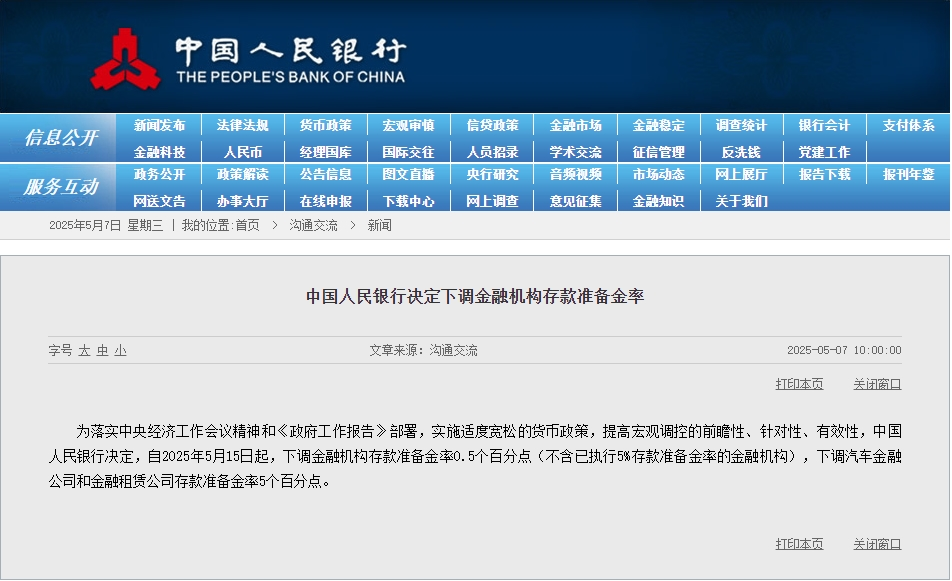
Group 1 - The People's Bank of China (PBOC) announced a 5% reduction in the reserve requirement ratio for auto finance companies and financial leasing companies, effective May 15, 2025, to implement a moderately loose monetary policy and enhance macroeconomic regulation [1][6]. - This adjustment is seen as a signal of support from the government for the automotive industry, automotive circulation industry, and automotive finance industry, particularly during a phase of increased domestic demand in the automotive consumption market [6][7]. - The reduction in the reserve requirement means that these financial institutions will no longer need to set aside a portion of their funds, allowing them to use the released capital for more flexible loans and investments, thereby increasing market liquidity [6]. Group 2 - PBOC Governor Pan Gongsheng indicated that this "reduction in reserve requirement" is a temporary measure, reflecting the significant role financial institutions play in promoting automotive sales and consumption [6]. - The removal of the reserve requirement may lead financial institutions to rely more on their liquidity management capabilities, which could pose risks if market demand for funds surges or if economic volatility increases [6].

这次降准降息,一点都不简单
虎嗅APP· 2025-05-08 10:03
Core Viewpoint - The recent reduction in the reserve requirement ratio (RRR) by 0.5% and the expected decrease in mortgage rates by 0.1% are seen as measures to stabilize the economy and the real estate market, rather than aggressive stimulus actions [4][34][40]. Group 1: Monetary Policy Changes - The RRR cut aims to increase the liquidity in the market, allowing banks to lend more, which can stimulate economic activity [14][15]. - This RRR adjustment is notable as it is the longest interval since the last cut, indicating a careful approach to monetary policy [19][22]. - The reduction in mortgage rates is a reflection of the broader monetary policy aimed at maintaining stability in the housing market [34][40]. Group 2: Real Estate Market Implications - The announcement includes support for a new financial development strategy aligned with the evolving real estate market [33]. - The reduction in the public housing loan interest rate from 2.85% to 2.6% is expected to lower the cost of home purchases for borrowers [35]. - The current mortgage rate of 3.6% and the reduced public loan rate suggest potential for further decreases in housing loan rates, which could stimulate the market [36][40]. Group 3: Structural Financial Support - The introduction of 300 billion yuan for technological innovation and 500 billion yuan for service consumption and elderly care loans indicates a shift towards supporting emerging sectors [54][57]. - An increase of 300 billion yuan in loans for agriculture and small businesses highlights the focus on strengthening the domestic economy [63]. - The reduction of reserve requirements for auto finance companies to 0% demonstrates targeted support for the automotive industry, which is seen as a key growth area [66][69]. Group 4: Broader Economic Context - The overall monetary policy is designed to ensure economic growth and stability, with a focus on gradual adjustments rather than abrupt changes [30][78]. - The measures taken are part of a larger strategy to adapt financial support to the needs of the economy, particularly in light of recent recovery signs [25][60]. - The emphasis on maintaining stability in the real estate market reflects a cautious approach to avoid overheating while still encouraging growth [41][42].
2025京洽会开幕 13个项目现场集中签约
Zhong Guo Xin Wen Wang· 2025-05-08 07:23
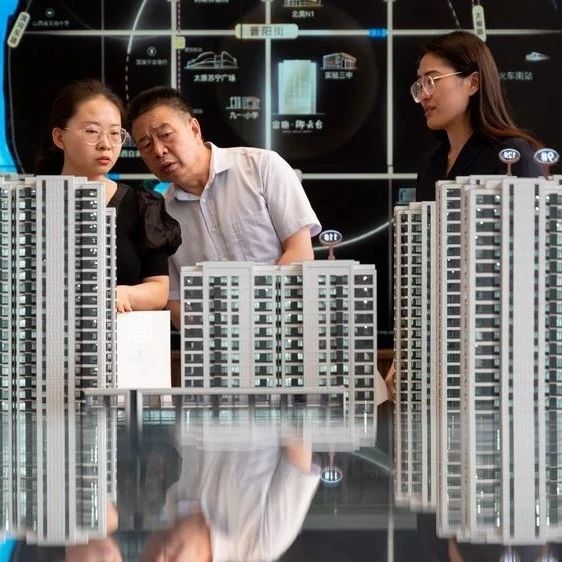
Core Points - The 2025 Beijing International Investment and Trade Fair (referred to as "Jing Fair") opened on May 8, 2023, at the National Convention Center in Beijing, with 13 projects signed on-site [1][3] - The theme of this year's Jing Fair is "Consultation, Sharing, and Win-Win," aiming to create a precise and effective two-way investment platform to promote practical cooperation for Chinese enterprises going global [1] - The event is held concurrently with the 27th Beijing Science and Technology Expo, attracting over 600 participants from domestic and foreign investment institutions, industry organizations, and enterprises [1] Industry Focus - The Jing Fair focuses on key sectors such as new generation information technology, healthcare, intelligent manufacturing, financial technology, and business services [1] - It aims to facilitate two-way investment and deepen mutually beneficial cooperation, particularly targeting hot regions for Chinese enterprises going abroad, including the Middle East, ASEAN, Latin America, and Europe [2] Event Structure - The event features various formats such as promotional exchanges, roundtable dialogues, and display negotiations, with over 300 domestic and foreign companies participating in discussions [2] - A special "Beijing-Saudi Advanced Manufacturing Negotiation Conference" is organized to discuss Saudi investment strategies and policies, facilitating one-on-one negotiations between Saudi enterprises and Chinese companies in relevant sectors [2] Strategic Collaborations - Strategic cooperation agreements were signed between the Beijing Trade Promotion Council and various organizations, covering sectors like automotive finance, merger funds, talent training, healthcare, and outbound services [3]
货币政策稳增长全面发力 央行降准降息“大招”落地
Zhong Guo Jing Ying Bao· 2025-05-08 03:26
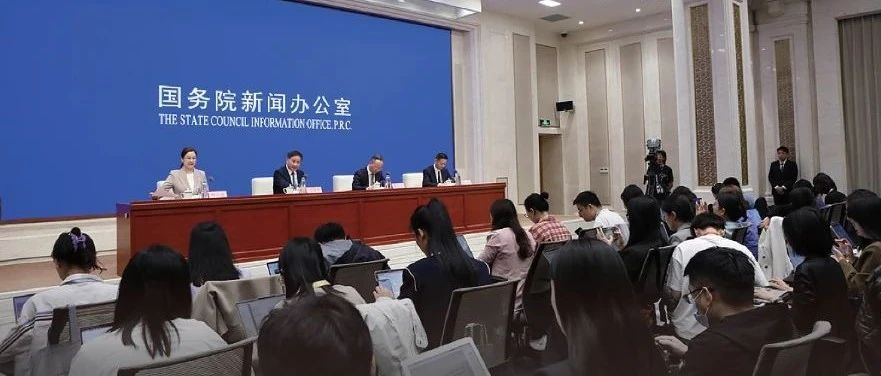
本报记者 谭志娟 北京报道 降准又降息! 5月7日,中国人民银行行长潘功胜在国新办举行的新闻发布会上宣布,降准0.5个百分点,向市场提供 长期流动性约1万亿元,并降低政策利率0.1个百分点。 在业界看来,这是对4月25日政治局会议部署"要加紧实施更加积极有为的宏观政策""适时降准降息"的 具体落实。 东方金诚首席宏观分析师王青对《中国经营报》记者表示,这是继2024年9月27日央行宣布降息降准以 来,两个货币政策"大招"再次同时出手,表明今年适度宽松的货币政策开始在稳增长方向全面发 力。"在当前时点宣布降息降准,能够有效激发企业和居民融资需求,扩投资促消费,提振市场信心, 是当前对冲外部波动最有力的手段之一。" 降准降息落地 受访专家认为,此次央行分别从数量、价格、结构三大方向入手,推出"降准+降息"等十项货币政策组 合,是自去年9月后再次实施较重大的货币政策调整。 经济学家、新质未来研究院院长张奥平接受记者采访时表示:"这有助于大幅提振市场预期,稳定房地 产及资本市场,并精准支持当前经济运行重点领域与薄弱环节,包括科技创新、扩大消费、普惠金融等 重点方向。" 此次十项货币政策措施亮点较多,这是及时回应市场呼 ...
兴业证券首席经济学家王涵:筑底线谋发展是最好的稳预期
Zheng Quan Shi Bao Wang· 2025-05-08 02:00
Core Viewpoint - The recent press conference by the State Council emphasized a comprehensive financial policy package aimed at stabilizing the market and expectations, with a balanced approach between bottom-line support and development initiatives [1] Group 1: Monetary Policy Measures - The People's Bank of China (PBOC) announced a series of interest rate cuts, including a 25 basis points reduction in the housing provident fund loan rate, effective May 8, and a comprehensive reduction in the 7-day reverse repurchase rate [1][2] - The PBOC's proactive measures include a total reduction in the reserve requirement ratio (RRR) and interest rates, with the RRR cut scheduled for May 15 [1][2] Group 2: Support for Technology and Innovation - The PBOC increased the quota for re-lending for technological innovation and technical transformation from 500 billion yuan to 800 billion yuan, aiming to support tech enterprises [2] - The China Securities Regulatory Commission (CSRC) plans to promote the development of technology innovation bonds and establish risk-sharing tools for these bonds [2] Group 3: Capital Market Stability - The CSRC is focused on encouraging long-term capital inflows into the market, with initiatives such as the "Action Plan for High-Quality Development of Public Funds" [3] - The PBOC supports the Central Huijin Investment Ltd. in increasing its holdings of index funds, providing sufficient re-lending support [3] Group 4: Real Estate Market Support - The PBOC will lower the personal housing provident fund loan rate by 25 basis points, which is expected to save residents over 20 billion yuan annually in interest payments [4] - The financial regulatory authority is expediting the introduction of financing systems that align with new models of real estate development [4] Group 5: Consumer Sector Support - The PBOC will temporarily reduce the reserve requirement ratio for auto finance and financial leasing companies to 0%, facilitating financial support for automotive consumption and equipment upgrades [5] - A new 500 billion yuan "Service Consumption and Elderly Care Re-lending" program will be established to encourage financial institutions to support key service sectors and the elderly care industry [5]

“5.7重磅政策”:救市的逻辑变了
吴晓波频道· 2025-05-07 18:21
Core Viewpoint - The current market stabilization strategy focuses on "supporting enterprises," aiming for a systematic recovery treatment to stabilize the economic foundation, market entities, and enhance economic resilience [1][7]. Summary by Sections Financial Policy Announcements - The government announced ten major supportive policies, including a 0.5% reduction in the reserve requirement ratio (RRR), releasing 1 trillion yuan in long-term funds, and lowering the RRR for auto finance and financial leasing companies to 0% [1][2]. - Policy interest rates were reduced by 0.1%, and various structural tool rates were lowered by 0.25% [2]. Targeted Support for Key Areas - An increase of 300 billion yuan in re-loan quotas for technological innovation and technical transformation, along with 500 billion yuan for service consumption and elderly care, and an additional 300 billion yuan for agriculture and small enterprises [3]. Market Reactions - Market sentiment was mixed; some viewed the policies as expected extensions of previous measures, while others were disappointed, hoping for more aggressive stimulus akin to the "9·24" policies from the previous year [4][6]. Economic Context - The primary economic contradiction has shifted from "insufficient domestic demand" to "increased external pressure," with small and foreign trade enterprises facing significant challenges [11][12]. - Manufacturing PMI fell to 49.2 in April, indicating a contraction, and there are concerns about the sustainability of recent foreign trade data [13][14]. Policy Objectives - The core task of the new policy measures is to stabilize the funding and confidence of enterprises, particularly small and private firms, amid external shocks [16][18]. - The policies aim to create a relaxed business environment, stabilize stock prices, and stimulate consumer spending to drive growth [18][25]. Specific Measures - The central bank's measures include a comprehensive RRR cut and interest rate reductions to ease financing costs for small and medium-sized enterprises [19][22]. - The optimization of capital market support tools aims to stabilize stock prices and enhance market confidence [23][24]. - Consumer confidence is targeted through measures like lowering the RRR for auto finance companies, which is expected to boost spending on durable goods [26]. Future Outlook - Despite the supportive policies, not all enterprises will benefit equally, and differentiation may become the new norm [30]. - The policies are seen as more supportive than stimulative, with a focus on preventing economic growth from "stalling" rather than driving immediate recovery [28][41]. - The real estate market may see benefits from increased liquidity, but the effectiveness of these measures will vary across different cities [42][43].
金融“十箭”齐发 稳增长强信心
Shen Zhen Shang Bao· 2025-05-07 17:34
本报首席评论员胡蓉 当下,关税战冲击将逐步显现,全球经济的不确定性仍然阴云笼罩。越是此时,越需要增强国内经济发 展的确定性。 一季度,中国经济实现了5.4%的较快增长,出口、零售、投资等经济指标普遍改善。在刚刚过去的"五 一"假期,根据文化和旅游部的数据, 5月1日至5日国内旅游总人次达3.14亿,同比增长6.4%;国内旅 游收入1802.69亿元人民币,同比增长8%。延续这一良好态势十分重要。 金融是经济的血脉。金融市场于此时"十箭"齐发,释放的是强烈的稳增长和提振市场信心的信号。稳定 保持中国经济的发展节奏,不仅能更好应对眼前的变局,更是为了坚定走向未来。 (文章来源:深圳商报) 可以说,央行此次出手的广度和力度都十分罕见。十项举措不仅重在加大中长期流动性供给、保持市场 流动性充裕,也着眼降低贷款利息成本;重在刺激新增贷款的产生,也针对贷款存量结构的调整,如存 量房贷利率也将随着LPR利率下调,有利于降低居民支出成本、为消费释放更多现金流。 10项措施,每一项都构成利好,而央行选择"十箭"齐发,目的就是要发挥出协同与聚合效应,激发更大 的效果。放在更大层面看,金融市场十大举措又将与其他政策联手,发挥出更大 ...
政在发声丨央行超预期“双降”:货币政策体现“未雨绸缪” ,总量结构价格工具协同发力稳增长
2 1 Shi Ji Jing Ji Bao Dao· 2025-05-07 13:01
Monetary Policy Measures - The People's Bank of China (PBOC) announced a package of monetary policy measures, including a 0.5 percentage point reduction in the reserve requirement ratio (RRR), expected to provide approximately 1 trillion yuan in long-term liquidity to the market [1] - The policy rate was lowered by 0.1 percentage points, which is anticipated to lead to a similar decrease in the Loan Prime Rate (LPR) [1][2] - Structural monetary policy tools' rates were reduced by 0.25 percentage points, and the personal housing provident fund loan rate was also cut by 0.25 percentage points [1] Innovations in Financial Support - A significant innovation includes lowering the RRR for certain financial institutions, such as auto finance and financial leasing companies, to 0%, breaking the previously understood 5% implicit lower limit [3][4] - The establishment of a risk-sharing tool for technology innovation bonds aims to support direct financing for tech innovation, enhancing the PBOC's support for this sector [5] Economic Context and Future Outlook - The backdrop for these measures includes a 5.4% year-on-year GDP growth in Q1, but a decline in the manufacturing Purchasing Managers' Index (PMI) to 49.0% in April, indicating potential economic challenges [2] - Analysts expect further monetary easing, including potential additional rate cuts and RRR reductions, as the PBOC aims to maintain economic stability amid external uncertainties and domestic demand challenges [7][8]
汽车金融迎利好!定向降准,不再需要存款准备金
Jing Ji Guan Cha Bao· 2025-05-07 11:29
Core Viewpoint - The People's Bank of China has temporarily reduced the reserve requirement ratio for auto finance companies and financial leasing companies from 5% to 0%, aiming to enhance liquidity and support economic growth [1][2]. Group 1: Policy Impact - The reduction in reserve requirement means that these financial institutions no longer need to set aside funds, allowing them to use the released capital for more flexible loans and investments [1]. - This adjustment is expected to provide higher liquidity in the market, alleviating pressures from slowing economic growth and tightening financial markets [1]. Group 2: Business Models - Auto finance companies primarily offer car loans and financing leasing services, supporting consumers in the automotive sales market [1]. - Financial leasing companies focus on equipment financing leasing, providing funding support for businesses to acquire and lease necessary equipment, covering a broader range of sectors [1]. Group 3: Challenges and Risks - Both types of financial institutions face challenges in capital operations, particularly when liquidity is insufficient, which can limit their lending capabilities [2]. - The policy change allows auto finance companies to offer more consumer loans, potentially stimulating automotive consumption demand [2]. - However, the removal of the reserve requirement means that financial institutions will need to enhance their liquidity management capabilities to avoid short-term liquidity strains during market fluctuations [2].