
蔬菜种植

Search documents
让盐碱地变成金银滩
Ren Min Ri Bao· 2025-12-01 03:29
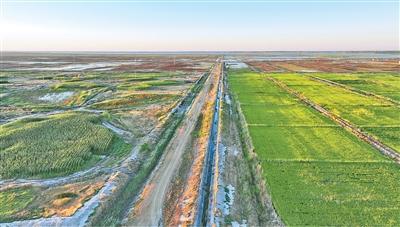
吉林省镇赉县种植茭白的盐碱地(右侧)。潘晟昱摄(人民视觉) "去年整地的时候,风吹得白碱面满天飞。现在抓把土,能攥出湿印子!" 冬日,在吉林省白城市镇赉县的上千亩茭白田里,白城天原生态农业开发有限公司负责人宋振博忙 着修整土地。"这片重度盐碱地,长出了上百万斤茭白,土壤条件也变好了。"攥着黑褐色的泥土,宋振 博说。 盐碱地种出好茭白,今年一上市便热销。眼下,宋振博锚定新目标,谋划来年扩大种植规模,进一 步提升茭白产量,结出更多富民兴村的"金果子"。 试种 茭白甜脆 土壤变肥 "这片地,之前是种啥都不长的废地。"走在茭白田里,镇赉县农业农村局高级农艺师周淑凤向记者 介绍。 改变这一情况的,是一群敢想敢干的人。来自浙江的茭白种植户丁炜,就是其中之一。 承包弃耕地,让丁炜与盐碱地结缘:"有些地因为盐碱太重,原承包人都放弃了。我凭着对茭白的 了解,把这些地包了下来。" 早期,种茭白像是"打游击":今年在这片地试种,明年换另一片。"但我发现一个规律:种过茭白 的地,颜色明显变深了,再种别的作物,就好种多了。"丁炜说。 "种苗活不了,产量上不去,始终是块心病。"丁炜说,早期试种全凭经验,育苗、整地都是自己摸 索,走了不少 ...

北京与28个蔬菜基地达成直供协议,蔬菜最快2小时进京
Xin Jing Bao· 2025-12-01 02:14
Group 1 - The core idea of the articles highlights the improvement in the supply chain for vegetables in Beijing, emphasizing direct supply from production bases to markets, which enhances freshness and reduces prices [1][2] - Beijing has established direct supply agreements with 28 vegetable bases across six provinces, covering 12 vegetable varieties with a total planting area of 36,000 acres, supplying 141,000 tons of vegetables annually [1] - The regulatory approach has shifted to pre-harvest inspections at the production sites, ensuring that substandard products are intercepted before reaching the market [1] Group 2 - The Beijing Municipal Market Supervision Administration is implementing a higher standard system to guide vegetable bases in standardized planting, focusing on controlling pesticide and fertilizer use to ensure product quality [2] - The administration is developing a "Beijing Quality" local standard system based on sensory, nutritional, and food safety indicators, aiming to expand direct supply bases and product varieties [2] - Future plans include selecting vegetable production areas with excellent ecological environments and well-established traceability systems to introduce more diverse products, including specialty fruits and high-quality grains and oils [2]
邮储银行晋中分行 创新服务持续润灌乡村沃土
Zheng Quan Ri Bao Zhi Sheng· 2025-11-30 07:12
Core Insights - Postal Savings Bank of China (PSBC) Jinzhong Branch is committed to serving the agricultural sector, integrating financial services with rural industry development, livelihood improvement, and entrepreneurship to promote rural revitalization [1][2][3] Group 1: Financial Support for Agriculture - PSBC has provided continuous financial support to local agricultural enterprises, such as the Shanxi Jin Nong Temple Livestock Technology Co., which has benefited from funding since 2017, helping to raise over 50,000 cattle and increase local farmers' income [1] - In the Taiyuan District, PSBC has issued over 10 million yuan in loans to support nearly 100 vegetable growers in expanding their greenhouse operations, demonstrating targeted financial solutions for different agricultural needs [2] Group 2: Credit and Financial Accessibility - The bank is advancing the construction of credit villages to address the challenges of loan access and guarantees for farmers, enabling credit to be transformed into tangible wealth [3] - PSBC is leveraging financial technology to enhance the convenience and quality of inclusive finance, simplifying loan application processes through online platforms and mobile payments, thus improving accessibility for rural farmers [3] Group 3: Future Plans and Commitment - The Jinzhong Branch plans to continue optimizing financial products and services, increasing credit investment in rural revitalization, and ensuring that financial resources support the development of rural areas [3]

让盐碱地变成金银滩(深阅读)
Ren Min Ri Bao· 2025-11-29 22:11
吉林省镇赉县种植茭白的盐碱地(右侧)。 潘晟昱摄(人民视觉) "去年整地的时候,风吹得白碱面满天飞。现在抓把土,能攥出湿印子!" 冬日,在吉林省白城市镇赉县的上千亩茭白田里,白城天原生态农业开发有限公司负责人宋振博忙着修 整土地。"这片重度盐碱地,长出了上百万斤茭白,土壤条件也变好了。"攥着黑褐色的泥土,宋振博 说。 盐碱地种出好茭白,今年一上市便热销。眼下,宋振博锚定新目标,谋划来年扩大种植规模,进一步提 升茭白产量,结出更多富民兴村的"金果子"。 试种 2024年,丁炜决定与白城天原生态农业开发有限公司合作,在镇赉县的重度盐碱地规模化试种茭白。 茭白甜脆 土壤变肥 "这片地,之前是种啥都不长的废地。"走在茭白田里,镇赉县农业农村局高级农艺师周淑凤向记者介 绍。 改变这一情况的,是一群敢想敢干的人。来自浙江的茭白种植户丁炜,就是其中之一。 承包弃耕地,让丁炜与盐碱地结缘:"有些地因为盐碱太重,原承包人都放弃了。我凭着对茭白的了 解,把这些地包了下来。" 早期,种茭白像是"打游击":今年在这片地试种,明年换另一片。"但我发现一个规律:种过茭白的 地,颜色明显变深了,再种别的作物,就好种多了。"丁炜说。 202 ...
深度关注丨盘活资源促振兴
Zhong Yang Ji Wei Guo Jia Jian Wei Wang Zhan· 2025-11-29 02:26
Core Viewpoint - The article discusses the significant improvements in the management of rural collective "three assets" (funds, assets, and resources) in Yunnan's Qujing City, highlighting the transition from unclear management to a more structured and effective system that enhances collective economic development and community satisfaction [3][15]. Group 1: Management Improvements - The management of rural collective "three assets" has shifted from being vague to clear, with a focus on enhancing efficiency and community satisfaction [3][15]. - A comprehensive investigation and establishment of management ledgers have been implemented to address issues such as overdue rents and idle assets [4][5]. - The introduction of a "three-color" warning mechanism has allowed for real-time updates and tracking of contracts, improving transparency and accountability [4][8]. Group 2: Financial Recovery and Asset Management - As of now, the total amount of rural collective funds cleared is 49.26 billion yuan, with assets amounting to 431.71 billion yuan and resources covering 3,726.47 million mu of collective land [7]. - The recovery of previously overlooked funds has reached 1.03 billion yuan, and over 5.6 million yuan in overdue land transfer payments has been reclaimed [7][15]. - The establishment of a unified regulatory framework for collective assistance projects has been initiated, encompassing assets worth 48.2 billion yuan [14][15]. Group 3: Systematic Reforms and Strategies - The city has introduced 34 practical regulations to address key issues in the management of rural collective "three assets," ensuring a comprehensive system for oversight and accountability [14]. - The separation of financial accounts between village committees and collective economic organizations has been implemented to enhance operational efficiency and transparency [12][13]. - Continuous monitoring and improvement of the management system are emphasized to prevent the recurrence of previous issues and to ensure sustainable development [14][15].
从“单村独斗”到“片区共生”:农业大省乡村振兴的组团发展样本
经济观察报· 2025-11-28 13:27
Core Viewpoint - Shandong province is implementing a "regionalization" approach to rural revitalization, integrating nearby villages to overcome challenges such as resource dispersion, weak industries, and population outflow, with 2,070 regional units established covering over 18,000 administrative villages [1][3][2] Group 1: Regionalization Concept - "Regionalization" involves grouping nearby villages with similar functions and development potential to plan and build collectively based on community needs [2][3] - The approach aims to address common issues in rural revitalization, such as small village sizes and limited resources, which hinder the integration of external factors [2][3] Group 2: Case Studies of Regionalization - The "Golden Mountain and Silver Sea" rural revitalization area in Yantai has established 17 supporting companies around the gold industry, generating over 6 million yuan in collective income and providing employment for over 1,000 villagers [7][8] - The Qingdao West Coast New Area's regionalization project integrates 10 villages, focusing on ecological preservation while promoting tourism and agriculture, resulting in over 60 million annual visitors and 100 million yuan in tourism revenue [12][13] Group 3: Mechanism Innovation - Mechanism innovation is crucial for activating development vitality, with Shandong employing cross-village cooperation, party leadership, and village-enterprise partnerships to enhance rural development [17][18] - In Feixian County, a new governance structure was established to promote differentiated development across four small regions, leading to significant economic growth and job creation [17][18] Group 4: Sustainable Development - The "Colorful Tomato" rural revitalization area in Shouguang focuses on creating a comprehensive tomato industry chain, achieving an annual production of 350,000 tons and significantly increasing local farmers' incomes [21][22] - The integration of modern agricultural practices and cooperative models has attracted young entrepreneurs back to rural areas, enhancing local economies and promoting sustainable growth [21][22][23]

调查|38小时,一袋莘县蔬菜如何跑通330家零售门店?
Da Zhong Ri Bao· 2025-11-28 09:23
Core Insights - The collaboration between Jiajiayue and Xinxian Agricultural Development Company enhances the supply chain for fresh vegetables, ensuring quality and traceability from farm to retail [1][3][7] - The implementation of the "Shandong Food Chain" traceability platform allows for real-time data tracking, improving food safety and consumer trust [7][11][12] - The shift towards transparency in the supply chain is becoming a competitive advantage in the fresh produce market, focusing on quality and reliability rather than just price [8][12] Group 1: Supply Chain and Collaboration - On November 26, Jiajiayue placed an order for 12,000 units of Xinxian vegetables, which were delivered to 330 stores within 38 hours [1] - Farmers in Xinxian are now assured of stable income and market demand through organized production and sales, with some reporting annual earnings exceeding 100,000 yuan per acre [2] - The partnership addresses the challenges faced by both parties: Jiajiayue needs stable, quality supply, while Xinxian farmers require reliable market access [3][4] Group 2: Traceability and Food Safety - Each package of Xinxian vegetables features a unique QR code that provides detailed information about the product, including planting location and harvest date [6] - The "Shandong Food Chain" platform enables comprehensive tracking of the supply chain, shifting regulatory focus from post-sale inspections to proactive risk management [7][11] - This digital traceability system enhances consumer confidence and allows retailers to focus regulatory efforts on higher-risk products [8][11] Group 3: Market Dynamics and Future Strategies - The competitive landscape in the fresh produce sector is evolving, with emphasis on providing stable, transparent, and traceable supply chains [8][12] - Jiajiayue plans to expand its collaboration with Xinxian Agricultural Development to include a wider range of vegetable products, enhancing market presence [8][12] - The partnership is seen as a model for future collaborations between agricultural producers and retailers, promoting regional brands and improving product value [12][13]


扎根乡土创新业 江西崇仁统战聚力促共富
Zhong Guo Xin Wen Wang· 2025-11-28 05:41
Core Insights - The article highlights the efforts of the Chongren County United Front Work Department in Jiangxi Province to promote rural revitalization through entrepreneurship and collective economic development [2][3]. Group 1: Entrepreneurship and Economic Development - Chen Shaohua, a returning entrepreneur, has initiated a greenhouse vegetable planting business in Tangxi Village, utilizing 110 acres of land for greenhouse vegetables and 500 acres for a traditional Chinese medicine base [2]. - The annual output value of the greenhouse vegetable business can reach up to 20 million yuan, with products primarily exported to South Korea and sold domestically [2]. - The multi-faceted business model of "planting + processing + domestic and foreign trade" has created over 150 job opportunities and increased collective economic income by more than 400,000 yuan annually [2][3]. Group 2: Agricultural Production and Statistics - Chongren County has a vegetable planting area of 162,300 acres, producing 247,000 tons of various fruits and vegetables annually [3]. - The local government is actively promoting the integration of intellectual resources into rural revitalization efforts, aiming to maximize the benefits of the United Front's service capabilities [3].
打造智慧农业新标杆!白云区国家现代农业产业园核心项目正式动工
Nan Fang Nong Cun Bao· 2025-11-27 16:05
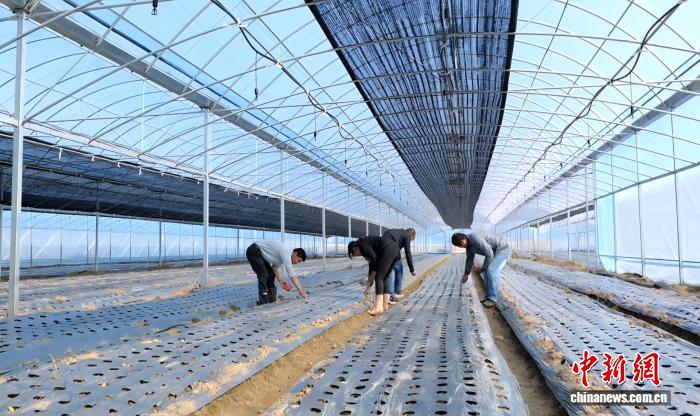
Core Insights - The core project of the National Modern Agricultural Industrial Park in Baiyun District, Guangzhou, focusing on intelligent vegetable planting, has officially commenced construction [2][3][5]. Investment and Project Details - The total investment for the project is approximately 69 million yuan, with over 665 acres of land being utilized [11]. - The project is strategically located in Longgang Village, adjacent to the central area of Zhongluotan Town and the Liuxi River ecological corridor [11]. Technological and Operational Goals - The project aims to establish a high-standard modern agricultural benchmark, integrating leading greenhouse technology and digital environmental control facilities [13][14]. - It will serve as a comprehensive functional park for modern facility vegetable cultivation, focusing on technology demonstration, automated seedling cultivation, precise management, intelligent decision-making, and efficient operations [14][16]. Strategic Importance - The initiative is expected to become a model for urban agricultural intelligence development and a practical scenario for new productive forces in agriculture [16][19]. - The project aims to provide a replicable and promotable "Baiyun experience" for the transformation and upgrading of the national facility vegetable industry [18][19]. Collaboration and Innovation - A significant highlight of the project is the deep integration of production, education, and research, collaborating with renowned agricultural institutions in South China [22]. - This collaboration will promote the integration and application of advanced agricultural technologies, enhancing production efficiency and ensuring the quality and safety of agricultural products [23][24]. Commitment to Quality and Community - The Baiyun Investment Group has committed to meticulously organizing and scientifically executing the project to ensure it becomes a quality, demonstration, and community-focused project [27][28].


“桂字号”蔬菜叫响大江南北
Guang Xi Ri Bao· 2025-11-26 04:10
Core Viewpoint - Guangxi is enhancing its position as a major vegetable production base in China by focusing on technological innovation and quality improvement in the agricultural sector [1][2] Group 1: Technological Innovation and Development - Guangxi has established 24 provincial and ministerial-level technological innovation platforms in the vegetable sector to support scientific research, result transformation, and talent cultivation [1] - The region has developed over 200 vegetable varieties with independent intellectual property rights, including the Guangxi series black-skinned winter melon, which has been promoted across 11 provinces, covering over 3 million acres, accounting for 34% of the national total and 70% in South China [1] - From 2022 to 2024, Guangxi plans to invest over 10 million yuan annually in key core technology research, including smart water and fertilizer integration and green pest control technologies [1] Group 2: Regional Vegetable Production and Branding - Guangxi has created seven major vegetable production areas with distinct regional characteristics, forming four main vegetable industry belts and four key facility vegetable production areas [2] - The quality of Guangxi's vegetables has improved significantly, with 238 green and geographical indication agricultural products recognized, and efforts to promote the "Guangxi" brand have increased its visibility across the country [2] - By 2025, Guangxi aims to have recognized 79 "Guangxi" vegetable agricultural brands, with a total brand value exceeding 60 billion yuan, featuring well-known local brands such as Baise tomatoes and Lijiang lotus root [2]