轨道交通

Search documents
投身一出大戏,天津“十五五”唱好京津“双城记”
Zhong Guo Xin Wen Wang· 2025-12-09 13:52
Core Perspective - The article discusses the transformation of Tianjin's role in the Beijing-Tianjin-Hebei (Jing-Jin-Ji) coordinated development strategy, shifting from a "defensive" role of merely absorbing functions from Beijing to a "proactive" role of mutual empowerment and deep integration with Beijing [1][2]. Group 1: Strategic Shift - Tianjin's new approach combines "deep integration" and "active introduction" to enhance its regional value and attract resources, aiming to create a positive cycle of development [2][6]. - The focus has shifted from merely relieving Beijing's non-capital functions to establishing a collaborative model where Beijing's innovation capabilities complement Tianjin's manufacturing and cost advantages [2][3]. Group 2: Practical Implementation - The concept of "dual-directional empowerment" is being realized through practical initiatives, such as the successful transformation of research outcomes from Beijing into production in Tianjin [3][4]. - Notable examples include the establishment of AI application centers and agricultural technology implementations in Tianjin, showcasing the effective collaboration between the two cities [2][3]. Group 3: Transportation Integration - Transportation improvements are a key aspect of the integration, with new rail and air connections significantly reducing travel time between Beijing and Tianjin, facilitating closer economic ties [5][6]. - The development of a comprehensive transportation network is expected to enhance the efficiency of cross-province travel, contributing to the overall connectivity of the Jing-Jin-Ji region [5]. Group 4: Collaborative Innovation - Tianjin is actively engaging in high-level collaborations with national research institutions and universities to build advanced research platforms, enhancing its innovation capacity [6]. - The city aims to establish a world-class advanced manufacturing cluster by deepening industrial cooperation with Beijing and Hebei, focusing on key industries such as high-end equipment and cybersecurity [6].
宏观经济深度研究报告:2026年固定资产投资能迎来“开门红”吗?
ZHESHANG SECURITIES· 2025-12-09 08:59
Group 1: Fixed Asset Investment Trends - In the first ten months of 2025, national fixed asset investment decreased by 1.7% year-on-year, with monthly declines of -5.3%, -7.1%, -7.1%, and -12.2% from July to October, marking five consecutive months of negative growth[1] - The fixed asset investment growth rate for Q1 2026 is projected to be +2.8%, with both broad infrastructure and manufacturing investments expected to exceed +5.0% year-on-year[1] - Historical data shows that the probability of achieving a positive growth in fixed asset investment in Q1 exceeds 80%, indicating a strong likelihood of a "good start" in 2026[4] Group 2: Policy Support and Debt Management - The new policy financial tools amounting to 500 billion yuan support over 2,300 projects, with a total investment of approximately 7 trillion yuan, aimed at both broad infrastructure and manufacturing sectors[2] - The rapid debt repayment progress in the second half of 2025 is expected to alleviate the pressure on project funding in 2026, allowing local governments to support investment and consumption more effectively[3] - By the end of 2025, local government debt issuance exceeded 10.2 trillion yuan, with special refinancing bonds playing a significant role in debt management and project funding[26] Group 3: Economic Environment and Investment Confidence - The meeting between the leaders of China and the U.S. in October 2025 is anticipated to improve micro-enterprise investment confidence, contributing to a more favorable investment environment[2] - The current data suggests that the "watered-down" statistics from previous periods may have been adequately addressed, reducing the likelihood of statistical manipulation in future investment data[4]
“局园一体” 成都市新都区探路科创与产业深度融合
Si Chuan Ri Bao· 2025-12-08 21:53
Core Insights - Chengdu's Xindu District has initiated a transformative reform called "Integration of Bureau and Park" to address the disconnect between technology and economic development, aiming to enhance the conversion of scientific achievements into industrial applications [4][5][6] - The reform has led to significant improvements, with the Xindu High-tech Industrial Park ranking second in provincial evaluations and first in Chengdu, while the number of high-tech enterprises has doubled over three years [4][5] - The district has implemented innovative governance and incentive mechanisms, fostering collaboration between government, industry, and academia, which has resulted in a robust innovation ecosystem [5][6] Summary by Sections Reform and Governance - The "Integration of Bureau and Park" reform was launched in 2022 to merge the functions of the Xindu District's New Economy and Technology Bureau with the management of the Xindu High-tech Industrial Park, facilitating better resource allocation and policy implementation [4][5] - This reform has enabled a direct feedback loop between technology policy makers and industry operators, creating a closed-loop system where demand drives innovation and innovation fuels industry [5] Economic Performance - The Xindu High-tech Industrial Park's revenue is projected to exceed 130 billion yuan in 2024, with nearly 3,000 enterprises, including 348 high-tech companies, contributing to five major industrial clusters [6] - The park has achieved a significant increase in patent ownership, with over 6,600 effective invention patents, doubling the number since the integration reform began [5][6] Innovation and Technology Transfer - The district has introduced financial products like "Innovation Points" and "Credit Loans" to address financing challenges faced by tech enterprises, successfully providing over 210 million yuan in financial support to more than 20 companies [5][6] - Collaborative initiatives such as the "Technology Vice President" and "Shared Doctor" programs have been established to connect academic expertise with industry needs, enhancing the technological capabilities of local enterprises [5][6] Industry Development - The district has focused on key industries such as equipment manufacturing and biomedicine, fostering the creation of various innovation platforms, with 18 national-level and 119 provincial-level platforms established [6] - Notable companies like Rongxin New Energy and Chengdu Telongmei Energy Technology have emerged as leaders in their fields, showcasing successful technology commercialization and addressing industry pain points [6]

一趟车如何串联出“同城新生活”
Qi Lu Wan Bao· 2025-12-07 16:48
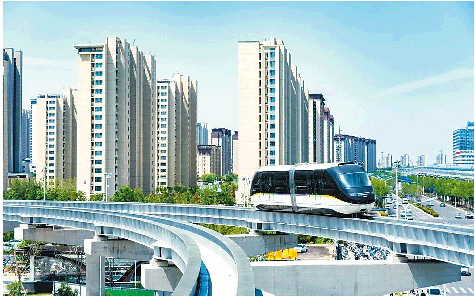
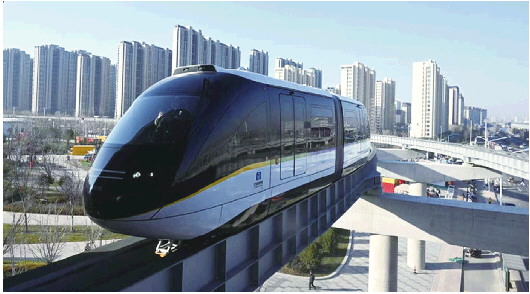
12月6日,山东省首条云巴线路——济南云巴正式开通运营。30.55公里"空中环线"、5分钟高峰发车间 隔、2元起步票价,这份"空中通勤"体验究竟如何?换乘是否如预期便捷?又将为产城融合注入多少动能? 记者于泊升济南报道 市民"少跑腿、省时间" "空中走廊"改写出行体验 6日上午,济南云巴沿线迎来首批乘车"尝鲜"的市民。市民刘敏(化名)从地铁2号线彭家庄站出站,步行3分 钟便登上了云巴内环列车,"车厢小巧精致,像在空中行驶的巴士,比想象中更便捷"。列车启动后,时速逐渐 攀升,独立高架运行,很快便抵达刘敏的目的地彩虹湖。 这条全长30.55公里的低运量轨道交通线,以高架形式串联高新区、历城区,32座车站构成闭环网络,覆盖唐 冶、孙村、两河、庄科四大片区。 对于通勤而言,这条"空中走廊"将改写出行体验。家在祝甸、公司在科创路沿线的程序员王浩(化名)以前 自驾通勤,早晚高峰经常被堵在路上,"现在坐地铁到彭家庄站换乘,坐上云巴就能直达公司,如果是在高峰 期能比开车快20分钟"。 云巴通车后,后期片区不断发展带来的交通压力将会缓解。全线5座换乘站可衔接轨道交通2、4、8号线, 其中彭家庄站可换乘轨道交通2、4号线;唐冶站 ...
如何推动产业与创新融合?2025科创投资大会上,企业家分享真知灼见
Zhong Guo Zheng Quan Bao· 2025-12-07 06:46
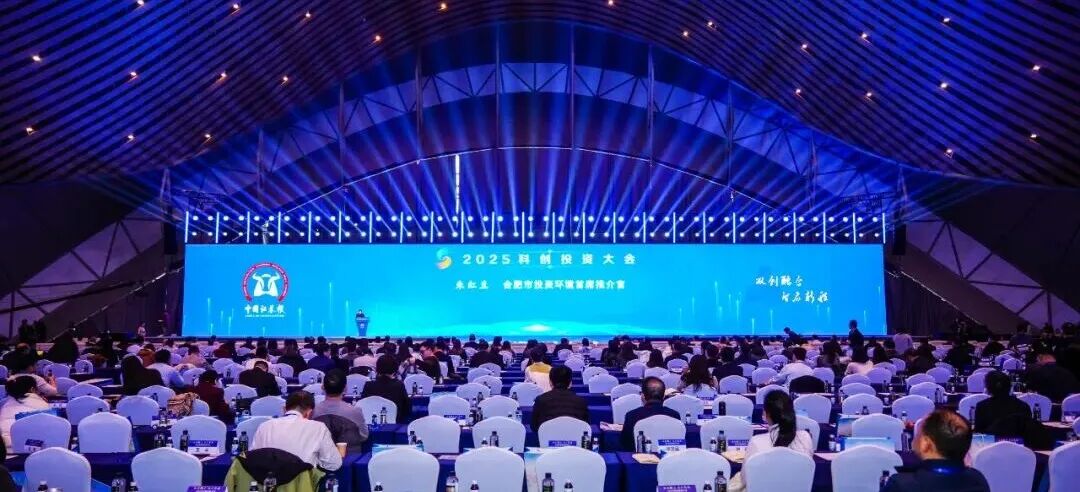
Core Insights - The 2025 Science and Technology Investment Conference highlighted the importance of collaborative development within industrial chains, emphasizing the need for companies to identify their positions and promote industry-wide progress while achieving their own growth [4][6]. Group 1: Industrial Chain Development - The development of industries relies on the collaborative efforts of upstream and downstream players, with a focus on building, strengthening, and extending the industrial chain [4]. - 中科星图 has successfully integrated its business segments into local industrial planning, achieving synchronization with regional development [4]. - 华尔泰 emphasized that extending and supplementing the industrial chain must be based on real market supply and demand to avoid overheating investments and low capacity utilization [4]. Group 2: Technology and Innovation - The competition in global technology is intensifying, making self-controllable core technologies vital for industrial development [6]. - 唐源电气 highlighted the importance of technology, standards, and materials in transitioning from laboratory innovations to mass production [6]. - 科新机电 identified three key issues in innovation to industrialization: understanding customer application scenarios, managing costs while ensuring service quality, and enhancing product usability and efficiency [6]. Group 3: Industry Trends - High-quality enterprise development requires precise understanding of macro environments, industry trends, and market demands [8]. - 元琛科技 suggested promoting "technology going abroad" to mitigate traditional risks associated with overseas investments, emphasizing the need for prior intellectual property arrangements and international standard setting [8]. - 四川具身科技 noted that 2025 is expected to be the year of mass production for humanoid robots, despite existing development bottlenecks [8].
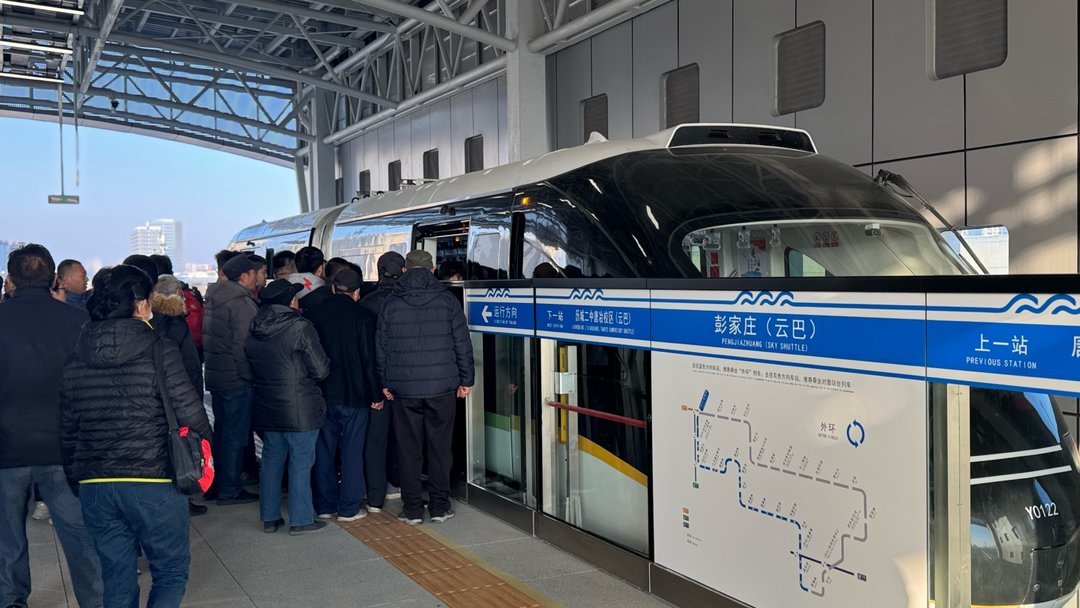
济南云巴通车首日 “尝鲜”市民排起队
Da Zhong Ri Bao· 2025-12-07 01:08
云巴线路途经济南高新区和历城区,串联唐冶片区、孙村片区、两河片区、庄科片区四大片区。在 运营服务方面,济南云巴考虑了市民出行需求。每日运营时间为6:00至22:00,首班车实行多点发 车,方便不同方向乘客出行。工作日高峰时段(7:00-9:00,17:00-19:00)行车间隔约5分钟,平 峰时段及双休日行车间隔约11分钟。实行里程计价票制,采用"递远递减"原则,5公里起步价2元,全程 最高票价仅为5元。 作为一种低运量轨道交通工具,云巴首次进入济南,不少市民对其"萌萌哒"的外形特别感兴趣。与 常规公交和地铁线性交通不同,济南云巴是一条环线,分为内、外环双向循环运行,拥有完全独立路 权,彻底摆脱地面交通拥堵影响。 由于彭家庄站是云巴与地铁2号线的换乘站,市民在此排起了队。记者跟车体验,由于云巴没有红 绿灯限制,速度相较于地面上的私家车和公交车要稍微快一些。每站运行加上停靠的时间大约2分钟, 全线32座车站整体运行时间约一个小时。 12月6日上午9时许,山东第一条云巴线路"济南云巴"开通运营,一大早不少市民过来"尝鲜"。 为了发挥云巴的交通功能,云巴线路串联了济南三条地铁线路,分别是2号线和将于年底开通的4号 ...
5座车站与地铁无缝换乘,济南云巴开通运营
Feng Huang Wang Cai Jing· 2025-12-06 23:59
Core Insights - The Jinan Yunba, a new elevated transportation system, officially commenced operations on December 6, marking Shandong Province's first Yunba line and the only circular Yunba line in the country [1] - The line spans 30.55 kilometers with 32 stations, providing independent right-of-way and enhancing commuting efficiency for residents and employees in the Jinan High-tech East District [1][3] - The Yunba system addresses the "last mile" connectivity issue, significantly reducing travel time between key industrial sectors such as automotive, smart manufacturing, and biomedicine [1][10] Group 1: Operational Features - The Yunba operates on a fully automated system with advanced "train-to-train communication" technology, allowing for autonomous operation and improved reliability [3] - The design allows for a maximum speed of 80 kilometers per hour, utilizing a unique U-shaped track beam and rubber wheel system to navigate complex urban terrains [3] Group 2: Construction and Environmental Impact - The construction of the Jinan Yunba set a record for speed among similar projects in China, minimizing ecological disruption by reducing construction barriers and preserving over 600 mature trees [5] - The project emphasizes efficient integration with the existing mass transit network, featuring five transfer stations that connect seamlessly with Jinan's metro lines [5] Group 3: Strategic Importance - The Yunba is expected to enhance the flow of talent, technology, and capital within the region, addressing commuting challenges and attracting more professionals to the High-tech East District [10] - It plays a crucial role in transforming the area from an "industrial highland" to a "vibrant new city," supporting Jinan's strategic development goals [10]
上海申通地铁股份有限公司关于召开2025年第二次临时股东会的通知
Shang Hai Zheng Quan Bao· 2025-12-05 19:48
Group 1 - The company will hold its second extraordinary general meeting of shareholders in 2025 on December 22 at 14:50 [2][6] - The meeting will be conducted using a combination of on-site and online voting methods [2][3] - Shareholders must register to attend the meeting by December 17, 2025, and can do so via email or in person [12][16] Group 2 - The company plans to transfer 100% equity of its wholly-owned subsidiary, Shanghai Metro Financing Leasing Co., Ltd., to Shanghai Zhangjiang (Group) Co., Ltd. [29][30] - The transaction price will not be less than the audited net assets of 235.6599 million yuan as of September 30, 2025 [29][30] - This transaction is part of the company's strategy to optimize asset allocation and focus on core business areas [30][33] Group 3 - The company has proposed adjustments to its 2025 annual related party transactions, with a total adjustment amount not exceeding 21.04 million yuan [42][40] - The adjustments are based on the actual business needs and are expected to benefit the company's operations [40][41] - The proposal will be submitted for shareholder approval, with related shareholders abstaining from voting [44]

众合科技(000925) - 2025年12月3日众合科技投资者关系活动记录表
2025-12-05 06:04
Group 1: Business Focus and Strategy - The company consolidates its core businesses in rail transportation and semiconductor materials while focusing on spatial information services to create a "three-dimensional transportation" scenario [2] - Future development will emphasize low-altitude and low-orbit satellite sectors, with the establishment of a research institute dedicated to key technologies such as drone flight control and airspace management [2][3] Group 2: Semiconductor Materials Business - The semiconductor materials division has achieved full coverage of power device semiconductor materials from 3 to 8 inches, indirectly entering partnerships with global companies like Toshiba and Sony [3] - The company is building an international business footprint through a "3+1" base strategy, collaborating with various facilities to enhance its semiconductor capabilities [3] Group 3: Product Development and Innovation - Key products in the low-altitude sector include the UniTFCC flight control computer, UniPort smart takeoff and landing field, and UniSpace low-altitude service platform, all of which have received high industry recognition [3][4] - The company is increasing R&D investments in MBSE (Model-Based Systems Engineering) software, which has already generated sales revenue and is applicable across various engineering fields [4] Group 4: Safety and Quality Assurance - The company has developed a safety management system for rail transit and low-altitude operations, achieving SIL4 certification for its control chip, which has been applied over 2,000 kilometers in rail transit [6] - A comprehensive quality safety system has been established, including ISO26262 and AS9100D standards, to ensure safety in both rail and low-altitude operations [6] Group 5: Market Potential and Financial Insights - The flight control computer is expected to account for approximately 8%-10% of the overall value of eVTOL (electric Vertical Take-Off and Landing) vehicles, with market growth anticipated as more eVTOLs achieve certification [4] - The company aims to leverage its technological advantages and market positioning to enhance its competitive edge in the low-altitude and semiconductor sectors [4][6]

云巴并不像地铁,好似公交空中“飞”
Qi Lu Wan Bao· 2025-12-04 21:40
Core Viewpoint - The Jinan High-tech East District Cloud Bus, as the first project of its kind in Shandong Province, aims to address the lack of high-capacity rail transit in the area by connecting various districts effectively [2] Group 1: Cloud Bus Features - The Cloud Bus has a maximum capacity of 140 passengers, making it suitable for areas with lower population density like the High-tech East District [3] - The vehicle operates at speeds of 60-70 km/h, but passengers may experience some swaying due to its rubber wheel design and frequent turns on the circular route [3][4] - The Cloud Bus utilizes BYD's blade battery, which is known for its high energy density and safety, having passed rigorous safety tests [3] Group 2: Station Facilities - Cloud Bus stations are designed to be simple and functional, lacking security checks and some amenities like escalators, but equipped with vertical elevators [5][6] - The design aims for efficiency in commuting, allowing passengers to board without waiting in line, thus enhancing the overall travel experience [6] Group 3: Operational Advantages - The Cloud Bus features a short construction period and low cost, operates independently of ground traffic, and is characterized by high punctuality [7] - It is fully automated and powered by a green, low-carbon energy source, effectively addressing the "last mile" transportation challenge in urban areas [7]