信息技术

Search documents
恒实科技:暂未涉及商业航天、卫星通信等业务
Zheng Quan Ri Bao Wang· 2026-01-21 10:13
证券日报网讯1月21日,恒实科技(300513)在互动平台回答投资者提问时表示,公司暂未涉及商业航 天、卫星通信等业务。 ...

去年四季度重仓方向曝光!融通基金李进:大部分优质科技成长公司估值谈不上泡沫
Mei Ri Jing Ji Xin Wen· 2026-01-21 09:49
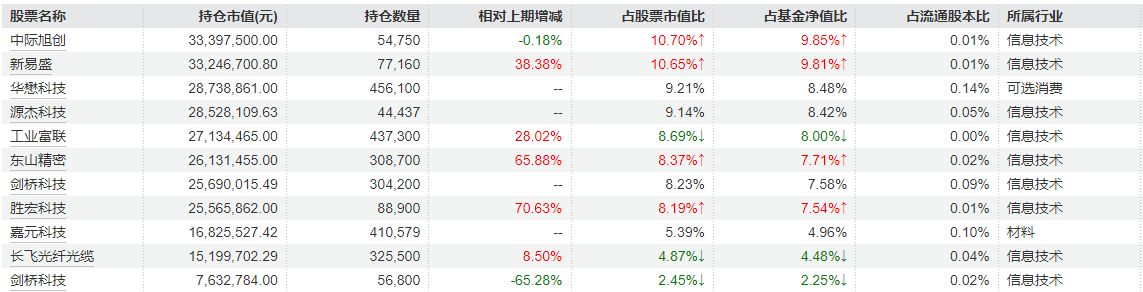
每经记者|任飞 每经编辑|赵云 继融通产业趋势臻选之后,1月21日,包括2025年股基冠军融通产业趋势在内,新生代基金经理李进管理的其余四只产品四季报全部发布。从季内持仓来 看,新进重仓华懋科技、源杰科技、嘉元科技等个股,A股剑桥科技、中际旭创则有所减持。 此外,李进也关注新能源、医药和消费行业的布局,并且在其他在管基金中新进重仓或加仓了相关个股。他在季报总结中表示,光模块和PCB龙头公司估值 处于合理偏低的水平,在后续频率和速率提升的背景下,PCB产品的层数和材料复杂性大幅提升,相关公司的业绩成长持续性能看到较长时间。 作为新生代的基金经理,融通基金李进在2025年打造出一只普通股票型基金的年度业绩"冠军",即融通产业趋势,1月21日,该基金发布2025年第四季度报 告,新增了多只重仓股。 具体来看,华懋科技、源杰科技、港股剑桥科技以及嘉元科技是该基金四季度新进重仓的品种,与往期着重集中在人工智能算力方向上不同,此次季报展示 的重仓股已经有所扩散,在新能源、消费等行业均有涉及。 值得注意的是,李进管理的基金在季内仓位调整上也同永赢科技智选有相似之处。首先,在权益资产的配比上,融通产业趋势四季度末的股票持仓占 ...

迪普科技(300768.SZ):公司及全资子公司通过高新技术企业认定
Ge Long Hui A P P· 2026-01-21 09:28
格隆汇1月21日丨迪普科技(300768.SZ)公布,公司及全资子公司杭州迪普信息技术有限公司(简称"迪 普信息")于近日收到浙江省经济和信息化厅、浙江省财政厅、国家税务总局浙江省税务局批准的《高 新技术企业证书》,上述证书为原高新技术企业证书有效期满后进行的重新认定。根据国家对高新技术 企业的相关税收优惠政策的有关规定,企业连续三年(2025年度至2027年度)享受国家高新技术企业的 相关税收优惠政策。 ...

联想宣布AI云超级工厂已经落地
Zheng Quan Ri Bao· 2026-01-21 08:42
本报讯 (记者贾丽)近日,联想集团有限公司(以下简称"联想")宣布AI云超级工厂已落地中国。此 前,联想董事长兼CEO杨元庆与英伟达创始人兼CEO黄仁勋在联想创新科技大会(TechWorld)上共同 宣布,两家公司将进一步深化在人工智能基础设施领域的合作,联合推出"联想人工智能云超级工厂", 这一合作被视为全球AI算力产业链中一次具有标志性意义的协同:一方是掌握全球最核心GPU与加速 计算机构的英伟达,另一方则是长期深耕服务器、数据中心与液冷技术的联想。 黄仁勋多次公开表示,联想在高性能计算硬件、系统集成与液冷技术的积累,与英伟达在算力架构与加 速计算领域的创新形成了高度互补。杨元庆则指出,在GPU与AI成为新一代通用计算平台的时代背景 下,联想将通过持续深化与英伟达的合作,在AI基础设施领域持续保持技术与交付能力的领先。 在此背景下,联想中国正式发布了"联想AI工厂"整体解决方案,旨在帮助企业数据中心从传统"算力中 心"向高效"AI工厂"的智能化转型,助力其全栈AI技术在中国的应用实践与全面落地。 正如黄仁勋在与杨元庆的对话中强调,混合式企业智能将广泛融合应用到高性能计算、人工智能云、 AI工厂、工业制造、 ...

20cm速递|科创板100ETF(588120)涨超1.2%,市场关注科技主线春季行情
Sou Hu Cai Jing· 2026-01-21 04:58
Group 1 - The core viewpoint of the article highlights the positive market sentiment towards the technology sector, particularly driven by new productivity areas such as brain-computer interfaces, AI applications, and commercial aerospace, with the Sci-Tech Innovation Board 100 ETF (588120) rising over 1.2% [1] - The brain-computer interface sector is stimulated by Neuralink's plan for mass production in 2026, while the commercial aerospace sector remains active as a recent market focus [1] - Continuous favorable policies are being released, including the Ministry of Finance's plan to issue ultra-long-term government bonds to support technological innovation, which is expected to guide trillions of yuan into the market [1] Group 2 - The Sci-Tech Innovation Board 100 ETF (588120) tracks the Sci-Tech 100 Index (000698), which includes 100 securities with larger market capitalization and better liquidity from the Sci-Tech Innovation Board, covering high-tech fields such as information technology and healthcare [1] - The index reflects the overall performance of representative technology innovation enterprises in the Sci-Tech Innovation Board, focusing on a growth-oriented investment style [1] - With the domestic monetary policy remaining moderately loose and foreign and long-term funds accelerating their entry into the market, there is an expectation for a spring market rally [1]
20cm速递|创业板50ETF国泰(159375)涨超1.6%,科技创新主线持续强化
Mei Ri Jing Ji Xin Wen· 2026-01-21 03:04
Group 1 - The core viewpoint emphasizes that technological innovation, particularly in artificial intelligence and smart manufacturing, is a key driver for market indices, with strategic emerging industries pushing the index upward [1] - The "Artificial Intelligence+" initiative has been included in the 14th Five-Year Plan, indicating accelerated technological breakthroughs and industrial applications [1] - The ChiNext 50 Index, representing new economy sectors, is expected to benefit from multiple drivers including technological innovation, industrial upgrades, and policy dividends [1] Group 2 - The ChiNext 50 ETF (159375) tracks the ChiNext 50 Index (399673), which has a daily price fluctuation limit of 20% and selects 50 securities with high average trading volumes from the ChiNext market [1] - The industry allocation of the index is focused on emerging growth areas such as power equipment and new energy, pharmaceuticals, and information technology, reflecting the performance of companies with strong growth and high technological innovation attributes [1]

从康波周期,看AI进入大规模应用阶段的重要信号
Sou Hu Cai Jing· 2026-01-21 00:55
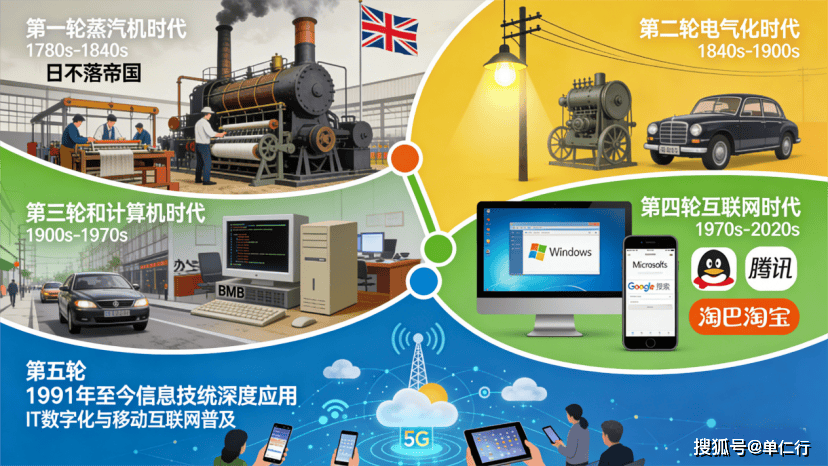
我在最近一个月研究中,越来越确定一件事。 AI,已经不是实验室里的花架子,而是进入到大规模应用,我们正站在一个比2000年互联网、2010年移动互联网更猛的大风口上。 我们用"康波周期"的规律,就能看得更明白。 02 我们先来看康波周期什么?跟我们有什么关系? 康波周期由苏联经济学家尼古拉・康德拉季耶夫在1920年代提出,他通过分析英、法、美等国1780年以来的价格、利率、工业产出等数据,发现经济存在 一种"50-60年"的长期波动规律,这就是康波周期。 它有两个要点: 1、经济每隔50-60年就会换个发动机,这个发动机就是新技术,而非短期政策或市场波动。 01 2、周期内最大的财富机会,出现在"新技术从实验室走向大规模应用"的阶段,比如说我们当前AI所处的关键节点。 我们看前几轮的康波周期就更直观了。 第一轮是蒸汽机时代(1780s-1840s):以前织布靠人工,在纺织机、蒸汽机的帮助下,工业效率大幅提升,英国也成了"日不落帝国"。 第二轮是电气化时代(1840s-1900s):电灯、电报以及内燃机的出现,让德、美逐步超过英国,当时搞电力设备、汽车的,比如福特,就是那轮周期的 龙头。 第三轮是汽车和计算机时 ...
全球经济前景略有改善
Sou Hu Cai Jing· 2026-01-21 00:16
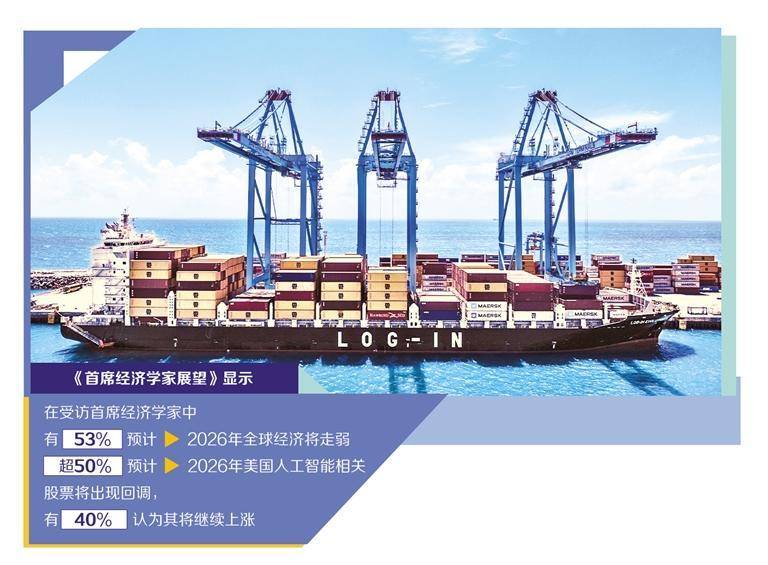
人工智能及其相关资产估值受到密切关注。针对人工智能领域股票的集中上涨态势,首席经济学家们的观点 明显分化。略超半数的受访首席经济学家预计未来1年,美国人工智能相关股票将出现回调,但仍有40%的受 访者认为其将继续上涨。74%的受访首席经济学家认为,若相关资产价格大幅下跌,可能会冲击全球经济。 在人工智能的预期效益问题上,不同地区与行业之间存在显著差异。约五分之四的受访首席经济学家预计, 中美两国有望在2年内实现生产效率提升。信息技术行业将最快融入人工智能,有近四分之三受访首席经济学 家预计该行业将迅速迎来生产力提升。金融服务、供应链、医疗、工程和零售等行业将紧随其后,是人工智 能部署应用的"先行者",预计将在1年至2年内收获成效。报告还指出,人工智能对就业的影响预计将随时间 发生变化。有三分之二受访首席经济学家预计,未来2年就业岗位将小幅缩减。但就长期趋势而言,观点呈现 显著分化,57%的受访首席经济学家认为10年内就业岗位将出现净减少,而32%的受访者则预期随着新兴职 业涌现,就业总量将实现净增长。 债务问题或将引发艰难权衡。报告指出,在当今支出压力增大的背景下,政策制定者面临的一项核心挑战, 就是管理高企 ...
张一婷:有序扩大服务领域自主开放
Jing Ji Ri Bao· 2026-01-21 00:01
Core Viewpoint - The article emphasizes the importance of expanding the service sector's openness in China as a key characteristic of modernization, highlighting its role in economic growth and global competitiveness [1][2]. Group 1: Economic Impact - By 2025, the service sector's value added is expected to account for over 50% of China's GDP for 11 consecutive years, with foreign investment in this sector making up about 70% of the actual foreign capital utilized in the country [1]. - Expanding openness in the service sector can introduce advanced global technologies and high-quality services, enhancing the high-end development of productive services and the quality of life services [1][2]. Group 2: Policy and Strategy - The manufacturing sector has seen the removal of foreign investment restrictions, making the service sector the primary focus for expanding foreign openness [2]. - The article outlines a phased approach to opening the service sector, emphasizing the need for precise regulation and a balance between openness and security [2][3]. Group 3: Implementation and Challenges - Recent efforts have included easing foreign investment restrictions in the service sector and establishing a negative list management model for cross-border service trade, which has been promoted from Hainan Free Trade Port to other regions [3]. - Despite progress, challenges remain, such as the need for greater autonomy in certain regions and industries, and the necessity for improved coordination of entry and operational regulations [3]. Group 4: Future Directions - The article advocates for a proactive approach to institutional openness in the service sector, including reducing restrictions in telecommunications, healthcare, education, and culture, and exploring the removal of foreign ownership limits [4]. - It calls for enhancing pilot programs for service sector openness, focusing on high-end, digital, and green services, and leveraging the advantages of free trade zones [4][5]. Group 5: Risk Management - The establishment of a risk assessment and prevention mechanism for service sector openness is crucial, utilizing technologies like big data and AI to identify potential risks in finance, data, and network security [6].
三省“双城德比”透视区域经济新格局
Xin Lang Cai Jing· 2026-01-20 22:59
Group 1: Economic Competition Overview - The competition among cities in China is intensifying, with notable "provincial derbies" emerging in various regions, reflecting strategic adjustments and economic dynamics [2] - In Northeast China, the competition between Shenyang and Dalian is highlighted, with Shenyang narrowing the GDP gap to less than 500 billion yuan in 2024 [3][4] - In Southeast China, Fuzhou and Quanzhou have been engaged in a long-standing economic rivalry, with Fuzhou reclaiming its position as the leading city after 22 years [6][7] Group 2: Shenyang vs. Dalian - In 2024, Dalian's GDP reached 9516.9 billion yuan, while Shenyang's GDP was 9027.1 billion yuan, marking a significant competition in the Northeast region [3] - Shenyang's economic growth rate of 6.1% in 2023 allowed it to slightly surpass Dalian's 6.0% growth, reducing the GDP gap by 245 billion yuan over two years [3][4] - Dalian's strengths lie in its industrial base and port advantages, while Shenyang focuses on transforming its economy through innovation and high-end manufacturing [4][5] Group 3: Fuzhou vs. Quanzhou - Fuzhou's economic resurgence is attributed to its strategic initiatives, including the development of digital economy, which reached over 450 billion yuan by 2020 [6][7] - The GDP gap between Fuzhou and Quanzhou has shifted from 600 billion yuan in 2018 to a lead of 1142 billion yuan for Fuzhou by 2024 [7] - Quanzhou is undergoing industrial upgrades to maintain its competitiveness, focusing on high-end manufacturing and emerging industries [7][8] Group 4: Tangshan vs. Shijiazhuang - Tangshan became the first city in Hebei to surpass the trillion yuan GDP mark in 2024, while Shijiazhuang's GDP reached 8203.4 billion yuan, indicating a narrowing gap [8][9] - The economic strategies of both cities emphasize integration with the Beijing-Tianjin-Hebei region and the development of their respective urban areas [9][10] - Both cities are focusing on leveraging digital economy and emerging industries to enhance their economic prospects in the coming years [10]