
新材料

Search documents
安徽国资敲定入主杉杉股份 17.9万股东的“定心丸”还是“新赌局”?
Jing Ji Guan Cha Wang· 2026-02-09 07:59
Core Viewpoint - The recent surge in the stock price of Singshan Co., Ltd. (杉杉股份) is attributed to a significant change in control, with the controlling shareholder transitioning to Anhui Wanwei Group and the actual controller becoming the Anhui Provincial State-owned Assets Supervision and Administration Commission [1][2] Group 1: Control Change Background - The control change was initiated by the sudden death of the founder, Zheng Yonggang, in February 2023, leading to a power struggle between his son and widow [2] - In September 2025, a restructuring investment agreement was signed by a consortium led by Ren Yuanlin, but it failed to gain creditor approval, resulting in the dissolution of the agreement in November 2025 [2][3] Group 2: New Control Agreement - A new restructuring investment agreement was signed on February 6, 2026, with Wanwei Group acquiring 13.50% of shares at approximately 4.99 billion yuan, while retaining 8.38% under the restructured entity [3] - Wanwei Group will control 21.88% of voting rights and is required to pay a deposit of 1.43 billion yuan within seven working days [3] Group 3: Financial Performance and Market Position - Singshan Co. is expected to achieve a net profit of 400 to 600 million yuan in 2025, marking a turnaround from previous losses, with its core businesses contributing significantly to profits [4] - The company has established itself as a key player in the artificial graphite anode materials sector, with a strong customer base including leading battery manufacturers [4] Group 4: Implications of State Ownership - The entry of state-owned capital is anticipated to enhance creditworthiness, reduce financing costs, and introduce policy resources, but it does not guarantee a premium in market valuation [5] - The effectiveness of the new management will depend on their ability to adapt to market dynamics and provide strategic investments rather than merely stabilizing the situation [5] Group 5: Investor Considerations - Investors face challenges regarding the new governance structure, potential control disputes, and the need for transparency in information disclosure [5] - The long-term success of Singshan Co. will hinge on the new management's ability to deliver on performance promises and maintain shareholder trust through clear communication and financial results [5]

杉杉股份公告重整进展,控股权或将易主国资
2 1 Shi Ji Jing Ji Bao Dao· 2026-02-09 07:56
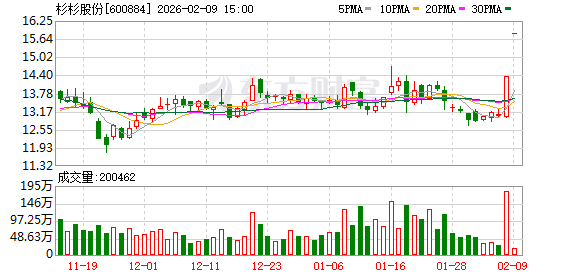
经过多轮推进,杉杉集团的重整进程迎来重要转折。 2月8日晚,杉杉股份(600884.SH)公告签署重整投资协议。受该消息影响,杉杉股份连续两个交易日涨停,2月9收盘报收 15.81元,最新市值356亿元。 | 分析 > 1分 5分 15分 50分 bU分 日 周 月 更多 | | | | | | 19 @ @ BE BE AND JAN BE W U | | | | | | | | | 移移股份 1 立即 | | | --- | --- | --- | --- | --- | --- | --- | --- | --- | --- | --- | --- | --- | --- | --- | --- | --- | | 15.81 +1.44 +10.02% | | | | 600884[杉杉股份]13:46 价 15.81 涨跌 1.44(10.02%) 均价 15.81 成交量 26 成交金额 4万 | | Win.d人气榜 第170名 | 2026/02/09 | | ಡಿ | | | | | | 600884 × 8 | | | 通融 2 四日 | | | | | | | | | | | SSE C ...

北方经济十强市,竞争更激烈了
3 6 Ke· 2026-02-09 06:50
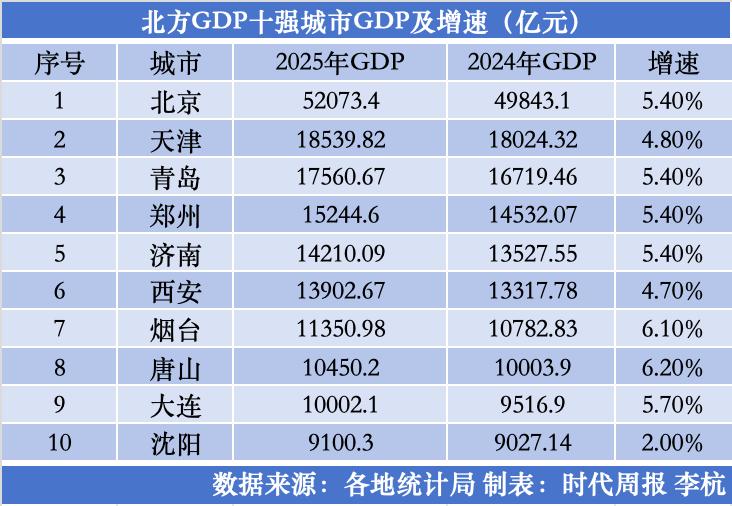
Core Insights - The competition among northern cities is intensifying, with a focus on economic growth and structural optimization as they aim to break through existing barriers [1][6]. Group 1: Economic Performance of Northern Cities - In 2025, the top ten northern cities by GDP are Beijing, Tianjin, Qingdao, Zhengzhou, Jinan, Xi'an, Yantai, Tangshan, Dalian, and Shenyang, with Beijing leading at 52,073.4 billion yuan [2][3]. - Seven out of the ten cities have GDP growth rates exceeding the national average of 5%, with Tangshan achieving the highest growth rate of 6.2% and Shenyang the lowest at 2% [3][4]. - Beijing is the first northern city to surpass the 50 trillion yuan mark, showcasing its economic resilience and high-end service industry advantages [3][4]. Group 2: Competitive Dynamics - Tianjin maintains its position as the "second city of the north" with a GDP of 18,539.82 billion yuan, significantly ahead of Qingdao by 979.15 billion yuan [3][4]. - Qingdao is narrowing the GDP gap with Tianjin, with a notable increase in its industrial output, particularly in marine economy and emerging industries [5][6]. - The competition between Tianjin and Qingdao is expected to intensify, with Qingdao's growth in the Jiaodong Economic Circle enhancing its position [5][6]. Group 3: Challenges and Opportunities - Despite some progress, the economic disparity between northern and southern cities remains significant, with northern provinces' GDP share decreasing slightly from 35.2% to 35.1% [6][7]. - The northern cities are encouraged to leverage policy benefits to shift from total output growth to structural optimization, focusing on industrial collaboration and green energy transitions [8][9]. - Shenyang is on track to become the second "trillion-yuan city" in Northeast China, with a GDP of 9,100.3 billion yuan, but faces challenges due to its lower growth rate [8][9].
河南鹤壁:地区生产总值增速全省第一
He Nan Ri Bao· 2026-02-09 05:09
Economic Performance - The total GDP of Hebi City reached 114.41 billion yuan, with a year-on-year growth of 6.6%, ranking first in the province [1] - The added value of the secondary industry was 55.88 billion yuan, with a year-on-year growth of 6.5%, contributing 3.4 percentage points to GDP growth [1] - The added value of the tertiary industry was 50.72 billion yuan, with a year-on-year growth of 7.3%, contributing 3 percentage points to GDP growth [1] Industrial Development - Hebi City has focused on technological innovation to drive industrial upgrades, enhancing economic stability and internal momentum [2] - The commercial aerospace sector has consolidated its advantages, and the production capacity of functional new materials has accelerated [2] - The market value of Shijia Photon has increased approximately fourfold over the past year, indicating strong performance in the capital market [2] Business Environment - Hebi City has optimized the business environment and deepened reforms to enhance efficiency, effectively stimulating the vitality of business entities [2] - The consumer market is steadily recovering under policy incentives, with a rapid integration of online and offline channels [2] - New business formats and models are emerging, contributing to a solid foundation for stable economic growth [2]
陕西省政协常委、民盟陕西省委会副主委张涛:唱响“双城记” 下好“一盘棋”
Zhong Guo Hua Gong Bao· 2026-02-09 02:44
Core Viewpoint - The government of Shaanxi Province aims to optimize regional layout and enhance collaborative development among its three distinct areas: Northern Shaanxi, Guanzhong, and Southern Shaanxi, focusing on energy supply and carbon emission control [1] Group 1: Regional Development Strategy - Shaanxi Province's Governor Zhao Gang emphasized the need for a coordinated development strategy to leverage the dual driving forces of Xi'an and Yulin [1] - Zhang Tao, a prominent local leader, advocates for a comprehensive regional development strategy that promotes economic growth points and high-quality development across the province [1] Group 2: Industry Development Initiatives - Xi'an is encouraged to develop emerging industries such as biomanufacturing and new materials, facilitating the flow of technology, talent, and capital throughout the province [1] - Yulin is positioned to enhance its traditional energy sector by developing a full industrial chain in solar, wind, and hydrogen energy, aiming to create a world-class high-end energy chemical base [1] Group 3: Collaborative Models and Policies - The establishment of new cooperative models like "Sci-tech Innovation Zones" and "Industrial Zones" is proposed to foster collaboration between Xi'an and Yulin, creating a beneficial cycle of research and development [1] - A new framework for county-level collaborative development is suggested, focusing on merging similar industrial parks and promoting resource integration across neighboring counties [2] - Policies for cross-regional cooperation are to be developed, addressing the distribution of benefits from industrial transfers and detailing tax sharing and resource flow measures [2]
大基金千亿引领万亿联动助推硬科技 精准落子重点布局激发产业投资活力
Chang Jiang Shang Bao· 2026-02-08 23:48
Group 1 - The National Industry Investment Fund (referred to as "Big Fund") is a core force in venture capital, leveraging hundreds of billions in fiscal funds to mobilize trillions in social capital in key national sectors, thus creating a new investment landscape in China's industry [1][2] - By 2025, the Big Fund aims to lead investments in critical industries, becoming a "weather vane" for the transition towards hard technology and high value-added sectors, contributing to high-quality economic development [1][2] Group 2 - The Big Fund system continues to expand, with the establishment of the National Venture Capital Guidance Fund and the National Integrated Circuit Industry Investment Fund, transitioning from simple capital injection to a collaborative model of "capital + industry + technology" [2][3] - The National Venture Capital Guidance Fund, launched at the end of 2025, is designed to leverage hundreds of billions in fiscal funds to mobilize trillions in social capital, supporting hard technology enterprises with a longer investment horizon [2][3] Group 3 - Various state-owned enterprises and local government funds are increasing investments in hard technology, with significant funds established to support sectors like artificial intelligence and semiconductors [3] - By 2025, 53% of newly established guidance funds allow for longer-than-10-year durations for sub-funds, effectively reducing the risk of forced exits during market downturns [3] Group 4 - The improvement of market-oriented operational mechanisms has further enhanced the investment vitality of the Big Fund, with more flexible return constraints and differentiated return ratios improving capital allocation efficiency [4] Group 5 - The Big Fund focuses on strategic emerging industries and weak links in the industrial chain, investing in early-stage innovative companies to support high-quality economic development [5] - The semiconductor industry is a key focus, with the National Integrated Circuit Industry Investment Fund holding over 100 billion yuan in total market value across 30 A-share listed companies, emphasizing a strategy of "full-chain breakthroughs" [5] Group 6 - Strategic emerging industries such as artificial intelligence, aerospace, and new materials are also key areas of investment for the Big Fund [6] Group 7 - In January 2025, the National Artificial Intelligence Industry Investment Fund was established with a total scale of 60.06 billion yuan, focusing on a layout that includes "chips + data centers + industrial digitalization" [7] - The Big Fund is actively investing in humanoid robots and other future industries, positioning itself to accelerate the growth of hard technology enterprises [7]
特变电工27亿买矿保供煤炭资源 四大主业并驾齐驱总资产2244亿
Chang Jiang Shang Bao· 2026-02-08 23:42
Core Viewpoint - TBEA has made a significant investment in expanding its mineral resources by acquiring the exploration rights for the Kumusu No. 5 coal mine in Xinjiang for 2.705 billion yuan, which is a strategic move to support its energy business and power supply [1][2][3] Group 1: Investment and Acquisition - TBEA's subsidiary, Xinjiang Tianchi Energy Co., won the bidding for the Kumusu No. 5 exploration rights, with the area covering 65.85 square kilometers [2][3] - The acquisition is part of TBEA's broader strategy to strengthen its core energy business, which includes coal, gold, bauxite, and lithium resources, creating a closed-loop industrial chain from upstream raw materials to midstream manufacturing [3][4] Group 2: Financial Performance - For the first three quarters of 2025, TBEA reported revenues of 72.92 billion yuan and a net profit attributable to shareholders of 5.484 billion yuan, both showing year-on-year growth [1][6] - The company's total assets reached a historical high of 224.4 billion yuan by the end of the third quarter of 2025, reflecting significant growth in asset scale [7] Group 3: Business Segments - TBEA operates in four main sectors: power transmission and transformation, new energy, energy, and new materials, with coal business contributing approximately 20% to its revenue [4][5] - The coal business generated 8.832 billion yuan in revenue in the first half of 2025, accounting for 18.27% of the total revenue [4]

地区生产总值增速全省第一
Sou Hu Cai Jing· 2026-02-08 23:07
Economic Performance - The total GDP of Hebi City reached 114.41 billion yuan, with a year-on-year growth of 6.6%, ranking first in the province [1] - The added value of the secondary industry was 55.88 billion yuan, growing by 6.5% year-on-year, contributing 3.4 percentage points to GDP growth with a contribution rate of 51.1% [1] - The added value of the tertiary industry was 50.72 billion yuan, increasing by 7.3% year-on-year, contributing 3 percentage points to GDP growth with a contribution rate of 44.9% [1] - The structure of the three industries adjusted to 6.8:48.8:44.4 [1] Industrial Development - Hebi City has focused on technological innovation to drive industrial upgrades, enhancing economic stability and internal momentum [2] - The city has solidified its advantages in commercial aerospace and accelerated the release of functional new materials production capacity [2] - The market value of Shijia Photon has increased approximately fourfold over the past year, indicating strong performance in the capital market [2] - The construction of "One Room and Two Cities" has been effectively promoted, showcasing the deep integration of technological and industrial innovation [2] Business Environment - Hebi City has continuously optimized the business environment and deepened reforms to improve efficiency in administration [2] - Policies to assist enterprises have been implemented effectively, stimulating the vitality of business entities [2] - The consumer market has steadily recovered under policy incentives, with a rapid integration of online and offline channels and the emergence of new business models [2]
永杰新材料股份有限公司关于使用部分暂时闲置募集资金进行现金管理到期赎回并继续进行现金管理的公告
Zhong Guo Zheng Quan Bao - Zhong Zheng Wang· 2026-02-08 22:37
Core Viewpoint - The company has approved the use of temporarily idle raised funds for cash management, aiming to enhance cash asset returns and maximize shareholder value, with a maximum amount of RMB 50 million allocated for this purpose [1][9]. Investment Overview - **Investment Purpose**: The objective is to improve the efficiency of raised fund utilization and increase company returns while ensuring that the investment does not affect the construction of projects funded by the raised capital [3]. - **Investment Amount**: The cash management amount is set at RMB 12 million [4]. - **Source of Funds**: The funds for this cash management initiative will come from temporarily idle raised funds [4]. Fundraising Details - The company successfully raised a total of RMB 1,013.52 million through its initial public offering, with a net amount of RMB 931.92 million after deducting issuance costs [5][7]. - The raised funds have been deposited into a designated special account, and a verification report has been issued confirming the funds' arrival [5]. Investment Projects - The company plans to invest in structured deposits as part of its cash management strategy, with an investment amount of RMB 12 million [6]. Approval Process - The board of directors and the supervisory board approved the cash management proposal on March 17, 2025, allowing the use of idle funds for cash management within a 12-month period [9]. Impact on the Company - The cash management initiative is designed to not affect the implementation of fundraising projects or the safety of the raised funds, while also improving the efficiency of idle funds and generating investment returns [11].
辽宁省地方金融管理局表示 全面提升整体效能 做强做优资本市场“辽宁板块”
Zhong Guo Zheng Quan Bao· 2026-02-08 22:06
Core Viewpoint - Liaoning Province is implementing a "Capital Market Enhancement Project" to strengthen and optimize its capital market, addressing new demands for revitalization and development in the region [1][4]. Group 1: Capital Market Development - The "2026 Capital Market Liaoning Action" event successfully launched, gathering key stakeholders to kick off the development of the capital market in Liaoning [2]. - Liaoning has a solid industrial foundation and is focusing on upgrading four trillion-yuan industrial bases, emphasizing the integration of traditional industries with new technologies [2][3]. - The province has seen significant growth in direct financing, with a 41.3% year-on-year increase in 2025, marking the highest growth rate in a decade [3]. Group 2: Innovation and Financial Products - Various innovative financial products have been introduced, including the first public REITs and QFLP fund in Northeast China, and a significant increase in financing through science and technology bonds [3]. - The province has established a service system covering the entire lifecycle of enterprises, aiming to enhance compliance and capital market engagement [5]. Group 3: Long-term Development Mechanism - A series of pragmatic policies and projects are being implemented to establish a long-term development mechanism for the capital market in Liaoning [4]. - The province is focusing on nurturing high-quality companies for listing and expanding bond financing, with a goal of creating a robust pipeline of potential public companies [4][5]. Group 4: Addressing Challenges - Despite progress, there are concerns about the relatively low level of capital market development compared to economic size, and issues related to compliance and market integrity need to be addressed [6]. - Recent measures have been introduced to optimize the financial ecosystem, targeting issues like financial fraud and enhancing market confidence [6]. Group 5: Future Initiatives - In 2023, Liaoning will implement an enterprise listing action plan, emphasizing provincial coordination and precise services to boost the capital market's role in economic development [7].