文化产业

Search documents
聚焦“十五五”规划建议|营造良好文化生态,提升文化原创能力
Xin Hua She· 2025-11-21 07:08
Core Viewpoint - The proposal for the 15th Five-Year Plan emphasizes the importance of fostering a good cultural ecosystem, enhancing cultural originality, and promoting high-quality creations in various fields such as news publishing, broadcasting, and the arts [1][2]. Group 1: Cultural Originality - Cultural originality is seen as a comprehensive reflection of a nation's ideological depth, aesthetic vitality, and creative courage, with China's rich civilization providing a strong foundation for this originality [1]. - During the 14th Five-Year period, China's cultural originality has significantly improved, with the cultural industry expected to achieve a revenue of 191,423 billion yuan in 2024, representing a 37.7% increase compared to 2020 [1]. Group 2: Recommendations for Improvement - To create a favorable cultural ecosystem, a complete cultural production, evaluation, and market system needs to be established, with suggestions including enhancing intellectual property protection, establishing a scientific IP transformation mechanism, and increasing support for original projects through various funds [2]. - There is a call to break traditional educational models to provide young creators with broader growth opportunities, encouraging them to innovate and unleash their imagination [2]. Group 3: Policy Support and Future Outlook - Strong policy support is viewed as a solid foundation for cultural innovation, with the planning proposal emphasizing support for originality, creating a more favorable development environment for creators [2]. - The continuous optimization of the cultural ecosystem and the enhancement of originality are expected to lead to a more prosperous development of Chinese culture, injecting strong spiritual power into national rejuvenation [2].
科技+文化融合,正为“一带一路”书写新叙事
Zhong Guo Jing Ji Wang· 2025-11-21 02:53
Core Insights - The integration of technology and culture is reshaping the "Belt and Road" initiative, moving beyond traditional infrastructure to a more relatable and human-centered approach [1][10] - The emergence of new composite talents who understand both art and technology is driving cultural exchanges and providing new opportunities for the cultural industry [3][9] - Chinese enterprises are leading the way in changing how cultural heritage is transmitted and disseminated through advanced technologies [4] Group 1: Cultural and Technological Integration - The third "Belt and Road" Cultural and Technological Integration Development Conference featured representatives from 15 countries discussing the coexistence of technology and art in the AI era [1] - The conference opened with a thematic drama that showcased the dialogue between science and art, as well as traditional and digital expressions [1] Group 2: Emerging Cultural Products - New industries such as animation, gaming, and esports are becoming frontline platforms for cultural value transmission due to their inherent technology and culture attributes [5] - The animated film "Ne Zha" achieved over 15.4 billion yuan in box office revenue, showcasing the successful integration of traditional Chinese ink painting with 3D animation [6] - The CS Shanghai Major esports event attracted nearly 10,000 overseas viewers, generating approximately 370 million yuan in tourism and consumption [6] Group 3: Global Cultural Exchange - Esports is emerging as a universal language connecting the new generation across countries, with the CS Major event reaching around 2.3 billion global live stream viewers [8] - Successful cultural products create broad communication platforms, allowing diverse audiences to connect through shared interests, aligning with the "Belt and Road" initiative's goal of mutual understanding [8] Group 4: Corporate Strategies - The "Belt and Road" vision presents opportunities and higher demands for cultural and technological enterprises, necessitating actions to create globally resonant cultural products [9] - Perfect World emphasizes three strategies: leveraging technology for continuous evolution, reshaping cultural product value through experience, and infusing cultural essence into global dissemination [9] - The game "Persona 5: Phantom of the Night" received a nomination for TGA 2025 Best Mobile Game and topped the iOS free game charts in 35 countries and regions after its overseas launch [9]



第六届长三角文博会开幕 “文化赋能”显活力
Zhong Guo Xin Wen Wang· 2025-11-21 02:19
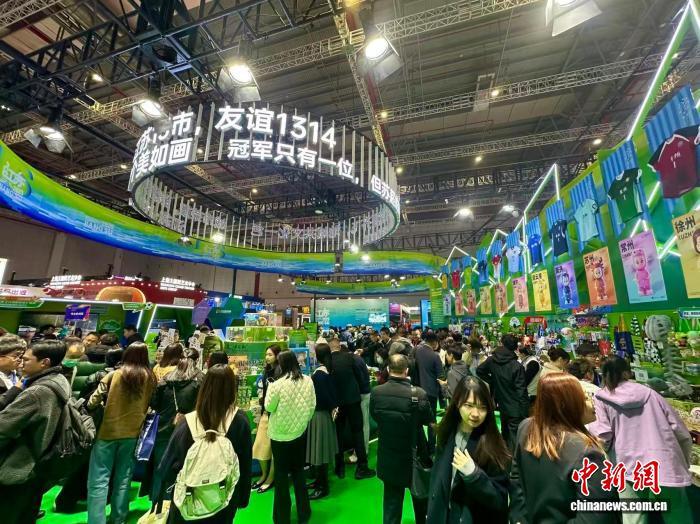
Core Viewpoint - The sixth Yangtze River Delta International Cultural Industry Expo showcases over 1,500 exhibitors, emphasizing the theme of "cultural empowerment" in economic and social development [1][3]. Group 1: Economic Growth and Trends - The Yangtze River Delta region is leveraging digital economy and cultural economy to create a globally significant modern cultural industry ecosystem [3]. - According to the "Blue Book on Cultural Industry Development," from 2020 to 2024, the revenue and profit of cultural enterprises in the region have maintained high growth rates, averaging 7.7% and 27.6% respectively [3]. - The new cultural business formats have shown remarkable performance, with an average revenue growth rate of 38.1%, becoming a key driver of rapid cultural industry development in the region [3]. Group 2: Innovative Exhibits and Engagement - The expo features innovative exhibits such as the "Drama Convenience Store," which brings the vibrant performing arts atmosphere into the venue, showcasing various cultural and creative products [5]. - The "Su Chao" (Jiangsu Province Urban Football League) IP has attracted attention, with creative products like blind boxes and themed fans driving consumer engagement and sales [5]. - Over 30 immersive projects are presented at the expo, such as the VR project "Sky Warrior," which combines traditional Chinese astronomy with technology, creating new cultural consumption scenarios [5][6]. Group 3: Future Directions - Research indicates four major trends in the development of the cultural industry in the Yangtze River Delta: generative artificial intelligence reshaping the industry landscape, enhanced cultural empowerment effects, data-driven quality upgrades, and integrated development of the digital cultural industry [6].
第六届长三角文博会开幕 “文化赋能”显活力
Zhong Guo Xin Wen Wang· 2025-11-20 15:59
Core Insights - The sixth Yangtze River Delta International Cultural Industry Expo has commenced, showcasing over 1,500 exhibitors and emphasizing the theme of "cultural empowerment" [1][3] Group 1: Economic Growth and Trends - The Yangtze River Delta region is leveraging digital economy and humanistic economy to create a globally significant modern cultural industry ecosystem [3] - According to the "Yangtze River Delta Cultural Industry Development Blue Book," from 2020 to 2024, the revenue and total profit of regulated cultural enterprises in the region have maintained high growth rates, averaging 7.7% and 27.6% respectively [3] - The new cultural formats have shown remarkable performance, with an average revenue growth rate of 38.1%, becoming a key driver of rapid development in the cultural industry [3][6] Group 2: Innovative Exhibits and Engagement - The expo features innovative exhibits such as the "Drama Convenience Store," which brings the vibrant performing arts atmosphere into the venue and includes interactive experiences with popular show actors [5] - The "Su Super" IP has gained attention, showcasing various cultural products that blend traditional craftsmanship with modern elements, attracting younger audiences [5] - Over 30 immersive projects are presented at the expo, such as the VR project "Sky Warrior," which combines traditional Chinese astronomy with LBE technology, creating new cultural consumption scenarios [5][6] Group 3: Future Directions - Research indicates four major trends in the development of the cultural industry in the Yangtze River Delta: generative artificial intelligence reshaping the industry landscape, enhanced cultural empowerment effects on economic and social development, data-driven quality upgrades in the cultural industry, and deepening integrated development of the digital cultural industry [6]
“十五五”开局之年,北京朝阳地区生产总值预计将破万亿元
Xin Jing Bao· 2025-11-20 13:27
Core Insights - Chaoyang District is projected to surpass a GDP of 1 trillion yuan by 2026, marking a significant milestone in its economic development [1][3] - The district has shown robust growth, with GDP increasing from 736.48 billion yuan at the end of the 13th Five-Year Plan to an estimated 923.01 billion yuan in 2024, accounting for nearly 20% of Beijing's total GDP [1][2] - Chaoyang District is a leader in various sectors, particularly in finance, which contributes around 20% to the district's GDP, and has seen a growth rate 6 percentage points higher than the city average in the first half of the year [2][3] Economic Performance - Fixed asset investment in Chaoyang has consistently remained above 100 billion yuan, with retail sales and local public budget revenues each accounting for about 20% of the city's totals [1] - The district hosts over 1,800 financial institutions, including nearly 400 foreign-funded entities, which represent 65% of the city's total [2] - The information and technology service sectors have increased their GDP contribution to 24.9%, up by 3.7 percentage points since the end of the 13th Five-Year Plan [2] Industry Development - Chaoyang District has focused on enhancing its leading industries, particularly in international finance, digital economy, and business services, resulting in 87 institutional innovations and 15 original reform measures that are being promoted nationwide [3] - The district has established itself as a hub for international business, hosting over 50% of the city's international conferences and more than one-third of international exhibitions [3] - Future development plans include over 16 million square meters of available space for urban integration and diverse functional areas to support business growth [3] Strategic Focus - During the 14th Five-Year Plan, Chaoyang aims to elevate its international development capabilities, leveraging technological innovation to enhance productivity and modernize its industrial system [3] - The district will continue to prioritize expanding domestic demand and promoting cultural prosperity while improving social welfare services [3]
大湾区文投会准备好了:为资金找项目 为项目找资金
2 1 Shi Ji Jing Ji Bao Dao· 2025-11-19 02:13
Core Insights - The cultural industry is becoming a focal point for technology and capital, with the 2025 Guangdong-Hong Kong-Macao Greater Bay Area Cultural Industry Investment Conference (GBA Cultural Investment Conference) scheduled for November 26-28, aiming to facilitate efficient connections between cultural enterprises and investment institutions [1][3] - This year's conference will feature an upgraded structure of "1+8+N" activities, including one main conference, eight specialized investment roadshows, and various supporting services, aiming to create a low-cost, one-stop transaction platform [1][4] - The conference theme is "Finding Projects for Funds, Finding Funds for Projects," emphasizing the gathering of quality projects and the invitation of leading institutions [1][4] Investment Opportunities - A total of 298 innovative cultural industry projects have been collected for this year's conference, with 60 selected for live roadshows, indicating a strong demand for financial support in the cultural sector [1][6] - Previous conferences have shown a high conversion rate, with 28 out of 58 projects from the first two conferences securing financing, totaling over 9.5 billion yuan [2] Policy and Industry Integration - The conference aligns with the recent introduction of six major policy packages aimed at promoting high-quality development in the cultural industry, focusing on the integration of culture, finance, and technology [3][4] - The event will also feature a special session for projects from Hong Kong and Macao, with approximately two-thirds of the projects coming from the Greater Bay Area [4][5] Participation and Engagement - Over 80 investment institutions have registered to attend, with expectations to exceed 100 by the registration deadline, significantly higher than the previous year's 60 [7] - Notable investment institutions include those managing over 20 billion yuan, such as Zhongwang Capital and Hillhouse Capital, indicating strong interest from major players in the industry [7]
【财经分析】激活“秦文化IP” 古都咸阳书写非遗经济新篇章
Xin Hua Cai Jing· 2025-11-17 15:50
新华财经西安11月17日电(记者张天源李亭吕昂)当千年技艺遇上重点产业链,会迸发出怎样的发展动 能?咸阳以"文化IP"为笔,在"保护"与"发展"的双重命题下,书写了一份非遗经济创新发展的高质量答 卷。 咸阳市位于陕西省关中平原中部,是秦文化核心区。近年来,当地深挖人文资源提升区域知名度、辨识 度,强化文商旅多业态跨界融合,推动文旅产业快速发展。据咸阳市文化和旅游局统计,2025年1-9月 全市累计接待国内游客9084.6万人次,同比增长5.6%,接待国内游客总花费618.78亿元,同比增长 7.17%。 挖掘独有文化打造特色IP 文化产业和旅游产业密不可分。近年来,随着国内旅游市场逐步提档升级,如何挖掘地区独有文化IP, 成为各地文旅产业差异化竞争的重点。 作为秦朝建都之地,咸阳拥有秦咸阳城遗址、汉阳陵等国家级文化地标,以及茯茶制作、弦板腔、旬邑 彩贴剪纸等600多项非遗资源。咸阳以秦文化为魂,以非遗活化为脉,在"守正"与"创新"的双重命题 下,探索了一条文化遗产带动文旅产业高质量发展的新路径。 "咸阳打造文旅IP的核心是'秦文化+'战略。"咸阳市文旅局相关负责人介绍,近年来,当地以"秦文化"为 核心,辅以" ...
专家学者南京共话文化与经济互促共荣
Zhong Guo Xin Wen Wang· 2025-11-17 06:57
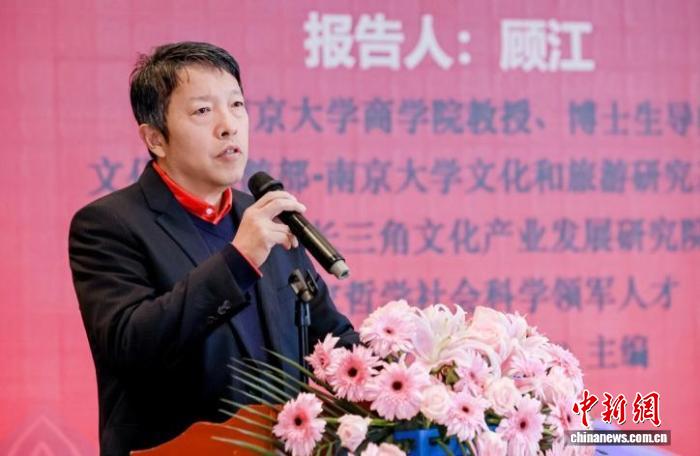
Core Insights - The fifth Cultural Industry Academic Annual Conference was held in Nanjing from November 14 to 16, focusing on the theme of "Mutual Promotion and Prosperity of Culture and Economy" [1] - Experts discussed new paths for high-quality development in the cultural industry, emphasizing the importance of cultural confidence and innovation [1][4] Group 1: Development Directions - Future development of the cultural industry should transition from cultural confidence to cultural awareness, from production-oriented to creation-oriented, from integrated development to structural reshaping, and from narrative dissemination to civilization co-construction [1] - The "14th Five-Year Plan" provides a grand blueprint for the development of the cultural industry, positioning it as a crucial support for Chinese-style modernization [1] Group 2: Innovation and Technology - The role of data elements and artificial intelligence in driving innovation within the cultural industry was highlighted, with examples such as the Dunhuang Digital Art Exhibition and the Yungang Grottoes' smart preservation [3] - Technological advancements like Sora and ChatGPT are reshaping human-machine relationships, offering new possibilities for co-creation in culture [4] Group 3: City Image and Cultural IP - The generation of city IP requires activating grassroots "self-communication" mechanisms, solidifying industrial foundations, and exploring original cultural genes [3] Group 4: Discussions and Awards - Three roundtable forums were held, focusing on topics such as "Innovations in Humanistic Economics Theory and Practice," "Digital Intelligence and High-Quality Development of Cultural Industry," and "Cultural Consumption and Business Model Innovation" [4] - An award ceremony recognized outstanding papers, with five first prizes and eighteen second prizes awarded during the conference [7]
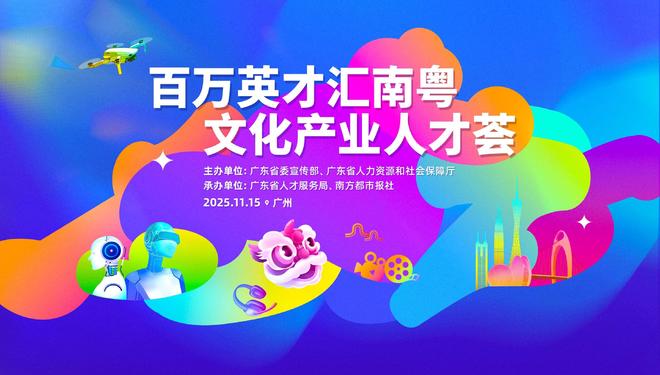
最高年薪70万,“百万英才汇南粤——文化产业人才荟”活动成功举办
Nan Fang Nong Cun Bao· 2025-11-15 12:54
Core Insights - The event "Million Talents Gathering in South Guangdong" aims to showcase the high-quality development of the cultural industry in Guangdong, featuring over 100 cultural enterprises and offering 18,000 quality job positions [1][10]. Group 1: Event Structure - The event consists of three main components: a lecture series at the Guangdong-Hong Kong-Macao Greater Bay Area Talent Port, a cultural industry policy exhibition and creative market, and a specialized recruitment fair [3][11]. - The lecture series focuses on policy guidance, practical sharing, and supply-demand matching, featuring industry leaders who discuss trends in cultural tourism, game design, film creation, and media operations [3][10]. Group 2: Policy and Creative Market - The policy exhibition and creative market integrate policy promotion with interactive experiences, showcasing over 20 vocational schools and various quality cultural enterprises [5][10]. - The event features immersive experiences in areas such as cultural technology, intangible cultural heritage, film, and animation, highlighting Guangdong's innovative cultural vitality [5][8]. Group 3: Recruitment Fair - The recruitment fair targets key sectors including film, performing arts, animation, online gaming, and digital media, providing a one-stop service for job matching [10][11]. - Over 18,000 job positions are available, with more than 8,000 positions offered on-site and over 10,000 online, including high-value roles with salaries exceeding 20,000 yuan per month [10][11]. - The event attracts major cultural enterprises and digital content leaders, emphasizing the commitment of Guangdong's cultural industry to attract talent [10][11].



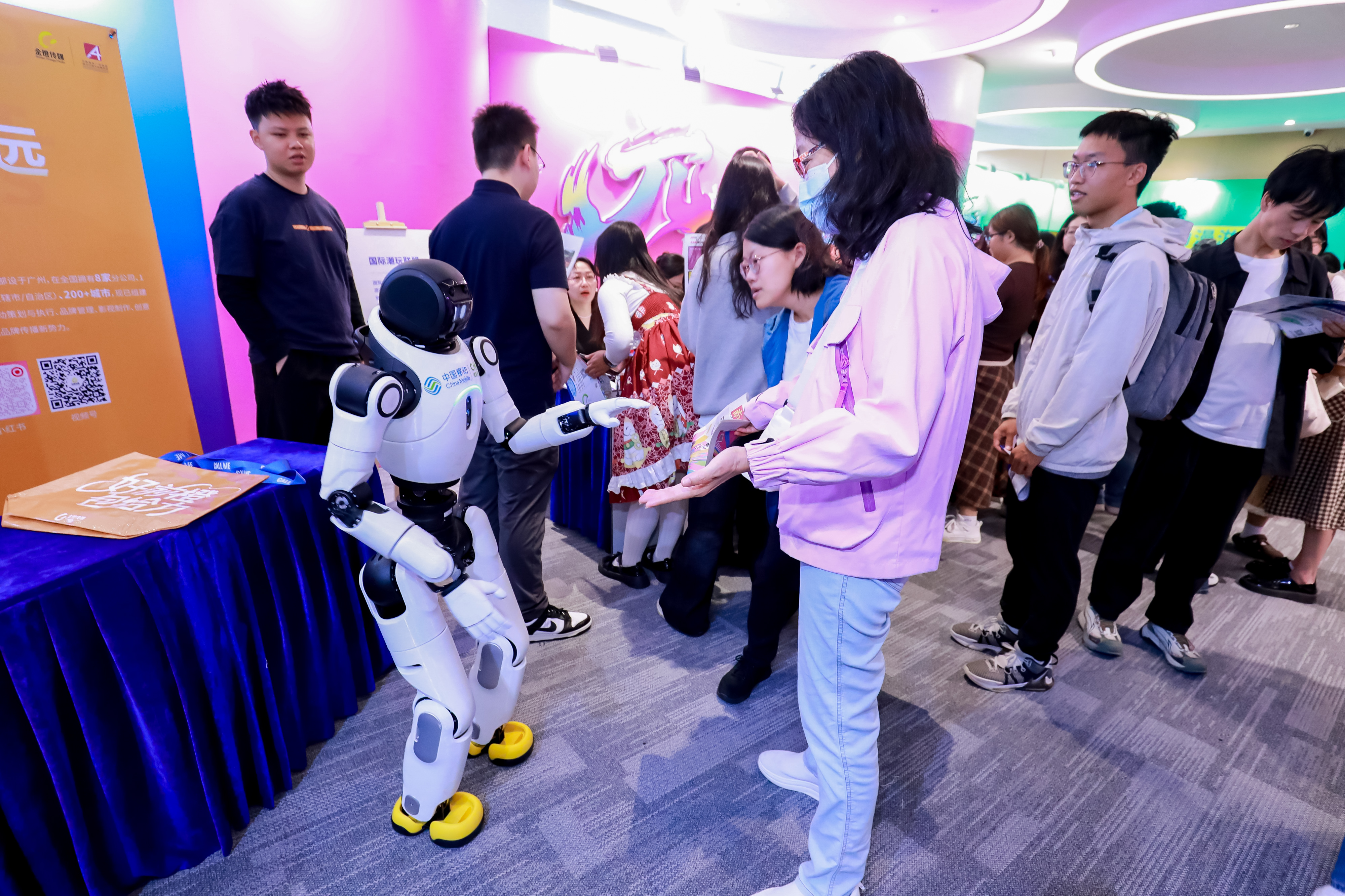
文化人才荟为何热?广东文化产业高擎创新旗帜 加速度领跑新周期
Nan Fang Du Shi Bao· 2025-11-15 11:13
Core Insights - The "Cultural Talent Fair" in the Guangdong-Hong Kong-Macao Greater Bay Area has attracted significant attention, with nearly 300 organizations offering 18,000 cultural job positions, and over 6,000 attendees submitting more than 25,000 resumes [2][19] - The growth of Guangdong's cultural industry is not only stable but is experiencing continuous breakthroughs, as evidenced by high-profile achievements in the sector [2][14] - The integration of culture and technology is accelerating, with new job roles emerging that require a blend of artistic and technical skills, particularly in AI and digital content creation [3][5][7] Job Market Trends - The job fair featured a variety of positions, including AI model designers and CG animators, with salaries ranging from 25K to 35K, indicating a strong demand for tech-savvy talent in the cultural sector [3][5] - Companies are increasingly looking for candidates who can leverage AI tools in creative processes, reflecting a shift towards "new liberal arts positions" that combine traditional skills with modern technology [5][7] - The presence of high-paying roles, such as AI chief modelers with salaries up to 700,000 yuan, highlights the lucrative opportunities available in the evolving cultural landscape [5][7] Cultural Ecosystem - The fair showcased a vibrant cultural ecosystem in Guangdong, with innovative products and experiences, such as VR installations and AI-generated art, demonstrating the fusion of technology and culture [8][10][12] - Traditional crafts and local aesthetics are being revitalized and commercialized, indicating a growing market for culturally inspired products [10][12][13] - The integration of various cultural elements, including technology, design, and traditional arts, is creating a dynamic and interconnected cultural industry in Guangdong [13][14] Policy Support - Guangdong's cultural industry has maintained its position as the largest in the country for 20 consecutive years, supported by a comprehensive policy framework aimed at fostering high-quality development [14][16] - The recent "policy package" introduced by the government includes 87 measures across six key areas, providing direct support to cultural enterprises and enhancing their operational capabilities [14][16] - The clarity and execution of these policies are encouraging businesses to invest and innovate, contributing to a more predictable and secure environment for cultural enterprises [18][21] Future Outlook - The cultural industry in Guangdong is entering a new growth cycle characterized by deeper integration of culture and technology, a more complex talent structure, and a robust policy framework [20][21] - The combination of cultural events, innovative job roles, and supportive policies is creating a fertile ground for sustained growth in the cultural sector [21]