新一代信息技术

Search documents
科创板“1+6”改革落地有多重意义
Zheng Quan Ri Bao Zhi Sheng· 2025-10-27 17:08
Core Viewpoint - The successful listing of three companies on the Sci-Tech Innovation Board marks the substantial implementation of the "1+6" reform, aimed at supporting unprofitable but technologically advanced enterprises [1][2]. Group 1: Reform Significance - The establishment of the Sci-Tech Growth Layer demonstrates the inclusiveness of the system and its alignment with the development of "hard tech" enterprises, providing institutional support for unprofitable companies with significant technological breakthroughs [2][3]. - The reform facilitates financing channels for "hard tech" companies, accelerating the gathering of new enterprises in the Sci-Tech Growth Layer, with 26 new companies accepted post-reform, including 8 unprofitable ones [3][4]. Group 2: Valuation Logic and Market Dynamics - The reform reshapes the valuation logic for "hard tech" companies, encouraging the market to focus on long-term value and technological barriers rather than short-term profits, which fosters a patient capital environment [4][5]. - The introduction of 21 new Sci-Tech Board ETFs since the reform, with a total scale of 300 billion yuan, directs funds towards key development areas in new productivity [4]. Group 3: Company Performance Post-Listing - Companies must maintain a focus on technological breakthroughs and commercialization after going public, as demonstrated by successful cases like ChipLink and Suzhou Zejing Biopharmaceutical, which have achieved significant market penetration and product approvals [5][6].
杭州上城区第四届“金靴奔跑”创新创业大赛收官
Zhong Guo Xin Wen Wang· 2025-10-27 09:19
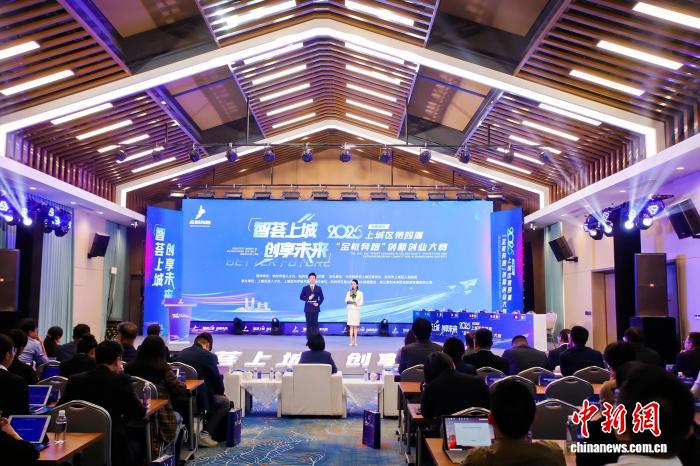
Core Insights - The fourth "Golden Boot Run" Innovation and Entrepreneurship Competition concluded in Hangzhou, showcasing 12 high-quality projects across six key industrial sectors, contributing to the local central innovation zone's development [1][5]. Group 1: Competition Overview - The competition attracted 868 global innovation and entrepreneurship projects, covering new generation information technology, metaverse and digital services, intelligent manufacturing, smart IoT, life health, and digital energy [1]. - The final projects demonstrated a significant enhancement in the integration of technological innovation and practical application, featuring advanced technologies such as robotic micro-spraying and AI-driven brain-machine interfaces [2]. Group 2: Project Support and Incentives - The competition provided a "growth policy package" for the top 30 projects, offering up to 10 million yuan in funding, along with bank loans, equity incentives, and office space support for projects that meet transformation requirements [3]. - Projects that reached the semi-finals could access up to 200 square meters of free office space for three years, with further R&D subsidies available for those achieving industrialization [3]. Group 3: Local Innovation Ecosystem - Hangzhou's Shangcheng District boasts 373 enterprise R&D platforms, including 156 provincial-level research institutes, and has nurtured 798 national high-tech enterprises and 17 (pre-)unicorn companies, with a talent pool of 407,000 [5]. - The competition serves as a bridge for accelerating the construction of the central innovation zone, with plans to deepen the "CID Talent Development" model to attract and retain talent through a closed-loop system of competitions, policies, and ecosystem development [5].


二十届四中全会部署科技创新引领发展新质生产力
Zhong Guo Xin Wen Wang· 2025-10-24 07:10
广告等商务合作,请点击这里 围绕下一步培育和发展新质生产力,阴和俊说,持续增加高质量科技供给。统筹国家战略和经济社会发 展需求,加快布局实施国家重大科技项目,有组织推进战略导向的基础研究,强化关键共性技术、前沿 引领技术、现代工程技术和颠覆性技术创新,加强科技基础条件自主保障,推动国家战略科技力量协同 联动,加快产出一批重大标志性、原创性成果。 在支撑现代化产业体系建设方面,阴和俊说,统筹科技创新和产业发展,推动创新链产业链无缝对接。 在新一代信息技术、人工智能等领域培育壮大一批新兴产业,在量子科技、生物科技等领域布局建设未 来产业,抢占未来科技和产业制高点,积极运用数智技术改造提升传统产业,推动产业向智能化、绿色 化、融合化转型。 二十届四中全会部署科技创新引领发展新质生产力 阴和俊还表示,因地制宜发展新质生产力。加强对地方科技创新和产业布局的宏观指导和统筹协调,引 导地方立足资源禀赋锻造科技长板和产业特色,实现差异化发展。加强跨区域创新协同和产业协作,打 造一批世界级产业集群。推动有条件的地方围绕科技创新和产业创新深度融合,大胆探索、先行先试, 打造原始创新策源地和产业科技创新高地。(完) 中新社北京10 ...
阴和俊:将深入实施创新驱动发展战略 加快部署推进重大科技创新任务
Zheng Quan Shi Bao Wang· 2025-10-24 04:38
Group 1 - The core viewpoint emphasizes that technological innovation is essential for fostering new industries, models, and driving new productive forces, which is crucial for high-quality development [1] - The 20th Central Committee's Fourth Plenary Session outlines a clear strategy for implementing an innovation-driven development strategy during the "14th Five-Year Plan" period, focusing on major technological innovation tasks [1] - There is a commitment to increasing high-quality technological supply by aligning national strategies with economic and social development needs, and promoting significant original achievements in technology [1] Group 2 - The strategy includes supporting the construction of a modern industrial system by ensuring seamless integration of innovation chains and industrial chains, particularly in emerging fields like information technology and artificial intelligence [2] - Comprehensive deepening of the scientific and technological system reform is highlighted, with an emphasis on enhancing policy coordination and promoting collaboration among technology, finance, industry, education, and talent [2] - The approach encourages localized development of new productive forces, guiding regions to leverage their resource endowments for differentiated development and fostering world-class industrial clusters [2]
十五五规划前瞻:四中全会将如何重塑中国经济增长新格局?
Sou Hu Cai Jing· 2025-10-24 03:56
Core Points - The Fourth Plenary Session of the 20th Central Committee of the Communist Party of China was held from October 20 to 23, focusing on the formulation of the 15th Five-Year Plan for national economic and social development, which will outline China's development blueprint for 2026 to 2030 [1][11] - The 15th Five-Year Plan is crucial as it aligns with the completion of the 14th Five-Year Plan in 2025 and the goal of achieving carbon peak by 2030, emphasizing high-quality economic development, institutional reforms, and green transformation [1][11] Group 1 - The Fourth Plenary Session is strategically significant, addressing major issues in party and national development, and is positioned to review the draft of the five-year plan [4] - The session aims to ensure that the 15th Five-Year Plan is closely linked with high-quality economic development and key reforms [1][11] - The plan will be developed in the context of internal and external challenges, including intensified Sino-U.S. technological competition and domestic economic transformation [11] Group 2 - The 15th Five-Year Plan will emphasize six key principles, including the comprehensive leadership of the Party, prioritizing people, high-quality development, deepening reforms, effective market and government collaboration, and balancing development with security [9][8] - The plan will focus on enhancing the innovation ecosystem, integrating education, technology, and talent to support comprehensive innovation [12] - Investment will be directed towards strategic emerging industries such as information technology, biomedicine, high-end equipment, integrated circuits, and new energy during the 15th Five-Year Plan period [13] Group 3 - The plan will also address regional development, with major economic provinces setting growth targets above the national average and promoting coordinated regional development [21] - Policies will aim to expand domestic demand and cultivate new growth points in service consumption while ensuring the improvement of people's livelihoods [24][25] - The focus on new quality productivity will drive high-quality development, with an emphasis on technological innovation and supply-side reforms [28]
十个关注点——四中公报要点学习
Huachuang Securities· 2025-10-24 01:06
Group 1: Strategic Context - The "15th Five-Year Plan" period is characterized by a complex development environment with both strategic opportunities and risks, necessitating a focus on maintaining strategic determination and enhancing confidence in overcoming challenges[11] - The report emphasizes a significant increase in economic, technological, national defense, comprehensive national strength, and international influence by 2035, reflecting the demands of great power strategic competition[13] - Economic construction remains the central focus, with a commitment to high-quality development and meeting the growing needs of the populace[14] Group 2: Key Policy Directions - There is a strong emphasis on optimizing major productivity layouts and enhancing national security capabilities in key areas, including food, energy, and supply chain security[21] - The report highlights the importance of technological self-reliance and self-improvement, indicating a shift towards greater innovation and domestic capability in technology[23] - Maintaining a reasonable proportion of the manufacturing industry is crucial, with a target to stabilize its share of GDP around 25% by 2025, while increasing the proportion of high-tech manufacturing[28] Group 3: Economic Growth and Investment - The economic growth target for the "15th Five-Year Plan" is suggested to be around 5%, aimed at enhancing national strength and boosting public confidence[15] - There is a call to vigorously stimulate consumption and expand effective investment, linking consumer welfare with investment in goods and services[29]
存量公司长势好新上公司新意足 制度创新精准滴灌科创成长层
Zheng Quan Shi Bao Wang· 2025-10-23 23:21
Core Insights - The article discusses the upcoming listing of He Yuan Bio, Xi'an Yicai, and Bibet on the Sci-Tech Innovation Board, marking them as the first batch of newly registered companies in the Sci-Tech Growth Layer [1][2]. Group 1: Overview of the Sci-Tech Growth Layer - The Sci-Tech Growth Layer was established as part of the "1+6" reform, allowing 32 existing unprofitable companies to enter this layer, which aims to better serve the needs of technology enterprises and new productive forces [2][3]. - The total market capitalization of the 32 existing companies exceeds 1 trillion yuan, with significant representation in strategic emerging industries such as new generation information technology (15 companies) and biomedicine (14 companies) [3]. Group 2: Financial Performance and Growth - The 32 existing companies have collectively raised 105.2 billion yuan through IPOs, which has catalyzed their R&D investments and commercial capabilities [3]. - In 2024, these companies are projected to achieve a total revenue of 67.6 billion yuan, with 29 companies surpassing 100 million yuan in revenue [4]. - The average annual compound growth rate of revenue for these companies is 27.87%, outperforming the overall growth rate of the Sci-Tech Innovation Board by nearly 4 percentage points [4]. Group 3: R&D and Innovation - The 32 companies are expected to invest a total of 30.6 billion yuan in R&D in 2024, with a median R&D expenditure to revenue ratio of 65.4%, leading the Sci-Tech Innovation Board [5]. - Notable achievements include the launch of 20 globally innovative Class 1 new drugs by the innovative pharmaceutical sector, with significant contributions from companies like BeiGene and Zai Lab [5]. Group 4: Institutional Support and Future Prospects - Recent reforms, including the "Sci-Tech Board Eight Articles" and "M&A Six Articles," provide tailored support for companies at different stages, facilitating their growth and development [6]. - The entry of new companies like He Yuan Bio, Xi'an Yicai, and Bibet into the Sci-Tech Growth Layer is expected to further expand the sector, alongside other unprofitable companies applying for IPOs [6].
无锡连云港专精特新产业园高标准厂房竣工
Xin Hua Ri Bao· 2025-10-23 21:32
Core Viewpoint - The completion of the high-standard factory buildings in the Wuxi Lianyungang Specialized, Refined, Characteristic, and Innovative Industry Park marks a transition from construction to the phase of attracting projects for renovation [1] Group 1: Project Overview - The Wuxi Lianyungang Specialized, Refined, Characteristic, and Innovative Industry Park covers an area of approximately 367 acres with a total investment of about 3.5 billion [1] - The completed high-standard factory consists of 5 buildings with a total construction area of approximately 60,000 square meters, designed to meet the production needs of various enterprises [1] Group 2: Current Status and Future Plans - The high-standard factory has already shown initial success in attracting tenants, with projects in high-end equipment manufacturing, new-generation information technology, and new energy having signed agreements to settle in [1] - The park has completed the filing for factory buildings 6 to 10 and is actively promoting the filing for the remaining buildings to facilitate the park's opening by the end of this year [1] Group 3: Strategic Focus - The park adheres to the principles of "resource sharing, complementary advantages, and collaborative development," focusing on attracting specialized and innovative industries [1] - Notable projects such as Guoxia Technology, Wanda Xilian Meihua Commercial Plaza, and others have signed agreements to settle in, contributing to the establishment of a concentrated cluster of high-tech enterprises and advanced manufacturing industries [1]

创新成果频出 业绩增收减亏 科创成长层公司跑出发展加速度
Shang Hai Zheng Quan Bao· 2025-10-23 18:40
Core Insights - The launch of the "1+6" reform on June 18 has established the Sci-Tech Innovation Board's growth tier, allowing 32 unprofitable listed companies to enter this tier, leading to significant innovation and a total market value exceeding 1 trillion yuan [1][2] - The growth tier companies are primarily in strategic emerging industries such as new-generation information technology, biomedicine, new energy, and high-end equipment manufacturing, showcasing a diverse and inclusive listing system [2][3] - The total R&D investment of the 32 growth tier companies is projected to reach 30.6 billion yuan in 2024, with a median R&D expenditure to revenue ratio of 65.40%, indicating a strong focus on innovation [3][4] Group 1: Institutional Inclusivity - The growth tier companies utilize various listing standards, with 11 companies under the fifth standard (market value + R&D progress), 8 under the fourth standard (market value + revenue), and others under different criteria, all not requiring prior profitability [2] - These companies have collectively raised 105.2 billion yuan through IPOs, facilitating R&D investments and capacity building [2] - The total market value of growth tier companies has reached 1.09 trillion yuan, with 19 companies valued over 10 billion yuan, indicating increasing market recognition of their investment value [2] Group 2: Innovation Outcomes - The growth tier companies are experiencing accelerated innovation outcomes, with innovative pharmaceutical companies launching 20 new drugs classified as national Class 1 new drugs [3] - Companies like Zejing Pharmaceutical have successfully developed innovative drugs, filling domestic treatment gaps for serious conditions [3] - New-generation information technology firms are also advancing rapidly, with products like DeepSeek and DeepEdge10 entering mass production, supporting domestic AI technology development [3] Group 3: Performance Growth - From 2019, the average annual compound growth rate of revenue for these companies is 27.87%, outperforming the overall sector [4] - In the first half of 2025, revenue growth for these companies reached 37.79% year-on-year, with 22 unprofitable companies achieving profitability and "delisting" from the unprofitable category [4] - Despite initial losses due to high R&D costs, the companies are showing a clear trend of reduced losses, with a significant reduction of 7.123 billion yuan in losses in the first half of 2025 [4] Group 4: Supportive Policies - Recent reforms, including the "Eight Articles of the Sci-Tech Innovation Board" and "Six Articles of Mergers and Acquisitions," provide targeted support for growth tier companies at various development stages [5][6] - New refinancing standards for companies with high R&D investments have been introduced, allowing them to raise funds for R&D projects without strict limitations [6] - The merger and acquisition framework supports companies in acquiring unprofitable but strategically beneficial firms, with several successful transactions reported [6][7]
市国资委举办市管企业2026届高校毕业生秋季校园招聘会
Xin Jing Bao· 2025-10-23 14:52
Group 1 - The Beijing State-owned Assets Supervision and Administration Commission hosted a job fair for 2026 graduates, featuring 87 state-owned enterprises offering over 2,000 job opportunities across various sectors [1][2] - The job positions cover advanced manufacturing, urban infrastructure, construction, healthcare, new information technology, cultural tourism, and modern services, with a notable increase in demand for technology research and development talent [1][3] - Companies like Capital Information Development Co., Ltd. and Beijing Financial Big Data Co., Ltd. are focusing on recruiting talent in "artificial intelligence" and "digital security," while other high-tech enterprises are seeking professionals in "intelligent manufacturing" and "new materials" [1][2] Group 2 - Graduates unable to attend the job fair can browse job postings and submit resumes online through the "Jingqi Direct Recruitment" platform [2] - The Capital Information Development Co., Ltd. plans to hire over 100 fresh graduates this year and is also recruiting candidates for 2025, offering a one-week onboarding training program to facilitate their transition into the workplace [2] - The Beijing State-owned Assets Supervision and Administration Commission has provided 21,000 job positions for 2025 graduates through last year's autumn and this year's spring recruitment, emphasizing its role in promoting employment [3]