新茶饮

Search documents
霸王茶姬二季度海外GMV猛增77%,创始人称坚决不打价格战
中国基金报· 2025-08-30 09:05
Core Viewpoint - The company aims to establish itself as a high-value brand and will not engage in price wars, despite the competitive landscape in the new tea beverage industry [4][9]. Financial Performance - For Q2 2025, the company reported a total GMV of 8.1031 billion yuan, a year-on-year increase of 15.5% [2]. - Net revenue reached 3.3319 billion yuan, up 10.2% year-on-year, while adjusted net profit was 629.8 million yuan, showing a slight increase of 0.1% [2][5]. - The company's net profit margin stands at 18.9%, which is considered strong within the new tea beverage sector [7]. Market Dynamics - The overseas market showed significant growth, with Q2 overseas GMV reaching 235.2 million yuan, a year-on-year increase of 77.4% and a quarter-on-quarter increase of 31.8% [4][14]. - The total number of global stores surpassed 7,000, with over 200 stores located overseas, marking a 40.9% year-on-year increase [13]. Strategic Focus - The company is committed to not participating in price wars, emphasizing a high-value brand strategy and focusing on product innovation and operational efficiency [9][11]. - The company plans to upgrade core ingredients, including tea leaves and milk sources, to enhance product quality [11]. Product Innovation - New product launches, such as "Yi Qi Hong Chen," have shown strong sales performance, contributing to a significant increase in GMV [7]. - The company has successfully localized products, with the "Gu Xiang Bei Cha" becoming a hit in Southeast Asia [16]. Management and Expansion - The company has established a management team with international experience to support its global expansion efforts, particularly in North America [16]. - The first North American store opened in Los Angeles in May, with a second store beginning trial operations in August [17].

古茗CEO称8月外卖平台补贴力度下降,美团王兴说补贴不是长久之计,外卖目标利润率约3%
Sou Hu Cai Jing· 2025-08-29 09:48
Core Viewpoint - The ongoing subsidy war in the food delivery sector, driven by platforms like Taobao, Meituan, and JD, is not beneficial for the long-term health of the industry, as stated by Gu Ming's founder Wang Yunan and Meituan's CEO Wang Xing [3][4]. Group 1: Impact of Subsidies - Gu Ming's founder indicated that long-term reliance on delivery subsidies is detrimental to franchise operations and the overall industry [3]. - The "zero purchase" campaign launched in July had an impact of approximately 4 to 5 yuan per order for Gu Ming, with lower-priced brands benefiting more from this initiative [3]. - The competitive landscape for food delivery intensified from the second quarter of the year, with the first quarter remaining unaffected [3]. Group 2: Company Performance - Gu Ming reported that the overall impact of the subsidy activities on its first half performance was limited, and the intensity of subsidies has decreased since August [3]. - Meituan's revenue for the second quarter of 2025 grew by 11.7% to 91.8 billion yuan, with an operating profit of 226 million yuan and an adjusted net profit of 1.493 billion yuan [4]. Group 3: Strategic Outlook - Meituan's CEO reaffirmed the company's long-term profit assumption of "1 yuan per order, with a profit margin of about 3%" despite increased strategic investments in the third quarter that may pressure short-term financial metrics [4]. - The CEO emphasized that Meituan will continue to invest to meet consumer demands and maintain its market leadership, believing that competition will eventually return to rationality [4].

南农晨读丨七夕
Nan Fang Nong Cun Bao· 2025-08-29 01:35
Group 1 - The article discusses the strategic initiative of cultivating "typical village areas" in Guangdong to address urban-rural development imbalances and promote high-quality rural revitalization [4][5][6] - A total of 15 cities in Guangdong have announced the results of the "Hundred Million Thousand Typical Village Area Cultivation Project" for 2024-2025, with 20 locations selected, including Wengyuan, Renhua, and Jiaoling [4][5] - The initiative aims to enhance rural development through innovative measures, contributing to the overall goal of rural revitalization and economic growth [5][6] Group 2 - The "Media+" initiative in Yunfu City aims to build a comprehensive agricultural product market system from 2025 to 2027, focusing on increasing agricultural efficiency, rural vitality, and farmers' income [17][18][27] - The action plan emphasizes the development of new business models under the "Media+" framework to promote urban-rural consumption, agricultural tourism, and media transformation [26][27] - The strategy includes leveraging internet thinking and new media advantages to enhance market channels and brand value, as seen in the promotion of Guangdong's Simao rice [29][30][31]

蜜雪集团2025年中期业绩发布,全球门店数超5.3 万家,净利润27.2亿元
Sou Hu Cai Jing· 2025-08-28 15:42
Core Viewpoint - The performance report of Mixue Group indicates strong growth in the new tea beverage industry, showcasing resilience amid overall industry slowdown, with significant increases in revenue, gross profit, and net profit [1][2][3] Financial Performance - For the first half of 2025, Mixue Group achieved revenue of 14.87 billion yuan, a year-on-year increase of 39.3% - Gross profit reached 4.71 billion yuan, up 38.3% year-on-year - Net profit was 2.72 billion yuan, reflecting a 44.1% year-on-year growth [1] Store Expansion - As of June 30, 2025, Mixue Group's total number of global stores reached 53,014, with a net increase of 9,796 stores compared to the same period last year - In mainland China, stores in tier-three and below cities accounted for 57.6% of total stores, with an addition of 5,707 new stores, indicating deep penetration into lower-tier markets [1][2] International Expansion - Mixue Ice City opened its first store in Kazakhstan in April 2025, marking entry into the Central Asian market - In August 2025, its coffee brand, Lucky Coffee, launched its first overseas store in Malaysia, highlighting the brand's adaptability and cross-regional replication capabilities [1][2] Competitive Landscape - The new tea beverage industry has shifted from product innovation to competition based on system efficiency - Mixue's integrated capabilities in supply chain, brand IP, and store operations have allowed it to add nearly 10,000 stores, demonstrating its business model's replicability and risk resilience [2][3] Technological Investment - Mixue is increasing investments in smart equipment, with over 5,600 stores equipped with intelligent dispensing machines, enhancing efficiency and reducing food safety risks - This reflects a broader trend of digital transformation in the industry, moving from manual management to system-based management [2] Supply Chain Management - Mixue has established a fully controllable supply chain system, with five production bases and over 70 intelligent production lines in China - The company produces 100% of its core beverage ingredients in-house and has developed a procurement network across 38 countries [2] Future Industry Trends - The competition in the tea beverage industry will increasingly focus on the breadth and depth of supply chain management rather than just the number of stores - Brands must develop local operational capabilities, global resource allocation strength, and digital management tools to sustain growth [3]
沪上阿姨上半年营收净利双增长 下沉市场布局与多品牌战略助力长效发展
Zheng Quan Ri Bao· 2025-08-28 05:45
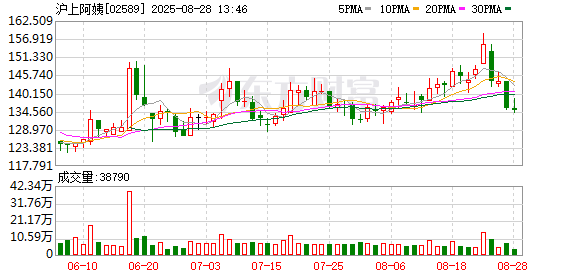
Financial Performance - In the first half of 2025, the company achieved operating revenue of 1.818 billion yuan, a year-on-year increase of 9.7% [2] - Gross profit reached 572 million yuan, up 10.4% year-on-year [2] - Net profit for the period was 203 million yuan, reflecting a year-on-year growth of 20.9% [2] - Adjusted net profit stood at 244 million yuan, with a year-on-year increase of 14.0% [2] - Basic earnings per share were 1.97 yuan, representing a year-on-year growth of 19.4% [2] - The company announced a mid-term dividend plan, proposing a distribution of approximately 71.12 million yuan [2] Market Strategy - The company has successfully implemented a down-market strategy, with 51.1% of its stores located in third-tier and below cities [3] - As of June 30, 2025, the total number of stores reached 9,436, an increase of nearly 1,000 stores year-on-year [3] - The down-market strategy has allowed the company to achieve stable growth despite industry uncertainties [3] Supply Chain and Franchise Model - The company has established a robust supply chain network, including 13 logistics bases, 4 equipment warehouses, 7 fresh produce warehouses, and 14 cold chain warehouses [4] - The supply chain supports the growing store network and ensures product quality and service stability [4] - The company has 5,706 franchisees operating 9,412 franchise stores, benefiting from a standardized and digitalized management system [4] - As of June 30, 2025, the company had 131.4 million registered members on its WeChat mini-program, with an average quarterly active membership of 15.8 million and a quarterly repurchase rate of 40.6% [4] Brand and Product Innovation - The company has developed a multi-brand strategy, including three main brands to enhance market reach and risk resilience [5][6] - The main brand "沪上阿姨" targets consumers in third-tier and below cities with cost-effective beverages, while "茶瀑布" focuses on a lower price range [5] - The introduction of "沪咖" in 2022 marks the company's entry into the coffee market, catering to diverse consumer needs [6] - The company launched 136 new products in the first half of 2025, maintaining a rapid pace of innovation [6] Market Recognition - The company has been included in the Hang Seng Composite Index, indicating strong market recognition of its business performance and value [7] - The solid performance in the semi-annual report further strengthens the company's position among leading players in the new tea beverage industry [7]
沪上阿姨入选恒生指数,上半年营收18.18亿元彰显成长潜力
Bei Ke Cai Jing· 2025-08-28 04:16
Core Viewpoint - The new tea beverage company, Hushang Ayi, has reported strong revenue and net profit growth in its first financial report since going public, reflecting its successful expansion into lower-tier markets and robust supply chain management [1][2]. Financial Performance - For the first half of 2025, Hushang Ayi achieved a revenue of 1.818 billion yuan, a year-on-year increase of 9.7% - Gross profit reached 572 million yuan, up 10.4% - Net profit was 203 million yuan, growing by 20.9% - Adjusted net profit stood at 244 million yuan, a 14.0% increase - Basic earnings per share were 1.97 yuan, reflecting a 19.4% growth - The company plans to distribute an interim dividend of approximately 71.12 million yuan, pending shareholder approval [2][3]. Market Strategy - Hushang Ayi has focused on expanding its presence in lower-tier markets, with 51.1% of its stores located in third-tier cities and below as of June 30, 2025 - The company has increased its total number of stores to 9,436, adding nearly 1,000 stores year-on-year [3][4]. Supply Chain and Franchise Support - The company operates a comprehensive supply chain network, including 13 logistics bases, 4 equipment warehouses, 7 fresh produce warehouses, and 14 cold chain warehouses - Hushang Ayi supports its franchisees through a standardized and digitalized management system, providing assistance in site selection, store opening, and ongoing operational support [3][6]. Brand and Product Innovation - Hushang Ayi has developed a multi-brand strategy, including its main brand, Hushang Ayi, and two others: Tea Waterfall and Huka, targeting different market segments - The company launched 136 new products in the first half of 2025, focusing on health-oriented beverages that appeal to younger consumers [7][8]. - Marketing efforts have generated significant attention, with products like the "Dark Night Rose" series achieving approximately 300 million online exposures and strong sales [9]. Capital Market Recognition - Hushang Ayi has been included in the Hang Seng Composite Index, indicating strong market recognition of its business performance and value [1][9].
蜜雪冰城:收入增速跑输古茗,海外门店收缩
Xin Lang Cai Jing· 2025-08-28 04:03
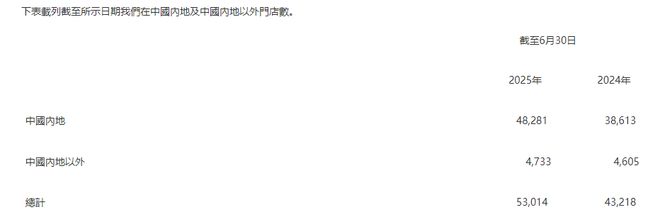
Core Viewpoint - The performance report of Mixue Group shows significant revenue and profit growth, yet the stock price declined sharply, indicating market concerns despite positive financial results [1] Financial Performance - For the first half of 2025, Mixue Group reported revenue of 14.87 billion yuan, a year-on-year increase of 39.3%, and a net profit attributable to shareholders of 2.69 billion yuan, up 43.1% year-on-year [1] - In comparison, competitor Gu Ming achieved revenue of 5.66 billion yuan, a 41.2% increase, and a net profit of 1.63 billion yuan, a remarkable 121.5% growth [1] - Hu Shang Ayi's revenue grew by 9.7% to 1.82 billion yuan, with a net profit increase of 20.9% to 200 million yuan, indicating a focus on cost control [1] Market Dynamics - The introduction of delivery subsidies has revitalized the tea beverage market, with major platforms like JD, Ele.me, and Meituan engaging in aggressive subsidy wars [2] - Mixue Group, as a leading player, benefits directly from these subsidies, which enhance sales during the high-demand summer season [2] - Gu Ming's CEO noted that lower-priced brands like Mixue benefit more from these subsidies, which could impact the long-term profitability of the tea beverage sector [2][3] Store Expansion and Challenges - As of June 30, 2025, Mixue Group had 4,733 overseas stores, a decrease of 162 stores from the beginning of the year, indicating challenges in international expansion [3][5] - The company reported a total of 53,014 stores, with 48,281 in mainland China, reflecting a net increase of only 1,800 stores, primarily driven by the expansion of its coffee sub-brand, Lucky Coffee [4] - Concerns arise regarding the saturation of the domestic market and the declining number of overseas stores, leading to investor skepticism about future growth [5]
古茗CEO:外卖补贴大战对于加盟门店经营并非好事
Sou Hu Cai Jing· 2025-08-28 02:24
Core Viewpoint - The impact of the recent food delivery competition initiated by major internet platforms on the new tea beverage brand, Gu Ming, is a focal point of investor interest [2] Company Summary - Gu Ming's CEO, Wang Yunan, stated that the long-term effects of the delivery subsidy war are detrimental to franchise operations and the industry's sustainable development [2] - The "zero purchase" activity launched by delivery platforms in July had a limited impact on Gu Ming, with each order affected by approximately 4-5 yuan [2] - Gu Ming reported that the competition from delivery platforms began in the second quarter, with minimal effects on the first quarter's performance [2] - Since August, the intensity of subsidy activities from delivery platforms has decreased [2] Industry Summary - The ongoing competition among food delivery platforms is expected to lead to a return to normal operational rhythms for brands once subsidies taper off [2] - Brands with lower average order values benefited more from the recent promotional activities [2]
古茗CEO王云安:长期来看,外卖补贴大战对于加盟门店经营并非好事
Xin Lang Cai Jing· 2025-08-28 02:05
8月27日晚间,古茗(01364.HK)召开2025年上半年业绩说明会。今年夏季由淘宝、美团、京东三家互 联网巨头掀起的外卖大战对新茶饮品牌的影响,成为投资者关注的焦点。 古茗披露,外卖平台的竞争主要从第二季度开始,第一季度没有受到影响;7月开始活动力度加大,总 体来说对上半年的业绩影响有限。8月以来,外卖平台的活动补贴力度已有所下降。(智通财经记者 卢 奕贝) 古茗创始人兼首席执行官王云安在业绩会上表示,长期来看,外卖补贴大战对于加盟门店经营并非好 事,也不利于行业长期发展,补贴退潮后,品牌仍需要回归正常的经营节奏当中。 今年7月,外卖平台们开展"零元购"活动,由于该活动仅每周六进行,对古茗而言每单的影响约4—5 元。王云安表示,客单价更低的品牌,在此活动中收益更多。 ...
“消费刺客”退烧
创业邦· 2025-08-27 15:31
Core Viewpoint - The article discusses the challenges faced by Baiguoyuan, a fruit retail brand, highlighting its struggle with consumer trust and market dynamics as it attempts to maintain high pricing amidst changing consumer expectations and competitive pressures [6][8][12]. Group 1: Baiguoyuan's Performance - On August 15, 2025, Baiguoyuan issued a mid-year earnings warning, projecting a revenue decline of up to 25% year-on-year, with a net loss estimated between 330 million to 380 million yuan. The actual revenue was reported at 4.376 billion yuan, a decrease of 21.8%, with a net loss of 342 million yuan and a 27% drop in store count to 4,386 [8][9]. - The brand's previous model, which relied on high-quality standardized fruit to command a premium price, has faltered due to quality control issues and a disconnect between consumer expectations and actual product quality [8][10][12]. Group 2: Market Dynamics - The article notes a broader trend of high-priced consumer brands facing pressure as the market shifts towards value and cost efficiency. This is evident in the new tea and coffee sectors, where brands like Heytea and Luckin Coffee have adjusted their pricing strategies to remain competitive [14][16]. - The oversupply in the market has led to a significant number of closures, with over 20,000 beverage outlets disappearing in the past year, indicating intense competition and a shift in consumer preferences towards lower-priced options [19][21]. Group 3: Consumer Behavior Changes - Consumer behavior is shifting towards prioritizing value and cost-effectiveness, influenced by economic factors such as declining asset values and rising debt obligations. This has resulted in a higher savings rate and reduced discretionary spending [21][22]. - The article highlights that even affluent cities like Beijing and Shanghai are experiencing slower retail growth compared to national averages, reflecting a broader trend of cautious consumer spending [21][22]. Group 4: Future Outlook for Baiguoyuan - Baiguoyuan is at a crossroads, needing to either establish advantages in scale, efficiency, and cost control or create unique value propositions to survive in a market increasingly divided between cost-driven and experience-driven brands [27][28]. - The brand's current positioning, caught between high convenience and high operational costs, limits its ability to compete effectively in a price-sensitive environment [28].