Mobile Phones

Search documents
它叫O1、也是Ophone,从一款国产手机讲起
3 6 Ke· 2025-06-05 11:00
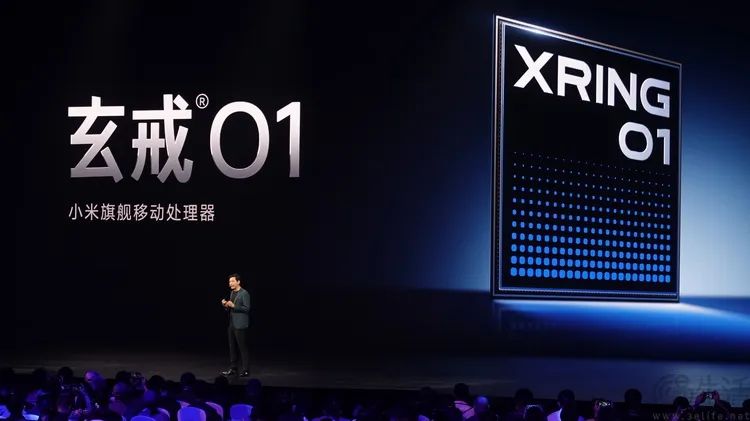
Group 1 - Xiaomi officially launched its self-developed chips, the Xuanjie O1 and Xuanjie T1, along with at least three mass-produced products based on these chips during its 15th anniversary event in late May 2025 [1] - The Xiaomi 15S Pro, equipped with the full-version Xuanjie O1 chip, has garnered significant attention due to its use of TSMC's flagship 3nm process and the latest ARM architecture [3] - The article also discusses the historical context of the Lenovo O1, which was released 16 years prior and represented a significant moment in the domestic smartphone industry, contrasting its fate with that of the Xuanjie O1 [5][6] Group 2 - The term "OPhone" refers to a derivative operating system developed by China Mobile in collaboration with various domestic companies, based on Android, and was first introduced in August 2009 [8][10] - Lenovo's O1 was the first product under the OPhone brand, which was highly anticipated as a flagship domestic smartphone, showcasing significant investment in the domestic operating system [11][13] - The Lenovo MIRO O1 featured competitive hardware for its time, including a 3.5-inch HVGA touchscreen and a Marvell PXA processor with a frequency of 624MHz, outperforming contemporaneous models [15][19] Group 3 - The OPhone OS 1.0, developed based on Android 1.0, included numerous modifications and was designed to integrate various services promoted by China Mobile, such as Feixin and CMMB mobile TV [26][29] - Despite its initial promise, the OPhone OS ultimately failed due to its inability to keep pace with rapid technological advancements in the smartphone industry, particularly in comparison to Google's Android updates [36][40] - The OPhone's decline was attributed to a focus on interface refinement at the expense of core system updates, leading to a significant lag behind Android's development [34][57]



从“百亿镇”到“千亿镇”!看广东东莞长安镇如何向“新”图强→
Sou Hu Cai Jing· 2025-06-02 14:16
Core Insights - Dongguan's Chang'an Town has achieved a historic leap from a "billion town" to a "trillion town" with a GDP of 105.07 billion yuan in 2024, targeting a 5% economic growth for 2025 [1][22] - The town is recognized as a major hub for the smartphone industry, producing one out of every eight smartphones globally [7][24] - Chang'an Town has developed a complete industrial chain around smartphone manufacturing, focusing on precision manufacturing, core technologies, quality certification, and smart factories [16][22] Industry Development - The smartphone production line in Chang'an Town produces a smartphone every 11.4 seconds, showcasing the efficiency of its manufacturing capabilities [7] - The local industry has evolved significantly since 1995, with a population exceeding one million and nearly 270,000 skilled workers, contributing to various sectors including a 100 billion yuan electronic information industry and a 50 billion yuan hardware industry [22] - The town has submitted over 17,000 technical proposals to international standardization organizations and applied for more than 7,000 patents related to 5G and 6G technologies [13] Technological Advancements - Recent advancements in mobile technology have allowed for smartphones to withstand extreme conditions, enhancing their market readiness [11] - The local companies are actively involved in the development of future communication standards, with research focused on technologies expected to be standardized by 2030 or 2035 [15] - The integration of machine vision technology in the production process ensures quality control of smartphone components [16][18]
汽车发布会,到底该不该讲技术?
3 6 Ke· 2025-05-30 12:20
作为科技媒体人,参加新品发布会是我们的日常工作之一,其中最常见的就是手机和汽车了。近两年来,准确地说是AI火了之后,我发现,手机企业的 发布会越来越硬核了,技术参数、创新功能、设计思路等"秀肌肉"几乎成了标配。 去年我参加OPPO的手机发布会,用了三四个小时,请宠物博主体验计算摄影,让工程师展示AI直播,仍嫌不够全面,剧透来年发布会要搞24小时直播。 跟手机发布会"把技术掰开了揉碎了"讲给消费者的叙事风格不同,参加汽车发布会就像被按了快进键。在短短两三个小时的流程里,把新功能、用户试 驾、代言人分享、领导致辞、价格揭晓等全部走完,紧追慢赶之下,对核心科技的拆解是很难深入的。 前不久长城汽车魏建军也炮轰车圈,认为现在的汽车发布会"听不懂""不以用户为中心"。或许正是因为汽车不能不讲技术、又没有时间好好讲技术,以至 于只能抛概念、抛名词。 那么,汽车发布会到底该不该讲技术?真正的问题或许是,要讲技术,但不能神秘化,而要场景化。手机发布会或许可以给汽车厂商提供一些新思路。 技术神秘化的汽车发布会该改变了 前不久长城汽车发布会上,魏建军的吐槽掀开了汽车行业的一个巨大矛盾:造车新势力把技术神秘化,而传统车企又固守传统传 ...

苹果打起价格战,国产手机只能靠边站
Tai Mei Ti A P P· 2025-05-30 08:33
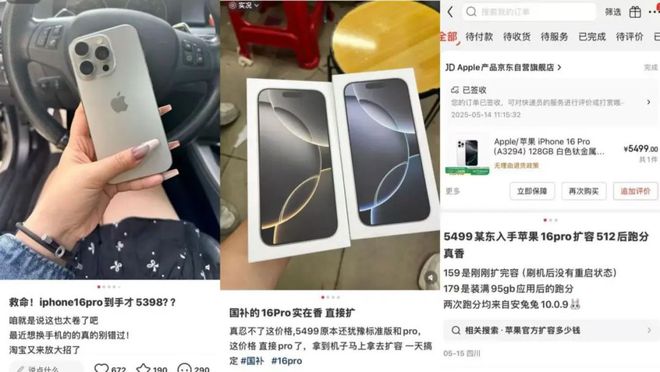
Core Insights - Apple has successfully regained market share in China with the iPhone 16 Pro, achieving a significant increase in activation rates due to a strategic price reduction [3][4] - The price drop has led to a surge in sales, with the iPhone 16 Pro activating 520,000 units in week 20 of 2025, nearly 3.8 times the previous week, while the Pro Max model saw a 100% increase [3][4] - Despite a strong sentiment for supporting domestic brands, consumer purchasing behavior shows a preference for Apple products, with over 63% of consumers choosing Apple when price is comparable [6][7] Market Dynamics - Apple's market share in China reached 21.5%, surpassing domestic brands like Huawei and Xiaomi, marking a return to the top position after several quarters [4] - The price strategy is seen as a response to the competitive pressure from high-end domestic models and aims to build momentum ahead of major sales events [4][8] - Domestic brands face challenges in high-end market profitability due to Apple's pricing strategy, which diminishes the perceived value of similar-priced domestic models [8][9] Consumer Behavior - Consumers express a desire to support domestic brands but often choose Apple due to its ecosystem and user experience, which are perceived as superior [6][7] - The integration of Apple products creates a seamless user experience that is difficult for domestic brands to replicate, leading to a loyalty that transcends price considerations [6][12] Competitive Landscape - Domestic brands are struggling with a "three dilemmas" situation: profit pressure in the high-end market, ecological shortcomings compared to iOS, and challenges in the mid-to-low-end market [8][9] - The competition is shifting towards AI capabilities and innovative scenarios, with domestic brands exploring new user experiences that Apple has not yet addressed [11][12] - The future of competition may hinge on who can redefine the smartphone experience, with AI and integrated ecosystems becoming critical factors [13][14] Strategic Recommendations - Domestic brands need to focus on creating a comprehensive ecosystem that can rival Apple's, emphasizing seamless integration across devices and services [11][12] - Innovations in AI and unique user scenarios could provide domestic brands with opportunities to differentiate themselves from Apple [12][13] - The path to success for domestic brands lies not in competing on hardware alone but in establishing a compelling reason for users to switch from Apple [15][16]

鑫闻界|游戏手机奶茶,在“618”“国补”蓄力中打出了组合牌
Qi Lu Wan Bao· 2025-05-29 07:49
Core Insights - The mobile phone industry is experiencing a surge in activity with multiple product launches in late May, coinciding with the "618" shopping festival and national subsidies [1][8] - OnePlus has introduced the Ace 5 Supreme series, featuring a unique "gaming three-core" architecture aimed at enhancing gaming performance [2][3] - The introduction of the "1% Low Frame" metric by OnePlus signifies a shift in how mobile gaming performance is evaluated, focusing on real-time gaming experience rather than average frame rates [2] Company Developments - OnePlus launched the Ace 5 Supreme series on May 27, with starting prices of 2499 yuan and 1799 yuan, and promotional prices during the "618" event [1][2] - The Ace 5 Supreme series is positioned in the competitive 2000 yuan market segment, facing strong competition from brands like Redmi and Nubia [3] - OnePlus has established strategic partnerships with games like "Valorant Mobile" and "Peace Elite," positioning its devices as official equipment for upcoming esports events [3] Industry Trends - The mobile gaming sector is becoming a strategic focus for major brands, with OnePlus emphasizing gaming experience as a key differentiator [3] - The recent collaboration between major Chinese smartphone manufacturers to establish the UFCS 2.0 standard for fast charging indicates a move towards greater interoperability and environmental sustainability in the industry [6] - The upcoming "618" shopping festival is expected to drive a new wave of smartphone purchases, particularly among younger consumers [8] Marketing Strategies - OnePlus has engaged popular influencers and celebrities, such as Chen Duling, to enhance brand visibility and appeal to younger demographics [4] - The integration of AI technology in marketing, such as using AI to order drinks during launch events, reflects a trend towards more interactive and engaging promotional strategies [5] - Honor's collaboration with celebrity Xiao Zhan has reportedly increased pre-orders for its new series by 400%, showcasing the effectiveness of celebrity endorsements in driving sales [4]
传音控股,遭遇至暗时刻
盐财经· 2025-05-23 10:14
Core Viewpoint - Transsion Holdings, known as the "King of Mobile Phones in Africa," is facing significant challenges as its growth slows down, particularly in net profit and revenue, amidst increasing competition from domestic brands in the African market [3][4][5]. Financial Performance - In 2024, Transsion Holdings reported revenue of 68.72 billion RMB, with a growth rate of 10.31%, and a net profit of 5.549 billion RMB, showing a minimal growth rate of 0.22%. This is a stark contrast to the previous year's revenue growth of 33.69% and net profit growth of 122.93% [4][7]. - The company's quarterly performance indicates a more severe decline, with Q4 2024 revenue and net profit at 17.46 billion RMB and 1.645 billion RMB, respectively, reflecting a decrease of 9.39% and 0.44%. In Q1 2024, revenue and net profit further dropped to 13 billion RMB and 490 million RMB, with declines of 25.45% and 69.87% [5][6]. Market Position and Competition - Transsion Holdings once held a dominant market share of 52% in Africa, but competition has intensified since 2022, leading to a decline in its market share to 51% by Q1 2024 [6][20]. - The entry of major Chinese brands like Xiaomi, Huawei, and OPPO into the African market has increased competition, with Xiaomi achieving a 45% year-on-year growth in Q2 2024 and capturing approximately 12% market share [18][20]. Strategic Shifts - In response to the competitive landscape, Transsion is exploring markets outside Africa, including Latin America, the Middle East, and Southeast Asia, where it has seen growth rates of 40%, 41%, and 9% respectively in 2024 [21]. - Despite these efforts, the company faces challenges in these new markets, which are already dominated by established players like Samsung and Motorola, resulting in lower profit margins compared to its core African market [21]. Historical Context - Transsion Holdings was founded in 2006, focusing on the African market, and achieved significant growth, with revenue increasing from 22.65 billion RMB in 2018 to 68.72 billion RMB in 2024, and net profit rising from 657.4 million RMB to 5.549 billion RMB during the same period [15][16].


价格进一步下探至千元以内 AI手机渗透率将进一步提升
Zheng Quan Shi Bao Wang· 2025-05-22 09:59
Group 1 - The rapid development of AI technology is leading to an increase in AI smartphone penetration and a decrease in prices, with the Meizu Note 16 series being the lowest-priced AI smartphone at 594.15 yuan [1] - The market has seen a shift towards AI smartphones in both high-end and mid-range segments, with prices now dropping below 1,000 yuan for several models, including those from OPPO and vivo [1] - The Meizu Note 16 series features the Flyme AIOS 2 operating system and integrates with Alibaba Cloud's Qwen-Omni model, offering various AI functionalities such as AI assistant and AI image recognition [1] Group 2 - There are significant differences in AI functionalities across different price segments, with high-end smartphones utilizing more powerful NPU chips for enhanced AI capabilities, while budget models rely more on cloud-based AI [2] - The chip is the most significant cost component in smartphones, with the Meizu Note 16 using a 6nm chip and the Note 16 Pro using a 4nm chip, indicating a trend towards more advanced technology in budget devices [2] - The demand for affordable AI smartphones is driving chip manufacturers like Qualcomm and MediaTek to develop mid-range and entry-level chips with AI capabilities [2] Group 3 - The trend of AI integration in smartphones is expected to continue, with an estimated 31.6% of new AI smartphones having NPU capabilities greater than 30 TOPS, projected to rise to 36.2% by 2025 [3] - The growth of AI functionalities in smartphones is positively impacting the performance of related companies, such as Sunlord Electronics, which is experiencing increased demand for components due to the rise in AI features [3] - Companies like Pengding Holdings are fully embracing AI, developing a comprehensive product matrix that includes AI smartphones and other AI consumer products, positioning themselves as key players in the global AI supply chain [4]


小米3纳米芯片量产面市,高通依然是旗舰机供应商
Nan Fang Du Shi Bao· 2025-05-21 14:18
Core Viewpoint - Xiaomi's self-developed 3nm smartphone SoC, "Xuanjie O1," is set to be officially released on May 22, marking a significant milestone in the company's decade-long chip development journey. This positions Xiaomi as the fourth company globally to design its own 3nm smartphone SoC, following Apple, Qualcomm, and MediaTek [2][4]. Chip Development and Market Position - The Xuanjie O1 is primarily aimed at high-end flagship products, with initial production estimates conservatively set at several hundred thousand units due to high initial costs from small-scale production [2][4]. - Xiaomi's strategy includes using a self-developed application processor (AP) while likely relying on MediaTek for the baseband processor (BP), as developing a proprietary BP involves high patent costs and complex compatibility challenges [6][8]. Competitive Landscape - Xiaomi aims to enhance its position in the high-end smartphone market, where competitors like Apple, Samsung, and Huawei already utilize self-developed SoCs. The self-developed SoC is seen as crucial for differentiation, cost control, and energy optimization [8][9]. - As of March 2024, Xiaomi holds a 24.3% market share in the 4000-5000 yuan price segment in mainland China, indicating progress in its high-end market strategy [8]. Relationship with Third-Party Suppliers - Despite the introduction of its own chip, Xiaomi will continue to collaborate with Qualcomm and MediaTek for various product lines, as the self-developed chip requires multiple generations for market validation and cost optimization [10][11]. - Qualcomm's CEO has stated that Xiaomi's self-developed chip is not expected to impact its business, and both companies have reaffirmed their partnership through a multi-year agreement [11]. Investment and Development History - Xiaomi has invested over 13.5 billion yuan in chip development from 2021 to April 2025, with an expected investment of over 6 billion yuan in 2023 alone. The R&D team has grown to over 2,500 members [12][13].
苹果渠道收缩,是战略远见还是无奈妥协?
雷峰网· 2025-05-21 07:36
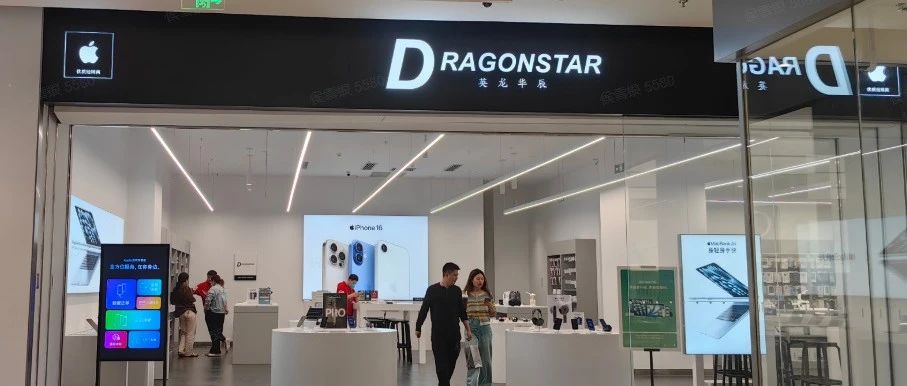
" 渠道「对内开刀」,以退为进能否守得住战线。 " 作者丨雪银 编辑丨相辉 618将近,苹果今年动作频频。 据媒体报道,5月10日,苹果向渠道商下发了调价通知,除iPhone 16 Pro的128GB版本降价176美元, 折合人民币1445.27元,iPhone 16 Pro 其他版本和iPhone 16 Pro Max所有容量版本均降价160美元。 今年的"6·18"活动将于5月13日开始,有渠道商认为苹果此次调价就是在为即将到来的"6·18"大促做准 备。 iPhone前所未有的降价力度和京东、拼多多等电商平台"斗法"有很大关系,近年拼多多正在追求品牌化和 高端化,苹果品牌无疑是其实现转型的优质抓手。很长一段时间,3C业务有口皆碑的京东被当做苹果手机 的进货平台,大量黄牛从京东低价进货,再抬价出售给拼多多和各大分销商,一石三鸟之下受伤的只有苹 果自己和老实巴交的经销商们。 全渠道时代下的电商平台是苹果未来在中国走向零售化的过程中不可忽视的重要阵地,也是进一步优化渠 道布局、规范价格体系不可绕过的一环。 苹果这两年在线下渠道管理方面的动作也不小,线下作为目前手机销售的主阵地,各大手机厂商都在持 续"扩店洗商 ...
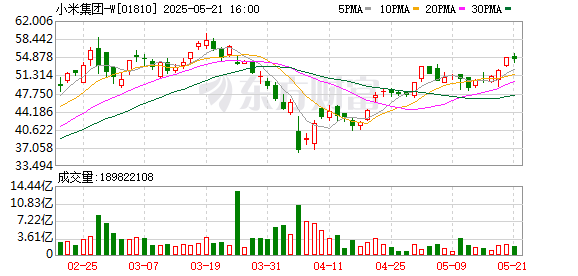
小米造芯,怎么看?
格兰投研· 2025-05-20 14:26
刚参加完高瓴资本的闭门会议,赶快来和同学们见面。 先说个科技圈的大事,小米准备在 5 月 22 日举办发布会,发布会的主角不是手机、平板和新款 SUV 车 型 Y U7 ,而是 新一代自研 SOC 芯片玄戒 O1 。 玄戒 O1 之所以能站在发布会 C 位,最根本的原因,是它的性能媲美高通等外国厂商的一线产品 。 小米成为在苹果、高通、联发科之后,第四个开发出 3nm 芯片的厂商,同时也是国内唯二两家,具备自研 芯片能力的手机厂商,另一家,就是华为。 单纯从跑分结果来看,数据确实不错。 小米对这颗芯片的定位 , 和 之前的 汽车业务一样, 一定是 首战必捷 。 自研芯片带来的关注度、信任感、科技产品力和舆论 造势,再一次把小米推到了新的高度。 最关键的问题来了,有些人说,小米的这个玄戒就是"组装厂",用的都是外部采购的架构、基带和GPU。 的确,玄戒还是采用了 ARM 授权的 CPU 架构,并且制程也是依靠台积电的第二代 3nm 工艺代工。 但这就不难吗? 单核性能超过高通骁龙 8Gen3 ,多核成绩对标苹果 A18 。 | 芯片 | 单核分 | 分数换算 | 多核分 | 分数换算 | 芯片工艺 | | -- ...