
文旅产业

Search documents
让更多“诗和远方”牵手“人间烟火”
Xin Lang Cai Jing· 2026-01-05 22:49
Core Viewpoint - The integration of cultural tourism and consumer demand is driving significant growth in the tourism sector, as evidenced by the strong performance during the New Year holiday period, indicating a vibrant market for cultural and tourism experiences [1][2][3] Group 1: Tourism Demand and Consumer Behavior - During the New Year holiday, ticket bookings for the "Xi'an City Wall·Beilin Historical and Cultural Scenic Area" increased by 134% year-on-year, with a notable rise in searches for related consumption categories such as dining and accommodation [1] - The holiday period saw a 19.4% increase in the number of tourists and an 18.4% increase in total spending in Hebei's cultural tourism market, marking a successful start to the year [3] Group 2: Integration of Cultural and Consumer Experiences - The cultural tourism industry is characterized by its broad reach and strong interconnections, with a single ticket capable of linking various consumption chains, enhancing overall visitor experience [2] - The combination of cultural experiences and tangible consumer goods, such as local cuisine and unique cultural products, transforms spiritual enjoyment into measurable lifestyle experiences [2] Group 3: Innovation and Quality Improvement - To sustain the synergy between cultural aspirations and everyday experiences, the tourism industry must focus on innovation, developing unique cultural tourism IPs, and creating diverse products and experiences that encourage deeper and varied consumer engagement [3] - Continuous improvement in service quality and infrastructure, including transportation and accommodation, is essential to ensure a comfortable and trustworthy experience for tourists [3]
写好生态与发展共荣的尖扎答卷
Xin Lang Cai Jing· 2026-01-05 18:44
Core Viewpoint - The article emphasizes the importance of ecological protection and high-quality development in the Yellow River Basin, particularly focusing on the strategies and initiatives being implemented in Qianzhai County to balance ecological preservation with economic growth [1][2][3][4][5][6] Group 1: Ecological Protection - Qianzhai County is committed to ecological priority, with a significant portion of its land designated for ecological protection, facing challenges such as limited developable land and high soil and water conservation pressure [1] - The county has completed afforestation of 545,300 acres and has achieved a forest coverage rate of 37.8% and a grassland vegetation coverage rate of 91.6% [1] - Future plans include integrated management of natural resources and the establishment of an ecological monitoring system to ensure effective implementation of ecological protection measures [1] Group 2: Industrial Upgrade - Industrial upgrade is identified as a core driver for high-quality development, with Qianzhai County focusing on developing unique agricultural products and clean energy projects [2] - The county has established clean energy projects with a capacity of 400,000 kilowatts and is advancing a 1,000,000-kilowatt rural revitalization wind power project [2] - Plans for the future include fostering a modern industrial system, enhancing brand recognition for local products, and exploring innovative agricultural models [2] Group 3: Urban-Rural Coordination - Urban-rural coordination is crucial for balanced development, with over 80% of the county's financial resources allocated to public welfare [3] - The county aims to improve infrastructure and public services in rural areas, addressing disparities in education and healthcare [3] - Future initiatives will focus on creating a coordinated development mechanism with neighboring counties and enhancing transportation and service accessibility [3] Group 4: Cultural and Tourism Integration - Cultural and tourism integration is seen as a pathway to unlock cultural and ecological value, with Qianzhai County possessing significant tourism resources [4][5] - The county plans to develop an international eco-tourism destination and enhance the integration of sports and tourism [5] - Future strategies include upgrading the tourism experience and promoting cultural heritage through various initiatives [5] Group 5: Party Leadership - Party leadership is viewed as essential for governance and development, with efforts to strengthen grassroots party organizations [6] - The county aims to enhance community participation in development and establish a collaborative governance mechanism [6] - Future actions will focus on promoting policy awareness and community engagement to foster a shared development environment [6]
元旦假期惠阳文旅市场开门红,接待游客超8.5万人次
Nan Fang Du Shi Bao· 2026-01-05 15:18
沙田镇东明村麒幻田园于元旦正式开园,园内推出 "小黄鸭漂流记"、非遗麒麟舞表演、麟图共绘、麟 饰工坊、麟韵糖坊非遗手作体验及麒麟主题星空烟花秀等特色活动。元旦三天,入园游客超 1200人 次。这些活动既生动展现了沙田麒麟非遗文化的活力,又以沉浸式田园体验满足了群众元旦休闲需求, 实现了传统文化传承与乡村文旅消费的有效融合。 此外,淡水街道灯光秀、秋长街道剧本游、三和街道接力跑等多元活动,进一步丰富了文旅供给,满足 不同休闲需求。此次假期的火热景象,为惠阳新一年文旅产业发展注入强劲动力。惠阳将持续深化文旅 融合,打造更优质的文旅产品与体验,诚邀游客前来探寻更多精彩。 2026年元旦假期,惠阳区文旅市场迎来"开门红"。据不完全统计,1月1日至3日,全区累计接待游客约 8.55万人次,实现旅游收入约3320万元,市场运行平稳有序,无安全事故及重大投诉,为市民游客营造 了安全祥和的假日氛围。 假期期间,惠阳各镇街推出系列特色文旅活动,亮点纷呈。平潭镇举办第五届淮山文化主题日暨区域品 牌发布会,全新IP"阿航仔"亮相,同步开展"淮山王"评比、田园徒步等活动,尽显农旅融合魅力;永湖 镇凤咀村发布特色IP"凤堡"与村歌《欢 ...
新消费派 |新消费时代观察——强IP与地方经济的融合共生
Sou Hu Cai Jing· 2026-01-05 14:53
Core Viewpoint - The integration of the panda IP with cultural tourism innovation is driving economic transformation, making pandas a key engine for local economic growth and cultural heritage [1][14]. Group 1: Panda IP and Tourism Growth - The panda IP has a natural global appeal and cultural affinity, which enhances local tourism development [2]. - In the first three quarters of 2025, domestic tourism in China reached 4.998 billion trips, an 18% increase year-on-year, providing an excellent market environment for panda IP [4]. - The panda IP's deep experience projects significantly increase visitor spending, with conversion rates for secondary consumption being 3 to 5 times higher than ordinary tourist attractions [4][5]. Group 2: Economic Impact and Consumer Behavior - In 2024, Ya'an city received 30 million tourists, generating a total tourism expenditure of 31.519 billion yuan, reflecting a year-on-year growth of 27.17% and 39.12% respectively [5]. - The new consumption model emphasizes personalization, scene-based experiences, and participation, aligning well with the panda tourism innovation direction [6]. - The cultural IP derivative consumption market is expected to exceed 120 billion yuan by 2025, with nearly 40% of the market share coming from cultural tourism scenarios [8]. Group 3: Integration of IP with Broader Economic Sectors - The panda IP's value extends beyond tourism, reshaping local economic structures through a "cultural tourism + all industries" integration model [14]. - The panda-themed educational bases and cultural parks are fostering local tourism market entities, while rural areas are leveraging panda-related content for economic advantages [14]. - The panda IP is becoming a "connector" for ecological protection, cultural transmission, and economic development, creating a virtuous cycle [15]. Group 4: Future Prospects and Technological Integration - The panda IP is expected to leverage technologies like the metaverse and digital twins to create diverse consumption scenarios [16]. - The integration of cultural symbols with new consumer demands is anticipated to drive not only local economic growth but also a new future of ecological, cultural, and economic synergy [16].


人民日报评论:“顶流审美”,何以硬控“老外”?
Xin Lang Cai Jing· 2026-01-05 12:33
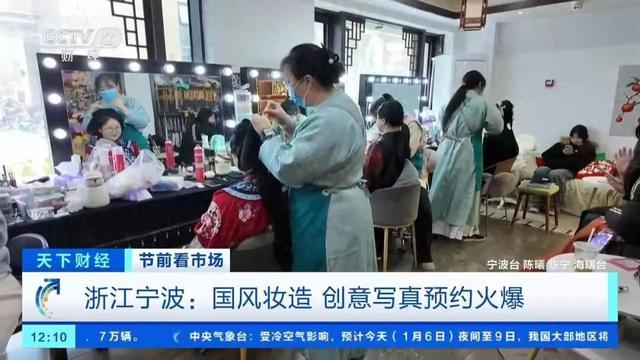
Core Viewpoint - The trend of foreign tourists engaging in traditional Chinese photography is becoming increasingly popular, enhancing their cultural experience in China and transforming their travel narratives into immersive cultural exchanges [1][2][3]. Group 1: Cultural Experience - Traditional Chinese photography allows foreign tourists to engage deeply with Chinese culture, moving from mere sightseeing to active participation in cultural practices [1][2]. - The rise of this trend is attributed to the growing inbound tourism market and innovative developments in the cultural tourism industry, supported by improved visa policies and internationalization of services [1][2]. Group 2: Cultural Significance - Traditional attire, such as Hanfu and Qipao, serves as a vital cultural symbol, reflecting China's rich history and aesthetic values [2]. - The photography experience fosters cross-cultural dialogue, bridging aesthetic differences and enhancing mutual respect and understanding between cultures [2][3]. Group 3: Global Impact - The sharing of traditional Chinese photography on social media platforms allows for a broader global audience to witness and appreciate China's cultural heritage [3]. - This trend not only showcases China's historical richness but also presents a modern, open, and friendly image of the country to the world [3].
祥源文旅:2026年元旦假期实现营业收入1378.43万元
Ge Long Hui· 2026-01-05 10:39
Core Viewpoint - Xiangyuan Cultural Tourism (600576.SH) reported significant growth in tourist reception and revenue for the New Year holiday in 2026 compared to the same period in 2024, indicating a strong recovery and performance improvement in the tourism sector [1] Financial Performance - The company received 226,500 visitors during the New Year holiday in 2026, representing a 485.42% increase from 38,700 visitors in the same period of 2024 [1] - The revenue generated was 13.7843 million yuan in 2026, which is a 377.79% increase from 2.8850 million yuan in 2024 [1]

“跟着徐霞客游广西”主题活动在桂林阳朔启动
Xin Lang Cai Jing· 2026-01-05 06:23
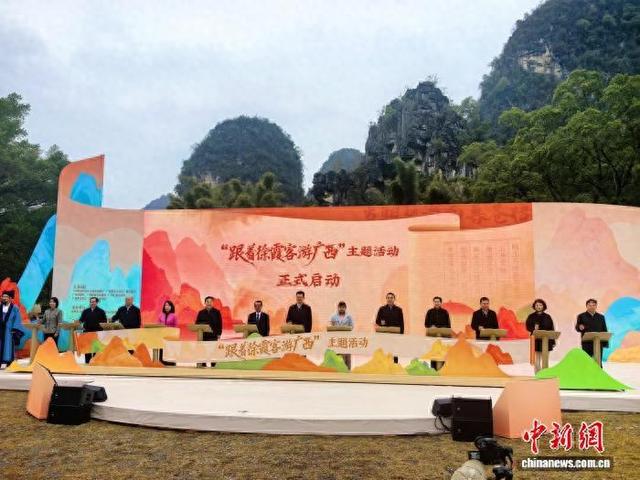
Core Viewpoint - The "Follow Xu Xiake to Travel Guangxi" themed event was launched to promote the cultural and tourism integration in Guangxi, celebrating the 439th anniversary of the famous Chinese geographer and traveler Xu Xiake [1][3]. Group 1: Event Overview - The event is co-hosted by multiple organizations including the Guangxi Zhuang Autonomous Region's Department of Culture and Tourism, aiming to explore the cultural connotations of Xu Xiake and drive innovative development in Guangxi's cultural tourism [1][3]. - The initiative seeks to transform Xu Xiake's travel routes into experiential and communicable cultural tourism products, thereby stimulating tourism consumption in Guangxi [3]. Group 2: Activities and Innovations - The launch featured various traditional and innovative content, including the AI micro-drama "Qi Xia Chuan," which uses modern technology to recreate historical travel narratives [3]. - An AI travel diary competition titled "2026 'Xu Xiake Travels Guangxi'" was announced, inviting the public to write about the scenic spots in Guangxi that Xu Xiake did not visit [3]. - A musical titled "Xia Ke Xing" and a series of programs by Guangxi Radio and Television Station are in preparation to showcase the "Xia Ke Spirit" through artistic and documentary methods [3]. Group 3: Future Plans - In 2026, Guangxi plans to continue various activities themed around "Follow Xu Xiake to Travel Guangxi," utilizing cultural, tourism, and media channels to showcase the natural beauty and cultural richness of Guangxi [5]. - The initiative aims to attract more tourists and encourage investment, enhancing the brand recognition of "Beautiful Guangxi" [5].
河南省委常委、宣传部部长王崧:在赓续中华文脉中推动文化繁荣兴盛
Bei Jing Ri Bao Ke Hu Duan· 2026-01-05 00:25
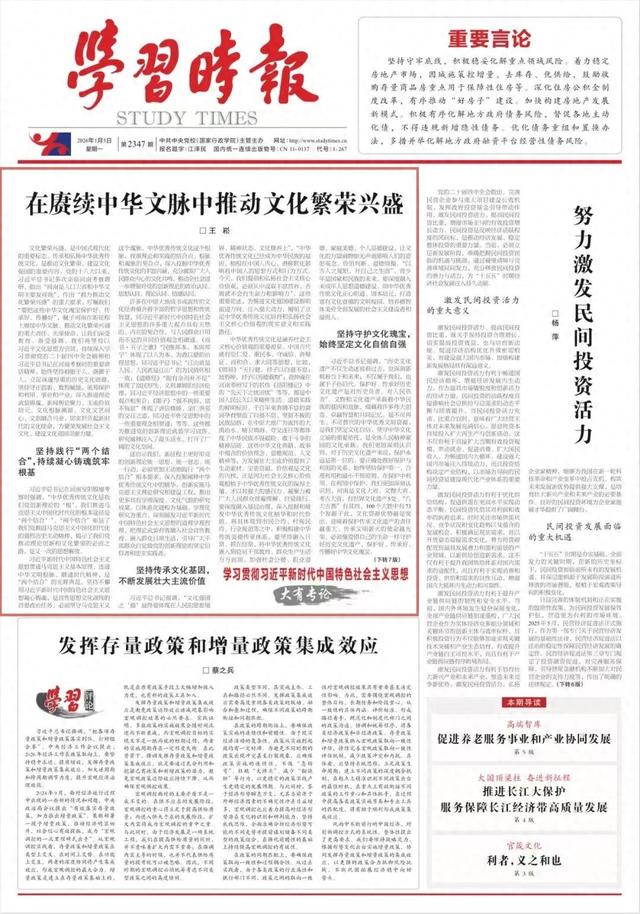
Core Viewpoint - The article emphasizes the importance of promoting cultural prosperity and the inheritance of traditional Chinese culture as a key aspect of China's modernization efforts [5][10][20]. Group 1: Cultural Inheritance and Innovation - The article highlights the need to protect, inherit, and disseminate Chinese cultural treasures, particularly in Henan, which is recognized as a major birthplace of Chinese civilization [5][13]. - It stresses the integration of traditional culture with modern socialist values, indicating that traditional Chinese culture serves as a vital source for nurturing socialist core values [11][10]. - The concept of "two combinations" is introduced, which refers to the integration of Marxism with traditional Chinese culture, as a pathway for theoretical innovation and cultural prosperity [7][9]. Group 2: Cultural Industry and Tourism - The article discusses the potential of the cultural and tourism industry as a pillar for economic development, emphasizing its role in expanding domestic demand and promoting employment [18][19]. - It outlines strategies for deepening the integration of culture and tourism, including enhancing product offerings and leveraging local cultural resources to create unique tourism experiences [19][20]. - The article notes the increasing public demand for high-quality cultural products and services, indicating a shift towards more personalized and high-standard cultural experiences [16][17]. Group 3: Cultural Confidence and Responsibility - The article underscores the importance of cultural confidence and the responsibility to protect cultural heritage, which is seen as essential for maintaining national identity and continuity [13][14]. - It calls for a systematic approach to cultural heritage protection, balancing preservation with economic development [14]. - The article emphasizes the need for continuous cultural innovation to enrich the spiritual world of the people, suggesting that cultural vitality lies in creativity and adaptation [15][17].
云南贯通监督力量压实主体责任 保障文旅产业持续健康发展
Zhong Yang Ji Wei Guo Jia Jian Wei Wang Zhan· 2026-01-04 23:58
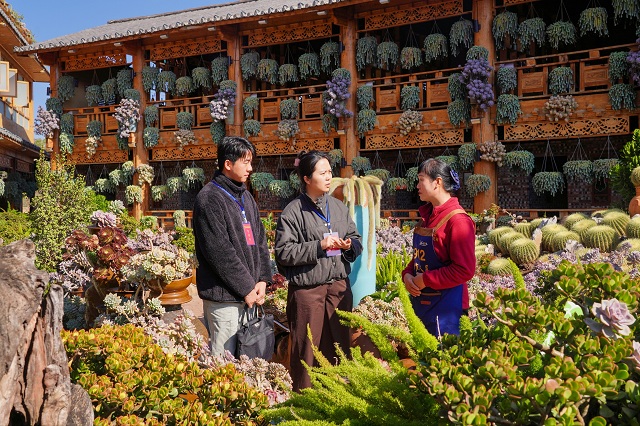
Core Viewpoint - The article emphasizes the importance of supervision in the cultural and tourism industry in Yunnan Province, highlighting efforts to ensure sustainable and healthy development while protecting tourists' rights and interests [2][3][13]. Group 1: Supervision and Regulation - Yunnan's disciplinary inspection and supervision agencies are focusing on enhancing oversight of the tourism market, transitioning from short-term fixes to long-term solutions to create a safe and comfortable environment for tourists [2]. - The integration of various departments, including tourism, market regulation, and emergency management, into a joint supervision group aims to address regulatory challenges and ensure the safety and rights of tourists during major events [2][3]. - The provincial disciplinary inspection and supervision agencies are actively monitoring key aspects of the tourism industry, such as funding, project management, and ecological protection, to ensure compliance with policies and regulations [3][5]. Group 2: Cultural Heritage and Environmental Protection - The preservation of cultural heritage sites, such as ancient towns, is crucial for the development of the tourism industry in Yunnan, with local authorities implementing targeted supervision to address issues related to heritage protection and resource utilization [4][5]. - The supervision of ecological protection measures is being prioritized, with inspections conducted across multiple regions to ensure compliance with environmental standards and rectify any identified issues [5][11]. Group 3: Economic Development and Community Benefits - The tourism industry is recognized as a vital driver of economic growth and community welfare, with initiatives aimed at transforming idle resources into assets and enhancing local income through tourism development [9][10][12]. - The establishment of pilot projects for high-quality tourism development is expected to create new income streams for local communities, with a focus on collaborative models involving local governments, enterprises, and residents [10][12]. - The article highlights the positive impact of tourism on local economies, with reports of increased collective income and job creation in rural areas due to the growth of the tourism sector [9][12]. Group 4: Improving Business Environment - The article stresses the need for an improved business environment to stimulate the tourism industry, advocating for streamlined administrative processes and enhanced service efficiency to support tourism-related projects [14][15]. - Efforts are being made to address common complaints regarding bureaucratic hurdles in project approvals, aiming to foster a more favorable environment for tourism development [14][15].
创新支撑广东跑出发展加速度
2 1 Shi Ji Jing Ji Bao Dao· 2026-01-04 22:50
Group 1 - Guangdong received over 10 million tourists during the New Year's holiday in 2026, indicating a strong trend in cultural and tourism consumption [1] - The province aims to enhance its role as a leading economic power in China during the "14th Five-Year Plan" period, emphasizing a spirit of rapid progress and innovation [1] - Guangdong plans to strengthen its technological innovation capabilities and deepen the integration of technology and industry, particularly in the Guangdong-Hong Kong-Macao Greater Bay Area [1][2] Group 2 - Guangdong's economic foundation is robust, with a GDP surpassing 14 trillion yuan and nine trillion-yuan industrial clusters, including a core AI industry worth over 220 billion yuan [2] - The province leads the nation in R&D investment intensity at 3.6%, with approximately 77,000 high-tech enterprises, showcasing a strong innovation ecosystem [2] - The integration of technological and industrial innovation has resulted in significant economic resilience, with Guangdong's GDP projected to reach 14.16 trillion yuan in 2024 [3] Group 3 - Guangdong's strategy to deepen the integration of technology and industry is a response to global supply chain challenges and aims to maintain its competitive edge [4] - The province has made breakthroughs in high-end sectors like chips and medical equipment, enhancing the security of its industrial chain [4] - The focus on innovation is expected to provide sustained internal momentum for economic growth, particularly in emerging industries like AI and low-altitude economy [4] Group 4 - To ensure a successful start to the "14th Five-Year Plan," Guangdong should enhance basic research, establish demand-driven mechanisms, and create innovation consortia [5] - Strengthening regional innovation collaboration and leveraging digital empowerment are essential for coordinated development across the province [5] - The province aims to deepen cooperation within the Greater Bay Area to build an open and integrated innovation ecosystem [5] Group 5 - Guangdong is positioned to showcase significant contributions in the upcoming technological revolution and industrial transformation during the "14th Five-Year Plan" [6]