化学

Search documents
他们在分子世界里“造房子”!解读2025年诺贝尔化学奖
Huan Qiu Wang Zi Xun· 2025-10-08 12:40
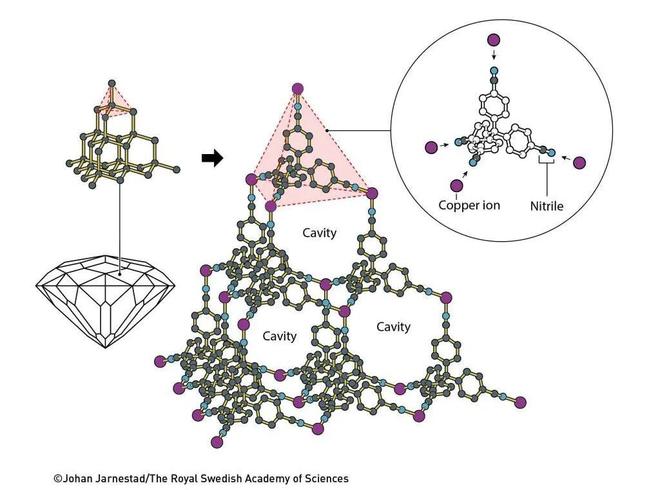
Core Viewpoint - The 2025 Nobel Prize in Chemistry was awarded to Japanese scientist Satoshi Kitagawa, Australian scientist Richard Robson, and American scientist Omar Yaghi for their pioneering contributions to the development of Metal-Organic Frameworks (MOFs), which are innovative molecular structures with numerous applications in various fields [1][15]. Group 1: Contributions of Richard Robson - Richard Robson's inspiration for molecular architecture came from a chemistry class in 1974, where he envisioned a method to allow atoms or molecules to connect based on their chemical properties, leading to the creation of new molecular structures [2][5]. - In 1989, Robson published his findings on the potential of molecular networks, predicting that they would endow materials with unprecedented properties [2][5]. Group 2: Contributions of Satoshi Kitagawa - Satoshi Kitagawa built upon Robson's work in the 1990s, focusing on the utility of previously deemed "useless" materials. In 1992, he created a two-dimensional molecular material with cavities capable of accommodating acetone molecules, representing a new design philosophy [6][7]. - In 1997, Kitagawa successfully constructed a three-dimensional MOF structure with intersecting open channels, demonstrating its ability to adsorb and release gases without deformation [7]. Group 3: Contributions of Omar Yaghi - Omar Yaghi coined the term "Metal-Organic Framework (MOF)" in 1995, defining it as a crystal structure composed of metal nodes and organic ligands with regular cavities [8]. - In 1999, Yaghi developed MOF-5, a highly stable framework that maintains its structure even at high temperatures, with an internal surface area equivalent to a football field, significantly surpassing traditional zeolites in gas adsorption capacity [11]. Group 4: Applications and Future Potential of MOFs - Scientists have designed thousands of MOFs for applications in carbon capture, air purification, drug delivery, and energy storage, with some being utilized in semiconductor manufacturing to capture or decompose toxic gases [15]. - The potential of MOFs is considered immense, with some experts believing they could become "materials of the 21st century," addressing critical issues in energy, environment, and health, aligning with the spirit of the Nobel Prize's mission to "benefit humanity" [15].

日本汽车、钢铁等制造业利润暴跌
Zhong Guo Qi Che Bao Wang· 2025-09-05 01:14
Core Points - Japan's manufacturing sector has experienced a significant decline in profits due to the impact of U.S. tariff policies, with overall regular profits dropping by 11.5% year-on-year for two consecutive quarters [1][4][7] - The non-manufacturing sector, particularly in tourism and services, has shown resilience with a profit increase of 6.6% compared to the previous year [3][4] Manufacturing Sector Impact - The manufacturing sector's regular profits fell sharply, particularly in the transportation machinery sector, which includes the automotive industry, with a decline of 29.7% [4][7] - Other affected industries include steel, which saw a profit drop of 48.2%, and metal products, which experienced a 36.6% decrease [4][7] - The overall regular profit for the manufacturing sector was recorded at 35.8338 trillion yen, marking a historical high for the quarter, but the decline in specific sectors overshadowed this achievement [3][4] Tariff Effects - U.S. tariffs imposed on imported automobiles and key components have significantly impacted Japanese exports, with tariffs on passenger cars rising from 2.5% to 27.5% [7][9] - The steel industry faced additional challenges as U.S. tariffs on steel and aluminum products increased from 25% to 50%, leading to losses in the Japanese steel sector [7][8] - In July, Japan's exports to the U.S. fell by 10.1% year-on-year, with automotive exports specifically declining by 28.4% [8][9] Company-Specific Impacts - Major Japanese automakers reported substantial profit losses due to U.S. tariffs, with Honda's net profit plummeting by 50.2% in the latest quarter [11] - Toyota estimated a loss of 450 billion yen in operating profit due to tariffs, with an expected total loss of 1.4 trillion yen for the fiscal year [11] - Other automakers, including Mazda, Nissan, Subaru, and Mitsubishi, also reported significant losses, prompting them to revise their profit forecasts downward [11]


欧盟:拟取消部分美国商品关税
财联社· 2025-08-28 15:44
Core Viewpoint - The European Commission has proposed two legislative measures to implement the joint statement between the EU and the US regarding tariff reductions, aiming to enhance transatlantic trade and investment stability and predictability [1][2] Group 1: Legislative Proposals - The proposals include the EU's plan to eliminate certain tariffs on US industrial products and provide preferential market access for some seafood and non-sensitive agricultural products, while extending zero-tariff treatment for shrimp [1] - The US has committed to reducing tariffs on EU automobiles and parts from 27.5% to 15%, and will implement zero or near-zero tariffs on several products including softwood, aircraft and parts, generic drugs, and chemical precursors starting September 1 [1] Group 2: Legislative Process - These proposals are necessary legislative steps to fulfill the first part of the commitments made in the EU-US joint statement, requiring approval from the European Parliament and the EU Council through the ordinary legislative procedure before the tariff measures can take effect [2]

传化智联上半年净利同比增长76.01% 连续17年分红回馈投资者
Zheng Quan Ri Bao Wang· 2025-08-26 08:46
Group 1 - The core viewpoint of the article highlights the strong financial performance of Chuanhua Zhiliang Co., Ltd., with a reported revenue of 12.226 billion yuan and a net profit of 509 million yuan, marking a year-on-year growth of 76.01% [1] - The company plans to distribute a cash dividend of 0.5 yuan per 10 shares to all shareholders, continuing its commitment to shareholder returns [1] - Chuanhua Zhiliang has consistently paid cash dividends for 17 years, totaling 3.167 billion yuan since 2008, reflecting its strong financial health and commitment to shareholder value [1] Group 2 - The company is actively implementing a share buyback program, with plans to cancel approximately 23.9396 million repurchased shares, indicating confidence in its future prospects and enhancing per-share profit distribution [1] - The logistics segment is focusing on the transformation and upgrading of highway ports, while the chemical segment emphasizes innovation and high-quality development, aiming for deep collaboration across the industry chain [2] - Chuanhua Zhiliang has introduced a valuation enhancement plan that includes measures such as deepening core business, encouraging shareholder returns, and seeking merger and acquisition opportunities to promote sustainable high-quality development [2]

推理速度快50倍,MIT团队提出FASTSOLV模型,实现任意温度下的小分子溶解度预测
3 6 Ke· 2025-08-26 07:23
Core Insights - The research team from MIT has developed an improved model for predicting organic solubility using a new organic solubility database, BigSolDB, which enhances the accuracy and speed of solubility predictions [1][2][22] - The new model, named FASTSOLV, shows a reduction in RMSE by 2-3 times compared to existing state-of-the-art (SOTA) models and achieves a speed increase of up to 50 times [2][14][22] Group 1: Model Development and Performance - The FASTSOLV model integrates solute and solvent molecular structures along with temperature parameters to directly regress logS, improving upon traditional methods that are time-consuming and less accurate [2][11] - In strict solute extrapolation scenarios, the optimized model's RMSE is significantly lower than that of the Vermeire model, demonstrating superior performance [14][22] - The model's training and evaluation were conducted using a rigorous system that ensures independence and reliability, avoiding data overlap issues [6][9][13] Group 2: Data Utilization and Methodology - BigSolDB serves as the core data source, systematically collecting solubility data across various solvents and temperatures, which is crucial for training generalizable predictive models [6][11] - The research emphasizes the importance of a well-structured training and evaluation system to achieve reliable extrapolation without prior conditions [6][9] - The study highlights the need for high-quality organic solvent datasets to further enhance model performance, indicating that simply increasing training data may not overcome performance limits [22][25] Group 3: Industry Implications and Applications - The advancements in solubility prediction technology are seen as key solutions to industry challenges such as long experimental times and high R&D costs [24][25] - Companies in the pharmaceutical sector are particularly interested in high-throughput, low-cost solubility assessment technologies, which can significantly improve efficiency in drug development processes [25] - The integration of academic research models into industrial applications is evident, with companies leveraging data-driven models to optimize production processes and enhance product quality [25][26]
【环球财经】日经225指数微涨0.05%
Xin Hua Cai Jing· 2025-08-22 07:28
Market Performance - The Tokyo stock market indices closed higher on August 22, with the Nikkei 225 index rising by 0.05% and the Tokyo Stock Exchange Price Index increasing by 0.58% [1][2] - The Nikkei index gained 23.12 points, closing at 42633.29 points, while the Tokyo Stock Exchange index rose by 17.92 points to close at 3100.87 points [2] Investor Behavior - After three consecutive days of decline, increased buying activity from investors led to a slight rise in the indices, with early trading showing minor fluctuations around the previous day's closing prices [1] - The stabilization of the Tokyo Stock Exchange index during the midday session was noted, while the Nikkei index faced pressure from sell-offs in high-priced technology stocks before turning positive towards the end of the trading day [1] Sector Performance - Most of the 33 industry sectors on the Tokyo Stock Exchange saw gains, particularly in the insurance, securities and commodity futures trading, and banking sectors [2] - Conversely, eight sectors, including chemicals, air transportation, and services, experienced declines on the same day [2] Economic Indicators - The release of Japan's Consumer Price Index for July heightened investor expectations for a potential interest rate hike by the Bank of Japan, which in turn supported the banking sector's performance [1]
三维化学: 关于2025年半年度利润分配方案的公告
Zheng Quan Zhi Xing· 2025-08-21 05:40
Group 1 - The company approved the 2025 interim dividend plan at the board meeting on March 26, 2025, and it was subsequently ratified at the annual shareholders' meeting on April 17, 2025 [1] - For the first half of 2025, the company reported a net profit of RMB 59,520,994.15 and proposed to distribute dividends of RMB 194,658,789.00, resulting in an ending retained earnings of RMB 135,250,542.18 [1][2] - The total share capital of the company as of the reporting period was 648,862,630 shares, with no stock dividends or capital increases from reserves planned [2] Group 2 - The rationale for the 2025 interim profit distribution plan is to enhance dividend frequency and investor returns while ensuring the company's sustainable and stable operation [3] - The proposed profit distribution plan aligns with industry characteristics, development stage, operational model, profitability, and investor return considerations, complying with relevant regulations [3]

华峰化学:上半年净利润9.83亿元 同比下降35.23%
Zheng Quan Shi Bao Wang· 2025-08-11 11:41
Group 1 - The core viewpoint of the article highlights that Huafeng Chemical (002064) reported a decline in both revenue and net profit for the first half of 2025, indicating challenges in the industry [1] - The company's revenue for the first half of 2025 was 12.137 billion yuan, representing a year-on-year decrease of 11.7% [1] - The net profit attributable to the parent company was 983 million yuan, showing a significant year-on-year decline of 35.23% [1] Group 2 - The report indicates that the industry is experiencing a downward cycle, leading to an oversupply situation [1] - Product prices have decreased compared to the same period last year, contributing to the financial challenges faced by the company [1]

Expeditors International of Washington (EXPD) Update / Briefing Transcript
2025-08-06 10:00
Summary of Expeditors International of Washington (EXPD) Update / Briefing Company Overview - **Company**: Expeditors International of Washington (EXPD) - **Division**: Onyx, an advisory firm under Expeditors, focuses on global supply chains and navigating trade disruptions [8][10] Industry Context - **Industry**: Trade and logistics, with a focus on customs and tariffs - **Current Environment**: Significant changes in U.S. trade policy, particularly regarding tariffs and trade agreements with various countries [13][15] Key Points and Arguments 1. **Tariff Changes**: Nine new tariff levels were announced, increasing the overall effective tariff rate significantly, with a focus on transshipment, which incurs an additional 40% tariff for goods attempting to avoid tariffs [15][16] 2. **Focus on China**: The U.S. administration is primarily targeting Chinese goods and exports, with a notable removal of de minimis exemptions for goods valued at $800 or less [17][18] 3. **Impact of Tariffs**: The competitive landscape will be affected on an industry-by-industry and product-by-product basis, with ongoing evaluations of how these tariffs will impact various sectors [20][21] 4. **Uncertainty in Trade Deals**: Current agreements are not fully defined, leading to significant uncertainty in trade relationships, particularly with the EU, Canada, and Mexico [22][56] 5. **Political Pressures**: Domestic political pressures, especially with upcoming midterms, may influence tariff policies and negotiations [26][66] 6. **EU Relations**: The EU has avoided a full trade war with the U.S., but faces economic and political challenges due to the current tariff landscape [27][58] 7. **China-U.S. Relations**: The relationship is in a strategic pause, with limited deals expected, focusing on structural demands rather than comprehensive agreements [62][63] 8. **USMCA and India**: The USMCA remains unresolved, and the Trump administration is applying pressure on India with reciprocal tariffs and potential sanctions related to oil purchases from Russia [66][70] Additional Important Insights 1. **Macroeconomic Impact**: Tariffs are expected to have a stagflationary effect, negatively impacting growth while pushing inflation higher, with estimates of a half percentage point reduction in GDP growth [80][81] 2. **Sector-Specific Effects**: Consumer electronics, automobiles, and industrial metals are among the most affected sectors due to high tariff exposure [82] 3. **Fiscal Implications**: Tariffs are projected to generate significant revenue, but the regressive nature of tariffs may disproportionately affect lower-income households [86] 4. **Investment Trends**: There is a potential shift in foreign direct investment towards Mexico and ASEAN economies as companies seek to derisk from China [87] Conclusion - The current trade environment is characterized by significant uncertainty and evolving tariff policies, with potential long-term implications for various sectors and international relationships. The focus remains on navigating these changes while assessing their macroeconomic impacts and sector-specific challenges.

天津铱粉的应用与回收
Sou Hu Cai Jing· 2025-08-01 06:21
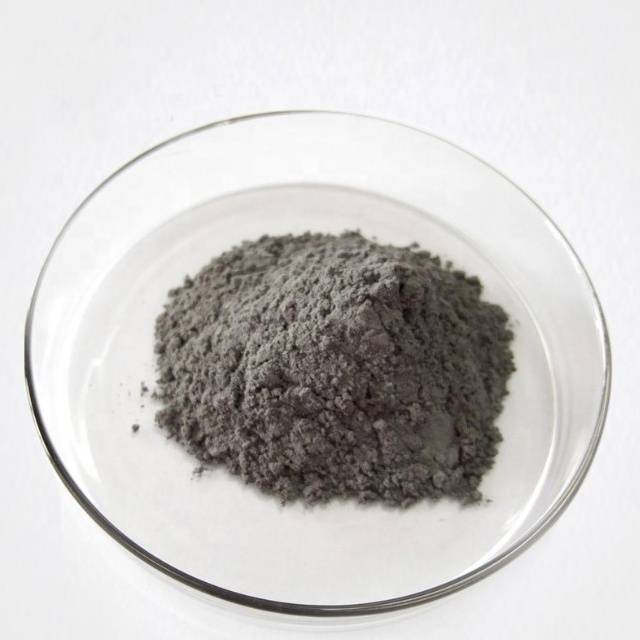
Core Viewpoint - Iridium is a rare precious metal with significant applications in high-end industrial, technological, and research fields, particularly in Tianjin, China, where its application and recycling are becoming increasingly important [1]. Application Areas of Iridium Powder - Iridium powder is primarily used in chemical catalysts, especially in petroleum refining and organic chemical reactions, due to its high-temperature resistance, corrosion resistance, and strong catalytic activity [2]. - In the electronics industry, iridium powder is widely used in manufacturing electrical contact materials, switches, and relays, making it essential for high-end electrical equipment, particularly in aerospace and military communications [4]. - Iridium powder plays a crucial role in high-temperature alloys, being a key component in alloy materials for advanced equipment like aircraft engines and rocket engines, ensuring stability and longevity in extreme high-temperature environments [5]. - In the medical field, iridium powder is utilized in the production of certain radioactive drugs, particularly in targeted radiation therapy for cancer treatment [6]. Importance and Market Outlook of Iridium Powder Recycling - The recycling of iridium powder has significant economic and environmental value globally, as it reduces resource waste and lowers production costs, making it an important industry trend in industrial hubs like Tianjin [8]. - The main sources for iridium powder recycling include waste catalysts, discarded electronic components, and industrial waste, with high-precision chemical separation technology required to extract iridium from these sources [9]. Recycling Prices - The recycling price of iridium powder is relatively high, typically ranging from 350 to 500 RMB per gram in Tianjin, influenced by market demand and supply conditions, as well as fluctuations in prices of other precious metals like palladium and platinum [10]. Challenges and Technical Requirements in Recycling - Despite the significant economic benefits of iridium powder recycling, technical challenges remain, including the need for precise chemical purification processes and advanced equipment to meet high purity requirements [11]. Future Prospects of Iridium Powder Recycling in Tianjin - With the increasing global demand for rare metals, the iridium powder recycling industry is expected to mature, particularly in Tianjin, which has strong production and technical foundations [12]. - The growing demand for iridium in sectors such as new energy, electronics, and aerospace, along with stricter environmental policies and improved legal frameworks, will enhance the efficiency and economic benefits of iridium powder recycling [12].