手机制造

Search documents
从非洲杯看传音,一个中国品牌的长期主义样本
3 6 Ke· 2025-12-25 08:39
Core Insights - The 35th Africa Cup of Nations (AFCON) has officially commenced in Rabat, Morocco, with TECNO, a brand under Transsion Holdings, as the official global partner, highlighting its significant presence in the event [2][4] - TECNO's partnership with AFCON is a strategic move to enhance brand visibility and connect with local consumers, showcasing its commitment to the African market [4][6] Market Position and Strategy - Transsion Holdings, known as the "King of Africa," has a dominant market share in the African smartphone market, with over 40% in 2024, and ranked fourth globally with a shipment of 29.2 million units in Q3 2025 [6][7] - The company has tailored its products to meet local needs, focusing on features like high-volume speakers, long battery life, and multi-SIM capabilities, which are essential for African consumers [8][9] Technological Innovation - Transsion has invested in AI technology to address local user needs, launching a smartphone assistant that supports over 100 languages, including many African dialects, enhancing accessibility for users [9][11] - The company emphasizes the importance of localized technology, with AI features designed for real-world applications, such as image enhancement for diverse skin tones and voice interaction for low literacy scenarios [13][16] Brand Engagement and Community Involvement - TECNO's sponsorship of AFCON is not just for exposure but aims to create deeper connections with users by integrating practical AI features into the viewing experience [16][18] - The brand engages in community projects, such as sports field renovations and educational support, fostering a long-term relationship with consumers beyond mere transactions [9][18] Global Expansion and Market Adaptation - Transsion is expanding its market presence globally, achieving a 14% market share in the global smartphone market by 2024, with significant growth in Southeast Asia and the Middle East [15] - The company's strategy of "Think Globally, Act Locally" allows it to adapt to different markets by understanding local consumer needs and preferences [15][19] Long-term Vision and Sustainability - Transsion's approach to building trust in emerging markets is through consistent presence and engagement, rather than short-term marketing tactics [16][19] - The company's ability to create sustainable social connections while generating commercial value positions it as a model for global brands in emerging markets [19]



社保基金“压箱底”的科技股名单曝光
Sou Hu Cai Jing· 2025-12-21 12:25
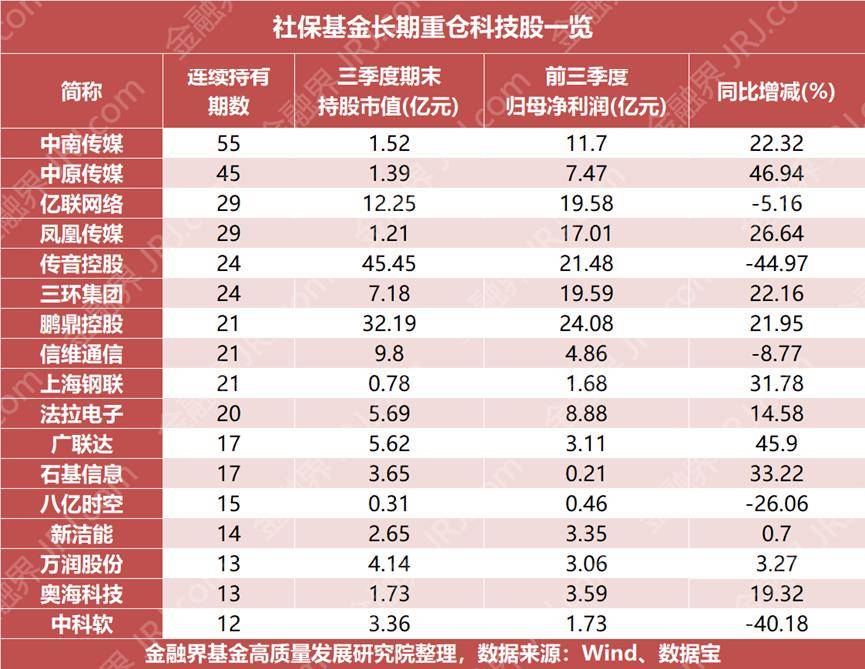
Core Insights - The National Social Security Fund (NSSF) has significantly increased its investment in technology stocks, with a market value exceeding 46.9 billion yuan as of Q3, marking an 18-fold increase compared to the same period in 2011 [1] Group 1: Investment Trends - The NSSF's heavy investment in technology stocks includes sectors such as electronics, communications, computers, and media, reaching a historical high [1] - Six technology stocks have been held by the NSSF for over 24 consecutive quarters, indicating a strong long-term commitment [1] Group 2: Key Companies - Transsion Holdings leads with a market value of over 4.5 billion yuan, focusing on mid-to-high-end products and expanding into AIoT and home appliances [3] - Pengding Holdings ranks second with over 3.2 billion yuan in market value and is recognized for its leadership in the PCB industry, capitalizing on AI-related growth opportunities [3] - Yealink Network, with a market value exceeding 1.2 billion yuan, is noted for its competitive edge in AI meeting products and cloud office terminals, driving market share and performance growth [3] Group 3: Company Performance - Zhongnan Media has been held for 55 consecutive quarters and is actively transforming its business model while showing strong profit growth [2] - The net profit of Zhongyuan Media increased by 46.94% year-on-year, reflecting its resilience amid industry transitions [2] - The net profit of Pengding Holdings increased by 21.95% year-on-year, showcasing its robust financial performance [2]



外派非洲,是份好工作吗?
创业邦· 2025-12-11 10:15
Core Viewpoint - The article discusses the experiences and challenges faced by Chinese expatriates working in Africa, highlighting the high salaries and potential for savings, but also the difficulties such as harsh working conditions, health risks, and social isolation [5][8][31]. Group 1: Historical Context - The influx of Chinese workers to Africa began in the 1960s, driven by the need for development in newly independent African nations and China's desire for allies [8][11]. - Major projects like the TAZARA Railway were significant milestones, with thousands of Chinese engineers sent to Africa, marking the start of a long-term engagement [11][12]. Group 2: Current Employment Landscape - Expatriate positions in Africa are often associated with high salaries, sometimes exceeding double the pay in major Chinese cities, particularly for roles in engineering and management [15][16][19]. - The average monthly salary for expatriates in engineering roles can be significantly higher than domestic counterparts, with some positions offering annual earnings around 990,000 RMB when including bonuses and allowances [19][20]. Group 3: Challenges Faced by Expatriates - Expatriates face numerous challenges, including demanding work hours, health risks from diseases prevalent in Africa, and security concerns such as robbery and kidnapping [24][25][27]. - The social isolation experienced by expatriates is profound, often leading to feelings of loneliness and disconnection from their home culture [30][31]. Group 4: Economic Implications - The high salaries offered to expatriates are a reflection of the supply-demand dynamics in the labor market, where the demand for skilled labor in Africa outstrips the local supply [23]. - Despite the lucrative opportunities, the risks and challenges associated with working in Africa can deter many potential candidates, leading to a limited pool of willing expatriates [24][33]. Group 5: Future Outlook - The evolving economic landscape in Africa presents both opportunities and challenges for Chinese companies, with issues such as political instability and inflation impacting business operations [32][33]. - The article concludes that while some individuals may thrive in expatriate roles, the overall experience is complex and varies greatly depending on personal circumstances and the broader economic context [35].

外派非洲,是份好工作吗?
36氪· 2025-12-10 11:18
Core Viewpoint - The article discusses the complexities and realities of working in Africa, particularly for Chinese expatriates, highlighting both the financial incentives and the challenges faced in such roles [14][15][22]. Group 1: Historical Context - The trend of Chinese expatriates in Africa began in the 1960s, coinciding with the continent's independence movements and China's need for allies [25][30]. - The construction of the TAZARA Railway is a significant historical example of early Chinese involvement in Africa, with nearly 50,000 Chinese engineers sent to assist [35][36]. - By the 1980s, China's aid to Africa shifted from political to economic motivations, with state-owned enterprises leading the charge in infrastructure projects [37][39]. Group 2: Current Employment Landscape - There is a growing number of job postings for expatriate positions in Africa, with salaries often exceeding those in major Chinese cities by more than double [55][57]. - For example, expatriates in engineering roles can earn an average monthly salary that is over twice that of similar positions in Beijing [57]. - New graduates can expect total compensation packages of around 250,000 yuan per year, while those with more experience can earn between 350,000 to 500,000 yuan [58][59]. Group 3: Challenges Faced by Expatriates - Working in Africa is often characterized by high demands, with expatriates expected to work long hours and handle multiple responsibilities [84]. - Health risks are significant, as Africa is known for high rates of infectious diseases, and access to quality healthcare can be limited [88][90]. - Security concerns are prevalent, with reports of crime and violence against expatriates, particularly in countries like Nigeria and the Democratic Republic of the Congo [92][96]. Group 4: Economic Considerations - The high salaries offered to expatriates are a result of supply and demand dynamics in the labor market, where local labor may not meet the expectations of Chinese companies [78][80]. - Despite the financial benefits, expatriates often face a high cost of living in terms of personal sacrifices, including isolation and cultural barriers [98][100]. - The article notes that while expatriates can save money due to provided accommodations and limited spending options, the overall experience can be challenging [71][74]. Group 5: Future Outlook - The increasing interest in Africa as a market presents both opportunities and challenges for companies, with issues such as political instability and corruption affecting operations [109][110]. - The evolving landscape means that while some expatriates find success, others may struggle with the realities of working in such environments [111][112]. - Ultimately, the decision to work in Africa is a complex one, influenced by personal circumstances and broader economic trends [115][116].

传音控股赴港IPO:控股股东递表前套现
Xin Lang Cai Jing· 2025-12-10 08:43
Core Viewpoint - Transsion Holdings, known as the "King of Mobile Phones in Africa," has submitted an IPO application to the Hong Kong Stock Exchange amid declining sales and revenue in its core African market and other regions, prompting the company to accelerate its high-end strategy and diversification efforts [1][14]. Group 1: Revenue Decline Across Regions - Despite holding over 50% market share, Transsion Holdings faces increasing competition from brands like realme, OPPO, and Honor, leading to a decline in its market share [2][15]. - In Q1 2025, Transsion's market share dropped by 5 percentage points to 47%, and although it regained a 51% share in Q3 2025, its growth rate of 25% lagged behind competitors like Xiaomi and Honor [2][15]. - For the first three quarters of 2025, Transsion reported revenue of 49.543 billion yuan, a year-on-year decrease of 3.33%, and a net profit of 2.148 billion yuan, down 44.97% [2][15]. Group 2: Performance in Key Markets - In Africa, Transsion's mobile sales are projected to decline by 1.58% in 2024 and 18.9% in the first half of 2025, with revenue growth slowing to 2.67% in 2024 compared to 5.96% in 2023 [3][16]. - The Asia-Pacific market also showed disappointing results, with revenues of 21 billion yuan, 24.442 billion yuan, and 10.41 billion yuan for 2023, 2024, and the first half of 2025, respectively, reflecting a year-on-year decline of 19.56% in the latter [5][18]. Group 3: High-End Strategy and Diversification - Transsion is rapidly developing its mobile internet, digital accessories, and home appliance businesses as part of its diversification strategy, but non-mobile revenue remains limited [7][19]. - The company aims to use funds from its IPO to expand its product categories and enhance its international marketing efforts, yet mobile business revenue still accounts for 89.8% of total revenue, with a decline of 18.41% year-on-year [7][19]. - The share of mid-to-high-end models priced over $200 has increased from 4.74% in 2017 to 14.04% in 2024, although the overall gross margin has not improved significantly [8][20]. Group 4: Shareholder Actions and Market Response - Transsion's controlling shareholder, Transsion Investment, has raised concerns by selling shares worth approximately 1.866 billion yuan before the IPO application, reducing its stake from 49.64% to 47.15% [9][21]. - The shareholder's previous sale in May 2022 at a higher price indicates a significant drop in market valuation, with the share price falling from 125.55 yuan to 81.81 yuan, a decrease of about 34.8% [11][23]. - Following a peak of 104.9 yuan per share, Transsion's stock has declined approximately 36.42% to 66.7 yuan as of December 9, 2025, raising questions about the necessity of the IPO given the company's strong cash position [13][23].

外派非洲,是份好工作吗?
首席商业评论· 2025-12-07 04:50
Core Viewpoint - The article discusses the complexities and realities of working in Africa, particularly for Chinese expatriates, highlighting both the financial incentives and the challenges faced in this environment [4][6][32]. Group 1: Historical Context and Development - The article traces the history of Chinese involvement in Africa, starting from the 1960s with the construction of the TAZARA railway, where nearly 50,000 Chinese engineers were sent to assist [9][12]. - The shift from political aid to economic cooperation is noted, with Chinese enterprises increasingly engaging in infrastructure projects across Africa since the 1980s [12][14]. - Huawei's expansion into Africa is highlighted as a significant example of this trend, achieving major milestones in telecommunications [14][15]. Group 2: Financial Aspects of Expatriate Work - Expatriate positions in Africa often offer salaries that are significantly higher than those in major Chinese cities, with average monthly salaries for engineering roles being over double that of Beijing [18][19]. - A specific example illustrates that an expatriate could earn around 990,000 yuan annually, including bonuses and allowances, making it financially attractive despite the challenges [19][20]. - The cost of living in Africa is discussed, noting that many expatriates have their basic needs covered, which allows for substantial savings [20][22]. Group 3: Challenges Faced by Expatriates - The article outlines the demanding nature of expatriate work in Africa, where employees often face long hours and high expectations [27][28]. - Health risks are significant, with Africa being a hotspot for diseases like malaria, and the medical infrastructure can complicate health issues [28][30]. - Security concerns are prevalent, with reports of crime and violence affecting expatriates, particularly in certain regions [30][31]. Group 4: Personal Experiences and Perspectives - The emotional toll of working in Africa is discussed, with feelings of isolation and cultural disconnection being common among expatriates [31][32]. - The article emphasizes that while some view expatriate work in Africa as a lucrative opportunity, others find it challenging and unappealing [36][37].

豆包抢入口,捅了马蜂窝
硬AI· 2025-12-05 06:45
Core Insights - The article highlights the competition for the "super entry point" in the AI era, emphasizing that the ability to control data and traffic is shifting from traditional apps to system-level AI agents [2][17] - The recent developments surrounding the Doubao AI assistant reveal the challenges faced by AI companies in navigating existing app ecosystems and data security regulations [5][19] Group 1: Doubao AI Assistant Launch and Challenges - Doubao AI assistant was launched on December 1, enabling cross-application operations, which generated significant market excitement [7][4] - Shortly after its launch, Doubao announced a temporary suspension of its ability to operate financial apps due to security concerns, highlighting the need for clear AI operation guidelines [3][4] - Major apps like WeChat, Taobao, and banks implemented measures to prevent Doubao AI from functioning properly, indicating a defensive response to the new technology [8][10] Group 2: Industry Dynamics and Competitive Landscape - The conflict between AI companies, hardware manufacturers, and app developers illustrates a complex interplay of interests and poses challenges to existing data security frameworks [5][12] - Goldman Sachs identified three core obstacles for third-party AI agents: system-level operation permissions, memory capabilities, and cross-application interface connections [12][14] - The dominance of major smartphone manufacturers in the Chinese market, which hold over 90% market share, makes it difficult for new players to disrupt the ecosystem [14][15] Group 3: Future of AI and App Ecosystem - The article suggests that as voice interaction becomes the primary entry point, traditional app operations may collapse, making it crucial to establish a default system entry point [17][20] - The ongoing battle for AI agents signifies a broader struggle involving major tech companies and highlights the potential for significant shifts in the internet landscape over the next decade [19][20]





外派非洲,是份好工作吗?
3 6 Ke· 2025-11-26 06:37
Core Viewpoint - The article discusses the experiences and challenges faced by Chinese expatriates working in Africa, highlighting the high salaries and potential for savings, but also the difficulties related to living and working in challenging environments [2][4][14]. Group 1: Expatriate Experiences - A Chinese individual named Kong Tao was awarded a chieftain title in Nigeria, reflecting the growing presence of Chinese workers in Africa due to initiatives like the Belt and Road [2][4]. - The trend of Chinese expatriates in Africa has increased significantly over the years, with many individuals taking on roles in engineering and construction projects [4][9]. - Expatriates often face a challenging work environment, with high demands and expectations from employers, leading to a perception that they must work harder for their high salaries [29][30]. Group 2: Financial Aspects - Expatriate positions in Africa typically offer salaries that are significantly higher than those in major Chinese cities, often two times or more [16][18]. - For example, expatriates in engineering roles can earn annual salaries exceeding 99,000 yuan, including bonuses and allowances [19][21]. - The cost of living in Africa can be lower for expatriates due to provided accommodations and limited spending options, allowing for greater savings [23][24][25]. Group 3: Challenges Faced - Expatriates encounter numerous health risks, including high rates of infectious diseases, which can complicate medical care [30][31]. - Security concerns are prevalent, with reports of crime and violence against expatriates in certain regions, adding to the stress of living abroad [33][34]. - The emotional toll of isolation and cultural differences can lead to feelings of loneliness among expatriates, making the experience more challenging [37][38]. Group 4: Broader Implications - The article emphasizes the dual nature of expatriate work in Africa, where high rewards come with significant risks and challenges, making it a complex decision for individuals [40][41]. - The evolving landscape of Africa presents both opportunities and obstacles for companies looking to expand, with factors like political instability and economic challenges affecting operations [44][45].

大量制造业企业撤出中国,迁往东南亚,为什么不搬去我国中西部?
Sou Hu Cai Jing· 2025-11-25 13:07
Core Insights - The acceleration of global value chain adjustments and the evolving Sino-U.S. trade relations are prompting companies to diversify production layouts to mitigate potential tariff and supply chain disruption risks [2] - By the first half of 2025, the U.S. will expand tariffs on solar and electronic products from China, leading to a 15% increase in Southeast Asian exports, with Vietnam's electronic exports rising by 18% year-on-year [2] Group 1: Regional Trade and Manufacturing Shifts - Under the RCEP framework, intermediate goods trade within the region accounts for 66%, with labor costs in Eastern China exceeding 4,000 yuan per month, and tightening environmental regulations creating space for high-end manufacturing [2] - The transfer of solar and mobile assembly to Southeast Asia is evident, with China's intermediate goods exports to Vietnam reaching $101.4 billion in the first seven months of 2025, accounting for 40% of Vietnam's total imports [2] - Vietnam's manufacturing export growth is projected to reach 18% by 2025, with local production of Xiaomi and OPPO covering 35% of Southeast Asian sales and employing over 50,000 local workers [6][13] Group 2: Labor and Infrastructure Considerations - Southeast Asia's labor resources are abundant, with 55% of Vietnam's population under 35 years old and monthly wages ranging from 1,800 to 2,200 yuan, suitable for electronic assembly and textile processing [4] - The logistics network in Vietnam has improved, reducing transport time between Hanoi and Ho Chi Minh City by 20%, facilitating quicker integration into ASEAN and Western markets [4] - In contrast, while the Midwest region has a high-skilled labor force with over 80% training coverage, initial investments are higher due to the need for cross-province coordination [7] Group 3: Supply Chain Dynamics - The solar industry is experiencing a shift, with China holding 80% of global solar capacity, but assembly processes moving to Southeast Asia, where Vietnam's capacity share is expected to reach 10% by 2025 [9] - Localized production in Southeast Asia has reached 60%, with Vietnam's solar exports growing by 25% in the first half of 2025, benefiting from the RCEP zero-tariff framework [11] - The Midwest's high worker education levels and training systems are offset by supply chain incompleteness, leading to a 10% increase in initial investment costs [11] Group 4: Policy and Investment Environment - Southeast Asia's "one-stop" approval process has attracted $23.5 billion in foreign investment, a 30% increase, while the Midwest faces longer approval times for environmental assessments [20] - The infrastructure matching degree is critical for success, with Eastern industrial clusters forming closed loops, while the Midwest's historical lag in infrastructure development results in higher logistics costs [22] - By 2025, the GDP growth rate in the Midwest is projected at 5.5%, with industrial added value at 6.1%, indicating a shift from passive acceptance to strategic layout [18]
中国手机全面撤离?莫迪开始慌了,外媒坦言:更可怕的才刚刚开始!难怪马斯克不愿去建厂
Sou Hu Cai Jing· 2025-11-25 10:50
据智通财经报道,2025年印度钦奈的手机产业园里,塔塔集团接手的厂房外墙还挂着崭新的标语,车间 里却只有零星工人在调试设备。与此同时,河南郑州的富士康厂区灯火通明,载着高端iPhone组件的货 柜车排起长队,这种鲜明对比正在印度制造业版图上不断重复。外媒最近的报道戳破了"印度制造"的泡 沫——中国手机品牌虽未完全离场,但核心产能正加速撤离,留给莫迪的不仅是空置的厂房,更是难以 挽回的产业信任。 谁都记得几年前中国企业涌入印度的盛况。2014年莫迪喊出"印度制造"口号时,小米、vivo、OPPO带 着真金白银赶赴诺伊达、钦奈圈地,富士康更是砸下数十亿美元建iPhone生产线。那时候印度官员剪彩 时的笑容是真的,中国品牌占印度手机市场七成以上的份额也是真的,vivo赞助板球联赛的广告铺天盖 地,小米的门店在德里商场里人满为患。可这看似双赢的局面,在2020年边境摩擦后戛然而止。 编辑 先是267款中国App被以"安全风险"封禁,年轻人手机里的常用软件一夜变灰;接着税务局成了"常客", 小米被追征数亿税款,银行账户直接冻结;vivo高管在2023年底被扣上"洗钱"罪名,数亿美元资产遭查 封。这些针对性措施背后,是印 ...