有机化工

Search documents
纯苯期货和期权今日上市
news flash· 2025-07-07 23:17
Core Viewpoint - The listing of pure benzene futures and options on the Dalian Commodity Exchange is expected to provide effective risk management tools for the pure benzene industry and enhance China's international pricing power in pure benzene trade [1] Industry Summary - Pure benzene is an organic chemical raw material widely used in electrical appliances, building materials, packaging materials, and fiber materials [1] - China is the world's largest producer and consumer of pure benzene, indicating a significant role in the global market [1] - The introduction of futures and options is anticipated to strengthen the international influence of pure benzene prices [1]
纯苯衍生品工具破局 产业链风险管理迈向精细化时代
Zhong Guo Zheng Quan Bao· 2025-07-03 20:25
Core Viewpoint - The introduction of benzene futures and options on July 8, 2025, is expected to provide effective risk management tools for companies in the benzene industry, enhance the resilience of China's pricing system, and increase the international influence of China's benzene prices [1][4][6]. Industry Overview - Benzene is a key organic chemical raw material widely used in various sectors, with China being the largest producer, consumer, and importer globally. In 2024, China's benzene production capacity is projected to reach 32.34 million tons, with a production volume of 25.13 million tons, accounting for 39% of global production [1][2]. - The industry faces challenges such as supply-demand mismatches, significant price fluctuations, and insufficient international pricing influence, necessitating efficient risk management tools [1][2]. Market Dynamics - The benzene industry has experienced inconsistent capacity adjustments across different segments, leading to repeated issues with profit transmission. The downstream capacity growth has outpaced that of benzene, resulting in a tight balance in supply and demand over the long term [2][4]. - Recent years have seen significant mismatches in supply and demand relationships, with instances of oversupply and tight market conditions occurring at different times [2][4]. Trading Characteristics - The current benzene spot market exhibits three main characteristics: increased trading volume with higher demands for efficiency and safety, diverse derivative trading methods requiring financial tool proficiency, and a rising need for price locking from downstream sectors [3][5]. Derivative Tools and Stability - The upcoming listing of benzene futures and options is anticipated to enhance risk management capabilities for companies, allowing them to hedge against price volatility effectively [4][5]. - Companies can utilize futures to lock in raw material costs and product prices, improving operational stability and enabling better management of price fluctuations [5][6]. Price System Development - The listing of benzene futures and options is expected to create a transparent and authoritative "Chinese benzene price," enhancing China's pricing power in the global market [6][7]. - The futures and options market will provide a unified pricing benchmark and risk hedging platform for the industry, promoting stable development across the supply chain [6][7]. Future Expectations - Industry leaders express optimism about the future development of the benzene futures and options market, emphasizing the need for increased liquidity and participation from both industry clients and financial institutions [7]. - The participation of major producers and trading companies is expected to enhance market liquidity and maturity, contributing to a more rational pricing system and supporting high-quality development in the aromatic hydrocarbon industry [7].
纯苯期货期权7月8日上市,企业积极筹备参与交易应对价格波动风险
Sou Hu Cai Jing· 2025-07-02 23:01
Core Viewpoint - The Dalian Commodity Exchange announced that pure benzene futures and options will officially start trading on July 8, which has garnered significant attention from the industry, with multiple companies expressing their intent to actively participate in the initial trading [1]. Industry Challenges - Companies in the pure benzene industry are currently facing multiple operational pressures, with price volatility being the primary challenge. The prices of pure benzene and its downstream derivatives are influenced by various factors including crude oil prices, import arbitrage, and new production capacity [3]. - The frequent occurrence of wide price fluctuations creates uncertainty for companies, necessitating more effective risk management tools to improve their operational stability [3]. - Domestic companies lack sufficient pricing power in the pure benzene market, as the liquidity of spot transactions primarily relies on imported goods, which are priced based on the Platts Korea offshore price model. This limits domestic companies' ability to control absolute pricing [3]. Corporate Preparations for Trading - Industry companies have shown strong interest in the launch of pure benzene futures and options, with many already participating in preliminary contract research and familiarizing themselves with relevant rules [4]. - The core application area of these derivative tools for companies is the hedging function, allowing them to conduct prudent hedging operations based on their spot exposure and risk preferences, thereby better managing price risks [4]. - Companies are also considering point pricing transactions, which would provide a more transparent pricing benchmark and reduce information asymmetry in trading [4]. - Participation in the delivery process is another important consideration for companies, as it would facilitate regional circulation of pure benzene resources and optimize resource allocation within the industry [4].


纯苯期货和期权上市在即 产业企业表态将积极参与交易
Zheng Quan Ri Bao· 2025-07-02 16:54
Core Viewpoint - The launch of pure benzene futures and options on July 8 by Dalian Commodity Exchange is expected to provide effective risk management tools for the pure benzene industry, with companies eager to participate in initial trading [1][4]. Industry Overview - Pure benzene is a key organic chemical raw material with downstream applications in various sectors including electrical appliances, construction materials, packaging, and fiber materials. China is the largest producer and consumer of pure benzene globally [2][3]. - The rapid changes in the supply and demand structure of the spot market have increased uncertainty for companies in the pure benzene industry, highlighting the urgent need for suitable risk management tools [2]. Challenges Faced by Companies - Companies face several operational challenges, including a lack of pricing power in the domestic pure benzene market, increased market credit risks due to price volatility, and mismatched product liquidity between pure benzene and its downstream derivatives [3]. - The reliance on traditional methods such as long-term contracts and inventory adjustments for risk management is insufficient, especially during extreme market fluctuations [2][3]. Expectations from Futures and Options - The introduction of pure benzene futures and options is anticipated to enhance market trading methods, improve hedging mechanisms, and provide a reliable trading platform for industry participants [3][4]. - Companies plan to actively engage in the futures and options market to utilize hedging and price discovery functions, thereby supporting domestic resource circulation and industry chain transfer [4][5]. Contract Details - The first batch of pure benzene futures contracts includes four contracts with a trading unit of 30 tons per lot and a delivery method of physical delivery. The initial price fluctuation limit is set at 7% of the previous day's settlement price [4][5]. Future Market Development - Industry participants hope that the futures market will enhance liquidity, optimize the structure of market participants, and attract more industry clients and financial institutions. Continuous optimization of rules by the exchange is also desired to ensure alignment with industry changes [5].
研判2025!中国苯胺行业产业链图谱、产能、进出口及未来前景展望:产能增速减缓,行业出口均价上涨[图]
Chan Ye Xin Xi Wang· 2025-06-24 01:20
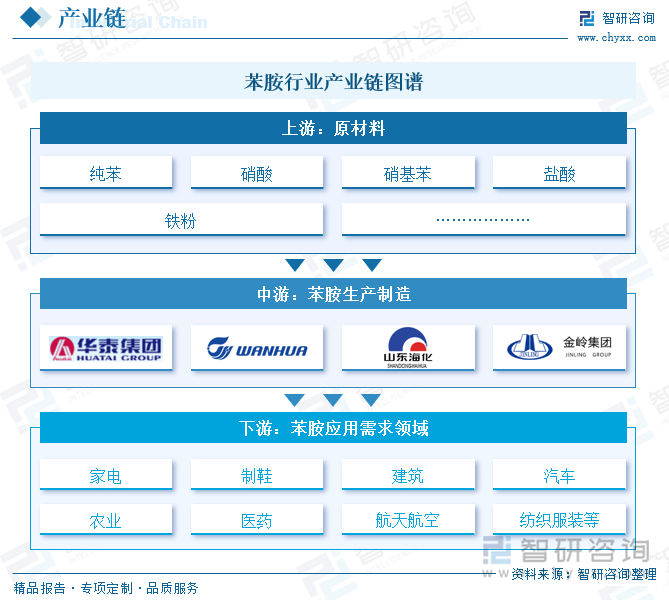
Core Viewpoint - The aniline industry in China has experienced significant changes in production capacity and market dynamics, with a notable increase in capacity from 338,000 tons in 2020 to 449,500 tons in 2023, but is expected to stabilize around 450,000 tons in 2024 due to slowed growth in MDI production capacity [1][5][20]. Industry Overview - Aniline, also known as aminobenzene, is a crucial organic compound with the chemical formula C6H7N, characterized as a colorless to pale yellow oily liquid [2][3]. - The aniline industry is structured into three segments: upstream raw material supply, midstream production, and downstream application, with key applications in MDI, rubber additives, dyes, and pharmaceuticals [3][11]. Production Side - From 2017 to 2020, China's aniline production capacity decreased from 3.91 million tons to 3.38 million tons due to supply-side reforms and stricter environmental policies [5]. - In 2021, the trend reversed as new aniline facilities were commissioned, leading to a recovery in production capacity, which reached 4.495 million tons in 2023 [5][20]. - The growth in MDI production capacity is expected to slow significantly in 2024, limiting the demand for new aniline capacity [5][20]. Import and Export - China has achieved self-sufficiency in aniline, with imports remaining below 0.1 thousand tons from 2018 to 2024, indicating strong domestic supply capabilities [7]. - Aniline exports saw a significant decline in 2023, dropping to approximately 97,900 tons, a year-on-year decrease of 65.49%, but are projected to rebound to 213,400 tons in 2024, reflecting a year-on-year increase of 117.98% [7][9]. - The average export price of aniline has risen from 4,874.17 yuan/ton in 2020 to 9,765.64 yuan/ton in 2024, marking a cumulative increase of 100.35% [9]. Consumption Side - The MDI industry is the largest consumer of aniline, accounting for about 80% of market consumption in 2024, driven by the growing demand for high-performance materials in various sectors [11][19]. - Domestic MDI production capacity has expanded significantly since 2000, with projections indicating a continued annual growth rate of 6% to 8% over the next five years, further driving aniline demand [11][19]. Key Enterprises - The aniline industry in China is characterized by high entry barriers and is dominated by major players such as Wanhua Chemical, China Petroleum & Chemical Corporation (Sinopec), and Shandong Haihua, which possess integrated advantages and strong market positions [13][15]. - Wanhua Chemical leads the industry with an aniline production capacity of 2.16 million tons, accounting for nearly 50% of the national total [17]. Development Trends - The regulatory environment is becoming stricter, promoting standardized and green development within the aniline industry, with policies focusing on environmental protection and safety production [19]. - The supply-demand balance in the aniline market remains tight, with production capacity steadily increasing while new capacity additions are limited [20][21]. - China's aniline industry is expanding its export market, with increasing international competitiveness, particularly in Europe, where demand for imported aniline is rising [22].




纯苯期货期权合约及规则介绍
Bao Cheng Qi Huo· 2025-05-15 09:08
Report Industry Investment Rating No relevant content provided. Core Viewpoints - Researching and developing pure benzene futures and options is an important measure by the Dalian Commodity Exchange (DCE) to serve the real economy. It can combine with the listed styrene futures and options to provide more comprehensive risk management tools and trade pricing benchmarks for relevant industrial enterprises, and contribute to the safe and stable development of the aromatic hydrocarbon industry chain and supply chain [4][9][96]. - After the listing of pure benzene futures and options, industrial chain enterprises can effectively cope with price - fluctuation risks using derivatives tools, and adjust supply and demand according to public and transparent forward price signals, thereby optimizing resource allocation and promoting the long - term and healthy development of the industry chain [5][97]. Summary by Directory 1. Market Review No relevant content provided. 2. Rubber Market No relevant content provided. 3. Conclusion - Pure benzene is an important organic chemical raw material, connecting petroleum and coal at the upstream and three major industries of synthetic resin, synthetic fiber, and synthetic rubber at the downstream. In 2024, China's pure benzene production was 2513000 tons, apparent consumption reached 2926000 tons, and the market scale was 208.6 billion yuan [4]. - The proposed pure benzene futures contract has a trading code of BZ, a trading unit of 30 tons/hand, a minimum price change of 1 yuan/ton, a daily price limit of 4% of the previous trading day's settlement price, and a minimum trading margin of 5% of the contract value. The contract months are from January to December, and the delivery method is physical delivery [4][96]. 4. Pure Benzene Basics Introduction - Pure benzene is a petroleum - chemical basic raw material, a colorless, sweet - smelling, flammable, and carcinogenic liquid at room temperature. It is a good organic solvent, slightly soluble in water and easily soluble in organic solvents such as ethanol and ether. Its production and application need to strictly follow safety and environmental protection regulations [10]. 5. Pure Benzene Storage, Transportation Precautions and Uses - During transportation, operators should wear protective equipment and prevent vapor leakage. During storage, it should be stored separately from oxidants and food chemicals in a cool and ventilated warehouse, with a temperature not exceeding 30°C [15]. - Pure benzene is mainly used as a chemical raw material in industry, for synthesizing various alkylbenzenes, and a series of benzene derivatives [15]. 6. Pure Benzene Production Process and Industry Chain Introduction - Pure benzene can be divided into petroleum benzene and coking benzene. Petroleum benzene accounts for 80.7% of the total, with a purity usually over 99%, and is more widely used [16]. - The main production processes include catalytic reforming (about 38% of the total source globally), ethylene - cracking by - product extraction, toluene disproportionation, and coal - processing by - product extraction [16][17]. - Upstream raw materials mainly come from crude oil, naphtha, and coal. Downstream, 47% of pure benzene is used for styrene production, 17% for caprolactam, 13% for phenol, 11% for aniline, 7% for adipic acid, and 5% for other chemicals [22]. 7. Domestic and International Pure Benzene Production Capacity and Demand - Globally, the production capacity of pure benzene exceeds 80 million tons, with major production areas in Northeast Asia, North America, and Western Europe, accounting for 51%, 13%, and 12% of the global capacity in 2024 respectively [28]. - In China, the production capacity increased from 12.47 million tons in 2017 to 25.78 million tons in 2024, and the output increased from 8.495 million tons in 2017 to 20.921 million tons in 2024. China is the world's largest producer and consumer of pure benzene. In 2024, the total output was about 24.955 million tons, and the demand was about 29.259 million tons, with a supply - demand gap of about - 140000 tons [28][29][30]. 8. Pure Benzene Downstream Demand Areas - Styrene is the main downstream product of pure benzene, accounting for 47%. The production of one ton of styrene requires about 0.8 tons of pure benzene, and its downstream products are used in multiple fields such as insulation materials and home appliances [36]. - Caprolactam accounts for 17% of the demand. The production of one ton of caprolactam requires nearly one ton of pure benzene, mainly used for PA6 slices, with downstream applications in textile and clothing [37]. - Phenol accounts for 13%. The production of one ton of phenol requires about 0.92 tons of pure benzene, used in the production of bisphenol A and other products [38]. - Aniline accounts for 12%. The production of one ton of aniline requires about 0.86 tons of pure benzene, used in the production of dyes and drugs [38][39]. - Adipic acid accounts for 7%. The production of one ton of adipic acid requires about 0.75 tons of pure benzene, used for synthetic nylon 66 salt and other products [39]. 9. China's Pure Benzene Import and Export - China is a net importer of pure benzene. In 2024, the total import volume was about 4.164 million tons, mainly from South Korea, Brunei, and Thailand. In 2025, China's production capacity and output are expected to further increase, and the listing of pure benzene futures will improve the aromatic hydrocarbon industry chain [42]. 10. Pure Benzene Cost Calculation and Influencing Factors - Cost calculation formulas include the theoretical cost of petroleum benzene, the rough - calculation cost, and the theoretical cost of hydrogenated benzene [47]. - Influencing factors include raw material cost, production process, supply - demand relationship, inventory level, and macro - economic factors [47][48]. 11. Correlation Analysis between Styrene and Pure Benzene - Pure benzene and styrene are closely related in the chemical industry chain. In the long - term, they show a strong correlation, but due to various factors, their price difference may fluctuate [49]. 12. Pure Benzene Futures and Options Contracts and Business Rules - The pure benzene futures contract has a trading unit of 30 tons/hand, a minimum price change of 1 yuan/ton, a daily price limit of 4% of the previous trading day's settlement price, and a minimum trading margin of 5% of the contract value. The delivery method is physical delivery [53]. - The pure benzene options contract has a contract type of call and put options, a trading unit of one hand (30 tons) of pure benzene futures contract, and an American - style exercise method [53]. 13. DCE Pure Benzene Futures Delivery Quality Standard - The quality requirements include a crystallization point (dry basis) of ≥5.45°C, a purity (mass fraction) of ≥99.90%, and a toluene (mass fraction) of ≤0.05%, etc. For some indicators, only reporting is required [94]. 14. DCE Pure Benzene Futures Margin and Position - Limit Standards - The minimum trading margin standard for pure benzene futures contracts is 5% of the contract value, with different margin standards at different trading stages [95]. - The position - limit standards vary at different trading times, with the maximum unilateral position of non - futures company members and customers limited [95].
因子与指数投资揭秘系列二十七:苯乙烯基本面与量价择时多因子模型研究
Guo Tai Jun An Qi Huo· 2025-04-16 09:42
Report Industry Investment Rating - No relevant content provided Core Viewpoints of the Report - The styrene industry chain starts from crude oil, goes through the production of benzene and ethylene, then to the production of styrene and its derivatives, and is finally applied in multiple fields such as packaging, automotive, electronics, and construction. It is an important part of the petrochemical industry, with characteristics of high dependence on crude oil, a long chain, and wide - ranging demand. The factors affecting styrene futures prices are complex. Fundamental quantitative factors cover 9 aspects, and volume - price factors include 7 aspects. By back - testing and screening, setting parameters such as back - testing time, handling fees, and leverage, and combining factors in a simple equal - weight addition way, a trend strength signal can be output [3]. - The fundamental multi - factor portfolio has an annualized return of 50.7% and a Sharpe ratio of 2.85 since 2019. The volume - price multi - factor portfolio has an annualized return of 35.3% and a Sharpe ratio of 2.14 since 2019. In the comprehensive model, all single factors are equally weighted, with an annualized return of 32.2% and a Sharpe ratio of 1.86 since 2019. Fundamental factors and volume - price factors have a low correlation. Investors can adjust the proportion of fundamental and volume - price factors in the comprehensive model according to their target returns and risk requirements [4]. Summary According to the Directory 1. Styrene Single - Commodity Timing Factor Framework - Styrene is an important organic chemical raw material with a clear upstream - downstream industrial chain. The model divides factors into two categories: fundamental quantitative factors and volume - price factors. Fundamental factors are constructed from dimensions such as inventory, basis, upstream inventory, profit, and overseas prices. Volume - price factors are constructed from dimensions such as momentum, moving averages, and technical indicators based on daily - frequency market data. As of the writing of the report, the model includes 9 fundamental quantitative factors and 7 volume - price factors [8][10]. - When back - testing and screening factors, the back - testing time for most fundamental factors and volume - price factors starts from October 2019, with the out - of - sample back - testing starting from January 2023 and ending in December 2024. The handling fee is set at a bilateral rate of 0.03%, and the leverage is 1x. Other settings such as cumulative return calculation, factor value mapping, and signal update rules are also specified [11][12][13] 2. Introduction and Back - Testing Results of Styrene Fundamental Quantitative Factors 2.1 Styrene Weekly Shipment Volume - A significant increase in styrene weekly shipment volume may lead to an oversupply situation if downstream demand does not increase synchronously, causing price decline. The data used is from the East China region, Jiangsu Province, China, and is published every Monday. Since 2019, its back - testing performance shows an annualized return of 30.3%, a Sharpe ratio of 1.68, a Calmar ratio of 1.23, a win rate of 51.0%, an average holding period of 13.7 days, and a maximum drawdown of 24.6% [19]. 2.2 Styrene Overseas Price - An increase in overseas styrene prices may push up domestic prices, while a decrease may suppress domestic prices. This factor mainly considers prices in the US Gulf, Rotterdam, and South Korea. The data is published with a one - day lag. Since 2016, its back - testing performance shows an annualized return of 19.6%, a Sharpe ratio of 0.99, a Calmar ratio of 0.73, a win rate of 52.5%, an average holding period of 19.1 days, and a maximum drawdown of 27% [21]. 2.3 Styrene Basis - When the market supply is tight, the basis widens; when the supply is excessive, the basis narrows. The data is from the Guojun Futures database and is published daily. Since 2019, its back - testing performance shows an annualized return of 27.7%, a Sharpe ratio of 1.12, a Calmar ratio of 0.71, a win rate of 51.9%, an average holding period of 2.6 days, and a maximum drawdown of 39.1% [23]. 2.4 Pure Benzene: Port Inventory - A low level of pure benzene port inventory may increase the production cost of styrene. The data is from the East China region and is published every Friday. Since 2019, its back - testing performance shows an annualized return of 15.8%, a Sharpe ratio of 0.67, a Calmar ratio of 0.42, a win rate of 50.8%, an average holding period of 38.2 days, and a maximum drawdown of 37.3% [25]. 2.5 Styrene: Non - Integrated Plant: Production Gross Margin - A high production gross margin of non - integrated styrene plants may encourage enterprises to increase production, leading to an increase in market supply. The data is from the Steel Union and is published after the market closes. Since 2019, its back - testing performance shows an annualized return of 12.5%, a Sharpe ratio of 0.46, a Calmar ratio of 0.3, a win rate of 50.4%, an average holding period of 11.3 days, and a maximum drawdown of 34.4% [27]. 2.6 Styrene Capacity Utilization Rate - An increase in styrene capacity utilization rate may lead to an oversupply situation and price decline. The data is from the Steel Union and is published weekly. Since 2019, its back - testing performance shows an annualized return of 16.5%, a Sharpe ratio of 0.91, a Calmar ratio of 0.85, a win rate of 50%, an average holding period of 28.6 days, and a maximum drawdown of 19.4% [27]. 2.7 Styrene Warehouse Receipts - An increase in warehouse receipts indicates sufficient market supply, while a decrease indicates tight supply. The data is from Flush and is published after the market closes. Since 2020, its back - testing performance shows an annualized return of 22.6%, a Sharpe ratio of 1.34, a Calmar ratio of 1.04, a win rate of 50.2%, an average holding period of 9.6 days, and a maximum drawdown of 21.7% [30]. 2.8 Styrene Arbitrage Spread - The internal - external spread has a mean - reversion characteristic. This factor considers styrene prices in Europe, Asia, and the Americas. The data is from the Steel Union and is updated with a one - day lag. Since 2019, its back - testing performance shows an annualized return of 33.8%, a Sharpe ratio of 1.68, a Calmar ratio of 0.93, a win rate of 53.2%, an average holding period of 12.5 days, and a maximum drawdown of 36.4% [32]. 2.9 Styrene: Spot Inventory - High inventory usually means sufficient or excessive market supply, while low inventory may indicate tight supply. The data is from the Steel Union and is updated every Monday. Since 2019, its back - testing performance shows an annualized return of 25.9%, a Sharpe ratio of 1.45, a Calmar ratio of 1.52, a win rate of 52.3%, an average holding period of 114.6 days, and a maximum drawdown of 17.1% [35]. 2.10 Fundamental Multi - Factor - By equally weighting the above 9 fundamental single factors to form a long - short timing model, since 2019, the back - testing shows an annualized return of 50.7%, a Sharpe ratio of 2.85, a Calmar ratio of 2.08, a win rate of 52.6%, an average holding period of 6 days, and a maximum drawdown of 24.4% [37]. 3. Introduction and Back - Testing Results of Styrene Volume - Price Factors 3.1 Intraday Momentum - Intraday momentum is defined as the average of the daily high and low prices divided by the opening price. A larger value indicates a faster price increase. Since 2020, its back - testing performance shows an annualized return of 27.6%, a Sharpe ratio of 1.51, a Calmar ratio of 1.7, a win rate of 47.2%, an average holding period of 3.7 days, and a maximum drawdown of 16.2% [40]. 3.2 Median Double Moving Averages - Similar to double moving averages, but the price for calculating the moving average is the median of the daily high and low prices. Since 2019, its back - testing performance shows an annualized return of 18%, a Sharpe ratio of 0.81, a Calmar ratio of 0.56, a win rate of 51.6%, an average holding period of 8.5 days, and a maximum drawdown of 32.4% [42]. 3.3 Kaufman Adaptive Moving Average (KAMA) - Calculated through steps such as efficiency coefficient (ER) and smoothing constant (SC). Since 2019, its back - testing performance shows an annualized return of 21.1%, a Sharpe ratio of 1.23, a Calmar ratio of 1.19, a win rate of 48.8%, an average holding period of 30.6 days, and a maximum drawdown of 17.8% [45]. 3.4 On - Balance Volume (OBV) - Calculated based on the relationship between daily closing prices and trading volumes, and a long - short double moving average strategy is constructed. Since 2020, its back - testing performance shows an annualized return of 21.2%, a Sharpe ratio of 1.17, a Calmar ratio of 1.28, a win rate of 50.4%, an average holding period of 72.4 days, and a maximum drawdown of 16.6% [49]. 3.5 Commodity Channel Index (CCI) - When CCI breaks through + 100, it is a potential selling signal; when it breaks through - 100, it is a potential buying signal. Since 2019, its back - testing performance shows an annualized return of 28.9%, a Sharpe ratio of 1.72, a Calmar ratio of 1.98, a win rate of 51.0%, an average holding period of 29.9 days, and a maximum drawdown of 12.0% [53]. 3.6 TRIX - Defined through exponential moving averages and a long - short double moving average strategy is constructed based on its daily change rate. Since 2019, its back - testing performance shows an annualized return of 28.9%, a Sharpe ratio of 1.72, a Calmar ratio of 1.98, a win rate of 51.0%, an average holding period of 29.9 days, and a maximum drawdown of 14.6% [55]. 3.7 MESA Adaptive Moving Average - Hilbert transform is used to process price data. MAMA and FAMA lines are calculated, and a double moving average strategy is constructed for timing. Since 2019, its back - testing performance shows an annualized return of 20.5%, a Sharpe ratio of 1.11, a Calmar ratio of 1.11, a win rate of 49.8%, an average holding period of 29.3 days, and a maximum drawdown of 18.5% [55]. 3.8 Volume - Price Multi - Factor - By equally weighting the above 7 volume - price single factors to form a long - short timing model, since 2019, the back - testing shows an annualized return of 35.3%, a Sharpe ratio of 2.14, a Calmar ratio of 2.41, a win rate of 51.5%, an average holding period of 10.3 days, and a maximum drawdown of 14.7% [59]. 4. Fundamental Quantitative and Volume - Price Multi - Factor Comprehensive Model 4.1 All - Factor Portfolio Long - Short Model - By equally weighting all 16 single factors to form a long - short timing model, since 2019, the back - testing shows an annualized return of 32.2%, a Sharpe ratio of 1.86, a Calmar ratio of 2.07, a win rate of 46.6%, an average holding period of 5.1 days, and a maximum drawdown of 15.6% [61]. 4.2 Only - Long Model - Fundamental only - long model: By equally weighting the first 9 single factors, when a short - selling signal is generated, it is regarded as closing the existing long position or staying in cash; when a long - buying signal is triggered, open a long position or hold the existing long contract. Since 2019, the back - testing shows an annualized return of 29.6%, a Sharpe ratio of 1.89, a Calmar ratio of 1.31, an average holding period of 6.7 days, and a maximum drawdown of 22.6%. - Volume - price only - long model: By equally weighting the latter 7 single factors, with similar signal - handling rules. Since 2019, the back - testing shows an annualized return of 22.1%, a Sharpe ratio of 1.57, a Calmar ratio of 1.68, an average holding period of 10.6 days, and a maximum drawdown of 13.1%. - All - factor comprehensive only - long model: By equally weighting all 16 single factors, with similar signal - handling rules. Since 2019, the back - testing shows an annualized return of 20.0%, a Sharpe ratio of 1.32, a Calmar ratio of 1.27, an average holding period of 7.6 days, and a maximum drawdown of 15.8% [64][67][69]. 4.3 Only - Short Model - Fundamental only - short model: By equally weighting the first 9 single factors, when a long - buying signal is generated, it is regarded as closing the existing short position or staying in cash; when a short - selling signal is triggered, open a short position or hold the existing short contract. Since 2019, the back - testing shows an annualized return of 20.0%, a Sharpe ratio of 1.48, a Calmar ratio of 1.28, an average holding period of 6.3 days, and a maximum drawdown of 15.7%. - Volume - price only - short model: By equally weighting the latter 7 single factors, with similar signal - handling rules. Since 2019, the back - testing shows an annualized return of 12.5%, a Sharpe ratio of 0.87, a Calmar ratio of 0.9, an average holding period of 16.7 days, and a maximum drawdown of 13.9%. - All - factor comprehensive only - short model: By equally weighting all 16 single factors, with similar signal - handling rules. Since 2019, the back - testing shows an annualized return of 11.8%, a Sharpe ratio of 0.87, a Calmar ratio of 0.82, an average holding period of 9 days, and a maximum drawdown of 14.4% [72][75][76].
研判2025!中国环已酮行业产业链、产业现状、进出口及未来趋势分析:国内环已酮产能不断扩张,行业净出口规模稳步增长[图]
Chan Ye Xin Xi Wang· 2025-04-12 02:18
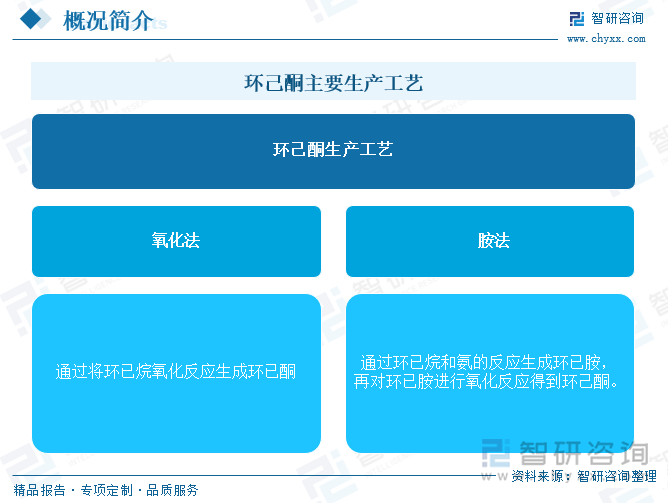
Industry Overview - Cyclohexanone, an organic compound with the chemical formula C6H10O, is a saturated cyclic ketone that is colorless and transparent, with a soil-like odor and a minty scent when containing trace amounts of phenol [1][3] - The production methods for cyclohexanone mainly include oxidation and amination [1][3] Industry Status - In recent years, to meet the growing demand from downstream markets, cyclohexanone companies in China have actively expanded their production capacity, leading to a continuous increase in national production capacity, which is projected to grow from 5.21 million tons in 2018 to 10.92 million tons by 2024 [5] - The production capacity utilization rate has improved, with the national cyclohexanone output reaching 7.66 million tons in 2024, a year-on-year increase of 19.69% [5] Consumption Market - The downstream consumption structure of cyclohexanone in China is relatively simple, with 90.24% of the demand coming from the production of caprolactam and adipic acid, with caprolactam accounting for approximately 64.37% and adipic acid for 25.87% [7] Import and Export - China transitioned from a net importer to a net exporter of cyclohexanone in 2019, maintaining a trade surplus since then. The export volume reached 74,300 tons in the first eleven months of 2024, a year-on-year increase of 49.11% [9][11] - The net export volume for cyclohexanone in 2024 reached 74,100 tons, with a trade surplus of 668 million yuan, reflecting a year-on-year increase of 52.51% [11] Competitive Landscape - The cyclohexanone industry in China is characterized by increasing capacity concentration and the emergence of leading companies, with major players like China Petroleum & Chemical Corporation (Sinopec) and others holding over 60% of the total production capacity [13] - The implementation of environmental policies has led to increased pressure on production capacity, causing many small enterprises to exit the market, thereby enhancing industry concentration [13] Key Companies - **Ruihua Technology**: Focuses on chemical process packages and has developed efficient cyclohexanone production technology, achieving a revenue of 279 million yuan in the first three quarters of 2024, up 34.48% year-on-year [15] - **Lanhua Technology**: Engaged in coal, fertilizer, and chemical production, with a revenue of 8.419 billion yuan in the first three quarters of 2024, down 12.34% year-on-year [17] Development Trends - Environmental policies are accelerating technological innovation in the cyclohexanone industry, creating more opportunities for development [19] - The market demand for cyclohexanone is expected to continue growing, particularly in the production of caprolactam and adipic acid, as well as in solvent and coating applications [20]
CPI暂回踩,后续易升难降——2月物价数据解读【财通宏观•陈兴团队】
陈兴宏观研究· 2025-03-09 07:44
Group 1: CPI Analysis - The CPI year-on-year growth rate decreased to -0.7% in February, down 1.2 percentage points from the previous month, primarily due to the impact of the Spring Festival timing [1][4] - Excluding the Spring Festival effect, the CPI year-on-year increased by 0.1% in February, indicating a moderate recovery in prices [1][4] - Food prices contributed over 80% to the total decline in CPI, with fresh vegetable prices dropping by 12.6% year-on-year [5][6] Group 2: PPI Analysis - The PPI year-on-year decline narrowed to 2.2% in February, with the average for January-February also showing a 2.2% decrease compared to the previous year [2][7] - The main reasons for the PPI decline include the off-peak industrial production season and weak demand for construction materials [2][7] - The prices of production materials fell by 2.5%, while living materials prices decreased by 1.2%, with specific industries like coal processing seeing significant price drops [7][8] Group 3: Market Sentiment and Future Outlook - The PMI data indicated an increase in raw material and finished product price indices, but the PPI only slightly narrowed, suggesting a discrepancy between perceived and actual market conditions [3] - The current policy uncertainty may lead to a cautious approach from enterprises, affecting production enthusiasm [3] - Positive signals from the upcoming Two Sessions may help restore market demand and improve production and demand dynamics [3]