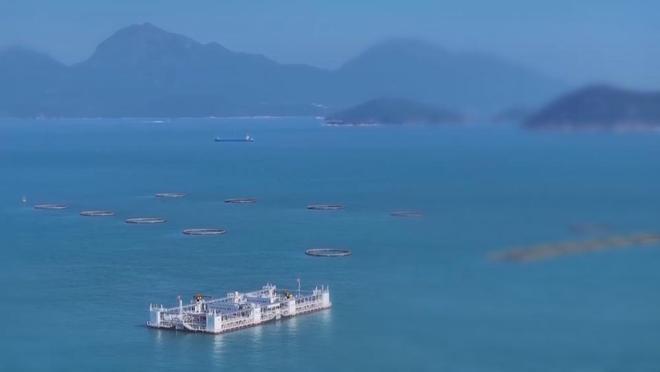
海洋养殖

Search documents
机构:海洋经济驱动内需增长 相关产业链或受关注
Zheng Quan Shi Bao Wang· 2025-12-11 01:09
Core Insights - The Jiangsu Provincial Committee of the Communist Party of China has proposed to promote high-quality development of the marine economy and accelerate the construction of a strong marine province [1] - The focus is on enhancing marine technology capabilities, fostering high-level marine research institutions and technology enterprises, and advancing key marine technologies [1] - The development of modern shipping services and marine tourism industries is emphasized, along with the need for better port resource coordination and infrastructure improvements [1] Group 1: Marine Economy Development - The proposal includes the establishment of a national marine economy development demonstration zone, elevating the marine economy to a strategic level [2] - The potential of the marine economy is highlighted, with marine communication identified as a foundational infrastructure for future 6G networks [2] - The government work report has introduced "deep-sea technology" as a core emerging industry, indicating a shift towards supporting marine equipment, energy, and aquaculture sectors [2] Group 2: Industry Opportunities - The offshore wind and solar power sectors are expected to expand into deeper waters, indicating a significant growth opportunity [2] - The marine aquaculture industry is projected to have substantial growth potential, particularly for upstream feed companies that can leverage technological and service advantages [2] - Policy support and recovering demand are likely to benefit marine tourism enterprises with distinctive features [2]
首份海洋清单释放百亿需求 多地场景开放激活“蓝色引擎”
Yang Shi Wang· 2025-12-10 02:46
Core Viewpoint - The Chinese government is promoting the development of various marine economic application scenarios to leverage the country's vast market and rich application environments, aiming to support innovative enterprises and enhance industrial capabilities [1][3]. Group 1: Marine Economic Application Scenarios - The first comprehensive marine economic application scenario list was released in Zhanjiang, Guangdong, featuring 48 scenario demands with a total investment scale exceeding 100 billion yuan, covering nine major fields including deep-sea aquaculture, marine + low-altitude applications, marine biomedicine, marine engineering, and marine low-carbon environmental protection [3]. - Among the scenarios, deep-sea aquaculture accounts for 13 items, representing over 27% of the total, providing ample validation space for various deep-sea equipment and artificial intelligence technologies [3]. Group 2: Technological Transition and Market Application - New technologies transitioning from laboratories to markets often face failures in real marine environments due to issues like wind and wave interference and salt corrosion. Open scenarios provide large-scale, high-fidelity "real-world testing grounds," which are crucial for bridging this gap [5]. - China's extensive coastline of 32,000 kilometers and approximately 3 million square kilometers of marine area provide a solid foundation for the comprehensive opening of marine economic application scenarios [5]. Group 3: Regional Development and Innovation Centers - The Sanxia Offshore Wind Power International Industrial Park in Fuzhou focuses on integrated scenarios for wind power equipment R&D, manufacturing, and installation, achieving significant advancements in offshore wind turbine capacity and establishing China's first national offshore wind power testing base [7]. - Dalian, a northern port city, is focusing on high-tech shipbuilding and marine engineering equipment, implementing a three-year action plan for high-quality development in the shipbuilding and marine engineering industry, promoting the transformation of the industry towards high-end, green, and intelligent development through the opening of advanced scenarios like deep-sea exploration and underwater robotics [9].

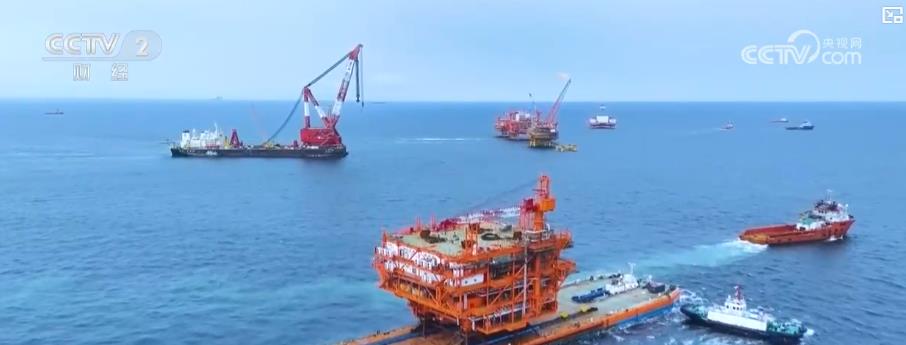
全国养殖用海调查档案进馆
Zhong Guo Zi Ran Zi Yuan Bao· 2025-12-10 02:07
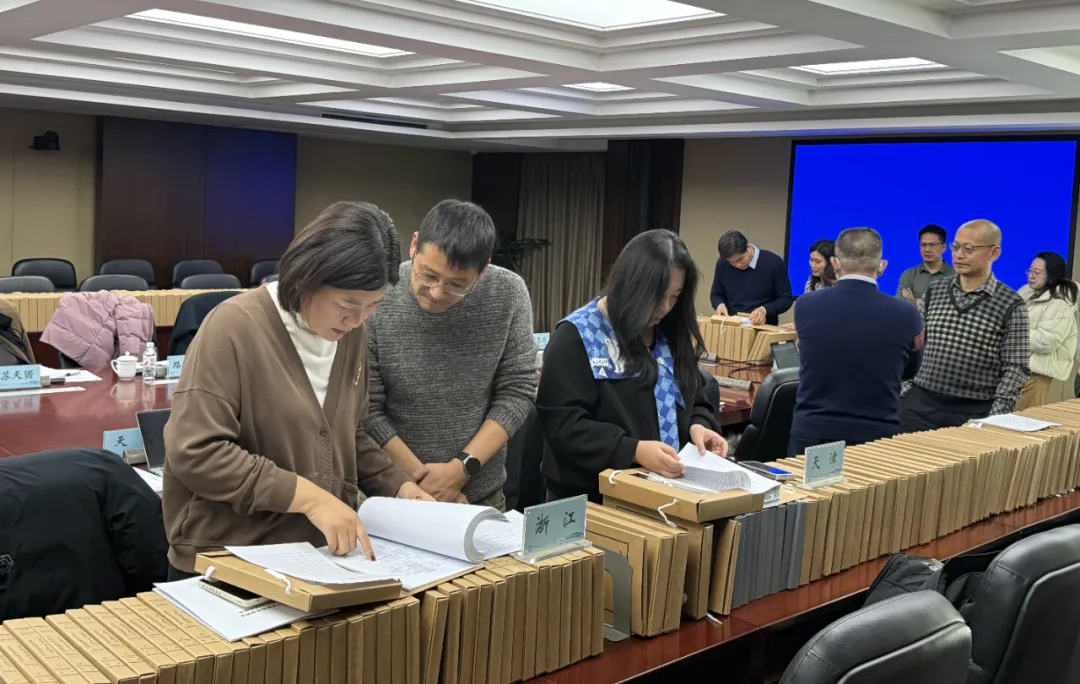
近日,随着最后批次养殖用海调查档案完成验收和进馆交接,覆盖我国11个沿海省(自治区、直辖市)和3个海区局的全国养殖用海调查档案进馆工 作圆满收官,标志着我国首次全面掌握养殖用海状况的成果正式进入规范管理、永久保存和长期服务的新阶段。中国海洋档案馆累计接收档案917卷5339 件,电子档案2.3TB。 全国养殖用海调查是自然资源部履行"两统一"职责的重要基础性工作。调查自2020年启动,2021年12月结束,查清了我国养殖用海的空间分布、审批 状态和用海主体等情况。这批档案凝聚着我国在摸清养殖用海底数、优化海域空间布局、强化海洋资源监管方面的实践成果,是未来开展海洋管理决策、 推动可持续发展不可或缺的权威依据。 据悉,全国养殖用海调查档案工作启动以来,中国海洋档案馆始终坚持高标准、严要求,起草和印发《全国养殖用海档案整理技术规程》等文件,组 织档案培训交流和集中答疑,建立起贯穿档案收集、整理、验收、移交全流程的质量控制。通过分批组织集中验收、专家现场审核、问题整改闭环等方 式,确保每一份档案真实、完整、规范、可用。下一步,中国海洋档案馆将加快推进档案整理整合、数字化加工和数据备份,构建安全可靠的档案保管体 系。 ...
科技为农业强国建设插上腾飞之翼
Ke Ji Ri Bao· 2025-12-08 10:03
Group 1: Agricultural Innovation and Technology - The successful creation of the first 2 million mu "ton grain field" in China is marked by an average yield of 1209.1 kg per mu, supported by the "high-yield precision control technology" developed by the Chinese Academy of Agricultural Sciences [1] - Since the 14th Five-Year Plan, China's total grain production has consistently remained above 1.3 trillion jin, with a projected increase to over 1.4 trillion jin in 2024, representing a growth of 74 billion jin since 2020 [1] - The introduction of high-yield rice varieties and innovative production models has led to significant increases in rice yields, with some regions achieving over 1300 kg per mu [2] Group 2: Crop Breeding and Yield Improvement - The innovation in wheat breeding has accelerated, with 12 new varieties approved by Northwest A&F University, enhancing wheat yield potential across various ecological zones [3] - The area of self-bred crop varieties in China has exceeded 95%, ensuring that the majority of grain is produced from domestic seeds [3] - The average grain yield in China reached 394.7 kg per mu, an increase of 12.5 kg since the end of the 13th Five-Year Plan, with yield improvements contributing over 60% to grain production growth [3] Group 3: Smart Agriculture and Efficiency - The integration of smart technologies such as sensors and drones in agriculture has transformed traditional farming practices into data-driven management systems, significantly improving monitoring and intervention capabilities [4][5] - The promotion of smart agricultural technologies has led to the establishment of 116 national innovation application projects, enhancing the efficiency and effectiveness of agricultural practices [5] - The contribution rate of agricultural technology to production has reached 63.2%, with the comprehensive mechanization rate of crop farming exceeding 75% [6] Group 4: Diversification of Food Supply - The development of a diversified food supply system is emphasized, with efforts to enhance food production from various sources, including forests, grasslands, and aquatic environments [8] - The total output of livestock products in China is projected to reach 175 million tons in 2024, an increase of 27.78 million tons or 18.8% since 2020, while aquatic product output is expected to reach 73.58 million tons, marking a 12.3% increase [8] - The focus on agricultural technology innovation is seen as a key driver for creating new industries and enhancing productivity in the agricultural sector [9]
高端对话热议“场景创新加速开拓深远海发展新空间”
Feng Huang Wang Cai Jing· 2025-12-07 03:04
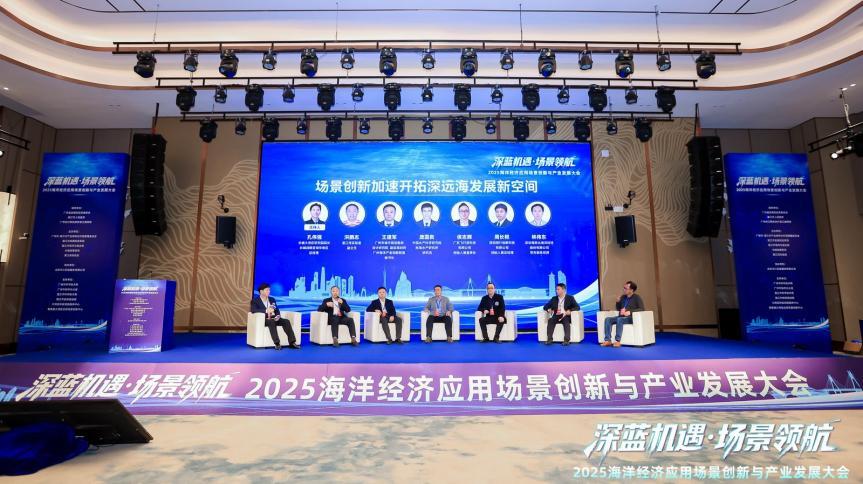
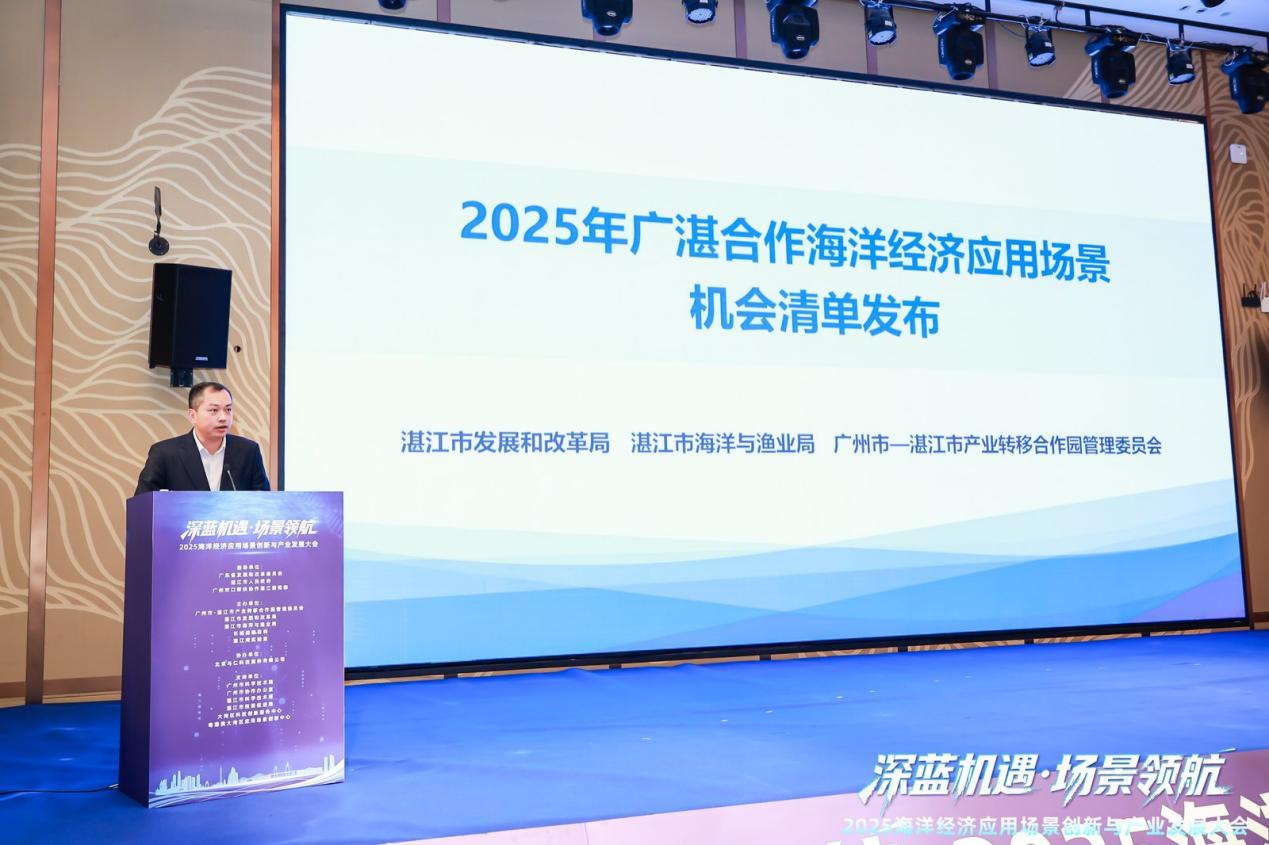
Core Insights - The 2025 Marine Economy Application Scenario Innovation and Industry Development Conference was held in Zhanjiang, focusing on the theme "Deep Blue Opportunities, Scene Navigation" [1] - The conference featured high-level discussions on accelerating scene innovation to explore new spaces for deep-sea development [1][3] Group 1: Key Discussions - The "Zhanjiang Bay No. 1" project was highlighted as a foundational example of offshore ranching, overcoming equipment challenges in the South China Sea and providing a replicable model for deep-sea aquaculture [3] - The collaboration between Guangzhou and Zhanjiang in marine economic development was emphasized, leveraging Zhanjiang's vast marine area and Guangzhou's technological strengths [6] - The current state of deep-sea aquaculture equipment in China was discussed, with over 70 large-scale aquaculture devices developed, positioning the country among the global leaders [8] Group 2: Industry Innovations - Guangdong Feixing Technology announced a strategic partnership with Zhanjiang Hengxing Group, aiming to enhance marine economic development through advanced delivery systems [10] - Shenzhen Qianxing Innovation Technology reported significant advancements in underwater robotics, breaking the monopoly of Western countries and expanding its market reach [12] - Shenzhen Haisebi Marine Technology introduced a "green energy island" initiative, integrating various technologies to create new marine economic models by 2026 [14] Group 3: Reports and Future Directions - The conference presented the first comprehensive annual report on marine economic application scenario innovation, outlining a "7-45" scenario map across seven fields and 45 key scenarios [19] - Zhanjiang's Development and Reform Bureau released a comprehensive marine application scenario list, including 48 specific project scenarios across nine major fields [19] - The successful hosting of the conference aligns with national strategies for marine economic development and the promotion of new application scenarios [19]
全国首份海洋经济综合性应用场景机会清单发布
Feng Huang Wang Cai Jing· 2025-12-04 06:09
Core Insights - The first comprehensive marine economy application scenario opportunity list in China, titled "2025 Guang-Zhan Cooperation Marine Economy Application Scenario Opportunity List," was officially released at the "2025 Marine Economy Application Scenario Innovation and Industry Development Conference" [1] - This list is a significant initiative to implement national application scenario innovation work and the requirements for building a strong marine province in Guangdong, marking a new phase of cross-regional collaboration between Guang and Zhan [3] Group 1: Application Scenario Opportunities - The list was compiled by the Zhanjiang Development and Reform Bureau, Zhanjiang Ocean and Fisheries Bureau, and the Guangzhou-Zhanjiang Industrial Transfer Cooperation Park Management Committee, resulting in 48 specific application scenario opportunity projects [3][4] - These projects cover nine major fields, including deep-sea aquaculture, marine + low-altitude applications, marine biomedicine, marine engineering, and marine resource energy development, aligning with national priorities for marine economy application scenario innovation [3][4] Group 2: Deep-Sea Aquaculture Focus - Among the application scenarios, 13 projects related to deep-sea aquaculture account for over 27%, addressing diverse needs such as smart aquaculture platforms, seed industry research, and disease prevention [4] - The technical demands are highly concentrated, focusing on cutting-edge areas like marine big models, unmanned ships, underwater robots, deep-sea wind power equipment, and new anti-corrosion materials, providing a rich environment for pilot testing and product maturation [4] Group 3: Conference Highlights - The conference was guided by the Guangdong Provincial Development and Reform Commission and the Zhanjiang Municipal Government, with participation from over 200 representatives from government, innovative enterprises, top think tanks, and research institutions [4][5] - A report titled "China Marine Economy Application Scenario Innovation Development Report 2025" was released, outlining a comprehensive mapping of marine economy application scenarios across seven fields and 45 key scenarios [5] Group 4: Discussions and Insights - The conference featured discussions on modern marine ranch application scenario innovation, the current state and challenges of deep-sea development, and the acceleration of the marine ranch industry through leading enterprises [6][7] - A consensus emerged that real scenarios must be opened up to allow technology to iterate in practice and business models to be tested in the market, which is essential for unlocking vast "deep blue opportunities" [7]
“融”入青岛,“合”出精彩
Ren Min Wang· 2025-11-22 10:00
Core Insights - The 2025 Media Integration Development Forum was held in Qingdao, showcasing the city's vibrant modernization and marine economy opportunities [2] - Qingdao aims to become a "modern marine center city," leveraging technological innovation to drive industrial growth and develop new marine productivity [2] Group 1: Event Overview - The forum included media reporters visiting research institutions and enterprises to highlight the integration of media and local development [2] - Activities showcased Qingdao's beauty and vitality, emphasizing its role in China's modernization [2] Group 2: Marine Economy Development - Qingdao is transitioning from relying on marine resources to developing marine industries, presenting significant opportunities [2] - The city is focusing on technological innovation to enhance its marine economy, with various initiatives in marine biology, aquaculture, and traditional medicine [2] - Notable projects include a 100,000-ton aquaculture vessel and innovative marine product formulations [2]

关键词读懂“十五五”丨破题海洋强基 怎样刷新海洋科创“贡献值”
Yang Guang Wang· 2025-11-17 02:12
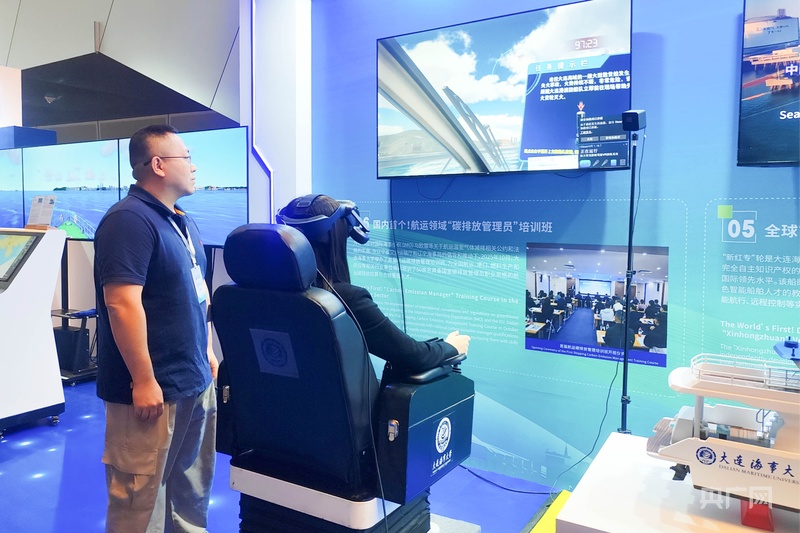
Core Viewpoint - The recent "14th Five-Year Plan" emphasizes the importance of marine economic development and innovation in marine technology, with Dalian positioned as a leading city in this initiative, focusing on high-quality growth in the marine economy through technological advancements [1][4][10]. Group 1: Marine Economic Development - Dalian is actively enhancing its marine capabilities by integrating technology in various sectors, including intelligent shipping, deep-sea energy equipment, and modern shipping services [1][9]. - The city aims to achieve a marine production value exceeding 10 trillion yuan by 2024, contributing 0.4 percentage points to national economic growth [5][10]. - In 2024, Dalian's shipbuilding and marine engineering industry is projected to reach an output value of approximately 62 billion yuan, reflecting a year-on-year growth of 12.7% [6][13]. Group 2: Technological Innovation - The development of advanced technologies, such as VR ship simulators and underwater robots, is transforming traditional industries like fishing into more efficient and intelligent operations [3][8]. - Dalian's research institutions are making significant strides in marine technology, with innovations like disaster risk warning systems and automated marine equipment enhancing productivity and safety [6][8][9]. Group 3: Domestic Substitution and Industry Upgrade - Dalian is breaking the reliance on imported marine technologies by achieving breakthroughs in key areas, such as LNG transport vessels and marine farming equipment, thus fostering a complete industrial chain [10][11]. - The shipbuilding industry in Dalian has seen substantial growth, with ship completion, new orders, and backlog orders increasing by 27.4%, 34.1%, and 72.6% respectively in the first half of the year [13]. - The synergy between policy support, research, and market demand is driving the deep integration of production, education, and research in Dalian, facilitating the transformation of technological innovations into practical applications [11][13].
五维进阶,海洋强国广东策
21世纪经济报道· 2025-11-16 12:59
Core Viewpoint - Guangdong has maintained its position as the leader in China's marine economy for 30 consecutive years, with a marine production value of 2 trillion yuan, marking a new starting point for the province's development [2]. Group 1: Technological Innovation - Technological advancements are becoming the new compass for Guangdong's deep-sea exploration, with innovations such as the successful collection of the "source fire" from deep-sea combustible ice, showcasing the integration of sports and deep-sea technology [4]. - The shift from traditional fishing methods to data-driven aquaculture is evident, with companies like Jinyuan Marine Biological Research Co., utilizing sensors for precise control of water conditions, leading to an annual hatchery output of 52 billion fish [4][5]. - Guangdong has established a 2 billion yuan fund for modern marine ranching, focusing on key species, with a projected 51.14% share of the national marine fish fry production in 2024 [5]. Group 2: Industry Ecosystem Development - The integration of technology and industry is evident in the offshore wind power sector, with the world's largest floating wind power platform demonstrating resilience against extreme weather, propelling Guangdong to the forefront of the offshore wind power industry with an annual output value exceeding 300 billion yuan [6]. - The marine new energy sector is expanding, with projects like the Shenzhen offshore photovoltaic power station and Zhanjiang wave energy device trials contributing to a projected 411 billion yuan output in 2024, reflecting an 8.3% year-on-year growth [6]. Group 3: Sustainable Development and Ecological Protection - Guangdong is innovating in marine economic practices while maintaining ecological integrity, with initiatives like the integrated use of marine space for renewable energy and aquaculture, resulting in a 40% increase in economic output per unit area [13]. - The province is actively restoring marine ecosystems, with over 100,000 acres of mangroves rehabilitated, and promoting eco-tourism as a transition for traditional fishermen [11]. Group 4: Institutional and Model Innovation - Guangdong is breaking down institutional barriers with a new model for land-sea coordination, enhancing operational efficiency in ports by 30% and reducing ship docking time by 25% [13][14]. - The province is implementing a "efficiency revolution" in project approvals, significantly reducing the time required for marine use rights and aquaculture permits, thus stimulating market enthusiasm [13]. Group 5: Future Outlook - The future of Guangdong's marine economy lies in multi-dimensional collaboration rather than isolated industry success, with ongoing efforts to explore deeper into the blue economy [14].

经略海洋,广东何以担纲“强国先锋”
2 1 Shi Ji Jing Ji Bao Dao· 2025-11-07 04:53
Core Insights - The recently passed "14th Five-Year Plan" emphasizes the importance of marine economy and the development of a maritime power, aiming for high-quality growth in marine sectors [2][3] Marine Economy Development - Guangdong province is set to surpass 2 trillion yuan in marine GDP by 2024, becoming the first province to achieve this milestone, and has led the nation in marine economic growth for 30 consecutive years [3] - The upcoming provincial marine economy conference in June 2025 will outline new strategies for developing emerging industries such as marine renewable energy and marine engineering equipment [3] Technological Innovation in Marine Industries - Since 2018, Guangdong has supported six key marine industries, resulting in 315 innovation projects and 281 key technology breakthroughs, with 25 projects filling domestic gaps and 20 reaching international standards [4] - The province has established billion-level industrial clusters in marine engineering and offshore wind power, showcasing significant technological advancements [5] Regional Economic Integration - Coastal cities in Guangdong are rapidly developing marine economies, with offshore wind power and green energy driving regional growth and supporting the "Hundred Counties, Thousand Towns, and Ten Thousand Villages" initiative [6] - The province is focusing on creating a modern coastal industrial system that integrates land and sea resources, enhancing regional coordination and economic synergy [5][6]