
科技金融

Search documents
上海杨浦:新年落地签约50项,持续建设“杨数浦”新质秀带创新区
Xin Hua Cai Jing· 2026-01-04 08:09
Core Viewpoint - Shanghai Yangpu District is focusing on cultivating new productive forces and promoting deep integration of technological and industrial innovation, with a significant investment in key projects totaling over 20 billion yuan [1]. Group 1: Key Industry Projects - A total of 50 key industrial projects have been signed, with a total investment exceeding 20 billion yuan, covering sectors such as online new economy, artificial intelligence, smart manufacturing, green low-carbon, life health, technology finance, and professional services [1]. - In 2026, Yangpu plans to advance 9 urban industrial projects and 9 technology innovation projects, with a total investment of approximately 4.5 billion yuan [1]. Group 2: Major Engineering Initiatives - Yangpu District has arranged 104 major engineering projects for 2026, with 7 projects starting construction, covering a total building area of 291,600 square meters and a total investment of 13.085 billion yuan [2]. - The projects include significant developments such as the Shanghai Quantum City Time-Space Innovation Base (Phase I), Fudan University Jiangwan Campus Mathematics Science Building, Tongji University Siping Road Campus Sports Complex, and new road construction on Guojing Road [2].
总投资额超375亿元,上海杨浦一批重大项目签约、重大工程开工
Xin Lang Cai Jing· 2026-01-04 05:31
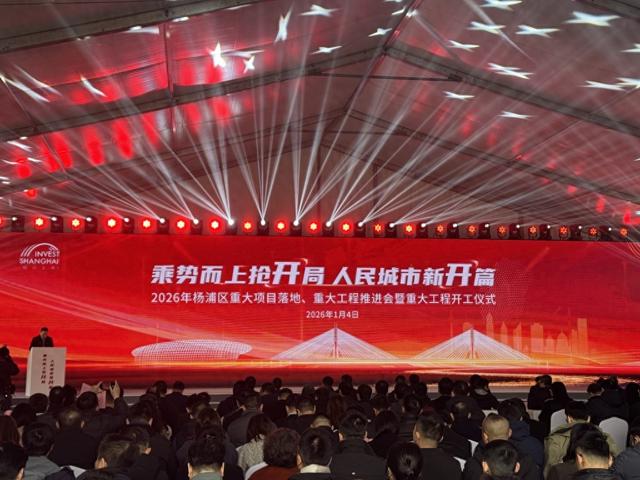
为聚焦培育发展新质生产力、推动科技创新和产业创新深度融合,2026年杨浦区安排了9个都市工业类 项目、9个科技创新产业类项目,总投资额约45亿元。 活动现场,上海量子城市时空创新基地一期工程开工仪式启动。杨浦滨江集团相关负责人徐少明介绍, 该项目将精准匹配复兴岛发展定位,为区域创新创业群体打造集办公、生活、休闲于一体的综合空间载 体。 1月4日,新年开工第一天,"乘势而上抢开局、人民城市新开篇"2026年杨浦区重大项目落地、重大工程 推进会暨重大工程开工仪式在上海量子城市时空创新基地一期工程建设广场举行。 智通财经记者从上海市杨浦区获悉,本次仪式既包括重大项目集中签约,又有重大工程集中开工奠基 等,总投资额超375亿元。2026年杨浦区安排了区重大工程104项,其中正式项目91项、预备项目13项。 本次集中开工重大工程7项,总建筑面积29.16万平方米、总投资130.85亿元,涵盖科创载体、商办及住 宅、高校建设和市政配套等领域,包括上海量子城市时空创新基地(复兴岛)一期工程、复旦大学江湾 校区数学科学楼、同济大学四平路校区综合运动馆、国京路道路新建工程等。 杨浦区 2026年重大项目集中签约仪式。 智通财经 ...

创新科技金融服务驱动“科技—产业—金融”良性循环|展望2026
Guo Ji Jin Rong Bao· 2025-12-31 13:36
Core Insights - The central theme of the articles emphasizes the importance of innovation-driven economic growth in 2026, particularly through the enhancement of technology financial services as a key focus of the Central Economic Work Conference [1] Group 1: Innovation in Technology Financial Services - The core objective is to establish a virtuous cycle connecting technology, industry, and finance, ensuring that financial resources are accurately matched to the development needs of hard technology enterprises throughout their lifecycle [2] - Key initiatives for 2026 include improving the intellectual property pledge financing mechanism, expanding the pilot scope of "investment-loan linkage" and "investment-insurance linkage," and fostering patient capital through the development of AIC equity investments and technology innovation bonds [2][8] Group 2: Financing Tools and Mechanisms - The articles highlight the need for innovative financing tools to support technology enterprises, including the establishment of a bond market "technology board" and the encouragement of technology companies to issue innovation bonds and asset-backed securities [4] - The focus is on making intellectual property pledge financing more accessible and effective, with efforts to standardize processes and introduce risk compensation mechanisms to alleviate banks' lending hesitance [4][6] Group 3: Patient Capital and Long-term Investment - The government aims to cultivate a "long money, long investment" ecosystem by establishing a national venture capital guiding fund with a 20-year duration, directing 70% of funds to seed and early-stage enterprises [12] - Measures to support hard technology enterprises include optimizing the listing review process, enhancing the inclusivity for unprofitable and high R&D companies, and promoting long-term capital investment [13][14] Group 4: Market Dynamics and Future Outlook - The articles suggest that the listing process for hard technology companies on the STAR Market will accelerate, with a focus on supporting enterprises with core technologies and clear commercialization paths while maintaining strict quality standards [14] - The emphasis will be on creating a favorable environment for genuine innovation while preventing "pseudo-innovation" from entering the market [14]
创新科技金融服务驱动“科技—产业—金融”良性循环
Guo Ji Jin Rong Bao· 2025-12-31 13:16
Core Insights - The central theme of the news is the emphasis on innovation-driven economic growth in 2026, particularly through the enhancement of technology financial services as a key focus of the Central Economic Work Conference [1] Group 1: Innovation in Financial Services - The core of innovative technology financial services is to establish a virtuous cycle between technology, industry, and finance, ensuring that financial resources are accurately matched to the development needs of hard technology enterprises throughout their lifecycle [2] - In 2025, significant explorations were made in technology financial services, including the launch of the National Venture Capital Guidance Fund, which has reached a scale of one trillion yuan, focusing on seed, startup, and early-stage enterprises [1][2] - The expansion of financial asset investment company (AIC) equity investment trials to 18 cities nationwide aims to guide bank capital to invest early, small, and in hard technology [1][2] Group 2: Financing Mechanisms - The establishment of a knowledge property pledge financing mechanism is crucial, with initiatives such as trial programs for "pre-compensation" loans for light asset technology enterprises to gain more financing support [2][4] - The exploration of innovative financing tools includes the promotion of knowledge property pledge financing, which has shifted from being merely feasible to being more practical, with standardized processes for patent and trademark pledges [3][5] - The introduction of a bond market "technology board" has seen nearly 100 institutions issue over 250 billion yuan in technology innovation bonds within seven months [3] Group 3: Long-term Capital Cultivation - The government is focused on cultivating "patient capital" to guide long-term investments into early and mid-stage hard technology sectors, establishing a closed-loop system for fundraising, investment, management, and exit [9] - The National Venture Capital Guidance Fund is designed with a 20-year duration, directing 70% of its funds towards seed and startup phases, alongside optimizing state-owned capital assessments [9][10] - The capital market is expected to support hard technology enterprises in their IPO processes, with measures to enhance the inclusivity of unprofitable, high-R&D companies [10][11] Group 4: Collaborative Financial Models - The "investment-loan linkage" model encourages collaboration between banks and investment institutions, integrating credit lending with equity investment to share risks and returns [6][7] - The "insurance-investment linkage" model aims to combine insurance with investment to mitigate risks associated with technology financing, enhancing banks' willingness to lend [7][8] - In 2026, the expansion of the "investment-loan linkage" and "insurance-investment linkage" trials will prioritize regions with concentrated technology enterprises and active equity investment [8]
“十五五”首席观察:中国经济提“量”更提“质”
Bei Jing Shang Bao· 2025-12-28 16:11
Core Insights - The macroeconomic environment in 2025 presents both opportunities and challenges, with a focus on the transition from the "14th Five-Year Plan" to the "15th Five-Year Plan" [1] - The financial market in China is characterized by a unique rhythm amidst internal and external changes, with monetary policy maintaining a "moderately loose" stance and promoting consumption through various financial support policies [1] - Key questions for 2025 include understanding the core contradictions limiting consumer spending and how to achieve sustainable long-term growth in consumption [1] Group 1: Green Finance - As of Q3 2025, China's green loan balance reached 43.51 trillion yuan, a year-on-year increase of 22.9%, maintaining over 20% growth for five consecutive years [3] - The balance between "stabilizing growth" and "reducing carbon emissions" is essential for high-quality economic development, with green finance playing a critical role in directing funds towards high-value and low-carbon sectors [4][5] - Green finance should support the upgrade of traditional industries and promote the development of green sectors like new energy vehicles and circular economy [4] Group 2: Financial Policies and Strategies - The "Five Major Articles" in finance aim to serve the real economy and require coordination among various financial sectors, with digital finance being a key driver for high-quality development [7][8] - The need for a systematic approach to financial services, including credit assessment and risk management, is emphasized to support technological and green finance [8] - The financial system's openness and alignment with international standards are crucial for enhancing the effectiveness of the "Five Major Articles" [9] Group 3: Monetary Policy Outlook - Structural monetary policy tools are expected to be adjusted to enhance effectiveness, with potential increases in quotas and reductions in interest rates [12] - The RMB is anticipated to appreciate moderately in 2026, influenced by both domestic and international factors, including the Fed's interest rate cycle [13] - The focus on domestic circulation stability will be essential in countering external uncertainties, with an emphasis on enhancing domestic market competitiveness [11] Group 4: Consumer Spending and Economic Growth - Recent consumer subsidy policies have shifted from "incremental stimulation" to "structural optimization," highlighting the importance of consumption in driving economic potential [15] - The core contradiction limiting consumer spending is linked to the real estate market's adjustment phase, necessitating multi-faceted policy approaches to stabilize expectations and enhance consumer confidence [16] - Recommendations for boosting consumption include implementing paid staggered vacations, optimizing service consumption, and improving the overall price environment to stimulate consumer willingness [16]

指向“十五五”的这场金融盛会,树立“青岛风向标”
凤凰网财经· 2025-12-27 11:46
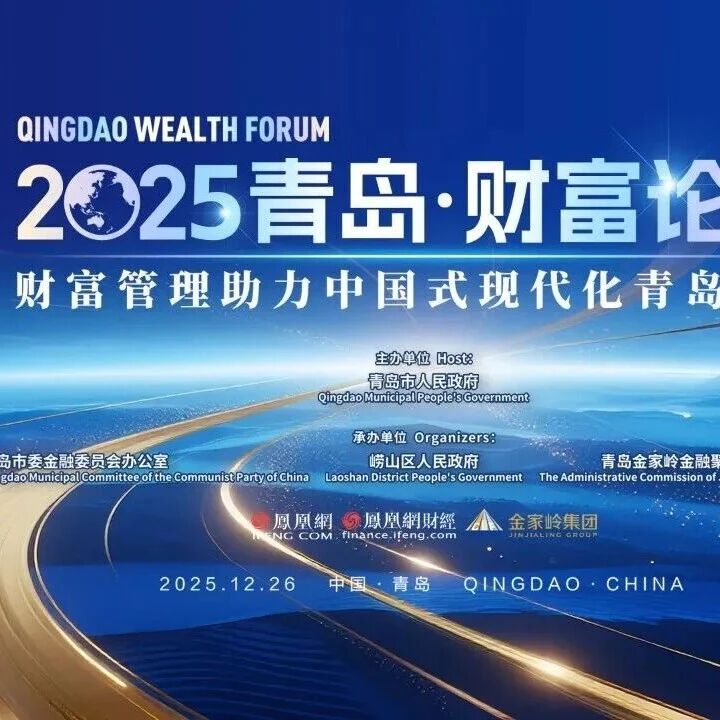
"十五五"开局之年已然临近。 规划建议首度将"金融强国"写入,既标志着我国金融发展逻辑发生重大转变——从基础制度搭建转 入以"强国"为导向的质量提升与全球竞争力培育阶段,更对金融业发展提出更高要求。 正是在这样的历史节点,12月26日,以"财富管理助力中国式现代化青岛实践"为主题的2025青岛 财富论坛在青岛金家岭金融区如约而至。 本次论坛共设置一个主论坛和三个分论坛,紧扣建设金融强国目标,围绕金融"五篇大文章",现场 数百位国内经济金融领域相关领导、业内知名专家学者齐聚,共探财富管理与国家战略同频共振的 实践路径。 01 发出"青岛声音",洞察"十五五"前沿趋势 过去一年,全球经济格局波谲云诡,国内新旧动能转换稳步演进,传统模式面临艰难险阻,在多重 风险交织叠加下,金融业站在了转型的十字路口。 本届论坛上,各界嘉宾在延续往年以前瞻视角、权威声音纵论行业发展同时,还进一步强调与国 家"十五五"规划建议的融合,带来精彩的观点输出,以更加积极的姿态深入探讨财富管理助力中国 式现代化青岛实践的赋能路径与未来图景。 "随着我国社会财富总规模的逐步积累,中国经济增长的模式也需要逐渐从投资驱动向消费投资并重 转变,充分发 ...
指向“十五五”的这场金融盛会,树立“青岛风向标”
Xin Lang Cai Jing· 2025-12-27 09:54
转自:推广 "十五五"开局之年已然临近。 规划建议首度将"金融强国"写入,既标志着我国金融发展逻辑发生重大转变——从基础制度搭建转入以"强国"为导向的质量提升与全球竞争力培育阶段, 也更对金融业发展提出新的更高要求。 正是在这样的历史节点,12月26日,以"财富管理助力中国式现代化青岛实践"为主题的2025青岛财富论坛在青岛金家岭金融区如约而至。 本次论坛共设置一个主论坛和三个分论坛,紧扣建设财富管理核心主线金融强国目标,围绕金融"五篇大文章",现场数百位国内经济金融领域相关领导、 业内知名专家学者齐聚,共探财富管理与国家战略同频共振的实践路径。 发出"青岛声音" 洞察"十五五"前沿趋势 过去一年,全球经济格局波谲云诡,国内新旧动能转换任重道远稳步演进,传统模式面临艰难险阻,在多重风险交织叠加下,金融业站在了转型的十字路 口。 已连续举办11届的青岛财富论坛,作为青岛推进财富管理中心建设的重要平台和品牌活动,早已成为洞察金融业发展趋势的前沿平台窗口。 本届论坛上,各界嘉宾在延续往年以前瞻视角、权威声音纵论行业发展同时,还进一步强调与国家"十五五"规划建议的融合,带来精彩的观点输出,以更 加积极的姿态深入探讨财 ...
让金融供给与科创规律更匹配
Sou Hu Cai Jing· 2025-12-26 22:56
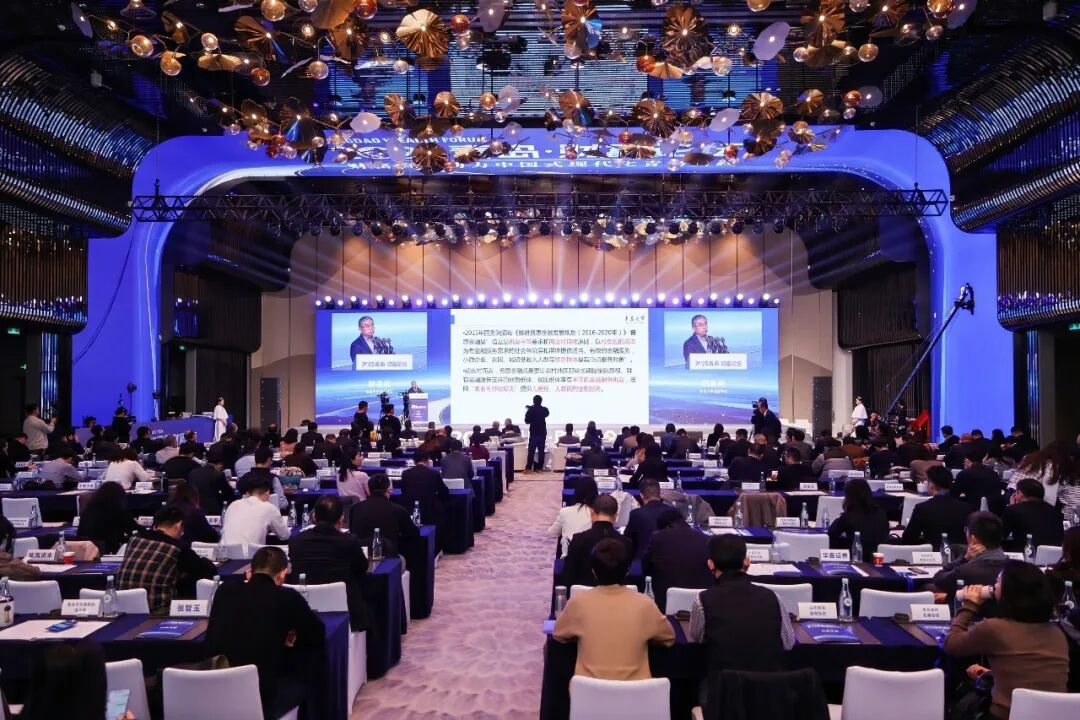
Core Viewpoint - The recent meeting held by the People's Bank of China and the Ministry of Science and Technology emphasizes the importance of deepening financial supply-side structural reforms to support the construction of a technology-driven nation, highlighting the strategic position of technological self-reliance during the 14th Five-Year Plan period [1] Group 1: Financial and Technological Integration - The integration of finance and technology is crucial for addressing challenges and stimulating high-quality development, with financial services aimed at precisely supporting technological innovation [1] - The transition from "single-point breakthroughs" to "ecological symbiosis" in technology finance emphasizes collaboration among various stakeholders, including government, financial institutions, technology companies, and research institutions [2] Group 2: Government and Financial Institutions' Roles - Governments play a dual role as guides and service providers, implementing forward-looking strategies and optimizing the business environment while also using market-oriented methods to attract social capital into technology innovation [2] - Financial institutions are evolving from mere fund providers to comprehensive financial service integrators, with innovations like intellectual property pledge financing addressing the financing challenges faced by technology enterprises [2] Group 3: Current State and Challenges of Technology Finance - China's technology finance scale ranks among the world's top, characterized by systematic policy innovation and large-scale mobilization of market resources [3] - There are structural contradictions between the risk-averse nature of finance and the high uncertainty of technological innovation, necessitating a rethinking of financial supply logic to align with the long cycles and high risks of technology innovation [3] Group 4: Evaluation and Risk Management - Establishing a multi-dimensional evaluation system that includes technology maturity and team stability is essential, with a focus on integrating non-financial indicators into credit decision-making [4] - The introduction of standardized data interfaces and intelligent assessment tools can help overcome financing difficulties for light-asset enterprises by transforming dormant patents into standardized financial assets [4] Group 5: Capital Market Support and Long-term Funding - Strengthening the capital market's support for the entire chain of technology achievement transformation and broadening long-term funding channels is critical [5] - Enhancing tax incentives and exit mechanisms for private equity and venture capital, along with increasing government fund contributions to early-stage technology funds, will promote investment in technology [5]
广东金融赋能科技强省“出大招”:首创3+3体系,打造耐心生态
Xin Lang Cai Jing· 2025-12-25 04:05
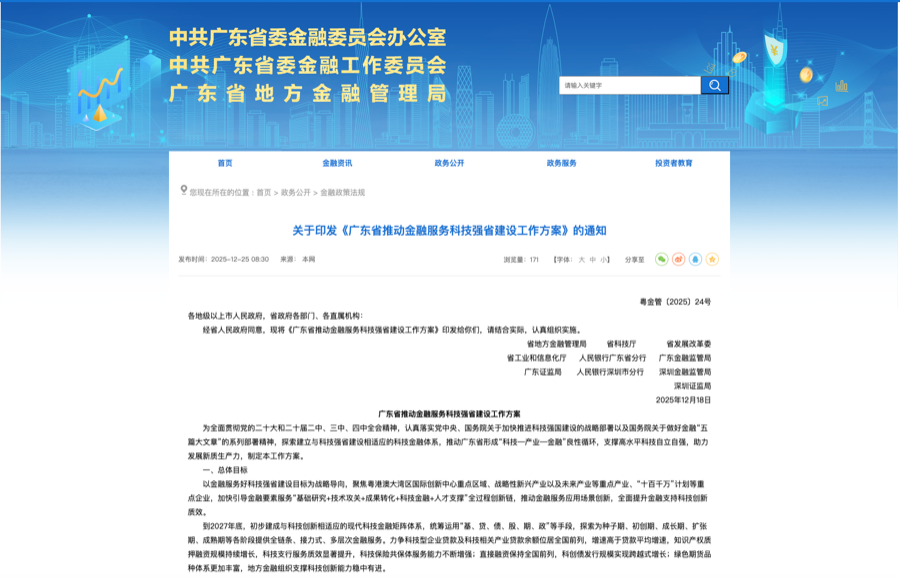
南方财经记者 郭晓洁 庞成 广州报道 在收官"十四五"、谋篇"十五五"的关键节点,广东重磅出台金融赋能科技强省建设专项政策,系统性绘就金融服务科技强省建 设"战略图谱"。 12月25日,广东省地方金融管理局会同省发展改革委、省科技厅、省工业和信息化厅、中国人民银行广东省分行、国家金融监 督管理总局广东监管局、中国证券监督管理委员会广东监管局、中国人民银行深圳市分行、深圳金融监管局、深圳证监局等十 部门联合发布《广东省推动金融服务科技强省建设工作方案》(以下简称《工作方案》)。 《工作方案》共分总体目标、强化科技强省建设金融支持、主要任务三部分,核心以首创的"3+3"系统体系支撑科技强省建设, 聚焦重点区域、重点产业、重点企业"三个重点",明确实施科技金融强基工程、科技金融生态工程、要素保障工程"三大工 程";同时锚定清晰总体目标,提出到2027年底,初步建成与科技创新相适应的现代科技金融矩阵体系,统筹运用"基、贷、 债、股、期、政"多元工具,为种子期、初创期、成长期、扩张期、成熟期科技企业提供全链条、接力式、多层次金融服务,力 争实现科技型企业贷款及科技相关产业贷款余额位居全国前列等目标。 南方财经记者留意到 ...
推动金融资源从“单点供给”转向生态赋能
Jin Rong Shi Bao· 2025-12-25 03:20
Core Viewpoint - The 20th Central Committee of the Communist Party of China emphasizes accelerating high-level technological self-reliance and innovation, integrating technological and industrial innovation deeply [1] Group 1: Financial Service Support System - The People's Bank of China Dongguan Branch has innovated the "Equity Loan Guarantee Rental" service model to support technology finance, integrating diverse resources to break financial barriers and create a full-cycle support ecosystem [1] - The model has served over 1,400 enterprises, facilitating nearly 5 billion yuan in financing and developing over 10 customized products and service models [1] Group 2: Institutional Innovation and Coordination - The Dongguan Branch has established a "three-level linkage" organizational system to enhance coordination, with clear responsibilities for government departments and financial institutions [2] - A "dynamic optimization" evaluation system has been created to continuously improve service quality based on quantitative and qualitative indicators [2] Group 3: Service Accessibility - A service system combining "fixed stations + grid specialists + special salons" has been developed to extend financial services to the front line of industries, addressing the last mile of financing for technology enterprises [3] - The service team has engaged with 491 technology enterprises with financing needs, providing personalized financing service plans [3] Group 4: Innovative Financial Products - The Dongguan Branch has focused on the full lifecycle needs of technology enterprises, innovating single-feature products and combination service models under the "Equity Loan Guarantee Rental" framework [4] - Various financing products have been developed, including "Technology Achievement Transformation Loan," "Angel Loan," and "Intellectual Property Pledge + Batch Guarantee" financing models [5][6] Group 5: Future Directions - The Dongguan Branch aims to deepen the "Equity Loan Guarantee Rental" service model, promoting the establishment of more specialized service teams to provide diversified, precise, and comprehensive financial services for technology enterprises [6]