节能环保

Search documents
跨越周期:中国企业出海东南亚的系统化攻坚指南
Jin Tou Wang· 2026-01-30 00:13
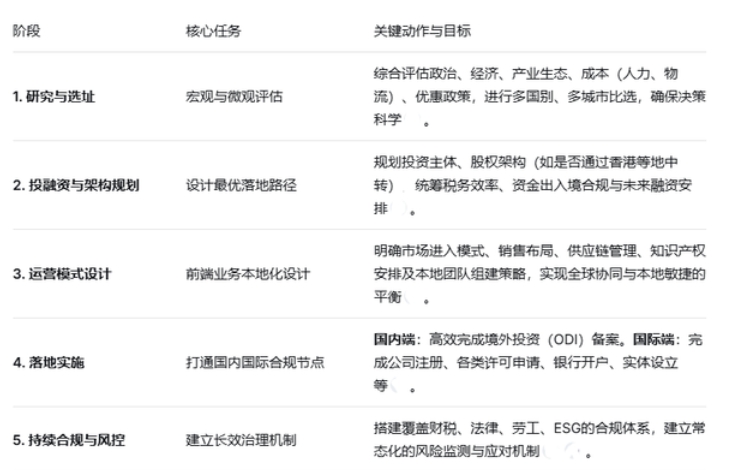
Core Insights - The shift of Chinese companies going abroad has evolved from an optional strategy to a necessity for long-term development, particularly in Southeast Asia, which is becoming a core area for globalization efforts due to its economic growth and strong trade ties with China [1] Group 1: Trends in Chinese Companies Going Abroad - The current trend of Chinese companies going abroad shows a clear upgrade, with a focus on brand establishment, technology cooperation, and long-term market share rather than just short-term orders [2] - The modes of going abroad have diversified from primarily goods trade to include greenfield investments, cross-border mergers and acquisitions, and localized R&D and operations [2] - Factors driving this transformation include domestic industrial upgrades, the Belt and Road Initiative, and investment incentives from Southeast Asian countries [2] Group 2: Opportunities and Challenges in Southeast Asia - Southeast Asia presents a diverse opportunity landscape, with different countries offering unique entry points for various types of businesses, such as manufacturing hubs in Vietnam, Thailand, and Indonesia, and digital innovation centers in Singapore and Indonesia [3] - However, challenges such as increased compliance requirements, geopolitical risks, and difficulties in local integration must be addressed [4] Group 3: Systematic Approach for Successful Expansion - A successful overseas expansion requires a systematic approach involving five key stages: research and site selection, investment and structural planning, operational model design, implementation, and ongoing compliance and risk management [5][6] - The Overseas Direct Investment (ODI) filing is a critical legal prerequisite for initiating overseas actions, and professional assistance can significantly streamline this process [6] Group 4: Building Resilience Against Uncertainties - Companies need to build resilience by prioritizing compliance, diversifying supply chains and markets, utilizing policy financial tools, and cultivating local leadership [7] Group 5: Future Outlook - Southeast Asia is expected to remain a vibrant testing ground and growth engine for Chinese companies' globalization efforts, with successful companies adopting a long-term mindset and viewing overseas expansion as an organizational capability upgrade [8]

透过报告新鲜词,看懂福建“新意”
Xin Lang Cai Jing· 2026-01-28 23:06
Core Insights - The government work report emphasizes practical measures and innovative concepts to drive economic development in Fujian, showcasing a commitment to integrating new ideas with local realities [1][2]. Group 1: Industry Development Strategies - The report outlines the "Four Chains" integration strategy, focusing on the synergy between innovation, industry, finance, and talent to enhance the entire industrial process [3]. - The "555X" industrial development framework aims to establish a robust industrial pyramid with five trillion-level clusters, five five-hundred billion-level clusters, five hundred billion-level clusters, and X future industries, promoting a strong manufacturing province [4]. - The report highlights the importance of digital transformation and the integration of digital and real economies, positioning Fujian as a leader in digital economic development [6]. Group 2: Business Environment and Support - The "Four Connections and Four Arrivals" mechanism is introduced to optimize services for enterprises, ensuring efficient communication and support while maintaining a clean and cooperative government-business relationship [5]. - The report emphasizes the development of the "Ticket Root Economy" and "Night Economy," leveraging consumer experiences to stimulate economic activity through interconnected consumption scenarios [7]. Group 3: Cultural and Social Initiatives - The report discusses the "Four No Separation" mutual assistance elderly care model, which focuses on providing care in familiar environments, addressing emotional needs while ensuring quality care [11]. - It also emphasizes the continuation and innovative development of Fujian's diverse cultural heritage, aiming to integrate cultural assets into contemporary life and industry, enhancing the region's soft power [12]. Group 4: Infrastructure and Connectivity - The report mentions the initiation of 33 "Two Connections" projects, enhancing transportation links and benefiting nearly 300 million people, thereby facilitating rural revitalization and regional economic growth [10]. - The establishment of cross-strait standardization aims to reduce barriers for Taiwanese businesses, promoting closer economic cooperation and integration between the two regions [9].
新经济、新动能行业洞察系列(一):新经济工业行业进阶中的质效观察
Southwest Securities· 2026-01-28 13:25
Group 1: New Economy Overview - The "new economy" is characterized by information technology and globalization, driven by technological and institutional innovations, representing a profound transformation in economic structure and development methods[2] - In 2024, the value added of the "three new" economies (new industries, new business formats, new models) is projected to reach 24.29 trillion yuan, accounting for 18.01% of GDP, an increase of 0.43 percentage points from the previous year[10] - The third industry constitutes 54.7% of the "three new" economy, highlighting the active role of the new economy in the service sector[10] Group 2: Industrial Sector Insights - The report constructs a monitoring system for the industrial sector's economic climate, focusing on key areas such as new energy, new materials, and aerospace[2] - The industrial sector's economic climate is stabilizing and entering a new cycle, with the manufacturing PMI showing recovery trends since 2020, particularly in high-tech industries[2] - Key industries are experiencing differentiated growth, with the communication equipment sector rebounding strongly, while the computer and home appliance sectors are still seeking a bottom[2] Group 3: Risk Factors - Potential risks include fluctuations in domestic and international economic cycles, adjustments in industrial policies, and geopolitical risks[2]
东部原油储运新兴产业营收涨八成
Zhong Guo Hua Gong Bao· 2026-01-28 02:45
该公司在深耕集团内部市场的同时,多渠道拓展外部市场,严格把控产品质量,持续优化售后服务。 2025年,智能测试桩销量达7158套,同比增长200%。同时,该公司承接了徐州数据中心建设维护、油 气储运站场控制系统集成等新一代信息技术产业服务项目,实现营业收入5371万元;在管道地质灾害及 应力监测等节能环保产业服务领域也取得积极进展。 该公司聚焦新一代信息技术、高端装备制造、节能环保三大板块精准发力。在高端装备制造领域,构建 起全链条转化体系,已完成多功能阴极保护智能测试桩等系列产品研发制造,通过强化推广、精准对接 需求,产品成功用于西部管道、华南公司、华中公司等单位。 中化新网讯 2025年,国家管网集团东部原油储运公司在新兴产业领域实现突破,全年战略性新兴产业 营业收入达9412.66万元,同比增长80.3%。 ...
陕西重点产业链总产值占规上工业比重逾八成
Zhong Guo Jing Ji Wang· 2026-01-27 15:02
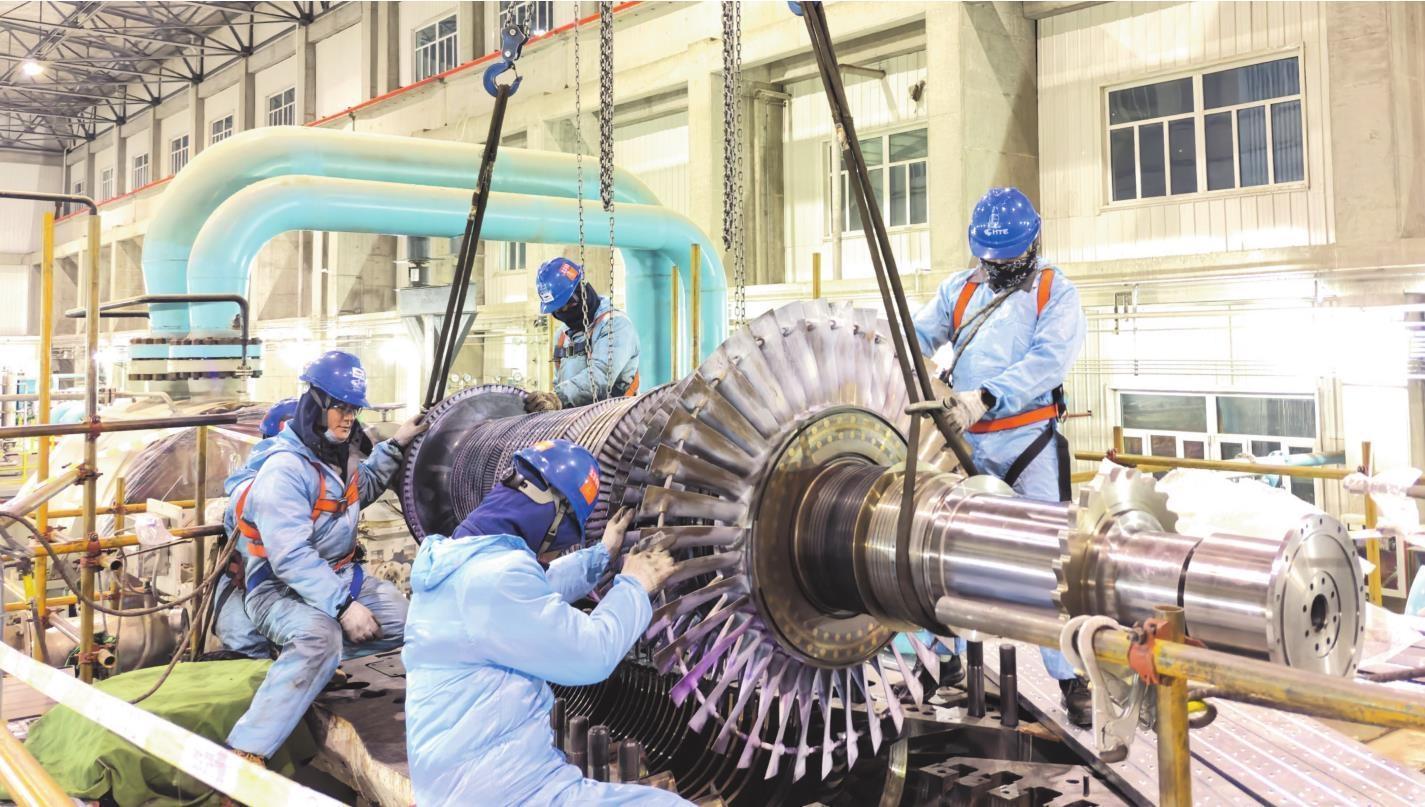
Group 1 - In 2025, Shaanxi's industrial production achieved rapid growth, with a total output value of 2.5 trillion yuan for 34 key industrial chains, a year-on-year increase of 1.2%, surpassing the growth rate of industrial output above designated size by 1.5 percentage points [1][2] - The added value of Shaanxi's industrial enterprises above designated size grew by 7.3% year-on-year, 1.4 percentage points higher than the national average, ranking 13th in the country [1] - The proportion of equipment manufacturing in Shaanxi's industrial output increased, with the added value of equipment manufacturing accounting for 18.2% of the industrial output above designated size, up by 1.9 percentage points from 2024 [1] Group 2 - New momentum products in the industrial sector saw rapid growth, with charging pile production increasing by 43.6%, 3D printing equipment by 71.3%, civilian drones by 50.1%, industrial robots by 49.5%, and wind turbine generators by 63.5% [1] - Eight industrial chains experienced output growth exceeding 10%, including the solar photovoltaic industry chain with a 34.8% increase and the white liquor industry chain with a 21.6% increase [2] - Eleven industrial chains had output exceeding 100 billion yuan, with five chains, including coal and passenger vehicles (new energy), exceeding 200 billion yuan [2]
阜新:聚链成群攀高向新
Xin Lang Cai Jing· 2026-01-26 22:08
Core Viewpoint - The article emphasizes the importance of industrial development as a driving force for urban growth, highlighting the transformation and revitalization efforts in Fuxin, which aims to build a modern industrial system to support high-quality development [8][19]. Group 1: Industrial Development and Strategy - Fuxin is focusing on upgrading its industrial system by aligning with Liaoning Province's "2211" industrial layout and creating an "8151" modern industrial system, which includes 8 advantageous industrial clusters, 15 key industrial chains, and 100 key enterprises [9][10]. - The Daqing Fuxin coal-to-natural gas project is a key national energy strategy project and represents the largest single investment in Fuxin's history, utilizing Mongolian East lignite as raw material to produce natural gas [9][10]. - The project aims to enhance energy security, optimize the provincial energy structure, and promote green and low-carbon development, serving as a pivotal point for industrial upgrading and diversification in Fuxin [9][10]. Group 2: Technological Innovation and Transformation - Companies in Fuxin are actively pursuing digital transformation and technological upgrades, with examples like Wanda Foundry Group implementing smart manufacturing processes to enhance efficiency and precision [13][14]. - The article highlights the importance of innovation in traditional industries, showcasing how companies like Liaoning Jianxing Solid Waste Resource Recycling Co. are utilizing advanced technologies to address waste disposal challenges while achieving resource recycling [14][15]. - The modernization of production lines in the food processing sector, such as at Liaoning Zhengyuan Food Co., is also noted, with plans to introduce automated production lines to improve efficiency and product quality [15]. Group 3: Supportive Business Environment - Fuxin's government is actively facilitating a supportive business environment by addressing challenges faced by enterprises, such as coordinating between departments to resolve issues like safety concerns related to infrastructure [16][18]. - The establishment of dedicated project managers and streamlined communication channels between various government departments has significantly reduced bureaucratic hurdles for businesses, enhancing their operational efficiency [18]. - The article illustrates how these supportive measures have led to faster project completion times, exemplified by Wanda Foundry's new R&D building being completed in less than a year [18].
限时报名|“零碳园区中国方案:创新实践与协同治理”上海站即将开启
第一财经· 2026-01-26 09:20
随着"十五五"能耗"双控"向碳排放"双控"全面转变,零碳园区已成为万亿级低碳市场的核心载体。 由上海交通大学环境社会治理研究院主办,第一财经协办的"零碳园区中国方案:创新实践与协同治 理"上海专场将于 2026 年 2 月 2 日举行。 作为产业集聚与能源消费的核心单元,零碳园区是落实"双碳"战略、抢占绿色低碳产业制高点的关 键战场。国家层面明确提出"十五五"时期建成百余个国家级零碳园区的宏伟目标,这一战略导向不 仅为园区绿色蝶变注入强劲动力,更催生了万亿级的绿色市场空间。 上海率先将零碳园区建设纳入城市绿色转型的系统布局,而临港新片区就是上海零碳转型的核心承载 地与实践标杆。近年来,临港新片区依托新能源、智能制造、节能环保等优势产业基础,积极探 索"零碳 + 产业"深度融合路径,在分布式能源利用、绿色建筑规模化推广、园区循环化改造等方面 积累了丰富实践经验,更培育了一批零碳技术创新企业与示范项目,为国家级零碳园区建设提供了可 复制、可推广的"临港样本"。 本次活动将立足上海与临港的政策实践与真实案例,不仅将深度解读行业前沿报告,更将围绕"规划 与落地的关键挑战""多元主体协同机制""可持续运营模式"等核心议 ...
2025年陕西34条重点产业链实现总产值2.5万亿元
Shan Xi Ri Bao· 2026-01-26 00:18
Core Insights - In 2025, Shaanxi's industrial production is expected to grow rapidly, with a solid push towards transformation and upgrading, as key manufacturing industry chains show positive trends [1][2] Group 1: Industrial Growth and Performance - The total output value of 34 key industrial chains in Shaanxi is projected to reach 2.5 trillion yuan, a year-on-year increase of 1.2%, which is 1.5 percentage points higher than the growth rate of industrial output above designated size [1] - The added value of industrial enterprises above designated size in Shaanxi is expected to grow by 7.3% year-on-year, ranking 13th nationally, with mining and manufacturing sectors showing significant growth rates of 9.5% and 4.9% respectively [1] - The automotive manufacturing sector is anticipated to see a remarkable year-on-year increase of 20.2%, while the electrical machinery and equipment manufacturing sector is projected to grow by 26.3% [1] Group 2: Equipment Manufacturing Sector - The added value of equipment manufacturing in Shaanxi is expected to account for 18.2% of the industrial output above designated size, an increase of 1.9 percentage points from 2024, with a year-on-year growth of 6.8% [2] - Key sectors such as general equipment manufacturing, automotive manufacturing, and electrical machinery are expected to contribute significantly to industrial growth, with respective year-on-year increases of 10.2%, 20.2%, and 26.3% [2] - High-end equipment product output is projected to grow rapidly, with generator sets, mobile communication base station equipment, and charging piles seeing year-on-year increases of 66.7%, 279.1%, and 43.6% respectively [2] Group 3: Key Industrial Chains - Eight industrial chains in Shaanxi are expected to see output value growth exceeding 10%, with the solar photovoltaic industry chain leading at 34.8% year-on-year growth [3] - Other notable growth includes the white liquor industry chain at 21.6%, additive manufacturing at 20.9%, and the photon industry chain at 19.8% [3] - Eleven industrial chains are projected to exceed 100 billion yuan in output value, with five chains, including coal and passenger vehicles (new energy), surpassing 200 billion yuan [3]
同方股份原董事长陆致成去世
Sou Hu Cai Jing· 2026-01-25 06:24
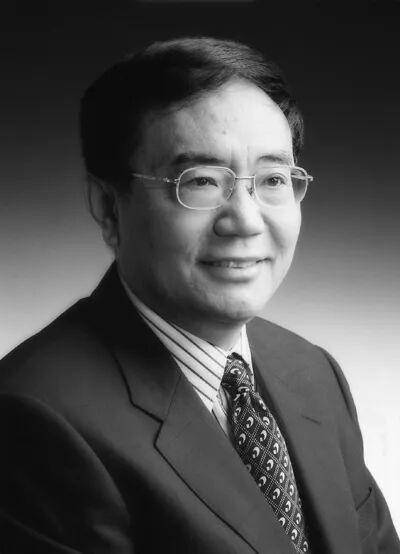
Core Insights - The passing of Mr. Lu Zhicheng, former president and chairman of Tongfang Co., Ltd., on January 24, 2026, at the age of 78, marks a significant loss for the company and the industry [1] Group 1: Background and Contributions - Mr. Lu was born in August 1948 in Shanghai and graduated from Tsinghua University in 1977, where he later became a professor and doctoral advisor, focusing on the integration of HVAC technology and computer control [3] - In 1989, driven by the ideal of "revitalizing the country through science and education," he founded Beijing Tsinghua Artificial Environment Engineering Company, which laid the groundwork for the establishment of Tongfang Co., Ltd. in 1997 [3] - As a core founder, he established the "technology + capital" development strategy and the "transfer of soil" model for industry-academia-research integration, facilitating the commercialization of scientific achievements from universities [3] Group 2: Achievements and Legacy - From 1997 to 2015, Mr. Lu led Tongfang in aligning with national needs, developing core businesses in information technology, public safety, and energy conservation, which resulted in the growth of well-known enterprises such as Tongfang Weishi and Tongfang Zhinet [4] - He was instrumental in the development of the "large container inspection system" and the localization of microelectronic core components, significantly contributing to China's security technology and the integration of Chinese technology in national projects like the second-generation ID card and the Beijing Olympics [4] - Mr. Lu's principles of "undertaking, exploring, and surpassing" and the corporate culture of "loyalty, responsibility, and value equivalence" have left a lasting impact on Tongfang and will guide future generations towards the vision of becoming a world-class high-tech enterprise [5]

哀悼!300亿A股原总裁、董事长陆致成病逝
中国基金报· 2026-01-25 06:05
Core Viewpoint - The article announces the passing of Lu Zhicheng, the former president and chairman of Tongfang Co., Ltd., who died on January 24, 2026, at the age of 78, highlighting his significant contributions to the company and the high-tech industry in China [1]. Group 1: Background and Contributions - Lu Zhicheng was born in August 1948 in Shanghai and graduated from Tsinghua University in 1977, where he later became a professor and doctoral advisor, focusing on the integration of HVAC technology and computer control [4]. - He founded Beijing Tsinghua Artificial Environment Engineering Company in 1989, driven by the ideal of "science and education revitalizing the country" and "serving the nation through industry" [4]. - In 1997, he played a key role in the restructuring of Tsinghua University’s enterprises, leading to the establishment and listing of Tongfang Co., Ltd., and laid the foundation for its "technology + capital" development strategy [4]. Group 2: Achievements and Legacy - Under Lu's leadership from 1997 to 2015, Tongfang focused on national needs and developed core businesses in information technology, public safety, and energy conservation, nurturing several well-known companies such as Tongfang Weishi and Tongfang Zhinet [5]. - He was instrumental in the development of the "large container inspection system" and the localization of microelectronic core components, enhancing China's security inspection capabilities [5]. - Lu's principles of "commitment, exploration, and transcendence" and the corporate culture he established will continue to inspire future generations at Tongfang as they strive to become a world-class high-tech enterprise [5]. Group 3: Company Overview - Tongfang Co., Ltd. was established in 1997 with funding from Tsinghua University and was listed on the Shanghai Stock Exchange the same year [6]. - The company is primarily engaged in nuclear technology applications, digital information, and smart energy, with products including security inspection equipment, knowledge data products, AI products, and energy-saving applications [6]. - As of January 23, 2026, Tongfang's stock price was 9.47 yuan per share, with a total market capitalization of 31.727 billion yuan [7].