铝制品

Search documents
特变电工:9月19日召开董事会会议
Mei Ri Jing Ji Xin Wen· 2025-09-19 09:16
Group 1 - The core point of the article is the announcement by TBEA Co., Ltd. regarding its board meeting held on September 19, 2025, and the company's revenue composition for the first half of 2025 [1] - TBEA's revenue composition for the first half of 2025 is as follows: transformers account for 27.62%, coal for 18.25%, wires and cables for 16.2%, new energy products and integrated engineering for 13.05%, power generation business for 7.16%, and aluminum electronic materials and aluminum and alloy products for 6.9% [1] - As of the time of reporting, TBEA's market capitalization is 82.8 billion yuan [1]

中国铝罐(06898)因行使可换股票据所附带的换股权而发行2500万股
Zhi Tong Cai Jing· 2025-08-25 08:47
Group 1 - The company, China Aluminum Cans (06898), announced the issuance and allocation of 25 million new shares due to the exercise of the attached conversion rights of convertible bonds on August 25, 2025 [1]
中国铝罐因行使可换股票据所附带的换股权而发行2500万股
Zhi Tong Cai Jing· 2025-08-25 08:44
Core Viewpoint - China Aluminum Cans (06898) announced the issuance and allocation of 25 million new shares on August 25, 2025, due to the exercise of the conversion rights attached to the convertible bonds [1] Group 1 - The company will issue 25 million new shares as part of the convertible bond exercise [1]
中国铝罐(06898.HK)因行使可换股票据所附带换股权发行2500万股
Ge Long Hui· 2025-08-25 08:42
Core Viewpoint - China Aluminum Cans (06898.HK) announced the issuance and allocation of 25 million new shares due to the exercise of attached conversion rights of convertible bonds on August 25, 2025 [1] Group 1 - The company will issue 25 million new shares [1]
白银td行情震荡上涨 全球贸易环境呈不确定性
Jin Tou Wang· 2025-08-25 03:11
Group 1 - The first batch of tariff measures has been in effect for six months, leading to a significant increase in the actual tariff rate in the U.S. from approximately 2.5% to nearly 20% [2] - Seven countries and regions are currently negotiating trade arrangements with the U.S., accounting for over a quarter of U.S. imports, with tariff rates fluctuating between 15% and 20% [2] - The U.S. has agreed to differentiated tariff reductions based on Section 232 reviews, with the U.K. receiving special treatment in the steel and aluminum sectors, maintaining a 25% tariff while others face 50% [2] Group 2 - The EU has announced a 15% tariff on pharmaceuticals and semiconductors, which is expected to be lower than the final tariff levels for these industries [3] - The EU's adjustments are significant as it is projected to account for 62% of U.S. imports in the pharmaceutical sector by 2024 [3] - The trade agreements with the U.S. involve over a trillion dollars in investment intentions across various sectors, although specific details remain unclear [3] Group 3 - The silver T+D market showed a fluctuating upward trend, closing at 9183 yuan/kg, with a daily high of 9224 yuan/kg and a low of 9124 yuan/kg [1][4] - Resistance levels for silver T+D are noted at 9224-9300, while support levels are identified at 9000-9124 [4]
一个周末就变天!特朗普钢铝关税范围陡然扩大,美国进口商措手不及
Hua Er Jie Jian Wen· 2025-08-19 17:10
Core Viewpoint - The Trump administration has significantly expanded the scope of steel and aluminum tariffs by 50%, adding 407 derivative products to the tariff list, creating substantial compliance pressure for U.S. importers [1][5]. Group 1: Tariff Expansion Details - The new tariff list includes a wide range of products such as machinery, motorcycles, children's swings, and tableware, which are subject to additional tariffs due to their steel and aluminum content [1][2]. - The expanded tariff list officially took effect on August 18, as announced by the U.S. Department of Commerce [5]. - The logistics industry expressed strong dissatisfaction, indicating that the rapid implementation of these changes caught many off guard, complicating compliance efforts [1][3]. Group 2: Industry Reactions - Trade compliance professionals noted that the lack of prior notification regarding the changes has made it difficult for importers to make informed purchasing decisions [1][3]. - Industry experts, including a professor from Michigan State University, expressed confusion over the strategy of imposing tariffs on a broad range of intermediate goods, suggesting that it may be counterproductive [3][6]. - The logistics giant Kuehne + Nagel highlighted that the new regulations represent a strategic shift in the oversight of steel and aluminum derivative products, increasing complexity and costs for businesses [3][4]. Group 3: Impact on Trade and Exports - The new tariffs are expected to further depress Chinese aluminum exports to the U.S., although the impact of the newly added products is anticipated to be less severe than previous rounds of tariffs [1][5]. - According to industry analysis, the value of goods currently covered by metal tariffs is estimated to be around $328 billion, significantly higher than previous years [3]. - The U.S. remains heavily reliant on aluminum imports, with an import dependency of approximately 40%, complicating efforts for domestic production to meet demand [6].
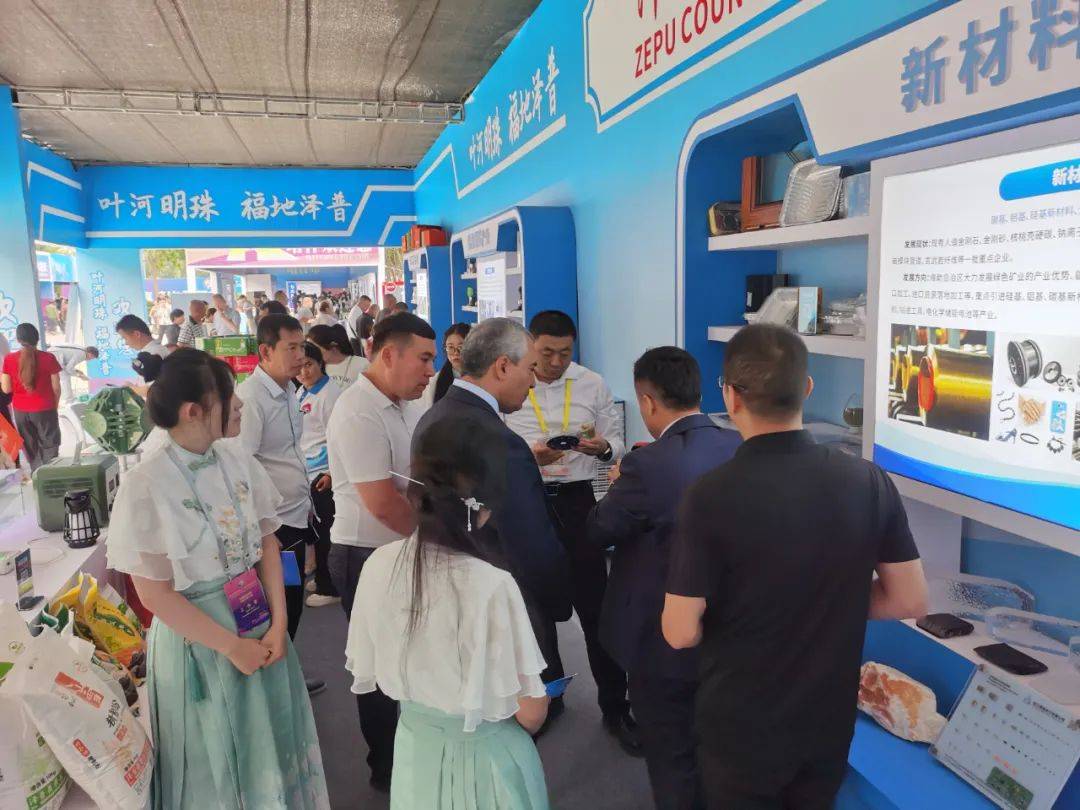
第十五届中国新疆喀什·中亚南亚商品交易会盛大开幕 泽普县展位引八方瞩目
Sou Hu Cai Jing· 2025-08-18 06:22
Core Insights - The 15th China Xinjiang Kashgar Central Asia and South Asia Commodity Fair (referred to as "Kashgar Fair") opened on August 15, attracting numerous exhibitors and visitors, highlighting the event's significance in promoting regional products and trade opportunities [1] Group 1: Exhibition Highlights - The Zepu County exhibition stand featured a sophisticated design that showcased local cultural characteristics and abundant resource endowments, drawing significant attention from attendees [2] - Various unique products, including red dates and crayfish, were displayed, emphasizing the richness of Zepu's local produce and encouraging visitors to explore the region [2] Group 2: Business Opportunities - The Zepu County exhibition area aimed to leverage the Kashgar Fair platform to engage in negotiations and collaborations with merchants from various regions, thereby expanding sales channels and creating new business opportunities for participating enterprises [3] - Companies like Zepu County Xiaopingle Adhesive Tape Co., Ltd. expressed the importance of the fair as a bridge connecting markets and customers, seeking to establish partnerships and expand their business networks [3] - Xinjiang Baiqin Fire Technology Co., Ltd. highlighted their successful participation in the previous year's fair, which exceeded expectations, and aimed to replicate that success this year [3] Group 3: Industry Focus - The Zepu County exhibition focused on three main industries: biological and food industries, equipment manufacturing, and new materials, showcasing over 30 participating enterprises across various sectors including specialty products, low-altitude economy, cultural tourism, and import-export trade [4] - Featured products included processed specialty fruits, beverages, fire-fighting equipment, synthetic diamonds, aluminum products, engineering equipment, aquatic products, and tourism souvenirs, reflecting the industrial vitality and unique charm of Zepu County [4]

美欧关税协议好于预期,高盛上调欧洲经济增长
Hua Er Jie Jian Wen· 2025-07-29 06:55
Group 1 - The core agreement between the US and EU involves a 15% tariff rate, increasing the effective tariff on EU goods exported to the US from approximately 10% to about 16% [1] - Goldman Sachs revised its forecast for the impact of trade tensions on the Eurozone's GDP from -0.6% to -0.4%, indicating a more positive outlook for the European economy [1][6] - The agreement is expected to positively influence European growth forecasts for 2025 and 2026, raising predictions by 0.1 percentage points to 1.1% and 1.2% respectively [1][6] Group 2 - The automotive sector benefits significantly from the agreement, with tariffs on cars reduced from 27.5% to 15%, impacting approximately €60 billion in exports, which constitutes 10% of total EU exports to the US [2] - Germany and Italy are the primary beneficiaries, accounting for 74% of EU automotive exports to the US [2] Group 3 - Pharmaceutical products are temporarily exempt from the new 15% tariff until early 2027 due to the sensitivity of drug pricing, with Ireland, Germany, Belgium, and Italy being the main beneficiaries of this exemption [3] Group 4 - Tariffs on steel and aluminum will remain at 50%, while the EU plans to reduce trade barriers through tariff cuts and quota systems [4] - Steel and aluminum products represent only 4% of the EU's total exports to the US, approximately €23 billion [4] Group 5 - The EU has committed to significantly increasing its procurement of US energy products, aiming for $750 billion over three years, which would triple current imports and account for 60% of EU energy imports [5] - Achieving this procurement goal is considered highly challenging, even with existing plans included [5] Group 6 - The overall economic impact of the tariff agreement is better than expected, with Goldman Sachs adjusting its GDP growth forecasts upward for 2025 and 2026, while also noting a slight increase in inflation expectations for 2026 [6]


“在美生意已无利可图” 塞尔维亚铝制品企业遭美关税绞杀
Yang Shi Xin Wen· 2025-07-26 02:29
Group 1 - The U.S. President Trump announced a 35% tariff on Serbian imports starting August 1, raising concerns among Serbian export companies, particularly those in the aluminum sector already facing a 50% tariff [1] - The general manager of a major Serbian aluminum company stated that 90% of their products are for export, with 70% of that going to the U.S., and the new tariffs could eliminate all profits from U.S. sales, making business unprofitable [2] - The Serbian Chamber of Commerce criticized the U.S. tariffs as unreasonable, highlighting a trade deficit with the U.S. of 60 million euros, contrary to U.S. claims of a trade surplus [3] Group 2 - The Serbian aluminum company is exploring alternative markets outside the U.S., focusing on nearby European markets, the Balkans, and local markets, while also signing contracts with Chinese companies [2] - The Serbian Chamber of Commerce emphasized the unpredictability of U.S. tariff policies, which could deter investment and negatively impact consumers [3] - The Serbian Chamber of Commerce called for a diversified market strategy to reduce reliance on the U.S. market, as unpredictability is detrimental to businesses [3]
石破茂叫板美国!当街喊出摆脱美国依赖,特朗普把日本给逼反了?
Sou Hu Cai Jing· 2025-07-16 05:40
Group 1 - The speech by Shigeru Ishiba on July 9, 2025, reflects a strong discontent with U.S. policies and calls for Japan to reduce its reliance on the U.S. [3][17] - The U.S. announced a 25% tariff on Japan and 13 other countries, targeting key sectors such as automotive, steel, and electronics, which are crucial for Japan's export economy [8][12] - Japan's automotive exports to the U.S. totaled $117.1 billion in 2024, accounting for 34% of its total exports to the U.S., with potential job impacts affecting approximately 5.6 million people [8][9] Group 2 - The trade negotiations between Japan and the U.S. are stalled due to conflicting economic models, with Japan advocating for investment prioritization while the U.S. demands a reduction in trade surplus and increased imports of U.S. goods [12][16] - Japan's steel exports to the U.S. fell by 20.6% year-on-year as of May 2025, indicating significant pressure on its foundational industries [13] - The U.S. has also pressured Japan to open its agricultural market further, which threatens Japan's domestic agricultural interests and political stability [11][19] Group 3 - Ishiba's firm stance is influenced by domestic political pressures, with his cabinet's approval rating at 24% and the ruling party's support at 19% ahead of the upcoming Senate elections [17][19] - The U.S. demands for Japan to increase defense spending to 3.5% of GDP are seen as excessive and beyond Japan's fiscal capacity [11][23] - Japan's trust in the U.S. has significantly declined, with only 22% of the population expressing trust in the U.S. as of June 2025, marking the lowest level since 2000 [23][25] Group 4 - Japan is actively seeking to improve relations with China, which has become its largest trading partner with a bilateral trade volume of $102.49 billion in 2024, as a strategy to counterbalance U.S. pressures [27][29] - The Japanese government has shown restraint in territorial disputes, indicating a focus on stabilizing relations with China amidst U.S. trade tensions [27][29] - The ongoing trade war and Japan's diplomatic strategies will significantly influence the geopolitical landscape in the Asia-Pacific region [31]