农产品种植

Search documents
山东潍坊峡山区:国企民企牵手协作,共建精品粮油示范区
Qi Lu Wan Bao Wang· 2025-10-27 04:40
Core Viewpoint - The strategic cooperation signing ceremony for the high oleic peanut project in Xiashan District, Weifang City, Shandong Province aims to integrate resources to establish a large-scale, standardized, and customized high oleic peanut planting base, promoting agricultural quality improvement and farmers' income increase, thereby injecting new momentum into rural revitalization [1][3]. Group 1 - The signing ceremony was attended by representatives from various parties, including Gao Sheng, the director of the Finance and Financial Bureau of Xiashan District, and Sun Dongfeng, the executive vice president of Shandong Luhua Group [3]. - The project aligns with the development plan of Weifang Water Group, aiming to enhance the strategic layout of state-owned enterprises in agriculture, cultivate new economic growth points, and accelerate the market-oriented transformation of state-owned enterprises [3]. - The project is expected to expand the planting area of regional economic crops, optimize the agricultural planting structure, and promote the construction of demonstration zones for specialty agricultural products, thus significantly advancing the rural revitalization process [3]. Group 2 - Shandong Luhua Group's vice president, Li Zhe, emphasized that Xiashan District has a strong agricultural industry foundation and favorable natural ecological resources, providing ideal conditions for the large-scale promotion of high oleic peanuts [3]. - The successful signing of the strategic cooperation agreement presents new development opportunities for all parties involved and establishes an effective platform for deep collaboration between government and enterprises, as well as between state-owned and private enterprises [3][4]. - Future cooperation will expand into modern efficient agriculture, deep integration of agriculture and cultural tourism, and high-level agricultural technology achievement transformation, contributing to the acceleration of agricultural and rural modernization [4].

从实验室、生产线到千里沃野 解锁农业“新吃法”“新玩法”
Yang Shi Xin Wen Ke Hu Duan· 2025-10-27 00:21
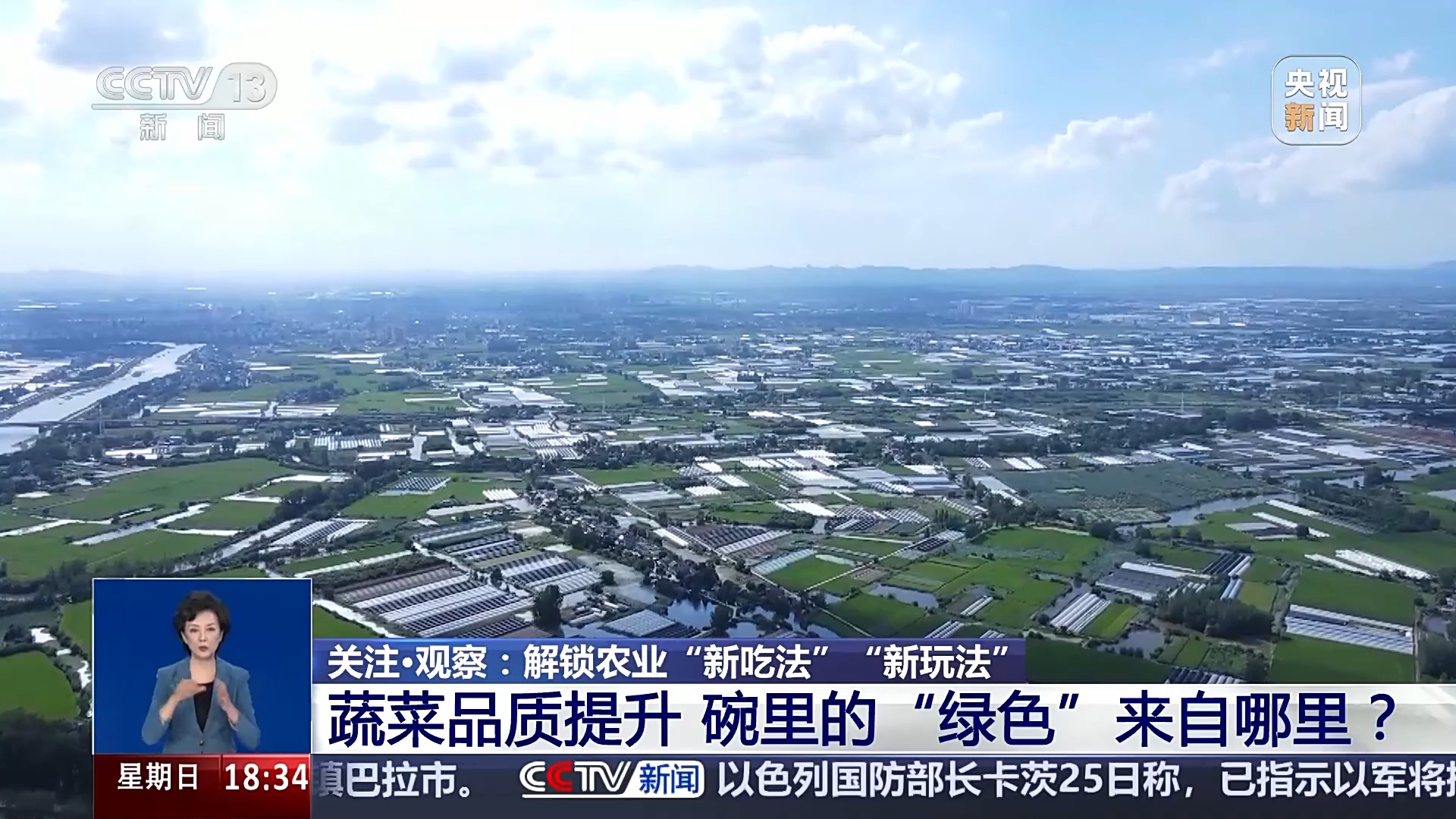
Core Insights - The demand for "healthy eating" is rising among consumers, shifting from merely "sufficient" and "good" food to a focus on "nutritional balance" and quality [1][3] - The agricultural sector is responding to these new consumer demands by enhancing the quality and freshness of vegetables through technology and innovative practices [3][5] Vegetable Quality Improvement - Consumers are increasingly pursuing high-quality vegetables, with organic labels and traceability codes becoming standard on packaging [1] - In Anhui's He County, farmers are utilizing smart devices to monitor soil and light conditions, implementing preservation technologies to enhance vegetable freshness and adjust harvest timing [3] Growth of Green and Organic Products - Anhui's He County has significantly increased its supply of green and organic products, with a total of 132 certified products as of now [5] - The Ministry of Agriculture and Rural Affairs reported that during the 14th Five-Year Plan, 36,000 new green and organic products were certified, providing over 200 million tons of quality agricultural products annually [7] Whole Grain Food Development - Quinoa is gaining popularity as a key whole grain, with significant harvests in Qinghai's Ulan County, which is a major breeding base for quinoa [8][9] - The average yield of quinoa in Shanxi's Jingle County is expected to exceed 300 kg per mu, with the entire quinoa industry projected to generate over 530 million yuan in annual output value [9] Agricultural Processing Upgrades - The agricultural processing sector is evolving, with innovations such as freeze-dried porridge and various soybean products being developed [11][12] - Heilongjiang's Wudalianchi is a key soybean production area, hosting 20 processing enterprises that leverage the region's high-quality soybean resources [12] Rural Tourism and Agricultural Integration - Rural areas are transforming into experiential destinations, blending agricultural activities with tourism, as seen in Zhejiang and Jiangsu [16][18] - The Ministry of Agriculture has established 240 key leisure agriculture counties, with the leisure agriculture sector generating nearly 900 billion yuan in revenue last year [18]
(乡村行·看振兴)山西襄垣:“辣”出产业路 “椒”出致富花
Zhong Guo Xin Wen Wang· 2025-10-26 04:35
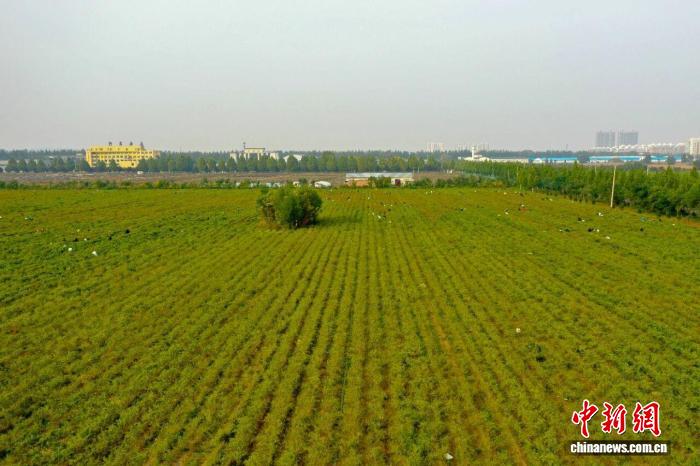
Core Viewpoint - The article highlights the successful cultivation of small chili peppers in Dahuangzhuang Village, Xiangyuan County, Shanxi Province, which has become a significant source of income for local farmers and contributes to rural revitalization [1][3]. Group 1: Agricultural Development - Dahuangzhuang Village has over 800 acres of small chili pepper, which is currently in the harvest season, providing stable employment for local villagers [3][4]. - The chili peppers are not only popular in local markets but also exported to places like Guizhou and overseas, gaining recognition from food processing companies and consumers [3][4]. Group 2: Economic Impact - The cultivation of small chili peppers has created job opportunities for over 300 villagers, allowing them to earn a stable income close to home [4]. - The village has adopted a "village collective + enterprise + farmers" model, which helps in land consolidation and large-scale cultivation, effectively reducing risks for farmers and enhancing economic benefits [3][4]. Group 3: Future Plans - Dahuangzhuang Village plans to continue focusing on specialty crops, introduce new varieties, and promote green and efficient farming techniques [4]. - The village aims to improve product quality, upgrade technology, and enhance brand development to extend the industrial chain and increase the added value of agricultural products [4].
打响“时味苏州”主品牌
Su Zhou Ri Bao· 2025-10-26 00:36
Core Viewpoint - The "Three-Year Action Plan for the High-Quality Development of Suzhou's Characteristic Agricultural and Sideline Products (2025-2027)" aims to enhance the green, standardized, and international development of local agricultural products, focusing on quality and safety standards [1][2][3] Group 1: Green Development - By 2027, the coverage rate of soil testing and formula technology for major crops in Suzhou is expected to exceed 98%, with green prevention and control coverage reaching over 73% [1] - The comprehensive mechanization rate for important grain crops is projected to be 99%, while the mechanization level for characteristic agriculture is anticipated to be over 86% [1] - The overall quality safety compliance rate for local agricultural products is targeted to remain stable at over 98%, with the total number of green and high-quality agricultural products exceeding 1,000 and accounting for over 85% of the total [1] Group 2: Standardization and Scale - The plan emphasizes the establishment of a characteristic germplasm resource protection system, focusing on local varieties such as Biluochun tea and Taihu pigs [2] - By 2027, the grain planting area is expected to exceed 2 million mu, with a total output of over 950,000 tons, and the conversion rate of high-quality rice reaching over 50% [2] - The total output value of the "Yangcheng Lake Crab" industry chain is projected to exceed 35 billion yuan, while the "Changshu Blue Dragon" industry chain is expected to exceed 40 million yuan [2] Group 3: Social Services and Innovation - The plan includes the establishment of two cold chain distribution centers for agricultural products and the construction of various modern agricultural demonstration projects by 2027 [3] - The goal is to achieve over 250 billion yuan in e-commerce sales of agricultural products, with the establishment of 15 city-level agricultural product e-commerce industrial alliances [3] - The plan aims to enhance brand development, focusing on promoting the main brand "Time Flavor Suzhou" and key products like "Yangcheng Lake Crab" and "Suzhou Rice" [3] Group 4: Internationalization and Cultural Heritage - The plan supports the export of preserved agricultural products and aims to add 10 new agricultural export enterprises by 2027 [3] - It targets the addition of three national-level agricultural cultural heritage sites and five provincial-level sites, promoting the Wujiang sericulture culture system [3] - The plan also focuses on integrating rural consumption patterns to cater to urban youth, families, and senior groups [3]
油脂油料月报:马棕油减产周期到来,油脂有望止跌反弹-20251026
Guo Xin Qi Huo· 2025-10-25 23:33
1. Report Industry Investment Rating No information regarding the report industry investment rating is provided in the content. 2. Core Viewpoints of the Report - In the soybean meal market, South American soybean sowing will fully commence in November, with potential weather - related speculation. Brazilian soybean production is expected to be high, but the export of old - crop soybeans is uncertain. US soybean prices depend on export improvement and the outcome of Sino - US negotiations. Domestic soybean meal supply may decline in November, and inventory may decrease steadily, boosting the basis. The rhythm and quantity of China's US soybean purchases after the Sino - US talks are crucial for the soybean meal market [2][58][133]. - In the oil market, the US soybean oil market is affected by multiple factors such as cost, oil - meal arbitrage, industrial consumption, and bio - diesel policies, remaining range - bound. In November, Southeast Asian palm oil enters the production - reduction cycle, and Malaysia's high palm oil inventory pressure may ease. Indonesia's palm oil inventory remains low, but the B50 bio - diesel policy is still unclear. The domestic oil market faces an oversupply situation, with inventory likely to increase steadily. However, there is a possibility of a stop - falling and rebound in November [3][131][134]. 3. Summary by Relevant Catalogs 3.1 Market Review - In October, CBOT soybeans fluctuated higher, influenced by factors such as the USDA quarterly inventory report, Sino - US trade relations, and the NOPA report. Domestic soybean meal markets fluctuated lower due to reduced supply concerns and weak terminal demand. International oils were range - bound, with US soybean oil showing weakness and Malaysian palm oil being relatively strong [7][8]. 3.2 Protein Meal 3.2.1 Brazilian Soybean Sowing - As of October 16, the 2025/26 Brazilian soybean sowing progress reached 24%, higher than the previous week and last year but lower than two years ago. With increased rainfall, the sowing progress has accelerated significantly. In November, Brazilian soybean sowing will fully start, with potential weather - related speculation in the northeast and south. Brazilian soybean production is expected to be high, and the export of old - crop soybeans is uncertain. If US soybean exports improve, Brazilian soybean premiums may decline [13][18][23]. 3.2.2 US Soybean Demand - The US government shutdown has affected the release of USDA reports. As of October 21, about 39% of US soybean - growing areas were affected by drought. US soybean exports are far lower than last year, and the possibility of a significant reduction in exports is high. Mississippi River transportation bottlenecks and uncertain bio - diesel policies also affect US soybean demand. If the USDA report is released in November, US soybean yield and exports are expected to be adjusted downward, and inventory may increase [24][29][42]. 3.2.3 Domestic Soybean Meal Market - As of October 21, the procurement of imported soybeans for different shipping dates showed different progress, with relatively limited procurement in December and January. Domestic soybean inventory is currently abundant but may start to decline in December. Domestic oil mills' operating rates may remain high in November but may decline compared to the previous period. Domestic soybean meal demand has increased slightly in 2025, but the decline in pig prices may affect demand. Domestic soybean meal inventory may decline steadily in November, and the basis may stop falling and rise slightly. The rhythm and quantity of China's US soybean purchases are crucial for the domestic soybean meal market [44][49][58]. 3.3 Oils 3.3.1 US Soybean Oil - Since mid - October, US soybean oil has declined from its high due to the unwinding of oil - meal arbitrage. In November, the oil - meal ratio may decline. The US biodiesel policy has not been finalized, and the market's demand expectations for US soybean oil have decreased. In November, US soybean oil will be affected by multiple factors and will continue to fluctuate within a range [60][62][67]. 3.3.2 Malaysian Palm Oil - The Malaysian palm oil production reduction cycle will start in November. In October, production increased, but exports faced resistance. Indonesia's B50 bio - diesel policy is still uncertain, which will affect the Malaysian palm oil market. Malaysian palm oil inventory may start to decline in November, and there is a possibility of a stop - falling and rebound [74][82][91]. 3.3.3 Domestic Oil Market - In November, domestic oil demand is expected to decline steadily due to the delayed Spring Festival. Supply may decrease after November but still exceeds demand, and inventory may continue to increase. Domestic soybean oil inventory is high, and the de - stocking process is slow. Palm oil inventory may increase, and the basis may be under pressure. Rapeseed oil supply may increase in November but is subject to policy risks. The current inverted spread between soybean oil and palm oil may continue, and the oil - meal ratio may be adjusted in the short term [94][99][131]. 3.4 Conclusion and Operational Suggestions - For soybean meal, maintain an interval - oscillation mindset, focusing on low - buying and high - selling. For oils, try to buy at the lower limit of the range or buy on dips after the market stabilizes in November [135].
国产与国际大豆:短期走势分化,价格一稳一低震荡
Sou Hu Cai Jing· 2025-10-24 08:18
Core Viewpoint - The domestic soybean prices are expected to remain stable in the short term, while international soybean prices are experiencing low-level fluctuations [1] Domestic Market Analysis - After the National Day holiday, the new season soybeans are being concentrated in the market, leading to an increase in supply [1] - The high cost of imported soybeans is driving smooth transactions for domestic soybeans, resulting in stable prices [1] International Market Analysis - The uncertainty surrounding the China-U.S. trade negotiations is impacting market sentiment [1] - There is an expectation of abundant soybean production in the U.S., which is reinforcing the outlook for low international soybean prices [1] - It is anticipated that international soybean prices will continue to fluctuate at low levels [1]
农产品日报:静宁富士价格偏高,新疆红枣进度远超常规-20251024
Hua Tai Qi Huo· 2025-10-24 01:33
1. Report Industry Investment Rating - The investment strategy for apples is neutral [4]. - The investment strategy for red dates is also neutral [8]. 2. Core Views of the Report - For apples, late Fuji apples are sporadically on the market. Affected by the weather, it's difficult to organize a large quantity of red apples. The acquisition period may be shortened. It's expected that the price of high - quality apples will remain stable and firm, with a significant price gap between high - quality and ordinary apples [4]. - For red dates, if the yield and quality are lower than expected, the upward trend of red dates may continue. Otherwise, the futures price of red dates will face a situation of limited upward movement and sufficient downward support, showing a volatile pattern. The new - season red dates in the main producing areas have not been harvested in large quantities, and it's expected that the harvesting work will start after the Frost's Descent [8]. 3. Summary by Related Catalogs Apple Market News and Key Data - Futures: The closing price of the apple 2601 contract yesterday was 8,830 yuan/ton, up 36 yuan/ton or 0.41% from the previous day [1]. - Spot: The price of 80 first - and second - grade late Fuji in Shandong Qixia was 3.75 yuan/jin, unchanged from the previous day; the price of 70 and above semi - commercial late Fuji in Shaanxi Luochuan was 4.15 yuan/jin, unchanged from the previous day. The spot basis of AP01 was - 1330 in Qixia and - 530 in Luochuan, down 36 from the previous day [1]. Market Information - The trading volume of late Fuji in production areas continues to increase, and the market remains stable and firm. In Shandong, trading has increased slightly, but the proportion of harvested apples is still low. In Gansu, the overall market is stable, and the harvesting progress is fast, with merchants mainly storing apples in warehouses. In Shaanxi, the ordering of high - quality goods is in the middle - late stage, and the price of ordinary goods is chaotic. The price of high - quality apples is expected to remain stable and firm in the short term, while the price of ordinary - quality apples may weaken slightly [2]. Market Analysis - Yesterday, the apple futures price closed slightly higher, and the national apple spot market continued to be stable and firm, with increasing trading volume. The market is characterized by a price gap between high - quality and ordinary apples. The price of high - quality apples is expected to remain stable and firm, while the price of ordinary apples may decline due to increased supply. The game between merchants' purchasing mentality and farmers' selling mentality should be closely monitored [3]. Strategy - The strategy is neutral. It's expected that the price of high - quality apples will remain stable and firm, with a significant price gap between high - quality and ordinary apples [4]. Red Dates Market News and Key Data - Futures: The closing price of the red date 2601 contract yesterday was 11,165 yuan/ton, down 100 yuan/ton or 0.89% from the previous day [5]. - Spot: The price of first - grade grey dates in Hebei was 9.60 yuan/kg, unchanged from the previous day. The spot basis of CJ01 was - 1565, up 100 from the previous day [5]. Market Information - In Xinjiang, the orchard - ordering process in main grey - date producing areas is fast, and the harvesting time is slightly earlier than last year. The mainstream price is 6.50 - 8.00 yuan/kg. In Hebei and Guangdong markets, the price is stable or slightly weak. It's expected that the spot price will remain stable in the short term [6]. Market Analysis - The red date futures price showed a volatile downward trend yesterday. The harvesting and orchard - ordering process in Xinjiang is fast, with the characteristic of "high - quality goods at high prices". The inventory in the sales areas is still under pressure, and the new - season yield is expected to be 56 - 62 tons. The quality of red dates is better than last year [7]. Strategy - The strategy is neutral. If the yield and quality are lower than expected, the upward trend of red dates may continue. Otherwise, the futures price will show a volatile pattern. The harvesting progress and price changes after the Frost's Descent should be monitored [8].
浙江S219路段改建拓宽变通途 “蹦跳路”成了共富路
Ren Min Ri Bao· 2025-10-23 21:51
Core Insights - The S219 road has transformed from a difficult path to a vital route for economic development and rural revitalization in Pujiang County, Zhejiang Province, facilitating urban-rural integration and promoting common prosperity [1][2][3] Group 1: Economic Development - Pujiang County has seen all administrative villages achieve operational income exceeding 500,000 yuan, with the urban-rural income gap reduced to below 1.86 [1] - The cold chain logistics system has enabled the direct delivery of seasonal highland vegetables to urban supermarkets, creating over 300 job opportunities and increasing the average monthly income of surrounding farmers by over 3,500 yuan [1] - The collective economy of six villages has increased by over 4 million yuan annually, with highland vegetables becoming one of the five key agricultural industries in Pujiang [1] Group 2: Tourism and Cultural Development - The New Light Village, with over 300 years of history, has been developed into a multi-functional rural tourism destination, attracting over 10,000 visitors daily during the National Day holiday [2] - The S219 road connects major scenic spots and popular tourist destinations, allowing local residents to benefit from tourism-related income [2] - The county has established a "消薄" (poverty alleviation) task force to guide villages in developing profitable industries, resulting in a nearly 2.4 times increase in collective economic income since 2017 [2] Group 3: Regional Collaboration - The establishment of the "S219 Three-Region Common Prosperity Alliance" among Pujiang, Tonglu, and Jiande aims to share tourism resources and enhance economic cooperation [3] - Initiatives include cross-county public transport, employee wellness programs, and the creation of a new cultural tourism brand, expected to generate an additional 200 million yuan in rural tourism revenue [3] - The collaboration seeks to break down administrative barriers and innovate mechanisms for regional cooperation, contributing to the construction of a common prosperity demonstration zone in Zhejiang [3]
青岛西海岸新区打造城乡融合新图景
Zhong Guo Jing Ji Wang· 2025-10-23 07:25
Core Insights - The article highlights the successful implementation of rural revitalization projects in Qingdao's Xihai'an New District, focusing on agricultural development and community engagement [1][2][3] Group 1: Agricultural Development - The cultivation of Jiaohua cabbage and potatoes serves as the "dual engine" for rural revitalization, with significant investments in storage facilities to enhance sales and reduce storage challenges [1][2] - A 1,200 square meter cold storage facility has been constructed, leading to an annual increase of approximately 120,000 yuan for the village collective [1] - The cooperative model is projected to generate annual revenues of 800,000 yuan, creating 30 jobs and increasing farmers' income by 600,000 yuan [1] Group 2: Economic Impact - The potato industry has seen rapid growth, with a storage facility and infrastructure improvements for a 2,000-acre planting area, benefiting over 5,400 households and generating economic benefits of around 15 million yuan [2] - The integration of food and tourism, exemplified by the "Taqiao Whole Lamb" brand, has transformed local villages into popular tourist destinations [2] Group 3: Community and Environmental Improvements - The area has undergone significant environmental improvements, including new asphalt roads and effective waste management, enhancing the quality of life for residents [3] - The establishment of the Shangshang New Energy Technology Industrial Park is expected to create approximately 450 jobs, further boosting local income [3] - The rural revitalization efforts have led to nearly 600 people gaining employment and an increase in farmers' income exceeding 6.8 million yuan [3]
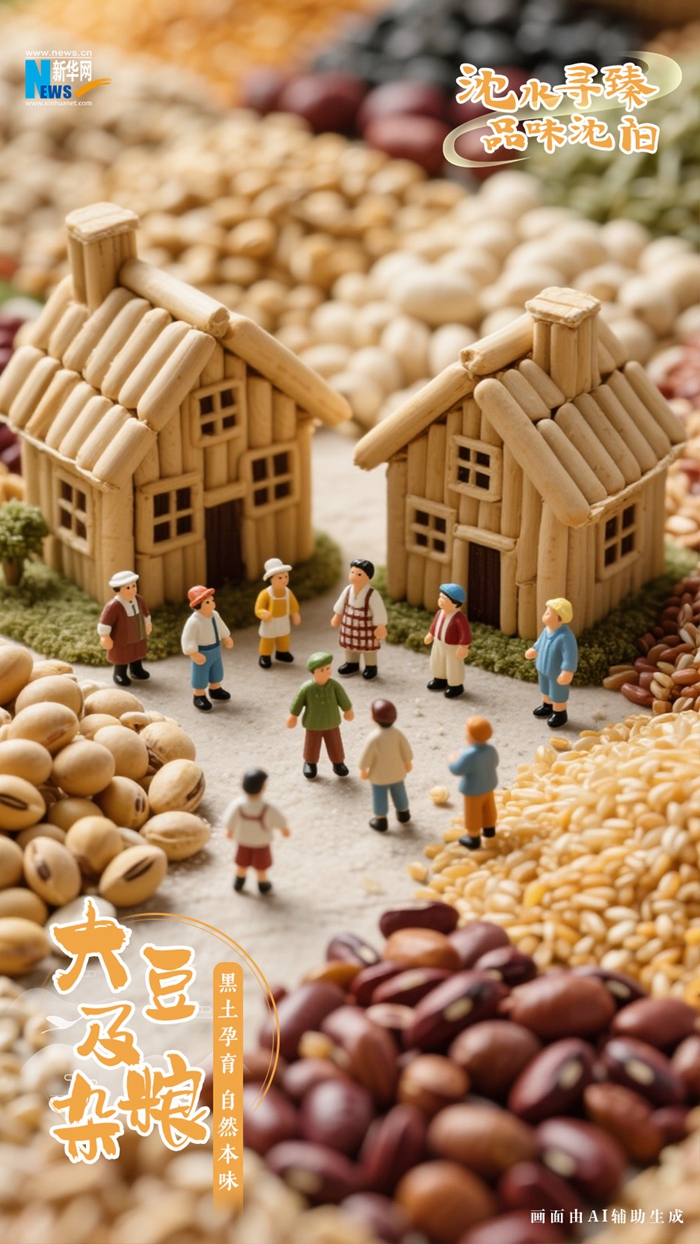
沈水寻臻 品味沈阳丨大豆及杂粮:黑土孕育 自然本味
Xin Hua Wang· 2025-10-23 06:05
Core Viewpoint - Shenyang aims to become a leading modern agricultural development city and a strong agricultural and food industrial city, focusing on high-quality development of its "1+8" agricultural specialty industries to boost rural revitalization [3] Group 1: Agricultural Development Goals - Shenyang is committed to developing a modern agricultural sector, targeting the establishment of a strong agricultural and food industrial city [3] - The city is promoting key agricultural products including edible fungi, facility vegetables, soybeans, miscellaneous grains, and more [3] Group 2: Industry Upgrading Initiatives - Recent efforts include cultivating superior varieties and promoting green production technologies to enhance the processing and utilization of soybeans and miscellaneous grains [3] - Future plans focus on extending the industrial chain, enhancing the value chain, and building a robust supply chain centered around raw material bases [3] Group 3: Strategic Focus Areas - The strategy emphasizes clustering industries, brand development, and innovation as primary drivers for constructing a modern specialty industry system [3] - These initiatives are designed to provide strong support for the construction of a strong agricultural city and a food industrial city [3]