
博物馆

Search documents
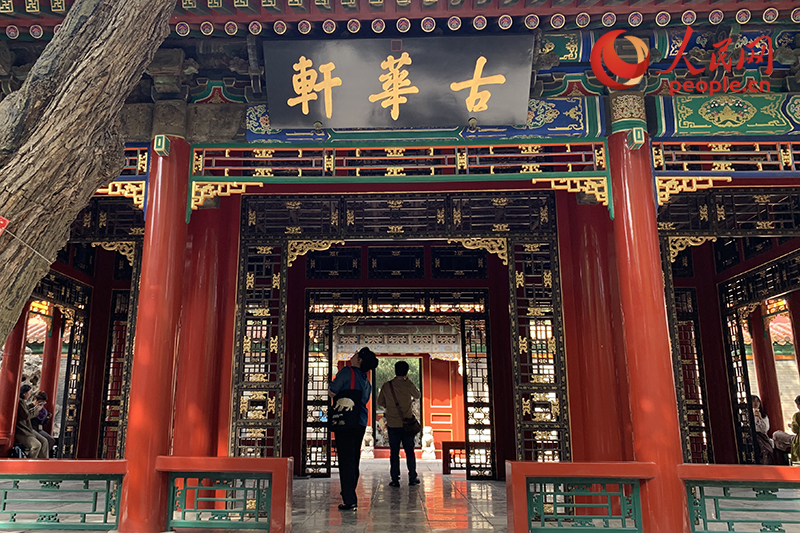
百岁故宫博物院 历经沧桑更青春
Ren Min Wang· 2025-10-11 00:06
Core Insights - The Palace Museum is celebrating its centenary in 2025, marking a transition from a royal palace to a "people's museum" over the past century [2] - The museum is enhancing its exhibitions and cultural outreach, showcasing its rich history and cultural heritage through various events and displays [3][4][6] Group 1: Exhibitions and Cultural Heritage - The exhibition "Heavenly Craftsmanship" at the Ning Shou Palace Garden highlights the restoration techniques and craftsmanship used in the garden's preservation [3] - The major exhibition "A Century of Guardianship" presents the development of the museum over the past hundred years, focusing on the theme of "guardianship" [3] - The "Palace Museum Artifacts Southward Migration" exhibition commemorates the efforts to protect cultural treasures during wartime, featuring over 100 documents and artifacts [4] Group 2: Expansion and Accessibility - The museum's open area has significantly increased, allowing more visitors to experience the vast collection of over 1.95 million artifacts [6] - The North Courtyard of the museum is under development, which will include 12 modern exhibition halls, improving the conditions for displaying artifacts [6] Group 3: Cultural Exchange and Innovation - The Hong Kong Palace Museum serves as a platform for cultural exchange, attracting over 3.4 million visitors since its opening in June 2022 [7] - The museum is actively engaging with global cultural sectors to enhance mutual understanding and appreciation of civilizations [7] Group 4: Youth Engagement and Digital Innovation - The Palace Museum has developed over 3,000 cultural and creative products, with many items frequently sold out due to high demand [9] - The introduction of AR technology in products like the 2026 Palace Calendar allows for interactive experiences, appealing to younger audiences [9] - Various cultural programs and performances, such as "I Repair Cultural Relics in the Palace Museum," have been successful in attracting younger viewers [9]

千年文脉+多元体验,安阳“群馆热”带动“全城活” 为一群馆来一座城
He Nan Ri Bao· 2025-10-10 23:24
Core Insights - The museum cluster in Anyang has become a "phenomenal" destination in the national cultural tourism market during the National Day and Mid-Autumn Festival holiday, leveraging its unique charm of "thousand-year cultural heritage + diverse experiences" [1] - Anyang received a total of 8.5844 million visitors from October 1 to 8, ranking third in the province, and achieved tourism revenue of 5.395 billion yuan, ranking fourth in the province [1] - The Anyang museum cluster has successfully attracted both domestic and international attention, with positive feedback from overseas visitors highlighting the city's rich historical culture [1] Tourism and Economic Impact - The "group museum" model has stimulated a chain reaction of "museums driving commerce, and commerce revitalizing the city," showcasing the province's distinctive and high-quality cultural tourism development [2] - Local businesses, such as restaurants and bookstores, have reported significant increases in sales, with some experiencing over 100% growth compared to the previous year during the holiday period [2] - The Anyang government is focusing on integrating museum resources and promoting collaboration with nearby attractions to sustain the momentum of the "museum cluster" [3] Visitor Experience and Engagement - The Anyang museum cluster has implemented various engaging activities, such as simulated archaeological digs and immersive VR experiences, to enhance visitor interaction and learning [2] - The combination of historical and red culture has proven effective in creating a sustainable tourism model, transitioning museums from mere cultural landmarks to consumption engines [3] - Future plans include developing more themed dining, accommodation, and retail options around the museum cluster to further invigorate the local economy [3]
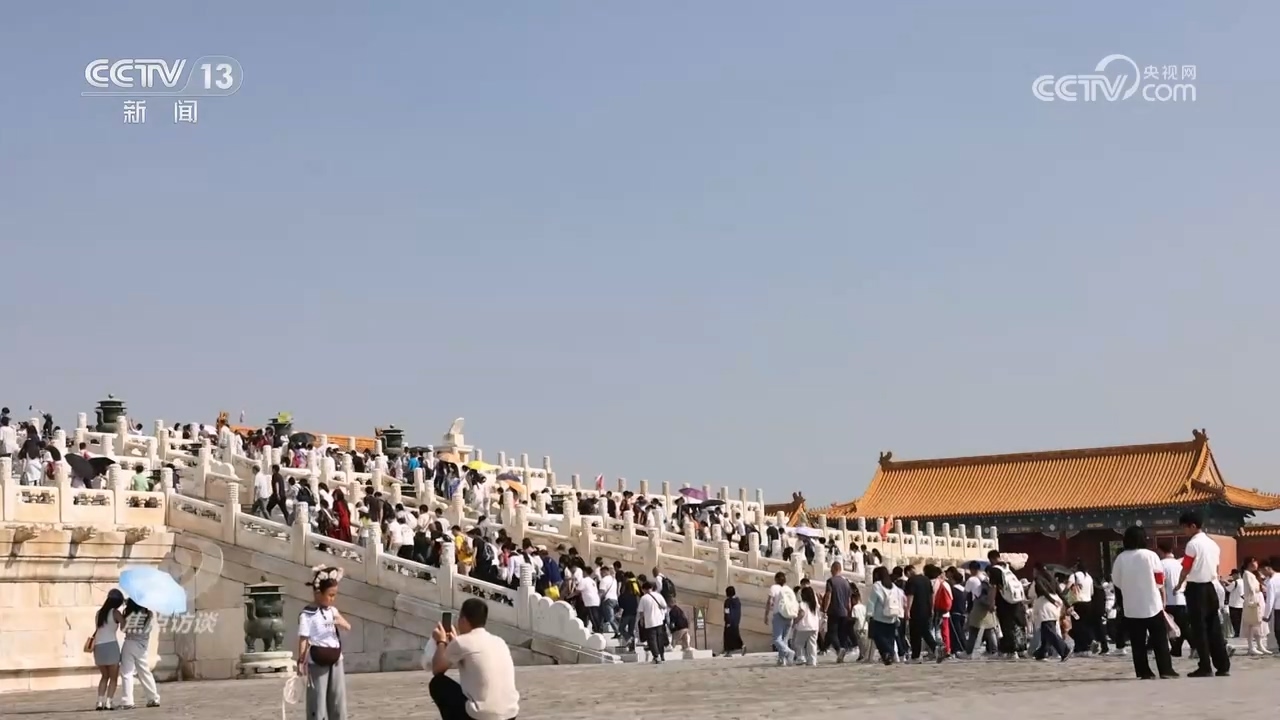
焦点访谈|建院百年 读懂故宫背后的文脉赓续与时代新篇
Yang Shi Wang· 2025-10-10 13:34
Core Viewpoint - The Palace Museum is celebrating its 100th anniversary in 2025, marking a significant transition from an imperial garden to a cultural institution shared by the public, showcasing advancements in artifact restoration and digital engagement with global civilizations [1]. Group 1: Anniversary Celebrations - The upcoming National Day holiday will see increased visitor engagement at the Palace Museum, with a focus on historical exploration and exhibitions as part of the centennial celebrations [3]. - The "Centennial Guardianship" exhibition features 200 selected treasures from a collection of 1.95 million artifacts, including national treasures like "Along the River During the Qingming Festival" [5][13]. Group 2: Artifact Restoration and Preservation - The restoration of artifacts is a key focus, with experts like Wang Youliang, a national intangible cultural heritage inheritor, dedicating decades to the meticulous restoration of bronze artifacts [7][9]. - Wang Youliang's work has resulted in the revival of over 300 artifacts, showcasing the high level of restoration expertise at the museum [9]. Group 3: Expansion and Future Developments - The construction of the new North District of the Palace Museum aims to address space limitations for displaying artifacts, with completion expected by 2026 [13][17]. - The North District will facilitate large-scale exhibitions and professional restoration, allowing for better preservation and display of historical buildings in the core area [17]. Group 4: Digital Innovation - The Palace Museum is leveraging digital technology to preserve and utilize artifact information, with over 1.06 million artifacts digitally cataloged and more than 100,000 available to the public [19][24]. - The digital initiatives include high-precision 3D modeling and virtual reality experiences, enhancing visitor engagement and accessibility to the museum's collections [19][22][24].
故宫博物院建院100周年座谈会举行
Yang Shi Wang· 2025-10-10 12:25
Core Viewpoint - The Palace Museum, as a unique symbol of historical China and an important marker of Chinese civilization, has celebrated its 100th anniversary, emphasizing the importance of cultural heritage protection and transmission in the context of national rejuvenation [1] Group 1 - The Palace Museum was established amidst the waves of social change in modern China and has evolved alongside the great rejuvenation of the Chinese nation over the past century [1] - There is a collective responsibility to strengthen the protection and transmission of cultural heritage, which is seen as a historical duty for the current generation [1] - The need to deeply learn and practice Xi Jinping's cultural thoughts is highlighted, along with a call to strengthen cultural confidence and cultivate cultural sentiment [1] Group 2 - The goal is to make the Palace Museum a model for the protection of world cultural heritage [1]
新华时评丨守护一脉文渊 续写百年辉煌
Xin Hua She· 2025-10-10 10:56
Core Viewpoint - The Palace Museum, celebrating its 100th anniversary, represents a significant milestone in China's cultural heritage, showcasing the evolution of Chinese civilization and its commitment to cultural preservation and innovation [1][2][3] Group 1: Historical Significance - The Palace Museum, with a history of over 600 years, houses 1.95 million cultural relics, reflecting the rich heritage of the Chinese nation [1] - It has witnessed pivotal moments in Chinese history, including the Anti-Japanese War and the founding of the People's Republic of China, symbolizing the nation's journey towards strength and prosperity [1] Group 2: Cultural Heritage and Preservation - The museum emphasizes the importance of protecting cultural heritage, ensuring the historical authenticity, architectural integrity, and cultural continuity of its artifacts [2] - There is a focus on deepening research and interpretation of the museum's collections, highlighting the philosophical and humanistic values embedded within [2] Group 3: Modern Integration and Innovation - The Palace Museum aims to integrate cultural heritage into modern life, enhancing exhibition capabilities and innovating display formats to foster connections between people and historical artifacts [2] - It has become a vibrant institution that blends tradition with modernity, positioning itself as a model for cultural heritage protection globally [3]
从帝王禁苑到人民博物院:故宫百年,何以“新生”?
Zhong Guo Xin Wen Wang· 2025-10-10 03:07
Core Perspective - The Palace Museum in Beijing celebrates its 100th anniversary, marking a significant transformation from a royal palace to a cultural institution accessible to the public [1][3]. Group 1: Transformation of Identity - The transition from a "symbol of power" to a "shared cultural space" began on October 10, 1925, when the Palace Museum was established, allowing public access to what was once a forbidden area [3]. - The essence of this transformation reflects a fundamental change in cultural heritage ownership and participation, evolving from a private royal collection to a public cultural asset [3][4]. - Over the past century, the concept of "sharing" has deepened, with over 80% of the museum now open to the public and the introduction of a "digital Palace Museum" allowing global audiences to engage with its treasures [3][5]. Group 2: Cultural Vitality - The Palace Museum has evolved from a "warehouse of artifacts" to a "living cultural entity," emphasizing not just preservation but also the creation of new cultural narratives [5]. - Initiatives like the documentary "I Repair Cultural Relics in the Palace Museum" showcase contemporary craftsmanship, while cultural products integrate classical aesthetics into modern life [5]. - Various exhibitions, lectures, and educational programs breathe life into static artifacts, fostering emotional connections with contemporary audiences [5]. Group 3: Globalization and Cultural Exchange - The museum's journey over the past century reflects a gradual emergence onto the world stage, transforming from "China's Palace Museum" to "the world's Palace Museum" [6][7]. - The internationalization process involves both inviting global civilizations into the museum and showcasing its artifacts and exhibitions worldwide, facilitating dialogue between Chinese and other cultures [7]. - As a UNESCO World Heritage site, the Palace Museum represents not only China's historical memory but also a shared cultural heritage for humanity, offering a model for balancing tradition and modernity in a globalized context [7]. Group 4: Future Prospects - Looking ahead, the Palace Museum faces both challenges and opportunities, including the need for enhanced artifact protection amid increasing visitor numbers and the balance between commercial development and cultural preservation [8]. - The future vision includes becoming a "super cultural IP," fostering innovative cultural experiences through the integration of technology and humanities [8]. - The museum aims to be a more influential platform for cultural dialogue, showcasing contemporary China's vitality and confidence while continuing to tell ancient Chinese stories [8][9].
百岁故宫博物院,生日快乐!
Xin Hua She· 2025-10-10 01:44
Core Points - The Palace Museum, a significant cultural landmark in China, will celebrate its 100th anniversary on October 10, 2025, marking its importance as the largest and best-preserved wooden palace complex in the world and a vital witness to over 5,000 years of Chinese civilization [1][2] Group 1: Historical Significance - The term "Forbidden City" refers to the imperial palace of the Ming and Qing dynasties, and the Palace Museum was established on October 10, 1925, becoming a specialized term for this historical site [2] - The museum houses 1.95 million cultural relics, showcasing the rich heritage of the Chinese nation over thousands of years [3] Group 2: Visitor Engagement - The museum's visitor numbers have significantly increased, surpassing 10 million for the first time in 2009 and expected to exceed 17.6 million in 2024 [3] - A major exhibition titled "A Century of Guardianship: From the Forbidden City to the Palace Museum" features national treasures like "Five Oxen" and "Along the River During the Qingming Festival," illustrating the museum's evolution and growth [3] Group 3: Cultural Impact - The Palace Museum has transformed from a royal collection into a shared cultural treasure for the public, reflecting a shift in accessibility and appreciation of Chinese heritage [4] - The architectural grandeur and exquisite artifacts, such as those displayed in the Treasure Hall and Clock Hall, highlight the museum's role in showcasing both Chinese and Western cultural aesthetics [5] Group 4: Future Prospects - The museum continues to attract a large audience, leveraging technology and cultural creativity to bring artifacts to life and promote traditional Chinese culture globally [7] - The centennial celebration symbolizes not only the museum's transformation but also the broader changes within Chinese society and the ongoing legacy of cultural heritage [7][8]
双节假期太原直属文博场馆游客接待量和门票收入创历史新高
Zhong Guo Xin Wen Wang· 2025-10-09 07:33
Core Insights - During the 2025 National Day and Mid-Autumn Festival, the cultural venues directly under the Shanxi Provincial Cultural Relics Bureau in Taiyuan achieved record-high visitor numbers and ticket revenue [1] Group 1: Visitor Reception and Revenue - A total of 911,400 visitors were received by the cultural venues, generating ticket revenue of 14.845 million yuan, representing a year-on-year increase of 2.29% and 13.96% respectively compared to the same period in 2024 [4] - The Jinci Museum alone welcomed 233,900 visitors and earned 12.08 million yuan, while the Jinci Park received 395,200 visitors, marking a growth of 17.01% [4] - External tourists accounted for a significant 77.21% of the total visitors, primarily from neighboring provinces such as Hebei, Shaanxi, and Henan [4] Group 2: Safety and Management Measures - The Taiyuan Cultural Relics Bureau prioritized safety by conducting comprehensive hazard inspections and utilizing big data to predict visitor flow, implementing scientific plans to ensure safety [2] - Security measures were enhanced in potentially congested areas, with additional security personnel deployed to manage crowds [2] - Cultural venues extended their opening hours and implemented real-time monitoring to ensure the safety of both cultural relics and visitors [2] Group 3: Cultural Activities and Engagement - A total of 75 themed educational activities and 167 online and offline exhibitions were organized to bring historical and cultural heritage to life during the holiday [2] - The Jinchang Museum introduced night tours and a series of activities that combined traditional culture with modern elements, attracting significant attention [4] - Various museums offered immersive games, hands-on experiences, and intangible cultural heritage workshops, enhancing visitor engagement [4]
以坚定文化自信走向未来
Ren Min Ri Bao· 2025-10-09 01:11
Core Viewpoint - The Palace Museum, celebrating its 100th anniversary as a museum, symbolizes the evolution of China's cultural heritage and its commitment to serving the public while preserving historical artifacts [1][17]. Collection and Preservation - As of the end of 2024, the Palace Museum's collection exceeds 1.95 million items, marking the fifth round of artifact inventory and preservation efforts [2]. - The museum has conducted five major inventory efforts over the past century, with a significant increase in the number of artifacts from over 1.8 million in 2010 to the current figure [3]. - The museum prioritizes the safety and cultural value of artifacts, reflecting its mission to protect the roots of Chinese civilization [3]. Historical Significance and Challenges - The museum faced significant challenges during the war, including the largest and longest artifact relocation in history to protect national treasures from invasion [4]. - After the establishment of New China, the government allocated over 20 million yuan for the restoration of the museum's ancient buildings, leading to the completion of over 430 projects in the first decade [4][5]. - The museum was listed as a national key cultural relic protection unit in 1961 and became a UNESCO World Heritage site in 1987, marking a new phase in its preservation efforts [4]. Modernization and Technological Integration - The museum has implemented a comprehensive security and preservation system, including modernized storage facilities and a multi-layered security approach [6]. - The integration of technology and cultural heritage has created a sustainable development model, showcasing the museum's commitment to both preservation and public engagement [6]. Public Engagement and Accessibility - Since its opening in 1925, the museum has focused on making cultural heritage accessible to the public, with visitor numbers increasing from 1 million in 1949 to over 15 million in 2012 [10]. - The museum has adopted a visitor management system to balance accessibility with the preservation of artifacts, including daily visitor limits and advanced data analysis for crowd management [10][11]. - Various initiatives have been launched to enhance visitor experience, including improved facilities, educational programs, and digital engagement [11][12]. Cultural Innovation and Global Influence - The museum has embraced creative transformation, allowing artifacts to be integrated into contemporary life and culture, exemplified by successful exhibitions and cultural products [14][16]. - The Palace Museum has become a platform for international cultural exchange, enhancing the global influence of Chinese culture through exhibitions and collaborations [15][16]. - Digital initiatives, such as virtual reality experiences and online platforms, have expanded the museum's reach and engagement with younger audiences [16]. Future Vision - The museum aims to become a world-class institution that not only preserves historical memory but also inspires future creativity and cultural exchange [17].
考古现场,如何“搬”进博物馆
Ren Min Ri Bao· 2025-10-09 00:05
Core Insights - The Yujia Mountain Archaeological Museum in Hangzhou, Zhejiang Province, has attracted over 3,000 visitors daily since its opening on May 18, 2025, showcasing its significance in connecting modern society with ancient civilizations [1][2]. Group 1: Museum Features - The museum covers a total area of 25,000 square meters and includes various exhibition halls featuring 1,800 selected artifacts, primarily pottery and jade items, many of which are being displayed for the first time [2]. - The exhibition design emphasizes the archaeological process, allowing visitors to understand the construction and evolution of the Yujia Mountain site and the rise and fall of the Liangzhu culture through various displays [3][6]. Group 2: Archaeological Significance - The Yujia Mountain site, recognized as one of the "Top Ten Archaeological Discoveries of 2011," contains evidence of the Liangzhu culture spanning 1,000 years, making it a unique resource for studying ancient social structures and burial practices [1][4]. - Over 600 tombs and more than 8,000 artifacts, including precious jade items, have been excavated, providing critical insights into the social dynamics and cultural practices of the Liangzhu civilization [4][5]. Group 3: Educational Approach - The museum aims to educate visitors not only about the artifacts but also about the methods of archaeological discovery, featuring interactive areas that simulate excavation experiences and explain archaeological techniques [6][7]. - The use of advanced technologies, such as 3D displays and augmented reality, enhances the storytelling aspect of the exhibits, making the historical context more accessible and engaging for visitors [8][9]. Group 4: Architectural Design - The architectural design of the museum reflects the historical narrative, with a landscape-inspired layout that integrates the natural environment, creating a rich spatial experience for visitors [9][10]. - A large glass wall in the Yujia Mountain exhibition hall allows for a direct view of the archaeological site, enhancing the visitor experience while ensuring the safety of the artifacts [10]. Group 5: Future Plans - The museum plans to develop educational programs that leverage the resources of the archaeological park and surrounding enterprises, aiming to improve visibility and accessibility for diverse audiences [10][11].