汽车

Search documents
中国车企全球销量,“20多年来首次超日本居榜首”
券商中国· 2026-03-22 01:23
Core Viewpoint - Chinese automotive manufacturers have surpassed Japanese companies in global sales for the first time in over 20 years, marking a significant shift in the global automotive landscape [1]. Group 1: Sales Performance - In 2025, Japanese automotive manufacturers are projected to have a slight decline in global cumulative sales to approximately 25 million vehicles, falling from the top position for the first time since 2000 [1]. - Chinese automotive companies achieved nearly 27 million global cumulative sales last year, overtaking Japan to become the world's largest automotive market [1]. Group 2: Company Rankings - BYD is expected to surpass Ford in sales, ranking sixth globally, while Geely has overtaken Honda to secure the eighth position [1]. - In the electric vehicle sector, BYD has surpassed Tesla to become the global leader [1]. - Six Chinese automotive companies made it to the top 20 global manufacturers list, exceeding Japan's five companies, with Chery, Changan, SAIC, and Great Wall also included [1]. Group 3: Industry Insights - The increase in Chinese automotive sales is attributed to a combination of advanced technology, cost advantages, and rapid research and development capabilities [1]. - Experts suggest that Japan needs to reassess its automotive industry's electrification and global strategy in light of this shift [1].




雷军,公开道歉
券商中国· 2026-03-21 23:32
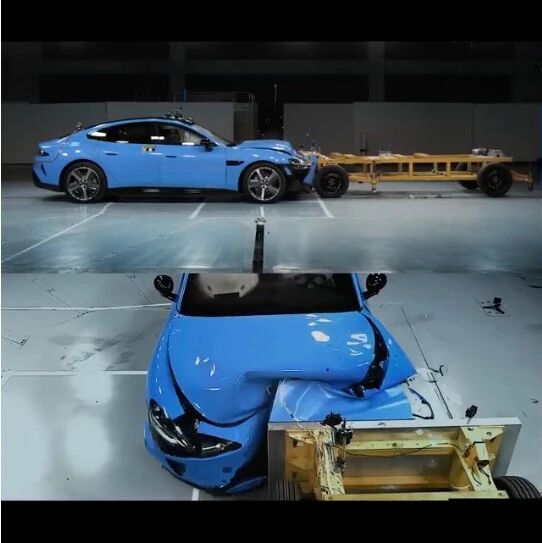
Core Viewpoint - Xiaomi's CEO Lei Jun addressed a misunderstanding regarding his statement about vehicle collision speeds, clarifying that it was a verbal mistake during a presentation [1] Group 1: Product Launch and Sales Performance - Xiaomi launched its new generation SU7 vehicle on March 19, with a starting price of 219,900 yuan. The vehicle achieved 15,000 locked orders within 34 minutes of its release [3] - The company reported that the locked order progress for the new SU7 has been better than that of the first generation model since its launch [4] Group 2: Communication Strategy - Xiaomi has opted to disclose "locked order" data instead of "big order" data since the launch of the YU7 model last year, as locked orders are seen as a more accurate reflection of user choice and acceptance [4]


陆家嘴财经早餐2026年3月22日星期日
Wind万得· 2026-03-21 22:26
Group 1 - The China Development Forum 2026 will be held from March 22 to 23 in Beijing, focusing on "The 14th Five-Year Plan of China: High-Quality Development and Co-Creating New Opportunities" [2] - The U.S. has conditionally relaxed oil sanctions on Iran for 30 days, allowing the delivery and sale of Iranian crude oil and petroleum products already loaded by March 20 [3] - The Iranian nuclear facility at Natanz was attacked, with Iran claiming it violated international laws, while the U.S. and Israel plan to significantly increase military actions against Iran [4] Group 2 - The Chinese government is encouraging multinational companies to increase investments in China, highlighting the stable and improving economic environment [5] - The insurance industry is experiencing pressure due to solvency regulations, but major players maintain that the impact on the market is limited [4] - The Ministry of Ecology and Environment is enhancing support for green and low-carbon development among private enterprises [9] Group 3 - The international oil price has surged due to escalating conflicts in the Middle East, raising concerns about inflation in the U.S. and potential interest rate changes by the Federal Reserve [14][15] - The World Trade Organization warns that the Middle East conflict could impact global trade through rising oil prices and fertilizer supply shortages [15] - Brazilian President Lula emphasizes the need for strategic oil reserves in response to the ongoing Middle East conflict [17]

日媒:中国车企全球销量20多年来首次超日本
第一财经· 2026-03-21 16:19
Group 1 - The core viewpoint of the article highlights that Japanese automakers are projected to see a slight decline in global cumulative car sales to approximately 25 million units by 2025, marking the first time since 2000 that they will not hold the top position in global sales [1] - Chinese automakers achieved a significant milestone in 2022, with total global sales nearing 27 million units, surpassing Japan and securing the number one position in the world for the first time [1] - BYD is expected to surpass Ford in sales by 2025, ranking sixth globally, while Geely is projected to surpass Honda, placing eighth [1] Group 2 - In the electric vehicle segment, BYD has overtaken Tesla to become the global leader in sales [1] - Among the top 20 global automakers, six Chinese companies made the list, exceeding the five Japanese companies represented [1] - Notable Chinese brands such as Chery, Changan, SAIC, and Great Wall are included in the rankings [1]

中国汽车出海,为什么从造船开始?
创业邦· 2026-03-21 15:57
Core Viewpoint - The article discusses the transformation of Chinese automotive companies as they shift from relying on external shipping services to developing their own shipping capabilities, marking a significant step in the globalization of the Chinese automotive industry [6][8]. Group 1: Current State of Chinese Automotive Exports - From 2020 to 2023, China's automotive export volume surged from 1.08 million to 5.22 million units, nearly a fivefold increase in just three years [8]. - By 2025, China's automotive export volume is projected to reach 7.095 million units, maintaining its position as the world's largest automotive exporter [8]. - Despite the rapid growth in export volume, the shipping capacity has not kept pace, leading to increased shipping costs and logistical challenges for automotive companies [9][12]. Group 2: Shipping Challenges - The daily rental price for a 6,500-car capacity roll-on/roll-off (RoRo) ship skyrocketed from approximately $10,000 in August 2020 to $115,000 by November 2023, an increase of 1,150% [8]. - Shipping costs to Europe averaged around $1,400 per vehicle at peak prices, significantly impacting profit margins for automotive companies [9]. - The shortage of available ships has led to delays, with vehicles often waiting at ports for weeks due to a lack of transportation options [9][11]. Group 3: Structural Issues in Shipping - As of 2023, only about 700 specialized automotive transport ships exist globally, with the majority owned by Japanese, Korean, and Norwegian companies, leaving Chinese companies with limited access [13][16]. - China's share of the global automotive transport fleet was only 39 ships, representing less than 3% of total capacity, highlighting a significant gap in shipping capabilities [13][16]. - The automotive shipping industry has developed a stable network over decades, primarily serving established players like Japan and Korea, making it difficult for newer entrants like China to gain a foothold [14][16]. Group 4: Strategic Shifts by Chinese Automotive Companies - Companies like BYD have begun investing heavily in their own shipping capabilities, with BYD investing approximately 5 billion RMB to build eight RoRo ships, the first of which, "Pioneer 1," is set to launch in 2024 [18][20]. - SAIC Group has also expanded its shipping fleet, investing over 10 billion RMB and currently operating 14 RoRo ships, significantly enhancing its logistics capabilities [20][22]. - The establishment of self-owned shipping fleets allows companies to better control their logistics, reduce costs, and create new revenue streams by offering transportation services [22][23]. Group 5: Future Developments and Local Production - Chinese automotive companies are not only focusing on shipping but are also establishing local production facilities to mitigate shipping costs and tariff risks, with BYD planning a factory in Hungary [25][27]. - SAIC aims to increase its overseas sales to 1.5 million units by 2025, with a growing proportion of production occurring locally [27]. - The shift towards local production and enhanced logistics infrastructure is expected to transform the export model from simple vehicle sales to a more integrated global operation [29][30].


每周高频跟踪20260321:施工指标加速回暖-20260321
Huachuang Securities· 2026-03-21 12:52
1. Report Industry Investment Rating No relevant content provided. 2. Core Viewpoints of the Report - In the third week of March, the uncertainty of the US - Iran situation continued to increase, with crude oil prices oscillating at a high level and rising compared to the previous week. Rising transportation and energy costs supported freight rates and upstream material prices. Terminal demand for products like rebar was steadily recovering seasonally during the "Golden March". In terms of inflation, the decline in pork prices continued to widen, while the decline in food prices slightly narrowed. In terms of exports, export container shipping prices showed a differentiated trend. Although the port container and cargo throughput increased month - on - month, the average monthly value year - on - year was still weaker than that in February. In terms of investment, cement prices stopped falling and rebounded, and downstream construction continued to pick up. In the real estate sector, the average value of new homes in March showed a year - on - year negative growth, while the year - on - year performance of second - hand homes continued to improve compared to the previous week, with the "Little Spring" market being slightly better than the same period [4][29]. - For the bond market, geopolitical disturbances continued, and high - fluctuating oil prices drove up shipping costs and energy product prices. As downstream demand was steadily recovering seasonally, it was necessary to continuously monitor whether the price increase of upstream products would temporarily suppress the release of demand. Overseas, rising shipping costs and geopolitical factors affected some routes, suppressing demand. Although the port throughput increased month - on - month this week, the average value in March was weaker than that in February year - on - year, so attention should be paid to the possibility of export fluctuations in March. Domestically, the resumption rate of construction sites continued to rise this week but was still lower than the same period in the lunar calendar, and the construction intensity was limited. Rebar inventory changed from accumulation to reduction for the first time this year, and the inflection point basically conformed to the seasonality. The "Little Spring" market was mainly reflected in the trading volume of second - hand homes, which continued to increase year - on - year under the high - base situation of last year, while new homes showed a year - on - year negative growth. Attention should be paid to the transmission of volume to price in the future [4][30]. 3. Summary According to Relevant Catalogs (1) Inflation - related: Food prices continued to decline - The decline in pork prices widened. This week, the average wholesale price of pork across the country announced by the Ministry of Agriculture decreased by 3.4% month - on - month, and vegetable prices decreased by 2.4% month - on - month. The decline in food prices narrowed, with the 200 - index of agricultural product wholesale prices and the wholesale price index of basket products decreasing by 0.9% and 1.0% month - on - month respectively [9]. (2) Import and export - related: Container shipping prices showed a differentiated trend - Due to changes in supply - demand fundamentals, freight rates showed a differentiated trend. This week, the CCFI index increased by 4.5% month - on - month, while the SCFI decreased by 0.2% month - on - month. The export container shipping market continued to be affected by the tense geopolitical situation. Relevant routes were greatly affected, and the rest of the routes were affected by supply - demand fundamentals and showed a differentiated trend. Among them, the European route transportation was basically stable, and the booking price continued to rise. The demand on the North American route weakened, and the prices of the West and East US routes decreased by about 7 - 8% month - on - month. The Persian Gulf route was most affected by the US - Iran conflict, and the container shipping market basically stagnated [10]. - In terms of port transportation volume, from March 9th to March 15th, the port's container throughput and cargo throughput increased by 9.3% and 9.5% month - on - month respectively, and the single - week year - on - year increase was 11.1% and 2.3% respectively [10]. - Supported by costs, the BDI and CDFI indices continued to rise. The Shanghai Shipping Exchange reported that the geopolitical conflict continued to drive up international fuel prices. Supported by rising costs, the freight rates of voyage charter routes in the international dry bulk shipping market remained at a high level. However, high oil prices had a certain impact on the release of local coal and grain transportation demand [10]. (3) Industry - related: Rebar inventory decreased for the first time this year, and demand continued to improve - The decline in coal prices narrowed. The price of thermal coal (Q5500) at Qinhuangdao Port decreased by 1.0% month - on - month, with a narrowing decline. Currently in the consumption off - season, power plant coal consumption was weak. However, due to the deep inversion of imported coal prices, procurement demand shifted to domestic trade, and cargo volumes were released intensively. In terms of price, coal prices in the main producing areas rose slightly and steadily. Coupled with the rigid demand for restocking by downstream enterprises after resuming work, coal mine sales improved, and the week - on - week average decline in coal prices narrowed [16]. - Rebar prices continued to rise, and inventory changed from accumulation to reduction for the first time this year. The spot price of rebar (HRB400 20mm) increased by 0.3% month - on - month, and the social inventory of rebar decreased by 0.9% month - on - month, entering the inventory reduction phase for the first time since the beginning of the year. The apparent demand for rebar increased by 17.5% month - on - month and continued to improve. This week, the acceleration of downstream resumption of work drove the recovery of demand. The apparent demand for rebar increased significantly, production continued to rise, inventory changed from increase to decrease, and both factory and social inventories decreased slightly [16]. - The asphalt operating rate declined rapidly. This week, the operating rate of asphalt plants decreased by 1.2 percentage points month - on - month to 21.8%, at a relatively low level. Geopolitical factors in Iran led to uncertainty in raw material supply, and asphalt production continued to decline month - on - month. In terms of demand, current terminal project demand was low, and high prices restricted transactions. Asphalt was in a situation of weak supply and demand [16]. - Due to the strengthening of the US dollar and the decline in risk appetite, the decline in copper prices widened. This week, the average price of Yangtze River non - ferrous copper decreased by 2.8% month - on - month, with the decline continuing to widen. The impact of US - Iran geopolitical factors increased, stagflation expectations trading continued. Coupled with the Federal Reserve's decision to keep interest rates unchanged at the March interest - rate meeting and a hawkish stance, the US dollar index strengthened, and low risk appetite continued to suppress copper prices [19]. - The glass futures price turned down. Although the energy price at the cost end supported the upstream soda ash price and limited the downward space for the finished product price, the current terminal demand had not substantially improved, and downstream purchasing sentiment was cautious. The spot price remained stable [19]. (4) Investment - related: Cement prices stopped falling and rebounded - Cement prices started to rise. This week, the cement price index increased by 1.6% month - on - month, ending the continuous decline. According to the Centennial Building Network, as of March 18th, the resumption rate of construction sites across the country was 62%, a month - on - month increase of 19.5 percentage points, and a year - on - year decrease of 2.6 percentage points in the lunar calendar; the labor employment rate increased by 17.8 percentage points month - on - month, remaining the same year - on - year in the lunar calendar [23]. - The trading volume of new homes continued to increase. As of Friday this week, the trading area of new homes in 30 cities increased by 12.7% month - on - month and 13% year - on - year, with the year - on - year increase narrowing compared to the previous week. Aligned with the Lunar New Year, as of March 20th, the trading area of new homes in 30 cities (7 - day rolling sum) decreased by 16.3% year - on - year in the lunar calendar, with the decline continuing to widen compared to the previous Friday [24]. - The trading volume of second - hand homes increased rapidly. As of Friday this week, the trading area of second - hand homes in 17 cities increased by 15.1% month - on - month and decreased by 9.7% year - on - year, showing improvement compared to the previous week. Aligned with the Lunar New Year, as of March 20th, the trading volume of second - hand homes (7 - day rolling sum) increased by 5.2% year - on - year, with the increase expanding compared to the previous week. The "Little Spring" market for second - hand homes was better than the same period [24]. (5) Consumption: Oil prices oscillated at a high level - In the first half of March, the retail sales of passenger cars showed a year - on - year negative growth. According to the Passenger Car Association, from March 1st to March 15th, the retail sales of the national passenger car market were 561,000 vehicles, a year - on - year decrease of 21% and a month - on - month increase of 2% compared to the same period in February. The popularity of the car market was gradually recovering [25]. - The average daily subway passenger volume in 25 cities decreased slightly. From last Saturday to this Friday, the average daily subway passenger volume in 25 cities was 3.209 million person - times, a month - on - month decrease of 1.3%. The Baidu Migration Index decreased by 2.6% month - on - month, in line with seasonality. The average value in March increased by 28.1% year - on - year, and travel was still at a high level compared to the same period [25]. - The uncertainty of the US - Iran situation remained high, and international oil prices fluctuated at a high level. As of March 20th, the prices of Brent crude oil and WTI crude oil increased by 8.8% and decreased by 0.5% respectively compared to last Friday, reaching $112.2 per barrel and $98.2 per barrel. Currently, major oil - producing countries were worried about reducing oil supply due to factors such as受阻 overseas shipping capacity, which supported the rise in oil prices [25][28].
雷军回应“60加60”争议:确实说错了
证券时报· 2026-03-21 12:13
Core Viewpoint - Lei Jun, founder and CEO of Xiaomi, clarified his statement regarding vehicle collision speeds, acknowledging a mistake in his explanation during a recent event [1][3]. Group 1: Product Launch and Sales Performance - Xiaomi launched its new generation SU7 vehicle on March 19, with a starting price of 219,900 yuan [3]. - The SU7 achieved impressive sales, with 15,000 units locked in within 34 minutes of the launch [3]. - Xiaomi emphasized the importance of "locked orders" over "big orders" to better reflect user choices and satisfaction, indicating a focus on improving the purchasing experience for customers [3].
海外策略周报:中东问题引发本周全球多数市场继续回调-20260321
HUAXI Securities· 2026-03-21 12:03
Global Market Performance - The report indicates that due to the evolving geopolitical issues in the Middle East, most global markets experienced a pullback this week, with significant declines in major indices such as the S&P 500, NASDAQ, and Dow Jones Industrial Average [1][13][25] - The S&P 500 index fell by 1.9%, the NASDAQ by 2.07%, and the Dow Jones by 2.11% during the week [13][25] - The report highlights that the S&P 500 utilities, materials, and consumer staples sectors saw the largest declines, while the energy sector was the only one to gain, increasing by 2.75% [13][25] US Market Insights - The TAMAMA Technology Index dropped by 2.48% this week, with a current P/E ratio of 31.34, indicating high valuations in the tech sector [1][17] - The Philadelphia Semiconductor Index's P/E ratio decreased slightly to 41.25, while the NASDAQ's P/E ratio remains at 38.54, suggesting continued pressure on tech stocks due to high valuations and geopolitical tensions affecting oil prices [1][17] - The report notes that despite potential short-term rebounds in tech stocks, there is a need for further digestion of pressures in the mid-term, particularly in financial, consumer, communication services, and industrial sectors [1][17] European Market Performance - European markets also faced declines, with major indices like the STOXX 50 and DAX experiencing significant drops, attributed to weak economic fundamentals and high price-to-book ratios [1][10] - The report anticipates continued volatility in European markets, even with potential short-term rebounds, due to the prevailing economic conditions [1][10] Asian Market Insights - The Nikkei 225 index saw a minor decline of 0.83%, with a current price-to-book ratio of 2.38, indicating high valuations and potential mid-term downward pressure [1][10] - The report mentions that the Korean market experienced a rebound, but the mid-term outlook remains cautious due to existing pressures in tech assets [1][10] Emerging Markets Overview - Emerging markets in Latin America and Southeast Asia also faced further pullbacks, with indices like Brazil's IBOVESPA and Mexico's MXX expected to encounter mid-term pressures despite potential short-term rebounds [1][10] - The report highlights that geopolitical uncertainties and economic conditions are influencing these emerging markets, leading to a cautious outlook [1][10] Hong Kong Market Analysis - The Hong Kong market experienced a pullback, with the Hang Seng Index and related indices declining, although there are structural opportunities in assets with favorable fundamentals and upward industry trends [1][29] - The report notes that the performance of different assets within the Hong Kong market is showing significant divergence, indicating potential selective investment opportunities [1][29]
未来10年,最挣钱的凭什么一定是这群人?
创业家· 2026-03-21 10:11
Core Insights - Amazon's report on global e-commerce trends and product selection serves as a guide for businesses seeking opportunities in the market [1][2] Trend Summaries Trend 1: AI-Enhanced Living Spaces - Consumers are increasingly willing to spend more on smart home products, with over 65% of consumers in Europe and the U.S. valuing emotional interaction and personalized experiences [4][6] - The market for personalized customization, emotional interaction, and privacy in AI-enhanced living spaces is significant [7] Trend 2: Sleep Economy - 37% of American adults reported a decline in sleep quality in 2023, highlighting a growing market for sleep-related products and services [10][11] - Consumers are willing to invest in products that improve sleep quality, focusing on health and lifestyle [12] Trend 3: Happy Workspaces - There is a rising expectation for workspaces to enhance comfort and productivity, with ergonomic furniture and technology becoming increasingly important [13][14] Trend 4: Subtle Technology Integration - Consumers are seeking technology that seamlessly integrates into their lives, enhancing quality without being intrusive [15] Trend 5: Pet Economy - The global pet industry is projected to grow by 45% over the next six years, with 55% of pet owners in Europe and Japan willing to spend more on pet health and wellness [16][17][19] - Products that foster emotional connections between pets and owners are gaining traction [19] Trend 6: Outdoor Cooking - The popularity of outdoor cooking and camping is rising, creating demand for specialized outdoor cooking equipment and experiences [20][22] Trend 7: Mobile Living Spaces - Vehicles are evolving into multifunctional spaces, serving as homes, entertainment areas, and offices, with a focus on comfort and efficiency [23][27] Trend 8: Generation Z Consumers - Generation Z, as digital natives, prioritize values such as sustainability, personalization, and emotional engagement in their purchasing decisions [28][30] Trend 9: Fitness Innovation - The fitness industry is increasingly focused on personalized, efficient, and enjoyable experiences, with technology playing a key role [31][34] Trend 10: Esports Growth - Emerging markets are experiencing rapid growth in esports, with consumers seeking high-performance equipment and immersive experiences [35][37] Key Drivers - The three main drivers of these trends are technological acceleration, emotional shifts, and lifestyle evolution, reflecting the complex needs of modern consumers [39][40]

别急着教AI开车,先让它看懂世界
虎嗅APP· 2026-03-21 10:10
Core Viewpoint - The competition in China's autonomous driving is shifting from merely adding functionalities to focusing on system architecture and capability organization, as the industry approaches a limit in functional advancements [3][4][26]. Group 1: Shift in Competition Focus - The current competition is moving towards how well systems can organize and utilize their capabilities rather than just stacking functionalities [3][4]. - As the complexity of driving scenarios increases, the ability to recognize, judge, and act continuously becomes crucial, indicating that system architecture will determine future performance limits [3][11][26]. Group 2: Ideal's Strategic Response - For Ideal, the transition to architecture competition is critical, requiring the company to demonstrate its capability in defining the next generation of autonomous driving systems, not just in creating user-friendly vehicles [6][30]. - The introduction of MindVLA-o1 represents Ideal's answer to the architectural challenge, aiming to unify understanding, judgment, and action within a single "driving brain" framework [7][14]. Group 3: Technical Innovations and Challenges - MindVLA-o1 aims to address several key challenges: understanding the physical world, predicting changes in dynamic environments, and converting judgments into actions [15][19][20]. - The architecture integrates visual, language, and trajectory models into a unified framework, enhancing the system's ability to understand three-dimensional relationships and respond to real-time changes [14][18][21]. Group 4: Future Directions and Industry Implications - The future of autonomous driving is seen as a starting point for broader physical AI applications, with MindVLA-o1 serving as a foundational model for a unified intelligent system [30][31]. - The competition will evolve from functional capabilities to model capabilities, with a focus on who can continuously train and iterate on the "driving brain" [32][35].