
租赁

Search documents
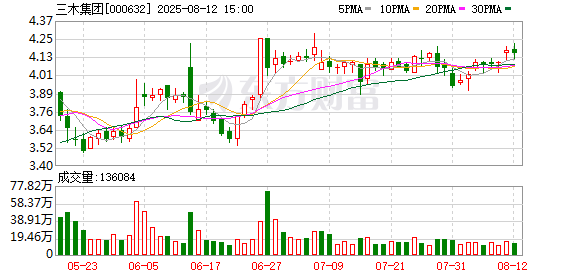
三木集团:8月12日召开董事会会议
Mei Ri Jing Ji Xin Wen· 2025-08-12 10:05
Group 1 - The company, Sanmu Group, announced the convening of its 11th third board meeting on August 12, 2025, to discuss the proposal for providing guarantees to Fuzhou Huaxin Industrial Co., Ltd. [2] - For the year 2024, the revenue composition of Sanmu Group is as follows: 90.74% from commodity trading, 6.94% from real estate, 0.99% from property management fees, 0.87% from leasing, and 0.22% from hotel services [2]


深圳市澍福汽车科技有限公司成立 注册资本100万人民币
Sou Hu Cai Jing· 2025-08-12 06:13
Company Overview - Shenzhen Shufu Automotive Technology Co., Ltd. has recently been established with a registered capital of 1 million RMB [1] - The legal representative of the company is Yao Shuangyan [1] Business Scope - The company engages in a wide range of activities including technology services, development, consulting, and promotion [1] - It also provides information consulting services (excluding licensed information consulting), network technology services, and sales of automotive decorative products and parts [1] - Additional services include vehicle sales, micro-car rental, electric bicycle sales, and second-hand car trading [1] - The company is involved in various sectors such as food sales (only pre-packaged food), navigation terminal sales, and social economic consulting [1] - It offers services related to property management, event organization, human resources, and advertising [1] - The company operates electric vehicle charging infrastructure and provides vehicle repair and maintenance services [1] Licensing and Regulatory Compliance - The company has licensed operations including network taxi services, passenger transport, and residential interior decoration [1] - It is required to obtain approval from relevant authorities for certain business activities [1]
中国信达发布2022年中期业绩:总资产规模15412.65亿元,收入总额412.58亿元
Xin Hua Wang· 2025-08-12 05:54
Core Viewpoint - China Cinda Asset Management Co., Ltd. reported stable operating performance for the first half of 2022, with key indicators meeting expectations and a solid foundation in its core business of non-performing asset management [1][3]. Financial Performance - As of June 30, 2022, total assets reached 1,541.265 billion yuan, with total revenue of 41.258 billion yuan and equity attributable to shareholders at 188.494 billion yuan, reflecting a 5.4% increase from the end of the previous year [1]. - Non-performing asset management business accounted for 61.4% of total assets, 73.4% of total revenue, and 56.6% of pre-tax profit, with total assets of 945.817 billion yuan and revenue of 30.299 billion yuan [1]. - Financial services business total assets grew by 5.1% to 606.867 billion yuan, with revenue increasing by 10.7% to 11.084 billion yuan [1]. Business Structure and Strategy - The company focused on optimizing its business structure, with a 20.3% increase in the acquisition of operating non-performing debt assets, totaling 26.157 billion yuan [3]. - China Cinda participated in risk resolution for small and medium-sized banks and high-risk institutions, providing training for over 70 banks and engaging in bankruptcy restructuring for distressed companies [3][4]. Social Responsibility and Community Support - The company has invested over 130 million yuan in poverty alleviation and rural revitalization efforts, with support reaching 27 provinces and autonomous regions [9]. - China Cinda's subsidiary, Nanshan Bank, has actively assisted businesses affected by the pandemic through various financial measures [9]. Digital Transformation and Innovation - The company is advancing its "Digital Cinda" strategy, enhancing digital operational capabilities and launching platforms to improve the efficiency of non-performing asset disposal [8]. - New economic sectors, including new materials and high-end manufacturing, received significant investment, with 64.7 billion yuan allocated to support structural adjustments [6].

渤海租赁股份有限公司2025年第四次临时股东大会决议公告
Shang Hai Zheng Quan Bao· 2025-08-11 19:36
Meeting Overview - The fourth temporary shareholders' meeting of Bohai Leasing Co., Ltd. was held on August 11, 2025, with both on-site and online voting options available [3][4] - A total of 1,030 shareholders attended the meeting, representing 3,076,676,675 shares, which accounts for 49.7480% of the total voting shares [4][5] Voting Results - The proposal regarding the purchase of aircraft from Airbus by the company's subsidiary Avolon Holdings Limited was approved with 99.2985% of the votes in favor [9][10] - Among minority shareholders, 94.8536% voted in favor of the proposal [11] Legal Compliance - The legal opinions provided by Beijing Haotian (Urumqi) Law Firm confirmed that the meeting's procedures and resolutions were in compliance with relevant laws and regulations [13] Documentation - The resolutions from the fourth temporary shareholders' meeting and the legal opinion letter are available for review [14]

渤海租赁: 北京浩天(乌鲁木齐)律师事务所关于渤海租赁股份有限公司2025年第四次临时股东会的法律意见书
Zheng Quan Zhi Xing· 2025-08-11 10:15
Core Viewpoint - The legal opinion letter confirms the legitimacy and compliance of the procedures for the 2025 Fourth Extraordinary General Meeting of Bohai Leasing Co., Ltd, ensuring that all actions taken during the meeting adhere to relevant laws and regulations [1][6]. Group 1: Meeting Procedures - The meeting was convened by the company's board of directors, with notifications published in major financial media on July 25, 2025, detailing the time, location, and agenda [2][3]. - The meeting utilized a combination of on-site and online voting methods, with detailed instructions provided for the online voting system [2][3]. Group 2: Attendance and Voting - A total of 1 representative and 7 shareholders attended the on-site meeting, representing 2,658,844,274 shares, which is 42.9919% of the total shares [4][5]. - Additionally, 1,023 shareholders participated via online voting, representing 417,832,401 shares, or 6.7561% of the total shares [5]. Group 3: Agenda and Voting Results - The agenda items discussed were consistent with those outlined in the meeting notice, with no amendments or new proposals introduced [5]. - The meeting proceeded without any proposals being postponed or omitted from voting, and all resolutions were passed, including the proposal for Avolon Holdings Limited to purchase aircraft from Airbus [5][6].
华电融资租赁有限公司 50000 万元 25 华电租赁 SCP004 即将兑付
Sou Hu Cai Jing· 2025-08-11 03:05
Group 1 - The announcement from Shanghai Clearing House details the smooth repayment process for Huadian Financial Leasing Co., Ltd.'s fourth short-term financing bond for 2025, with a total issuance amount of RMB 500 million [1] - The bond, named 25 Huadian Leasing SCP004, has an interest rate of 1.9% and a maturity period of 121 days, starting from April 23, 2025 [1] - The total amount of principal and interest to be repaid on August 22, 2025, is RMB 503.1493 million, with provisions for adjustments in case of public holidays [1] Group 2 - The bond is rated AAA, indicating a high level of creditworthiness [1] - The repayment funds will be transferred to a designated account by the issuer before the specified time, ensuring compliance with the repayment schedule [1]
国家统计局:7月CPI环比由降转涨0.4%,核心CPI创年内新高
Sou Hu Cai Jing· 2025-08-10 22:03
Group 1 - The Consumer Price Index (CPI) showed a significant shift from a decrease to an increase in July, with a month-on-month rise of 0.4% compared to a decrease of 0.1% in June, while year-on-year remained flat [1] - The core CPI, excluding food and energy, increased by 0.8% year-on-year, marking the highest level since March 2024 and reflecting a continuous expansion over three months [1] - The Producer Price Index (PPI) decreased by 0.2% month-on-month and 3.6% year-on-year, with the decline rate unchanged from June [1] Group 2 - Service prices were the main driver of the CPI increase, rising by 0.6% month-on-month, contributing 0.26 percentage points to the CPI increase, accounting for over 60% of the total rise [3] - The peak summer travel season significantly boosted demand, with air ticket prices rising by 17.9%, tourism prices by 9.1%, hotel accommodation by 6.9%, and vehicle rental fees by 4.4%, collectively impacting the CPI increase by approximately 0.21 percentage points [3] - The active performance of service consumption reflects the positive effects of domestic demand expansion policies in the service sector [3] Group 3 - Industrial consumer goods prices increased by 0.5% month-on-month, with the rise rate expanding by 0.4 percentage points compared to June, contributing approximately 0.17 percentage points to the CPI increase [4] - Prices of fuel and new energy vehicles stabilized after more than five months of decline, indicating a recovery in consumer demand [4] - The prices of household appliances rose by 2.2%, and prices of durable consumer goods increased between 0.5% and 2.2%, closely related to the end of the "618" promotional event and various consumption-boosting policies [4]

上海国际金融中心一周要闻回顾(8月4日—8月10日)
Guo Ji Jin Rong Bao· 2025-08-10 14:32
Group 1 - Shanghai Pudong aims to build a benchmark financial technology cluster by leveraging the policy advantages of the Shanghai Free Trade Zone and promoting the application of cutting-edge financial technology [1] - The Shanghai Gold Exchange emphasizes the need for a secure and efficient gold market infrastructure while enhancing service quality and risk management capabilities [1] - The approval of the first "photovoltaic + hydropower" REIT project marks a significant milestone in asset diversification for public REITs [1] Group 2 - The successful listing of the Southern Universal Data Center REIT on the Shanghai Stock Exchange represents a significant step in supporting technology finance and green finance [2] - Shanghai has introduced measures to promote the high-quality development of commercial health insurance, focusing on innovative drug and medical device support [2][3] - The Shanghai Clearing House has launched online services for credit derivatives bilateral clearing, enhancing market capacity [4] Group 3 - The issuance of the first "Zhangjiang Technology Loan" by Agricultural Bank of China in Shanghai supports specialized enterprises in the Zhangjiang Science City [5] - The successful launch of the first project company satellite leasing business by China Merchants Jinling marks a significant advancement in supporting China's aerospace strategy [5] - The issuance of the first structured deposit product linked to the daily temperature index in the Yangtze River Delta by Shanghai Rural Commercial Bank showcases innovation in financial products [6] Group 4 - The establishment of the Shanghai Clinical Transformation Fund aims to enhance the ecosystem for clinical innovation and facilitate the transfer of medical innovations [7] - The People's Bank of China and other departments have issued guidelines to support new industrialization, emphasizing the importance of financial services for the real economy [8] - New regulations from the China Futures Association target unfair competition in the futures industry, promoting a shift from price wars to value creation [12]
中国诚通发展集团(00217)与中国电建租赁订立租赁资产转让协议
Zhi Tong Cai Jing· 2025-08-08 14:07
Core Viewpoint - China Chengtong Development Group (00217) announced a leasing asset transfer agreement with China Power Construction Leasing, with an expected consideration of RMB 380 million (approximately HKD 414 million) [1] Group 1: Agreement Details - The agreement involves the transfer of leasing assets from China Power Construction Leasing to Chengtong Financing Leasing, effective from August 8, 2025 [1] - Chengtong Financing Leasing will have the right to collect all rental payments and other outstanding amounts from the Shaanxi lessee under the sale-leaseback agreement starting from the transfer date [1] - The agreement includes a clause allowing Chengtong Financing Leasing to exercise a reverse transfer right three years after the payment date [1] Group 2: Financial Implications - If the reverse transfer right is not exercised and assuming no early termination of the entrusted agreement and the Shaanxi sale-leaseback agreement, Chengtong Financing Leasing is expected to earn a total income of approximately RMB 177 million from the arrangement [1] - This income estimate is based on the rental income receivable under the Shaanxi sale-leaseback arrangement, minus the consideration and total management fees, assuming the transfer date is October 31, 2025 [1] Group 3: Company Overview - The company primarily engages in leasing, property development and investment, offshore tourism services, and hotel operations [1] - The leasing business is mainly conducted through Chengtong Financing Leasing, which is its core business [1]

中国诚通发展集团(00217.HK)与中国电建租赁订立租赁资产转让协议
Ge Long Hui· 2025-08-08 13:18
Core Viewpoint - China Chengtong Development Group announced a leasing asset transfer agreement with China Power Construction Leasing, with a projected value of RMB 380 million (approximately HKD 414.2 million) [1] Group 1 - The agreement involves the transfer of leasing assets from China Power Construction Leasing to Chengtong Financing Leasing, effective from August 8, 2025 [1] - Chengtong Financing Leasing will gain the right to collect all lease payments and other outstanding amounts from the lessee in Shaanxi under the sale-leaseback agreement starting from the transfer date [1] - Chengtong Financing Leasing has the right to exercise a reverse transfer option three years after the payment of the transfer price [1]