蔬菜种植

Search documents
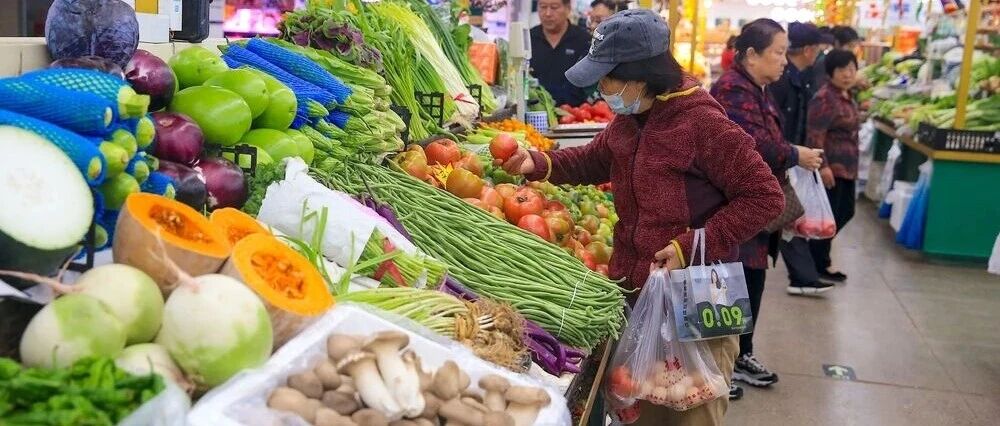
秋菜上市,护市井烟火
Ren Min Ri Bao· 2025-10-29 22:41
Core Points - The article discusses the seasonal sale of autumn vegetables in Northeast China, particularly in Dalian, Liaoning Province, highlighting the cultural significance of stocking up for winter [1] - Dalian's government has implemented measures to manage the sale of autumn vegetables, including designating over 400 sales points and waiving certain fees for farmers [1] Group 1 - The autumn vegetable sale season is a unique winter preparation ritual for the people in Northeast China [1] - Dalian's government has established a specific timeframe for the autumn vegetable sales from October 20 to November 20 [1] - The initiative aims to balance the need for public convenience and urban cleanliness, addressing issues like street congestion and waste management [1] Group 2 - Over 400 designated sales points have been established to streamline the sale of autumn vegetables [1] - Farmers selling autumn vegetables in the city are exempt from sanitation and street occupation fees, promoting a more organized sales environment [1] - The measures taken by the Dalian government reflect a commitment to enhancing urban governance and community welfare during the autumn vegetable season [1]
农业农村部:“菜篮子”产品市场供应充足
Xin Lang Cai Jing· 2025-10-28 12:01
Core Insights - The supply of "basket" products in the market is sufficient, with significant production increases in various livestock and dairy products [1] Group 1: Livestock and Dairy Production - In the first three quarters, the national production of pork, beef, mutton, and poultry reached 73.12 million tons, a year-on-year increase of 3.8% [1] - Milk production totaled 29.21 million tons, reflecting a year-on-year growth of 0.7% [1] - Egg production amounted to 26.46 million tons, with a slight year-on-year increase of 0.2% [1] Group 2: Swine and Cattle Management - Comprehensive regulation of pig production has been strengthened, with the number of breeding sows at 40.35 million heads by the end of September, marking a decline for three consecutive months and a reduction of 450,000 heads from the peak at the end of last year [1] - The beef and dairy industries are receiving support to alleviate difficulties, with beef farming showing overall profitability for six consecutive months [1] - The price of fresh milk has stabilized after reaching a bottom [1] Group 3: Agricultural Product Supply and Quality - The supply of vegetables, fruits, and aquatic products is abundant, with a rich variety and stable prices [1] - The supply of green and high-quality agricultural products continues to increase, with a routine monitoring pass rate of 97.6% for agricultural product quality and safety in the third quarter [1] - The total number of certified and registered green, organic, specialty, and geographical indication agricultural products has exceeded 87,000 [1]
湖北嘉鱼:一棵蔬菜的 “融资”之旅
Sou Hu Cai Jing· 2025-10-28 10:03
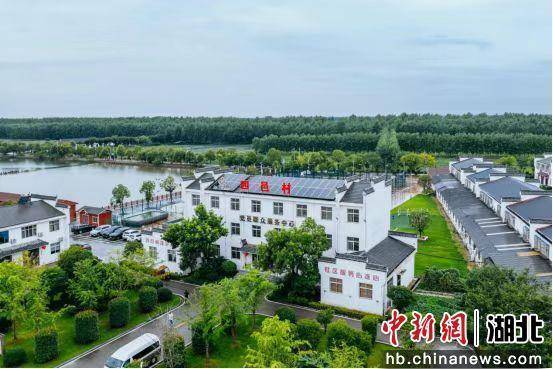
Core Viewpoint - The financial support in Jia Yu County is significantly enhancing the agricultural sector, particularly in vegetable cultivation, through innovative credit products and services tailored to the needs of farmers [3][4][12]. Financial Support and Credit Innovations - The Agricultural Bank of China provided a credit loan of 5 million yuan to Hubei Jinrun Agricultural Development Co., which has a planting area of 8,250 acres and is focused on green vegetable cultivation [3][4]. - As of September 20, the Agricultural Bank in Jia Yu County has granted credit of 16.79 million yuan to 59 vegetable growers and 7.3 million yuan to 28 livestock farmers, effectively addressing funding bottlenecks [4]. - Jia Yu County has established a multi-layered rural financial service system, with agricultural loans reaching 9.86 billion yuan, a year-on-year increase of 18.3% [4]. Innovative Financial Products - Jia Yu Rural Commercial Bank launched the "Jia Nong Loan" series, which calculates credit value based on planting area, allowing larger areas to receive higher credit limits [6][10]. - The bank has issued loans totaling 89.13 million yuan under the "Jia Nong Loan" program, benefiting 260 households [6]. - The bank's innovative approach has led to a 173.67% year-on-year increase in the balance of re-loans for supporting agriculture and small businesses, reaching 466 million yuan [6]. Infrastructure and Service Expansion - The establishment of 75 village service points has improved access to financial services, allowing villagers to conduct transactions conveniently [7]. - The bank's efforts have resulted in a significant increase in the number of loan clients, surpassing 18,300 by mid-year [13]. Impact on Agricultural Development - The financial support has led to an expansion of vegetable planting areas to 460,000 acres, generating an annual output value exceeding 6 billion yuan, contributing to an increase in per capita income for farmers by over 10,000 yuan [12][13]. - The Agricultural Development Bank has invested 90 million yuan in projects aimed at upgrading agricultural infrastructure, enhancing irrigation and access to fields [12]. Conclusion - The integration of financial services with the agricultural sector in Jia Yu County is fostering a robust environment for vegetable production, demonstrating the effectiveness of targeted financial strategies in rural development [12][13].

广州市科技特派员助力增城迟菜心产业提质增效
Nan Fang Nong Cun Bao· 2025-10-27 14:31
Core Insights - The article highlights the role of university technology commissioners in promoting agricultural technology services as part of the rural revitalization strategy in Guangzhou [1][3] - A technology service team led by Professor Chen Changming from South China Agricultural University is actively engaging with local agricultural enterprises to enhance vegetable seedling techniques and distribute high-quality vegetable seeds [1][3] Group 1: Agricultural Technology Services - The technology service team visited multiple agricultural bases in Zengcheng District to provide guidance on vegetable seedling techniques and distribute quality vegetable seeds [1][3] - The team specifically focused on improving seed supply, seedling plans, and management measures at Guangzhou Hefengshou Agricultural Co., Ltd. [3] - Recommendations were made regarding substrate improvement, temperature and humidity control in seedling greenhouses, green disease prevention, and cost reduction to optimize production processes [3] Group 2: Seed Distribution and Crop Quality - The team distributed nine varieties of high-quality vegetable seeds, including hybrid Zengcheng late vegetable heart, to local farms and family farms [3] - The initiative aims to enhance scientific seedling levels among farms and farmers, thereby supporting the stable production and supply of vegetables during the autumn and winter seasons [3] - The collaboration between the technology service team and local agricultural enterprises is expected to drive innovation in vegetable seedling and cultivation techniques, contributing to the high-quality development of the Zengcheng late vegetable heart industry [3]
河南安阳县:“菜篮子”鼓了“钱袋子” 金钥匙”打开“致富门”
Yang Guang Wang· 2025-10-27 08:20
Core Insights - The agricultural sector in Anyang County is experiencing significant growth, particularly in vegetable cultivation, driven by favorable policies and technological support [1][2][3] Group 1: Vegetable Cultivation - In Wadian Village, the average yield of green radishes is expected to be around 6 tons per acre, with farmers benefiting from improved agricultural practices and government support [1] - In Yangqi Village, chili peppers are thriving, with an expected yield of 2,000 pounds per acre and a selling price of at least 1.5 yuan per pound, leading to an average profit of 3,000 yuan per acre after costs [2] - The cultivation of vegetables is attracting external buyers due to the high quality of produce, which is characterized by good shape, color, and taste [1][2] Group 2: Employment and Economic Impact - The chili pepper cultivation provides local employment opportunities, allowing workers to earn around 100 yuan per day, thus supporting their families while contributing to the local economy [2] - The integration of various agricultural processes, including planting, storage, processing, and packaging, is being promoted to enhance product value and efficiency [2] Group 3: Agricultural Strategy and Development - Anyang County is focusing on rural revitalization through policy support, technical training, and market expansion, emphasizing the development of high-efficiency economic crops [3] - The county is adopting a "company + cooperative + farmer" model to achieve standardized production and enhance market competitiveness [3] - Future plans include deepening agricultural supply-side reforms and promoting the integration of agricultural industries to create more wealth opportunities for the local population [3]
一度吃菜多靠外省调运的青海 逆袭成了很多地方的“菜篮子” 高原冷凉蔬菜的“破圈”之路(乡村观察)
Ren Min Ri Bao· 2025-10-23 23:13
Core Insights - Qinghai Province has transformed its agricultural shortcomings into advantages by developing cool-season vegetables, becoming a significant supplier of fresh produce in China [1][3]. Group 1: Development of Cool-Season Vegetables - The cool-season vegetable industry in Qinghai has seen significant growth, with the planting area reaching approximately 660,000 acres and a production volume of around 1.58 million tons, of which 700,000 tons are exported [3]. - The region's high altitude, cool climate, and ample sunlight create ideal conditions for growing high-quality cool-season vegetables, which are marketed as eco-friendly products [3][4]. Group 2: Technological Advancements - The introduction of pest monitoring technology and water-fertilizer integration systems has improved the efficiency and yield of cool-season vegetable farming, with water and fertilizer usage reduced by about 40% and yield increased by approximately 10% [4][5]. - New vegetable varieties have been developed, including 28 highland specialty varieties and over 50 new varieties selected by national experts, enhancing both quality and yield [5]. Group 3: Market and Sales Coordination - The cooperative model has facilitated direct supply chains, allowing fresh vegetables to reach markets in Guangdong within 40 hours, meeting high-quality standards set by buyers [6]. - Qinghai's vegetable exports have reached 54.3% of the province's total vegetable output, with significant export volumes to international markets, including 4,200 tons valued at $1.28 million in the first half of the year [7]. Group 4: Economic Impact - The cool-season vegetable industry has generated substantial economic benefits, with annual production valued at over 760 million yuan, involving more than 20,000 farming households and providing over 500 million yuan in labor income [7][8].
“蹦跳路”成了共富路
Ren Min Ri Bao· 2025-10-23 22:42
Core Insights - The S219 road has transformed from a difficult route to a vital connection for urban-rural integration and economic development in Pujiang County, Zhejiang Province, significantly reducing the income gap between urban and rural residents [1][2][3] Group 1: Economic Development - Pujiang County's operational income for all administrative villages exceeded 500,000 yuan last year, with the urban-rural income disparity reduced to below 1.86 [1] - The county has seen a 2.4 times increase in collective economic income since 2017, with over 70% of villages previously earning less than 50,000 yuan [2] - The grape industry in Pujiang has achieved an annual output value exceeding 1.4 billion yuan, with a 35% increase in product premium rates due to direct sales to urban markets [3] Group 2: Tourism and Employment - The New Light Village, with over 300 years of history, has become a popular tourist destination, attracting over 10,000 visitors daily during the National Day holiday, contributing to a collective income exceeding 1 million yuan for four consecutive years [2] - The S219 road connects various tourist attractions and has enabled local residents to benefit from tourism-related income [2][3] - Employment opportunities have been created through agricultural projects, with over 300 jobs provided and an average monthly income increase of over 3,500 yuan for surrounding farmers [1] Group 3: Regional Collaboration - The establishment of the "S219 Three-Region Common Prosperity Alliance" aims to enhance tourism resource sharing and collaborative economic development among Pujiang, Tonglu, and Jiande [3] - Initiatives include cross-county public transport, employee wellness programs, and unified tourism branding, expected to generate an additional 200 million yuan in rural tourism revenue this year [3]
高原冷凉蔬菜的“破圈”之路(乡村观察)
Ren Min Ri Bao· 2025-10-23 22:42
Core Insights - Qinghai Province has transformed its agricultural shortcomings into advantages by developing cool-season vegetables, becoming a significant supplier of fresh produce in China [1][3][4] Group 1: Development of Cool-Season Vegetables - The cool-season vegetable industry in Qinghai has evolved from small-scale farming to large cooperative operations, with the planting area reaching approximately 660,000 acres and a production volume of around 1.58 million tons, of which 700,000 tons are exported [3][4] - The region's high altitude, cool climate, and significant temperature variations provide an ideal environment for growing high-quality cool-season vegetables, which are marketed as eco-friendly products [3][4] Group 2: Technological Advancements - The introduction of pest monitoring technology and water-fertilizer integration systems has improved the efficiency and yield of cool-season vegetable production, with water-fertilizer integration saving about 40% in resources and increasing yields by approximately 10% [4][5] - New vegetable varieties have been developed, including 28 highland specialty varieties and over 50 introduced varieties, enhancing both quality and yield [5][6] Group 3: Market and Export Dynamics - The cooperative model has facilitated direct supply chains, allowing vegetables to reach markets in Guangdong within 40 hours, meeting high-quality standards set by local regulations [7][8] - Qinghai's cool-season vegetables are not only popular domestically but also have significant export potential, with 54.3% of the province's vegetable exports coming from certified bases, and an expected export volume of 10,000 tons for the year [8][9] Group 4: Economic Impact - The cool-season vegetable industry has become a major economic driver in Qinghai, with annual production valued at over 760 million yuan, benefiting more than 20,000 farming households and providing over 500 million yuan in labor income [8][9]
年出种苗500万株 山西高平育苗进入“智能时代”
Zhong Guo Xin Wen Wang· 2025-10-23 12:40
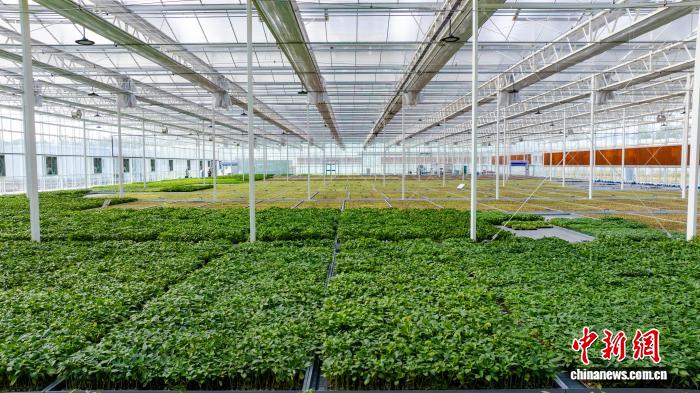
Core Viewpoint - The establishment of an intelligent seedling greenhouse in Gaoping City, Shanxi, marks a significant advancement in modern agricultural facilities, enabling the production of 5 million seedlings annually and enhancing operational efficiency through automation and smart technology [1][5]. Group 1: Project Overview - The Wuguifeng vegetable industry project covers an area of 531 acres, featuring a 5,000 square meter intelligent seedling greenhouse equipped with a water and fertilizer integration workshop [3]. - The intelligent greenhouse utilizes a smart control system for precise management of water and nutrients, along with IoT sensors for real-time monitoring of temperature, humidity, and light [3]. Group 2: Operational Efficiency - The intelligent seedling greenhouse requires only 2 to 3 personnel to manage the entire process of sowing, regulation, storage, and retrieval, significantly reducing labor needs compared to traditional methods that required over ten workers [2][4]. - Each seedbed in the greenhouse can cultivate over 4,000 seedlings, with a total of more than 260 seedbeds available, allowing for the production of approximately 5 million seedlings per year [5]. Group 3: Technological Advancements - The greenhouse is equipped with advanced systems such as automated sowing lines, fully automated logistics seedbed systems, and tidal irrigation systems, which contribute to the intelligent and automated operation of the entire seedling production process [3].
“菜篮子”这样的工程奇迹,为何只出现在中国?
虎嗅APP· 2025-10-23 11:18
Core Viewpoint - The article emphasizes the significance of the "vegetable basket project" in China, which has transformed the country's food supply system, ensuring food security and diversity in vegetable availability, thus enhancing the quality of life for its citizens [4][42]. Time Scale - Historically, the northern Chinese diet during winter was characterized by monotony and scarcity, relying heavily on winter-stored vegetables like cabbage and potatoes, which reflected the harsh survival conditions [5][6]. - The evolution of dietary habits showcases the shift from a limited selection of winter vegetables to a more diverse and abundant supply, highlighting the progress made in food security [5][10]. Spatial Scale - Comparisons are drawn between China's vegetable supply and that of other countries, such as Germany and the Nordic countries, where vegetable variety is limited, especially during winter [8][9]. - China's vegetable production is projected to reach 800 million tons by 2025, accounting for over 50% of global output, showcasing its dominance in vegetable supply [10]. Vegetable Basket Project - The "vegetable basket project" was initiated in the late 1980s to address food supply shortages in urban areas, establishing a comprehensive system for production, distribution, and regulation to ensure food security [11][12]. - The project has undergone four phases, each focusing on different aspects of food supply and quality improvement, from establishing supply channels to enhancing agricultural technology and quality standards [13][21]. Phases of the Vegetable Basket Project 1. **First Phase (1988-1994)**: Focused on establishing supply channels and ensuring urban food security through the "vegetable basket" responsibility system for local governments [14][15]. 2. **Second Phase (1994-1999)**: Emphasized the development of facility agriculture to overcome seasonal limitations in vegetable production, leading to significant increases in production capacity [17][18]. 3. **Third Phase (1999-2009)**: Aimed at improving food quality and safety standards, introducing new vegetable varieties, and establishing a comprehensive quality management system [21][22]. 4. **Fourth Phase (2010-present)**: Focuses on optimizing the existing framework, enhancing logistics, and ensuring resilience in the food supply system, particularly highlighted during the COVID-19 pandemic [24][28]. Comparison with Western Countries - The article contrasts China's approach to food supply with that of Western countries, noting that China's government actively regulates and supports food supply systems, while Western models prioritize capital efficiency and profit maximization [31][32]. - The differences in political and market structures between China and Western countries have led to varying outcomes in food supply resilience and diversity [36][38]. Conclusion - The "vegetable basket project" represents a significant achievement in China's food security strategy, ensuring that citizens have access to a diverse and stable food supply, which has transformed dietary habits and improved quality of life [42][44].