
军工

Search documents
长城基金汪立:市场趋稳,成长与价值轮动
Xin Lang Cai Jing· 2026-01-28 01:29
Group 1: Market Overview - The A-share market exhibited a structural differentiation pattern last week, with broad indices showing mixed performance and funds significantly favoring small and mid-cap stocks and popular growth sectors [1][7] - In terms of industry performance, construction materials, real estate, and military industries strengthened, while chemical, non-ferrous metals, banking, non-banking financials, and telecommunications indices declined [1][7] Group 2: Macroeconomic Analysis - In 2025, China's economy is projected to achieve its annual target with a GDP growth of 5.0%, and a quarterly growth rate of 4.5% in Q4, slightly down from previous periods due to base effects [2][8] - The economic characteristics for Q4 include a dual differentiation: strong industrial production but persistent structural mismatches in capacity and demand, and a divergence between external and internal demand, with external demand supported by an optimized export structure [2][8] - Future policy focus may shift towards expanding domestic demand, enhancing consumption through initiatives like trade-in programs for consumer goods, and investing in new infrastructure and equipment updates to mitigate uncertainties in external demand and pressures on internal demand [2][8] Group 3: Urban Renewal Initiatives - The top-level design for urban renewal is being reinforced, expected to become a significant driver for expanding domestic demand, with the Ministry of Housing and Urban-Rural Development emphasizing high-quality urban development [3][9] - In 2024, there are 60,015 urban renewal projects planned, with a total investment of 2.9 trillion yuan, focusing on the renovation of old urban communities, urban village transformations, and underground pipeline upgrades [3][9] Group 4: Investment Strategies - The investment strategy emphasizes technology growth as a main line, with value stocks also having potential, highlighting the importance of regulatory stability in enhancing market investability [4][10] - Recent large-scale reductions in ETFs by the Central Huijin Investment have stabilized the weighted index, while the technology growth sector has accelerated rotation, maintaining market activity without suppressing it [4][10] - Key investment directions include emerging technologies, non-bank financials benefiting from wealth management demand, and cyclical sectors poised for recovery due to low valuations and improving economic conditions [5][11]
长城基金汪立:科技成长是主线,价值股也有春天
Xin Lang Cai Jing· 2026-01-28 01:24
Core Viewpoint - Recent large-scale reduction of ETF holdings by Central Huijin has stabilized the weighted index, while value stocks have shown weak performance, yet market trading enthusiasm remains high, with a rotation towards technology growth sectors [1][4] Group 1: Market Dynamics - Strict and prudent capital market regulation is believed to enhance the investability of the Chinese market, contributing to its long-term development and allowing more investors to share in the benefits of transformation and reform [1][4] - Key drivers of the transformation market include the downward shift of risk-free returns, capital market reforms, and economic structural transformation [1][4] Group 2: Investment Directions - Emerging technology is identified as a main investment theme, with value stocks also having potential; focus on leading companies in niche markets and the A500 index is recommended [2][5] - Technology growth direction: Global demand for AI computing power is in a strong upward trend, driving rapid growth in semiconductor equipment demand, leading to price increases across the entire industry chain; sectors to watch include Hong Kong internet, electronic semiconductors, communications, military industry, and globally competitive manufacturing sectors such as power equipment, machinery, and automotive components [2][5] - Non-bank financial sector: Benefiting from the migration of household deposits and growing wealth management demand, capital market reforms are boosting market risk appetite; focus on insurance and brokerage firms is suggested [2][5] - Cyclical sectors: With valuations and holdings at low levels and marginal improvements at the economic bottom, sectors benefiting from domestic demand expansion policies include food, retail, tourism services, hotels, and commodities likely to see price increases due to global turmoil and declining dollar credit, such as non-ferrous metals, chemicals, and oil [2][5]
军工ETF(512660)收涨超1.4%,昨日资金净流入近1亿元,基本面利好行业前景
Mei Ri Jing Ji Xin Wen· 2026-01-27 19:00
Group 1 - The military industry ETF (512660) rose over 1.4% on January 27, with a net inflow of nearly 100 million yuan, indicating a positive outlook for the industry fundamentals [1] - Huafu Securities highlights the investment focus on the SpaceX supply chain and the domestic rocket industry chain, with SpaceX aiming to achieve reuse of Starship this year and the V3 satellite scheduled for 2027 [1] - The domestic rocket industry is experiencing accelerated development and capital support, which will enhance its progress and lead to a significant increase in the number of large-scale rockets [1] Group 2 - The commercial space industry trend is emerging, with space photovoltaics potentially becoming the next growth area [1] - The military industry is expected to see a strong demand recovery by 2026, which supports a positive outlook for the industry's fundamentals [1] - The military ETF (512660) tracks the CSI Military Industry Index (399967), which selects listed companies related to the military industry from the Shanghai and Shenzhen markets, focusing on key areas such as aviation, aerospace, and military electronics [1]
美国民众能“减负”吗?——特朗普七大政策构想分析
一瑜中的· 2026-01-27 16:01
Core Viewpoint - The importance of the "Affordability" issue is increasingly prominent as the U.S. enters the midterm election year, with Trump proposing several policies aimed at addressing this concern [2]. Group 1: Proposed Policies - The proposed policies can be categorized into four areas: housing, finance, cost of living, and defense [21]. - In the housing sector, Trump has proposed two measures: directing Fannie Mae and Freddie Mac to purchase $200 billion in mortgage-backed securities (MBS) to lower mortgage rates, and restricting large institutional investors from buying single-family homes to stabilize home prices [21][26]. - In the finance sector, a proposal to set a credit card interest rate cap at 10% has been introduced [22]. - For the cost of living, three measures include issuing tariff dividends, requiring large tech companies to cover their electricity infrastructure costs, and a comprehensive healthcare plan aimed at reducing medical expenses [23][24]. - In defense, a proposal has been made to prohibit defense contractors from stock buybacks and dividends while limiting executive compensation [25]. Group 2: Feasibility of Policies - The feasibility of these policies is assessed based on whether they require congressional legislation, the attitudes of both parties, and predictions from the betting market [27]. - Two of the proposed policies do not require congressional approval and have already begun implementation: directing Fannie Mae and Freddie Mac to purchase MBS, and prohibiting defense contractors from stock buybacks and dividends [29][32]. - The remaining five policies may require congressional legislation, with varying degrees of clarity regarding their implementation paths [29][33][34]. Group 3: Potential Impacts - The potential impacts of the proposed policies are significant, particularly in four areas: 1. Directing Fannie Mae and Freddie Mac to purchase MBS could help narrow mortgage loan spreads, although their holdings represent only about 1.1% of the total MBS market [46][50]. 2. Restricting institutional purchases of homes could affect only about 3% of the market, as large investors hold a small share of single-family rentals [53][59]. 3. The proposed credit card interest rate cap could reduce rates by 11%, but the net interest margin for credit card businesses is only around 9% to 10%, potentially making the business unprofitable [63][65]. 4. The prohibition on dividends and buybacks for defense contractors could impact their financial strategies, as these actions currently represent a significant portion of their market value [17]. Group 4: Future Monitoring Points - Key future monitoring points include the Defense Secretary's review of defense contractors on February 6, the State of the Union address on February 24, the presidential budget proposal in February-March, and potential affordability measures that may be announced during the primary election period from May to August [4].


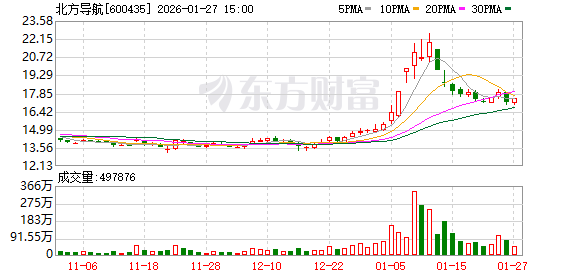
北方导航:公司于2026年1月8日发布《北方导航2025年度业绩预增公告》
Zheng Quan Ri Bao· 2026-01-27 12:15
证券日报网讯 1月27日,北方导航在互动平台回答投资者提问时表示,公司于2026年1月8日发布《北方 导航2025年度业绩预增公告》,经初步测算,公司预计2025年度实现归属于上市公司股东的净利润 11000万元至14000万元,与上年同期相比,预计增加5096.26万元到8096.26万元,同比增长86.32%至 137.14%。根据上海证券交易所股票上市规则,上市公司停牌需符合相关条件及要求。 (文章来源:证券日报) ...

氪星晚报|德国军工巨头要为德军打造本土版“星链”;OpenAI首席信息安全官奈特将卸任职务;金饰克价涨至1585元
3 6 Ke· 2026-01-27 10:16
Group 1 - Adidas has become the official strategic partner of the 2026 Jiangsu Province City Football League, with attendance exceeding 2.43 million and an average of 28,000 spectators per match since its inception in 2025 [1] - Samsung and SK Hynix have reportedly decided to significantly increase the price of LPDDR used in iPhones, nearly doubling the price compared to the previous quarter [2] - Vietnamese automaker Kim Long Motor will collaborate with China's BYD to build a $130 million electric vehicle battery factory in northern central Vietnam, with funding provided by Kim Long and technical support from BYD [3] Group 2 - Rheinmetall and Bremen-based satellite manufacturer are planning to bid for a contract to provide a satellite internet service similar to the US Starlink for the German military, with the contract potentially worth several billion euros [4] - OpenAI's Chief Information Security Officer, Nate, is set to resign from his position [5] - The Beijing Stock Exchange has denied rumors regarding a delayed announcement for new stock subscriptions, stating that the circulated notice was false [6] Group 3 - Beijing Yonghui Supermarket has issued a statement regarding the suspension of operations at its Hongkun Plaza store due to property management issues, including water and heating disruptions [7] - Nike is laying off 775 employees to accelerate automation processes in its U.S. distribution centers, following a previous announcement to cut 1,000 positions [8] - DeepSeek has released the DeepSeek-OCR 2 model, which utilizes an innovative DeepEncoder V2 method for dynamic image rearrangement based on meaning [9][10] Group 4 - Alibaba Health's medical AI application "Hydrogen Ion" has launched a new feature for "dynamic evidence positioning," which accurately locates specific statements supporting viewpoints in original texts [11] - AI medical innovation company "Virtual Reality" has completed an A+ round of financing exceeding 50 million yuan, with plans for further development in AI algorithms and hardware [12] - The National Market Supervision Administration has reported 1,169 cases related to charging treasure safety violations, emphasizing the importance of product quality safety [13] Group 5 - Domestic gold jewelry prices have increased, with several brands reporting prices for pure gold jewelry ranging from 1,575 to 1,585 yuan per gram [14] - China's Ministry of Human Resources and Social Security plans to implement measures to support employment in response to the impact of artificial intelligence, including actions to stabilize and expand job opportunities [15]
天箭科技跨期11年审价调整 利润被砍掉2亿 或将“披星戴帽”
Xin Lang Cai Jing· 2026-01-27 08:30
Core Viewpoint - Tianjian Technology is expected to report a net loss of 176 to 250 million yuan for 2025, with negative operating revenue, triggering the *ST clause from the Shenzhen Stock Exchange [1] Group 1: Financial Performance - The significant loss is primarily due to the unique pricing mechanism in the military industry, resulting in an 11-year price gap between the company's product pricing and the military's approved prices, necessitating a retrospective adjustment of approximately 260 million yuan in operating revenue for 2025 [1] - The adjustment affects three main product models of Tianjian Technology, with the earliest contracts dating back to 2014 [1] - Historical data shows that military enterprises typically have a pricing adjustment cycle of 3-5 years, with some exceptions like Hengyu Xintong and Galaxy Electronics, which experienced adjustment cycles of 8 and 19 years respectively, leading to significant revenue reductions [1] Group 2: Stock and Market Impact - The company will announce the risk warning for delisting alongside its 2025 annual report, with trading of its stock suspended for one day after the announcement [2] - The future of Tianjian Technology's delisting will depend on its financial performance in 2026, with recent trends showing a continuous decline in operating revenue [2] - The company reported a historical low gross margin of 40% for the first three quarters of 2025, and its contract liabilities decreased by 25.2% from the end of 2023 [2] Group 3: Strategic Response - In response to the challenges posed by the delisting risk, the company plans to focus on the development and mass production of new models and products while accelerating the research and validation of new technologies [2] - The company aims to strengthen its core product competitiveness and improve operational efficiency through strategic planning and management [2] - The fate of Tianjian Technology is not only dependent on its transformation efforts but also on the capital market's ability to price industry risks [2]

军工ETF(512660)上一交易日净流入近1亿元,军工行业估值有望获得支撑
Mei Ri Jing Ji Xin Wen· 2026-01-27 03:15
Core Viewpoint - The article emphasizes the importance of advancing national defense and military modernization in China, highlighting the potential for growth in the military industry due to increased global competition and geopolitical tensions [1] Industry Overview - The 14th Five-Year Plan proposes high-quality advancement in national defense and military modernization, accelerating the upgrade of advanced weaponry and equipment [1] - The military industry is identified as a crucial area for breakthroughs in new productive forces, with a broad industry outlook [1] Competitive Landscape - China's global competitiveness in shipbuilding, aerospace, and satellite navigation has been steadily improving in recent years [1] - The military industry is expected to receive valuation support due to the rising importance of national defense and security amid frequent global conflicts and unstable geopolitical situations [1] Investment Vehicle - The military ETF (512660) tracks the CSI Military Index (399967), which selects the top ten military groups and other representative companies in the military sector from the Shanghai and Shenzhen markets [1] - The index covers various military-related fields, including aviation, aerospace, shipbuilding, weaponry, military electronics, and satellites, reflecting the overall performance of military-themed listed companies, with a focus on aviation equipment and military electronics [1]
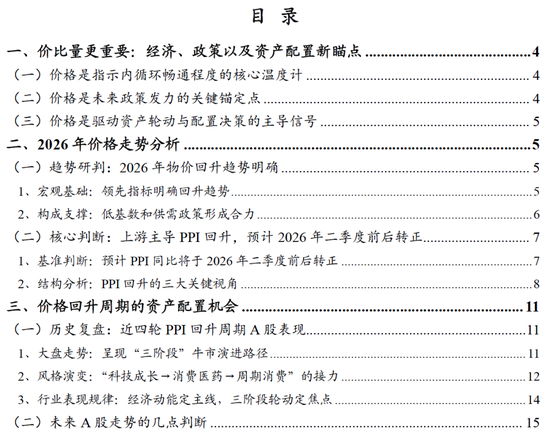
财信宏观深度|价格趋势确立,牛市行至中局——2026年物价走势与A股策略研判
Xin Lang Cai Jing· 2026-01-27 01:28
Group 1 - The focus of macroeconomic analysis is shifting from "quantity" to "price," with "price" becoming a key variable for observing the internal circulation of the economy, predicting policy directions, and driving asset rotation [9][10][14] - Price signals are crucial for activating the "price-profit-income-consumption" positive cycle, which is essential for understanding economic vitality and guiding policy [10][11][14] - The report predicts that the Producer Price Index (PPI) will enter an upward cycle in 2026, primarily driven by upstream industries, fundamentally reshaping profit patterns and market styles [8][15][28] Group 2 - The analysis indicates a clear upward trend in prices for 2026, supported by macroeconomic indicators such as narrowing supply-demand gaps and improving financial liquidity [17][18][19] - The report highlights that the PPI is expected to turn positive around the second quarter of 2026, with structural characteristics emphasizing the role of upstream industries [28][31][32] - The low base effect and supportive supply-demand policies are anticipated to create a combined force that will support moderate price increases in 2026 [25][26] Group 3 - Historical analysis shows that the PPI's transition from negative to positive corresponds with three stages of bull market evolution, with distinct patterns in market performance and sector rotation [49][52][58] - The report identifies a clear rotation in market styles during bull markets, transitioning from technology growth to consumer healthcare and then to cyclical consumption [58][66] - The report emphasizes that the leading sectors during these cycles reflect the core drivers of economic growth and strategic focus, with upstream industries like coal, oil, and metals expected to lead the recovery [36][66] Group 4 - The current market is in the second phase of a bull market, with expectations for reduced return forecasts for 2026, as historical trends indicate diminishing returns in later stages [69] - The focus for the first half of the year will remain on new productive forces, particularly in sectors like computing, electronics, military, and power equipment, driven by the AI technology revolution [70] - The report suggests that while the valuation of technology sectors is high, the potential for profit recovery remains a key driver for performance in these areas [70]
国际军贸深度-安全局势驱动需求稳增-实战战绩助力高端破局
2026-01-26 15:54
Summary of Key Points from the Conference Call Industry Overview - The conference call discusses the global military trade market, highlighting the significant changes driven by geopolitical tensions and conflicts, particularly in the Middle East and South Asia [1][2][3]. Core Insights and Arguments - **Performance of Chinese Military Equipment**: Chinese weapons have exceeded expectations in conflicts such as the India-Pakistan air battle and Middle Eastern confrontations, enhancing international trust in Chinese military technology, especially in fighter jets and missiles [1]. - **Market Share Dynamics**: The global military trade market is experiencing a shift, with Russia's market share declining significantly due to the Ukraine conflict, while China is expected to expand its market presence, particularly in Asia, the Middle East, and South America [1][2]. - **Self-Reliance in Weaponry**: China has overcome the bottleneck of weaponry self-reliance, with advanced weapons like the J-10, J-35, and Y-20 breaking supply constraints, thus supporting military exports and potentially increasing the profitability of domestic manufacturers [1][8]. - **Comparison with U.S. Military Firms**: While China's military trade system is similar to that of the U.S., the revenue scale of Chinese companies still lags behind major U.S. defense contractors like Lockheed Martin. Improving gross margins and increasing overseas revenue share are critical for the future development of Chinese firms [1][6][9]. - **Profitability in Military Trade**: Military trade gross margins are significantly higher than domestic margins, with larger manufacturers gaining more negotiating power and profitability as their military trade scale increases [10][11]. Additional Important Insights - **Increased Military Spending**: The call notes a trend of increased military spending globally, particularly in Europe, as countries reassess their defense capabilities in light of recent conflicts [4][12]. - **Diverse Client Base for China**: China's primary military clients include Pakistan, with growing trust from Middle Eastern nations. Future exports may extend to Europe and the Americas [6][12]. - **Weapon Types and Demand Elasticity**: Aircraft, particularly fighter jets, dominate the types of weapons exported, with missile demand showing high elasticity during wartime [5][12]. - **Beneficiaries of Military Trade**: The primary beneficiaries of military trade are the main manufacturers, while midstream and upstream companies see limited price increases but can benefit from volume growth. Specific sectors to watch include aircraft, radar, missiles, and armored vehicles [13]. Recommendations for Investment Focus - Suggested focus areas include companies involved in aircraft manufacturing, missile systems, radar technology, and armored vehicles. Notable companies mentioned include AVIC Shenyang Aircraft Corporation, AVIC Chengdu Aircraft Corporation, and others involved in the military supply chain [13].