
母婴

Search documents
母婴品牌拓展儿童节商机 沉浸式体验打造线下“新消费场景”
Xin Hua Cai Jing· 2025-06-01 14:10
Core Insights - The International Children's Day on June 1st serves as a crucial marketing opportunity for brands in the mother and baby industry, reflecting the evolving consumer trends towards refined, scenario-based, and technology-driven experiences [1][2] Group 1: Company Strategy - Goodbaby Group has established the "June 1st Goodbaby Festival" IP since 2014, utilizing a dual-channel integration model of "hundreds of cities and thousands of stores" to enhance user interaction and ecosystem building [1][2] - The 2023 "June 1st Goodbaby Festival" focuses on a global celebration theme, expanding its core store network across China, Southeast Asia, and Europe and the U.S., while creating immersive experience stores in major urban centers [1][2] - The company is enhancing its digital capabilities by integrating various data sources, including consumer, product, sales, and customer service data, to achieve comprehensive consumer outreach [2][3] Group 2: Market Trends - The core drivers of maternal and infant consumption have shifted from mere functional needs to emotional and technological demands, with 72% of consumers willing to pay a premium for smart features [3] - The collaboration between the "June 1st Goodbaby Festival" and the "618" shopping festival represents an extension and reconstruction of consumer scenarios, aiming to establish brand recognition through offline pop-up stores and online gamified operations [3] - The Chinese maternal and infant market is projected to exceed 5 trillion yuan by 2025, indicating that reliance on price wars is no longer sustainable; instead, companies must integrate technological innovation, scenario operations, and user value to create new growth in a saturated market [3]
【行业前瞻】2025-2030年全球及中国母婴行业发展分析
Sou Hu Cai Jing· 2025-05-29 23:35
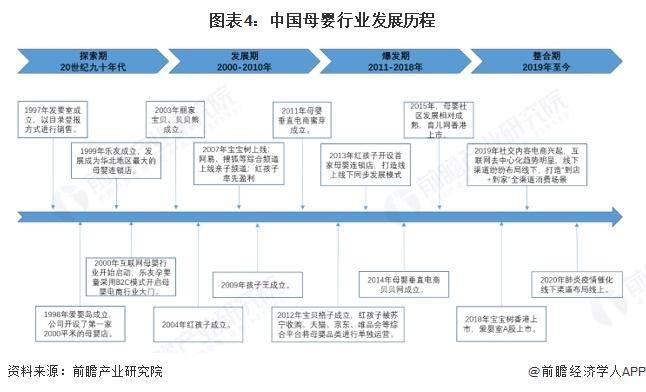
Industry Overview - The main listed companies in the maternal and infant industry include Kidswant (301078), Runben (603193), Aiyingshi (603214), Mengjie (002397), Jinfalabi (002762), Beiyinmei (002570), Keka (301009), China Feihe (06186.HK), Babytree Group (01761.HK), Goodbaby International (01086.HK), and Newman (02530.HK) [1] - The development history of China's maternal and infant industry can be divided into several stages: Exploration Period (1990s), Development Period (2000-2010), Explosion Period (2011-2018), and Integration Period (2019-present) [1][2] Development Stages - Exploration Period (1990s): Introduction of foreign parenting culture and products, with limited specialized maternal and infant stores [1] - Development Period (2000-2010): Increased acceptance of maternal and infant products, emergence of regional chain markets, and the rise of online maternal and infant communities [1] - Explosion Period (2011-2018): Rapid growth of online maternal and infant platforms and the establishment of offline stores as the primary consumption channel [1] - Integration Period (2019-present): Growth of private traffic through social media and the need for a "online + offline" shopping experience to maintain competitive advantage [2] Global Trends - The global maternal and infant industry began to flourish in the 1950s-60s, with significant growth in countries like Japan and the USA, leading to the emergence of chain brands [3] - By 1990, the maternal and infant market in developed countries matured, prompting international brands to enter markets like China, where domestic brands also began to rise [3] - The future of maternal and infant products will see increased diversification and innovation in sales channels and models to meet modern consumer demands [3] Market Share Insights - According to Grand View Research, baby cosmetics and toiletries account for 33.5% of the global baby products market, driven by the importance of hygiene and convenience for parents [7] - Baby food holds a 25.3% market share, with demand driven by urbanization, busy work schedules, and increasing parental focus on nutrition [7] Demographic Trends - The number of women of childbearing age in China is on a declining trend, decreasing from 380 million in 2011 to 310 million in 2022, with projections indicating a further decline by 2025 [9][10]


妈妈放心生,我们帮您养!
Sou Hu Wang· 2025-05-29 10:04
Core Viewpoint - The launch of the "Nurturing Consumption Service Trust Plan" aims to fundamentally address the declining birth rate issue in China by providing affordable parenting essentials to expectant mothers [1][2] Group 1: Trust Plan Overview - The "Nurturing Consumption Service Trust" model is a collaboration between Chang'an Trust and several well-known maternal and infant brands, including Beingmate, to alleviate the concerns of expectant mothers regarding childbirth and parenting [1] - The plan allows families and friends to collectively invest in a trust fund, enabling expectant mothers to purchase essential baby products at significantly discounted prices for up to three years after the baby's birth [1] Group 2: Support for Families - Participating brands like Beingmate will provide high-quality products and offer pregnancy subsidies and insurance support to families involved in the trust plan, aligning with national fertility subsidy policies [2] - The initiative is expected to reduce the financial burden of raising children for new mothers in China, thereby supporting the country's population quality development [1][2] Group 3: Industry Impact - Industry experts believe that this initiative could inject new vitality into the maternal and infant industry and potentially reverse the ongoing decline in birth intentions if successful [2]

QuestMobile2025有孩家庭人群消费洞察报告:有孩家庭月活规模3.62亿,Z世代有孩比例超28%,引发两大消费趋势变化
QuestMobile· 2025-05-27 01:59
Core Insights - The article discusses the insights from the 2025 Children's Economy Report, highlighting the growth of families with children and the increasing influence of Gen Z parents in the consumer market [2][9]. Group 1: Family Demographics and Online Engagement - As of March 2025, the active user base of families with children reached 362 million, with an average monthly usage time of 190 hours, reflecting year-on-year increases of 2.8% and 4.8% respectively [10]. - The proportion of 90s parents has surpassed 45%, making them the dominant group, while Gen Z parents now account for 28.2% of families with children, marking their entry into parenting [13][12]. Group 2: Consumer Behavior and Preferences - Gen Z parents exhibit a significantly higher online spending capacity, with 85.5% of families able to spend over 2000 yuan, indicating a strong willingness to engage in higher-end consumption [12]. - Families with children show a preference for sectors that enhance family life quality and child development, such as travel, early education, and fresh food e-commerce [24]. Group 3: Emerging Consumption Trends - The demand for health and experiential consumption is rising among families with children, with active users on platforms like Hema and Sam's Club increasing by 33.6% and 54.2% respectively [21]. - The popularity of educational apps for early childhood, such as BabyBus and iQIYI's Qibabu, reflects a growing interest in engaging and educational content for children [26]. Group 4: Travel and Leisure Preferences - Families with children are increasingly favoring quality travel experiences, with a notable interest in educational travel, such as museum visits and university tours during school breaks [34]. - The demand for family-oriented travel planning and personalized experiences is evident, with significant engagement in apps related to family travel and accommodations [32]. Group 5: Marketing and Advertising Trends - There is a noticeable shift in advertising strategies for maternal and infant brands, with increased investment in short video and social media platforms, reflecting the preferences of younger parents [41]. - The advertising expenditure for maternal and infant products is projected to exceed 2 billion yuan by March 2025, with a year-on-year growth of 26.6% [42].

『婴童经济』对话 『银发经济』:世代碰撞,双轨消费
2025-05-26 15:17
Summary of Key Points from Conference Call Records Industry Overview - The conference discusses the "Baby Economy" and "Silver Economy" in China, highlighting the generational collision and dual-track consumption trends [1][2][3]. Baby Economy Insights - **Birth Rate Recovery**: In 2024, the number of newborns in China is expected to reach 9.54 million, an increase of 500,000 from 2023, indicating a recovery in birth rates due to improved fertility intentions and government incentives [2][3]. - **Government Policies**: Local governments, such as in Tianmen, Hubei, are offering substantial subsidies (up to 285,100 yuan for families with three children), leading to a 17% increase in local birth rates, significantly higher than the national average of 5.8% [2]. - **Raising Costs**: The average cost of raising a child aged 0-17 is approximately 538,000 yuan, which is 6.3 times the per capita GDP, significantly higher than in developed countries like Germany and the USA [3]. - **Market Trends**: Despite a decline in overall market volume, the average transaction value in the maternal and infant market is steadily increasing, reflecting a shift towards more scientific and refined parenting concepts [2][3]. - **Product Preferences**: Over 80% of mothers conduct research before making purchasing decisions, with a preference for branded products that emphasize quality and nutritional content [2][3]. Market Performance - **Baby Care Market**: The baby skincare market is leading, with Tmall sales projected to reach 4.113 billion yuan from October 2023 to September 2024. Leading brands are expanding their market share, while smaller brands are competing through differentiation [3][4]. - **Diaper Industry**: Domestic brands are catching up with foreign brands in product quality, particularly with the introduction of composite core diapers that better meet local market needs [7]. - **Children's Clothing**: The newborn clothing segment prioritizes safety and material quality, while older children's clothing is becoming more personalized and diverse [8]. Silver Economy Insights - **Elderly Consumer Trends**: The elderly population is becoming a new driving force in tourism consumption, with a focus on travel and leisure rather than traditional homebound lifestyles [12][13]. - **Tourism Adaptations**: Tourist attractions are adapting to the needs of older visitors by enhancing accessibility and offering tailored services, such as the implementation of barrier-free facilities [12][14]. - **Market Growth**: The silver tourism market is diversifying and customizing offerings, with a notable increase in elderly visitors participating in specialized travel packages [13][14]. Company Strategies and Performance - **Key Players**: Companies like Kidswant and Aiyingshi are highlighted for their growth strategies, including expanding store networks and enhancing online sales channels [17][18]. - **Investment Opportunities**: Recommended companies in the baby economy include Steady Medical, Haoyue Nursing, and Runben Co., which are well-positioned to capitalize on market trends and consumer preferences [22]. - **Market Share Dynamics**: The competitive landscape is shifting, with leading companies expected to gain market share during the current industry reshuffle [5][6]. Conclusion - The current trends in the baby economy focus on product innovation and channel development, while the silver economy emphasizes the speed of service ecosystem construction to meet the evolving needs of elderly consumers [23]. Companies that can effectively address these demands are likely to experience significant growth opportunities in the future [23].
8家消费公司拿到新钱;52TOYS递表港交所;小罐茶也要做无糖即饮茶|创投大视野
36氪未来消费· 2025-05-24 13:25
Group 1 - IMCOCO, a Thai company specializing in coconut water, has completed a Pre-A round financing of over 100 million yuan, led by Insignia Ventures Partners and Tian Tu Capital [3] - Veminsyn, a Chinese biotech startup, has entered a strategic partnership with L'Oréal for minority equity investment to co-develop innovative bioactive ingredients for cosmetics [4][5] - Kagu E-commerce, a cross-border furniture e-commerce company, has raised 650 million yen (approximately 30 million yuan) in Series A financing, led by X&KSK Fund and金沙江创投 [6] Group 2 - Airwallex, a global cross-border payment platform, has completed a Series F financing of 300 million USD, with participation from various venture capital firms and Visa Ventures [7] - Tea Star, a provider of intelligent solutions for the tea industry, has completed nearly 50 million yuan in angel round financing and plans to accelerate industrialization [8] - YX Technology, an internet companion service platform, has successfully completed 10 million yuan in angel round financing, covering over 30 cities in China [9] Group 3 - 52TOYS has submitted its prospectus for a Hong Kong IPO, aiming to capitalize on the growing demand for emotional value consumption, with revenue projected to grow from 460 million yuan in 2022 to 630 million yuan in 2024 [13] - Xiaoguan Tea has launched a new line of sugar-free ready-to-drink teas, with significant growth in retail store numbers, reaching 2,105 stores [14][15] - Jasmine Milk White has opened 100 new stores nationwide, achieving over 10 million yuan in sales within three days of opening [16] Group 4 - Babycare has partnered with Kaiyuan Senbo to launch themed family rooms, equipped with various mother and baby products, enhancing the family vacation experience [17] - Orange Bud has upgraded its star product, the third-generation essence lip powder cream, achieving significant sales milestones since its launch [18][19] - Leifen has entered the electric shaver market, launching two new products with advanced linear motor technology [20] Group 5 - The top 100 convenience store companies in China have increased their total number of stores by 14,000, reaching 196,000 stores, reflecting a 7.7% growth [21] - In Beijing, the average rent for prime shopping centers has decreased to 767.8 yuan per square meter, indicating a market adjustment [22][23]

小红书运营:2025小红书母婴行业细分场景需求洞察
Sou Hu Cai Jing· 2025-05-24 12:15
Core Insights - The report "Xiaohongshu Operations: Insights into the Demand for the Maternal and Infant Industry in 2025" highlights the trend of personalized and refined maternal and infant consumption as the post-95 generation becomes the main force in parenting [1] - Xiaohongshu serves as a comprehensive content platform for over 100 million maternal and infant users, addressing diverse parenting needs and becoming a trusted source for product recommendations and parenting inspiration [1][2] Group 1: Market Trends - The demand for maternal and infant products is increasingly segmented, covering various stages from pre-pregnancy to the growth of children up to 6 years old, with specific focuses such as scientific pregnancy, newborn care, and early education [1][2] - The report identifies 30 major segmented demand scenarios, reflecting the unique needs of different parenting groups, such as "Tiger Moms" and "New Dads," who prioritize different aspects of child-rearing [1][2] Group 2: Marketing Strategies - Brands are encouraged to adopt refined marketing strategies by analyzing consumer preferences through data platforms, optimizing content delivery, and enhancing engagement [2] - Successful case studies include STOKKE, which improved click-through rates by 20% through aesthetic targeting, and Anwei, which saw a 331% increase in search popularity by launching seasonal products [2] Group 3: Consumer Behavior - New generation parents are increasingly reliant on professional and authentic content for parenting decisions, leading to a more complex decision-making process that emphasizes detailed comparisons and credible sources [1][2] - The report emphasizes the importance of building trust through authentic content and understanding the evolving consumer preferences for quality, reputation, and personalized parenting methods [2]

2025小红书母婴行业细分场景需求洞察图鉴
Xiao Hong Shu· 2025-05-22 08:10
Investment Rating - The report does not explicitly provide an investment rating for the industry. Core Insights - The mother and baby industry is experiencing diversification as a new generation of parents, particularly those born in the 1990s, seek professional guidance and personalized products for their children. This shift indicates significant growth potential in various niche markets despite challenges in population and traffic dividends [9][10]. - The report emphasizes the importance of understanding consumer needs from a human perspective, suggesting that brands focusing on individual demands and diverse parenting methods will gain continuous growth momentum [9][10]. - The report identifies 30 specific scenarios of demand within the mother and baby sector, highlighting the need for brands to deeply understand consumer needs at different stages from pregnancy to child development [10][17]. Summary by Sections Consumer Demand Changes - The report notes a clear trend towards personalized and refined parenting among parents born in the 1990s and 2000s, leading to an upgrade in consumption patterns within the mother and baby product categories [27][36]. - Key consumer preferences include a focus on health and quality, with 86.6% of consumers researching brands extensively before making purchases [29][30]. Detailed Insights on Consumer Segments - The report categorizes consumer needs into various stages: - **Pre-pregnancy**: Emphasis on health products and services [26]. - **Pregnancy**: Increased demand for maternity products and prenatal services [26]. - **0-6 months**: Focus on essential baby products and care services [26]. - **1-3 years**: Growing interest in educational and developmental products [26]. - The report highlights that 93% of consumers rely on professional content for parenting advice, indicating a shift towards informed decision-making [30]. Marketing Strategies - The report suggests that effective marketing strategies should focus on precise audience targeting and understanding consumer behavior to enhance product visibility and sales [72][74]. - It emphasizes the importance of community-driven content and user-generated feedback in shaping consumer perceptions and driving purchases [75][79]. Growth Opportunities - The report identifies significant growth opportunities in the mother and baby sector, particularly through the lens of understanding specific consumer needs and preferences at various life stages [60][63]. - The analysis indicates that brands that can adapt to the evolving demands of modern parents will be well-positioned for success in this dynamic market [70][72].
一季报母婴股业绩持续回暖,依赖人口红利而增长仍待破题
Di Yi Cai Jing· 2025-05-21 09:45
Core Viewpoint - The recovery of newborn population in 2024 has provided relief to maternal and infant-related listed companies, but long-term growth remains dependent on overcoming reliance on population dividends [1][2]. Group 1: Company Performance - In Q1 2024, Kidswant (孩子王) reported revenue of 2.4 billion yuan, a year-on-year increase of 9.5%, and net profit of 31.08 million yuan, up 166% [1]. - Aiyingshi (爱婴室) achieved Q1 2024 revenue of 860 million yuan, growing 6.6% year-on-year, with net profit of 6.694 million yuan, up 6.1% [1]. - The newborn population in China for 2024 was 9.54 million, an increase of 520,000 from the previous year, positively impacting the maternal and infant market [1]. Group 2: Revenue Drivers - The growth in revenue for Kidswant and Aiyingshi was primarily driven by core business milk powder sales, with revenues of 5.07 billion yuan and 2.1 billion yuan respectively, both showing year-on-year growth of 9.4% and 9.5% [2]. - In Q1 2025, Aiyingshi's milk powder revenue reached 530 million yuan, a 10.9% increase year-on-year, while sales of other products like toys also saw growth [2]. - Haoyue Care (豪悦护理) reported a 4.3% increase in infant hygiene product revenue to 2.06 billion yuan in 2024, contributing to an overall revenue of 2.93 billion yuan, reversing a decline from the previous year [2]. Group 3: Market Trends and Challenges - Analysts indicate that while the recovery in newborn numbers has contributed to performance, companies must diversify away from reliance on population growth due to the long-term decline in birth rates [3]. - Companies are exploring transformation paths, with Haoyue Care investing in adult incontinence products to capitalize on the aging population trend [3]. - The management of Yili has indicated potential slight declines in birth rates in 2025, reflecting ongoing challenges in the demographic landscape [3].

爱婴室可持续发展报告:助农兴业 深化ESG与公司业务融合
Zhong Zheng Wang· 2025-05-19 14:39
Group 1 - The core viewpoint of the articles highlights Aiyingshi's commitment to sustainable development, evidenced by its continuous release of ESG reports over the past five years and recognition through various awards [1][2] - Aiyingshi has integrated green development principles into its daily operations, implementing green office practices, green warehousing, and logistics, as well as green store construction [1] - The company has launched a logistics transportation management system (TMS) that digitizes delivery processes, enhancing operational efficiency and reducing resource waste [1] Group 2 - Aiyingshi's solar power generation project produced a total of 603,000 kWh during the reporting period, marking a 59.9% increase compared to 2023, with 295,000 kWh used for self-consumption [1] - The company initiated a clothing recycling program called "Old Clothes for New Children," successfully recovering 6,573 pieces of clothing, promoting the concept of a circular economy [1] - Aiyingshi is actively involved in rural revitalization by empowering the agricultural supply chain, sourcing geographical indication fruits, and ensuring the natural purity of baby food while supporting local farmers [2] Group 3 - The company has invested a total of 3.2 million yuan in purchasing fruits from cooperative farmers during the reporting period [2] - Aiyingshi plans to continue its sustainable development efforts by integrating ESG principles with its business strategy, focusing on "channels + brands + multiple industries" [2]