
医药

Search documents
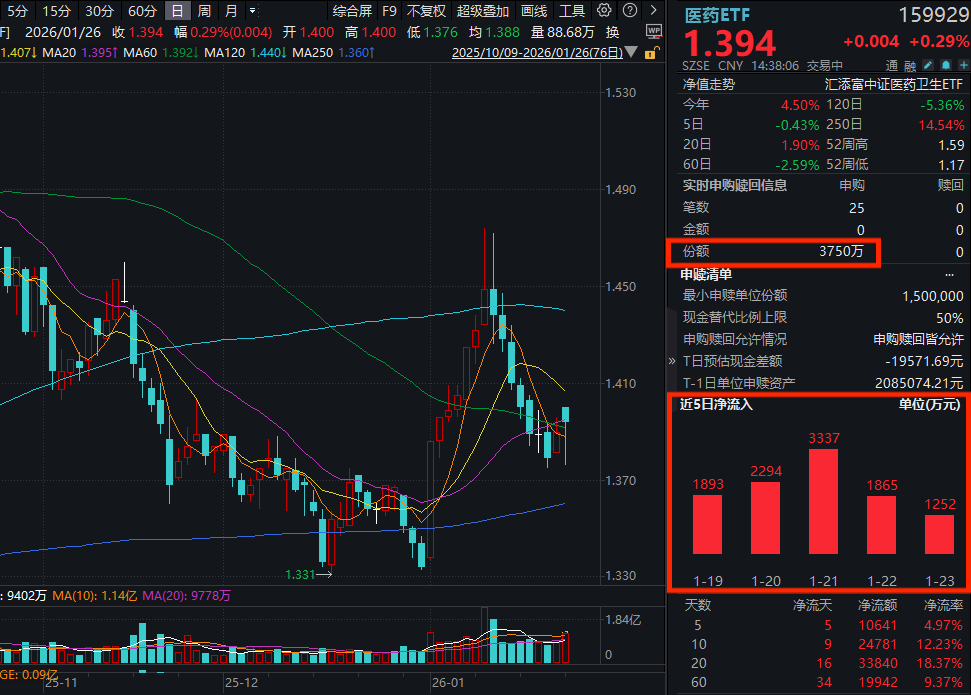
疫苗板块走强,沃森生物涨超10%!医药ETF(159929)翻红上扬,再获净流入超5200万元,连续6日“吸金”超1.5亿!
Sou Hu Cai Jing· 2026-01-26 06:59
Group 1 - The vaccine sector is experiencing a strong performance, with the medical ETF (159929) gaining 0.43% in the afternoon and surpassing a trading volume of 1.2 billion yuan, exceeding last Friday's total [1][3] - The medical ETF's constituent stocks are mostly in the green, with notable gains in vaccine stocks: Zhifei Biological up over 14%, Watson Bio up over 10%, and Hualan Biological up over 6% [3] - The top ten weighted stocks in the medical ETF account for 42.97% of the index, indicating a concentrated investment in key players within the pharmaceutical sector [7][8] Group 2 - Hualan Biological's subsidiary has received approval for clinical trials of its shingles vaccine, marking a significant breakthrough in its pipeline for preventive medicine, with expectations of increased demand due to an aging population [5] - Yiling Pharmaceutical forecasts a net profit of 1.2 to 1.3 billion yuan for 2025, indicating a turnaround from previous losses and signaling a critical operational inflection point [5] - The development of therapeutic cancer vaccines is entering a breakthrough phase, with mRNA technology leading the shift towards efficient and personalized immunotherapy, offering advantages in production, clinical safety, and strategic flexibility [6]




春季行情仍在途,注意总体赚钱效应已逼近高位
Zheng Quan Shi Bao Wang· 2026-01-26 05:44
Group 1 - The core viewpoint is that the current market is experiencing a spring rally, characterized by a recovery in market confidence and a focus on sectors that are not heavily weighted in broad-based ETFs, particularly in consumer and real estate chains [2][3][4][10] - The liquidity environment is a key driver of the current spring rally, supported by new insurance premiums entering the market and the return of overseas funds due to the appreciation of the RMB [4][7] - The market is expected to see a structural bull market with alternating phases of upward and sideways movements, with the current phase transitioning from the second to the third upward segment [6][12][14] Group 2 - Investment opportunities are identified in sectors with strong earnings forecasts, particularly in AI hardware, batteries, pharmaceuticals, steel, and non-bank financials [5][9][11] - The focus on "technology + resource products" is emphasized, with sectors such as semiconductors, AI, new energy, and chemicals being highlighted for their growth potential [7][9] - The market is advised to pay attention to the performance of cyclical stocks and the impact of regulatory policies on market dynamics, particularly in the context of the anticipated earnings reports from listed companies [10][12][13]
中国医药:创新药出海BD仍然火爆,关注IO2.0抢位赛
Zhao Yin Guo Ji· 2026-01-26 03:31
Investment Rating - The report assigns a "Buy" rating to several companies in the pharmaceutical sector, indicating a potential upside of over 15% in their stock prices over the next 12 months [29]. Core Insights - The MSCI China Healthcare Index has increased by 9.2% since the beginning of 2026, outperforming the MSCI China Index, which rose by 5.6% [1]. - The pharmaceutical industry has seen significant growth, driven by strong institutional investor interest and the ongoing trend of innovative drugs going global [1]. - The report emphasizes the importance of clinical progress and data validation for pipelines that have already gone overseas, suggesting that this trend will continue in the long term [1]. Summary by Sections Industry Overview - The report highlights a robust trend in the outbound licensing of innovative drugs, with multiple business development (BD) transactions occurring at the start of 2026, reflecting a high level of activity in the sector [4]. - Key transactions include significant upfront and milestone payments for various drugs, indicating strong market interest and potential for future growth [4]. Company Ratings and Valuations - The report provides detailed valuations for several companies, including: - **Sangfor Technologies (1530 HK)**: Market cap of $7,598.4 million, target price of $37.58, with a 54% upside potential [2]. - **Gusongtang (2273 HK)**: Market cap of $963.3 million, target price of $44.95, with a 46% upside potential [2]. - **WuXi AppTec (2268 HK)**: Market cap of $10,551.0 million, target price of $88.00, with a 28% upside potential [2]. - **China National Pharmaceutical Group (1177 HK)**: Market cap of $15,951.4 million, target price of $9.40, with a 42% upside potential [2]. Market Trends - The report notes that the competition in the PD-(L)1/VEGF space is intensifying, with several companies advancing their clinical trials and aiming for first-line indications [4]. - The report suggests that the efficiency and breadth of clinical trials, as well as the richness of combination therapies, will be critical factors in determining success in this competitive landscape [4].
宏观周周谈-当前的核心矛盾是什么
2026-01-26 02:49
Summary of Key Points from Conference Call Records Industry and Company Overview - The discussion primarily revolves around macroeconomic trends, inflation expectations, and the performance of various industries in the context of the Chinese and U.S. markets. [1][2][3] Core Insights and Arguments Market Sentiment - Market sentiment has improved, particularly in second and third-tier cities, indicating a recovery in market activity to about 50-66% of previous levels. [2] Inflation Expectations - A "pork-oil resonance" phenomenon is anticipated in 2026, signaling the end of deflation and a return to inflation, with a CPI central tendency expected to reach 0.5% and PPI likely turning positive in Q3. [1][3][4] Industry Focus - Industries that may benefit from the positive PPI include resource-related sectors and raw materials, while the technology sector's valuations are no longer seen as advantageous. [1][4] U.S. Stock Market Outlook - The U.S. stock market is expected to experience a rally from May to August 2026, potentially boosting related sectors such as computing power. However, the main focus remains on the implications of PPI turning positive. [1][6] PPI Impact on Industries - Positive PPI is expected to favor industries such as construction materials, non-ferrous metals, steel, and basic chemicals, while sectors like machinery, automotive, electronics, pharmaceuticals, and home appliances show strong alpha correlation but weak beta correlation. [1][7][8] Currency Exchange Rate - The Chinese yuan is projected to appreciate significantly, with the effective exchange rate expected to return to levels seen at the end of 2024. This appreciation will benefit yuan-denominated assets, including Hong Kong stocks. [1][9] Geopolitical Risks - Geopolitical risks are increasing due to the disintegration of the old international order, U.S. strategic adjustments, and rising global political uncertainties. Key areas of concern include the Russia-Ukraine conflict, the situation in Iran, and developments in U.S.-China relations. [1][10][11] Other Important but Potentially Overlooked Content Specific Industry Dynamics - The relationship between PPI and various industries has shifted, with some sectors like real estate losing their previous correlation with PPI, while others have become more competitive due to changes in consumer behavior and market dynamics. [1][7][8] Recent Developments in Geopolitical Situations - The situation in Greenland has shown signs of easing, with diplomatic negotiations taking precedence over military threats. However, tensions remain in the Middle East, particularly regarding Iran and the ongoing Russia-Ukraine conflict. [10][11][12][14] U.S.-China Relations - Recent developments indicate a potential stabilization in U.S.-China relations, with high-level diplomatic engagements expected to continue throughout the year. [15][16]
A股三大指数集体高开,创业板指涨0.48%
Feng Huang Wang Cai Jing· 2026-01-26 01:36
Group 1 - A-shares opened higher with the Shanghai Composite Index up 0.21%, Shenzhen Component Index up 0.37%, and ChiNext Index up 0.48% on January 26, 2023, driven by sectors like non-ferrous metals and photovoltaic [1] - Recent market dynamics show a divergence in fund flows, with over 570 billion yuan exiting broad-based ETFs while approximately 110 billion yuan flowed into thematic industry ETFs, indicating a positive overall market sentiment [2] - The focus remains on "technology + resource products" as key investment themes, with sectors like AI semiconductors, new energy, and non-ferrous metals showing strong performance and growth potential [2] Group 2 - The spring market is expected to progress, with key themes including commercial aerospace and AI applications, alongside a focus on price increase chains driven by supply-demand mismatches [3] - The current price increase trend is supported by the expansion of AI hardware chains and upstream raw material chains benefiting from supply gaps, such as lithium carbonate and PTA [3] - The global shift in commodity prices, particularly in gold and silver, suggests a need to adjust pricing frameworks for scarce physical assets and core equity assets due to declining currency value [4]

奋力实现“十五五”良好开局 推动新时代首都发展再上新台阶
Bei Jing Ri Bao Ke Hu Duan· 2026-01-26 00:10
迈入五万亿之城 2025年是"十四五"规划收官之年。过去一年,在以习近平同志为核心的党中央坚强领导下,在中共北京市委直接领导下,在市人大及其常委会监督支持下, 我们坚持以习近平新时代中国特色社会主义思想为指导,全面贯彻党的二十大和二十届历次全会精神,深入贯彻习近平总书记对北京重要讲话精神,加 强"四个中心"功能建设,提高"四个服务"水平,深化"五子"联动服务和融入新发展格局,坚持统筹发展和安全,经济顶压前行、向新向优发展,社会大局保 持稳定,较好完成了市十六届人大三次会议确定的目标任务。 2025年六方面重点工作成绩 一、首都功能持续优化提升 圆满完成中国人民抗日战争暨世界反法西斯战争胜利80周年纪念活动服务保障,以零误差交上服务国家重大活动的北京答卷。 全面增强中央政务功能保障,高标准完成核心区控规新一轮三年行动计划。 持续打好"疏整促"组合拳,疏解提质一般制造业企业104家,治理违法建设2049万平方米,核心区平房申请式退租2006户。 全力支持雄安新区建设,雄安新区中关村科技园新增入驻企业132家,京雄快线、京雄城际衔接升级。 高水平建设城市副中心,东六环入地改造工程建成通车,北京通州站开通运营,副中心 ...
北京:完善民营小微企业融资支持协调机制
Zhong Guo Zheng Quan Bao· 2026-01-25 21:05
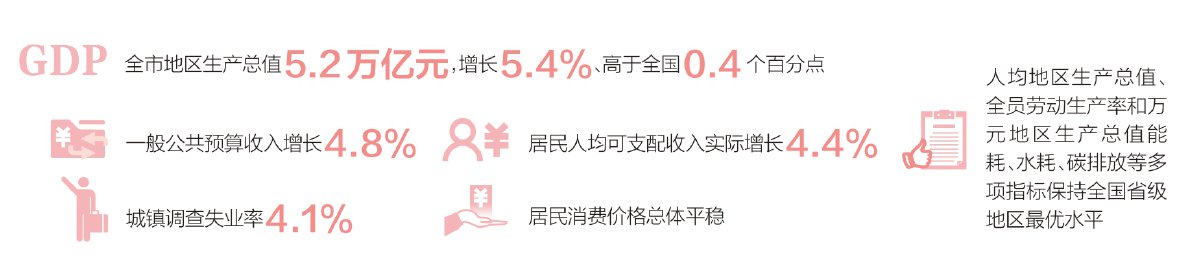
Economic Growth Targets - The GDP growth target for Beijing in 2026 is set at around 5% [1][2] - The projected GDP for 2025 is 5.2 trillion yuan, with a year-on-year growth of 5.4%, surpassing the national average by 0.4 percentage points [1] Investment and Project Development - Beijing aims to actively expand effective investment, promoting major projects with a total investment of no less than 200 billion yuan [1][3] - The report emphasizes optimizing investment structure, increasing investments in livelihood improvement and consumption upgrade [3] Key Economic Indicators - The expected growth for general public budget revenue is around 4% [2] - The urban unemployment rate is targeted to be controlled within 5% [2] - The average annual concentration of fine particulate matter is aimed to be around 29 micrograms per cubic meter [2] Focus on High-Tech Industries - The report highlights the implementation of the "Artificial Intelligence +" initiative and the establishment of a national AI application pilot base [3] - Future industry pilot zones will be developed to foster new growth points in 6G, quantum technology, and biomanufacturing [3] Financial Sector Development - Beijing will enhance its modern service industry, leveraging its role as a national financial management center [4] - Support will be provided for the Beijing Stock Exchange to strengthen financing services for small and medium-sized enterprises [4]
北京明确2026年主要经济工作:多举措扩内需 发展高精尖产业
Shang Hai Zheng Quan Bao· 2026-01-25 18:54
Economic Growth and Development Plans - Beijing's GDP is expected to grow by around 5% in 2026, focusing on expanding domestic demand and accelerating the development of new productive forces [2] - The city aims to significantly boost high-tech industries and fully implement the "Artificial Intelligence +" initiative [2][5] Investment and Consumption Strategies - Beijing plans to promote effective investment by optimizing the implementation of key projects, with a total investment of no less than 200 billion yuan [4] - The government will enhance consumer capacity by formulating policies to increase urban and rural residents' income and improving the quality of traditional commercial areas [3] High-Tech Industry Development - The integrated circuit industry in Beijing has seen over 20% growth, with nearly 700,000 new energy vehicles produced annually and 34 innovative drugs approved for market [5] - The city will continue to develop high-tech industries, including expanding production in key integrated circuit projects and constructing an international pharmaceutical innovation park [5][6] Service Sector Growth - The modern service industry, including software information, technology services, and business services, contributed over 50% to economic growth in 2025 [4] - Beijing will support service consumption policies in education, health, and elder care, while encouraging innovation in service industries [3]
强生创新制药与蚂蚁健康达成战略合作 共筑医药健康服务高质量发展
Feng Huang Wang Cai Jing· 2026-01-25 15:31
Group 1 - Ant Health announced a strategic partnership with Johnson & Johnson Innovation Pharmaceuticals to explore new models of efficient, precise, and accessible medical health services in China [1] - The collaboration aims to advance digitalization in healthcare services and precision medicine education, leveraging Ant Health's digital platform and Johnson & Johnson's expertise in innovative drug development [1] - The partnership will focus on creating a "Pharmacist Innovation Drug Company Zone" to enhance the professional academic capabilities and service levels of practicing pharmacists [2] Group 2 - The initiative will utilize digital precision outreach and academic insights to improve the breadth and depth of pharmacist education and public awareness [2] - Ant Health and Johnson & Johnson plan to deepen their collaboration and explore innovative paths for integrating digital healthcare and health services, contributing to a higher quality and more sustainable development phase for China's healthcare industry [2]
北京平原新城已对接投资近300亿元
Xin Jing Bao· 2026-01-25 14:05
Core Insights - In 2025, Beijing will launch the "Pingyuan New City Venture Capital Event" to connect investment institutions with over 300 projects in Pingyuan New City, addressing a financing demand of nearly 30 billion yuan [1][2] - Pingyuan New City is a crucial part of the Beijing-Tianjin-Hebei coordinated development strategy, encompassing Fangshan, Shunyi, Changping, Daxing, and Yizhuang, and aims to enhance regional collaboration and productivity [1] - The Beijing government plans to invest in over 400 fixed asset projects in Pingyuan New City, with significant infrastructure developments including the opening of the North Qing Road and Tongma Road, and the operational launch of Metro Line 18 [2] Investment and Development Plans - The Beijing Municipal Development and Reform Commission will implement a high-quality development plan for the five Pingyuan New Cities, establishing a special work mechanism for coordinated development [1] - An annual work plan will be created, detailing policies, tasks, and projects to ensure effective implementation, supported by a multi-dimensional evaluation system [1] - The initiative is expected to stimulate nearly 1,800 social investment projects, enhancing the overall capacity of the region [2] Industry-Specific Developments - Each Pingyuan New City is developing unique industries, such as the aviation engine maintenance project in Shunyi, the international pharmaceutical innovation park in Daxing Yizhuang, and the national-level testing platform for humanoid robots in Yizhuang [2] - Changping's Future Science City will see the delivery of its national laboratory core area, while Fangshan will implement new energy storage applications [2]