
快餐

Search documents
分拆、合资、放权......入华二十多年的洋快餐为何都要“独立”?
Xin Lang Cai Jing· 2025-11-17 08:12
Core Insights - The article highlights a trend of multinational companies, particularly in the food and beverage sector, increasingly opting for joint ventures and local partnerships in China to enhance growth and localization strategies [1][10][15]. Group 1: Joint Ventures and Partnerships - Starbucks announced a joint venture with Boyu Capital, selling up to 60% of its Chinese operations for an estimated valuation of $4 billion (approximately 284.84 billion RMB) [3][10]. - CPE Yuanfeng has formed a joint venture with Restaurant Brands International (RBI) to take over Burger King's operations in China, with CPE holding approximately 83% and RBI retaining about 17% [1][10]. - The trend of forming joint ventures is not new; McDonald's previously sold 80% of its China operations to a consortium led by CITIC and Carlyle in 2017, while Yum China was spun off from Yum Brands in 2016 [3][11][15]. Group 2: Growth and Localization Strategies - Starbucks aims to expand its store count in China from 8,000 to 20,000, leveraging Boyu's local expertise to penetrate smaller cities and emerging regions [3][10]. - Burger King plans to increase its store count from 1,250 to over 4,000 with the support of CPE Yuanfeng, focusing on product upgrades and digital transformation [3][10]. - McDonald's set a goal to grow its store count from 2,500 to 4,500 within five years after partnering with CITIC and Carlyle, emphasizing delivery and digital trends [3][10]. Group 3: Market Dynamics and Competition - The Chinese market is significant, with McDonald's identifying it as its second-largest and fastest-growing market globally, contributing about 8% to Starbucks' revenue [5][6]. - The competitive landscape is shifting, with local players like Luckin Coffee and Wallace rapidly gaining market share, prompting international brands to rethink their strategies [7][19]. - Starbucks' market share in China has declined from 42% in 2017 to an estimated 14% in 2024, indicating increasing competition from local brands [6][19]. Group 4: The Role of Local Partners - The introduction of local partners is seen as a crucial strategy for navigating the complexities of the Chinese market, as evidenced by the success of brands like Luckin Coffee and Heytea [9][29]. - The partnership model allows foreign brands to maintain brand ownership while leveraging local expertise for operational execution, enhancing their adaptability in a competitive environment [29][30]. - The article emphasizes that successful localization does not mean abandoning brand values but rather adapting to local consumer preferences and market dynamics [34][36].


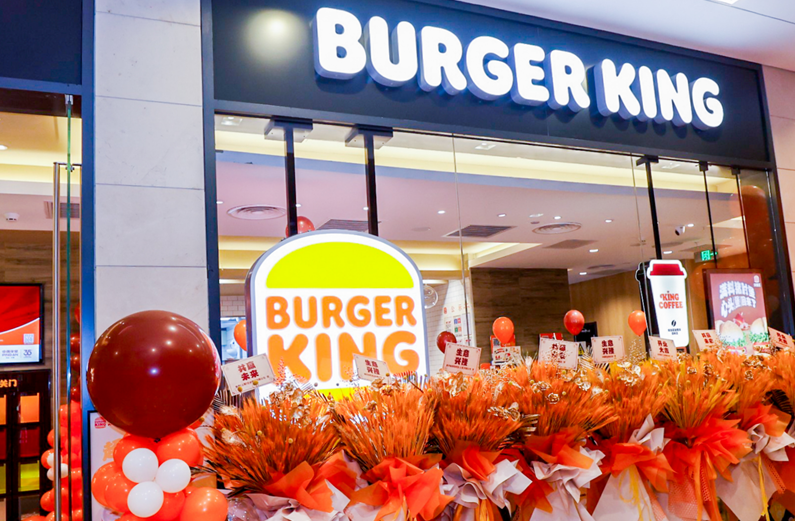
高盛据报洽购日本汉堡王,作价料逾32亿
Ge Long Hui A P P· 2025-11-17 07:32
Core Insights - Goldman Sachs has obtained exclusive negotiation rights to acquire the Japanese Burger King business, with an expected transaction value of approximately 70 billion yen (around 3.213 billion RMB) [1] - The acquisition discussions are taking place with Affinity Equity Partners, a Hong Kong-based investment fund, regarding its stake in BK Japan Holdings [1] Financial Performance - For the fiscal year 2024, the sales revenue of Burger King Japan is projected to grow by 29% year-on-year, reaching 32.2 billion yen [1] - The growth is attributed to the popularity of their signature flame-grilled smoked beef patties [1] Expansion Plans - BK Japan has announced plans to increase the number of its outlets from the current approximately 310 to 600 by the end of 2028, representing a growth of about 93.55% [1]

汉堡王、Costa、哈根达斯:国际消费品牌批量迎来「中国资本」买家
3 6 Ke· 2025-11-17 00:59
Core Insights - International brands are increasingly seeking local partners in China, as evidenced by CPE Yuanfeng's acquisition of 83% of Burger King's China operations for 2.5 billion RMB, marking a significant shift in strategy towards local capital and management [1][4][25] - The acquisition aims to transform Burger King's operations in China, with a target of expanding from approximately 1,250 stores to 4,000 over the next decade [1][4][8] - Luckin Coffee's major shareholder is evaluating a bid for Costa Coffee, indicating a trend of Chinese capital consolidating international consumer brands [2][25] Investment and Strategic Moves - CPE Yuanfeng's investment strategy emphasizes deep operational involvement, aiming for a "quasi-holding" approach even with minority stakes [27][30] - The management team for Burger King China has been revamped with experienced local executives, including former leaders from Yum China and McDonald's, to drive the brand's growth [19][20][22] - The restructuring includes closing around 196 underperforming stores, resulting in a 10.5% same-store sales increase, demonstrating potential for operational efficiency [16][20] Market Context and Challenges - Burger King China has faced significant challenges, including a decline in store numbers and low average sales per store compared to competitors like McDonald's and KFC [34][36] - The brand's positioning has been criticized for lacking differentiation in a competitive market, struggling to establish a clear identity against both premium and budget competitors [38][39] - The investment from CPE Yuanfeng is seen as a "bottom-fishing opportunity," given the current low valuation of Burger King China compared to its revenue potential [2][31] Future Outlook - The new management team is expected to implement strategies similar to those that successfully revitalized McDonald's in China, focusing on localization and digital transformation [17][20] - CPE Yuanfeng's long-term goal includes a significant expansion of Burger King's footprint in China, with a focus on leveraging local insights to enhance brand appeal [25][50] - The success of this venture could reshape the competitive landscape of the fast-food market in China, as local capital and management take a more prominent role [50][51]
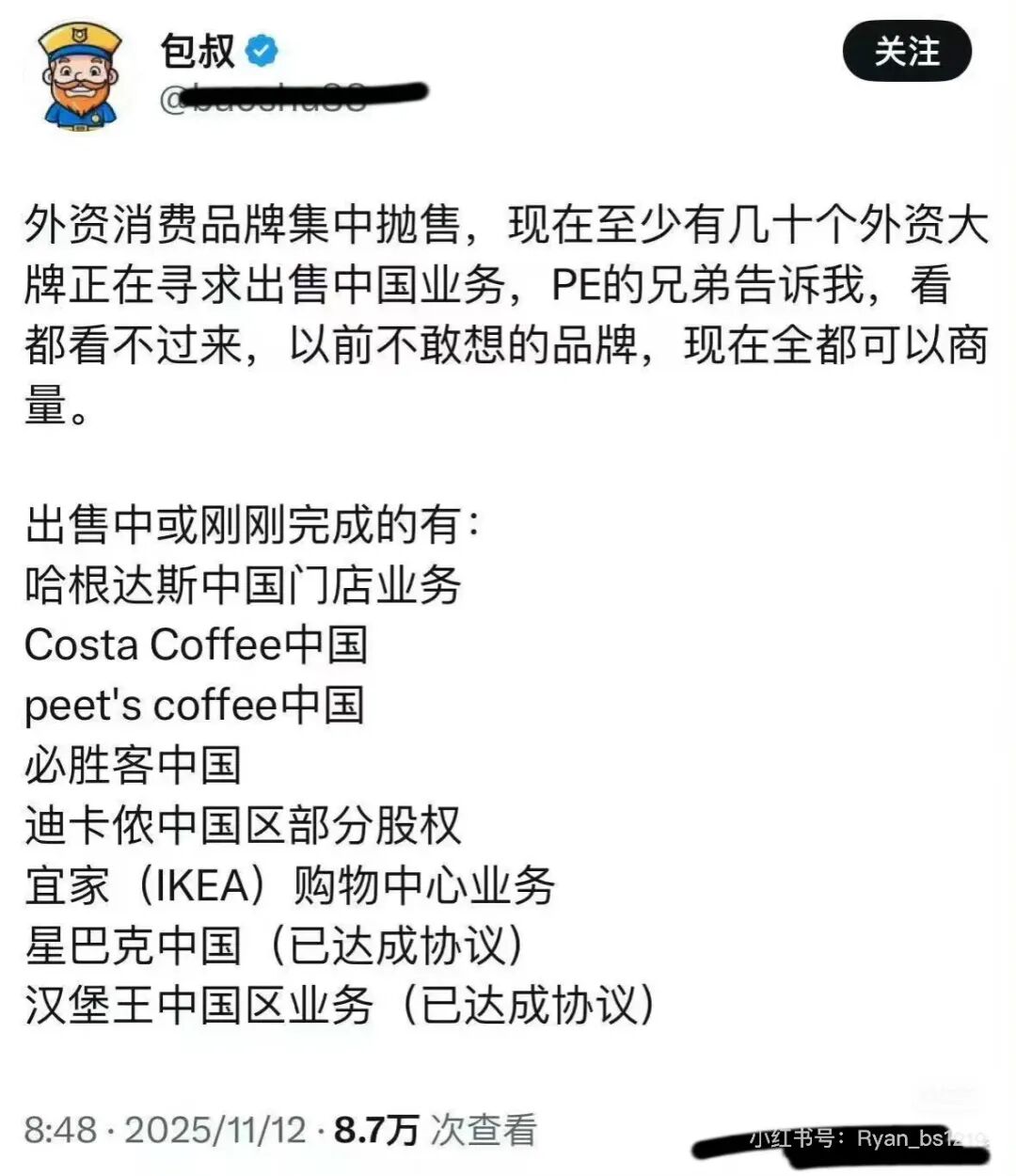
汉堡王错失黄金期年内净关店224家 CPE源峰3.5亿美元豪赌本土化临考
Chang Jiang Shang Bao· 2025-11-16 23:35
Core Viewpoint - Burger King's exit from the Chinese market is characterized as a failure after 20 years of operation, leading to a strategic partnership with CPE Yuanfeng, which will take an 83% stake in the newly formed joint venture, Burger King China, with an investment of $350 million [1][12]. Group 1: Market Performance - Burger King has struggled to establish a strong presence in China, failing to meet its goal of opening 2,000 stores, with a net reduction of 224 stores since early 2025 [1][11]. - As of March 2024, Burger King had only 1,593 stores, significantly lagging behind competitors like KFC and McDonald's, which had 10,296 and 5,903 stores respectively [9][8]. - The average annual revenue per store in China is approximately $400,000, which is less than one-ninth of the top-performing market [11]. Group 2: Competitive Landscape - The competitive landscape in China has been dominated by established brands like KFC and McDonald's, as well as the rapid rise of local brands such as Tastin and Wallace, which have opened thousands of new stores [10][4]. - Burger King's late entry into the market and slow expansion have been detrimental, with only 68 stores opened in the first seven years [6][7]. Group 3: Strategic Shift - The partnership with CPE Yuanfeng is seen as a gamble, as the latter aims to leverage its understanding of local consumer preferences to revitalize the brand [14]. - CPE Yuanfeng plans to inject $350 million into Burger King China for store expansion, marketing, menu innovation, and operational improvements [14]. - The previous management's dissatisfaction with Burger King's performance in China led to the termination of a partnership with TFI and the search for a new strategy [13].
昔日商场四大顶流,排队请“中国贵人”出手相救
投中网· 2025-11-16 07:04
Core Viewpoint - The trend of foreign brands seeking "Chinese partners" is becoming popular, with companies like Starbucks and Burger King exemplifying different motivations behind such partnerships [6][7][8]. Group 1: Starbucks and Burger King - Starbucks announced a strategic partnership with Boyu Capital to sell 60% of its Chinese business for a total of $4 billion, forming a new joint venture, despite achieving a 6% year-on-year revenue growth in Q4 [7]. - In contrast, Burger King is seen as "selling out" by partnering with CPE Yuanfeng, which will inject $350 million into Burger King China, resulting in an 83% ownership stake [8][10]. - Burger King's performance in China is significantly lagging, with only about 1,300 stores compared to competitors like McDonald's and KFC, and an average annual sales per store of approximately $40,000, which is among the lowest in the industry [8][12][16]. Group 2: Häagen-Dazs - Häagen-Dazs is rumored to be selling its Chinese stores, having closed nearly 20% of its locations and experiencing a double-digit decline in customer traffic [20][22]. - The brand's previous high-end positioning has been challenged by increased competition and price discrepancies, with Häagen-Dazs products being 30% cheaper in the U.S. compared to China [22][23]. - The emergence of local brands offering competitive pricing and appealing flavors has further eroded Häagen-Dazs' market share, necessitating a search for new selling points [25][27]. Group 3: Ingka Group and IKEA - Ingka Group is reportedly planning to sell 10 of its shopping centers in China, with the first three expected to fetch around 16 billion yuan, despite the popularity of its shopping centers [28][29]. - IKEA's declining performance in China, with a nearly 30% revenue drop compared to 2019, has prompted the need for Ingka to focus on core business areas [33][34][36]. - The high maintenance costs of the shopping centers and the need for cash flow improvements are driving the decision to seek partners [36][37]. Group 4: Decathlon - Decathlon is considering selling 30% of its shares in China for an estimated €1-1.5 billion due to a 15.5% decline in net profit, marking its lowest in four years [39][40]. - The brand's shift towards higher-end products has alienated its traditional customer base, leading to criticism for becoming unaffordable [44][46]. - Decathlon's need for a "Chinese partner" is seen as a way to upgrade its offerings and better align with the evolving market demands [47].
星巴克之后汉堡王中国也卖了,中国市场玩法变了
2 1 Shi Ji Jing Ji Bao Dao· 2025-11-14 23:32
Core Insights - International brands like Starbucks and Burger King are seeking local partnerships in China to adapt to the unique market dynamics and consumer preferences [1][2] - The rapid growth of local dining brands and changing consumer expectations have made traditional strategies less effective for foreign brands [1][3] Group 1: Market Dynamics - Burger King announced a joint venture with CPE Yuanfeng, investing $350 million to expand its Chinese stores from 1,250 to 4,000 by 2035 [1] - Starbucks has partnered with Boyu Capital, relinquishing 60% of its stake in its Chinese operations [1] - The shift towards localization is driven by the need for brands to innovate their product offerings to meet the evolving tastes of Chinese consumers [1][3] Group 2: Strategic Adaptations - Companies must enhance supply chain agility to quickly respond to trending flavors and consumer demands [2] - There is a need for deeper market insights and localized decision-making, moving away from centralized control [2] - Successful examples include McDonald's and Yum China, which have thrived after local partnerships and restructuring, demonstrating the importance of a localized approach [2] Group 3: Broader Industry Trends - The trend of localization is not limited to the food industry; it is also evident in the automotive sector, where traditional car manufacturers are adopting comprehensive localization strategies [3] - The competitive landscape in China is increasingly favoring brands that understand local consumer needs and preferences [3] - Future innovations may include products that blend local and international flavors, enhancing consumer experience [3]
星巴克之后汉堡王中国也卖了,中国市场玩法变了|财经早察
2 1 Shi Ji Jing Ji Bao Dao· 2025-11-14 23:09
Core Insights - International brands like Starbucks and Burger King are seeking local partnerships in China to adapt to the unique market dynamics and consumer preferences [1][2] - The shift towards localization is not merely about menu adjustments but involves a comprehensive restructuring of supply chains, store strategies, and marketing approaches [2][3] - Successful examples from the past decade, such as McDonald's and Yum China, highlight the necessity of localization for international brands to thrive in the Chinese market [2][3] Group 1 - Burger King announced a joint venture with CPE Yuanfeng, investing $350 million to expand its Chinese stores from 1,250 to 4,000 by 2035 [1] - Starbucks has partnered with Boyu Capital, relinquishing 60% of its stake in its Chinese operations [1] - The changing consumer landscape in China demands innovative products that cater to local tastes rather than standardized offerings [1][2] Group 2 - Localization requires a more agile supply chain to quickly respond to trends and consumer preferences [2] - Store opening strategies must adapt to lower-tier cities, considering appropriate store types and pricing [2] - Marketing strategies need to resonate with local culture and trends, such as engaging with social media platforms [2][3] Group 3 - The trend of localization is evident beyond the food industry, with automotive companies also prioritizing comprehensive localization strategies [3] - The rapid evolution of the Chinese electric vehicle market necessitates a fundamental restructuring of international brands' approaches [3] - The competitive landscape in China favors brands that deeply understand local consumer needs and preferences [3]
卖身中资,汉堡王搭上本土化末班车
Hua Er Jie Jian Wen· 2025-11-14 11:57
Core Insights - CPE Yuanfeng and Burger King have formed a strategic partnership to establish a joint venture named "Burger King China," with an initial investment of $350 million aimed at expanding store presence and enhancing operations [1][9] - The partnership is seen as a "second entry" for Burger King into the Chinese market, addressing previous missteps and aiming to capitalize on local market opportunities [2][8] Company Development History - Burger King entered the Chinese market in 2005, significantly later than competitors like KFC and McDonald's, which affected its market positioning [3] - The company initially adopted a fully franchised model, which only began to show improvement after 2012 when it shifted to a franchise model under TFI [3][4] - Despite reaching a peak of 1,587 stores in 2023, Burger King failed to meet its expansion targets, indicating a struggle to keep pace with competitors [6][7] Market Position and Challenges - The competitive landscape in China is dominated by KFC and McDonald's, which have established a significant number of stores and captured market share through early strategic positioning [4][5] - Burger King faced challenges in 2024 due to a price war in the fast-food industry, which negatively impacted its profitability and market share [7][8] - The average annual sales per store in China are approximately $400,000, significantly lower than in markets like South Korea, indicating underperformance [8] Strategic Changes and Future Outlook - Following a full acquisition by RBI, Burger King China has implemented several restructuring measures, including the closure of underperforming stores and the introduction of experienced executives from leading fast-food brands [9][10] - The company plans to increase its store count from 1,250 to over 4,000 in the next decade, aiming for sustainable same-store sales growth [10][12] - There is potential for expansion in both first-tier cities and lower-tier markets, leveraging the expertise of CPE Yuanfeng in rapid store openings [10][11] Market Opportunities - The Chinese Western fast-food market is projected to grow to 297.5 billion yuan in 2024, with an annual growth rate of 11%, indicating a favorable environment for expansion [12] - The new partnership allows for a more agile decision-making process, enhancing Burger King's ability to respond to market changes [12]
百胜中国11月13日斥资626.58万港元回购1.75万股
Zhi Tong Cai Jing· 2025-11-14 11:29
百胜中国(09987)发布公告,该公司于2025年11月13日斥资626.58万港元回购1.75万股股份,每股回购价 格为357.4-362.6港元。 于同日,斥资320万美元回购6.95万股股份,每股回购价格为45.85-46.29美元;因公司采纳的长期激励计 划项下的授予而发行的股票4.48万股;及注销6.91万股已回购股份。 ...
洋品牌卖股权复盘:一招鲜打遍全球哑火,洋品牌卖身后狂飙下沉市场
Di Yi Cai Jing· 2025-11-14 09:35
Group 1 - The core viewpoint is that many international brands are restructuring their development paths in China by introducing Chinese investors and relinquishing control, driven by the need to balance "risk outsourcing" and growth efficiency in a competitive market [1][2] - Yum Brands was the first to sell its Chinese operations, divesting KFC and Pizza Hut to Primavera Capital Group and Ant Financial in 2016, leading to steady growth and expansion into lower-tier markets [1] - By the third quarter of 2025, KFC had added 992 new stores, totaling 12,600, with nearly 40% of these located in third-tier cities and below [1] Group 2 - The chairman and CEO of Zhanlian Consulting, Gao Chengyuan, noted that foreign brands entering China share similar strategies, initially relying on high-end pricing and landmark locations from 2000 to 2010, but facing declining same-store growth and market challenges post-2012 [2] - The introduction of Chinese capital is seen as foreign brands exchanging "future growth options" for "current cash flow," effectively selling off assets with diminishing returns to players more willing to invest in lower-tier markets [2]
