
文化娱乐

Search documents
今日视点:夜经济持续释放消费新活力
Zheng Quan Ri Bao· 2025-08-17 22:59
Core Viewpoint - The night economy is experiencing significant growth, transforming from a single consumption model to a comprehensive consumption ecosystem, which is crucial for driving consumption upgrades, enhancing urban vitality, and promoting economic growth [1][2]. Group 1: Factors Driving Night Economy Growth - Strong policy support and guidance have been instrumental in expanding the night economy into diverse sectors such as night dining, night tourism, night entertainment, night shopping, and night wellness [1]. - Changing consumer attitudes emphasize the importance of cultural and spiritual satisfaction, leading to an upgraded demand for diverse and enriching night-time consumption experiences [1]. - The emergence of new business models is reshaping night-time consumption scenarios, creating numerous job opportunities in areas like night markets, delivery services, and cultural activities [1]. Group 2: Recommendations for Enhancing Night Economy - There is a need to diversify consumption formats, creating a balance between lively and tranquil experiences to inject new vitality into the market [2]. - Cities should prioritize planning and precise positioning to reflect regional characteristics, avoiding uniformity, while enhancing management and public services to address potential issues related to night markets [2]. - Utilizing modern technology to improve consumer experiences is essential, with a focus on creativity, digital empowerment, and service support to elevate the night economy [2]. - Businesses should avoid homogenization by fostering innovation and prioritizing quality to win consumer trust and reputation [2].
刚刚!财政部、央行等九部门,最新发布!
Zheng Quan Shi Bao Wang· 2025-08-16 10:16
Core Viewpoint - The Ministry of Finance and nine other departments have issued a policy implementation plan for interest subsidies on loans to service industry operators, aimed at boosting consumption and expanding domestic demand by reducing financing costs for service providers [4][5]. Policy Content - **Support Scope**: The policy applies to loans issued by banks to operators in eight service sectors: catering and accommodation, health, elderly care, childcare, housekeeping, cultural entertainment, tourism, and sports. Loans must be signed between March 16, 2025, and December 31, 2025, and used for improving consumption infrastructure and enhancing service supply capabilities [5]. - **Interest Subsidy Standard**: The subsidy is set at 1% per annum for a maximum of one year, with a cap of 1 million yuan per loan. The central and provincial finances will cover 90% and 10% of the subsidy, respectively [6]. - **Loan Processing Banks**: The loans will be processed by 21 national banks, including major institutions like the Industrial and Commercial Bank of China and the Agricultural Bank of China [7]. Loan Application and Approval - **Loan Application**: Eligible service operators can apply for loans at designated banks, providing necessary documentation [8]. - **Approval and Disbursement**: Banks will approve loans based on market principles and must sign contracts with operators detailing subsidy conditions and fund usage [8]. - **Regular Review**: Provincial branches of national banks will report monthly on loan issuance to relevant industry management departments for review [8]. Subsidy Process - **Subsidy Fund Application**: After the policy period, banks will apply for subsidy funds based on the loans issued [9]. - **Fund Settlement**: The Ministry of Finance will settle subsidy funds with provincial finance departments based on their applications [9]. - **Fund Distribution**: Provincial finance departments will distribute the funds to banks, which must then return the subsidy to the operators [9]. Supervision and Management - **Responsibility Assignment**: Local governments will oversee the implementation, with banks responsible for loan approvals and management [11]. - **Fund Flow Control**: Operators must ensure loan funds are used for compliant activities, and banks must adhere to strict guidelines to prevent misuse [11]. - **Accountability**: Violations of the policy will lead to penalties, and responsible parties will be held accountable [12].

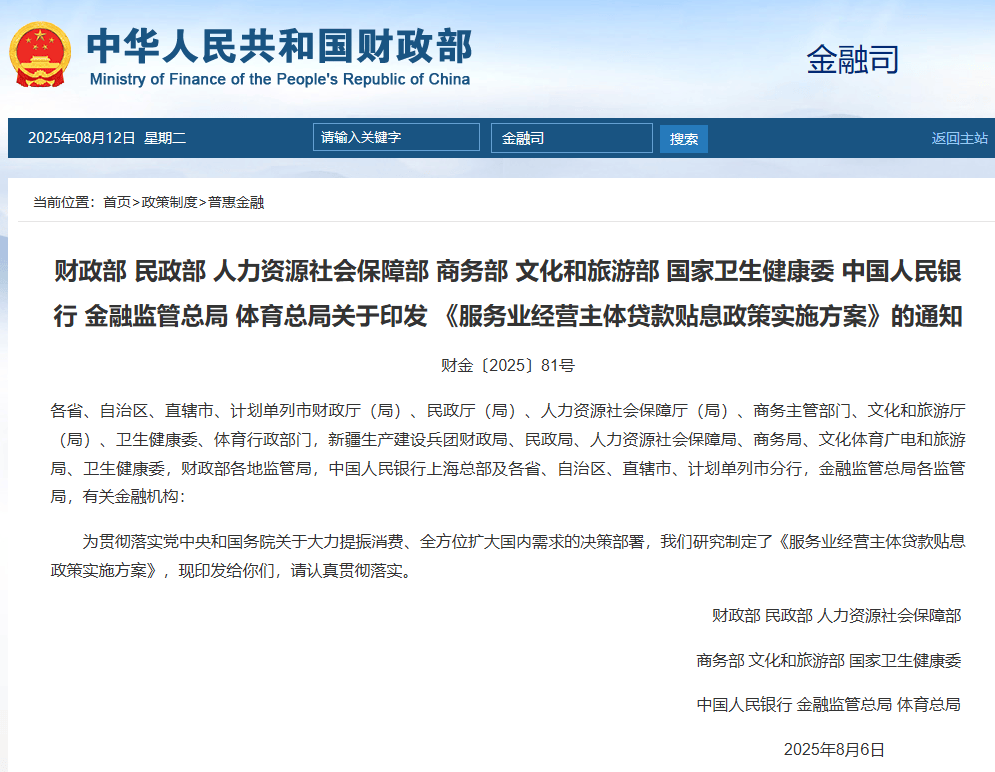
暑期文旅市场持续升温:出入境客流显著增长 文旅消费活力迸发
Yang Shi Wang· 2025-08-16 03:22
Group 1 - The domestic cultural and tourism market in China is experiencing significant growth during the summer, with an average of 129,000 inbound and outbound passengers per day at Shanghai ports since July 1, representing a year-on-year increase of over 14% [1] - The Nanjing Road pedestrian street in Shanghai has seen a surge in foot traffic due to a series of anime-themed events, with the Madame Tussauds wax museum transforming into a fantastical space, resulting in a nearly 30% increase in visitor numbers compared to last year [3] - Over 20 million domestic and international tourists visited the Yuyuan Garden in Shanghai in the first half of the year, with July alone attracting over 4.5 million visitors, and sales of co-branded products with traditional brands and domestic animation IPs expected to reach around 40 million yuan [4] Group 2 - The "cooling economy" has become a popular trend this summer, with a temporary water park set up at the Bund in Shanghai, offering various water activities, and a large indoor snow park in Lingang featuring a Peking Opera-themed skiing show, attracting over 250,000 visitors, with a significant increase in foreign tourists [6]
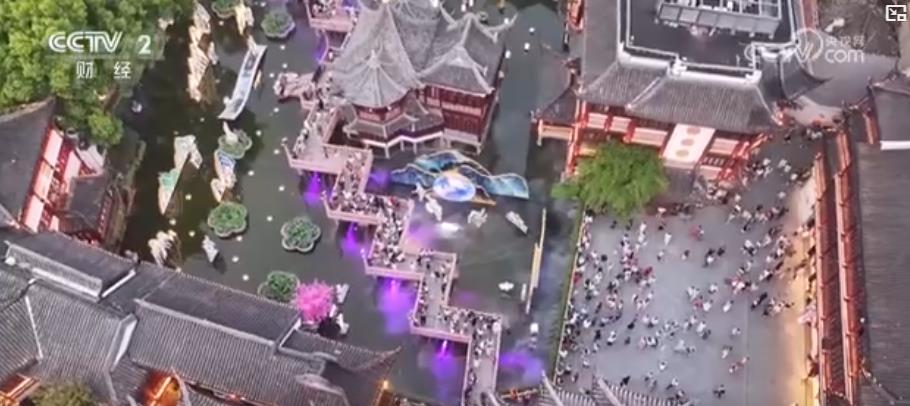
上海老城改造融合多元业态,“夜游”热度高,拉动夜间消费
Sou Hu Cai Jing· 2025-08-15 09:47
Core Insights - The article highlights the significant increase in "night tourism" searches and comments since July, with Shanghai leading in this trend among major cities [1] - Shanghai has innovatively developed its nighttime economy, transforming old industrial areas into vibrant cultural and recreational spaces [5] Group 1: Night Economy Development - The search volume for "night tourism" has surged, particularly on weekends, indicating a growing interest in nighttime activities [1] - Shanghai has transformed former industrial sites into cultural hubs, such as the "Dome Art Center" and waterfront venues, enhancing its nighttime appeal [5][9] - The "Night Food Terrace" has become a key attraction, featuring a mix of dining, entertainment, and unique experiences like a Ferris wheel [12] Group 2: Economic Impact - The "Night Food Terrace" reported over 4.5 million yuan in sales, with foot traffic exceeding 9 million visitors in the first half of the year, reflecting a 15% year-on-year increase [11][12] - Shanghai's total nighttime consumption exceeded 88 billion yuan since June, showcasing the economic potential of the nighttime economy [14]
中证香港300通信服务指数报1602.62点,前十大权重包含长和等
Jin Rong Jie· 2025-08-15 07:48
Core Viewpoint - The China Securities Hong Kong 300 Communication Services Index has shown significant growth, with a 7.68% increase over the past month, 16.16% over the past three months, and 34.53% year-to-date [1]. Group 1: Index Performance - The China Securities Hong Kong 300 Communication Services Index reported a value of 1602.62 points [1]. - The index is designed to reflect the overall performance of different industries in the Hong Kong market, classified according to the China Securities industry classification standards [1]. Group 2: Index Composition - The top ten holdings of the index include Tencent Holdings (15.61%), NetEase-S (13.89%), China Mobile (13.83%), Baidu Group-SW (13.11%), Kuaishou-W (11.9%), Cheung Kong (7.34%), China Telecom (4.55%), China Unicom (3.31%), China Tower (2.89%), and Bilibili-W (2.89%) [1]. - The index is composed entirely of stocks listed on the Hong Kong Stock Exchange [2]. Group 3: Sector Allocation - The sector allocation of the index shows that digital media accounts for 47.16%, telecommunications services for 30.39%, cultural entertainment for 15.87%, communication technology services for 2.89%, data centers for 1.84%, communication equipment for 1.05%, and marketing and advertising for 0.80% [2]. Group 4: Index Adjustment Mechanism - The index samples are adjusted semi-annually, with adjustments occurring on the next trading day after the second Friday of June and December each year [2]. - Weight factors are adjusted in accordance with the periodic sample adjustments, and any temporary adjustments are made in response to changes in the underlying index [2].





财政贴息来了!贷款利率直接降1个点,个人消费、服务业都能享
Sou Hu Cai Jing· 2025-08-15 07:01
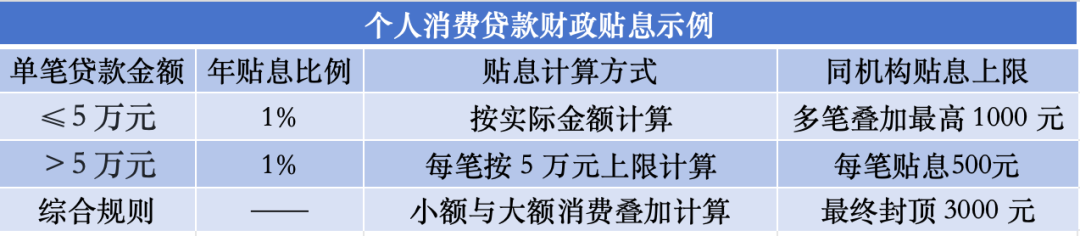
Group 1 - The government has introduced two significant policies: the "Personal Consumption Loan Interest Subsidy Program" and the "Service Industry Operating Entity Loan Subsidy Program," aimed at reducing loan interest rates for consumers and service providers [1] - From September 1, 2025, to August 31, 2026, consumers can enjoy a 1% annual interest subsidy on loans for various purposes such as purchasing cars, home renovations, education, tourism, and health [3] - There is a cap on the interest subsidy: for loans exceeding 50,000 yuan, only the portion up to 50,000 yuan will be subsidized [4] Group 2 - Individual users can receive a maximum interest subsidy of 3,000 yuan, applicable to loans up to 300,000 yuan [5] - For example, a loan of 100,000 yuan at a 4% interest rate would incur 4,000 yuan in interest, but with the subsidy, the rate drops to 3%, saving 1,000 yuan in interest [6] - Service industry businesses, such as restaurants and tourism, can also benefit from a 1% annual interest subsidy starting March 16, 2025, if the loan is used to improve consumer infrastructure or service capabilities [7] Group 3 - The policy specifies participating banks, including six major state-owned banks, twelve joint-stock banks, and five consumer finance institutions for personal consumption loans, and 21 national banks for service industry loans [9] - The subsidy is funded by the government, with 90% of the interest covered by the central government and 10% by local governments, ensuring that banks do not incur losses or impose additional fees [10] - The effectiveness of the policy will be evaluated after its expiration to determine if support will continue [10]

从“跃升”品悟“逆袭”之道(评论员观察)
Ren Min Ri Bao· 2025-08-14 21:58
Group 1 - The core viewpoint emphasizes that different perspectives can reveal varying developmental potentials, highlighting the importance of high positioning and broad thinking to create transformative opportunities [1][3] - Recent economic reports indicate that Chongqing has surpassed Shanghai to become the leading consumer city, while Anhui has overtaken Guangdong to become the largest automobile manufacturing province [1][2] Group 2 - Chongqing has successfully developed a unique 8D traffic network despite its challenging geographical conditions, turning its disadvantages into advantages [2][4] - Anhui, previously overlooked, has leveraged its position as a "window" to connect the Yangtze River Delta with the inland, transforming from a "backseat" player to a leading province through strategic collaboration [2][4] Group 3 - The integration of various local industries in Anhui, such as complete vehicle manufacturing and parts production, showcases the importance of identifying unique strengths and fostering collaborative innovation [4] - The concept of "cultural and economic symbiosis" is highlighted, with initiatives like "one museum, one city" stimulating market activity and promoting balanced development through urban-rural integration [4] Group 4 - In the first half of the year, Chongqing saw a 140% year-on-year increase in foreign travelers due to new tax refund policies and tourism incentives, demonstrating the effectiveness of open policies in attracting international visitors [5] - The establishment of a global automotive safety system supplier's factory in Anhui signifies the province's growing importance in the automotive export market, reflecting a successful strategy of outward product movement and inward investment attraction [5] Group 5 - Various cities in China, such as Hangzhou and Tangshan, are experiencing significant growth and transformation, driven by innovative development strategies and collaboration among provinces [6] - The report highlights China's advancements in AI technology and global innovation rankings, emphasizing the country's commitment to high-level openness and the importance of international collaboration for sustained growth [6] Group 6 - The article concludes with a call for practical action and commitment to long-term planning as essential for continued growth and development [7]
财政贴息不止为撬动消费
Hu Xiu· 2025-08-14 10:27
Group 1 - The core viewpoint of the article is the introduction of significant policies aimed at promoting consumption and expanding domestic demand through financial support [2][10]. - The Ministry of Finance, in collaboration with other departments, has launched the "Personal Consumption Loan Interest Subsidy Policy" and the "Service Industry Operating Entity Loan Interest Subsidy Policy" [2][10]. - These policies are designed to provide financial incentives for personal consumption loans and loans to service industry entities, thereby stimulating economic activity [12]. Group 2 - The personal consumption loan interest subsidy policy will be effective from September 1, 2025, to August 31, 2026, covering loans used for consumption as identified by lending institutions [4][5]. - The subsidy rate is set at 1%, which is approximately one-third of the current personal consumption loan interest rates offered by commercial banks [8]. - Specific consumption areas eligible for subsidies include household appliances, automotive purchases, education, cultural tourism, and healthcare, among others [8][13]. Group 3 - For loans under 50,000 yuan, the subsidy is calculated based on the actual amount, with a maximum subsidy of 1,000 yuan for multiple loans from the same institution [9]. - For loans over 50,000 yuan, the subsidy is capped at 500 yuan per 50,000 yuan, with a total maximum subsidy of 3,000 yuan when combined with smaller loans [9]. - The service industry loan subsidy policy targets eight key sectors, including dining, health, and tourism, with a similar subsidy rate of 1% and a maximum loan amount of 1 million yuan per entity [9][12]. Group 4 - The policies are part of a broader strategy to enhance consumer spending and investment efficiency, as highlighted in recent government reports [11]. - The implementation of these policies is expected to alleviate purchasing power issues for consumers and reduce financing costs for businesses, thereby supporting sustained economic growth [7][12]. - The government plans to evaluate the effectiveness of these policies after their expiration and may consider extending or expanding them based on the results [10].
秀我中国丨服贸会开幕倒计时,在首钢科幻乐园开启奇幻之旅
Xin Hua Wang· 2025-08-14 09:43
Core Viewpoint - The 2025 China International Service Trade Fair is being held at Shougang Park, showcasing a blend of technology, culture, and consumer experiences through various immersive activities [1] Group 1: Event Overview - The venue, Shougang Park, has transformed from an industrial site into a futuristic entertainment hub called SoReal, featuring attractions like a technology amusement park, themed performance areas, and art exhibitions [1] - The fair aims to provide visitors with a comprehensive experience that includes retail, dining, cultural, and entertainment services [1] Group 2: Experience Highlights - The event emphasizes the integration of technology, culture, and consumption, offering an immersive experience for attendees [1] - Various business formats are represented, enhancing the overall visitor engagement and interaction [1]
人民财评:政策精准发力,服务业升级迎来新动能
Ren Min Wang· 2025-08-14 08:32
Core Viewpoint - The implementation of the loan interest subsidy policy aims to support the service industry, which is crucial for high-quality economic development, by providing financial assistance to enhance consumption and expand domestic demand [1][2]. Group 1: Policy Implementation - The Ministry of Finance and nine other departments have jointly issued the "Implementation Plan for Loan Interest Subsidy Policy for Service Industry Operators" to support consumption and domestic demand strategies [1]. - The service industry has become a core engine for economic growth, with its value-added accounting for over 50% of GDP and 88.2% of newly established business entities in the third sector in the first half of the year [1][2]. Group 2: Financial Support Mechanism - The policy aims to lower financing costs for service industry operators, who often face challenges due to reliance on light asset operations and lack of effective collateral [2]. - The subsidy rate is set at 1 percentage point for a maximum loan amount of 1 million yuan per entity, with a maximum subsidy of 10,000 yuan per entity for one year [2][3]. Group 3: Expected Outcomes - The loan interest subsidy policy is expected to provide financial convenience and incentives for high-quality service enterprises, enabling them to innovate, upgrade, and expand, thereby enhancing service quality [3]. - The policy will undergo evaluations post-implementation to assess its effectiveness and may lead to extensions or adjustments based on the outcomes [3]. Group 4: Collaborative Measures - To maximize the effectiveness of the subsidy policy, it is essential to establish a risk-sharing mechanism, enhance policy communication, and create an evaluation system to ensure efficient use of funds [3].