造船业

Search documents
香港故事丨阅尽千帆 “船”承匠心
Xin Hua Wang· 2025-09-14 03:20
Company Overview - The "Zhang Bao Zai" boat was created in 2006 by the Guangming Shipyard, which was facing operational difficulties due to a decrease in orders [2] - The boat is a traditional Chinese wooden sailboat, handcrafted by the third-generation shipbuilder Qu Shijie and his father Qu Wei [1][2] - The shipyard was founded in the 1950s and has been passed down through three generations, with Qu Shijie learning shipbuilding from a young age [3] Industry Context - Hong Kong has a rich maritime history, having become an important trade transshipment port after its opening, which contributed to the flourishing of the shipbuilding industry [2] - The shipyard once produced 50-60% of the operating boats in Hong Kong, catering to tourists and residents [3] - The demand for traditional wooden boats has declined due to the rise of lighter, modern vessels and the high cost of raw materials [3] Craftsmanship and Challenges - The construction of the "Zhang Bao Zai" involved complex design and craftsmanship, taking approximately nine months to complete [2] - Qu Shijie emphasized the importance of precision in shipbuilding, noting that even a 0.5 cm error could lead to significant issues [2] - The shipyard has shifted its focus from building new vessels to repairing and maintaining existing ones due to declining market demand [3] Future Aspirations - Qu Shijie hopes to inspire younger generations to take an interest in traditional shipbuilding techniques and preserve this cultural heritage [4] - He maintains a collection of ship models, including one of the "Zhang Bao Zai," reflecting his passion for traditional Chinese sailboats [4]
中船防务(00317.HK):船周期上涨中继 关注集团解决同业竞争进展
Ge Long Hui· 2025-09-12 12:17
Core Viewpoint - China Shipbuilding Defense, a listed company under China Shipbuilding Group, is positioned to benefit from a tightening supply-demand balance in the shipbuilding industry, with significant growth in production planned for 2028, driven by strong replacement demand and favorable market conditions [1][2]. Industry Summary - The shipbuilding industry is experiencing a persistent supply-demand tightness, with replacement of old ships as a core demand driver. The current replacement progress is just over half, and new environmental policies are expected to extend the replacement cycle [1]. - The global active shipyard count has significantly decreased since the last cycle, with current capacity at only 74% of the previous peak. Even if capacity recovers to 85% by 2030, it will still be insufficient to meet future delivery demands, supporting high ship prices [1]. - Recent changes in the Chinese shipbuilding market have shifted from a pessimistic outlook, with a notable decline in transaction volumes and ship prices earlier in the year due to investigations by the U.S. Trade Representative's Office. However, following the release of revised policies, new orders for Chinese shipyards have rebounded, indicating a potential recovery in order volumes and ship prices [1]. Company Summary - China Shipbuilding Defense's core business is shipbuilding, which accounted for 92% of its revenue in the first half of 2025. The company is expected to see significant production increases in 2028, with Huangpu Wenchong and Guangzhou Shipyard International projected to have production increases of 58% and 34%, respectively, in CGT terms [2]. - The company benefits from a favorable cost structure, as many current orders were signed during a price upcycle in 2021, while steel procurement costs are declining. This creates a positive margin environment for the company [2]. - China Shipbuilding Group is actively addressing competition issues within the industry, with a commitment to resolve competition between Huangpu Wenchong and China Shipbuilding within five years, which is a key development to monitor [2]. - The company has been rated "Buy" due to its expected performance in the global shipbuilding cycle and capacity release, with projected net profits of 1.1 billion, 1.7 billion, and 2.8 billion yuan for 2025-2027, corresponding to PE ratios of 18, 11, and 7 times [2].

中船防务午前涨逾5%造船业供需紧张格局持续存在关注集团解决同业竞争进展
Xin Lang Cai Jing· 2025-09-12 04:34
Core Viewpoint - China Shipbuilding Defense (00317) shows significant stock performance with a price increase of 4.56% to HKD 15.59, reflecting strong market interest following its interim results announcement [1] Company Summary - China Shipbuilding Defense plans to hold a 2025 semi-annual performance briefing on September 15 [1] - The company's interim results indicate a revenue of approximately CNY 10.173 billion, representing a year-on-year growth of 16.54% [1] - The net profit attributable to shareholders is around CNY 526 million, marking a substantial year-on-year increase of 258.4% [1] Industry Summary - Shenwan Hongyuan highlights that China Shipbuilding Defense operates under China Shipbuilding Group, with the State-owned Assets Supervision and Administration Commission as the actual controller [1] - The company’s core assets include the controlling Huangpu Wenchong and the participating Guangzhou Shipyard International [1] - The shipbuilding industry continues to experience a tight supply-demand balance, which has been a persistent factor since the beginning of the year [1]
申万宏源:首予中船防务“买入”评级 业绩弹性与估值修复空间充足
Zhi Tong Cai Jing· 2025-09-12 03:04
Core Viewpoint - Shunwan Hongyuan initiates coverage on China Shipbuilding Defense (600685) with a "Buy" rating, citing benefits from the global shipbuilding cycle and capacity release, projecting net profits of 1.1 billion, 1.7 billion, and 2.8 billion yuan for 2025-2027, with corresponding P/E ratios of 18, 11, and 7, and a current market value/order book ratio of 0.42, significantly below the 10-year average of 0.53, indicating substantial room for valuation recovery [1] Industry Overview - The shipbuilding industry continues to experience a tight supply-demand balance, driven by the need for replacing aging vessels, with the replacement progress just over half, and new environmental policies potentially extending the replacement cycle. The number of active shipyards has significantly decreased, with current capacity at only 74% of the previous peak, indicating that even a recovery to 85% by 2030 will not meet future delivery demands, thus supporting high ship prices [2] Market Dynamics - Since the beginning of the year, negative factors affecting the Chinese shipbuilding market have changed. Following investigations by the U.S. Trade Representative's Office under Section 301, shipowners adopted a wait-and-see approach, leading to a significant drop in transaction volumes and declining ship prices. However, with the release of the initial Section 301 proposal in February 2025, new ship orders from China surpassed those from South Korea in March, and the second version of the proposal in April showed notable easing, suggesting a potential recovery in order volumes and ship prices [3] Company Performance - The production plan for 2028 shows a significant increase compared to 2027, with Clarkson data indicating a 58% and 34% increase in CGT terms for Huangpu Wenchong and Guangzhou Shipyard International, respectively. In monetary terms, the increases are 61% and 41%. Most current orders were signed during the price upcycle that began in 2021, and with steel procurement costs declining, the company is positioned for substantial performance elasticity due to the combination of capacity release and margin improvement [4] Competitive Landscape - China Shipbuilding Group is focused on addressing issues of intra-industry competition, having committed to resolving competition between Huangpu Wenchong and China Shipbuilding within five years, with future progress being closely monitored [5]
港股异动 | 中船防务(00317)再涨超6% 造船业供需紧张格局持续存在 关注集团解决同业竞争进展
智通财经网· 2025-09-12 02:57
Group 1 - The core viewpoint of the article highlights the significant increase in the stock price of China Shipbuilding Defense (00317), which rose over 6% and is currently trading at 15.76 HKD with a transaction volume of 113 million HKD [1] - China Shipbuilding Defense plans to hold a semi-annual performance briefing for 2025 on September 15, indicating a proactive approach to investor relations [1] - The company's mid-year performance shows a revenue of approximately 10.173 billion CNY, representing a year-on-year growth of 16.54%, and a net profit attributable to shareholders of approximately 526 million CNY, reflecting a substantial year-on-year increase of 258.46% [1] Group 2 - The approval of the merger plan between China Shipbuilding and China Heavy Industry has accelerated the restructuring process within the China Shipbuilding system [1] - According to Shenwan Hongyuan, China Shipbuilding Defense is a listed company under the China Shipbuilding Group, with its core assets being Huangpu Wenchong and the partially-owned Guangzhou Shipyard International [1] - The shipbuilding industry is experiencing a persistent supply-demand imbalance, and the pessimistic factors that have suppressed the Chinese shipbuilding market since the beginning of the year are changing [1] - The company's production schedule for 2028 is expected to show a significant increase compared to 2027, indicating ample long-term performance elasticity [1] - The China Shipbuilding Group is committed to resolving issues of competition within the industry, having announced a commitment to address competition between Huangpu Wenchong and China Shipbuilding within five years, with future developments being noteworthy [1]
绿色造船业被寄望成孟加拉下一个出口支柱
Shang Wu Bu Wang Zhan· 2025-09-10 23:14
Core Insights - The green shipbuilding industry is expected to become the next major source of foreign exchange income for Bangladesh after the ready-made garment sector [1] - Bangladesh has gradually gained recognition in the global shipbuilding industry, but development is hindered by insufficient financing, high costs, and external shocks [1] - Experts emphasize the need to expand international trade, promote energy-efficient and modern technologies, and urge policymakers to shift their mindset and leverage local capabilities [1] Industry Overview - Bangladesh's ship export value over the past 12 years has reached $143 million [1] - The government has introduced the "2020 Shipbuilding Industry Development Policy" to provide incentives and loan support [1] - If opportunities are seized, export-oriented shipyards in Bangladesh could achieve an annual export value of $100 million in the next two years and create 100,000 jobs [1] Market Potential - The global commercial shipbuilding market is projected to reach $230 billion by 2030, presenting significant opportunities for Bangladesh [1]
五年来,我国制造业“家底”更厚实
Ren Min Ri Bao· 2025-09-10 10:12
Group 1: Manufacturing Industry Overview - China's manufacturing industry has maintained the largest global scale for 15 consecutive years, with its value added accounting for nearly 30% of the global total [2] - In 2024, 64 manufacturing enterprises from China were included in the Fortune Global 500 list, indicating strong industrial performance [1] - The production of new energy vehicles is expected to exceed 13 million units in 2024, maintaining a global leadership position for 10 consecutive years [2] Group 2: Innovation and R&D - The proportion of R&D expenditure in revenue for large-scale manufacturing enterprises has surpassed 1.6%, with over 570 companies entering the global top 2500 in R&D investment [2] - The number of invention patent applications from industrial enterprises increased from 907,000 at the end of the 13th Five-Year Plan to 1,244,000 in 2024, with a rising share of 65% in total applications [4] - 33 national manufacturing innovation centers have been established, facilitating breakthroughs in nearly 700 key common technologies [4] Group 3: Digital Transformation and Infrastructure - China has built the world's largest and most extensive network infrastructure, with 4.598 million 5G base stations and over 100 million device connections on key industrial internet platforms [3] - The number of registered small and medium-sized enterprises has exceeded 60 million, with significant improvements in quality and efficiency [3] Group 4: Traditional and Emerging Industries - Traditional industries account for 80% of the manufacturing sector's main indicators, with significant support for technological upgrades and the establishment of over 230 intelligent factories [7] - Emerging industries such as new energy vehicles, photovoltaic, and lithium batteries are rapidly growing, with the production of new energy vehicles expected to be 9.5 times that of 2020 [7] Group 5: Future Industry Development - The development of future industries is being accelerated, with advancements in quantum computing, laser manufacturing technology, and bio-manufacturing technologies [7] - The Ministry of Industry and Information Technology plans to enhance the modern industrial system centered on advanced manufacturing and promote industrial upgrades [8]
“十四五”时期 我国制造业增加值增量预计将达到8万亿元
Yang Guang Wang· 2025-09-10 08:52
Group 1 - The core viewpoint of the news is that during the "14th Five-Year Plan" period, China's manufacturing industry is expected to achieve significant growth, with an increase in added value projected to reach 8 trillion yuan, maintaining its position as the world's largest manufacturing sector for 15 consecutive years [1] - From 2020 to 2024, the average annual growth rates for China's equipment manufacturing and high-tech manufacturing industries are expected to be 7.9% and 8.7%, respectively [1] - The production of new energy vehicles is projected to exceed 13 million units in 2024, with production and sales maintaining the global lead for 10 consecutive years [1] - China's shipbuilding industry continues to hold a leading position in the international market share [1] - Over the past five years, China has built the largest and most extensive network infrastructure globally, with over 100 million devices connected to key industrial internet platforms [1] - A total of over 230 top-level smart factories and 1,260 5G factories have been established during the "14th Five-Year Plan" period, with the installation of industrial robots accounting for more than 50% of the global total [1] Group 2 - Since the beginning of the "14th Five-Year Plan," more than 100,000 specialized and innovative small and medium-sized enterprises have been added, bringing the total to over 140,000 [2]
数读“十四五”答卷丨多项全球第一!一组数据看新型工业化发展“亮眼成绩单”
Yang Guang Wang· 2025-09-10 07:52
Group 1 - The core message highlights the significant achievements in China's new industrialization during the 14th Five-Year Plan, emphasizing the continuous growth and dominance of the manufacturing sector [1] - China's manufacturing output has maintained its position as the largest globally for 15 consecutive years, contributing over 30% to global manufacturing growth [5][10] - The production and sales of new energy vehicles have ranked first globally for 10 years, with an expected production of over 13 million units in 2024 [10] Group 2 - The number of specialized and innovative small and medium-sized enterprises has exceeded 140,000, showcasing the growth of niche markets [1] - Research and development investment in large-scale manufacturing enterprises has increased, with R&D expenses accounting for over 1.6% of operating income [8] - China has established the world's largest and most extensive network infrastructure, with 459.7 thousand 5G base stations, facilitating widespread application of digital technologies [12]

押注新能源船!造船巨头投资扩建产能
Sou Hu Cai Jing· 2025-09-07 12:49
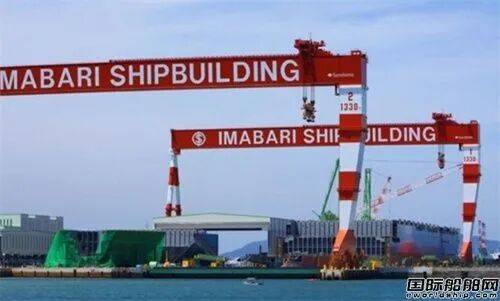
Group 1 - Japan's largest shipbuilding group, Imabari Shipbuilding, is enhancing its production capacity for environmentally friendly new energy vessels [2][3] - The company plans to build new facilities at its Kagawa shipyard by the fiscal year 2028 to increase the production capacity of fuel tanks, a key component for new energy ships [2] - Imabari Shipbuilding will also expand its dock facilities for outfitting operations, aiming to avoid delays in shipbuilding processes [3] Group 2 - The company is currently the largest shipbuilder in Japan by completed ship volume, operating 10 shipyards and capable of constructing over 90 vessels annually [4] - Imabari Shipbuilding's Kagawa headquarters features Japan's largest dry dock, measuring 600 meters in length, 80 meters in width, and 11.7 meters in depth [4] - The company aims to produce fuel tanks for methanol-powered and ammonia-fueled ships in addition to LNG-powered vessels [3] Group 3 - Earlier this year, Imabari Shipbuilding announced an agreement to acquire additional shares in Japan Marine United (JMU), increasing its stake from 30% to 60% [5] - This acquisition will allow Imabari Shipbuilding and JMU to collaborate in the same market, covering various types of vessels including container ships and LNG carriers [5] - The merger is expected to lead to cost savings through shared design and procurement efforts [5]