医疗装备

Search documents
中集环科20260323
2026-03-24 01:27
Summary of Conference Call for 中集环科 Company and Industry Overview - The conference call pertains to 中集环科, a company involved in the manufacturing of tank containers and medical equipment, focusing on the tank container industry and its market dynamics [2][3]. Key Points and Arguments Tank Container Orders and Market Dynamics - Tank container orders have significantly rebounded, with new orders accounting for 60%-70% of the market. Starting January 2026, customers are requesting early production, leading to full capacity scheduling for March-April [2][3]. - In Q4 2025, the company secured a large order worth approximately 600 million yuan, with a prepayment ratio of 50%, indicating speculative restocking and asset renewal by leasing companies during low industry conditions [2][11]. - Despite a decline in demand for tank containers due to low operating rates and chemical prices from 2024, a notable increase in demand was observed starting from Q4 2025 [3]. Cost and Pricing Dynamics - Cost pressures are driven by rising steel prices and exchange rate fluctuations, with over 70% of sales denominated in USD. Customers have accepted price adjustments due to these cost increases, with quarterly profit impacts estimated at 20-30 million yuan [2][4][8]. - Recent price increases in tank containers are attributed to rising steel costs and exchange rates, with a notable price surge following new order demands [13][14]. Financial Health and Cash Flow - The company maintains a strong financial position with over 3 billion yuan in cash. A dividend of 1.65 yuan per 10 shares is proposed for 2026, with plans for mid-term dividends in 2027 [2][10]. - The strong operating cash flow in 2025 is primarily due to strict management of order quality and payment collection, with significant prepayments from large orders boosting cash inflow [10]. Market Share and Competitive Strategy - The company aims to maintain a high market share and ensure marginal contributions from every order. It focuses on large orders and effective supply chain management to support profit levels [7]. - The customer base consists of leasing companies and operators, each accounting for approximately 50% of the total, with leasing companies exhibiting more speculative purchasing behavior [12]. Future Outlook for Medical Equipment - Medical equipment is positioned as the "second track" for the company, with gross profit contribution exceeding one-third. Expansion plans are set to begin in 2026, with capacity expected to double by 2027 [2][15]. - The company is actively involved in the medical imaging equipment sector, collaborating with major clients like Siemens and GE, and plans to expand into CT angiography and other areas [9][15]. Aftermarket Services and Growth Potential - The aftermarket business focuses on cleaning, maintenance, and storage services, particularly in coastal chemical parks, benefiting from China's significant share of global chemical production [2][6]. - The company sees substantial growth potential in the aftermarket services, driven by the trend of chemical industry clustering in China [9]. Additional Important Insights - The company is adapting to currency fluctuations by promoting RMB settlement options and managing exchange rate risks through diversified strategies [8]. - The competitive landscape is influenced by geopolitical factors and energy prices, which may affect the chemical industry's recovery and demand for tank containers [11]. This summary encapsulates the key insights from the conference call, highlighting the company's strategic positioning, market dynamics, and future growth prospects in both the tank container and medical equipment sectors.
挖掘经济潜能系列二:消费补贴和信贷贴息如何推动扩内需?
East Money Securities· 2026-02-27 06:05
Group 1: Consumption Subsidies - In 2025, over 360 million people applied for consumption subsidies, driving related sales exceeding 2.6 trillion yuan, directly boosting social retail sales by 0.6 percentage points[17] - The retail sales of key subsidized products such as furniture, home appliances, and communication equipment grew by 14.6%, 11.0%, and 20.9% respectively, significantly outpacing the overall retail sales growth of 3.7%[18] - The government allocated 300 billion yuan in special bonds for consumption subsidies in 2025, doubling the amount from 2024[12] Group 2: Investment Support - Fixed asset investment in China decreased by 3.8% in 2025, with equipment updates and high-tech services countering declines in real estate and private investment[23] - The government supported 1,459 projects with 800 billion yuan in "two heavy" investments in 2025, an increase from 700 billion yuan in 2024[27] - Equipment investment grew by 11.8% in 2025, accounting for 18.0% of total fixed asset investment, contributing 1.8 percentage points to overall investment growth[23] Group 3: Policy Optimization - The "two new" policies were optimized in 2026, expanding support for old equipment updates and consumption subsidies to include more product categories and enhance subsidy standards[30] - Structural monetary policy tools were adjusted, with a 0.25 percentage point reduction in interest rates, expected to lower interest costs by approximately 12.5 billion yuan[37] - Fiscal policies in 2026 will focus on increasing total expenditure while optimizing the structure to enhance the effectiveness of spending on consumption and investment[42]
陕西省人工智能赋能消费品行业创新研发中心启动
Shan Xi Ri Bao· 2026-02-27 00:30
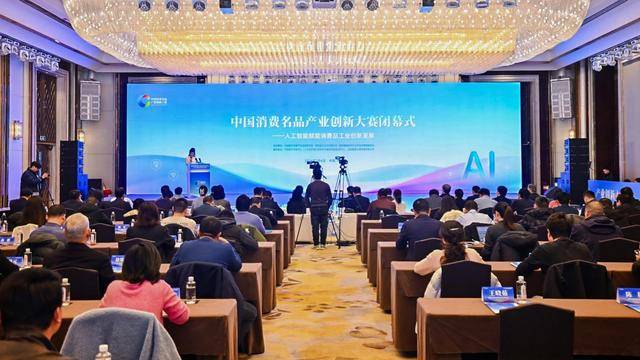
Group 1 - The first China Consumer Brand Industry Innovation Competition concluded in Xi'an, marking the launch of the Shaanxi AI Empowerment Consumer Goods Industry Innovation Research Center, which will focus on key areas such as selenium-rich products, dairy, liquor, pharmaceuticals, and textiles [1] - The competition, organized by the China Electronic Information Industry Development Research Institute in collaboration with the Shaanxi Provincial Department of Industry and Information Technology, aims to leverage AI for product innovation and address industry pain points [1][2] - The Ministry of Industry and Information Technology emphasized the need for deep integration of AI with the consumer goods industry, planning to implement a "AI + Three Products" initiative to accelerate the development of specialized AI models and service providers in the consumer goods sector [1] Group 2 - The Shaanxi Provincial Department of Industry and Information Technology highlighted the competition as a crucial bridge for linking national innovation resources and accelerating the digital transformation of industries [2] - Key presentations during the event included insights from industry leaders such as Huawei and Alibaba, showcasing AI applications in light industry and digital supply chain innovations [2] - A total of 33 finalist teams presented their projects, demonstrating the application of AI technology in areas like elderly assistance, smart home appliances, modern food, and textiles [2]
首届中国消费名品产业创新大赛西安闭幕
Sou Hu Cai Jing· 2026-02-06 13:17
Core Insights - The first China Consumer Brand Industry Innovation Competition concluded successfully in Xi'an, focusing on the integration of artificial intelligence (AI) in the consumer goods industry [1][3]. Group 1: Event Overview - The event was attended by over 200 representatives from various industrial and governmental sectors, including officials from the Ministry of Industry and Information Technology and local industrial departments [3]. - The competition was co-hosted by the China Electronic Information Industry Development Research Institute, the Shaanxi Provincial Department of Industry and Information Technology, and the Xi'an High-tech Industrial Development Zone Management Committee [3]. Group 2: Themes and Objectives - The competition centered on three main themes: product innovation, technological breakthroughs, and new consumer scenarios, aiming to identify innovative products and solutions that leverage AI to address industry pain points and enhance manufacturing efficiency [3][5]. - The event aims to accelerate the application and value release of cutting-edge AI concepts in the consumer goods sector [3]. Group 3: Future Directions - The Ministry of Industry and Information Technology plans to implement a "AI + Three Products" initiative, creating a comprehensive application roadmap for AI in various industries [5]. - Shaanxi Province aims to use the competition as a key opportunity to strengthen resource connections and accelerate the digital transformation of industries [8]. Group 4: Innovation and Collaboration - The establishment of the Shaanxi Province AI Empowerment Consumer Goods Industry Innovation Research Center was announced, focusing on key local sectors such as selenium-rich products, dairy, liquor, pharmaceuticals, and textiles [12]. - The next competition will continue to emphasize AI's role in consumer goods innovation, enhancing the mechanism for results transformation and promoting deep integration of industry, academia, and research [8][10]. Group 5: Showcase of Innovations - The competition featured presentations from 33 finalist teams, showcasing deep explorations and practices of AI technology in various fields, including smart home appliances and modern food [13].

贷款贴息“红包”更大了
Ren Min Ri Bao Hai Wai Ban· 2026-02-04 22:59
Core Viewpoint - The Chinese government is enhancing financial support through interest subsidies for consumer loans and small and micro enterprises, aiming to stimulate domestic demand and support the real economy [8][9][12]. Group 1: Consumer Loan Policies - The upgraded consumer loan subsidy policies will provide a 1% interest subsidy on personal consumption loans and service industry loans, benefiting both consumers and businesses [9][10]. - The policies have been optimized to include credit card installment payments, allowing more consumers to benefit from the subsidies [11]. - The implementation period for these policies has been extended to December 31, 2026, with potential for further extensions based on effectiveness [17][19]. Group 2: Support for Small and Micro Enterprises - A new interest subsidy policy for small and micro enterprises will provide a 1.5% subsidy on loans, with a maximum loan amount of 50 million yuan and a subsidy period of up to two years [14][16]. - The policy targets key industries such as new energy vehicles, industrial robots, and medical equipment, aiming to alleviate financing difficulties for private enterprises [14][16]. - The equipment update loan subsidy policy has been expanded to include fixed asset loans related to equipment updates and technology innovation [15][16]. Group 3: Implementation and Efficiency - The government aims to streamline the process for accessing these subsidies, ensuring that consumers and businesses can benefit from the policies with minimal bureaucratic hurdles [18][19]. - There is a focus on making the subsidy process more efficient, with an emphasis on automatic recognition of eligible transactions to facilitate immediate benefits for consumers [18][19]. - The policies are designed to create a favorable consumption environment by reducing credit costs and enhancing consumer purchasing power [19].
财政部:支持新能源汽车、工业母机、医药工业等相关重点产业链及上下游产业 以人工智能等为代表的新兴领域
Sou Hu Cai Jing· 2026-01-20 04:21
Core Viewpoint - The Ministry of Finance has issued a notice to implement a loan interest subsidy policy for small and micro enterprises, focusing on key industry chains and their upstream and downstream sectors [1] Group 1: Supported Industries - The policy supports fixed asset loans for small and micro private enterprises involved in key industry chains, including new energy vehicles, industrial mother machines, pharmaceutical industry, medical equipment, basic software, industrial software, civil aircraft, servers, mobile communication devices, new displays, instruments, industrial robots, rail transit equipment, marine engineering equipment, agricultural machinery, and more [1] - It also covers production service sectors such as technology services, logistics services, information and software services, energy-saving and environmental protection services, productive leasing services, and business services [1] Group 2: Emerging Fields - The policy emphasizes support for emerging fields represented by artificial intelligence and other innovative sectors [1]
美的集团与安徽交控集团、皖江金租达成战略合作
Xin Lang Cai Jing· 2025-10-17 13:00
Group 1 - Midea Group signed a strategic cooperation agreement with Anhui Jiaokong and Wanjing Jinzu on October 17 [1] - The collaboration will focus on key areas such as new energy, industrial robotics, and medical equipment manufacturing [1]

制造业“压舱石”作用持续显现
Jing Ji Ri Bao· 2025-10-01 22:21
Core Viewpoint - The manufacturing sector in China has shown significant growth and resilience, supported by various policies and a focus on technological innovation, contributing to the overall economic stability and development of the country [1][2][3]. Group 1: Manufacturing Sector Performance - In the first eight months of the year, tax revenue from the manufacturing sector increased by over 5% year-on-year, accounting for more than 30% of total tax revenue [1]. - The added value of the manufacturing industry grew by 7.0% year-on-year in the first half of the year, outperforming the overall industrial growth by 0.6 percentage points [2]. - Key sectors such as equipment manufacturing and high-tech manufacturing saw added value growth rates of 10.2% and 9.5%, respectively, exceeding the overall industrial growth by 3.8 and 3.1 percentage points [2]. Group 2: Policy Support and Initiatives - A series of supportive policies have been implemented to enhance the manufacturing sector, including guidelines for upgrading traditional manufacturing and promoting future industries [3][4]. - The Ministry of Industry and Information Technology has supported 46 cities in piloting new technology transformations, resulting in over 230 top-tier smart factories and 1,260 5G factories [2]. - Local governments are focusing on developing the real economy, with initiatives such as advanced manufacturing cluster cultivation and key industry chain service officer systems [3]. Group 3: Technological Innovation and Structural Optimization - The manufacturing sector is entering a new phase of technological innovation, with breakthroughs in key core technologies and strategic products [2]. - There is an emphasis on enhancing the self-control capability of core technologies and optimizing the industrial structure to strengthen competitive advantages [4]. - The transition towards intelligent and green manufacturing is being prioritized, with support for leading enterprises to adopt industrial internet platforms and promote low-carbon, high-efficiency transformations [5].
工信部等六部门:《机械行业稳增长工作方案(2025—2026年)》,发展智能农机、服务和特种机器人等智能民生装备
机器人圈· 2025-09-30 09:36
Core Viewpoint - The "Mechanical Industry Stabilization and Growth Work Plan (2025-2026)" aims to achieve an average annual revenue growth rate of approximately 3.5% for the mechanical industry, with total revenue exceeding 10 trillion yuan by 2026, while fostering competitive small and medium-sized enterprises and industry clusters with international competitiveness [1][5][26]. Group 1: Overall Requirements - The plan is guided by Xi Jinping's thoughts and aims to implement the spirit of the 20th National Congress of the Communist Party, focusing on stable progress and the integration of supply and demand [4][25]. - It emphasizes the need for coordinated efforts in technological and industrial innovation to stimulate effective demand and enhance the supply capacity of quality equipment [4][31]. Group 2: Main Goals - The mechanical industry is expected to maintain a stable and positive trend, with resilience and safety in key supply chains continuously improving, aiming for an average annual revenue growth rate of around 3.5% and total revenue surpassing 10 trillion yuan by 2026 [5][32]. - The plan also targets the enhancement of enterprise competitiveness and the cultivation of competitive industry clusters [5][32]. Group 3: Work Measures Expanding Effective Demand - The plan includes measures to tap into existing market potential, promote new demand, and stabilize foreign trade [6][26]. - It emphasizes the importance of updating old equipment and promoting advanced agricultural machinery through subsidies [6][36]. Enhancing Quality Equipment Supply Capacity - The plan calls for the integration of technological and industrial innovation, focusing on enhancing the resilience and safety of supply chains [11][27]. - It aims to support collaborative innovation between enterprises and research institutions to drive technological advancements [11][41]. Stimulating Industry Growth Vitality - The plan proposes nurturing high-quality enterprises and promoting regional coordinated development to enhance the internal dynamics of the mechanical industry [16][53]. - It encourages the establishment of a favorable business environment and the implementation of supportive policies for small and medium-sized enterprises [18][61]. Group 4: Guarantee Measures - The plan stresses the need for coordinated efforts among various departments to ensure the effective implementation of policies that support the mechanical industry's stability [19][26]. - It highlights the importance of monitoring economic operations and establishing a risk warning mechanism to address potential issues in the industry [20][26].

工信部等六部门:在仪器仪表等领域培育一批高新技术企业
仪器信息网· 2025-09-30 06:36
Core Viewpoint - The article discusses the "Mechanical Industry Stabilization and Growth Work Plan (2025-2026)" issued by the Ministry of Industry and Information Technology and other departments, emphasizing the cultivation of high-tech enterprises and the development of a robust industrial ecosystem to support the mechanical industry and enhance its global competitiveness [3][8]. Summary by Sections Overall Requirements - The plan aims to stabilize the mechanical industry, enhance supply chain resilience, and promote technological and industrial innovation, aligning with the new development philosophy and the goals of modernizing the industrial system [9][10]. Main Goals - The mechanical industry is expected to maintain a steady growth trajectory, with an average annual revenue growth rate of around 3.5%, aiming to exceed 10 trillion yuan in revenue by 2026 [10]. Work Measures - **Expanding Effective Demand**: Strategies include updating old equipment, promoting advanced agricultural machinery, and enhancing medical equipment to stimulate demand [11][12][13]. - **Investment Expansion**: The plan encourages significant investments in major projects and the use of various funds to boost demand for mechanical equipment [13]. - **Digital Transformation**: Emphasis on digitalization and smart upgrades across various sectors, including agriculture and healthcare, to enhance operational efficiency [14]. - **Open Cooperation**: Encouragement for enterprises to explore international markets and enhance cooperation through trade agreements and partnerships [15]. - **Enhancing Supply Capacity**: Focus on improving innovation capabilities and developing high-quality equipment to meet domestic and international demands [16][17][18]. - **Standardization and Quality Improvement**: The plan includes initiatives to enhance standards and quality across the mechanical industry, promoting reliability and competitiveness [19][20]. Stimulating Industry Growth - **Cultivating Quality Enterprises**: The plan aims to nurture world-class enterprises and specialized small giants in various sectors, including robotics and medical equipment [21]. - **Regional Development Coordination**: Support for regional strengths and the establishment of competitive manufacturing bases in different provinces [22]. - **Support for SMEs**: Initiatives to enhance services for small and medium-sized enterprises, ensuring they receive necessary support and resources [23]. Guarantee Measures - **Coordination and Policy Support**: Emphasis on inter-departmental collaboration and the implementation of supportive policies to ensure the mechanical industry's stability [25]. - **Monitoring and Risk Management**: Establishment of a risk warning mechanism to monitor the economic performance of the mechanical industry [26].