保险业

Search documents
2026年1月15日18时财经热点资讯信息分享
Sou Hu Cai Jing· 2026-01-18 07:48
Group 1 - Xibei's CEO Jia Guolong admits that the company will close a large number of stores [2] - The Central Bank of China projects an increase of 16.27 trillion yuan in RMB loans for the year 2025 [2][4] - The State Grid plans to invest 4 trillion yuan in building a new power system during the 14th Five-Year Plan [2] Group 2 - The founder of the "Dead or Alive" app responds to its removal from app stores [4] - The Central Bank indicates there is still room for further cuts in reserve requirements and interest rates this year [4] - Han Shu has been reported for adding banned ingredients, leading to collective complaints [4]
险企破圈新方向!银发浪潮下 “保险+养老”成风口
Zhong Guo Zheng Quan Bao· 2026-01-18 05:49
Core Insights - The insurance industry is accelerating the entry of pension communities by the end of 2025, transitioning from early single-point exploration to large-scale, networked operations, with "insurance + pension" integration becoming mainstream [1][3] - The industry is facing challenges such as long capital return cycles and insufficient inclusivity, which need to be addressed for further growth [1][6] Group 1: Industry Developments - By the end of 2025, over 10 pension community projects are expected to be launched by insurance companies, with major players like China Pacific Insurance and Ping An leading the way [3][4] - China Pacific Insurance's "Taibao Home" has already established 14 communities across 12 cities, serving over 3,000 long-term residents and achieving 130,000 short-term stays in a year [3][4] - Ping An's home-based elderly care services have reached 85 cities, with nearly 240,000 clients qualifying for services, and they have launched six high-quality pension community projects across five cities [4] Group 2: Strategic Upgrades - China Pacific Insurance is upgrading its strategy from "big health" to "big pension and health," aiming to create a comprehensive ecosystem covering various aspects of elderly care [3] - The industry is entering a phase of scale explosion, with commercial pension and health insurance reserves reaching 11 trillion yuan during the 14th Five-Year Plan period [4] Group 3: Challenges and Solutions - The long capital return cycle is a significant challenge, with some insurance companies indicating that it takes over 10 years to achieve profitability in heavy-asset pension communities [6] - High occupancy rates are essential for profitability, with a threshold of 60% occupancy needed for stable operations [6] - The industry faces issues with inclusivity, as many pension communities have high entry barriers, making it difficult for middle and low-income groups to access services [6] - A shortage of professional talent is a common pain point, with difficulties in retaining staff due to low wages and challenging working conditions [6] Group 4: Policy Support - Recent policy initiatives from the National Financial Regulatory Administration aim to enhance the integration of long-term care and community pension services, promoting the expansion of insurance companies into home-based care [7] - The application of financial tools like REITs is expected to improve funding exit channels for the pension industry, alleviating capital pressure [7] - The competition in the pension community sector is anticipated to intensify, with ecological, inclusive, and technological advancements being key directions for industry breakthroughs [7]


险企破圈新方向!银发浪潮下,“保险+养老”成风口
Zhong Guo Zheng Quan Bao - Zhong Zheng Wang· 2026-01-18 04:24
Core Insights - The insurance industry is accelerating the entry of pension communities by 2025, transitioning from early single-point exploration to large-scale, networked operations, with a focus on the integration of "insurance + elderly care" as a mainstream model [1] - The industry is experiencing a significant expansion, with over 10 pension community projects launched by insurance companies in 2025, including major projects from leading firms like China Pacific Insurance and Ping An [2] Group 1: Industry Developments - By the end of 2025, China Pacific Insurance's "Tai Bao Home" will operate 14 communities across 12 cities, serving over 3,000 long-term residents and achieving 130,000 short-term stays [2] - Ping An's home-based elderly care services have reached 85 cities, with nearly 240,000 clients qualifying for services, and their high-quality elderly care community projects are underway in five cities [2] - The insurance sector has seen significant growth in the third pillar of pension insurance, accumulating reserves of 11 trillion yuan, with 130 pension community projects developed [2] Group 2: Challenges and Solutions - The long capital return cycle is a major challenge, with large asset-based pension communities taking over 10 years to become profitable, requiring a minimum occupancy rate of 60% for stable operations [3] - The high entry barriers for pension communities, such as a minimum premium of 3 million yuan and monthly fees starting at 11,500 yuan, limit accessibility for middle and low-income groups [3] - A shortage of professional talent in the industry is a common issue, with difficulties in retaining staff due to low salaries and challenging resident behaviors [3] Group 3: Policy and Innovation - The National Financial Regulatory Administration has issued guidelines to enhance the integration of long-term care and community elderly services, promoting the expansion of insurance companies into home-based care [5] - Companies like Fude Life Insurance are exploring new development paths through financial products that connect physical services, aiming to facilitate home-based elderly care with smart home equipment [4] - The application of financial tools like REITs is expected to improve funding exit channels for the pension industry, alleviating financial pressures [5]
人民人寿九江中支被罚20万,涉给予客户合同外利益等
Sou Hu Cai Jing· 2026-01-17 11:19
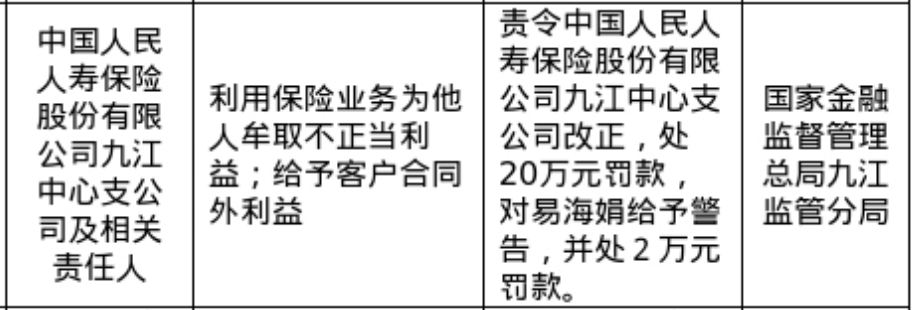
罚单显示,中国人民人寿保险股份有限公司九江中心支公司及的主要违法违规事实(案由)为:利用保险业务为他人牟取不正当 利益;给予客户合同外利益。 蓝鲸新闻1月17日讯,近日,国家金融监督管理总局九江监管分局发布罚单,剑指中国人民人寿保险股份有限公司九江中心支公司 及及其相关责任人。 针对上述违法违规行为,国家金融监督管理总局九江监管分局责令其改正,处20万元罚款;对易海娟给予警告,并处2万元罚 款。 ...

CFCA:筑牢数字金融安全基座 构建智能化防御体系
Zhong Guo Jing Ying Bao· 2026-01-17 03:45
Core Viewpoint - The implementation plan for the digital financial high-quality development emphasizes the dual drive of digital technology and data elements, focusing on risk prevention and data security as key components [1] Group 1: Implementation Plan Overview - The plan outlines 33 tasks aimed at achieving high-quality development while ensuring high-level security, with a focus on preventing systemic financial risks [1] - Specific tasks include constructing a secure and trustworthy data ecosystem, enhancing data security protection, and improving network security resilience [1] Group 2: Security Challenges in Digital Finance - The banking and insurance sectors face four systemic security challenges: lack of comprehensive asset awareness, insufficient threat intelligence effectiveness, imbalance between technological innovation and security capability, and regulatory challenges in data flow and compliance [2][3][4] - The absence of a unified security management view leads to operational and management goal disconnection, creating governance difficulties [2] - The industry struggles with high volumes of alerts due to low-quality intelligence and inadequate verification tools, resulting in a passive response to advanced threats [2][3] Group 3: Transition to Intelligent Security Operations - Financial institutions are urged to shift towards a comprehensive security operation system that includes full asset awareness, intelligence-driven operations, and practical verification capabilities [4] - The focus should be on proactive identity verification in critical business interactions to prevent identity theft and transaction disputes [4][5] - A smart security operation platform should integrate comprehensive visibility, asset awareness, intelligence-driven actions, automated verification, and compliance management [5] Group 4: Implementation of Governance Framework - The execution of security governance requires both standard guidance and technical implementation, transforming strategic requirements into practical technical specifications [5][6] - The integration of digital certificates, electronic signatures, and timestamps can automate compliance with principles such as minimal authorization and auditable processes [6]
中银三星人寿烟台中支开展防范非法金融宣传进社区活动
Qi Lu Wan Bao· 2026-01-16 14:41
Group 1 - The core theme of the event is to promote financial insurance knowledge and enhance residents' risk awareness through community engagement and professional actions [1][2] - The event featured a dedicated area for "Financial Knowledge Popularization and Risk Prevention," attracting many residents with warning banners and interactive activities [2][3] - The company emphasized the importance of protecting the elderly from common financial scams, such as high-yield investments and fake insurance agents, by providing educational materials and case studies [2][4] Group 2 - The company demonstrated its commitment to social responsibility by visiting and providing essential supplies to underprivileged families in the community [4][5] - This event is part of the company's ongoing efforts in financial consumer education and protection, reflecting its mission to serve the public and enhance financial risk identification capabilities [7] - The company plans to continue innovating in financial knowledge dissemination and contribute to a harmonious financial environment through community involvement [7]

江苏:鼓励保险公司为科技企业提供综合性保险解决方案
Bei Jing Shang Bao· 2026-01-16 14:33
Core Viewpoint - The Jiangsu financial regulatory bureau and other departments have issued an action plan to support the deep integration of technological innovation and industrial innovation in the banking and insurance sectors [1] Group 1: Action Plan Details - The action plan aims to optimize technology insurance services and guide insurance companies to improve their technology insurance product systems [1] - It focuses on key areas such as technology research and development, achievement transformation, application promotion, and intellectual property protection [1] - The plan encourages the provision of comprehensive insurance solutions for technology enterprises, including large commercial insurance and master policies to better meet the insurance needs of large technology companies [1] Group 2: Insurance Product Development - The initiative aims to enrich the supply of insurance in areas such as research and development, pilot testing, intellectual property, and cybersecurity [1] - It emphasizes the need for insurance products that are aligned with the lifecycle stages of technology enterprises and cover the entire process of technological innovation activities [1] - There is a push to increase the supply of insurance for technology innovation talents and related professionals [1]
50万亿天量存款即将到期
2 1 Shi Ji Jing Ji Bao Dao· 2026-01-16 13:27
Core Insights - A significant wave of 50 trillion yuan in fixed-term deposits is set to mature in China by 2026, raising concerns among depositors about asset allocation strategies as interest rates decline [1][3][4] - The term "caged tiger" is used to describe the potential impact of this massive capital shift on the market, with various experts weighing in on how these funds might be reallocated [3][4] Group 1: Deposit Maturity and Market Impact - The upcoming maturity of fixed-term deposits is expected to create substantial pressure on banks' liability management, with estimates suggesting that around 50 trillion yuan will mature in 2026, marking a 10 trillion yuan increase from 2025 [5][6] - Different research institutions have provided varying estimates of the total amount of maturing deposits, with a consensus that the impact on banks and asset allocation will be significant [6][8] - The majority of maturing deposits will come from long-term fixed deposits, with state-owned banks facing the largest volume of maturing funds [5][6] Group 2: Potential Fund Allocation - The reallocation of maturing funds is a key concern, with expectations that a significant portion will remain within the banking system rather than flowing into capital markets [8][9] - Current trends indicate that depositors are likely to seek higher interest rates, leading to competitive rate offerings from smaller banks to attract funds [9][10] - Consumer spending, housing repayments, and bank wealth management products are anticipated to be primary destinations for the reallocated funds [9][10] Group 3: Market Conditions and Future Projections - The current environment of declining interest rates and the potential for further monetary easing by the People's Bank of China may influence banks' ability to manage their liabilities effectively [19][20] - Analysts predict that the pressure on banks' net interest margins will ease starting in the second half of 2025, potentially leading to improved revenue and profit growth for the banking sector [20] - The overall strategy for banks will involve optimizing their liability structure while encouraging a gradual release of maturing funds into the market [20]

重要会议召开,释放明确信号→
Jin Rong Shi Bao· 2026-01-16 12:47
Core Viewpoint - The 2026 financial regulatory work meeting emphasizes a comprehensive deployment of financial regulation, focusing on risk prevention, strong regulation, and promoting high-quality development to support the "14th Five-Year Plan" [1] Group 1: Risk Prevention and Resolution - The meeting prioritizes the effective resolution of risks in small and medium-sized financial institutions, aiming to manage existing risks and prevent new ones, particularly in the real estate sector [2][3] - A systematic approach will be adopted for risk prevention, focusing on high-risk institutions through coordinated efforts between central and local authorities [2][3] - The regulatory focus will shift from mere scale expansion to substantive risk control, enhancing classification and tiered regulation [3] Group 2: Promoting High-Quality Development - The meeting calls for improving the capacity for high-quality development in the financial sector, emphasizing the need for orderly competition and optimizing institutional layout [4] - The strategy of "reducing quantity and improving quality" will guide the restructuring of financial institutions, focusing on eliminating inefficient and high-risk entities [4][5] - Regulatory measures will target disordered competition, ensuring financial institutions concentrate on their core businesses and adhere to capital constraints [4][5] Group 3: Strengthening Financial Regulation - The meeting outlines the need to enhance and perfect financial regulation, focusing on substantive risks and improving the capacity for lawful regulation [6][7] - The "Golden Supervision Project" will be accelerated, marking a shift towards digital and intelligent regulation to improve risk identification and oversight capabilities [6][7] - The regulatory framework will evolve towards precision, differentiation, and collaboration, ensuring effective consumer protection and preventing cross-market risks [7] Group 4: Enhancing Financial Services for Economic and Social Quality - The meeting emphasizes the need to improve financial services for the economy, focusing on major strategies and sectors, including support for consumer demand and small enterprises [8][9] - Financial institutions will be encouraged to develop integrated financial solutions that link investments in physical assets with human capital [9][10] - Internal mechanisms will be optimized to enhance service delivery, particularly for technology-driven and small enterprises, through improved credit evaluation and risk management [10]
债市早报:央行打出结构性货币政策工具的“组合拳”;资金面明显改善,债市偏强震荡
Jin Rong Jie· 2026-01-16 02:56
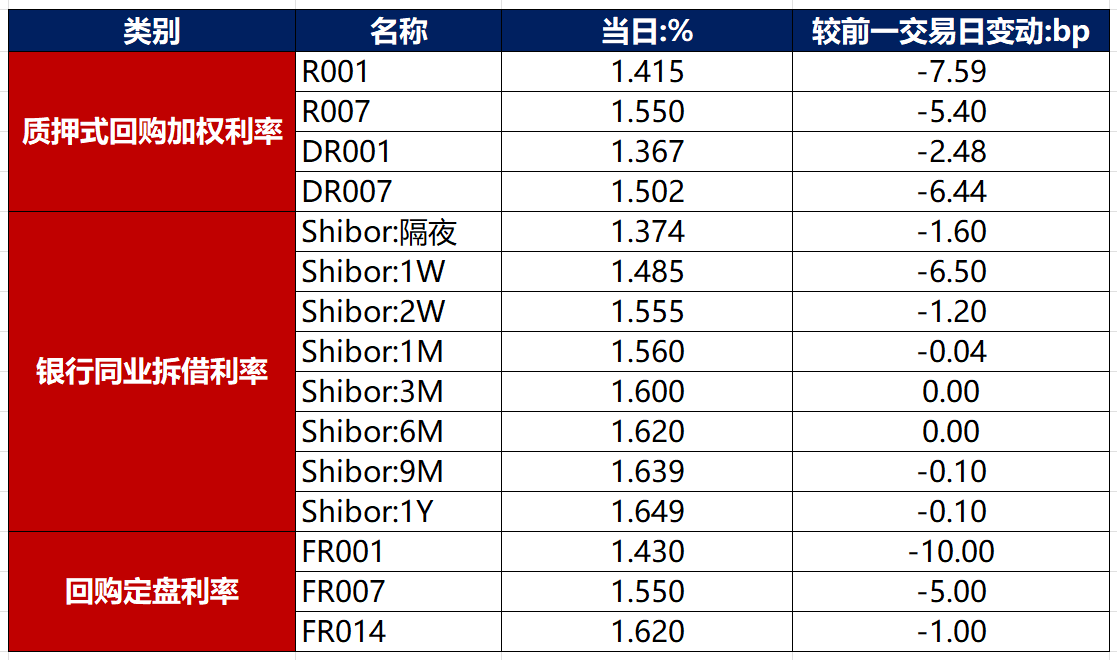
Group 1: Domestic News - The People's Bank of China (PBOC) announced a 0.25 percentage point reduction in the interest rates of various structural monetary policy tools starting January 19, 2026, as part of its efforts to implement a moderately loose monetary policy [3] - The PBOC reported that in 2025, the total increase in RMB loans was 16.27 trillion yuan, with M2 money supply growing by 8.5% year-on-year [4] - The Financial Regulatory Authority emphasized the importance of risk resolution for small and medium financial institutions, particularly in the real estate sector, to prevent financial "explosions" [5] Group 2: Bond Market Dynamics - On January 15, the bond market showed a strong oscillation, with the yield on the 10-year government bond at 1.8550%, down by 0.20 basis points, while the 10-year policy bank bond yield rose by 0.10 basis points to 1.9680% [12] - The bond market saw a total issuance of 60 billion yuan for the 25-year policy bank bond and 132.5 billion yuan for the 25-year government bond on January 15 [13] - The convertible bond market experienced a collective increase, with major indices rising by 0.20% to 0.25% on January 15, and a total trading volume of 953.71 billion yuan [19] Group 3: International News - The U.S. labor market showed resilience, with initial jobless claims falling to 198,000, significantly below market expectations [7] - In the international bond market, U.S. Treasury yields rose, with the 2-year yield increasing by 5 basis points to 3.56% and the 10-year yield up by 2 basis points to 4.17% [24] - European bond yields displayed mixed trends, with Germany's 10-year yield rising by 3 basis points to 2.81%, while Spain's yield decreased by 1 basis point [26]