
先进制造业

Search documents
《京津冀“十五五”产业协同发展倡议》发布
Xin Lang Cai Jing· 2025-10-30 06:01
Core Viewpoint - The Hebei Provincial Institute of Industrial Development Research released the "Beijing-Tianjin-Hebei 14th Five-Year Plan for Industrial Collaborative Development Initiative," emphasizing the construction of a modern industrial system centered on advanced manufacturing and the development of seven national-level advanced manufacturing clusters in the Beijing-Tianjin-Hebei region [1] Group 1 - The initiative aims to accelerate the development of advanced manufacturing clusters within the Beijing-Tianjin-Hebei region [1] - High-standard construction of industrial agglomeration areas is a key measure proposed in the initiative [1] - The initiative will leverage platforms such as the Zhongguancun National Independent Innovation Demonstration Zone and the Beijing-Tianjin-Hebei Intelligent Connected New Energy Vehicle Technology Ecological Port to promote regional integration [1]
重磅部署!未来五年这么干→
Jin Rong Shi Bao· 2025-10-30 03:54
Group 1: Economic Development Goals - The "15th Five-Year Plan" outlines key economic and social development goals, emphasizing high-quality growth, technological self-reliance, and the expansion of the middle-income group [2][3] - The plan aims for economic growth to remain within a reasonable range, with a focus on improving total factor productivity and synchronizing income growth with economic growth [2][4] Group 2: Modern Industrial System - The plan emphasizes the construction of a modern industrial system centered on advanced manufacturing, highlighting the importance of maintaining a reasonable proportion of manufacturing in the economy [4][5] - It aims to enhance the resilience and competitiveness of the industrial system in response to global technological and trade challenges [4][6] Group 3: Technological Innovation - The plan calls for accelerating high-level technological self-reliance, focusing on original innovation and key core technology breakthroughs [6][7] - It promotes the integration of technological and industrial innovation, advocating for a collaborative mechanism among government, industry, academia, and finance [6][7] Group 4: Domestic Market Expansion - The plan stresses the importance of building a strong domestic market and enhancing the interaction between supply and demand [8][9] - It aims to increase residents' disposable income and stimulate consumption while optimizing government investment structures [8][9] Group 5: Open Economy - The plan outlines a strategy for gradually expanding institutional openness and maintaining a multilateral trade system [9][10] - It emphasizes optimizing trade development pillars, including goods, services, and digital trade, to enhance competitiveness [9][10] Group 6: Employment and Housing - The plan focuses on promoting high-quality and sufficient employment, addressing structural employment issues while ensuring income stability [11][12] - It aims to establish a new model for real estate development, emphasizing high-quality housing supply and meeting diverse housing needs [12]
中央财经委员会办公室原副主任尹艳林:从五个关键点把握“十五五”时期经济社会发展
Zhong Guo Zheng Quan Bao· 2025-10-30 00:30
Core Viewpoint - The forum emphasizes the importance of economic development, focusing on the real economy, domestic market, reform and innovation, and improving people's livelihoods as key points for the "14th Five-Year Plan" period [1][3][4]. Economic Development as the Main Theme - From now until 2035, there are only 10 years left, and the first five years are crucial for establishing a solid foundation for future growth. The goal is to maintain an average annual GDP growth rate of around 5% and a nominal growth rate of about 7% [3]. Focus on the Real Economy - The central task is to build a modern industrial system and strengthen the foundation of the real economy. The emphasis is on intelligent, green, and integrated development while maintaining a reasonable proportion of manufacturing [3]. Domestic Market as the Main Battlefield - A strong domestic market is essential for China's modernization. Efforts should be made to boost consumption, expand effective investment, and improve the structure of government investment, particularly in people's livelihoods [4]. Reform and Innovation as the Driving Force - There is a need to enhance original innovation and tackle key core technologies. The integration of technological and industrial innovation is crucial, along with supporting the development of high-tech enterprises and small and medium-sized technology firms [4]. Improving People's Livelihoods as the Starting and Ending Point - High-quality employment, a fair income distribution system, and a robust social security system are essential. Specific measures include supporting the development of innovative drugs and medical devices, as well as optimizing policies to support childbirth [4].

李晓华:发挥先进制造业的“骨干”作用
Sou Hu Cai Jing· 2025-10-29 23:09
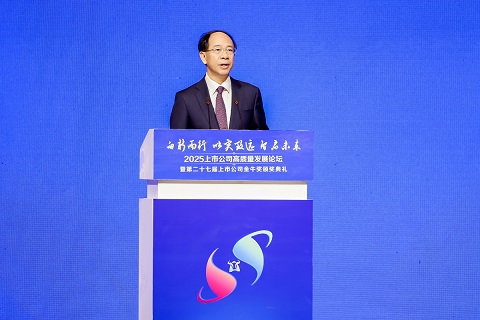
Core Viewpoint - The advanced manufacturing industry is essential for building a modern industrial system and strengthening the foundation of the real economy, as emphasized by the 20th Central Committee of the Communist Party of China [1][4]. Group 1: Importance of Advanced Manufacturing - Advanced manufacturing serves as the backbone of the modern industrial system, supporting the economy despite a decline in its proportion of the national economy [2][4]. - The growth of the service sector is heavily reliant on advanced manufacturing, which provides necessary tools and drives demand for services [2][3]. Group 2: Development Potential - There is significant potential for advanced manufacturing driven by technological progress and economic growth, which necessitates higher efficiency and greener production methods [3][5]. - Advanced manufacturing is crucial for the digital, intelligent, and green transformation across various industries, providing essential technologies and products [3][5]. Group 3: Supply Chain Security - Advanced manufacturing plays a critical role in ensuring the safety and stability of industrial and supply chains, especially in the face of global uncertainties and competition [4][6]. - Mastery of key core technologies within advanced manufacturing is vital for national economic and defense security [4][6]. Group 4: Strategic Initiatives - Strengthening frontier technology innovation and increasing investment in basic research are essential for advancing new productive forces [5]. - Addressing supply chain bottlenecks in critical areas such as high-end production equipment and advanced materials is necessary to enhance self-sufficiency [5]. - Accelerating digital transformation in advanced manufacturing will improve production efficiency and international competitiveness [5][6]. - Promoting international cooperation and attracting foreign investment in advanced manufacturing will facilitate global integration and market expansion [5][6].
发挥先进制造业的“骨干”作用
Jing Ji Ri Bao· 2025-10-29 22:33
Group 1 - The core viewpoint emphasizes the importance of advanced manufacturing as the backbone of a modern industrial system, which is crucial for enhancing innovation capabilities and optimizing industrial structure [1][4] - Advanced manufacturing is described as the "muscle and bone" of the modern industrial system, highlighting its growing significance despite a decrease in the manufacturing sector's share of the national economy [2][4] - The development potential of advanced manufacturing is immense, driven by technological progress and economic growth, which necessitates higher efficiency and greener production methods [3][5] Group 2 - Advanced manufacturing plays a critical role in ensuring the safety and stability of industrial and supply chains, especially in the context of global competition and technological self-sufficiency [4][6] - Key strategies for enhancing advanced manufacturing include increasing investment in basic research, addressing supply chain bottlenecks, accelerating digital transformation, and deepening international cooperation [5][6] - The need for advanced manufacturing to support the digital economy and provide essential products for various sectors, including AI and internet services, is emphasized [2][3]
湖北宜昌市经济和信息化局党组书记、局长朱汉洪:立足实际筑牢产业基石
Jing Ji Ri Bao· 2025-10-29 22:14
Core Viewpoint - The relationship between government and market is crucial for building a high-level socialist market economy system, as emphasized by the strategic direction outlined in the 20th National Congress of the Communist Party of China [1] Group 1: Economic Strategy - The current economic resilience of China is attributed to the establishment of a more effective market and a proactive government [1] - The focus is on improving market institutional rules and standards, maintaining a reasonable proportion of the manufacturing industry, and building a modern industrial system centered on advanced manufacturing [1] Group 2: Local Implementation - The economic and information technology department of Yichang will implement the spirit of the 20th National Congress, focusing on "industrial strength and industry-based city" [1] - Efforts will be made to transform and upgrade traditional industries, cultivate and strengthen emerging industries, and strategically plan for future industries [1] - The integration of new-generation information technology will empower new industrialization, with a focus on developing new productive forces tailored to local conditions [1]
新型储能再入规划,夯实国家战略方向!中共中央"十五五"规划建议: 大力发展新型储能,持续提高新能源供给比重
Xin Hua She· 2025-10-29 10:59
Group 1 - The core viewpoint of the article emphasizes the importance of accelerating the green transformation of the economy and society during the "14th Five-Year Plan" period, with a focus on building a new energy system and achieving carbon peak goals [1][4][5] - The article highlights the need to enhance the proportion of renewable energy supply, promote the safe and orderly replacement of fossil energy, and develop a clean, low-carbon, safe, and efficient energy system [1][2] - It stresses the importance of improving the resilience and safety of the power system, advancing energy consumption towards electrification, and establishing market mechanisms suitable for the new energy system [1][2][3] Group 2 - The article outlines the goal of building a modern industrial system that strengthens the foundation of the real economy, emphasizing the need for technological upgrades and the promotion of intelligent and green manufacturing [2][15] - It calls for the implementation of industrial innovation projects and the development of strategic emerging industries such as new energy, new materials, and aerospace [2][16] - The article also discusses the importance of fostering new industries and future industries, exploring diverse technological routes, and promoting quantum technology and hydrogen energy as new economic growth points [2][17] Group 3 - The article emphasizes the need for high-quality development, with economic growth maintained within a reasonable range and an increase in the contribution of domestic demand to economic growth [13][26] - It highlights the importance of improving the national innovation system and enhancing the level of self-reliance in technology [13][19] - The article discusses the necessity of deepening reforms and improving the socialist market economy system to ensure sustainable high-quality development [26][29] Group 4 - The article outlines the goal of expanding domestic demand and creating a strong domestic market as a strategic support for modernization [23][24] - It emphasizes the need to boost consumption and optimize investment structures to enhance the effectiveness of investments [23][24] - The article also highlights the importance of breaking down barriers to the construction of a unified national market and improving market regulations [25][26] Group 5 - The article discusses the importance of enhancing the financial system to support high-quality development, including the development of green finance and digital finance [29][30] - It emphasizes the need for a robust financial infrastructure and effective financial regulation to ensure financial stability [29][30] - The article also highlights the significance of expanding high-level opening-up and promoting win-win cooperation in international trade [30][31]
“十五五”规划建议稿解读:乘势而上,因势利导
Yin He Zheng Quan· 2025-10-29 05:44
Group 1: Economic Development - The "15th Five-Year Plan" is a critical period for achieving socialist modernization by 2035, with a target GDP growth rate of around 5% during this period[2] - The plan emphasizes high-quality development as the primary task, aiming for significant achievements in this area[2] - By 2035, the goal is to reach a per capita GDP level comparable to that of moderately developed countries, which is projected to be approximately 21,000 USD[25] Group 2: Industrial and Technological Advancement - The plan focuses on building a modern industrial system, highlighting advanced manufacturing as a leading sector[3] - Key areas for technological self-reliance include new energy, quantum technology, and artificial intelligence, aiming for international leadership in these fields[3] - Strengthening the integration of technological innovation with industrial innovation is a priority[3] Group 3: Domestic Market and Consumption - Enhancing domestic demand is crucial, with a strong emphasis on boosting consumer spending as a top priority[3] - The plan outlines strategies for effective investment expansion to stimulate economic growth[3] Group 4: Financial and Open Economy - The "15th Five-Year Plan" aims to accelerate the construction of a financial powerhouse and promote the internationalization of the Renminbi[3] - It emphasizes a cooperative and win-win approach to expand autonomous openness in the economy[3] Group 5: Agricultural and Cultural Development - Accelerating agricultural modernization and leveraging regional strategic advantages are key components of the plan[3] - The plan also stresses the importance of cultural confidence and the value of the cultural industry, aiming to stimulate cultural innovation and creativity[3]
前三季度成都工业投资增长18% 位居副省级城市第二
Sou Hu Cai Jing· 2025-10-29 01:46
Core Insights - Chengdu's industrial economy is experiencing rapid growth, with industrial investment increasing by 18% and overall investment rising by 19.9% in the first three quarters of 2023 [2][3][4] Group 1: Industrial Growth - The city's GDP reached 18,226.9 billion yuan, reflecting a year-on-year growth of 5.8% [2] - The added value of large-scale industrial enterprises grew by 7.5% year-on-year [2] - The five major advanced manufacturing industries saw an increase in added value of 8.9% [4] Group 2: High-Tech Manufacturing - The added value of high-tech manufacturing industries increased by 11.2% [2][3] - Investment in high-tech manufacturing grew by 21.6% year-on-year [3] - Chengdu has established 67 national-level enterprise technology centers, with 5 new centers added this year [4] Group 3: Project Development - A total of 1,060 reserve projects with a total investment of 3,849.3 billion yuan have been identified, with 73 projects approved [3] - Major industrial and information technology projects worth over 672 billion yuan are accelerating construction, with investments reaching 1,154.7 billion yuan [3] Group 4: Future Focus - The city plans to focus on key industries and strengthen growth support, implementing tailored strategies for each of the five major advanced manufacturing sectors [4] - Efforts will be made to enhance market expansion and support local products in international markets [5]
沪指时隔十年盘中再度冲上4000点
Mei Ri Shang Bao· 2025-10-29 01:31
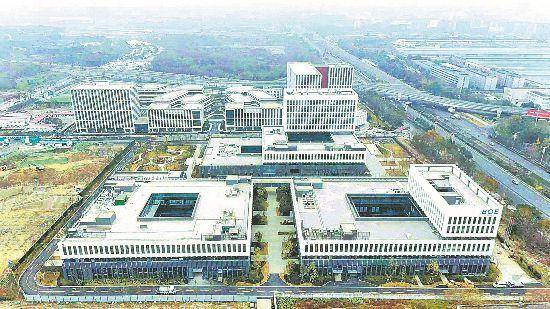
Market Overview - A-shares experienced volatility with the Shanghai Composite Index briefly surpassing 4000 points, marking a new high since August 2015, but closed down 0.22% at 3988.22 points [1][2] - The total trading volume in the Shanghai and Shenzhen markets was 21,656 billion yuan, a decrease of over 1900 billion yuan from the previous day [1] Sector Performance - Resource stocks, including non-ferrous metals, steel, electricity, and gas, saw collective declines, while the military and humanoid robot sectors experienced gains [1][2] - The military sector saw significant increases, with stocks like Jianglong Shipbuilding and Beifang Changlong hitting their daily limit of 20% and over 16% respectively [4] - The humanoid robot concept stocks also surged, with companies like Jinfutech and Yongmaotai reaching their daily limit [2] Technology and Innovation - The technology sector is characterized by a "technology bull" market, driven by policy and capital support, with a focus on semiconductor, general aviation, and innovative pharmaceuticals as potential investment opportunities [3][6] - AI application stocks showed strong performance, with companies like Tianxiexiu and Shuiyou Shares hitting their daily limit, supported by recent policy initiatives promoting AI innovation [5][6] Gold and Commodities - Following a period of rapid gains, gold and non-ferrous metal stocks faced significant declines, with companies like Tongling Nonferrous Metals hitting their daily limit down [7] - Global precious metal markets experienced a correction, with spot gold prices falling below $3930 per ounce, indicating a shift in market dynamics [7]
