军工行业

Search documents
特朗普对全球下令,180天内废掉中方王牌,美媒:中国在霸凌美国
Sou Hu Cai Jing· 2026-02-12 10:37
Core Viewpoint - The article highlights the significant impact of China's control over rare earth exports on the U.S. defense industry, revealing the vulnerabilities in the U.S. supply chain and the challenges faced in establishing alternative sources of rare earth materials [1][5][15]. Group 1: U.S. Response to Rare Earth Supply Crisis - In January 2026, U.S. President Trump issued a presidential announcement requiring global critical mineral suppliers to reach supply agreements with the U.S. within 180 days, or face punitive tariffs of up to 25% [1]. - The urgency of this demand stems from a looming supply crisis in the U.S. defense industry, where certain critical rare earth elements are running low, directly affecting the production of advanced weapons like the F-35 fighter jet [1][10]. - The 180-day ultimatum reflects a desperate attempt to bypass reliance on China for rare earth supplies, indicating a critical situation for the U.S. military-industrial complex [1][17]. Group 2: Challenges in Establishing Alternative Supply Chains - Rebuilding a global rare earth supply chain independent of China within 180 days is nearly impossible due to the complex and time-consuming processes involved in mining, separation, and purification of rare earth elements [3][10]. - Although the U.S. has attempted to create a backup supply chain, challenges include the slow production capabilities of allies like Australia and Canada, and the inconsistent quality of rare earth ores from countries like Vietnam and Kazakhstan [10][12]. - Domestic mining efforts in the U.S. face significant legal hurdles, with lengthy environmental assessments and legal challenges delaying the establishment of new mining operations [12][15]. Group 3: China's Strategic Control Measures - China's precise control measures on rare earth exports have directly contributed to the U.S. supply crisis, with strategic regulations implemented as early as 2025 targeting seven key rare earth elements [5][7]. - The export controls include strict end-use regulations, preventing rare earths from being used for military purposes, effectively cutting off supplies to the U.S. defense sector [7][8]. - Following these controls, international rare earth prices surged, with prices for dysprosium doubling and terbium increasing by more than twofold, underscoring China's decisive influence in the global rare earth supply chain [8][10]. Group 4: Implications for Global Supply Chain Dynamics - The current rare earth crisis faced by the U.S. is a consequence of decades of industrial hollowing out, where the U.S. outsourced its rare earth processing capabilities, leading to a fragile supply chain [15][17]. - The 180-day ultimatum serves as a statement of U.S. vulnerability rather than a credible threat, highlighting the importance of core technology and production capabilities in the modern industrial raw material competition [17].

2026年,全球资产会迎来巨变
大胡子说房· 2026-01-09 10:28
Macro Situation - The macro situation has become increasingly uncertain following the U.S. arrest of Venezuela's president, leading to fluctuations in oil, commodities, gold, and silver prices [2] - Trump's potential military budget increase to $1.5 trillion for 2027 suggests a new arms race may be on the horizon [3][5] - The military-industrial sector in the U.S. has already seen a surge in stock prices [6] Military Industry - The military industry in China is expected to enter a new growth cycle during the 14th Five-Year Plan, focusing on high-quality defense modernization and national unification [6][7] - The geopolitical landscape indicates that the military sector will be a key area of investment and development [8] Energy Competition - The U.S. aims to control Venezuela's oil resources, which could impact global oil pricing and the use of alternative currencies for oil transactions [9][10] - Greenland's resources, including significant rare earth and oil reserves, are also a target for U.S. interests, which could lead to energy supply disruptions for China [12][13] AI and Power Demand - Elon Musk predicts an unprecedented demand for electricity due to the rise of artificial general intelligence (AGI), which will require exponentially more computational power [17][22] - The current electrical grid is not equipped to handle this surge, leading to a potential shortage of transformers, which are becoming a strategic resource [28][30] Infrastructure and Manufacturing - The demand for power infrastructure, particularly transformers, is expected to skyrocket, benefiting manufacturers and suppliers of raw materials like copper and silicon steel [31] - China's ability to rapidly build data centers and enhance its computing infrastructure positions it favorably in the global race for computational power [34][35] Space Energy Revolution - Musk advocates for space-based solar energy as a solution to Earth's energy limitations, with advancements in launch costs making such projects economically viable [42] - The commercial space industry and related technologies are poised for significant growth as nations compete for orbital resources [43][44] Workforce Transformation - AI is set to replace many white-collar jobs, leading to permanent job losses in sectors like customer service and content creation [49][50] - However, the demand for skilled individuals who can manage and utilize AI technologies will remain, emphasizing the need for adaptation [52][53]

A股盘前播报 | 事关航空能源!央企“巨无霸”重组启幕 广州将打造商业航天新一极
智通财经网· 2026-01-09 00:24
Industry Insights - The restructuring of state-owned enterprises is underway, with China Petroleum & Chemical Corporation (Sinopec) merging with China Aviation Oil Group, potentially transforming the aviation fuel market worth over 200 billion yuan [1] - Guangzhou aims to establish itself as a new hub for commercial aerospace by 2035, focusing on reusable rocket technology to support the development of medium to large liquid rockets [2] - The State Administration for Market Regulation has conducted talks with six leading photovoltaic companies, including Tongwei and Daqo New Energy, prohibiting them from agreeing on production capacity and pricing to mitigate monopoly risks [3] Company Developments - The Ministry of Commerce has responded to inquiries regarding the review of Meta's acquisition of AI platform Manus, emphasizing the importance of compliance with Chinese laws and regulations for cross-border investments and technology cooperation [4] Market Trends - Brent crude oil prices surged by 5% due to geopolitical tensions in Venezuela, with expectations that prices will remain between $60 and $70 per barrel in a currently oversupplied market [9] - Trump's proposal to increase U.S. military spending to $1.5 trillion has led to significant gains for drone manufacturers, indicating a potential recovery phase for the defense industry [10] - The National Development and Reform Commission will hold a press conference to discuss the progress of the national water network construction, which is expected to boost the pipeline industry and benefit traditional pipeline companies [11]
股市“四辩”︱重阳投资2026年投资策略报告
私募排排网· 2026-01-01 03:05
Core Viewpoint - In 2025, the Chinese stock market experienced a strong rebound, with the Shanghai Composite Index reaching a ten-year high, while the market structure showed significant differentiation. Looking ahead to 2026, the company aims to identify new opportunities through four debates: future debate, allocation debate, current debate, and strategy debate [3]. Future Debate - China is unlikely to follow Japan's path of economic stagnation, primarily due to its superior innovation capabilities and irreplaceability in the global market. The perception of the Chinese market has shifted from "uninvestable" to having "strategic allocation value" [5][10]. - The Chinese stock market's performance from 2021 to 2024 raised concerns about a potential "lost decade," similar to Japan's experience. However, the market's recovery in 2025 has led to a more optimistic outlook [10][11]. Current Debate - The anticipated capital expenditure in AI may not materialize as expected. While AI is seen as a significant technological revolution, the high profit margins and capital requirements in the industry present challenges for sustainable growth [21][29]. - The contradiction between massive capital expenditure and high profit margins in the AI industry could limit growth potential. The market's expectations for cloud service providers' capital expenditures are substantial, but achieving the necessary revenue growth poses a significant challenge [22][23][27]. Strategy Debate - The company maintains a positive outlook for the market in 2026 but advises investors to temper their return expectations. The focus will be on defensive strategies and seeking opportunities in technology and advanced manufacturing sectors, while also exploring contrarian investments in underappreciated sectors like consumption, military, and real estate [30][31]. - The company emphasizes the importance of rational and gradual asset reallocation in the current market environment, contrasting with previous market behaviors characterized by herd mentality [15][20]. Investment Focus Areas - The company is optimistic about the technology sector, particularly in AI applications and innovative pharmaceuticals, as well as advanced manufacturing, which has shown significant growth potential [32][33]. - In the consumer sector, despite a challenging environment, some leading companies have demonstrated resilience and growth, making them attractive for stable investment [33]. - The military sector is expected to benefit from ongoing geopolitical tensions, while the real estate market is viewed as having structural opportunities despite current challenges [34].

欧洲要出局?俄罗斯眼中的国际秩序,中美俄三强并列!
Sou Hu Cai Jing· 2025-12-11 14:54
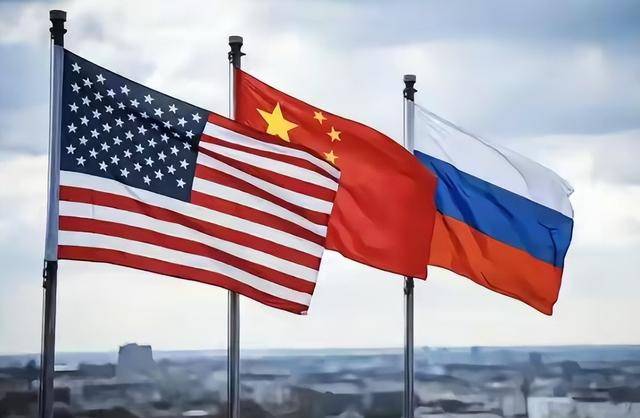
Group 1 - The core argument is that Europe is losing its influence in global affairs, with the future being dominated by the US, China, and Russia, leaving Europe sidelined [1][15][17] - The European economy is experiencing a significant decline, with the EU's economic output dropping and green energy investments being redirected to the US [3][5] - The European defense industry is struggling, with a lack of advanced military capabilities and reliance on outdated strategies, leading to a diminished role in global security [9][11] Group 2 - Russia is leveraging its strategic position and resource wealth to assert itself as a key player, maintaining military spending and political influence while Europe faces internal debt issues [7][11] - The relationship between Europe and China, initially seen as a counterbalance to the US, has deteriorated, with European exports to China increasing while exports to the US decline [9][11] - The lack of a unified fiscal policy in Europe is exacerbating its economic challenges, making it difficult to respond effectively to external pressures from the US and China [11][13] Group 3 - The ongoing geopolitical shifts highlight the necessity for Europe to regain control over its security, energy, and industrial chains to avoid further decline [13][18] - The current situation serves as a warning that neglecting realism in favor of political correctness can lead to detrimental outcomes for Europe [13][17] - The emerging "tripolar" world order necessitates that China positions itself strategically to influence the balance of power among the US, Russia, and itself [15][18]
尤洛卡:军工业务引入战略投资者是公司一项长期且审慎的战略行为
Zheng Quan Ri Bao Zhi Sheng· 2025-12-10 08:43
Core Viewpoint - The company is strategically considering the introduction of strategic investors into its military business as a long-term and prudent strategy, and will comply with legal and regulatory requirements for information disclosure if there are substantial developments [1] Group 1 - The military business is a focus area for the company, indicating potential growth and investment opportunities [1] - The company emphasizes a careful and long-term approach to introducing strategic investors [1] - The company commits to timely information disclosure in accordance with relevant laws and regulations if significant progress is made [1]

国泰海通|金属新材料首席李鹏飞:致力于长期、持续、有效的金属深度研究
国泰海通证券研究· 2025-11-12 14:02
Core Viewpoint - The article emphasizes the importance of in-depth research in the metal and materials sector, highlighting the expertise and recognition of analysts in this field [2][3]. Group 1: Analyst Credentials - The lead analyst, Li Pengfei, has a strong academic background with a Master's in Finance from Peking University and dual Master's degrees in Economics from The Chinese University of Hong Kong, along with 9 years of experience in metal and materials research [3]. - Li Pengfei has received multiple accolades, including being ranked third in the 2024 New Fortune Best Analyst and fifth in 2023, showcasing a consistent track record of excellence in the industry [3]. Group 2: Research Focus - The company is dedicated to long-term, continuous, and effective deep research in metals, indicating a commitment to providing comprehensive insights into market trends and opportunities [3].

华秦科技(688281):3Q25业绩同环比均增长,子公司新签订单情况较好
Minsheng Securities· 2025-10-29 05:48
Investment Rating - The report maintains a "Recommended" rating for the company, considering its industry-leading position and strategic layout in the aerospace sector [4][6]. Core Insights - The company reported a revenue of 800.1 million yuan for the first three quarters of 2025, representing a year-over-year increase of 8.63%. However, the net profit attributable to shareholders decreased by 21.48% year-over-year to 243 million yuan [1]. - In Q3 2025, the company achieved a revenue of 285 million yuan, a year-over-year growth of 12.85% and a quarter-over-quarter increase of 3.68%. The net profit for the quarter was 97 million yuan, reflecting a year-over-year increase of 3.73% and a quarter-over-quarter increase of 17.32% [1][2]. - The gross margin for the first three quarters of 2025 declined by 6.92 percentage points to 47.69%, primarily due to the transition phase of special functional materials and increased costs during the ramp-up period of subsidiary production [1][3]. Summary by Sections Financial Performance - For the first three quarters of 2025, the company reported a net profit of 243 million yuan, down 21.48% year-over-year, while the net profit excluding non-recurring items was 213 million yuan, down 27.87% year-over-year [1]. - The company’s operating cash flow improved significantly, reaching 251 million yuan for the first three quarters of 2025, compared to 157 million yuan in the same period last year [3]. Business Segments - The company’s main research and development revenue accounted for over 60% of total revenue, with several new products already in mass production [2]. - Subsidiaries reported strong order intake, with Huayin Aerospace achieving a revenue of 103 million yuan, a year-over-year increase of 142.95%, and cumulative orders of 244 million yuan [2]. Research and Development - R&D expenses increased by 81.39% year-over-year to 105 million yuan, reflecting the company's ongoing investment in special functional materials and aerospace components [3]. - The R&D expense ratio rose to 13.11%, indicating a focus on innovation and product development [3]. Profit Forecast - The company is expected to achieve net profits of 415 million yuan, 601 million yuan, and 823 million yuan for the years 2025, 2026, and 2027, respectively, with corresponding price-to-earnings ratios of 46x, 32x, and 23x [4][5].

沪指时隔十年盘中再度冲上4000点
Mei Ri Shang Bao· 2025-10-29 01:31
Market Overview - A-shares experienced volatility with the Shanghai Composite Index briefly surpassing 4000 points, marking a new high since August 2015, but closed down 0.22% at 3988.22 points [1][2] - The total trading volume in the Shanghai and Shenzhen markets was 21,656 billion yuan, a decrease of over 1900 billion yuan from the previous day [1] Sector Performance - Resource stocks, including non-ferrous metals, steel, electricity, and gas, saw collective declines, while the military and humanoid robot sectors experienced gains [1][2] - The military sector saw significant increases, with stocks like Jianglong Shipbuilding and Beifang Changlong hitting their daily limit of 20% and over 16% respectively [4] - The humanoid robot concept stocks also surged, with companies like Jinfutech and Yongmaotai reaching their daily limit [2] Technology and Innovation - The technology sector is characterized by a "technology bull" market, driven by policy and capital support, with a focus on semiconductor, general aviation, and innovative pharmaceuticals as potential investment opportunities [3][6] - AI application stocks showed strong performance, with companies like Tianxiexiu and Shuiyou Shares hitting their daily limit, supported by recent policy initiatives promoting AI innovation [5][6] Gold and Commodities - Following a period of rapid gains, gold and non-ferrous metal stocks faced significant declines, with companies like Tongling Nonferrous Metals hitting their daily limit down [7] - Global precious metal markets experienced a correction, with spot gold prices falling below $3930 per ounce, indicating a shift in market dynamics [7]

美国政府停摆背后,华尔街为何保持冷静,市场影响几何?
Sou Hu Cai Jing· 2025-10-08 18:41
Group 1 - The government shutdown has become a routine occurrence, with citizens expressing a sense of resignation as their salaries remain unaffected [1][3] - The financial markets are largely unfazed by the shutdown, with the VIX index showing minimal fluctuations and traders maintaining a calm demeanor [4][10] - Companies reliant on government contracts, particularly in the defense sector, are experiencing slight stock price increases, while other sectors like banking are seeing net redemptions in ETFs [6][8] Group 2 - The impact of the shutdown on GDP is projected to be minimal, with estimates suggesting a 0.18% decrease if the shutdown lasts over two weeks [3] - Tech companies report little disruption, attributing their resilience to diversified revenue streams, while government-dependent firms are adjusting payment schedules [6][8] - Market sentiment remains stable, with investors confident that the Federal Reserve will intervene if the situation escalates [10]