投资银行

Search documents
黄金股多数走高 地缘风险与降息预期支撑金价 多家黄金矿企发业绩预喜
Zhi Tong Cai Jing· 2026-01-09 02:38
值得一提的是,近期多家上市黄金矿企发布业绩预喜。灵宝黄金预计2025年度取得净利润人民币介于约 15.03亿元至约15.73亿元,同比增加约115%至125%;紫金矿业预计全年实现归母净利润510亿至520亿 元,同比增幅约为59%至62%;赤峰黄金则预计全年净利润同比增加约70%到81%。 消息面上,近期地缘风险与降息预期支撑金价,美国财政部长斯科特·贝森特周四再度向美联储施压, 并称该行需要尽其所能促进经济投资,利率应该大幅降低。当前市场关注将于今晚公布的2025年12月非 农就业报告。摩根士丹利在报告中预测,黄金价格将在2026年第四季度升至每盎司4800美元,突破去年 创下的历史纪录。该投行认为,利率下行、美联储领导层更迭,以及各国央行和基金持续买入,将共同 推动金价进一步上涨。 黄金股多数走高,截至发稿,山东黄金(600547)(01787)涨5.8%,报39.78港元;招金矿业(01818)涨 4.8%,报35.82港元;紫金矿业(601899)(02899)涨3.12%,报38.86港元;赤峰黄金(600988)(06693) 涨3.11%,报29.85港元。 ...



深化政企协同 北京东城区联合中金公司推出“紫金・金禾”共创计划
Shang Hai Zheng Quan Bao· 2026-01-09 01:37
Core Insights - The "Zijin·Jinhua" co-creation plan aims to support high-quality development of technology enterprises by integrating financial capital and industrial ecology, responding to national strategic calls [1][3] - The plan is a collaboration between the Dongcheng District government and China International Capital Corporation (CICC), focusing on providing a one-stop service system for outstanding technology enterprises across the country [1][3] Group 1 - The launch event of the "Zijin·Jinhua" co-creation plan was held in Beijing, attended by key leaders from both the Dongcheng District government and CICC, marking the beginning of this initiative [1][2] - The core service framework of the plan includes eight aspects: concierge services, talent services, policy services, space services, digital services, listing services, industrial empowerment, and asset allocation services, aimed at supporting the development of specialized and innovative enterprises [2][3] Group 2 - The plan is designed to create an efficient platform for technology enterprises through policy support, resource matching, and professional services, aligning with the strategic deployment of the 14th Five-Year Plan regarding technological innovation and industrial upgrading [3] - CICC aims to leverage its resources to address the financing challenges faced by early-stage enterprises, contributing to the overall high-quality development of the regional economy [3][4] Group 3 - The co-creation plan will continue to attract partners from the industrial chain and professional service institutions to enhance the service ecosystem and provide comprehensive solutions for the entire lifecycle of technology enterprises [4] - CICC is committed to supporting the development of new productive forces and contributing to regional economic growth through specialized capital market services [4]

美股新年“轮动行情”持续:科技股回落 小盘股顺势而起
智通财经网· 2026-01-09 00:01
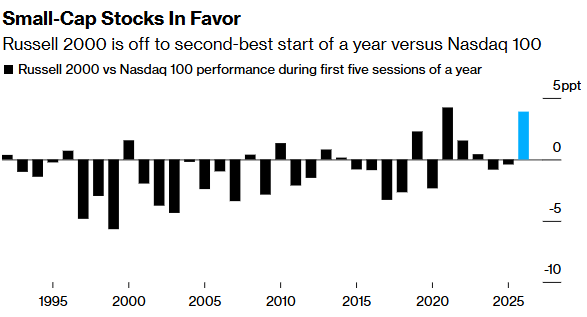
Group 1 - Investors are shifting away from major tech stocks to those that underperformed last year, indicating a rotation trend in the U.S. stock market since early 2026 [1] - The S&P 500 index closed nearly flat after reaching a new high earlier in the week, while the tech-heavy Nasdaq 100 index fell by 0.5%. In contrast, the Dow Jones Industrial Average rose by 0.6%, and small-cap stocks rebounded with the Russell 2000 index increasing by 1.1% [1] - Dave Lutz from JonesTrading noted that investors are looking to allocate funds into stocks with perceived appreciation potential, particularly small-cap stocks, due to high valuations in tech stocks and the theoretical AI bubble [1] Group 2 - The equal-weighted S&P 500 index is on track to outperform its market-cap weighted counterpart for the third consecutive month, which would mark the longest streak in three years if maintained [3] - Trump's plan to increase U.S. military spending to $1.5 trillion by 2027 has boosted defense stocks, with companies like Lockheed Martin, Northrop Grumman, and Kratos Defense seeing significant stock price increases [3] - Thomas Thornton from Telemetry LLC mentioned that Trump's active social media presence has negatively impacted housing-related stocks, but his comments on defense spending have mitigated this effect [3] Group 3 - U.S. Energy Secretary Chris Wright indicated that companies like ConocoPhillips and ExxonMobil are exploring ways to help revitalize Venezuela's energy sector [6] - U.S. labor productivity accelerated in Q3, reaching its fastest growth in two years, which suggests that efficiency improvements are helping to mitigate inflationary pressures from rising wages [6] Group 4 - Wall Street strategists are seeking new catalysts for a U.S. stock market bull run amid concerns over slowing AI trading, with Goldman Sachs identifying companies benefiting from increased middle-class consumer spending, such as healthcare providers and essential goods manufacturers [7] - A team at Goldman Sachs warned that high stock trading premiums could pose risks if economic growth concerns escalate, increasing the likelihood of a bear market [7] - Reports indicate that China plans to approve the import of Nvidia's H200 chips as early as this quarter, allowing the company to regain access to a critical market [7] Group 5 - Alphabet's stock price rose after Cantor Fitzgerald upgraded the tech giant's rating to "overweight" [7] - Soho House & Co. saw its stock price decline due to an impending sale that has created a funding gap [7] - Jefferies' stock price fell after the investment bank reported fourth-quarter earnings per share below analyst expectations [7]

摩根士丹利:未来6至12个月仍看好中国市场
Jin Rong Jie· 2026-01-08 23:52
Core Viewpoint - Morgan Stanley believes that the strengthening of the Renminbi and ample liquidity have led to an increase in trading volume at the beginning of the new year, significantly improving investor sentiment towards the Chinese stock market [1] Group 1: Market Outlook - The firm remains optimistic about the Chinese market over the next 6 to 12 months, citing ongoing liquidity support, continuous technological advancements, and a wide range of thematic opportunities [1] Group 2: Key Focus Areas - Morgan Stanley is closely monitoring earnings growth momentum and potential additional fiscal support, particularly any measures related to mortgage subsidies [1]

1月9日隔夜要闻一览
Sou Hu Cai Jing· 2026-01-08 23:26
Group 1 - The U.S. Senate is pushing legislation against further military actions in Venezuela, with five Republican senators breaking ranks [1] - The U.S. House of Representatives passed a three-year extension of subsidies for the Affordable Care Act, but faces significant resistance in the Senate [2] - Apple CEO Tim Cook's potential successor has been revealed, focusing on hardware and previously involved in foldable phone development [6] Group 2 - Glencore and Rio Tinto have resumed merger talks, aiming to create the world's largest mining company [7] - A Goldman Sachs survey indicates institutional investors' bearish sentiment towards oil is at its highest level in nearly a decade [9]
Singapore's Nasdaq link draws interest, but threshold and liquidity may limit take-up
Reuters· 2026-01-08 23:02
Core Viewpoint - A Singaporean initiative aims to enhance the IPO market by introducing a fast-track route for companies seeking dual listings on Nasdaq, receiving positive feedback from potential issuers, although concerns about thin liquidity and high valuation requirements may restrict participation [1] Group 1 - The initiative is designed to facilitate quicker access to the IPO market for companies looking to list on Nasdaq [1] - Potential issuers have shown a warm response to the fast-track listing option, indicating interest in the opportunity [1] - Bankers have expressed caution regarding the initiative, highlighting that thin liquidity in the market could pose challenges for successful listings [1] Group 2 - High valuation requirements associated with the dual listing may limit the number of companies that can take advantage of this initiative [1] - The dual listing strategy is part of a broader effort to strengthen Singapore's position as a financial hub for IPOs [1]

多家外资机构看好2026年中国市场,高盛维持对A股和H股超配
Di Yi Cai Jing· 2026-01-08 22:46
Group 1 - The A-share market has shown strong performance at the beginning of 2026, with the Shanghai Composite Index remaining above 4000 points for four consecutive trading days [1] - UBS and Goldman Sachs have expressed optimism about the Chinese market in 2026, with UBS noting that the current asset valuations are not overheated and driven by long-term investment opportunities [1][4] - UBS predicts a 14% or higher earnings growth for the MSCI China Index in 2026, driven by structural changes in corporate fundamentals and sectors like high-end manufacturing and internet platforms [2][3] Group 2 - In 2025, the A-share market indices saw significant increases, with the Shanghai Composite Index rising by 18.41%, and the ChiNext Index increasing by 49.57% [2] - International investors have shifted from a wait-and-see approach to active participation in the Chinese market, with a notable increase in capital inflow [3] - Goldman Sachs forecasts a 20% increase in the MSCI China Index and a 12% increase in the CSI 300 Index for 2026, with market growth driven by earnings rather than valuation expansion [4][5] Group 3 - The technology, media, and telecommunications (TMT) sector is expected to see approximately 20% earnings growth in 2026, driven by artificial intelligence and corporate globalization strategies [5] - Goldman Sachs highlights the potential for significant capital inflows, predicting a record net purchase of $200 billion from southbound funds in 2026 [5] - The firm recommends focusing on sectors benefiting from AI development, export-oriented companies, and those with substantial shareholder returns [5][6]


多家外资机构看好2026年中国市场表现
Di Yi Cai Jing Zi Xun· 2026-01-08 15:52
Group 1 - The A-share market has shown a strong start in 2026, with the Shanghai Composite Index remaining above 4000 points for four consecutive trading days [2] - UBS and Goldman Sachs have expressed optimism about the Chinese market in 2026, highlighting that the current valuation levels are not overheated and that the market is driven by long-term investment rather than speculative trading [2][6] - UBS predicts a 14% or higher earnings growth for the MSCI China Index in 2026, driven by sectors such as internet platforms, high-end manufacturing, and companies with global expansion capabilities [4] Group 2 - In 2025, the A-share market outperformed expectations, with major indices showing significant increases: the Shanghai Composite Index rose by 18.41%, the Shenzhen Component Index by 29.87%, and the ChiNext Index by 49.57% [3] - The valuation of the MSCI China Index is approximately 13 times earnings, slightly above the ten-year average, indicating room for growth [3] - International investors have shifted from a passive to an active approach in the Chinese market, with a notable increase in capital inflow [4] Group 3 - Goldman Sachs forecasts a 20% increase in the MSCI China Index and a 12% increase in the CSI 300 Index for 2026, with growth driven by earnings rather than valuation expansion [6] - The technology, media, and telecommunications (TMT) sector is expected to see a profit growth of around 20% in 2026, supported by artificial intelligence and corporate strategies [6] - High levels of interest from foreign investors in Chinese technology and AI companies are noted, with a significant gap in valuation compared to similar U.S. firms [5][6] Group 4 - Goldman Sachs anticipates record net inflows of $200 billion from southbound capital in 2026, alongside a potential 3 trillion RMB increase in domestic asset reallocation [7] - Investment themes to focus on include companies benefiting from AI development, export leaders, and those with substantial shareholder returns [7] - High valuations are seen in sectors such as technology hardware, insurance, materials, media/entertainment, and internet retail, which are rated as overweight by Goldman Sachs [7]

多家外资机构看好2026年中国市场表现
第一财经· 2026-01-08 15:36
Core Viewpoint - The article highlights a positive outlook for the Chinese market in 2026, driven by valuation recovery and structural changes in corporate fundamentals, with foreign investment showing increased interest and participation [3][5][8]. Market Performance in 2025 - In 2025, major A-share indices saw significant gains, with the Shanghai Composite Index rising by 18.41%, the Shenzhen Component Index by 29.87%, and the ChiNext Index by 49.57% [4]. - The overall performance of the Chinese capital market in 2025 was described as "comprehensive and exceeding expectations" [5]. Factors Supporting Market Growth - Valuation levels are currently reasonable, with the MSCI China Index trading at a price-to-earnings ratio of approximately 13, slightly above the past decade's average [5]. - Investor participation remains below historical highs, indicating potential for further growth [5]. - External factors, including global economic shifts and supportive domestic policies, are expected to benefit the Chinese market [5]. Structural Changes in Corporations - Chinese companies are shifting their operational focus from "scale first" to "internal improvement," emphasizing profitability quality, technological barriers, long-term value, and innovation [5]. - UBS forecasts a potential earnings growth of 14% or higher for the MSCI China Index in 2026, driven by sectors such as internet platforms, high-end manufacturing, and companies with global expansion capabilities [5][6]. Foreign Investment Trends - Foreign investors' attitudes towards Chinese assets have shifted from cautious observation to active participation, with a noticeable influx of capital [5][6]. - Despite a significant recovery in foreign investment in 2025, there remains considerable room for increased allocation compared to the averages from 2017 to 2021 [6]. Predictions for 2026 - Goldman Sachs maintains an overweight rating for A-shares and H-shares, predicting a 20% increase in the MSCI China Index and a 12% increase in the CSI 300 Index in 2026 [8]. - The market's growth momentum is expected to transition from valuation expansion to earnings-driven growth, particularly in the TMT sector, which is projected to see earnings growth of around 20% [8][9]. Investment Themes and Recommendations - Goldman Sachs suggests focusing on four key investment themes: companies benefiting from AI development, sectors supported by the "14th Five-Year Plan," leading export companies, and firms with substantial shareholder returns [9]. - The firm has assigned overweight ratings to sectors including technology hardware, insurance, materials, media/entertainment, and internet retail [9].

“预计降息150个基点”,美联储理事,最新发声
Zheng Quan Shi Bao· 2026-01-08 13:59
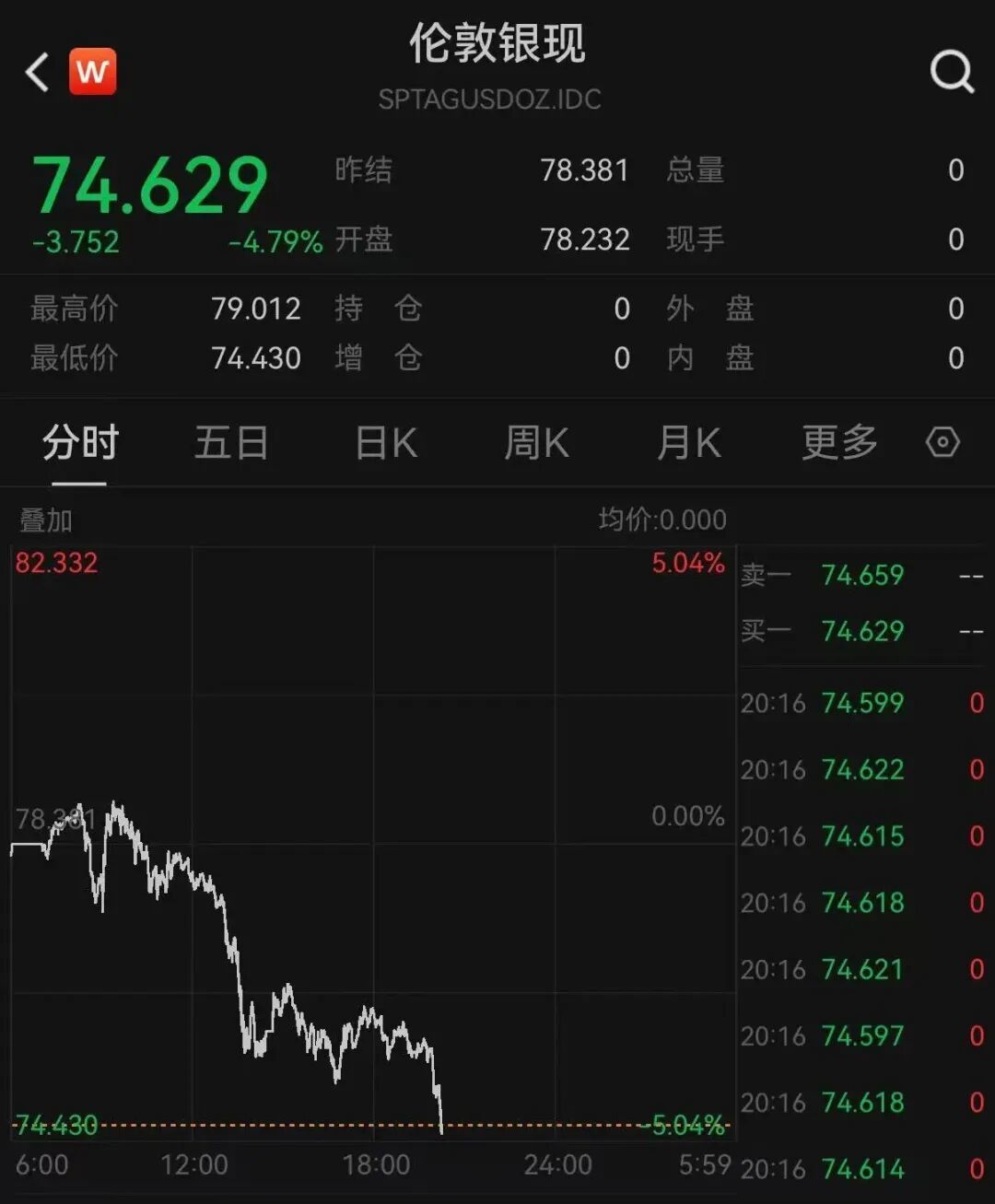
Group 1: Federal Reserve and Economic Outlook - Federal Reserve Governor Milan expects interest rates to be cut by approximately 150 basis points by 2026, potentially creating around one million jobs without triggering inflation [1] - Milan believes that the current policy is not neutral and that the U.S. economy is still significantly above neutral levels [1] - The core inflation level has reportedly returned to near the Fed's target of 2%, with expectations of strong economic growth in the U.S. this year [1] Group 2: Labor Market and Employment Data - The U.S. Labor Department is set to release non-farm payroll data, which is the first timely report since the government shutdown, with economists predicting an increase of 73,000 jobs in December 2025, up from 64,000 in November 2025, and a slight decrease in the unemployment rate to 4.5% [1] - Recent ADP data, although weak, confirms a trend of "orderly cooling" in the labor market, which may reinforce expectations for continued interest rate cuts by the Fed in the first half of the year [1] Group 3: Precious Metals Market - On January 8, both gold and silver prices experienced significant declines, with silver dropping nearly 5% to $74.629 per ounce and gold falling over 1% to $4410.25 per ounce [2] - Morgan Stanley forecasts that gold prices will rise to $4800 per ounce by the fourth quarter of 2026, surpassing the historical record set in 2025, driven by declining interest rates, changes in Fed leadership, and ongoing purchases by central banks and funds [5]