火锅

Search documents
海底捞,把饭圈玩明白了
36氪· 2025-08-12 13:46
Core Viewpoint - The article discusses how Haidilao has successfully positioned itself as a popular post-concert gathering spot for fans, leveraging the "fan economy" to boost its business and customer engagement [4][66][68]. Group 1: Haidilao's Strategy - Haidilao has expanded its business model to include post-concert gatherings, where fans often go to enjoy hot pot after attending concerts [6][7][50]. - The brand has effectively utilized transportation services, such as buses, to transport concert-goers to its restaurants, creating a seamless experience for fans [15][20][59]. - The restaurant chain has tailored its offerings to cater to fans, including themed decorations and special services that resonate with concert-goers [31][36][41]. Group 2: Impact on Business - During peak concert seasons, Haidilao has seen significant increases in customer traffic, with reports of up to 400 fans dining at a single location after a concert [48][70]. - The late-night dining trend has been revitalized, with fan attendance boosting the restaurant's evening customer flow by 50% to 100% [78]. - The brand's ability to attract fans has led to a notable increase in revenue, with some locations reporting a 20% year-on-year growth during concert events [72]. Group 3: Customer Experience - Fans have expressed that the experience of dining at Haidilao post-concert is more about the communal joy and excitement rather than the food itself [84]. - The atmosphere created by Haidilao, including fan interactions and themed events, has made it a preferred choice for post-concert gatherings [44][68]. - The brand's understanding of fan culture and preferences has allowed it to create a unique dining experience that resonates with concert attendees [32][36][66].



内蒙古呼伦贝尔一火锅店因“阴阳菜单”等问题被罚10万元
Xin Jing Bao· 2025-08-12 10:15
8月12日,内蒙古呼伦贝尔海拉尔区市监局通报一火锅店涉嫌存在"阴阳菜单"等问题处罚结果。8月1 日,有网民称海拉尔区蒙元牛门焰传统涮火锅店涉嫌存在"缺斤短两"、"阴阳菜单"等问题。之后,海拉 尔区市场监督管理局对该店进行立案调查。8月12日,海拉尔区市监局对当事人作出警告并罚款10万 元,当事人已缴纳罚款。 ...
巴奴毛肚火锅拟港股IPO 中国证监会要求补充说明报告期内分红内部决策情况以及税费缴纳等情况
Zhi Tong Cai Jing· 2025-08-08 11:26
Group 1 - The China Securities Regulatory Commission (CSRC) has requested additional disclosures from Banu Hotpot regarding dividend decisions, tax payments, and foreign exchange management procedures during the reporting period [1][2] - Banu International Holdings Limited has submitted a listing application to the Hong Kong Stock Exchange, with China International Capital Corporation and CMB International as joint sponsors [1] - Banu is recognized as the largest quality hotpot brand in China, holding a 3.1% market share in the quality hotpot sector as of 2024, according to Frost & Sullivan [2] Group 2 - The CSRC has asked Banu to clarify the reasons for the founder's and spouse's additional shareholding through Tomato Second, despite existing holdings through personal and employee platforms [1] - The company must provide details on the development and operation of its digital products, including user information collection and data security measures before and after the listing [2] - The company is required to explain the internal decision-making process for dividends, the necessity of financing for the listing, and compliance with labor laws regarding non-full-time employees [2]
新股消息 | 巴奴毛肚火锅拟港股IPO 中国证监会要求补充说明报告期内分红内部决策情况以及税费缴纳等情况
智通财经网· 2025-08-08 11:24
Group 1 - The China Securities Regulatory Commission (CSRC) has requested additional information from Banu Hotpot regarding its dividend decision-making process, tax payments, and foreign exchange management compliance during the reporting period [1][2] - Banu International Holdings Limited has submitted a listing application to the Hong Kong Stock Exchange, with CICC and China Merchants International as joint sponsors [1] - Banu is recognized as the largest quality hotpot brand in China, holding a 3.1% market share in the quality hotpot sector as of 2024, according to Frost & Sullivan [2] Group 2 - The CSRC has asked Banu to clarify the reasons behind the ownership structure involving Tomato Second and the compliance of related foreign investment and foreign exchange management procedures [1][2] - The company must provide details on its website, app, and data protection measures, including user information collection and third-party data sharing practices [2] - Banu's internal decision-making regarding dividends and the necessity of financing through the upcoming listing must be justified in light of the company's liabilities [2]
海底捞破局火锅红海,“千店千面”战略探索标准化与个性化平衡点
Zhong Guo Chan Ye Jing Ji Xin Xi Wang· 2025-08-08 06:47
Core Insights - The restaurant market is undergoing iterative upgrades, with increasingly diversified consumer demands leading to a consensus among dining enterprises for refined layouts [1] - Haidilao has launched a new premium store in Beijing, focusing on Cantonese-style hot pot with high-quality seafood and Wagyu beef, enhancing the dining experience through a more sophisticated environment and service [1] - The company is decentralizing decision-making to frontline stores, allowing for differentiated operations while maintaining standardized service quality, achieving a "thousand stores, thousand faces" approach [2] Company Strategy - Haidilao is expanding its personalized service offerings through initiatives like the "Joyful Banquet" for customized dining experiences tailored to various important gatherings [1] - The new premium store features trained staff with backgrounds in high-end hospitality, aiming to provide a refined dining experience that meets consumer expectations for customization [1] - The company is balancing standardization and differentiation to maintain brand warmth while catering to the ceremonial needs of niche markets [2]
杨国福麻辣烫入局自助小火锅
Bei Jing Shang Bao· 2025-08-07 15:39
Core Viewpoint - The self-service hot pot market is experiencing renewed interest, with Yang Guo Fu's recent opening of a self-service hot pot restaurant in Qingdao, priced at 59.9 yuan per person, highlighting a polarized reception among consumers [1][3]. Company Summary - Yang Guo Fu's self-service hot pot restaurant offers a variety of options, including eight types of broth and a range of ingredients, with an initial promotional price of 29.9 yuan per person, later adjusted to 59.9 yuan [3]. - The restaurant's operational model includes a QR code ordering system and conveyor belt delivery of ingredients, aiming to provide a cost-effective dining experience [3]. - Consumer feedback has been mixed, with some praising the affordability and freshness of ingredients, while others criticize the cleanliness and quality of service [3][6]. Industry Summary - The self-service hot pot segment is growing, with over 50,000 outlets projected by July 2024, accounting for approximately 10% of the total hot pot market in China [4]. - The low entry barrier for self-service hot pot restaurants is attributed to lower investment costs, with startup expenses around 150,000 yuan and minimal staffing requirements [5]. - Despite the growth, the industry faces challenges such as maintaining food quality and safety, with reports of declining consumer trust due to issues like unsanitary conditions and subpar ingredients [6][7]. - The profitability of self-service hot pot models is under scrutiny, as they must balance high turnover rates with quality service and ingredient sourcing, particularly in competitive urban markets [6][7].
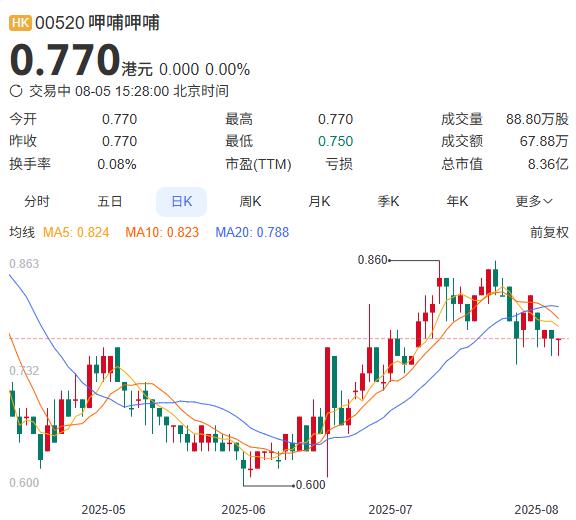
五年间累计亏损超13亿,呷哺呷哺「不好吃了」?
36氪· 2025-08-07 13:24
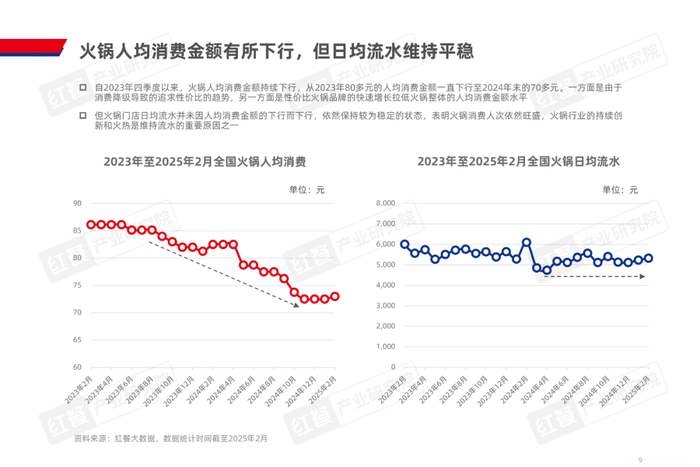
Core Viewpoint - The article discusses the struggles of the hot pot chain company Xia Bo Xia Bo, highlighting its significant financial losses and challenges in maintaining market share amidst increasing competition in the hot pot industry [4][5][6][14]. Financial Performance - Xia Bo Xia Bo is expected to report revenues of approximately 1.9 billion yuan and a net loss between 80 million to 100 million yuan for the fiscal year ending June 30, 2025 [5]. - Since 2021, Xia Bo Xia Bo has been on a losing streak, accumulating losses of approximately 1.326 billion yuan over five years [6][9]. - The company's net losses from 2021 to 2024 were 293 million yuan, 353 million yuan, 199 million yuan, and 401 million yuan, with an additional loss of about 80 million yuan in the first half of 2025 [9]. Brand Performance - Xia Bo Xia Bo's core revenue sources are its two brands: Xia Bo Xia Bo and its high-end sub-brand Cou Cou, which has been underperforming [11]. - In 2024, Cou Cou's revenue decreased significantly, with a net loss of 353 million yuan, accounting for nearly 90% of the group's overall losses [12]. - The average customer spending at Cou Cou dropped from 142.3 yuan to 123.5 yuan, and table turnover rates fell from 2 times to 1.6 times compared to the previous year [12]. Market Position and Competition - Xia Bo Xia Bo's stock price has plummeted to 0.77 HKD, with its market capitalization dropping from 29 billion HKD to 830 million HKD [8][13]. - The hot pot market is becoming increasingly competitive, with new brands emerging and capturing market share, which has led to a decline in Xia Bo Xia Bo's visibility among consumers [20][21]. - The overall hot pot market in China is projected to grow to 668.9 billion yuan by 2025, but the growth rate is expected to slow from 10% in 2019 to 4.3% in 2025 [20]. Challenges Faced - Xia Bo Xia Bo faces challenges from various competitors, including fast-casual hot pot brands and regional players that offer lower prices and better operational efficiency [22]. - The company has struggled with unclear positioning and failed attempts to transition from a fast-food model to a light dining experience, leading to a loss of its original value proposition [16][17]. - The hot pot industry is experiencing a significant exit of businesses, with over 210,000 stores closing in the past year, indicating a highly competitive environment [23].
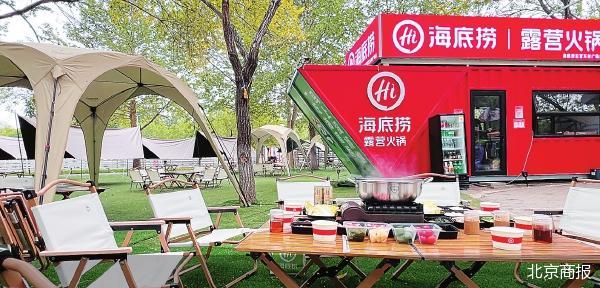
海底捞:“户外+”创造餐饮新增长极
Bei Jing Shang Bao· 2025-08-07 12:35
Core Insights - Haidilao is transforming the dining experience by integrating hot pot with outdoor camping, aiming to connect emotions, culture, and lifestyle [1] - The trend of "outdoor +" is reshaping the restaurant industry, as traditional dining growth faces challenges [1][7] - The camping hot pot model has seen significant demand, with a 50% increase in bookings during the Dragon Boat Festival [3][4] Company Strategy - Haidilao has opened over a hundred camping hot pot locations, with the first in Beijing showing high occupancy rates during weekends and holidays [3][4] - The camping hot pot stores offer various dining options for different group sizes, catering to a diverse customer base beyond just hot pot enthusiasts [3] - The company is adopting a "single store, single creation" approach for its camping hot pot locations, allowing regional managers to tailor offerings based on local market insights [5] Industry Trends - The outdoor dining market is expanding, with a projected 31.9% year-on-year growth in camping-related dining transactions in 2024 [1][8] - The integration of dining with outdoor activities is becoming a new growth logic for the restaurant industry, moving beyond traditional metrics like taste and price [7][9] - The rise of outdoor dining experiences is driven by changing consumer preferences for diverse and personalized experiences [9][11] Challenges and Considerations - Outdoor dining incurs higher operational costs and faces challenges related to weather and seasonal factors [1][4][12] - Brands must ensure that new outdoor experiences align with their core values to avoid diluting brand identity [12][13] - The sustainability of the outdoor dining trend is questioned, with concerns about whether it will remain popular in the long term [12][13]
海底捞求变:高端化与下沉市场能否兼得?
Xin Lang Cai Jing· 2025-08-07 10:40
Group 1 - The core viewpoint of the articles indicates that Haidilao is facing challenges in its main hot pot business due to market saturation and declining consumer spending, prompting the company to explore new business lines to sustain growth [1][2][5][9] - Haidilao's first premium store opened in Beijing, featuring high-quality ingredients and a significantly higher average spending of around 700 RMB per guest, which is seven times that of regular stores [1] - Concurrently, Haidilao is launching budget-friendly dining options, such as the "Jugaogao Self-Service Hot Pot" with a price of 59.9 RMB per person, indicating a dual strategy to target both high-end and budget markets [1][10] Group 2 - The hot pot market in China is experiencing a slowdown, with a projected growth rate of only 5.3% in 2025, down from double-digit growth in previous years, leading to a reduction in the number of hot pot restaurants [2][9] - Haidilao's total number of self-operated restaurants decreased to 1,355 by the end of 2024, reflecting a decline in its market presence [2] - The average spending per guest has also declined, with figures dropping from 104.9 RMB in 2022 to 97.5 RMB in 2024, indicating a decrease in consumer spending power [7][9] Group 3 - Haidilao's revenue for 2024 was 42.75 billion RMB, with a year-on-year growth of only 3.1%, while net profit grew by 4.6% to 4.708 billion RMB, suggesting stagnation in growth [9] - The company is actively pursuing new business initiatives under the "Pomegranate Plan," which aims to foster innovation and develop new restaurant brands, with an average of 200 new projects proposed daily [10][14] - Despite its strong supply chain capabilities, Haidilao faces intense competition in the restaurant industry, particularly in the small hot pot segment, which is characterized by low prices and high competition [15][19] Group 4 - The competitive landscape for Haidilao's new ventures is challenging, as many of the targeted markets are already saturated, making it difficult to establish a differentiated competitive advantage [15][22] - Haidilao's historical success in the mid-to-high-end hot pot market was largely due to its focus on service quality, which may not easily translate to its new business models [21][22] - The company must find a unique value proposition in its new offerings to avoid homogenization and maintain profitability, as simply replicating its previous service model may not suffice [22]
五年间累计亏损超13亿,呷哺呷哺“不好吃了”?
3 6 Ke· 2025-08-07 00:40
Core Viewpoint - The company Xiapu Xiapu is facing significant financial challenges, with continuous losses and a declining market position, while competitors like Banu Hotpot are thriving and preparing for an IPO [1][2][10]. Financial Performance - Xiapu Xiapu has been in a loss-making situation since 2021, accumulating losses of approximately 1.326 billion yuan over five years [2][5]. - The expected revenue for Xiapu Xiapu for the fiscal year ending June 30, 2025, is around 1.9 billion yuan, with a projected net loss between 80 million to 100 million yuan [1]. - The company's net losses from 2021 to 2024 were 293 million yuan, 353 million yuan, 199 million yuan, and 401 million yuan, respectively, with a loss of about 80 million yuan in the first half of this year [5][10]. Market Position and Competition - Xiapu Xiapu's stock price has plummeted to 0.77 HKD, with its market capitalization dropping from 29 billion HKD to 830 million HKD [4][10]. - The company has lost its competitive edge in the hotpot market, which is becoming increasingly crowded with new entrants and established brands like Banu Hotpot, which is projected to generate 2.307 billion yuan in revenue for 2024 [2][15][19]. - The hotpot industry is expected to grow to 668.9 billion yuan by 2025, but the growth rate is slowing down from 10% in 2019 to 4.3% in 2025 [15]. Brand and Operational Challenges - Xiapu Xiapu's high-end sub-brand "Coucou" is underperforming, with losses accounting for nearly 90% of the company's total losses in 2024 [3][9]. - The brand's average customer spending has decreased from 142.3 yuan to 123.5 yuan, and table turnover rates have dropped from 2 times to 1.6 times per day [9]. - The company has faced challenges due to aggressive expansion strategies, leading to poor site selection and operational inefficiencies, resulting in a decline in same-store sales by 23.3% in 2024 [11][14]. Consumer Trends and Market Dynamics - The competitive landscape is intensifying, with various brands targeting different market segments, including low-cost fast-casual options and high-end dining experiences [17][19]. - Consumer preferences are shifting towards high-quality and cost-effective dining options, making it crucial for Xiapu Xiapu to innovate and enhance service quality to regain market share [19].