
量子计算

Search documents
量子科技概念爆发,科大国创20%涨停,国盾量子续创新高
Zheng Quan Shi Bao Wang· 2025-10-29 02:13
Core Viewpoint - Quantum technology stocks experienced a strong surge on October 29, with notable gains in companies such as Keda Guokai, Guandun Quantum, and others, driven by advancements in quantum computing technology and its potential for commercialization [1] Group 1: Market Performance - Keda Guokai reached a 20% limit up, while Guandun Quantum rose approximately 12%, setting new highs [1] - Other companies like Tianrongxin and Shenzhou Information also hit the limit up, with Geer Software and Western Superconducting increasing over 7% [1] Group 2: Technological Advancements - NVIDIA announced the launch of NVQLink, connecting 17 quantum computing companies and 9 research laboratories, integrating GPU computing with quantum processors [1] - NVQLink is an open system architecture designed to build accelerated quantum supercomputers [1] Group 3: Industry Outlook - Quantum computing is identified as a core driver of next-generation information technology, transitioning from laboratory research to industrial applications [1] - The industry is experiencing rapid development due to technological breakthroughs, policy support, and market demand, with applications expanding from specialized to general computing [1] - The period from 2025 to 2030 is projected to be a golden window for commercialization, with the market potentially reaching a scale of hundreds of billions [1]


马斯克再次“吃瓜”量子计算:谷歌首次实现可验证的量子优越性
Sou Hu Cai Jing· 2025-10-28 23:45
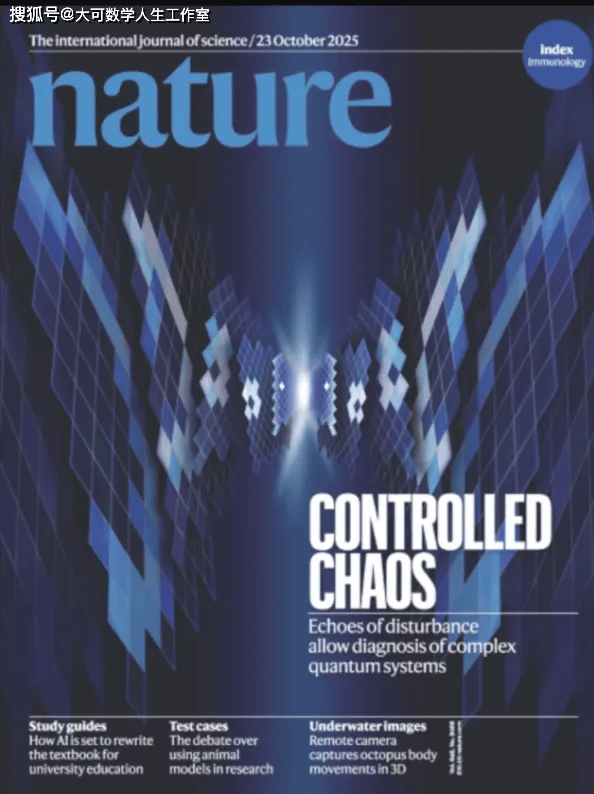
Group 1 - Google announced a historic research achievement with the "Quantum Echoes" algorithm, demonstrating verifiable quantum advantage on the Willow chip, outperforming the best classical algorithms by 13,000 times [1] - The research involved members from Google's Quantum AI team, DeepMind, and researchers from UC Berkeley and Dartmouth College, including Nobel Prize winner Michel Devoret [1] - The achievement has led to a surge in quantum computing stocks in the US and China, with notable figures like Elon Musk expressing excitement about the practicality of quantum computing [3] Group 2 - Google is recognized as the pioneer of "quantum supremacy," having first achieved it in 2019 with its "Sycamore" quantum computer, while domestic counterparts like "Jiuzhang" and "Zuchongzhi 2" have also reached quantum supremacy [4] - Quantum supremacy refers to surpassing classical computers on specific problems, and without it, classical computers can simulate any computational task, thus not providing true computational power [4] - Elon Musk has previously shown interest in quantum computing, particularly impressed by Google's superconducting quantum chip Willow, which features 105 qubits and strong quantum error correction capabilities [4]


“十五五”规划建议发布 更清晰的方向!
Sou Hu Cai Jing· 2025-10-28 23:35
Core Insights - The "14th Five-Year Plan" emphasizes a strategic approach to counter global challenges while focusing on domestic economic stability and growth [1][6][11] Strategic Dimensions - Understanding the complexities and volatility of the current macro external environment is crucial, as traditional globalization principles are changing [1][2] - Concentrating efforts on internal matters is essential to navigate external changes effectively [1][2] Historical Perspective - A historical viewpoint is necessary to recognize China's current position and future trajectory in the global landscape [2] Goal Orientation - The unwavering goal remains the construction of a modern socialist country and the rejuvenation of the Chinese nation, despite global uncertainties [2][4] Problem Orientation - Identifying and addressing existing issues is vital after understanding the broader context [2] Economic Growth and Quality - The plan highlights the importance of both qualitative and quantitative aspects of growth, with a target economic growth rate of around 5% to achieve the status of a moderately developed country by 2035 [4] - Emphasis on improving labor productivity as a key component of quality growth [4] Domestic Market Stability - Enhancing internal stability through a unified domestic market is critical to countering external uncertainties [6] - The establishment of a unified domestic market involves standardizing regulations, infrastructure, and business environments [6] Technological Development - China has made significant advancements in technology, particularly in AI, quantum computing, and nuclear energy, positioning itself to compete with the U.S. [8][10] - The focus on AI+ applications and breakthroughs in quantum computing are seen as pivotal for future growth [9][10] Global Engagement - The "China+N" strategy reflects a shift in global investment patterns, with foreign companies recognizing the importance of the Chinese market [11][12] - Chinese enterprises are increasingly expanding globally, contributing to a new structure in global supply chains [13] Currency Internationalization - The acceleration of the internationalization of the Renminbi is deemed necessary for strengthening China's financial position in global competition [14]

黄仁勋发声!英伟达市值暴增1.6万亿元;英伟达推出全新量子设备 以实现量子处理器与英伟达GPU互联——《投资早参》
Mei Ri Jing Ji Xin Wen· 2025-10-28 23:22
Key Market News - NVIDIA CEO Jensen Huang highlighted technological breakthroughs in 6G, AI, quantum computing, and robotics at the GTC conference, introducing NVQLink technology that connects quantum processors with GPU supercomputers, supported by 17 quantum computing companies [1] - U.S. stock indices closed higher, with the Nasdaq up 0.8%, Dow Jones up 0.34%, and S&P 500 up 0.23%; NVIDIA's stock rose approximately 5%, adding $231.8 billion to its market cap, nearing $5 trillion [1] Industry Insights - NVIDIA launched a new quantum device, NVQLink, to connect quantum processors with NVIDIA GPUs, supported by 17 quantum computing companies and 9 research labs, aiming to create accelerated quantum supercomputers [3] - Quantum computing is transitioning from laboratory experiments to industrial applications, with significant growth expected between 2025 and 2030, potentially reaching a market size of hundreds of billions of dollars [4] - The digital RMB ecosystem is being established, with a cumulative transaction amount of 14.2 trillion yuan by September 2025, covering 26 regions and facilitating 3.32 billion transactions [4][5] - A research team from the Chinese Academy of Sciences successfully industrialized the production of high-purity Hastelloy alloys, crucial for second-generation high-temperature superconducting materials, which are essential for controlled nuclear fusion [5][6]

黄仁勋发声!英伟达市值暴增1.6万亿元;英伟达推出全新量子设备, 以实现量子处理器与英伟达GPU互联——《投资早参》
Mei Ri Jing Ji Xin Wen· 2025-10-28 23:18
Important Market News - NVIDIA CEO Jensen Huang delivered a keynote speech at the GTC conference, focusing on breakthroughs in 6G, AI, quantum computing, and robotics, introducing NVQLink technology that connects quantum processors with GPU supercomputers, supported by 17 quantum computing companies [1] - Major US stock indices closed higher, with the Nasdaq up 0.8%, Dow Jones up 0.34%, and S&P 500 up 0.23%. NVIDIA's stock rose approximately 5%, adding $231.8 billion to its market cap, nearing $5 trillion. Microsoft increased about 2%, regaining a $4 trillion market cap. Intel rose over 5%, while Tesla and Amazon gained over 1%. Nokia's ADR surged about 23%, marking its largest single-day gain since January 2021 [1] Industry Insights - NVIDIA launched a new quantum device to connect quantum processors with NVIDIA GPUs through NVQLink, which is an open system architecture that tightly couples GPU computing with quantum processors to build accelerated quantum supercomputers. This has garnered support from 17 quantum computing companies and 9 research laboratories [3] - Quantum computing is transitioning from laboratory experiments to industrial applications, driven by technological breakthroughs, policy support, and market demand. The industry is expected to reach a market size of hundreds of billions by 2025-2030, with China prioritizing quantum technology in its 14th Five-Year Plan [4] - The digital RMB ecosystem has been established, with a cumulative transaction amount of 14.2 trillion yuan by September 2025 across 26 regions. The digital RMB trial covers various sectors, creating replicable application models [4][5] - A research team from the Chinese Academy of Sciences successfully industrialized the production of high-purity Hastelloy alloy, crucial for the manufacturing of second-generation high-temperature superconducting tapes, which are essential for controlled nuclear fusion [6] Company Updates - Silane Technology announced that a shareholder plans to reduce holdings by up to 8.441 million shares, representing 2% of the total share capital [7] - Brother Technology's chairman and other executives plan to reduce their holdings by a total of approximately 1.142 million shares [7] - ZTE Corporation reported Q3 2025 revenue of nearly 29 billion yuan, a year-on-year increase of 5.11%, but net profit decreased by 87.84%. For the first three quarters of 2025, revenue was 100.52 billion yuan, up 11.63%, while net profit fell by 32.69% [7]
总计5500亿美元,日本对美投资计划清单曝光,最大项目近1000亿美元
Mei Ri Jing Ji Xin Wen· 2025-10-28 22:28
Group 1: US-Japan Investment Mechanism - The Japanese government has unveiled a potential project list under a $550 billion investment mechanism with the US, detailing specific funding proposals related to the core terms of the US-Japan trade agreement [4][5] - The project list includes investments from companies like SoftBank, Westinghouse Electric, and Toshiba in sectors such as energy, artificial intelligence, and critical minerals, with individual project sizes ranging from $350 million to $100 billion [4][5] - Energy projects dominate the list, with Westinghouse planning to invest nearly $100 billion in AP1000 nuclear reactors and small modular reactors, while SoftBank is interested in a $25 billion power infrastructure project [5] Group 2: Market Reactions and Stock Performance - US stock indices reached new historical highs, with the Dow Jones up 0.32%, Nasdaq up 0.31%, and S&P 500 up 0.01% as of the latest report [1] - Uranium and nuclear power stocks surged, with the uranium sector rising by 11.5%, and notable gains for companies like Cameco and Uranium Energy [6][7] - The partnership between Cameco and Brookfield Asset Management with the US government aims to construct at least $80 billion worth of Westinghouse AP1000 nuclear units, which is expected to create significant job opportunities [7][9] Group 3: Apple and Microsoft Market Performance - Apple's market capitalization briefly surpassed $4 trillion, with strong early sales of the iPhone 17 series, outperforming the iPhone 16 series by 14% in the first 10 days post-launch [10][15] - Microsoft also reached a market cap of approximately $4.03 trillion, driven by a new agreement with OpenAI for additional Azure services [11][13] - The iPhone 17's sales performance indicates a robust market demand, with average sales growth of 31% across China and the US compared to the previous model [15]



量子计算:信息处理的新型计算范式产业赛道与主题投资风向标
Tianfeng Securities· 2025-10-28 09:42
Group 1 - Quantum computing is viewed as a significant direction for future technological development, utilizing principles of quantum mechanics for information processing, enabling ultra-fast parallel computing and exponential speedup for specific problems [2][10] - The global quantum industry is expected to grow at an average annual growth rate (CAGR) of 44.8% from 2023 to 2028, reaching a market size of $10.54 billion by 2027 and potentially $811.7 billion by 2035 [17][14] - The quantum computing industry chain includes upstream components like measurement and control systems, low-temperature devices, and software development tools, midstream quantum computer manufacturing, and downstream applications across various fields [17][16] Group 2 - China has made significant strides in quantum computing, with the first research group established in 2003 and the first domestically produced quantum computer prototype released in 2020, with the "Zu Chongzhi III" superconducting quantum computer expected to be unveiled in 2025 [11][10] - The quantum computing measurement and control system is crucial for the operation of quantum computers, with advancements in automation and integration expected in the future [27][20] - The quantum computing software system is still in its early stages, characterized by fragmentation and diversity, with over 100 global quantum software startups, while China has only a few teams capable of providing real quantum computing services [33][40] Group 3 - The downstream of the quantum computing industry connects technology with market needs, primarily consisting of quantum computing cloud service providers and industry application parties, facilitating the early cultivation of the industry ecosystem [36][40] - Current applications of quantum computing are focused on quantum simulation, quantum combinatorial optimization, and quantum linear algebra, with successful applications in various sectors including scientific research, chemical engineering, national defense, and finance [40][36] - The quantum chip is the core hardware of quantum computers, with various types including superconducting, silicon spin, NV center, trapped ions, neutral atoms, and photonic technologies, with superconducting technology being the most mature [20][18]
券商晨会精华:看好量子计算和可控核聚变产业趋势向上
Xin Lang Cai Jing· 2025-10-28 00:29
Group 1 - The market experienced a significant upward trend, with the Shanghai Composite Index rising over 1% and reaching a ten-year high, approaching 4000 points [1] - The trading volume in the Shanghai and Shenzhen markets was 2.34 trillion, an increase of 365.9 billion compared to the previous trading day [1] - Key sectors that saw gains included storage chips, CPO, and controllable nuclear fusion, while gaming and wind power equipment sectors faced declines [1] Group 2 - Guotai Junan Securities expressed optimism about the upward trend in quantum computing and controllable nuclear fusion industries, supported by national policy and funding [2] - The 14th Five-Year Plan emphasizes the development of quantum technology and nuclear fusion as new economic growth points [2] Group 3 - CITIC Construction Investment highlighted the investment opportunities in the liquid cooling sector, predicting significant growth in market size due to increased adoption of liquid cooling in AI chip applications by 2025 [3] - The penetration of liquid cooling in the ASIC market and domestic market is expected to accelerate as the industry matures [3] Group 4 - China Merchants Securities anticipates a marginal improvement in the profit growth rate of non-financial A-shares in the third quarter, driven by a low base effect [4] - High profit growth is expected in sectors such as information technology and midstream manufacturing, while upstream resources and healthcare are projected to see a narrowing of performance declines [4]
加密货币、量子计算概念股盘初集体上涨
Ge Long Hui A P P· 2025-10-27 13:59
Core Viewpoint - The U.S. stock market saw a collective rise in cryptocurrency and quantum computing concept stocks, indicating positive market sentiment in these sectors [1] Group 1: Cryptocurrency Stocks - Robinhood, BMNR, and SBET stocks rose over 4% [1] - Strategy, Bitfarms, and IREN stocks increased by more than 3% [1] Group 2: Quantum Computing Stocks - IONQ and QBTS stocks surged over 5% [1] - RGTI, QUBT, and ARQQ stocks experienced an increase of more than 4% [1]
盟云全息(HOLO.US)预计全年净利润超3.5亿元 拟斥资4亿美元投向量子计算等前沿领域
Zhi Tong Cai Jing· 2025-10-27 13:29
Group 1: Company Overview - Mengyun Holography (HOLO.US) expects to achieve a net profit exceeding RMB 350 million for the year 2025, a significant turnaround from a net loss in the previous year [1] - The company reported a net loss of approximately RMB 63 million for the entire year of 2024 [1] - Mengyun Holography currently holds over RMB 3 billion in cash, cash equivalents, and short-term investments [1] - The company plans to allocate over $400 million from its cash reserves to invest in quantum computing, blockchain, and quantum holography technologies [1] Group 2: Industry Trends - The quantum computing sector in the U.S. stock market has seen a strong performance, with Mengyun Holography experiencing a pre-market surge of over 17% following positive news [2] - Recent developments, including the U.S. government's consideration of using federal funds to acquire equity in quantum computing companies, have led to a collective rise in quantum sector stocks [2] - Key players in the quantum computing field, such as IonQ, Rigetti, and D-Wave, have also seen significant stock price increases, reinforcing expectations of a "national-level track" premium [2] - Industry experts believe that the quantum computing field is approaching critical milestones, with the potential for achieving "quantum advantage" and "quantum supremacy" within the next three to five years [2][3] - IonQ's CEO has indicated that the era of "quantum supremacy" is imminent, marking a significant threshold where quantum processors can outperform classical supercomputers on specific tasks [3] - Quantum computing systems leverage quantum mechanics properties, such as superposition and entanglement, to provide a new computing paradigm that could vastly exceed traditional binary computers in certain areas [3]
