
氯碱

Search documents
氯碱化工:第三季度净利润1.7亿元,同比下降29.49%
Xin Lang Cai Jing· 2025-10-27 08:01
Core Insights - The company reported a third-quarter revenue of 2.109 billion yuan, representing a year-on-year decline of 0.33% [1] - The net profit for the third quarter was 170 million yuan, showing a significant year-on-year decrease of 29.49% [1] - For the first three quarters, the total revenue reached 5.687 billion yuan, which is a year-on-year decrease of 5.36% [1] - The net profit for the first three quarters was 613 million yuan, reflecting a slight year-on-year increase of 1.02% [1]

烧碱周报:现货价格稳中有涨,盘面震荡偏弱-20251027
Guo Mao Qi Huo· 2025-10-27 06:52
1. Report Industry Investment Rating - The investment view is "oscillating", indicating that the short - term market has no obvious driving force and is expected to mainly oscillate [3]. 2. Core View of the Report - The spot price of caustic soda is stable with a slight increase, while the futures market is oscillating weakly. The supply side shows a mixed situation with reduced maintenance and increased production this week, but different regions have different load changes. The demand side is neutral, with weak non - aluminum demand and stable overall production after offsetting increases and decreases. The inventory is increasing, and the profit, valuation are on the bearish side. The macro - policy has a neutral impact, and the short - term market is expected to oscillate [3][6]. 3. Summary by Relevant Catalogs 3.1 Main Views and Strategy Overview - **Supply**: It is neutral. This week, maintenance decreased and production increased by 0.6 tons to 80 tons. The average capacity utilization rate of sample enterprises with 200,000 tons and above of caustic soda was 80.8%, a week - on - week decrease of 0.6%. Different regions had different load changes, with Northeast, East, and South China seeing load declines, and Northwest and North China having slight increases [3]. - **Demand**: It is neutral. Alumina start - up declined, non - aluminum demand was weak. The capacity utilization rate of the viscose staple fiber industry was 88.61%, a decrease of 1.02% from last week. The overall production of lithium hydroxide was stable [3]. - **Inventory**: It is bearish. The recent shipping pressure increased, and caustic soda inventory accumulated. The factory inventory of fixed liquid caustic soda sample enterprises with 200,000 tons and above was 414,300 tons (wet tons), a week - on - week increase of 2.73% and a year - on - year increase of 37.78% [3]. - **Basis**: It is neutral. The current basis of the main contract is around 95, and the futures price is at a discount [3]. - **Profit**: It is bearish. The average weekly gross profit of Shandong chlor - alkali enterprises was 573 yuan/ton, a week - on - week increase of 45.43% [3]. - **Valuation**: It is bearish. The spot price is neutral, the absolute futures price is low, and the near - month contract is at a discount [3]. - **Macro - policy**: It is neutral. The anti - involution sentiment in the energy and chemical sector subsided, and the futures market traded based on fundamentals [3]. - **Investment View**: It is expected to oscillate. There is no obvious short - term driving force for the futures market, and it is expected to mainly oscillate [3]. - **Trading Strategy**: There is no unilateral or arbitrage strategy for now. Attention should be paid to changes in liquid chlorine prices, rotation storage policies, and the global economic recession [3]. 3.2 Futures and Spot Market Review - The futures market oscillated within a range. The Shandong spot price was stable with a slight increase, and the futures price hit a new low. The liquid chlorine subsidy was less, the liquid chlorine price rose to 250 yuan/ton, the chlor - alkali profit remained high, and the factory operating load remained high. Demand is at the turning point between peak and off - peak seasons. In the future, the new maintenance of alumina will increase, and the supply - demand of caustic soda will turn loose, with the spot price expected to be stable with a slight decline. Future attention should be paid to changes in liquid chlorine and the alumina production start - up rhythm [6]. 3.3 Caustic Soda Supply - Demand Fundamental Data - **Electricity Price**: As the summer peak electricity consumption season approaches, the electricity price stabilizes [32]. - **Upstream Production**: Production decreased slightly, and inventory decreased slightly [35]. - **Main Production Area Output**: In North China, maintenance increased, and output decreased [38]. - **Chlor - alkali Comprehensive Profit**: It decreased [39]. - **Downstream Price**: The alumina price declined, and non - aluminum prices were weak [42]. - **Alumina**: The alumina start - up recovered, and inventory accumulated. Due to the end of maintenance and the start - up of new devices, the start - up rate of Henan alumina increased significantly. The supply - demand balance of alumina improved, inventory accumulated, port bauxite inventory decreased, and alumina profit was good and stable year - on - year [54][65]. - **Non - aluminum Demand**: Non - aluminum start - up was stable but lower than the same period last year. The non - aluminum sector entered the seasonal off - peak season, and start - up declined [66]. - **Liquid Chlorine Downstream**: The start - up rate rebounded [74]. - **Subsequent Maintenance Information**: Multiple enterprises in different regions have maintenance plans from October to November, including full - or half - load maintenance and shutdown for a certain period [77].
以“三高”标准 书写烧碱建设优异答卷
Huan Qiu Wang· 2025-10-27 05:41
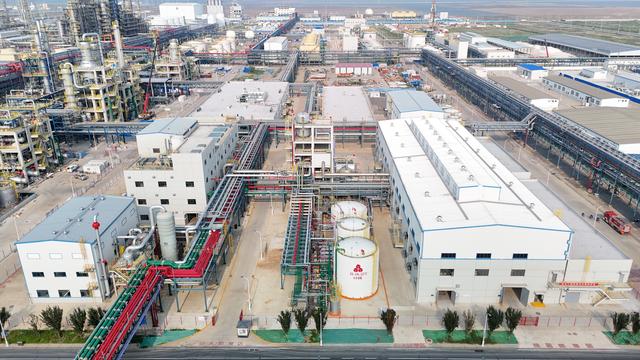
Core Viewpoint - The successful completion of the 300,000 tons/year ion membrane caustic soda project by China Chemical's Fourth Chemical Construction North Company marks a significant milestone in promoting the green upgrade of the chlor-alkali industry in Tianjin, showcasing the company's comprehensive strength in large-scale chemical EPC projects [3][4]. Project Overview - The project, which includes 14 production units and supporting public engineering facilities, was completed on June 30, 2025, and has begun producing qualified caustic soda products [3]. - The project was characterized by high complexity and a dense intersection of specialties, with a construction period of 19 months, achieving "zero accidents, zero defects, and zero delays" [3][5]. Party Building and Management - The project implemented a "Party Building + Production Management" integration model, establishing a "553" work mechanism to enhance project construction efficiency [4]. - Safety measures included over 120 safety inspections led by party members, ensuring effective hazard identification and rectification [4]. Construction Efficiency - The project adopted a "no soil construction" approach, achieving over 80% factory prefabrication of steel structures and pipelines, which minimized on-site interference [5][6]. - The project team divided construction tasks into 128 key nodes, ensuring efficient completion of civil works and precise equipment installation [5]. Technical Innovation - The project utilized digital tools such as "eZWalkerReview" and "Tekla" for digital pre-assembly, which helped avoid over 500,000 yuan in rework costs [7]. - A digital welding management system was implemented, reducing welding defects to below 1.2% [7]. Management Innovations - The project adopted a "divide and conquer" management model, organizing the site into two main areas with dedicated management teams for each unit [8]. - A peak construction period saw over 800 workers on-site, with measures taken to ensure worker health and safety during high temperatures [8]. Future Directions - The successful execution of the Tianjin Bohua Phase II project has established a model for project construction that emphasizes party leadership, technological efficiency, and quality management [8]. - The company plans to leverage the lessons learned from this project to enhance management practices in future EPC projects [8].

氯碱周报:SH:下游存补库需求,关注现货端补库节奏,V:供需矛盾较难解决,但绝对价格偏低空单有限-20251027
Guang Fa Qi Huo· 2025-10-27 03:00
Report Industry Investment Rating No relevant content provided. Core Views Caustic Soda - In the short term, the supply of caustic soda is at a high level, the price of downstream alumina continues to weaken, industry profits are shrinking, and demand - side support is weak, resulting in insufficient support for market prices. In the medium term, as the demand procurement cycle approaches and downstream has restocking needs, caustic soda prices are expected to be supported. Considering the production schedule, there will be more alumina production in Q1 2026, so there may be concentrated stockpiling in Q4 2025, which may tighten spot liquidity. For non - aluminum sectors, after the National Day, as the previous non - aluminum inventory decreases, there may be purchasing willingness due to low prices. It is recommended to stop profiting on existing short positions and track downstream restocking rhythms [2]. PVC - This week, the PVC futures market stopped falling and stabilized, showing a volatile trend. On the supply side, there were still many maintenance enterprises this week, resulting in low production loads. However, it is expected that some maintenance enterprises will end maintenance next week, increasing production and bringing supply back to a high level. On the demand side, domestic downstream construction remains low, product orders are limited, and downstream continues to purchase on a need - to - basis at low prices. The cost of raw material calcium carbide has been rising, but the increase is limited, and the ethylene price may be lowered next week. The cost side provides bottom - level support. In the future, the logic of a lackluster peak season is expected to continue, the futures market will still face pressure, but the absolute price is already low, and a short - term operation strategy of shorting on rebounds is recommended [3]. Summary by Directory Caustic Soda Price and Market Trends - The caustic soda futures price has shown significant fluctuations due to various factors such as macro - economic conditions, alumina price changes, and cost movements. For example, factors like the relaxation of Sino - US tariff conflicts, the strengthening of alumina profits, and the expectation of alumina production resumption have affected the spot - buying willingness and futures prices [6]. Supply - The weekly weighted average operating load rate of sample enterprises in major regions across the country was 85.55%, a 0.1 - percentage - point increase from last week. The caustic soda production in terms of 100% purity was 82.53 tons, a 0.12% increase from last week. Although there were many chlor - alkali device maintenance activities, some enterprises with previously low loads increased their production. Multiple enterprises across different regions are in maintenance or have planned maintenance, with a total weekly maintenance loss of 6.92 tons [25][26]. Demand - Alumina is a major downstream consumer of caustic soda. From late 2025 to 2026, the planned alumina production capacity is 12.3 million tons (including 2 million tons of replacement), with an estimated annual production capacity growth rate of around 10%. The estimated alumina annual output in 2026 will exceed 88 million tons, with a production growth rate of around 6%. The new alumina projects are expected to increase the demand for caustic soda by about 800,000 tons per year, with a relatively concentrated demand increase of 150,000 tons from April to June. In addition, the non - aluminum downstream sectors, such as the printing and dyeing industry, have a seasonal increase in the operating rate, while the viscose staple fiber industry has a decline in the operating rate [30][50]. Export - In September 2025, the export profit of caustic soda increased, and the export volume rebounded significantly. However, the estimated export profit declined in October [54]. PVC Price and Market Trends - The PVC futures price has fluctuated due to factors such as supply - demand relationships, macro - economic sentiment, and cost changes. The spot price has been weakening [61][62]. Supply - This week, the overall operating load rate of PVC powder was 73.74%, a 1.4 - percentage - point decrease from last week. Among them, the operating load rate of calcium - carbide - based PVC powder was 71.65%, a 3.08 - percentage - point decrease, and the operating load rate of ethylene - based PVC powder was 78.56%, a 2.46 - percentage - point increase. Many enterprises are in long - term, current, or planned maintenance, which affects the supply of PVC [83][85]. Demand - The two major downstream sectors of PVC, profiles and pipes, are facing pressure from both demand and industry competition, and the industry's contribution is difficult to improve. The real - estate sector, with the goal of "reducing inventory and stabilizing prices," continues to have a negative impact on demand. According to sample data, downstream orders are significantly lower than the average of the past five years, and both raw material and finished - product inventories are at high levels [93]. Inventory - PVC inventory has been continuously increasing, and the total inventory is at the highest level in recent years compared to the same period [101]. Export and Import - In September 2025, the PVC import volume was 14,400 tons, with an average import price of $736 per ton, and the cumulative import from January to September was 175,500 tons. The single - month import volume increased by 16.08% month - on - month and 7.73% year - on - year, with a cumulative year - on - year increase of 0.76%. The export volume in September was 346,400 tons, with an average export price of $612 per ton, and the cumulative export from January to September was 2.9216 million tons. The single - month export volume increased by 21.945% month - on - month and 24.53% year - on - year, with a cumulative year - on - year increase of 50.63% [119].
银河期货烧碱周报-20251027
Yin He Qi Huo· 2025-10-27 02:21
Report Industry Investment Rating - Not provided in the document Core Viewpoints - The current supply and demand of the Shandong liquid caustic soda market are in a weak balance, and the price trend is stable. The supply side sees some plants resuming operation after maintenance and some enterprises reducing their loads, with overall stable supply. The demand side shows a slight increase in delivery volume to major downstream industries. The stable profit from liquid chlorine reduces enterprises' willingness to adjust prices. Future market trends depend on delivery to major downstream industries and changes in liquid chlorine prices [4]. - The caustic soda market is expected to have a weak and volatile trend. It is recommended to wait and see for arbitrage and options trading [5]. Summary by Directory Comprehensive Analysis and Trading Strategy - **Comprehensive Analysis**: The Shandong liquid caustic soda market is in a weak balance, with stable supply and a slight increase in demand. Liquid chlorine provides profit support, and future trends depend on downstream delivery and liquid chlorine prices [4]. - **Strategy**: The caustic soda market is expected to be weak and volatile. It is recommended to wait and see for both arbitrage and options trading [5]. Core Logic Analysis - **Shandong Alumina Market**: The delivery volume of liquid caustic soda to large - scale alumina plants in Shandong is decreasing, and the price has been adjusted downwards several times. As of October 17, the price is stable at 740 yuan/ton, and the current delivery volume is 8720 tons, showing a significant decline [7][9]. - **Caustic Soda Inventory**: As of October 23, 2025, the inventory of fixed - liquid caustic soda sample enterprises with a capacity of 200,000 tons and above is 414,300 tons (wet tons), a 2.73% increase from the previous week and a 37.78% increase year - on - year. The capacity utilization rate is 23.80%, a 0.71% increase from the previous week. Most regions' inventory ratios are rising [13]. - **Alumina Market**: Most alumina enterprises are operating normally, with no clear maintenance plans except for a roasting furnace rotation plan in a large - scale alumina group in Chongqing. The operating capacity is 9.765 million tons, an increase of 500,000 tons from the previous week, and the operating rate is 85.2%. The inventory of alumina in aluminum plants is rising, and the market is under pressure with a downward trend [17]. - **Caustic Soda Production**: The average capacity utilization rate of 200,000 - ton and above caustic soda sample enterprises in China from October 10 - 16, 2025, is 81.4%, a 2.6% decrease from the previous week. The load has decreased in multiple regions [19]. Weekly Data Tracking - **Caustic Soda Futures and Spot Prices**: Includes price trends of caustic soda futures contracts, 32% and 50% liquid caustic soda, flake caustic soda, as well as price differences between different varieties and regions [23][25][27]. - **Caustic Soda Profit**: Shows the profit trends of caustic soda and chlor - alkali in Shandong and Jiangsu, as well as the prices of liquid chlorine [40]. - **Caustic Soda Inventory**: Covers factory and market inventories of liquid and flake caustic soda, as well as provincial - level inventory data [42][46]. - **Caustic Soda Production**: Involves production volume and capacity utilization rate of caustic soda, provincial - level production data, and new production capacity plans [49][51][53]. - **Caustic Soda Device Maintenance**: Lists the maintenance situations of caustic soda devices in different regions and enterprises [55]. - **Caustic Soda Consumption**: Presents the demand and weekly consumption of caustic soda, liquid caustic soda, and flake caustic soda [57][58]. - **Alumina Market**: Covers the production capacity, output, and new production capacity plans of alumina, as well as the impact on caustic soda demand [16][61][65]. - **Related Industries**: The capacity utilization rate of the viscose staple fiber industry has increased. The printing and dyeing industry has stable operation but a lackluster "Golden September" [67][71]. - **Caustic Soda Export**: Includes export volume, price, profit, and export destinations of caustic soda, as well as overseas alumina production capacity plans [73][77][82].
南华期货烧碱产业周报:补库不及预期-20251026
Nan Hua Qi Huo· 2025-10-26 12:54
1. Report Industry Investment Rating - There is no information about the report industry investment rating in the provided content. 2. Core Viewpoints of the Report - The current non - aluminum spot market has no obvious replenishment behavior, falling short of expectations, and may wait for the spot price to bottom out to stimulate speculative demand. As maintenance resumes, spot support may weaken. The rising price of liquid chlorine weakens cost support [2]. - High profits limit the price ceiling. In the medium - to - long - term, there is continued production capacity pressure. The implementation degree and time of downstream alumina production capacity may vary, affecting the phased replenishment rhythm [4]. - The pattern of high profits and high production restricts the price space of caustic soda. Overall, the contradictions are limited, but the near - term demand and replenishment rhythm are below expectations. It is expected that the price will fluctuate weakly. It is recommended to conduct range trading within the range of [2300, 2600] [7]. 3. Summary by Relevant Catalogs 3.1 Core Contradictions and Strategy Recommendations 3.1.1 Core Contradictions - Near - term trading logic: The overall spot market is weak, non - aluminum replenishment is below expectations, the chlor - alkali industry maintains medium - to - high profits, and the recent rise in liquid chlorine weakens cost support [3]. - Long - term trading expectations: High profits limit price increases, there is continued production capacity pressure in the medium - to - long - term, and the implementation of downstream alumina production capacity may affect the phased replenishment rhythm [4]. 3.1.2 Trading - Type Strategy Recommendations - Market positioning: The price of caustic soda is expected to fluctuate weakly. Range trading within [2300, 2600] is recommended [7]. - Basis, spread, and hedging arbitrage strategy recommendations: Current short - only positions are advised to exit or wait for signs of the spot price bottoming out [8]. 3.1.3 Industrial Customer Operation Recommendations - Inventory management: For enterprises with high finished - product inventory worried about price drops, shorting caustic soda futures to lock in profits and selling call options to collect premiums are recommended. The recommended hedging ratio is 50%, and the entry range is 2600 - 2650 [11]. - Procurement management: For enterprises with low regular inventory hoping to purchase according to orders, buying caustic soda futures to lock in procurement costs and selling put options to collect premiums are recommended. The recommended hedging ratio is 50%, and the entry range is 2300 - 2350 [11]. 3.1.4 Basic Data Overview - Price data shows that on October 24, 2025, the prices of different types and regions of caustic soda had various changes, such as a - 2.9% drop in Shandong flake caustic soda price compared to the previous day [13]. - The price range forecast for caustic soda is 2300 - 2600, with a current volatility of 25.50% and a historical percentile of 65.5% over three years [11]. 3.2 This Week's Important Information and Next Week's Attention Events 3.2.1 This Week's Important Information - Bullish information: Maintenance continued in October, providing short - term support for the spot market. The price - holding strength of alkali plants needs to be observed [15]. 3.2.2 Next Week's Important Events to Watch - There is no information about next week's important events in the provided content. 3.3 Disk Interpretation 3.3.1 Price - Volume and Fund Interpretation - The main 2601 contract of caustic soda showed low - level fluctuations this week. The absolute price has reached a relatively low level this year, mainly due to weak market sentiment and reality, and the non - aluminum downstream's phased replenishment was below expectations [17]. 3.3.2 Basis and Spread Structure - The non - aluminum end has not shown concentrated replenishment. The continuous rise in liquid chlorine weakens cost support. Attention should be paid to the continued upward movement of liquid chlorine, the replenishment signs of the non - aluminum end in the middle and downstream, and the continuation of inventory accumulation [19]. 3.4 Valuation and Profit Analysis 3.4.1 Upstream and Downstream Profit Tracking in the Industrial Chain - The profit valuation is moderately high. This week, the price of industrial salt remained stable, while the price of liquid chlorine increased, leading to a month - on - month increase in chlor - alkali profits. Currently, the price of liquid chlorine in Shandong is 250 yuan/ton (+200 yuan), and in Jiangsu is 100 yuan/ton (+50 yuan). The current profit of caustic soda in Shandong is over 600 yuan/ton (including liquid chlorine) [30]. 3.4.2 Import and Export Profit Tracking - In terms of exports, the CFR price in Southeast Asia decreased by 5 US dollars to around 455 US dollars, remaining generally stable. There is an expected substitution in overseas caustic soda demand, and the sustainability of exports needs to be observed [40]. 3.5 Supply, Demand, and Inventory 3.5.1 Spot Data - The report provides seasonal price data for different types (32% caustic soda, 50% caustic soda, flake caustic soda) and regions of caustic soda, as well as price difference data between different brands and regions [43][51][54]. 3.5.2 Supply Side - Caustic soda loss volume: Data on weekly and monthly device loss volume is provided [100]. - Liquid caustic soda production and operation: Data on weekly and monthly total production, operation rate, and regional production are provided [102]. - Flake caustic soda production and operation: Data on weekly total production, operation rate, and regional production are provided [111]. 3.5.3 Demand Side - The report provides data on the spot price, operation rate, and import and export volume of downstream products such as alumina, propylene oxide, epichlorohydrin, and viscose staple fiber [118]. 3.5.4 Inventory - Data on the weekly factory inventory of liquid caustic soda and flake caustic soda in different regions are provided [132].
氯碱周报:下游氧化铝调低接货价,新增氧化铝烧碱招标进行中-20251026
Hua Tai Qi Huo· 2025-10-26 12:48
1. Report Industry Investment Rating No information provided. 2. Core Viewpoints of the Report - For caustic soda, the spot price is mainly stable. The supply side has a slight decline in the operating rate due to new production capacity and a mix of maintenance and increased production. The demand side shows a decrease in the receiving price of alumina, and the inventory is at a similar level to last week. The procurement of new alumina plants may support the price in the next two months, and the cost support still exists [1][2]. - For PVC, it rebounds with the macro - sentiment. The supply side is abundant with new production capacity coming on stream, and the demand side has a general purchasing sentiment after a pick - up in downstream operating rates. The inventory is still at a relatively high level. The export has some resilience, but the export of PVC products may be affected by Indian anti - dumping investigations. Attention should be paid to relevant policies [4][5]. 3. Summary by Directory I. Caustic Soda Price & Spread - As of October 24, 2025, the SH main contract of caustic soda futures closed at 2373 yuan/ton (-12). The spot price of 32% liquid caustic soda in Shandong was 820 yuan/ton (+0), and that of 50% was 1280 yuan/ton (+0). The basis of 32% liquid caustic soda in Shandong was 190 yuan/ton (+12) [1]. II. PVC Price & Spread - As of October 24, 2025, the main contract of PVC futures closed at 4708 yuan/ton (-22). The spot price of PVC in East China's calcium carbide method was 4630 yuan/ton (-10), and in South China's calcium carbide method was 4710 yuan/ton (+0). The basis in East China was - 78 yuan/ton (+12), and in South China was 2 yuan/ton (+22) [4]. III. Cost - Profit - As of October 24, 2025, the comprehensive profit of chlor - alkali in Shandong (1 ton of caustic soda + 0.8 tons of liquid chlorine) was 1068.28 yuan/ton (+40.00), and (1 ton of caustic soda + 1 ton of PVC) was 206.28 yuan/ton (-10.00). The single - variety profit of caustic soda in Shandong was 1571.40 yuan/ton (+0.00), and the comprehensive profit of chlor - alkali in the Northwest (1 ton of caustic soda + 1 ton of PVC) was 1135.25 yuan/ton (-56.00). The single - variety production profit of PVC in the calcium carbide method was - 722.72 yuan/ton (-9.54), and in the ethylene method was - 560.46 yuan/ton (-7.70) [2][5]. IV. Caustic Soda Supply - As of October 24, 2025, the operating rate of caustic soda was 80.80% (-0.60%), and the weekly output was 79.54 tons (-0.70). Tianjin Bohua's 300,000 - ton new production capacity has reached full production, and there are both new maintenance enterprises and those increasing production this week [1][2]. V. Liquid Chlorine Price and Liquid Chlorine Downstream - As of October 24, 2025, the price of liquid chlorine in Shandong was 250 yuan/ton (+50). The operating rate of propylene oxide downstream of liquid chlorine was 67.82% (+0.26%), that of epichlorohydrin was 50.28% (-3.01%), and the weekly output of chloroform was 2.70 tons (-0.43) [2]. VI. PVC Supply - As of October 24, 2025, the average operating load of upstream calcium carbide was 66.01% (+1.69%), the operating rate of PVC was 76.57% (-0.12%), that of the calcium carbide method was 74.38% (-0.33%), and that of the ethylene method was 81.64% (+0.38). The loss due to shutdown and maintenance was 14.28 tons (+0.07). New production capacities are gradually reaching full production [4][5]. VII. Caustic Soda Downstream Demand - As of October 24, 2025, the operating rate of the main downstream alumina was 86.27% (+0.05%), the weekly output was 186.20 tons (+0.10), and the port inventory was 10.80 tons (+1.60). The operating rate of printing and dyeing in East China was 67.31% (+0.55%), that of viscose staple fiber was 88.61% (+0.00%), that of white cardboard was 79.65% (+3.32%), and that of hardwood pulp was 84.90% (-0.90) [1]. VIII. PVC Downstream Demand - As of October 24, 2025, the comprehensive operating rate of PVC downstream was 49.86% (+1.27%), among which the operating rate of PVC pipes was 41.20% (+1.20), that of profiles was 35.87% (+2.61), and that of films was 72.50% (+0.00). The pre - sales volume of production enterprises was 63.54 tons (+7.99). In September, PVC exports were 34.64 tons, a month - on - month increase of 21.94% and a year - on - year increase of 24.53% [4][5]. IX. Caustic Soda & PVC Inventory Data - As of October 24, 2025, the inventory of liquid caustic soda in domestic factories was 41.43 tons (+1.10), and that of flake caustic soda was 2.45 tons (+0.00). The inventory of PVC in factories was 33.38 tons (-2.65), and the social inventory was 55.47 tons (-0.15), among which the social inventory in East China was 50.52 tons (+0.04), and in South China was 4.95 tons (-0.19) [2][5].
英力特:前三季度净亏损2.47亿元
Xin Lang Cai Jing· 2025-10-26 08:53
Core Viewpoint - The company reported a slight increase in revenue for Q3 2025 but continued to face significant net losses, indicating ongoing financial challenges [1] Financial Performance - In Q3 2025, the company achieved a revenue of 413 million yuan, representing a year-on-year growth of 0.08% [1] - For the first three quarters of 2025, the company reported a total revenue of 1.28 billion yuan, which is a decline of 6.97% compared to the same period last year [1] - The net loss attributable to shareholders for Q3 2025 was 91.84 million yuan, with a basic earnings per share loss of 0.275 yuan [1] - Cumulatively, the net loss for the first three quarters reached 247 million yuan, with a basic earnings per share loss of 0.785 yuan [1]

氯碱日报:PVC开工下降,库存难去-20251024
Hua Tai Qi Huo· 2025-10-24 01:35
1. Report Industry Investment Rating - Not mentioned in the provided content 2. Core Viewpoints of the Report - PVC: The PVC market shows a pattern of abundant supply and high inventory. Although the downstream demand has recovered to the pre - holiday level and the export has increased, factors such as high - level futures warehouse receipts and potential impacts from anti - dumping investigations will continue to suppress the PVC futures price. Attention should be paid to subsequent anti - involution policies and the impact of the Politburo meeting [3] - Caustic Soda: The spot price of caustic soda is mainly stable, with a slight increase in Jiangsu due to end - of - month maintenance. The supply is expected to increase slightly, while the demand shows mixed signals. The cost support still exists, but there are uncertainties in the alumina production capacity launch and downstream inventory - building rhythms [3] 3. Summary by Relevant Catalogs 3.1 Market News and Important Data 3.1.1 PVC - **Futures Prices and Basis**: The closing price of the PVC main contract is 4730 yuan/ton (+11). The East China basis is - 90 yuan/ton (-1), and the South China basis is - 20 yuan/ton (-1) [1] - **Spot Prices**: The East China calcium carbide - based PVC is quoted at 4640 yuan/ton (+10), and the South China calcium carbide - based PVC is quoted at 4710 yuan/ton (+10) [1] - **Upstream Production Profits**: The semi - coke price is 690 yuan/ton (+0), the calcium carbide price is 2830 yuan/ton (+0), the calcium carbide profit is - 12 yuan/ton (+0), the gross profit of PVC calcium carbide - based production is - 713 yuan/ton (-91), the gross profit of PVC ethylene - based production is - 553 yuan/ton (-14), and the PVC export profit is - 2.7 US dollars/ton (-1.9) [1] - **Inventory and Capacity Utilization**: The in - factory PVC inventory is 36.0 tons (-2.3), the social PVC inventory is 55.6 tons (-0.1), the calcium carbide - based PVC capacity utilization rate is 71.65% (-3.08%), the ethylene - based PVC capacity utilization rate is 78.56% (+2.46%), and the overall PVC capacity utilization rate is 73.74% (-1.40%) [1] - **Downstream Orders**: The pre - sales volume of production enterprises is 55.6 tons (-2.8) [1] 3.1.2 Caustic Soda - **Futures Prices and Basis**: The closing price of the SH main contract is 2385 yuan/ton (+5), and the basis of 32% liquid caustic soda in Shandong is 178 yuan/ton (-5) [1] - **Spot Prices**: The price of 32% liquid caustic soda in Shandong is 820 yuan/ton (+0), and the price of 50% liquid caustic soda in Shandong is 1280 yuan/ton (+0) [1] - **Upstream Production Profits**: The single - variety profit of caustic soda in Shandong is 1571 yuan/ton (+0), the comprehensive profit of chlor - alkali in Shandong (0.8 tons of liquid chlorine) is 1028.3 yuan/ton (+40.0), the comprehensive profit of chlor - alkali in Shandong (1 ton of PVC) is 216.28 yuan/ton (+0.00), and the comprehensive profit of chlor - alkali in the Northwest (1 ton of PVC) is 1191.25 yuan/ton (+0.00) [2] - **Inventory and Capacity Utilization**: The liquid caustic soda factory inventory is 41.43 tons (+1.10), the flake caustic soda factory inventory is 2.45 tons (+0.00), and the caustic soda capacity utilization rate is 80.80% (-0.60%) [2] - **Downstream Capacity Utilization**: The alumina capacity utilization rate is 86.22% (-0.10%), the printing and dyeing capacity utilization rate in East China is 67.31% (+0.55%), and the viscose staple fiber capacity utilization rate is 88.61% (+0.00%) [2] 3.2 Market Analysis 3.2.1 PVC - **Supply**: Some maintenance enterprises have resumed production this week, with a decrease in loss volume but still at a high level. Newly - added production capacities are gradually reaching mass production, and the supply remains abundant [3] - **Demand**: The downstream capacity utilization has generally recovered to the pre - holiday level. The point - price transactions have improved after the price dropped to a low level. The social inventory has slightly decreased, but the absolute inventory level is still high [3] - **Export**: In September, PVC exports reached 34.64 tons, a month - on - month increase of 21.94% and a year - on - year increase of 24.53%. The cumulative exports reached 292.15 tons, a year - on - year increase of 50.58%. However, the anti - dumping investigation on PVC wallpapers in India may affect PVC product exports [3] - **Market Pressure**: The high - level PVC futures warehouse receipts continue to suppress the PVC futures price [3] 3.2.2 Caustic Soda - **Supply**: The 300,000 - ton new production capacity of Tianjin Bohua has reached full production. Many maintenance enterprises have resumed production this week, and the supply is expected to increase slightly [3] - **Demand**: Orders from Shandong alumina are stable, but the production reduction expectation of alumina plants has increased. The non - aluminum end is mainly for rigid - demand procurement [3] - **Inventory**: The inventory of 32% caustic soda in Shandong has decreased, while the inventory of 50% caustic soda has increased. The inventory in Jiangsu has increased [3] - **Cost**: The electricity price in Shandong has increased in October, and the price of liquid chlorine has risen. The cost support still exists, but the chlor - alkali profit is at a relatively low level compared to the same period [3] 3.3 Strategies 3.3.1 PVC - **Single - side Trading**: Hold a wait - and - see attitude [4] - **Inter - delivery Spread Trading**: Go for a reverse spread for V01 - 05 when the spread is high [4] - **Inter - commodity Spread Trading**: No trading strategy [4] 3.3.2 Caustic Soda - **Single - side Trading**: Hold a wait - and - see attitude [5] - **Inter - delivery Spread Trading**: Hold a wait - and - see attitude [5] - **Inter - commodity Spread Trading**: No trading strategy [5]
氯碱日报:烧碱山东库存持平,江苏累库-20251023
Hua Tai Qi Huo· 2025-10-23 02:31
Group 1: Report Industry Investment Rating - No information provided Group 2: Core Views of the Report - PVC prices may rebound with macro - sentiment after a decline. The supply is abundant due to new capacity and recovering from maintenance, and demand has improved. Export is strong but there are potential risks from anti - dumping investigations. Attention should be paid to policies and political meetings. [3] - The spot price of caustic soda is mainly stable, with a slight increase in Jiangsu. Supply is expected to rise slightly, while demand sentiment is mixed due to alumina plant production cuts. Inventory varies by region, and new alumina plant demand needs attention. [3] Group 3: Summary by Category PVC Market Data - Futures price: The closing price of the PVC main contract is 4719 yuan/ton (+20). The basis in East China is - 89 yuan/ton (-20), and in South China is - 19 yuan/ton (-20). [1] - Spot price: The East China calcium carbide - based PVC is quoted at 4630 yuan/ton (+0), and in South China at 4700 yuan/ton (+0). [1] - Upstream production profit: The price of semi - coke is 690 yuan/ton (+0), calcium carbide is 2830 yuan/ton (+0), calcium carbide profit is - 12 yuan/ton (+0), calcium carbide - based PVC production gross profit is - 713 yuan/ton (-91), ethylene - based PVC production gross profit is - 553 yuan/ton (-14), and PVC export profit is - 0.8 dollars/ton (+0.0). [1] - Inventory and开工: Factory inventory is 36.0 tons (-2.3), social inventory is 55.6 tons (-0.1), calcium carbide - based PVC开工 rate is 74.73% (-7.03%), ethylene - based PVC开工 rate is 76.10% (-2.44%), and overall PVC开工 rate is 75.14% (-5.66%). [1] - Downstream orders: The pre - sales volume of production enterprises is 55.6 tons (-2.8). [1] Market Analysis - Supply: Some maintenance enterprises have resumed, and new capacity is ramping up. The supply is abundant. [3] - Demand: Downstream开工 has recovered, and point - price transactions have improved. Exports are strong, but PVC product exports may be affected by anti - dumping investigations. [3] - Inventory: Social inventory has decreased slightly, but the absolute value is still high. [3] - Price: The futures price is under pressure from high - level hedging, but may be affected by policies. [3] Caustic Soda Market Data - Futures price: The closing price of the SH main contract is 2380 yuan/ton (+5), and the basis of 32% liquid caustic soda in Shandong is 183 yuan/ton (-5). [1] - Spot price: The price of 32% liquid caustic soda in Shandong is 820 yuan/ton (+0), and 50% is 1280 yuan/ton (+0). [1] - Upstream production profit: The single - product profit of caustic soda in Shandong is 1571 yuan/ton (+0), the comprehensive profit of chlor - alkali (0.8 tons of liquid chlorine) is 988.3 yuan/ton (+0.0), the comprehensive profit of chlor - alkali (1 ton of PVC) in Shandong is 216.28 yuan/ton (+0.00), and in the Northwest is 1191.25 yuan/ton (-50.51). [2] - Inventory and开工: Liquid caustic soda factory inventory is 40.33 tons (-1.79), flake caustic soda factory inventory is 2.45 tons (+0.34), and the开工 rate is 81.40% (-2.90%). [2] - Downstream开工: The alumina开工 rate is 86.22% (-0.10%), the dyeing开工 rate in East China is 66.76% (+0.13%), and the viscose staple fiber开工 rate is 88.61% (-1.02%). [2] Market Analysis - Supply: New capacity has been put into full production, and more maintenance enterprises have resumed, so supply is expected to increase slightly. [3] - Demand: Alumina orders in Shandong are stable, but there are expectations of production cuts in Henan. Non - aluminum demand is mainly for rigid needs. [3] - Inventory: Shandong's inventory is stable, while Jiangsu's inventory has increased. [3] - Price: The price is mainly stable, with a slight increase in Jiangsu. [3] Strategies - PVC: Unilateral - wait and see; Inter - delivery spread - sell V01 and buy V05 when the spread is high; Inter - commodity spread - no strategy [4] - Caustic Soda: Unilateral - wide - range oscillation; Inter - delivery spread - wait and see; Inter - commodity spread - no strategy [5]