
液碱

Search documents
扬农化工(600486) - 2025年年度主要经营数据公告
2026-03-30 11:30
江苏扬农化工股份有限公司 2025 年年度主要经营数据公告 本公司董事会及全体董事保证本公告内容不存在任何虚假记载、误导性陈 述或者重大遗漏,并对其内容的真实性、准确性和完整性承担法律责任。 本公司根据上海证券交易所《上海证券交易所上市公司自律监管指引第 3 号——行业信息披露》《上市公司行业信息披露指引第十三号——化工》要求, 现将 2025 年年度主要经营数据披露如下: 二、主要产品和原材料的价格变动情况 (一)主要产品价格变动情况 证券代码:600486 证券简称:扬农化工 编号:临 2026-011 1 一、主要产品的产量、销量及收入实现情况 主要产品 产量(吨) 销量(吨) 营业收入(万元) 原药 113,776.72 113,475.18 731,528.72 制剂(不折百) 36,713.15 36,828.54 149,761.45 | | 2025 年度 | 2024 年度 | | | --- | --- | --- | --- | | | 平均采购价格 | 平均采购价格 | 价格变动情况 | | | (元/吨) | (元/吨) | | | 甲醛 | 1,061 | 1,087 | -2.4 ...

中毅达(600610) - 中毅达:2025年年度主要经营数据公告
2026-03-27 09:16
| A B | | | | | | | --- | --- | --- | --- | --- | --- | | | 股证券代码:600610 股证券代码:900906 | | | | | | | | A B | 股证券简称:中毅达 股证券简称:中毅达 | | | | | | | | B | 公告编号:2026-005 | 贵州中毅达股份有限公司 2025 年年度主要经营数据公告 本公司董事会及全体董事保证本公告内容不存在任何虚假记载、误导性陈述 或者重大遗漏,并对其内容的真实性、准确性和完整性承担法律责任。 贵州中毅达股份有限公司(以下简称"公司")根据上海证券交易所《上海 证券交易所上市公司自律监管指引第 3 号行业信息披露:第十三号——化工》的 相关要求,现将 2025 年年度主要经营数据披露如下: 以上经营数据信息来源于公司 2025 年年度财务数据,已经中审众环会计师 事务所(特殊普通合伙)审计,详见公司同日披露的审计报告,敬请广大投资者 理性投资,注意投资风险。 特此公告。 贵州中毅达股份有限公司董事会 二〇二六年三月二十七日 | 主要产品 | | 2025 年 | 1-12 | 月平 | 20 ...

烧碱周报:供应下滑+出口增加双向驱动烧碱期货价格上涨-20260315
Zhong Tai Qi Huo· 2026-03-15 06:30
1. Report Industry Investment Rating - No relevant content provided 2. Core Viewpoints of the Report - The price of caustic soda futures has risen due to the dual drivers of supply decline and increased exports. The core driving logic is the significant fluctuations in crude oil prices leading to large - scale price fluctuations in chemical futures, which have a great impact on caustic soda futures. Additionally, the conflict between the US and Iran has made it difficult to transport ethylene from the Middle East, causing overseas PVC plants to reduce their loads, and some domestic PVC enterprises that purchase ethylene externally to also reduce their loads, resulting in a passive reduction in the load of upstream chlor - alkali enterprises. This has led to a substantial increase in the export demand for domestic caustic soda. At the same time, some factories have reduced production due to sudden failures, further reducing the supply. Moreover, some downstream industries of liquid chlorine have reduced their liquid chlorine procurement plans due to maintenance or an inability to accept high prices, leading to a significant drop in the price of liquid chlorine, which in turn provides an upward driving force for the price of liquid caustic soda. Looking ahead, with the decline in overseas caustic soda production and the reduction in domestic supply, the logic of supply shortage and export volume increase still exists. However, it is necessary to be vigilant about the situation of long - position profit - taking and the regression of the basis when the overseas caustic soda procurement sentiment fades [5]. 3. Summary According to the Directory 3.1 Overview - **Supply**: In the week from March 6th to March 12th, 2026, the average capacity utilization rate of Chinese caustic soda sample enterprises with a capacity of 100,000 tons or more was 85.3%, a month - on - month decrease of 1.1%. The chlor - alkali loads in North China, Central China, and South China decreased significantly, driving the national chlor - alkali load to decline moderately. It is estimated that the national chlor - alkali load next week will be around 85%. The alumina production in this period was 1785,000 tons, a slight increase from the previous week. The production of viscose staple fiber was 92,000 tons, an increase of 600 tons from the previous week. As of March 12th, the physical inventory of viscose staple fiber factories was 147,100 tons, a month - on - month decrease of 4600 tons and a year - on - year decrease of 15,500 tons [5]. - **Demand**: As of March 12th, 2026, the comprehensive startup rate in the Jiangsu and Zhejiang regions was 50.15%, a month - on - month increase of 7.69%. The startup rate in the Shaoxing region was 51.11%, an increase of 8.89% from the previous data but a year - on - year decrease of 13.33%. The startup and orders of dyeing factories show an obvious differentiation trend. Most dyeing factories have fully resumed work, but the order structure is differentiated. Some enterprises focusing on digital printing and differentiated products have sufficient orders and extended delivery times. The industry mostly purchases on - demand, and the overall order - receiving of dyeing factories shows a "short - term and long - term" structure, with intense competition for conventional products. In terms of dyeing fees, enterprises have a strong willingness to raise prices, but the downstream acceptance is limited. The average startup rate of printing and dyeing enterprises in the Shengze region was 49.47%, an increase of 7.89% from the previous period and a year - on - year decrease of 12.11%. The terminal weaving industry is warming up slowly, and the domestic market and brand orders are mostly in a wait - and - see state. The rigid demand has been slightly released, mainly in small batches, and the large - scale orders are limited. In terms of foreign trade, due to unstable shipping factors, some brand and market orders have been placed, but the order volume is still significantly narrower than last year [5]. - **Export**: In December, the export volume of liquid caustic soda was 309,600 tons, and the export volume of flake caustic soda was 59,400 tons [5]. - **Inventory**: As of March 11th, 2026, the factory inventory of fixed liquid caustic soda sample enterprises with a capacity of 200,000 tons or more in the country was 534,200 tons (wet tons), a month - on - month decrease of 3.86% and a year - on - year increase of 19.15%. The capacity utilization ratio of national liquid caustic soda sample enterprises this week was 30.41%, a month - on - month decrease of 1.33%. Except for the stable capacity utilization ratio in Central China and the increase in the Southwest, the capacity utilization ratios in the Northwest, Northeast, North China, East China, and South China decreased month - on - month [5]. - **Profit**: This Friday, the average price of liquid caustic soda in Shandong was 2094 yuan/ton, the average price of liquid chlorine was 300 yuan/ton, and the chlor - alkali profit was 280 yuan/ton, which is at a historically low level. The strong chlorine and weak caustic soda situation has led to a low comprehensive chlor - alkali profit [5]. 3.2 Price - **Shandong Chlor - Alkali Spot Price**: The report presents the historical price trends of Shandong 32% caustic soda minimum ex - factory converted to 100% price, the price difference between Shandong 50% caustic soda and 32% caustic soda, Shandong liquid chlorine price, and Shandong 50% caustic soda minimum ex - factory converted to 100% price from 2023 to 2026 [7][8]. - **Flake Caustic Soda and Export Caustic Soda Price**: It shows the historical price trends of Shandong flake caustic soda from 2023 to 2026 and the FOB price of caustic soda in East China from 2024 to 2026 [10][11]. - **Caustic Soda Futures Price, Basis, and Inter - Month Spread**: The report provides the historical price trends of the caustic soda main contract from 2024 to 2026, the basis of the 32% caustic soda main contract in Shandong region from 2024 to 2026, the basis of the 50% caustic soda main contract in Shandong region from 2024 to 2026, and the spread between the SH04 - SH05 contracts from 2024 - 2025 and 2025 - 2026 [12][13]. - **Raw Salt and Coal Price**: It shows the historical price trends of Shandong sea salt market price from 2022 to 2026, Shandong well - mine salt market price from 2024 to 2026, and Qinhuangdao steam - coal closing price from 2022 to 2026 [15][16]. 3.3 Supply - **Caustic Soda Supply**: The report presents the historical trends of China's weekly caustic soda production, caustic soda startup rate, caustic soda plant loss volume, and cumulative caustic soda production from 2022 to 2026 [18][19]. - **Caustic Soda Maintenance Situation**: This week, the Ganzhou Luoci in East China - Jiangxi resumed operation after a shutdown for maintenance from February 14th to March 3rd; the Jiangmen Guangyue in South China - Guangdong is under maintenance since February 24th, and the recovery time is to be determined. In the future, Hubei Yihua in Central China - Hubei plans to have maintenance from March 11th to the end of March; Jinling New Materials in North China - Shandong has a maintenance plan in March, with the specific time to be determined; Kesai Chemical in Central China - Hubei plans to shut down in early April for about 15 - 20 days; Baililian in Central China - Henan has a maintenance plan in April, with the specific time to be determined; Shandong Jinmao in North China - Shandong has a maintenance plan in April, with the specific time to be determined [22]. - **Caustic Soda Inventory and Chlor - Alkali Profit**: It shows the historical trends of China's sample enterprises' liquid caustic soda inventory (wet tons), caustic soda futures warehouse receipt quantity, caustic soda futures warehouse receipt (dry tons), and Shandong chlor - alkali enterprise profit from 2022 to 2026 [23][24]. 3.4 Demand - **Alumina Industry**: The report presents the historical trends of China's alumina production, Shandong alumina production, alumina production in the Shanxi, Hebei, Shandong, and Henan regions, alumina spot price in Shandong, Shandong alumina enterprise liquid caustic soda procurement price, electrolytic aluminum plant alumina inventory, alumina plant alumina inventory (excluding Xinjiang), and alumina in - transit inventory from 2022 to 2026 [27][28][29][30]. - **Textile Industry**: It shows the historical trends of viscose staple fiber capacity utilization rate, East China viscose staple fiber market price, viscose staple fiber factory inventory, Chinese cotton yarn enterprise viscose staple fiber inventory available days, Chinese textile enterprise weekly startup rate, Chinese textile enterprise order days, Chinese textile enterprise in - factory finished product inventory available days, and Jiangsu and Zhejiang region printing and dyeing factory startup rate from 2022 to 2026 [31][32][34][35]. - **Pulp and Paper Industry**: The report presents the historical trends of pulp production, paper product production, upstream factory paper product inventory available days, and China's machine - made paper and cardboard monthly production from 2021 to 2026 [37][38]. - **Export**: It shows the historical trends of China's monthly liquid caustic soda export volume, monthly flake caustic soda export volume, cumulative caustic soda export volume, and monthly caustic soda export volume from 2021 to 2025 [39][40].
银河期货烧碱周报-20260313
Yin He Qi Huo· 2026-03-13 11:17
1. Report Industry Investment Rating There is no information about the industry investment rating in the provided content. 2. Core Viewpoints of the Report - This week, caustic soda showed a strong performance, with spot prices rising across the board and profits significantly restored. The core drivers were the triple positive factors of supply contraction, export expectations, and inventory reduction [4]. - In the short term, the continuation of maintenance and active export inquiries will continue to support the market, and there is still room for the prices of liquid caustic soda and flake caustic soda to rise. Attention should be paid to the implementation of export orders and the actual procurement rhythm of downstream industries [4]. 3. Summary by Relevant Catalogs 3.1 Comprehensive Analysis and Trading Strategies - **Comprehensive Analysis**: The sample enterprise capacity utilization rate dropped to 85.3%, and the weekly output was 844,000 tons, both showing a decline compared to the previous week. Multiple sets of equipment in Tianjin, Hubei, Guangxi and other places were under centralized maintenance, effectively alleviating the supply pressure. The apparent demand increased to 861,000 tons, and the supply - demand situation changed from loose to a slight tight balance. The national sample factory inventory was 534,200 tons, a 3.86% decrease compared to the previous week, and the storage capacity ratio declined. The prices of 32% liquid caustic soda in Shandong averaged 651 yuan/ton per week, and 50% liquid caustic soda was 1,118 yuan/ton, with flake caustic soda also rising, especially in East and Central China. The cost of raw salt remained stable, and the gross profit of chlor - alkali enterprises turned positive to 205 yuan/ton, with a significant improvement in profitability [4]. - **Trading Strategies**: - Unilateral: Caustic soda is expected to remain strong. - Arbitrage: Temporarily on the sidelines. - Options: Temporarily on the sidelines [4]. 3.2 Core Logic Analysis - The delivery volume of liquid caustic soda to large alumina plants in Shandong decreased significantly, while the price remained stable. From January 18 to February 28, the purchase price of 32% ion - exchange membrane caustic soda by major alumina manufacturers in Shandong decreased from 630 yuan/ton to 590 yuan/ton [6][9]. 3.3 Weekly Data Tracking - **Inventory**: As of March 11, 2026, the inventory of fixed liquid caustic soda sample enterprises with a capacity of 200,000 tons and above in the country was 534,200 tons (wet tons), a 3.86% decrease compared to the previous week and a 19.15% increase compared to the same period last year. The storage capacity ratio of liquid caustic soda sample enterprises in the country this week was 30.41%, a 1.33% decrease compared to the previous week. Except for the stable storage capacity ratio in Central China and the increase in the storage capacity ratio in Southwest China, the storage capacity ratios in Northwest, Northeast, North, East, and South China decreased compared to the previous week [10]. - **Capacity Utilization**: This week (March 6 - 12, 2026), the average capacity utilization rate of caustic soda sample enterprises with a capacity of 100,000 tons and above in China was 85.3%, a 1.1% decrease compared to the previous week. The chlor - alkali loads in North, Central, and South China decreased significantly this week, driving the national chlor - alkali load to decline moderately. It is estimated that the national chlor - alkali load next week will be around 85% [13]. - **Price**: The prices of 32% liquid caustic soda, 50% liquid caustic soda, and flake caustic soda all showed an upward trend. The prices of different regions and varieties had certain differences and fluctuations over time [24][27][29]. - **Profit**: The profit of caustic soda and chlor - alkali comprehensive profit showed certain trends and fluctuations in different regions and time periods. The profit of caustic soda in Shandong and Jiangsu showed different trends in different years [37]. - **Consumption and Market Demand**: The demand for caustic soda, liquid caustic soda, and flake caustic soda showed certain trends and fluctuations over time. The operating capacity, output, and operating rate of alumina also showed corresponding changes. The operating rate of viscose staple fiber and the dyeing and printing operating rate also had certain trends [50][54][60][63]. - **Export**: The export volume of caustic soda, liquid caustic soda, and flake caustic soda showed certain trends and fluctuations over time. The FOB price in North China and export profit also had corresponding changes [65][66].
新华指数|1月份新华·中盐两碱工业盐价格指数月环比下跌1.39%
Xin Lang Cai Jing· 2026-02-12 14:12
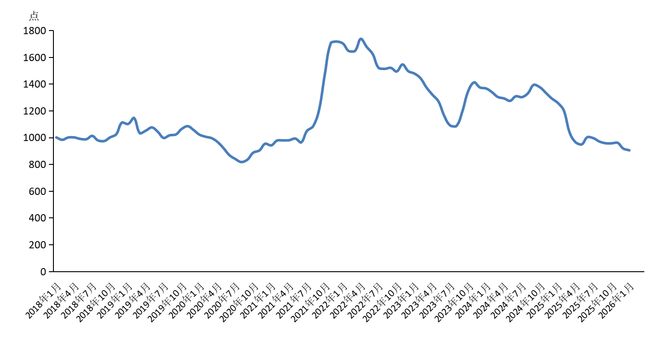
Price Index Overview - The Xinhua·Zhongyan industrial salt price index for January 2026 is reported at 903.81 points, a decrease of 12.73 points or 1.39% from December 2025, and a decline of 96.19 points or 9.62% from the base period of January 2018 [1] - Compared to the peak of 1736.66 points in April 2022, the index has decreased by 832.85 points or 47.96%, while it has increased by 87.61 points or 10.73% from the lowest point of 816.2 points in August 2020 [1] Regional Price Changes - In January 2026, industrial salt prices increased in Anhui, Hubei, Yunnan, and Tianjin compared to December 2025, while prices remained stable in Sichuan and decreased in several provinces including Shaanxi, Jiangsu, Jiangxi, Henan, Chongqing, Xinjiang, Hebei, Shandong, Hunan, and Ningxia [3] - The price of industrial salt in various provinces is detailed, with notable changes including a 2.03% decrease in Shaanxi and a 2.33% increase in Hubei [5] Market Dynamics - The overall market for raw salt continues to exhibit a pattern of ample supply and stable demand, with trading prices showing narrow fluctuations [6] - The northern sea salt production areas are primarily relying on inventory sales, maintaining stable market supply despite some regional supply constraints due to maintenance activities [7] - The demand from downstream industries remains generally stable, with purchasing primarily driven by rigid needs, although there is a slight increase in stocking activity as the Spring Festival approaches [6][9] Specific Market Segments - The sea salt market is operating steadily, with a focus on inventory sales and limited large-scale purchasing behavior from downstream two-soda enterprises [7] - The brine salt market is experiencing a weak supply-demand dynamic, with prices slightly declining due to stable supply and subdued demand from the two-soda industry [8] - The lake salt market is stable, with production adjusted according to downstream orders, maintaining a balanced supply [9] Downstream Product Performance - The domestic soda ash market continues to show a weak consolidation trend, with limited price fluctuations and a high overall supply [10] - Liquid alkali prices remain stable, with most chlor-alkali plants operating at high capacity, although demand from the aluminum industry is under pressure [11] - The market for flake alkali is experiencing a slight recovery in demand, leading to increased purchasing activity and a gradual rise in prices in some regions [12]

银河期货烧碱周报-20260210
Yin He Qi Huo· 2026-02-10 01:46
Report Industry Investment Rating - Not provided in the document Core Viewpoints - This week, there were rumors that the second - phase roasting furnaces of a large alumina plant in North China were shut down for maintenance, leading to inventory backlog and suspension of front - end feeding, to be verified next week [4]. - The supply and demand of caustic soda are both weak. The supply - side device load decreased slightly, with the chlor - alkali operating load rate dropping 0.81 percentage points to 90.63%, and the caustic soda output in terms of 100% purity being 881,400 tons, a 0.89% decrease from the previous week. Although some device overhauls led to a slight reduction in supply, the overall supply was still sufficient [4]. - The demand side showed a differentiated operation, with rigid demand coming to an end. The operating capacity of the main downstream alumina dropped to 75.42% (a 2.34 - percentage - point decrease), weakening demand support; although the operating rate of viscose staple fiber increased to 83.78%, due to the approaching Spring Festival, downstream stocking was basically over, and the overall willingness to receive goods became weaker [4]. - Inventory was depleted, and losses widened. The pressure on the upstream was relieved. The inventory of 32% liquid caustic soda factories in Shandong dropped to 109,800 tons, a significant 8.88% decrease from the previous week. Traders maintained low inventories due to risk - aversion sentiment, and the social inventory changed little. Profits were severely in the red, and the willingness to raise prices was strong. The average loss of chlor - alkali enterprises (including self - owned power plants) in Shandong expanded to 91.17 yuan/ton, with the loss increasing by over 60% [4]. - It is expected that the prices of liquid caustic soda and flake caustic soda will remain stable next week, with little room for significant fluctuations. Attention should be paid to the resumption of work progress of downstream enterprises after the festival and changes in alumina procurement prices [4]. - For trading strategies, the caustic soda is expected to be weak in the single - side trading; for arbitrage and options, it is recommended to wait and see [5]. Summary by Directory Comprehensive Analysis and Trading Strategies - **Comprehensive Analysis**: The supply and demand of caustic soda are both weak. Supply decreased slightly due to some device overhauls, but overall it was still sufficient. Demand was differentiated, with alumina demand weakening and viscose staple fiber demand tapering off. Inventory decreased, and losses widened. It is expected that prices will remain stable next week [4]. - **Trading Strategies**: Single - side: Caustic soda is weak; Arbitrage: Wait and see; Options: Wait and see [5] Core Logic Analysis - **Alumina in Shandong**: The delivery volume of liquid caustic soda to large alumina plants in Shandong was at a high level, and the price continued to decline. From January 4th to January 24th, the purchase price of 32% ion - exchange membrane caustic soda by major alumina manufacturers in Shandong was successively reduced by 15 yuan/ton each time, and the current delivery volume is 13,812 tons [7][10]. - **Alumina Operation**: This week, domestic overhauls and production cuts were frequent, and the operating capacity fluctuated. As of Friday, the national alumina built - in capacity was 114.62 million tons, and the operating capacity was 94.25 million tons, a decrease of 800,000 tons from the previous week. Next week, two alumina enterprises in Guangxi will resume production, and two in Shanxi will enter the overhaul state. It is expected that the national operating level will fluctuate around 94 million tons. The spot trading atmosphere is expected to be lighter, and the spot price will maintain a narrow - range fluctuation [17]. - **Caustic Soda Operation**: This week, the average utilization rate of the production capacity of caustic soda sample enterprises with a capacity of 100,000 tons and above in China was 87.8%, a 0.1% increase from the previous week. Regionally, the chlor - alkali loads in Central and South China increased, while those in North, East, and Southwest China slightly decreased, and those in Northwest and Northeast China were basically stable. The weekly production capacity utilization rate in Shandong was 90.1%, a 1% decrease from the previous week [19]. Weekly Data Tracking - **Inventory**: As of February 5, 2026, the inventory of fixed liquid caustic soda sample enterprises with a capacity of 200,000 tons and above in the country was 471,400 tons (wet tons), a 9.41% decrease from the previous week and a 2.97% increase from the same period last year. The national liquid caustic soda sample enterprise storage capacity ratio was 27.47%, a 2.56% decrease from the previous week. The storage capacity ratios in North, East, and South China decreased, while those in Northwest, Central, Northeast, and Southwest China increased [11]. - **Price**: The prices of 32% liquid caustic soda, 50% liquid caustic soda, flake caustic soda, and their regional and variety spreads are presented in the form of charts, reflecting the price trends from 2020 - 2026 [30][33][35]. - **Profit**: The profit charts of caustic soda and chlor - alkali in Shandong and Jiangsu from 2022 - 2026 are provided, showing the profit trends and the prices of liquid chlorine [43]. - **Production**: The production capacity utilization rate, production volume, and provincial - level production volume of caustic soda from 2019 - 2026 are presented in the form of charts [52][55]. - **Consumption**: The demand, weekly consumption (including exports) of caustic soda, liquid caustic soda, and flake caustic soda from 2019 - 2026 are presented in the form of charts [57][58]. - **Alumina**: The production, operating capacity, operating rate, and planned new production capacity of alumina from 2019 - 2026 are presented in the form of charts and tables. In the first quarter of 2026, there will be more new alumina production capacity, especially in Guangxi, which will drive the demand for 50% and flake caustic soda in Shandong and other places [61][66]. - **Viscose Staple Fiber and Printing and Dyeing**: The factory - level inventory and weekly operating rate of viscose staple fiber from 2019 - 2026, and the operating rates of printing and dyeing in East China, Jiangsu, and Zhejiang from 2019 - 2026 are presented in the form of charts [69][70][72]. - **Export**: The export volume, FOB price in North China, and export profit of caustic soda from 2019 - 2026 are presented in the form of charts [74][75].
嘉化能源:公司全年表现平稳,经营业绩无明显季节性差异
Zheng Quan Ri Bao· 2026-02-06 13:38
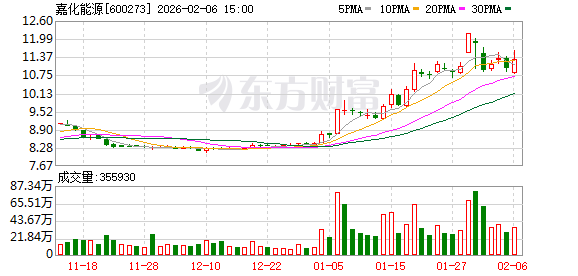
Core Viewpoint - The company, Jiahuan Energy, emphasizes its commitment to a circular economy model, which is central to its development strategy and aims to enhance resource and energy efficiency while improving competitiveness and profitability [2]. Group 1: Circular Economy Model - The company is a key player in the China Chemical New Materials (Jiaxing) Park, focusing on establishing a circular economy that integrates energy and chemical industries [2]. - The circular economy includes both internal and external cycles, with internal cycles involving the development of the chlor-alkali industry and polymer materials (VCM/PVC) through cogeneration [2]. - The development of polymer materials positively impacts the chlor-alkali industry and self-generated power advantages, contributing to the company's growth [2]. Group 2: Resource and Energy Utilization - The company has developed a series of fatty alcohol (acid) products, which have become significant growth units due to the advantages of self-produced steam and by-product hydrogen from the chlor-alkali industry [2]. - The external cycle involves supplying steam, liquid alkali, desalinated water, and hydrogen, while recycling condensate and related materials to enhance the value of the industrial chain [2]. Group 3: Operational Performance - The company reported stable performance for the year, with no significant seasonal variations in operating results during the first three quarters [2].

短期存抢出口现象 预计PVC期货价格承压震荡偏强
Jin Tou Wang· 2026-01-25 23:27
Market Overview - As of January 23, 2026, the main PVC futures contract closed at 4921 CNY/ton, with a weekly decline in the K-line and an increase in open interest by 48,696 contracts compared to the previous week [1] - During the week of January 19-23, the PVC futures opened at 4806 CNY/ton, reached a high of 4926 CNY/ton, and a low of 4708 CNY/ton, resulting in a weekly price change of 2.07% [1] Price Trends - On January 22, the spot prices for PVC in Hangzhou stabilized, with slight increases in transaction prices. The prices for different types of PVC ranged from 4500 to 4720 CNY/ton [2] - The domestic PVC powder operating rate decreased by 1.10 percentage points to 77.98% [2] Supply and Demand Dynamics - Yibin's 200,000-ton facility has restarted, while Wanhua's 500,000-ton facility has been affected by shutdowns, leading to little change in PVC capacity utilization [2] - The social inventory of PVC has reached a record high, following the strength of the chemical sector. However, the overall demand remains weak due to seasonal factors, with domestic operating rates rising to 80% [3] - PVC production companies are maintaining high supply levels, but domestic demand is in a traditional off-season, leading to rapid accumulation of industry inventory [3]
行业继续累库 烧碱期价延续低位运行态势
Jin Tou Wang· 2026-01-21 08:07
Market Overview - The main contract for caustic soda futures closed at 1939.0 CNY/ton, experiencing a decline of 2.02% [1] - As of January 20, the top 20 futures companies held a total of 224,200 long positions and 254,900 short positions, resulting in a long-to-short ratio of 0.88. The net position increased by 2,131 contracts to -30,700 contracts compared to the previous day [1] Production and Supply - Last week, the production of caustic soda from sample enterprises with a capacity of 20,000 tons or more was approximately 853,000 tons, reflecting a month-on-month increase of 0.47% and a year-on-year increase of 4.28% [1] - A 170,000-ton facility in East China experienced a short shutdown, while a 650,000-ton facility in East China and a 300,000-ton facility in South China resumed operations, leading to a slight increase in caustic soda production capacity utilization, which remains at a high operating level [1] Industry Sentiment - According to Fangzheng Zhongqi Futures, the market is under pressure from high supply, weak demand, and high inventory, making short-term improvements unlikely. Caustic soda prices are expected to continue operating at low levels, with resistance around 2130-2150 CNY/ton and support to be monitored around 1900-2000 CNY/ton [3] - Guotou Anxin Futures noted that the caustic soda market continues to exhibit a weak trend, with ongoing inventory accumulation and significant inventory pressure. A large alumina enterprise in Shandong reduced the price of liquid caustic soda by 15 CNY to 615 CNY. The price of liquid chlorine remains firm at around 300 CNY, maintaining acceptable integrated profits, while caustic soda production remains high. Although downstream alumina operations are at high levels, the industry is generally experiencing losses, and future production cuts need to be monitored [3]
烧碱数据日报-20260116
Guo Mao Qi Huo· 2026-01-16 03:31
1. Report Industry Investment Rating - Not provided in the given content 2. Core Viewpoints of the Report - The trading atmosphere in the domestic liquid caustic soda market is dull today. The prices of 32% liquid caustic soda in Shandong and Hebei regions have decreased, the price of 48% liquid caustic soda in Jiangsu region has decreased, and the price of 32% liquid caustic soda in Inner Mongolia region has increased. The enthusiasm of downstream buyers in Shandong region is low, and recently some warehouse receipt goods have entered the market, impacting the market price. The market price of 32% liquid caustic soda has decreased, the trading of 50% liquid caustic soda is stable, and the price remains unchanged. The mainstream transaction price of 32% ion - membrane caustic soda in Shandong region today is 650 - 760 yuan/ton. The purchase price of liquid caustic soda by a large local downstream alumina factory is 645 yuan/ton, and the mainstream transaction price of 50% ion - membrane caustic soda in Shandong region is 1050 - 1210 yuan/ton, a decline from the previous working day's average price. The game between long and short positions is fierce, and it is recommended to stay on the sidelines [1] 3. Summary According to the Catalog 3.1 Price Changes of Raw Materials and Products - **Raw Salt**: The prices in Shandong, Jiangsu, and Northwest remain unchanged at 240, 260, and 180 respectively [1] - **Calcium Carbide**: The prices in Shandong and Inner Mongolia remain unchanged at 250 and 3415 respectively [1] - **Liquid Chlorine**: The price in Shandong increases by 50 from 200 to 250, while the prices in Jiangsu and Northwest remain unchanged at 250 and - 100 respectively [1] - **32% Liquid Caustic Soda**: The prices in Shandong, Jiangsu, and Guangdong remain unchanged at 2156, 2438, and 1075 respectively [1] - **50% Liquid Caustic Soda**: The prices in Shandong, Jiangsu, and Guangdong remain unchanged at 2160, 1280, and 1300 respectively [1] - **Caustic Soda Flakes**: The prices in Shandong, Inner Mongolia, Guangdong, and Southwest remain unchanged at 3050, 2700, 2750, and 3375 respectively [1] - **PVC**: The price in Shandong remains unchanged at 3450 [1] 3.2 Futures and Basis - **Futures Main Contract**: The closing price in Inner Mongolia changes from 5550,2093 to 5550,2057, with a change of 0, - 36 [1] - **Basis**: The basis in Shandong increases by 38 from - 62 to - 24, and the basis in Jiangsu increases by 49 from 258 to 307 [1] 3.3 Price Differences and Profits - **Price Difference between 50% Caustic Soda and 32% Caustic Soda**: The price difference in Shandong remains unchanged at 4 [1] - **Price Difference between Caustic Soda Flakes and 50% Caustic Soda**: The price difference in Guangdong decreases by 31 from 48 to 16 [1] - **Regional Price Difference of 50% Caustic Soda**: The price difference between the east and Shandong remains unchanged at 515 [1] - **Regional Price Difference of Caustic Soda Flakes**: The price differences between Southwest and Inner Mongolia, and between Southwest and Shandong remain unchanged at 250 and 700 respectively [1] - **Chlor - alkali Profit**: The profit in Shandong increases by 1 from - 15 to - 14, and the profit in the Northwest decreases by 31 from 349 to 318 [1] 3.4 Electricity Price - The electricity prices in Shandong and Inner Mongolia remain unchanged at 0.63 and 0.44 respectively [1]