
石油和天然气开采业

Search documents
核心CPI同比涨幅连续3个月保持在1%以上 扩内需政策措施继续显效
Sou Hu Cai Jing· 2025-12-10 23:16
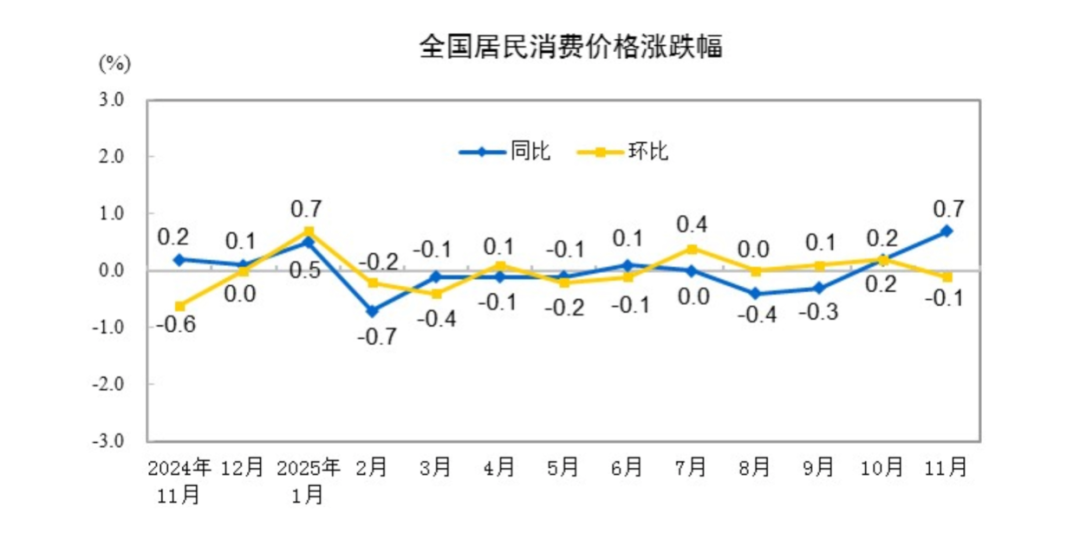
Group 1: Consumer Price Index (CPI) Insights - In November, the CPI increased by 0.7% year-on-year, marking the highest growth since March 2024, with a month-on-month decrease of 0.1% [2][3] - The rise in CPI was primarily driven by a shift in food prices from decline to increase, with fresh vegetable prices rising by 14.5% after a nine-month decline [2][3] - Core CPI, excluding food and energy, rose by 1.2% year-on-year, maintaining above 1% for three consecutive months, indicating stable inflationary pressure [2][3][8] Group 2: Producer Price Index (PPI) Insights - The PPI increased by 0.1% month-on-month in November, marking the second consecutive month of growth, influenced by seasonal demand increases in certain industries [4] - Year-on-year, the PPI decreased by 2.2%, with the decline slightly widening compared to the previous month, primarily due to high comparison bases from the previous year [4][5] - The prices in sectors such as coal mining and gas production saw significant month-on-month increases due to seasonal demand, while oil-related sectors experienced price declines [4][5] Group 3: Market Trends and Future Outlook - The ongoing "anti-involution" measures are showing results, with price declines in key industries narrowing, indicating improved market competition [5][6] - Emerging industries are driving price increases in related sectors, with notable growth in new materials and intelligent technology, suggesting a positive trend for future pricing [6][8] - The potential for moderate price recovery is anticipated, supported by stable domestic demand and effective policy measures aimed at boosting consumption [7][8]
11月CPI同比上涨0.7% 为2024年3月以来最高
Zhong Guo Zheng Quan Bao· 2025-12-10 20:17
Group 1 - In November, the Consumer Price Index (CPI) showed a slight month-on-month decrease of 0.1% but a year-on-year increase of 0.7%, marking the highest growth since March 2024 [1] - The increase in CPI year-on-year was primarily driven by a turnaround in food prices, which shifted from a decrease of 2.9% in the previous month to an increase of 0.2% [1] - The Producer Price Index (PPI) rose by 0.1% month-on-month, marking the second consecutive month of increase, while year-on-year it decreased by 2.2% [2][3] Group 2 - The core CPI, excluding food and energy prices, increased by 1.2% year-on-year, maintaining a growth rate above 1% for three consecutive months, indicating effective demand expansion policies [2] - Seasonal demand increases in certain domestic industries contributed to the rise in PPI, with coal mining and gas production prices increasing by 4.1% and 0.7% respectively [2] - The prices of fresh vegetables saw a significant turnaround, increasing by 14.5% year-on-year after nine months of decline, indicating a tightening supply due to weather and production disruptions [1][4] Group 3 - The prices of essential consumer goods, such as nutritional food manufacturing, increased by 1.1% year-on-year, reflecting the positive impact of consumption-boosting initiatives [4] - The prices of home appliances, including washing machines and air conditioners, experienced a narrowing decline compared to the previous month, suggesting a recovery in consumer demand [4] - The prices in the non-ferrous metal mining sector rose by 2.6% month-on-month, driven by international price increases, while oil and gas extraction prices fell due to declining international oil prices [3]
11月CPI同比涨幅扩大 PPI连续两个月上涨
Shang Hai Zheng Quan Bao· 2025-12-10 17:56
Group 1: CPI and Core CPI Trends - In November, the Consumer Price Index (CPI) increased by 0.7% year-on-year, marking the highest level since March 2024, with the core CPI rising by 1.2% year-on-year [1][2] - The increase in CPI was primarily driven by a turnaround in food prices, which shifted from a 2.9% decline in October to a 0.2% increase in November [2] - Fresh vegetable prices saw a significant increase, rising by 14.5% year-on-year in November after nine consecutive months of decline, attributed to adverse weather affecting supply [2] Group 2: PPI Trends - The Producer Price Index (PPI) rose by 0.1% month-on-month in November, marking the second consecutive month of increase [1][4] - The rise in PPI was influenced by seasonal demand increases in industries such as coal mining, with coal prices increasing by 4.1% month-on-month [4] - Year-on-year, PPI decreased by 2.2%, with the decline slightly widening compared to October, largely due to high base effects from the previous year [4] Group 3: Emerging Industries and Price Trends - Prices in emerging industries showed signs of recovery, with significant year-on-year increases in sectors such as external storage devices (up 13.9%) and integrated circuit manufacturing (up 1.7%) [5] - The price declines in photovoltaic equipment and lithium-ion battery manufacturing narrowed, indicating a potential stabilization in these sectors [5] - Overall, the outlook for prices suggests a moderate recovery, supported by improving international trade conditions and ongoing domestic demand policies [5]
【数据发布】2025年11月份工业生产者出厂价格环比继续上涨
中汽协会数据· 2025-12-10 10:35
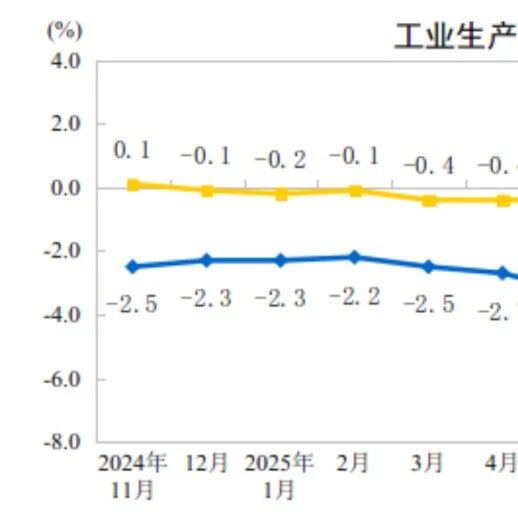
Group 1: Year-on-Year Changes in Industrial Producer Prices - In November, the industrial producer's ex-factory prices decreased by 2.2% year-on-year, while the purchase prices dropped by 2.5% [1] - For the period from January to November, the average ex-factory prices fell by 2.7% compared to the same period last year, and the purchase prices decreased by 3.1% [1] Group 2: Breakdown of Ex-factory Prices - In November, the prices of production materials decreased by 2.4%, contributing approximately 1.79 percentage points to the overall decline in ex-factory prices. The mining industry saw a price drop of 6.1%, raw materials decreased by 2.9%, and processing industries fell by 1.9% [3] - Prices of living materials decreased by 1.5%, impacting the overall ex-factory price level by about 0.38 percentage points. Food prices fell by 1.5%, clothing prices decreased by 0.3%, while general daily goods increased by 1.1% and durable consumer goods dropped by 3.6% [3] Group 3: Month-on-Month Changes in Industrial Producer Prices - In November, the ex-factory prices of production materials increased by 0.1%, contributing approximately 0.08 percentage points to the overall increase in ex-factory prices. The mining industry prices rose by 1.7%, while raw materials saw a slight decrease of 0.2%, and processing industries increased by 0.1% [7] - Living material prices remained stable, with food prices decreasing by 0.1%, clothing prices increasing by 0.1%, general daily goods rising by 0.2%, and durable consumer goods dropping by 0.2% [7] Group 4: Changes in Purchase Prices - In November, the purchase prices of fuel and power decreased by 6.9%, building materials and non-metallic products fell by 5.8%, and chemical raw materials dropped by 5.0%. Agricultural products decreased by 4.9%, black metal materials fell by 3.0%, and textile raw materials decreased by 1.9%. However, prices of non-ferrous metal materials and wires increased by 8.1% [6] Group 5: Industry-Specific Price Changes - The coal mining and washing industry saw a price drop of 11.8%, while the oil and gas extraction industry experienced a decrease of 10.3%. The black metal mining industry had a slight increase of 2.4%, and the non-ferrous metal mining industry saw a significant rise of 20.2% [8] - The food manufacturing industry experienced a price decrease of 1.2%, while the chemical raw materials and products manufacturing industry saw a decline of 5.2% [8]

2025年11月价格数据点评:CPI涨势能否延续?
EBSCN· 2025-12-10 08:52
Group 1: CPI Analysis - In November 2025, the CPI increased by 0.7% year-on-year, up from 0.2% in the previous month, aligning with market expectations[2] - The main driver for the CPI increase was the turnaround in food prices, particularly fresh vegetable prices, which rose by 14.5% year-on-year, compared to a decline of 7.3% in the previous month[4][5] - Core CPI remained stable at 1.2% year-on-year, with gold prices contributing significantly to this stability, while service prices showed a slowdown due to seasonal demand[6] Group 2: PPI Analysis - The PPI decreased by 2.2% year-on-year in November, slightly worse than the previous month's decline of 2.1%, primarily due to a high base effect from the previous year[8] - PPI showed a month-on-month increase of 0.1%, marking the second consecutive month of growth, driven by rising prices in the coal and non-ferrous metal sectors[8][9] - The "anti-involution" effect is evident as downstream consumer goods prices stabilize, while upstream coal and metal prices continue to rise[11] Group 3: Future Outlook - The CPI is expected to maintain its upward trend in December, supported by low base effects and rising food prices, with a projected average CPI growth rate of 0.7% for the coming year[10] - The PPI's year-on-year decline is anticipated to narrow, influenced by global manufacturing recovery and domestic supply-demand adjustments, although the timing for a return to positive growth remains uncertain[11] - The recovery of domestic demand and the potential for a rebound in pork prices are critical factors that could influence CPI trends in the upcoming months[10]
中国PPI环比连续两个月上涨
Zhong Guo Xin Wen Wang· 2025-12-10 07:58
Group 1 - In November, China's Producer Price Index (PPI) increased by 0.1% month-on-month, marking the second consecutive month of growth [1] - Seasonal demand in certain domestic industries, particularly coal and gas, contributed to the price increase, with coal mining and washing prices rising by 4.1% and gas production and supply prices increasing by 0.7% [1] - The PPI year-on-year decreased by 2.2%, with the decline rate widening by 0.1 percentage points compared to the previous month, influenced by a high comparison base from the previous year [1] Group 2 - The reduction in year-on-year price declines for certain industries indicates the effectiveness of measures against "involution" competition, with coal mining and washing, photovoltaic equipment manufacturing, and lithium-ion battery manufacturing seeing narrowed declines [2] - Emerging industries are driving price increases, with external storage devices and components prices rising by 13.9% year-on-year, graphite and carbon product manufacturing prices increasing by 3.8%, and integrated circuit manufacturing prices up by 1.7% [2]
2025年11月份CPI同比涨幅扩大核心CPI继续上涨
Guo Jia Tong Ji Ju· 2025-12-10 06:02
Group 1: CPI Analysis - The Consumer Price Index (CPI) increased by 0.7% year-on-year, marking the highest growth since March 2024, driven primarily by a reversal in food prices from a decline to an increase [2] - Food prices shifted from a decrease of 2.9% to an increase of 0.2%, contributing positively to the CPI by approximately 0.04 percentage points [2] - Fresh vegetable prices rose by 14.5%, marking the first increase after nine consecutive months of decline, significantly impacting the CPI [2] - Core CPI, excluding food and energy, rose by 1.2%, maintaining above 1% for three consecutive months [2][3] Group 2: PPI Analysis - The Producer Price Index (PPI) increased by 0.1% month-on-month, marking the second consecutive month of growth [4] - Seasonal demand increases in certain domestic industries, such as coal and gas, contributed to the rise in PPI [4] - Year-on-year, PPI decreased by 2.2%, with the decline slightly widening due to high comparison bases from the previous year [5] - The prices in key industries like coal mining and photovoltaic equipment manufacturing showed a narrowing of year-on-year declines, indicating improved market conditions [5]
中国海油12月9日获融资买入4739.84万元,融资余额13.24亿元
Xin Lang Cai Jing· 2025-12-10 04:51
来源:新浪证券-红岸工作室 截至9月30日,中国海油股东户数21.65万,较上期减少7.02%;人均流通股13922股,较上期增加 7.62%。2025年1月-9月,中国海油实现营业收入3125.03亿元,同比减少4.15%;归母净利润1019.71亿 元,同比减少12.59%。 12月9日,中国海油跌1.12%,成交额6.32亿元。两融数据显示,当日中国海油获融资买入额4739.84万 元,融资偿还6767.84万元,融资净买入-2028.00万元。截至12月9日,中国海油融资融券余额合计13.25 亿元。 分红方面,中国海油A股上市后累计派现2559.95亿元。近三年,累计派现1790.51亿元。 融资方面,中国海油当日融资买入4739.84万元。当前融资余额13.24亿元,占流通市值的1.57%,融资 余额低于近一年10%分位水平,处于低位。 机构持仓方面,截止2025年9月30日,中国海油十大流通股东中,香港中央结算有限公司退出十大流通 股东之列。 融券方面,中国海油12月9日融券偿还3.63万股,融券卖出1.66万股,按当日收盘价计算,卖出金额 46.85万元;融券余量5.35万股,融券余额150. ...

去年3月以来最高!国家统计局发布重要数据
Zhong Guo Zheng Quan Bao· 2025-12-10 02:29
Core Insights - In November, the Consumer Price Index (CPI) increased by 0.7% year-on-year, marking the highest growth since March 2024, primarily driven by a reversal in food prices from decline to increase [2][4] - The Producer Price Index (PPI) rose by 0.1% month-on-month, marking the second consecutive month of increase, while year-on-year, it decreased by 2.2% [5][8] CPI Analysis - The CPI's year-on-year increase of 0.7% reflects a 0.5 percentage point rise from the previous month, largely due to food prices shifting from a 2.9% decline to a 0.2% increase [2][4] - Fresh vegetable prices saw a significant turnaround, increasing by 14.5% year-on-year after nine months of decline, while pork and poultry prices decreased by 15.0% and 0.6%, respectively, with the rate of decline narrowing [4] - Core CPI, excluding food and energy, rose by 1.2% year-on-year, maintaining above 1% for three consecutive months [4] PPI Analysis - The PPI's month-on-month increase of 0.1% is attributed to seasonal demand increases in certain domestic industries, such as coal and gas, with coal mining prices rising by 4.1% [5][7] - Year-on-year, the PPI's decline of 2.2% is influenced by high comparison bases from the previous year, with various macroeconomic policies showing positive effects on prices [8] - Prices in emerging industries, such as new materials and intelligent manufacturing, have increased, with specific categories like external storage devices rising by 13.9% year-on-year [8]
国家统计局:整治“内卷式”竞争成效显现,相关行业价格同比降幅收窄
Sou Hu Cai Jing· 2025-12-10 02:08
2025年11月份CPI同比涨幅扩大 核心CPI继续上涨 ——国家统计局城市司首席统计师董莉娟解读2025年11月份CPI和PPI数据 11月份,居民消费持续恢复,居民消费价格指数(CPI)环比略降0.1%,同比上涨0.7%,扣除食品和能 源价格的核心CPI同比上涨1.2%。受国内部分行业供需结构优化、国际大宗商品价格传导等因素影响, 工业生产者出厂价格指数(PPI)环比上涨0.1%,同比下降2.2%。 一、CPI同比涨幅扩大,核心CPI上涨1.2% CPI同比上涨0.7%,涨幅比上月扩大0.5个百分点,为2024年3月份以来最高,同比涨幅扩大主要是食品 价格由降转涨拉动。食品价格由上月下降2.9%转为上涨0.2%,对CPI同比的影响由上月下拉0.54个百分 点转为上拉0.04个百分点。食品中,鲜菜价格由上月下降7.3%转为上涨14.5%,为连续下降9个月后首次 转涨,对CPI同比的上拉影响比上月增加约0.49个百分点;鲜果价格由上月下降2.0%转为上涨0.7%;牛 肉和羊肉价格分别上涨6.2%和3.7%,涨幅均有扩大;猪肉和禽肉类价格分别下降15.0%和0.6%,降幅均 有收窄。能源价格下降3.4%,降幅比 ...