纺织服装

Search documents
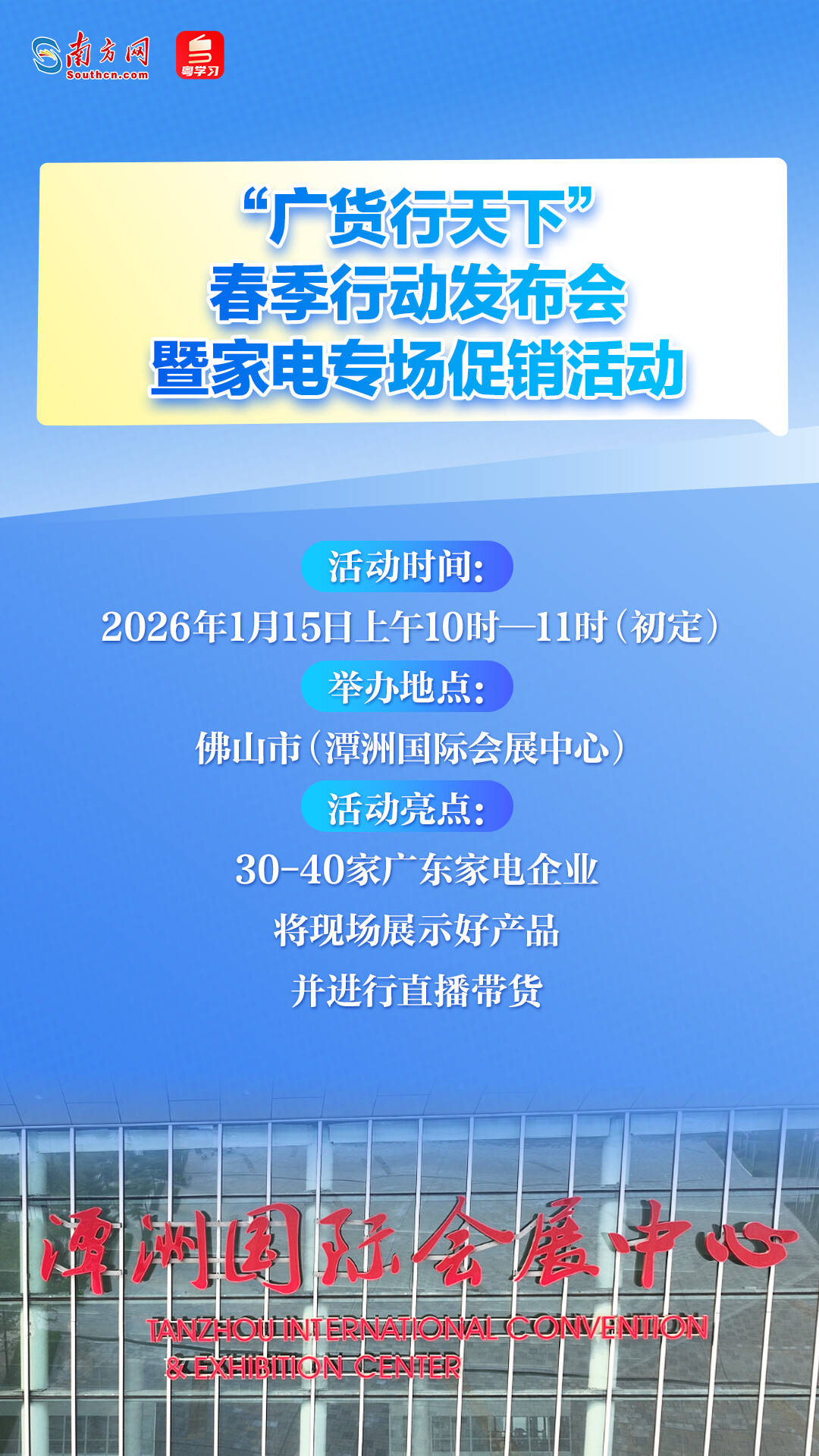
“广货行天下”春季行动启动仪式将于1月15日在佛山举行
Nan Fang Ri Bao Wang Luo Ban· 2026-01-14 08:40
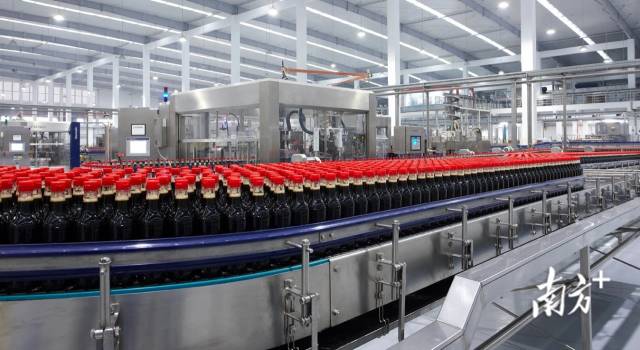
Core Insights - Guangdong's manufacturing sector is showcasing its diverse capabilities, from smart home appliances to high-end mobile phones, fashion apparel, gourmet food, and modern agriculture, emphasizing innovation and quality development [1][2][3] Food Industry - Guangdong's food industry is projected to achieve a revenue of 896.87 billion yuan in 2024, with soy sauce production accounting for over 60% of the national output and mooncake exports representing 90% of the total [2] - The industry is driven by digitalization, biotechnology, and regional collaboration, with major cities like Guangzhou, Foshan, and Dongguan each exceeding 100 billion yuan in food industry scale [2][3] Home Appliances - Guangdong's home appliance sector, representing nearly 50% of the national market, has established a robust supply chain with over 4,400 enterprises, including three with revenues exceeding 100 billion yuan [4][5] - Major companies like Midea and Hisense are localizing their research, production, and sales globally, with Midea operating 33 R&D centers and 43 manufacturing bases worldwide [5][6] Agriculture - Guangdong's agricultural sector is characterized by its "土特生金" (specialty products generate wealth) strategy, achieving a grain production capacity increase from 12.38 million tons in 2021 to 12.98 million tons in 2025 [7][9] - The province leads in various agricultural outputs, with total agricultural production value reaching 677.56 billion yuan in the first three quarters of 2025, marking a 4.9% year-on-year growth [7][9] Textile and Apparel - Guangdong's textile and apparel industry boasts 4,240 enterprises, accounting for 18.34% of the national total, with a production output of 3.44 billion garments in 2024 [15][16] - The industry is undergoing digital transformation, with companies implementing AI and big data for precise design and flexible production, significantly enhancing efficiency [15][16] Mobile Phones - Guangdong produces one in every three mobile phones globally, with a complete supply chain that allows for rapid assembly of 95% of components within a one-hour commute [10][11] - Innovations such as satellite communication technology and AI integration are being developed to enhance product capabilities and market reach [10][11] Cultural and Tourism - The "请到广东过大年" (Come to Guangdong for the New Year) campaign aims to enhance tourism through cultural experiences, with events showcasing traditional customs and local cuisine [12][13] - The initiative includes a series of activities and performances to attract visitors, emphasizing the cultural richness and festive atmosphere of Guangdong [12][13]
中国纺织品进出口商会:2025年我国纺织服装出口额2937.7亿美元 整体表现好于预期
Zhi Tong Cai Jing· 2026-01-14 07:59
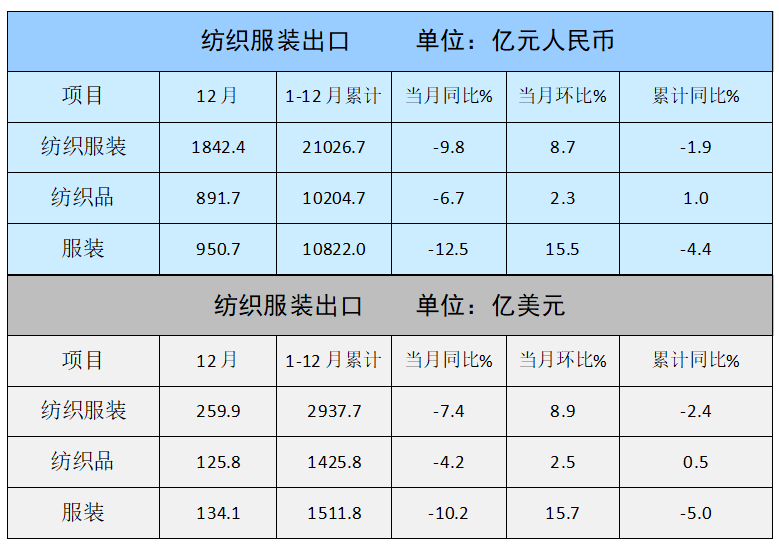
Core Viewpoint - In 2025, the textile and apparel export industry in China faced multiple pressures including adjustments in US tariffs, insufficient overseas demand, and exchange rate fluctuations, yet managed to maintain a stable export performance with a total export value exceeding $290 billion, demonstrating the industry's solid foundation and resilience [1]. Group 1: Export Performance - In 2025, the cumulative textile and apparel exports amounted to $293.77 billion, a decrease of 2.4% compared to 2024, which was better than expected [1][3]. - The textile exports reached $14.258 billion, showing a slight increase of 0.5%, while apparel exports fell to $15.118 billion, down by 5% [3][4]. - In December 2025, textile and apparel exports were $25.99 billion, a decline of 7.4% year-on-year but an increase of 8.9% month-on-month [3][4]. Group 2: Monthly and Cumulative Data - In December 2025, textile and apparel exports in RMB totaled 184.24 billion, down 9.8% year-on-year, but up 8.7% month-on-month [2][4]. - The textile exports in December were 89.17 billion RMB, a decrease of 6.7% year-on-year, while apparel exports were 95.07 billion RMB, down 12.5% [2][4]. - Cumulatively, for the year, textile exports were 1.02047 trillion RMB, an increase of 1%, while apparel exports were 1.0822 trillion RMB, down 4.4% [2][4].

鄂尔多斯股价连续3天下跌累计跌幅9.94%,浦银安盛基金旗下1只基金持30.6万股,浮亏损失48.04万元
Xin Lang Cai Jing· 2026-01-14 07:22
Group 1 - The stock price of Ordos has declined by 0.84% on January 14, reaching 14.23 CNY per share, with a trading volume of 316 million CNY and a turnover rate of 1.12%, resulting in a total market capitalization of 39.827 billion CNY. The stock has experienced a cumulative decline of 9.94% over the past three days [1] - Ordos Resources Co., Ltd. is located in the Dongsheng District of Ordos City, Inner Mongolia, and was established on October 15, 1995. The company was listed on April 26, 2001, and its main business includes cashmere clothing, power metallurgy, and chemicals. The revenue composition is as follows: silicon iron 37.05%, PVC resin 18.59%, clothing 13.60%, caustic soda 7.78%, others 7.65%, coal 5.87%, silicon manganese alloy 3.76%, fertilizer 2.81%, calcium carbide 2.55%, and polysilicon 0.34% [1] Group 2 - According to data from the top ten holdings of funds, one fund under Puyin Ansheng holds a significant position in Ordos. The Puyin Ansheng Dividend Quantitative Mixed A Fund (022488) held 306,000 shares in the third quarter, accounting for 1.84% of the fund's net value, making it the fourth-largest holding. The estimated floating loss today is approximately 36,700 CNY, with a total floating loss of 480,400 CNY during the three-day decline [2] - The Puyin Ansheng Dividend Quantitative Mixed A Fund (022488) has a total asset size of 759.078 million CNY and has achieved a return of 1.48% this year, ranking 6521 out of 8838 in its category. Over the past year, the fund has returned 12.29%, ranking 6285 out of 8089, and since its inception, it has returned 9.16% [2]

《非洲增长与机会法案》延期进入投票表决阶段
Shang Wu Bu Wang Zhan· 2026-01-14 05:37
Core Viewpoint - The U.S. Congress is in the voting phase to extend the African Growth and Opportunity Act (AGOA), which is set to expire on September 30, 2025, aiming to prolong trade benefits for African countries to mitigate export impacts to the U.S. [1] Group 1: Legislative Details - The proposed extension would continue AGOA's tariff benefits until the end of 2028 and extend certain import-related technical fees and customs arrangements until the end of 2031 [1] - The House of Representatives has passed the bill, which is now under Senate review; if approved, the measures will have retroactive effects allowing importers to claim refunds on duties paid since the expiration date [1] Group 2: Economic Impact - AGOA has been a crucial trade arrangement between the U.S. and sub-Saharan African countries since its implementation in 2000, with over 30 African nations eligible to export thousands of products to the U.S. duty-free [1] - In 2024, the total value of U.S. imports from AGOA beneficiary countries is projected to be approximately $8.4 billion, with non-energy products accounting for about $6 billion, primarily including automobiles and parts, apparel, agricultural products, and some industrial goods [1] Group 3: Country-Specific Insights - South Africa is the largest exporter of non-energy products to the U.S., with automobiles and parts being the main categories [2] - Kenya has seen significant growth in apparel exports under AGOA, with exports rising from tens of millions in the early 2000s to over $600 million recently, constituting the majority of its exports to the U.S. [2] - Countries like Lesotho and Madagascar heavily rely on the U.S. market for their textile and apparel industries, with exports directly impacting tens of thousands of jobs [2] Group 4: Broader Implications - The extension of AGOA is viewed as a significant signal of U.S. commitment to economic cooperation and industrial support for Africa [2] - A timely extension of AGOA is crucial to prevent increased tariffs on exports from certain countries, which could weaken their competitiveness in international markets and negatively affect employment and foreign exchange earnings [2]
赋能服装业焕新出海,“SHEIN链”插上数智翅膀
2 1 Shi Ji Jing Ji Bao Dao· 2026-01-14 04:20
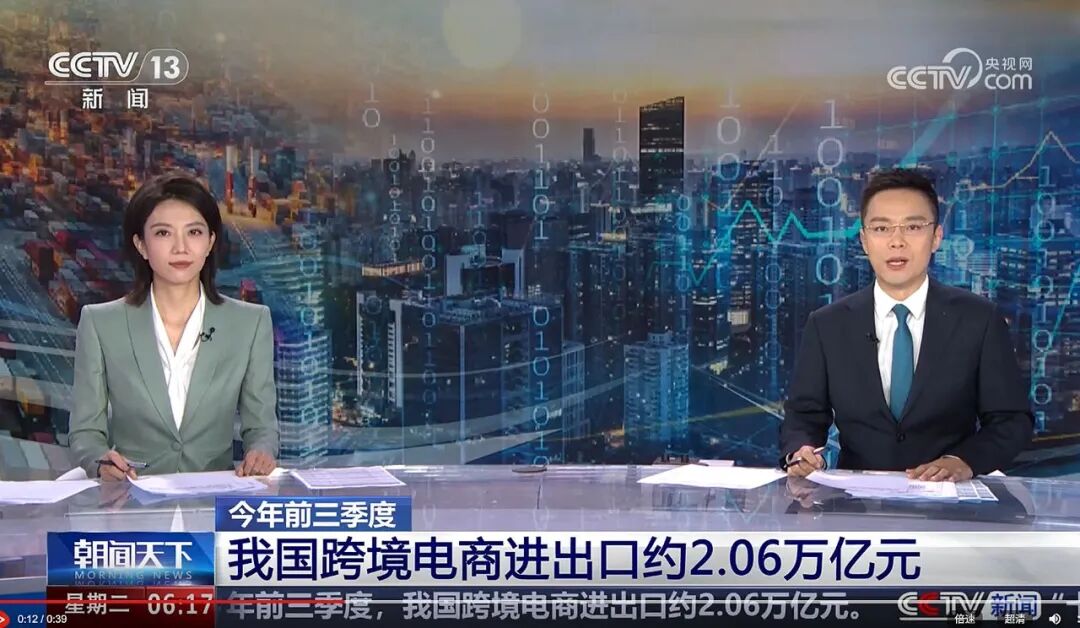
Core Viewpoint - SHEIN is reshaping the apparel industry landscape through significant investments in smart supply chain infrastructure and innovative manufacturing practices, aligning with national strategies for industrial transformation and sustainability [1][4][22]. Group 1: Industry Transformation - By 2025, China's cross-border e-commerce imports and exports are projected to reach approximately 2.06 trillion yuan, marking a 6.4% growth and positioning it as a vital force in trade development and industrial upgrading [2]. - SHEIN has become the third-largest fashion retailer globally, investing over 10 billion yuan in the Guangdong-Hong Kong-Macao Greater Bay Area to enhance its smart supply chain [4]. - The company has implemented a "small batch quick response" flexible supply chain model, allowing for market testing with initial orders of 100-200 pieces, which is driven by real-time sales data [9][10]. Group 2: Supplier Empowerment - SHEIN has developed over 180 innovative tools for suppliers, delivering 7,500 items that improve process efficiency by an average of 35%, addressing challenges in traditional sewing processes [11][12]. - The company has conducted nearly 600 training sessions for suppliers in 2025 alone, covering operational management, practical business skills, and technical enhancements, reaching approximately 37,000 suppliers [19]. - Following training, defect rates among suppliers decreased by 50% within a month, demonstrating the effectiveness of SHEIN's educational initiatives [18]. Group 3: Sustainability Initiatives - SHEIN's green transformation extends throughout its supply chain, with over 65% of its products utilizing digital heat transfer technology, saving 1.13 million tons of water [24]. - The company has implemented over 650 energy-saving measures in recent years, significantly reducing water, electricity, and gas consumption in supplier factories, equivalent to the annual water needs of 150 garment factories [24][25]. - SHEIN collaborates with various partners to explore new technologies and processes, including a joint laboratory for innovative materials and logistics solutions [24]. Group 4: Long-term Vision - SHEIN aims to create a self-evolving, symbiotic industrial ecosystem, emphasizing the importance of talent in industrial upgrading and addressing production challenges through targeted training [17][26]. - The company's long-term commitment to empowering its supply chain and fostering sustainable practices positions it to transition from a focus on scale advantages to value advantages in the textile and apparel industry [27].
百宏实业1月12日斥资8.32万港元回购1.8万股
Zhi Tong Cai Jing· 2026-01-14 04:12
百宏实业 分时图 日K线 周K线 月K线 4.79 -0.21 -4.20% 4.20% 2.80% 1.40% 0.00% 1.40% 2.80% 4.20% 4.79 4.86 4.93 5.00 5.07 5.14 5.21 09:30 10:30 12:00/13:00 14:00 16:10 0 667 1333 2000 百宏实业(02299)发布公告,该公司于2026年1月12日斥资8.32万港元回购1.8万股股份,每股回购价格为 4.58-4.78港元。 ...
提升纤维制品质量监管效能
Jing Ji Ri Bao· 2026-01-14 03:04
Core Viewpoint - The recent revisions to the "Quality Supervision and Management Measures for Fiber Products" and the "General Technical Requirements for Filling Fiber Products" aim to enhance the quality and safety of fiber products in response to increasing consumer demands and the evolving market landscape [1][2]. Group 1: Regulatory Framework - The new regulations will take effect on July 1, 2026, focusing on key products such as infant fiber products, school uniforms, underwear, and filling fiber products [2]. - The regulations emphasize strict management of raw materials, particularly prohibiting the use of recycled fibers in infant and intimate apparel to eliminate safety risks [2]. - A rigorous inspection system will be implemented for school uniforms, ensuring that products are tested and approved before delivery [2]. Group 2: Quality Control Measures - The regulatory body will adopt a "zero tolerance" approach towards violations, establishing a closed-loop supervision system that includes prevention, management, risk control, and punishment for illegal activities [3]. - Enhanced quality monitoring and stricter standards will be enforced, with severe penalties for companies that violate regulations, especially those using banned materials [3]. - Companies found guilty of serious violations will be listed on a "serious violation and dishonesty list," leading to cross-departmental punitive measures [3]. Group 3: Lifecycle and Sustainability - The revised standards for filling fiber products will set clear technical guidelines and usage norms, promoting the recycling and high-value utilization of waste textiles [4]. - Products made from recycled materials must clearly indicate the use of such materials, fostering a transparent and trustworthy market environment [4]. - The rapid growth of e-commerce and new fiber materials presents challenges for quality supervision, prompting the need for integrated monitoring mechanisms across online and offline channels [4].
学生服等纳入重点监管!纤维制品监管新规来了
Xin Hua She· 2026-01-14 02:23
Core Viewpoint - The recent revisions to the "Quality Supervision and Management Measures for Fiber Products" and the mandatory national standard "General Technical Requirements for Fiber Products Used for Filling" by the State Administration for Market Regulation (SAMR) aim to enhance quality safety supervision with high standards and strict requirements. Group 1: Regulatory Changes - The revised management measures expand the scope from three categories (filling fiber products, student uniforms, and fabrics) to all daily fiber products and non-daily filling fiber products [1] - The measures prohibit the use of certain raw materials, including medical fiber waste and used funeral fiber products, in the production of fiber products [1][2] - Specific regulations are established for labeling fiber products, requiring clear indications of recycled materials used and safety classifications for products like student uniforms and infant fiber products [1] Group 2: Focus on Key Products - The revised measures identify infant fiber products, student uniforms, underwear, and filling fiber products as key regulatory targets, implementing differentiated raw material prohibitions based on risk levels [2] - Manufacturers and sellers of fiber products are required to establish and execute a procurement inspection and acceptance system to ensure traceability of quality responsibility [2] - A strict pre-inspection system is mandated for products like student uniforms that are subject to centralized procurement and uniform use, ensuring that only inspected and qualified batches are delivered [2] Group 3: Quality Monitoring and Standards - The SAMR plans to conduct quality monitoring of fiber products, establishing a dynamic risk assessment and early warning model for quality safety [2] - Special monitoring modules will be created for potential risk areas, including the recycling of used textiles and new functional fiber materials [2] - The new national standard adjusts the application requirements for recycled materials in daily filling fiber products, setting clear technical boundaries and usage norms to promote better classification and higher-level recycling of waste textiles [3]
展十八般武艺!“广货行天下”春季行动明天启动
2 1 Shi Ji Jing Ji Bao Dao· 2026-01-14 01:45
Core Insights - Guangdong's manufacturing sector is showcasing its diverse capabilities, from smart home appliances to high-end mobile phones, fashion apparel, gourmet food, and modern agriculture, emphasizing innovation and quality development [1][2][6][9][21] Group 1: Food Industry - Guangdong's food industry is projected to achieve a revenue of 896.87 billion yuan in 2024, with soy sauce production accounting for over 60% of the national output and mooncake exports representing 90% of the total [2] - The food sector is characterized by a "smart brewing" approach, integrating traditional flavors with modern technology, leading to a "delicious revolution" driven by digitalization and biotechnology [2][3] - The province has established several billion-yuan sub-clusters in various food categories, including sauces, health foods, and traditional snacks, showcasing its strong industrial foundation [2] Group 2: Home Appliances - Guangdong's home appliance exports account for nearly 50% of the national total, with the Greater Bay Area's smart appliance industry representing about 30% of the global market [6][8] - The industry employs a "combination of strengths" strategy, integrating research, manufacturing, and branding while localizing production to penetrate global markets [6][8] - Major companies like Midea and Hisense are expanding their global footprint with numerous R&D centers and manufacturing bases, enhancing their competitiveness [6][8] Group 3: Agriculture - Guangdong's agricultural output is robust, with grain production capacity increasing from 12.38 million tons in 2021 to 12.98 million tons in 2025, achieving a record high in yield per unit area [9][10] - The province leads the nation in the production of lychees and pomelos, with the lychee industry alone generating over 9 billion yuan in value [12] - The agricultural sector is supported by a modernized marine ranching initiative, positioning Guangdong as a leader in fishery production and output [10][12] Group 4: Textile and Apparel - Guangdong's textile and apparel industry boasts the highest number of enterprises in the country, with 4,240 registered companies and a production output of 3.44 billion garments in 2024 [21][23] - The industry employs a "fast response and flexible attack" strategy, utilizing data-driven customization and intelligent production to enhance efficiency [21][23] - Significant advancements in digital transformation are evident, with companies adopting AI and big data to streamline operations and reduce production times [23][24] Group 5: Cultural and Tourism - Guangdong's cultural tourism sector is leveraging traditional customs and modern marketing strategies to attract visitors, particularly during the Spring Festival [17][19] - The "Please Come to Guangdong for the New Year" campaign aims to enhance the province's appeal as a travel destination through various cultural events and activities [19][20] - The integration of local culture, food, and entertainment is designed to create immersive experiences for tourists, showcasing Guangdong's rich heritage [17][21]



12场促销+18场配套活动!“硬核”广货何以能行天下?
Sou Hu Cai Jing· 2026-01-13 19:44
Group 1 - The core initiative "Guangdong Products Going Global" aims to boost market expansion and sales for local enterprises, with a series of promotional activities scheduled for the first quarter of 2026 [1] - A total of 12 promotional events will be held, including 10 offline and 2 online, with a focus on various product categories such as home appliances, mobile phones, and food [16][20] - The Guangdong home appliance industry has a significant impact, accounting for nearly 50% of the national export share, with the Guangdong-Hong Kong-Macao Greater Bay Area's smart home appliance industry representing about 30% of the global market [12][16] Group 2 - Guangdong's manufacturing sector is characterized by a diverse industrial ecosystem, encompassing all 31 manufacturing categories, with 15 of them leading nationally [27] - The region's manufacturing capabilities include a complete supply chain in sectors like textiles and home appliances, enhancing responsiveness and reducing costs [27] - The transition from traditional manufacturing to intelligent manufacturing is evident, with automation and AI technologies significantly improving production efficiency across various industries [28][29]