服装制造

Search documents
四川浪莎控股股份有限公司关于全资子公司签订厂房出租合同的公告
Shang Hai Zheng Quan Bao· 2025-08-04 19:35
Core Points - The company has signed a lease agreement for a factory with a total area of 12,663 square meters for a duration of 6 years [2][3] - The lease does not constitute a related party transaction or a major asset restructuring [3][4] - The rental income for the first year is set at 2.65923 million yuan, with subsequent years at 2.735208 million yuan annually [3][4] Contract Details - The factory is located at No. 1-7, 3rd Factory Building, East Sihai Avenue, Yiwu City, and is designated for production, warehousing, office, and e-commerce use [3][4] - The lease term starts from January 1, 2026, to December 31, 2031, with a 5-month rent-free period from the contract signing date [3][4] - The rental payment for the first year is due within 5 working days after signing, while payments for the following years are due by November 30 each year [4] Company Information - Zhejiang Langsha Underwear Co., Ltd. is a wholly-owned subsidiary of Sichuan Langsha Holdings Co., Ltd., established on July 14, 2006, with a registered capital of 150 million yuan [4][5] - Yiwu Xuhe Enterprise Management Co., Ltd., the lessee, was established on October 11, 2023, with a registered capital of 88,000 yuan [5][6] Impact on the Company - The leasing of the idle factory aims to activate assets and increase revenue for the company [7]

波司登高德康出席企业家太阳岛年会 新质生产力领航冰雪经济浪潮
Zheng Quan Zhi Xing· 2025-08-04 09:06
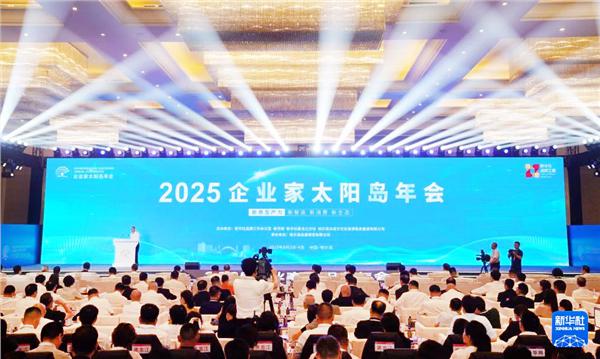
8月3日,太阳岛年会主论坛开启了一场关于产业发展与品牌建设的深度对话。 (高德康在2025企业家太阳岛年会主论坛上致辞) "发展新质生产力,是企业从中国第一迈向全球领先的核心引擎。"高德康在主论坛发表了主题为《融合 聚势,向新而行,从中国第一迈向"全球领先"》的致辞,阐释了波司登49年专注羽绒服主业、以新质生 产力驱动品牌进阶升级的战略逻辑和时代价值。 当前,我国正处于"十四五"收官与"十五五"谋篇的关键节点,全球产业竞争格局重塑,纺织服装行业已 从传统制造蜕变为科技与时尚融合的创新产业(300832)。高德康表示,因地制宜发展新质生产力,不 仅是国家战略的召唤,更是企业迈向高质量发展的必由之路。他强调,新质生产力是以科技创新为驱动 力的先进生产力质态,关键在于"向新"、"提质"、"攀高"。 哈尔滨的8月,太阳岛的盛夏清风里涌动着智慧与创新的思潮。8月2日至4日,以"新质生产力:新智造 新消费新生态"为主题的2025企业家太阳岛年会在此盛大举行。这场汇聚政产学研高端思想的盛会,为 中国企业探寻高质量发展路径点亮了前行之光。 (大会主会场全景照片:聚焦新质生产力赋能高质量发展) 全国工商联纺织服装业商会理事长, ...


恒富控股(00643)上涨6.25%,报0.51元/股
Jin Rong Jie· 2025-08-04 01:50
Group 1 - The core point of the article highlights the recent stock performance of Hengfu Holdings, which saw a 6.25% increase, reaching HKD 0.51 per share with a trading volume of HKD 2.5322 million [1] - Hengfu Holdings Limited and its subsidiaries primarily engage in the production and trading of garment products for various internationally recognized brands, as well as securities investment [1] - The company has production facilities in mainland China, is headquartered in Hong Kong, and was listed on the main board of the Hong Kong Stock Exchange in 2000 [1] Group 2 - As of the 2024 annual report, Hengfu Holdings reported total revenue of HKD 616 million and a net loss of HKD 31.2937 million [2] - Hengfu Holdings is scheduled to disclose its interim report for the fiscal year 2025 on August 28 [3]
广州服装产业,为什么那么“快”?
Hu Xiu· 2025-08-04 00:44
Core Viewpoint - The article emphasizes the competitive advantage of the Kanglu area in garment manufacturing, primarily due to its speed and efficiency in production processes, which is a result of its well-organized industrial ecosystem [1]. Group 1: Industrial Cluster Effects - The Kanglu area benefits from a significant industrial cluster effect, with the Zhongda textile market being the largest and most comprehensive fabric market in the country, allowing for one-stop shopping for raw materials [2]. - Over 30-40 years, the area has evolved into a complete industrial chain from raw materials to design and processing, creating a robust ecosystem that meets various production needs [2]. - The concentration of resources enables the emergence of niche crafts, supported by sufficient demand, allowing for tailored production processes to meet diverse customer needs [2][3]. Group 2: Internal Production Units - The Kanglu area spans 3 square kilometers, with production elements located within every 100-200 meters, creating numerous small ecological units that enhance production efficiency [4]. - Proximity to suppliers allows for immediate responses to production needs, fostering a dynamic environment where new demands can easily arise [4][5]. Group 3: Information Flow and Trust Mechanisms - The area operates like a "familiar society," where information flows freely among various stakeholders, facilitating quick access to necessary materials and services [7]. - Trust among different workshops is crucial for efficient collaboration, as the high density of orders creates a strong incentive for cooperation and reliability [8]. - This social trust reduces transaction costs and saves production time, ensuring timely delivery of goods to factories [9].
中国消费向新而行·关注夏日消费|“新中式”穿搭成潮流
Sou Hu Cai Jing· 2025-08-02 08:52
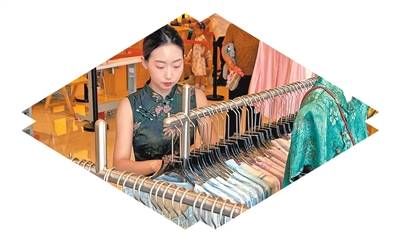
Group 1: Market Trends in "New Chinese" Clothing - The popularity of "New Chinese" clothing has surged, with various regions leveraging their unique characteristics to expand market opportunities [1][5] - In Shenyang, the Qipao store has seen daily foot traffic of 2,000 to 3,000 people and cumulative sales exceeding 1 million yuan since its opening during the May Day holiday [4] - The consumer base for Qipao is becoming younger, with a growing demand for personalized styles and everyday wear, leading to an average annual growth of nearly 30% in custom Qipao orders [4][5] Group 2: Innovations in Fabric Production - In Suzhou, the "New Chinese" clothing market is thriving, with monthly sales exceeding 1 million yuan at some stores [7][8] - Fabric manufacturers are innovating to create materials that are both aesthetically pleasing and cost-effective, such as the "Han Palace Autumn Moon" fabric, which has become a market hit [8] - New materials like acetate, rayon, and copper ammonia are being developed to offer features like anti-static, pilling resistance, and breathability, making them more affordable than silk [8] Group 3: Design and Cultural Integration - In Chengdu, designers are revitalizing traditional patterns by incorporating modern aesthetics, ensuring that traditional designs resonate with contemporary consumers [9][10] - The "New Chinese" clothing industry in Chengdu is projected to reach a market size of 8 billion yuan in 2024, with expectations to grow to 10 billion yuan by 2025 [11] - Designers emphasize the importance of innovation in traditional patterns to maintain relevance in modern fashion, blending cultural heritage with contemporary design [10][11]
盛泰集团: 盛泰智造集团股份有限公司关于“盛泰转债” 预计满足转股价格修正条件的提示性公告
Zheng Quan Zhi Xing· 2025-08-01 16:23
Core Viewpoint - The company announces that the convertible bond "Shengtai Convertible Bond" is expected to meet the conditions for a downward adjustment of the conversion price due to the stock price being below 85% of the current conversion price for a specified period [1][3]. Group 1: Convertible Bond Issuance Overview - The company issued 7,011,800 convertible bonds with a total fundraising amount of 700.18 million yuan, netting 683.845 million yuan after deducting issuance costs [2]. - The bonds have a term of 6 years, from November 7, 2022, to November 6, 2028, and were listed on the Shanghai Stock Exchange on December 1, 2022 [2]. Group 2: Conversion Price Adjustment Terms - The initial conversion price was set at 10.90 yuan per share, with the latest adjustment bringing it down to 10.56 yuan per share [3]. - The conversion price can be adjusted downward if the stock price is below 85% of the current conversion price for at least 15 out of 30 consecutive trading days [3][5]. Group 3: Conditions for Triggering Price Adjustment - The period for triggering the conversion price adjustment starts from July 21, 2025, with the threshold set at 8.9760 yuan per share [5]. - If the stock price continues to meet the conditions within the next 20 trading days, the company may trigger the conversion price adjustment [5].

天风证券晨会集萃-20250730
Tianfeng Securities· 2025-07-29 23:44
Group 1: Macro Strategy and Market Overview - The upcoming third round of trade talks between China and the US is expected to focus on energy and rare earth materials, with potential extensions of negotiation deadlines [2] - A-shares saw slight increases across major indices, with the CSI 500 and ChiNext rising by 3.28% and 2.76% respectively [2] - The central bank's net fund injection was 109.5 billion yuan, indicating a slight rebound in short-term interest rates [2] - The US dollar index showed a slight decline, closing at 97.67, down 0.8% week-on-week, while the RMB appreciated by 0.18% [2] Group 2: Fixed Income and Debt Market - The Southbound Bond Connect is expected to facilitate investment in Chinese dollar bonds, with a focus on city investment bonds benefiting from local debt policies [4] - The Hong Kong bond market has a total outstanding amount of 19.55 billion USD in HKD bonds and 17.32 billion USD in offshore RMB bonds [4] - The outlook for Chinese dollar bonds remains positive, with expected continued good returns due to narrowing yield spreads and favorable policies [4][33] Group 3: Coal Industry Insights - Domestic coal social inventory decreased in June 2025, leading to a rebound in coal prices, with expectations for port prices to reach 700-750 yuan per ton [9] - The government aims for coal production to reach approximately 4.8 billion tons in 2025, with potential adjustments in production capacity to ensure supply [9] Group 4: Company-Specific Analysis - Wei Shi Jia Jie (00856) is expected to benefit significantly from the AI and cross-border payment sectors, with projected revenue growth from 63.7 billion yuan in 2020 to 81.1 billion yuan in 2024 [11] - The company is positioned to capture growth in the Southeast Asian ICT market, which is projected to reach approximately 415 billion USD by 2028 [11] - The company anticipates a significant increase in net profit from 830 million yuan in 2023 to 958 million yuan in 2024, reflecting a growth rate of 14.09% [11][15] Group 5: Construction and Materials Sector - Su Jiao Ke (300284) reported a revenue decline of 13.75% in H1 2025, but is transitioning towards becoming a "think tank technology enterprise" with a focus on new business areas [16] - The company has developed five cloud platforms aimed at enhancing its service offerings in urban safety and low-altitude economy [16] Group 6: Chemical Industry Trends - The proportion of public funds holding basic chemical stocks has slightly decreased, with a shift towards mid-cap stocks [15] - The chemical sector has seen a notable increase in the holding ratio of leading stocks, indicating a preference for smaller-cap stocks [15]

氪星晚报|茅台旗下基金、中信证券投资等入股乐聚机器人公司;SHEIN:累计研发超170项精益工具;因信息系统故障,俄航取消42个航班
3 6 Ke· 2025-07-28 10:35
Group 1: Semiconductor Equipment Sector - ASML and other European semiconductor equipment stocks rose due to Samsung winning a contract to produce AI chips for Tesla, alongside a trade agreement between the US and Europe that alleviated trade war concerns [1] Group 2: AI and E-commerce - Alibaba International's AI solution Marco won the SAIL award, with external partners' AI usage increasing by 23 times [1] Group 3: Automotive Industry - South Korea's eco-friendly vehicle registrations surpassed 3 million for the first time, driven by demand for hybrid and electric vehicles, while internal combustion engine vehicle registrations decreased by 249,000 [3] - Lantu Automotive's registered capital increased from approximately 3.09 billion RMB to about 3.67 billion RMB, marking a 19% increase [6] Group 4: Investment and Financing - Moutai's fund and CITIC Securities invested in Leju Robotics, increasing its registered capital from about 1.9 million RMB to approximately 2.27 million RMB [4] - "Tangshangtang" completed a Pre-A round financing of several million RMB, with funds allocated for supply chain development and team building [5] Group 5: New Technologies and Products - A new wearable device developed by the Israel Institute of Technology can monitor blood sugar and drug concentration in real-time, applicable to various chronic diseases [7] - KUSAI Intelligent won the AI NAS frame project with Honor, expected to enter mass production in Q4 2025 [7] Group 6: Pharmaceutical Developments - Bristol-Myers Squibb's dual immunotherapy for non-small cell lung cancer received approval in China, providing a new treatment option without chemotherapy [8] Group 7: Economic Outlook - Bank Negara Malaysia revised its economic growth forecast for 2025 to 4% to 4.8%, down from 4.5% to 5.5%, citing trade and tariff uncertainties [10]

东极王博专题分享:服装企业打造民族品牌的三大战略建议
Sou Hu Wang· 2025-07-23 09:32
Core Viewpoint - The article emphasizes the importance of building national brands in the Chinese fashion industry, highlighting the current favorable conditions for the rise of these brands and providing strategic recommendations for achieving this goal [1][3][22]. Group 1: Current Industry Landscape - The Chinese apparel industry has a mature supply chain and a vast consumer market, creating significant opportunities for national brands to emerge [3]. - The article discusses the strategic positioning of various national brands, including Feihe Milk Powder and Linglong Tire, showcasing their successful differentiation strategies against foreign competitors [9][11]. Group 2: Strategic Recommendations - **Recommendation 1: Focus on Conceptual Differentiation** - Building a brand requires capturing a strong differentiation concept, which is essential for occupying consumer mindshare and outcompeting rivals [4][6]. - Successful examples include Wanglaoji's repositioning as a beverage for preventing heat, which allowed it to compete effectively with Coca-Cola [4]. - **Recommendation 2: Seize Strategic High Ground** - National brands must establish a strong competitive position by creating unique value propositions that challenge foreign brands [7][9]. - Feihe Milk Powder's emphasis on being more suitable for Chinese babies helped it grow from 3 billion to 20 billion in revenue over six years [9]. - **Recommendation 3: Develop Iconic Products** - In the age of social media, exceptional product quality and experience are crucial for brand strength, with the idea that "product equals brand" becoming increasingly relevant [16][17]. - Successful brands often have at least one flagship product that defines their market presence, such as Xiaomi's Yu7 SUV or Feihe's Star Flying Formula [19][21]. Group 3: Future Outlook - The article concludes that the Chinese fashion industry is poised for growth, with national brands expected to navigate towards their own unique paths in the global market [22].

财经观察:美国制造业回流遭遇“用工荒”
Huan Qiu Shi Bao· 2025-07-22 22:49
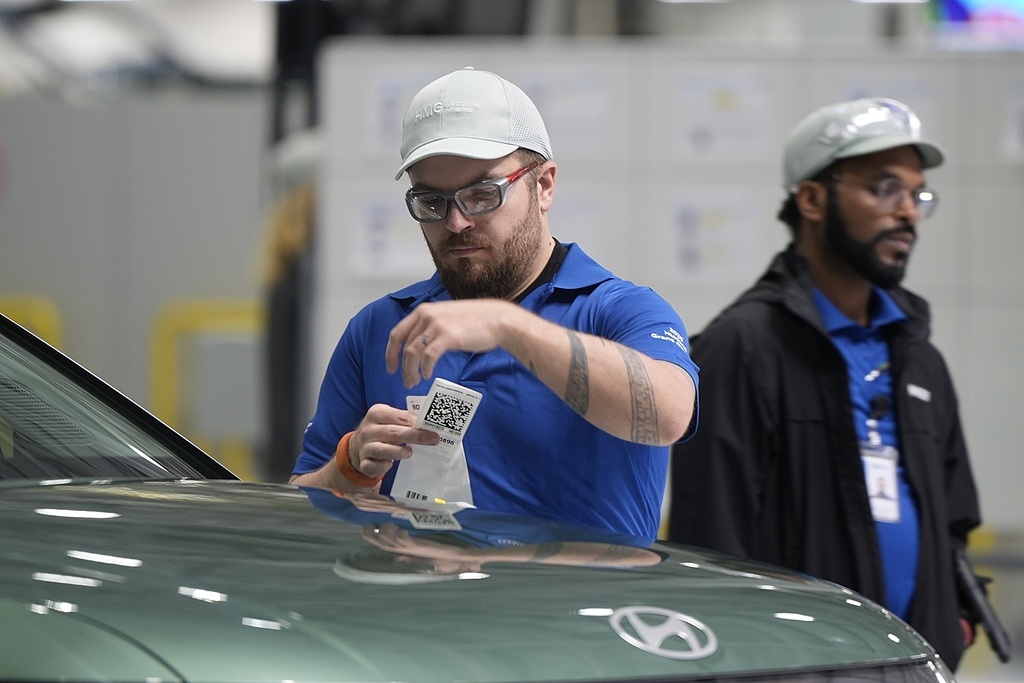
Group 1 - The core viewpoint of the article is that the U.S. government's push to bring manufacturing jobs back to America faces significant challenges, particularly a labor shortage in the manufacturing sector, which is hindering the realization of this goal [1][2][4][8] - There are approximately 500,000 vacant manufacturing jobs in the U.S., and over 65% of manufacturing companies report that recruiting and retaining workers is their primary business challenge [2][4] - A survey indicates that while 80% of Americans believe that increasing manufacturing jobs would benefit the country, only 25% think it would personally benefit them, highlighting a disconnect between national and personal perspectives on manufacturing employment [2][4] Group 2 - The manufacturing sector in the U.S. struggles to attract workers due to perceptions of low wages, poor working conditions, and inadequate benefits, leading many potential workers to prefer less demanding jobs [5][7] - Many low-income individuals are still interested in manufacturing jobs due to higher wages compared to service sector jobs, with manufacturing wages ranging from $18 to $30 per hour [6][7] - The current labor force in manufacturing is increasingly composed of immigrant workers, particularly from Latin America, while there is a declining interest among native-born Americans in pursuing manufacturing careers [6][7] Group 3 - The article discusses the need for higher wages to attract workers to manufacturing jobs, but this raises concerns about the profitability and global competitiveness of U.S. manufacturers, as higher wages were a factor in their previous relocation [7][8] - There is a call for investment in apprenticeship programs and education to equip the workforce with the necessary skills for modern manufacturing jobs, which require higher education and technical expertise [9][10] - Experts suggest that the U.S. government should focus on enhancing specific skills among workers and adapting to global trade dynamics rather than imposing pressure on foreign entities to bring manufacturing back [10]