
食品制造业

Search documents
重磅数据发布!现多项积极信号→
证券时报· 2025-05-10 04:19
Core Insights - The Consumer Price Index (CPI) increased by 0.1% month-on-month in April, while year-on-year it decreased by 0.1%. The Producer Price Index (PPI) decreased by 0.4% month-on-month and by 2.7% year-on-year [1][2]. CPI Analysis - The month-on-month CPI change shifted from decline to increase, with a core CPI increase of 0.2% month-on-month and a stable year-on-year increase of 0.5%. This reflects the resilience of the economy [2][4]. - Food prices rose by 0.2%, and service prices increased by 0.3%, driven by seasonal factors and demand recovery during the holiday period [3][4]. PPI Analysis - The PPI's month-on-month decline of 0.4% was consistent with the previous month, influenced by international factors and seasonal declines in energy prices [8][10]. - Certain industrial sectors showed signs of price recovery, with reduced year-on-year declines in sectors such as black metal smelting and non-metallic mineral products [5][6]. Sector Performance - High-tech industries and construction activities contributed to a positive trend in some industrial prices, with specific sectors like wearable smart devices and aircraft manufacturing showing price increases [5][6]. - The international oil price decline negatively impacted domestic oil-related industries, leading to price drops in sectors such as petroleum extraction and refining [10]. Economic Outlook - The People's Bank of China anticipates that policies aimed at expanding domestic demand will support a moderate recovery in price levels [2][11]. - Recent monetary policies, including interest rate cuts and structural tools, are expected to stimulate domestic demand and support price stability [11].


重磅发布!↑0.1%
券商中国· 2025-05-10 02:53
Group 1 - The Consumer Price Index (CPI) turned from a decrease of 0.4% in the previous month to an increase of 0.1% in April, with a year-on-year decrease of 0.1% remaining unchanged from the previous month. The core CPI increased by 0.2% month-on-month and 0.5% year-on-year, maintaining stability [1][2] - Food prices increased by 0.2% month-on-month, exceeding seasonal levels by 1.4 percentage points, driven by factors such as reduced import volumes and seasonal supply changes [2] - The prices of air tickets, transportation rentals, hotel accommodations, and tourism services rose significantly, contributing approximately 0.10 percentage points to the month-on-month CPI increase [2] Group 2 - The Producer Price Index (PPI) decreased by 0.4% month-on-month, with the decline rate remaining the same as the previous month. This was primarily influenced by international input factors affecting domestic prices [4] - The prices in the petroleum and natural gas extraction industry fell by 3.1%, while the prices of refined petroleum products decreased by 2.5%, reflecting the impact of declining international oil prices [4] - Some industrial sectors showed signs of improvement, with the year-on-year price decline in black metal smelting and rolling industries narrowing by 1.4 percentage points [5] Group 3 - High-tech industries are experiencing growth, with prices in related sectors increasing. For instance, the price of wearable smart devices rose by 3.0%, and aircraft manufacturing prices increased by 1.3% [5][6] - The expansion of trade diversification is contributing to price increases or narrowing declines in some export sectors, such as integrated circuit packaging and testing, which saw a price increase of 2.7% [6]
五芳斋(603237):收入增长利润减亏,关注端午旺季催化
Changjiang Securities· 2025-05-09 05:41
Investment Rating - The investment rating for the company is "Buy" and is maintained [6]. Core Views - In Q1 2025, the company reported total revenue of 243 million yuan, representing a year-on-year increase of 17.24%. The net profit attributable to the parent company was -45.23 million yuan, indicating a reduction in losses, while the non-recurring net profit was -48.74 million yuan, also showing a reduction in losses [2][4]. - The company is expected to benefit from the upcoming Dragon Boat Festival sales peak, with significant growth anticipated in its main products, particularly the rice dumpling series, which saw a revenue increase of 37.27% to 124 million yuan [10]. - The company has optimized its cost structure, achieving an increase in net profit margin by 15.05 percentage points to -18.63% and a gross profit margin increase of 1.12 percentage points to 35.4% [10]. Summary by Sections Financial Performance - Q1 2025 total revenue was 243 million yuan, with a year-on-year growth of 17.24%. The company reduced its net losses, with a net profit of -45.23 million yuan and a non-recurring net profit of -48.74 million yuan [2][4]. - The company’s gross profit margin improved to 35.4%, and the net profit margin increased to -18.63% due to cost optimization [10]. Product and Channel Performance - The rice dumpling series generated 124 million yuan in revenue, up 37.27%, while the mooncake series saw a remarkable increase of 723.39% to 485,800 yuan [10]. - Revenue from e-commerce channels grew by 26.39% to 35 million yuan, while revenue from distributors increased by 50.52% to 83 million yuan [10]. Regional Performance - Revenue from East China reached 157 million yuan, up 16.09%, while North China saw a significant increase of 65.03% to 12 million yuan [10]. Future Outlook - The company forecasts net profits attributable to the parent company for 2025-2027 to be 191 million, 209 million, and 229 million yuan, respectively, with corresponding EPS of 0.96, 1.05, and 1.15 yuan [10].

星湖科技(600866):扣非后净利润同比增长57.07% 在建项目进展顺利
Xin Lang Cai Jing· 2025-05-07 06:25
Core Viewpoint - The company achieved a net profit of 1.142 billion yuan after deducting non-recurring items in 2024, representing a year-on-year increase of 57.07%, primarily due to a significant increase in product sales [1][3]. Financial Performance - The company reported an operating income of 17.334 billion yuan in 2024, a slight decrease of 0.23% year-on-year. The net profit attributable to shareholders was 943 million yuan, up 39.12% year-on-year, while the net profit after deducting non-recurring items was 1.142 billion yuan, reflecting a 57.07% increase [3]. - For Q1 2025, the company achieved a total operating income of 4.039 billion yuan, a decrease of 3.82% year-on-year, but the net profit after deducting non-recurring items was 462 million yuan, showing an impressive year-on-year growth of 81.61% [4]. Dividend Distribution - The company plans to distribute a cash dividend of 0.38 yuan per share (before tax), with an estimated total cash dividend of approximately 631.36 million yuan (before tax), accounting for 66.94% of the net profit attributable to shareholders [3]. Future Profit Forecast - The company forecasts net profits attributable to shareholders for 2025, 2026, and 2027 to be 1.318 billion yuan, 1.433 billion yuan, and 1.601 billion yuan, respectively, with corresponding EPS of 0.79, 0.86, and 0.96 yuan [2]. Project Development - The company is accelerating the construction of a 600,000-ton corn deep processing and supporting cogeneration project, aiming for trial production by the end of 2025, with a total investment of approximately 3.712 billion yuan [4]. - The company is also steadily advancing the nucleotides technical transformation project in Zhaodong, with an investment of 167.29 million yuan, expected to take 16 months [4].

《农村绿皮书:中国农村经济形势分析与预测(2024~2025)》发布
Sou Hu Cai Jing· 2025-05-06 15:15
Core Insights - The "Green Book" published by the Chinese Academy of Social Sciences predicts a stable and positive development trend for China's agricultural and rural economy in 2024, contributing significantly to high-quality economic growth [1][3] - The per capita disposable income of rural residents is expected to reach approximately 24,000 yuan in 2025, reflecting steady income growth [3] Economic Performance - In 2024, the added value of the primary industry is projected to be 91,414 billion yuan, with a real growth of 3.5%, contributing 5.3% to GDP growth [1] - Fixed asset investment in agriculture, forestry, animal husbandry, and fishery is expected to grow by 6.4%, with significant increases in the food processing and manufacturing sectors, at 18.0% and 22.9% respectively [1] - The total retail sales of consumer goods in rural areas are anticipated to grow by 4.3%, increasing their share of total retail sales to 13.7% [1] Agricultural Production - The total grain production in 2024 is projected to reach 70649.9 million tons, marking a 1.6% increase and surpassing 700 million tons for the first time [2] - The yield per hectare for grain is expected to be 5,921.1 kg, reflecting a 1.3% increase, with wheat and corn showing the largest production growth at 2.6% and 2.1% respectively [2] Trade and Income - The agricultural trade deficit is expected to decrease to 112.15 billion USD, a reduction of 16.7% from the previous year, with a significant drop in corn imports by 49.7% to 13.64 million tons [2] - The average monthly income for migrant workers is projected to be 4,961 yuan, reflecting a growth of 3.8% [2] Future Outlook - The agricultural economy is expected to maintain stability in 2025, with continued support from government reforms and increased financial backing for agriculture [3] - Grain production is anticipated to remain stable at around 700 million tons, with prices for key agricultural products expected to stabilize [3] - The income disparity between urban and rural residents is projected to decrease, with the urban-rural income ratio expected to drop to around 2.3 [3]
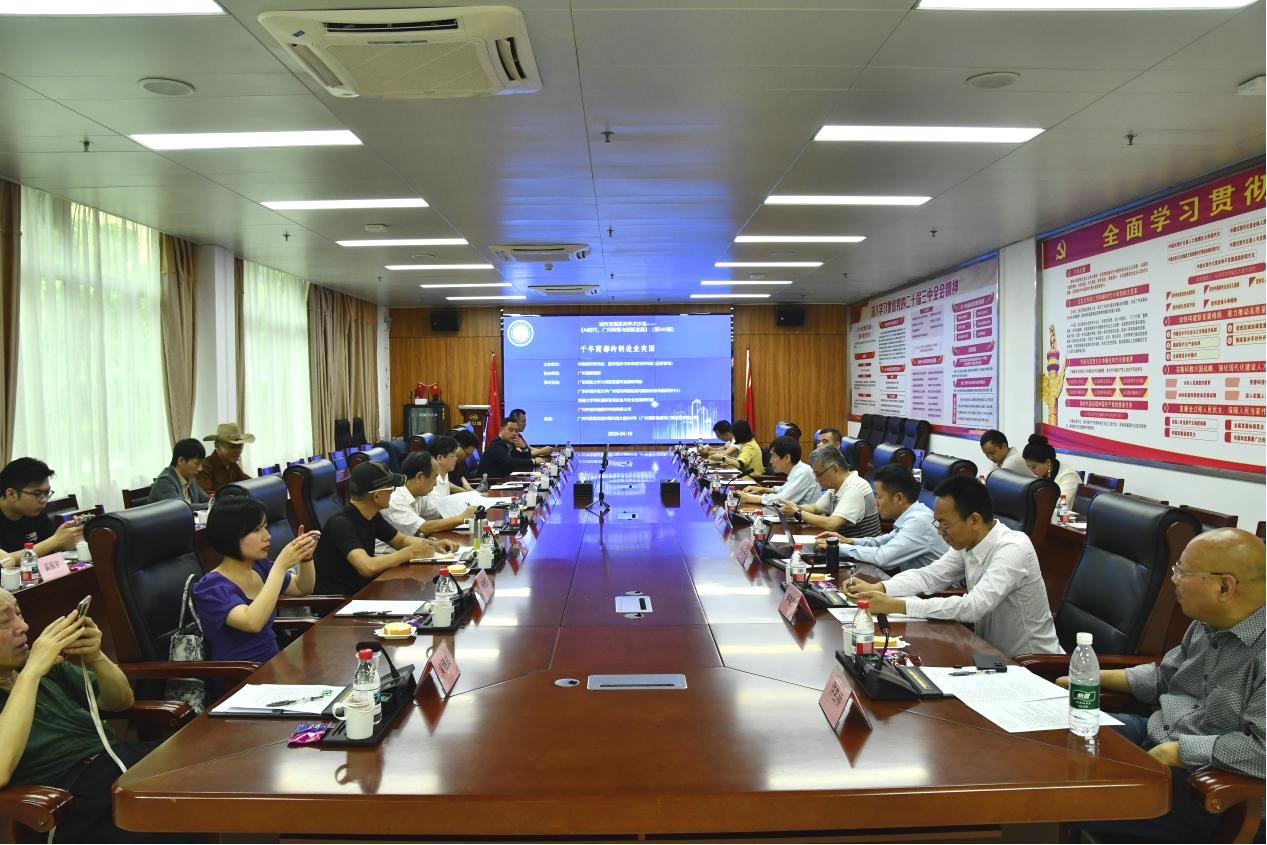
统筹好三组关系!“千年商都的制造业突围”研讨会在广州举办
Nan Fang Nong Cun Bao· 2025-05-06 06:22
Core Insights - The seminar titled "Breakthrough of Manufacturing in the Millennium Business Capital" was held in Guangzhou, focusing on how the city's manufacturing sector can innovate and overcome challenges [1][3]. Group 1: Strategic Planning - Experts emphasized the need for systematic strategic planning in Guangzhou's manufacturing sector, leveraging its commercial heritage and integrating AI into manufacturing [3]. - The goal is to create a "digital + manufacturing" ecosystem that focuses on high-end equipment and intelligent supply chains, thereby reshaping the industrial advantages of the millennium business capital [3]. Group 2: Policy and Economic Relationships - The seminar highlighted the importance of balancing the roles of government and market forces, ensuring effective market mechanisms while avoiding market failures, particularly in new business areas [4]. - It was noted that various economic entities, including state-owned, private, and foreign enterprises, should be coordinated to promote high-quality development through policy support and market access [4]. Group 3: Short-term and Long-term Strategies - The discussion included the need to align short-term measures, such as enhancing technological innovation and updating equipment, with long-term strategies for sustainable development [5]. - Emphasis was placed on deepening cooperation between industry, academia, and research to foster the growth of strategic emerging industries [5].
传统产业增数添智谋升级
Jing Ji Ri Bao· 2025-05-05 22:01
Core Insights - The automation and intelligent transformation of Ganyuan Food has led to a 60% increase in production efficiency, positioning the company as a national leader in modern industrialization [1] - The Pingxiang Economic and Technological Development Zone has implemented a "smart matrix" for digital transformation in manufacturing, significantly boosting industrial development [1] Group 1: Digital Transformation Initiatives - The Pingxiang Economic and Technological Development Zone has introduced the "Digital Transformation Action Plan (2024-2025)" and supportive policies, achieving recognition as an excellent digital transformation development zone [1] - A total of 117 enterprises have completed digital diagnostics, with 59 enterprises undergoing digital transformation, and 6 enterprises achieving L6 level or above in digital standardization [1] Group 2: Service Platform and Support - The "Smart Development Zone" service platform has been established, integrating a comprehensive service platform that has reduced project approval times by over 80% [2] - The digital transformation promotion center has provided over 60 technical training sessions, serving more than 800 enterprises [2] - The "Gantong Code" platform has launched a unique application for enterprises, achieving full coverage for over 600 companies [2] Group 3: Economic Impact and Future Goals - The Pingxiang Economic and Technological Development Zone has added 21 new industrial enterprises and disbursed over 30 million yuan in enterprise subsidies since last year [2] - The "Science and Technology Loan" program has issued a total of 340 million yuan in loans to support enterprises [2] - Future goals include focusing on the deep integration of "AI + Industrial Internet," aiming for over 80% of large-scale enterprises to achieve digital transformation [2]
股市必读:星湖科技(600866)4月30日董秘有最新回复
Sou Hu Cai Jing· 2025-05-05 17:21
Core Viewpoint - The company, Xinghuo Technology, is actively managing its international sales and responding to changes in the economic environment, particularly regarding U.S. tariffs and its impact on operations [2][3]. Group 1: Financial Performance - As of April 30, 2025, Xinghuo Technology's stock closed at 7.56 yuan, down 1.05%, with a turnover rate of 3.45%, a trading volume of 382,400 shares, and a transaction value of 292 million yuan [1]. - On the same day, the net outflow of main funds was 26.93 million yuan, accounting for 9.21% of the total transaction value [4]. Group 2: International Sales and Market Strategy - The company exports products to over 50 countries and regions, including Europe, Southeast Asia, and South Korea, with specific inquiries about U.S. export revenue being directed to a future report [2]. - The company indicated that the current U.S. tariff policies would not significantly impact its production and operations, and it is closely monitoring international economic conditions [2]. Group 3: Environmental and Operational Measures - The company adheres to a green development philosophy and implements environmental protection measures in its operations, with disclosures made in regular reports [3]. - The company has established risk assessment and response mechanisms to address potential risks arising from U.S.-China trade tensions, focusing on optimizing business layout and diversifying markets [3].
特朗普遭关税恶果反噬
虎嗅APP· 2025-05-03 13:02
Core Viewpoint - The article discusses the significant impact of tariff policies under the Trump administration, highlighting the adverse effects on U.S. businesses, supply chains, and the broader economy, while also emphasizing the potential long-term consequences for global trade governance [1][10]. Group 1: Impact on U.S. Businesses - Tariff-induced uncertainty has led to a decline in product demand, making it difficult for U.S. companies to pass on rising costs to customers, with some businesses facing potential bankruptcy [4]. - The Dallas Fed's manufacturing survey indicated a sharp decline in the business activity index to -35.8 in April, reflecting the turmoil caused by tariff policies [3]. - Many companies are experiencing increased operational costs due to the need to shift supply chains, with estimates suggesting an 18%-25% increase in operational costs for those relocating production [4]. Group 2: Employment and Economic Consequences - The imposition of tariffs has resulted in negative employment growth in the manufacturing sector, with job losses projected to increase significantly as tariffs rise [5]. - The agricultural sector, particularly U.S. farmers, is facing declining net income and increasing bankruptcy rates due to canceled orders from China, a major buyer of U.S. agricultural products [5]. Group 3: Environmental and Social Implications - The shift in supply chains to countries with weaker industrial bases, such as Vietnam and Mexico, is expected to increase carbon emissions and environmental pollution [7]. - The tariff policies disproportionately affect low-income households, as they spend a larger portion of their income on essential goods that are sensitive to tariff increases, exacerbating income inequality [8][9]. Group 4: Global Trade Governance - The unilateral tariff actions have led to a breakdown of the global trade governance system, replacing multilateral agreements with bilateral coercion, which undermines the effectiveness of the WTO [10]. - The article argues that the tariff policies represent a blend of populism and monopolistic capitalism, posing a legitimacy crisis for global governance and pushing the world towards a "zero-sum game" scenario [10].

特朗普遭关税恶果反噬
Hu Xiu· 2025-05-03 05:09
Group 1 - The article discusses the significant impact of Trump's tariff policies on American businesses, highlighting the confusion and chaos experienced by various industries due to these measures [2][3][4] - Many companies are facing increased costs and supply chain disruptions, leading to a decline in product demand and potential bankruptcies [2][4][5] - The tariffs have prompted some businesses to relocate production to countries like Vietnam and Mexico, resulting in higher operational costs and longer supply chains [3][5] Group 2 - The agricultural sector is particularly affected, with reports of canceled orders from China for U.S. agricultural products, leading to decreased net income for American farms [4][6] - The environmental impact of the tariffs is also noted, as companies shift production to regions with less developed industrial bases, potentially increasing carbon emissions [5][6] - The article emphasizes that the tariffs disproportionately harm low-income households, as they face higher prices for essential goods, exacerbating income inequality [6][7] Group 3 - The article suggests that Trump's tariff strategy is a form of unilateral protectionism that undermines global trade governance, replacing multilateral agreements with bilateral coercion [9][10] - The long-term consequences of these policies may lead to a breakdown of the World Trade Organization's dispute resolution mechanisms, pushing the global economy towards a "zero-sum game" scenario [9][10] - Overall, the article argues that the tariffs represent a blend of populism and monopolistic capitalism, with far-reaching implications beyond just economic factors [10]