
包装食品

Search documents
6零碳园区白皮书系列——肇庆高新技术产业开发区
荣续智库· 2026-03-02 09:30
Investment Rating - The report does not explicitly state an investment rating for the industry Core Insights - The dual carbon goals are a significant strategic deployment for sustainable development in China, with industrial parks being key to achieving carbon peak and carbon neutrality targets. The Zhaoqing High-tech Industrial Development Zone is a national pilot area for carbon peak, focusing on the green and low-carbon transformation of industrial parks [5][6] - The report emphasizes the importance of the Zhaoqing High-tech Zone in exploring zero-carbon transformation paths, leveraging its advantages in new energy vehicles and new energy storage industries, and establishing a green development system [5][6] - The report aims to provide systematic guidance for the construction of zero-carbon parks in Zhaoqing, promoting replicable solutions for similar high-tech zones across the Guangdong-Hong Kong-Macao Greater Bay Area and nationwide [6] Summary by Sections 1. Construction Foundation - The report outlines the background, foundation, and goals of zero-carbon park construction, detailing the achievements in industrial low-carbon upgrades, energy structure optimization, and infrastructure improvement [6] 2. Policy Framework - The report discusses the alignment of local policies with national zero-carbon park construction requirements, highlighting the need for optimization paths and enhancement suggestions [6][58] 3. Key Tasks - The report identifies key tasks such as energy storage and flexible load management, green infrastructure, carbon sink capacity, resource recycling, and building a green smart management platform [6][10] 4. Future Enhancement Suggestions - The report provides future enhancement suggestions for the Zhaoqing High-tech Zone, focusing on innovation-driven development and the establishment of industrial platforms [6][35] 5. Industry Layout - The Zhaoqing High-tech Zone has established a comprehensive industrial layout centered on new energy vehicles and new energy storage, supported by advanced manufacturing, biomedicine, modern home furnishing, food and beverage, artificial intelligence, and new materials [6][38] 6. Energy Supply and Consumption - The report analyzes energy consumption trends, indicating a shift towards cleaner energy sources, with coal consumption decreasing and natural gas and renewable energy sources increasing significantly [45][48][50]


康尼格拉股价上涨受高股息及财报后情绪修复推动
Jing Ji Guan Cha Wang· 2026-02-11 16:46
Group 1 - The stock price of Conagra (CAG.N) increased on February 11, 2026, driven by market interest in its high dividend yield and improved market sentiment following recent earnings reports [1][3] - On that day, the stock closed at $19.83, up 2.59%, with an intraday high of $19.84. The trading volume was $69.85 million, with a turnover rate of 0.75%, outperforming the packaged food sector and the broader U.S. market [2] - Conagra's dividend yield reached 7.06% as of February 11, making it attractive to investors seeking stable cash flow amid potential changes in interest rates [3] Group 2 - Despite a year-over-year revenue decline in Q4 of fiscal year 2025, Conagra achieved significant net profit growth through strict cost control, leading the market to believe that short-term performance pressures have been alleviated [3] - The North American consumer market's weakness has prompted food giants to adopt a "profit-first" strategy, with Conagra focusing on high-margin businesses and optimizing its product structure, which has garnered attention from some market participants [3] - As of February 2026, institutional ratings remain cautious, with 75% of ratings being hold (neutral), and the current stock price is above the average target set by institutions [4]
东莞“猪肉荣”十年逆袭 IPO :靠“不卖隔夜肉”开出 3000 家钱大妈
3 6 Ke· 2026-01-19 11:42
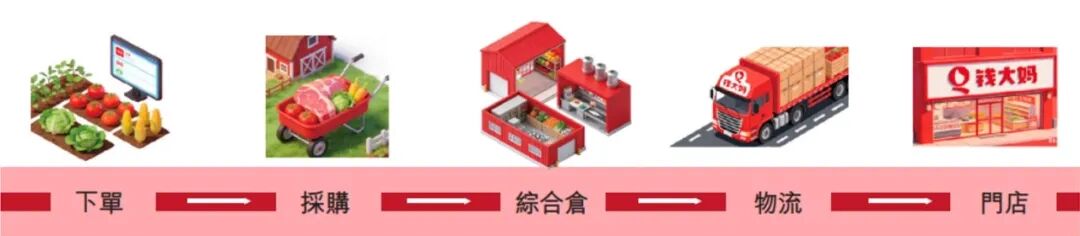
Core Insights - The article discusses the challenges and business model of Qian Dama, a leading player in the fresh produce retail sector in China, highlighting its rapid expansion and the inherent difficulties of the low-margin business [3][39]. Business Model - Qian Dama operates primarily through a franchise model, with 98.6% of its 2,938 stores being franchisee-owned, allowing for rapid expansion without bearing heavy operational costs [5][6]. - The company generates over 95% of its revenue from selling products to franchisees, relying heavily on its supply chain efficiency [9][7]. - The "daily clearance" strategy, where products are discounted throughout the evening until they are given away for free, helps reduce waste and attract customers but places financial pressure on franchisees [18][19]. Financial Performance - Qian Dama's revenue for 2023 and 2024 is projected at approximately 117.44 billion and 117.88 billion RMB, respectively, with a slight decline of 4.2% in the first three quarters of 2025 [15][27]. - The gross profit margin for product sales is only 9%, significantly lower than the 15%-25% average for traditional supermarkets, indicating ongoing struggles with profitability [15][29]. - The company has seen a decline in the number of franchisees, with 1,159 franchisees leaving over three years, raising concerns about its business sustainability [26][30]. Market Challenges - Qian Dama's market presence is heavily concentrated in Southern China, contributing 65.9% of its revenue, with saturation in this region making further growth challenging [32]. - Attempts to expand into Northern markets have failed due to differing consumer behaviors and supply chain limitations [34][35]. - The company faces competition from other players like Dingdong Maicai and Hema, which have more advanced digital operations and supply chain responsiveness [38]. Future Considerations - Qian Dama must address the crisis of franchisee exits and restructure its profit-sharing model to ensure sustainability [40]. - The company needs to diversify its product offerings to improve profit margins and reduce reliance on low-margin fresh produce [36][39].

华润万家杭州首家调改店今天焕新开业
Mei Ri Shang Bao· 2025-12-30 22:31
Core Insights - The Huaren Wanjia Pujia store in Hangzhou has undergone a comprehensive upgrade and reopened with significant promotional offers, including fresh pork at 7.99 yuan per portion and poultry products starting at 26.8 yuan [1][2] Group 1: Promotions and Discounts - The store is offering over 2800 quality products with a 20% discount from December 31 to January 11, 2026, covering various categories such as fresh ingredients and popular items [3] - Members can receive a free box of 8 anti-antibiotic eggs with any purchase from December 31 to January 2, 2026, and all customers can participate in a lottery to win a Huawei Mate 80 phone [3] Group 2: Store Experience Enhancements - The store has improved the shopping experience by widening the main aisle to 3.5 meters, eliminating mandatory traffic flow, and adding various convenience services such as free slicing and meat grinding [2] - A new "Food Street" has been created within the store, featuring 14 specialty stalls offering freshly made snacks at promotional prices [2]
陪伴18年的“生活补给站” 明日以全新姿态重新和大家见面
Mei Ri Shang Bao· 2025-12-29 22:19
Core Insights - The Huaren Wanjia Pujia Store in Hangzhou is set to reopen on December 31 after a comprehensive renovation aimed at enhancing the shopping experience for consumers [1] Group 1: Store Renovation and Offerings - The renovation focuses on four core dimensions: products, pricing, environment, and services, aiming to create a "better quality and more value" one-stop shopping experience [1] - Over 3,000 new products will be introduced, while nearly 70% of old products will be replaced, with a selection of over 9,500 quality items covering daily needs [2] - The fresh food section will be expanded, featuring a "Food Street" with 14 specialty stalls offering diverse flavors, and a 50 square meter dining area with 30 seats for immediate dining needs [2] Group 2: Store Layout and Customer Services - The store will adopt a single-layer operation model, removing mandatory traffic flow designs, and widening main aisles to 3.5 meters for smoother shopping [2] - New facilities will include direct drinking water, microwaves, pet storage, and various free services such as blood pressure measurement and eyeglass cleaning, catering to diverse customer needs [2][3] - Fresh food processing services like free slicing, grinding, and fish killing will be available, along with a 7-day no-reason return policy [3] Group 3: Opening Promotions and Member Benefits - The store will offer significant discounts on seasonal fresh products, with prices such as fresh-cut pork starting at 7.99 yuan per portion and various promotions on other items [4] - A range of opening gifts will be available from December 31 to January 11, including a 20% discount on over 2,800 quality items [4] - Members will receive exclusive benefits, including a free box of antibiotic-free eggs with any purchase from December 31 to January 2, and a chance to win prizes in a lottery during the opening period [5]
天虹股份12月19日获融资买入6532.58万元,融资余额3.01亿元
Xin Lang Cai Jing· 2025-12-22 01:39
Group 1 - Tianhong Co., Ltd. experienced a stock price increase of 1.35% on December 19, with a trading volume of 412 million yuan [1] - The company had a net financing purchase of 19.49 million yuan on the same day, with a total financing and securities balance of 302 million yuan [1] - The financing balance of Tianhong Co., Ltd. is 301 million yuan, accounting for 4.30% of its market capitalization, indicating a high level compared to the past year [1] Group 2 - As of December 10, the number of shareholders of Tianhong Co., Ltd. increased by 15.92% to 40,000, while the average circulating shares per person decreased by 13.73% to 29,225 shares [2] - For the period from January to September 2025, the company reported a revenue of 8.878 billion yuan, a year-on-year decrease of 1.86%, and a net profit attributable to shareholders of 62.54 million yuan, down 47.15% year-on-year [2] Group 3 - Since its A-share listing, Tianhong Co., Ltd. has distributed a total of 4.149 billion yuan in dividends, with 316 million yuan distributed in the last three years [3] - As of September 30, 2025, the third-largest circulating shareholder is Hong Kong Central Clearing Limited, holding 38.549 million shares, a decrease of 13.6547 million shares from the previous period [3] - New shareholders include Dachen Jingheng Mixed A and Guangfa Quantitative Multi-Factor Mixed A, while Huaxia New Consumption Mixed A has exited the top ten circulating shareholders list [3]

生鲜传奇王卫:“即食零售”主导的新周期到来
Sou Hu Cai Jing· 2025-12-19 02:24
Core Insights - The article emphasizes the importance of understanding consumer behavior and market trends, particularly the shift towards quality and convenience in food retailing, as articulated by Wang Wei, Chairman of Fresh Legend [2][14][23]. Group 1: Consumer Behavior and Market Trends - Wang Wei identifies a consumer mindset of "refined poverty," where consumers prioritize quality and experience even with limited budgets, leading to a demand for affordable yet high-quality products [3][6]. - The shift in consumer demographics from older generations to younger ones (80s, 90s, and 00s) has changed consumption patterns, with a preference for quality over quantity [5][14]. - The rise of "ready-to-eat" retail reflects a growing demand for convenience, as younger consumers prefer quick meal solutions over traditional cooking [14][20]. Group 2: Retail Strategies and Innovations - Wang Wei argues that discount stores are not merely about lower prices but about the perceived value and brand equity they offer [8][12]. - The concept of "food halls" is gaining traction, with a focus on high-quality, ready-to-eat options that cater to modern consumer needs, as seen in the transformation of Fresh Legend's stores [19][17]. - The company has successfully implemented a "潮汐式" (tide-style) operation model, adjusting product offerings throughout the day to meet varying consumer demands [31][34]. Group 3: Private Label and Product Differentiation - Fresh Legend's private label products account for 50% of sales, focusing on quality and differentiation rather than just low pricing [25][29]. - The company emphasizes the importance of product innovation and quality control, with significant investments in product development and testing [26][29]. - Wang Wei advocates for a "product manager" mindset among entrepreneurs, stressing the need for attention to detail in product development to avoid the pitfalls of generic private labels [23][25]. Group 4: Future of Retail and Small Stores - The article predicts a "golden decade" for small stores in China, driven by high-density residential areas and the efficiency of small retail formats [34][36]. - Fresh Legend aims to expand its network of 24-hour community stores, leveraging technology and logistics to enhance operational efficiency and customer experience [30][36]. - The integration of digital tools and AI in retail operations is seen as crucial for adapting to market changes and improving service delivery [30][31].

2025年快消品市场企稳 线下新兴渠道逆势增长
Zhong Guo Jing Ying Bao· 2025-12-14 12:57
Core Insights - The report indicates that the Chinese fast-moving consumer goods (FMCG) market is stabilizing in 2025 after a flat performance in 2024, with a 1.3% year-on-year sales growth in the first three quarters, driven by a 3.8% increase in sales volume [1] - The average selling price in the FMCG market has decreased by 2.4%, a reduction compared to the 3.4% decline in 2024, reflecting a trend towards price stabilization [1] Market Trends - The decrease in promotional activities has contributed to price stabilization, with the contribution of promotions to FMCG sales dropping from 24.1% to 23% [2] - Nearly 80% of the growth in the FMCG market in 2025 is attributed to third to fifth-tier cities, with sales volume increasing by 4%-6%, offsetting a 2%-3% decline in average selling prices [2] - The main drivers of growth include ongoing urbanization and robust local consumption, with more retailers and FMCG brands expanding into lower-tier cities [2] Category Performance - Packaged food categories have shown the fastest growth, with core staple foods and snacks driving a 3.4% increase in sales [2] - Household care products grew by 3.3%, supported by stable demand for cleaning supplies, while personal care categories showed signs of recovery with a 1.1% year-on-year growth [2] - In contrast, beverage sales declined by 1.1%, despite a 3.6% increase in volume, due to a 4.6% drop in average selling prices driven by intensified brand competition and market pressures [3] Consumer Behavior - The report highlights a shift in consumer behavior, with a trend towards quality and price balance rather than solely seeking the lowest price [2] - The "consumption substitution" phenomenon remains prevalent, although some categories like juice and chocolate continue to experience premiumization [3] Channel Dynamics - Traditional retail channels are contracting, with traditional hypermarkets and convenience stores seeing a further decline in their share of FMCG sales [4] - Emerging channels such as warehouse membership stores, snack collection stores, and discount stores are experiencing rapid growth, with year-on-year increases of 40%, 51%, and 92% respectively [4] - The rise of snack collection stores is particularly significant for foreign brands, which view these channels as crucial for business growth and market penetration [5][6] Retailer Strategies - Retailers are increasingly focusing on convenience, value, and brand differentiation, with a trend towards developing private labels that offer innovative products rather than just low prices [6] - Collaboration between retailers and brands is becoming more common, blurring the lines between retail and brand ownership [6]
2025年中国购物者报告解读(28页附下载)
Sou Hu Cai Jing· 2025-12-11 13:32
Core Insights - The report highlights the overall performance of China's fast-moving consumer goods (FMCG) market in the first three quarters of 2025, indicating a stable growth trend with a 1.3% year-on-year increase in sales, driven primarily by volume growth of 3.8% despite a decline in average prices by 2.4% [23][24][25]. Market Performance - The FMCG market in China experienced a sales growth of 1.3% year-on-year in the first three quarters of 2025, with a notable 3.8% increase in volume and a 2.4% decrease in average prices [23][24]. - Lower-tier cities (third to fifth tier) contributed 80% of the market growth, becoming the main growth engine, while first and second-tier cities showed relatively flat performance due to slow economic recovery and the trend of "consumption substitution" [23][24][30]. Category Dynamics - **Packaged Foods**: Sales increased by 3.4%, with stable demand for core staple and snack foods. Instant noodles and nutritional supplements performed well, while chocolate and candy continued to decline [33][34]. - **Beverages**: Overall sales decreased by 1.1%, despite a 3.6% increase in volume, with average prices dropping by 4.6%. Milk and yogurt saw significant declines, while juice and beer categories experienced growth [41][42]. - **Personal Care**: Sales grew by 1.1%, ending a three-year decline, with strong performance in makeup and toothpaste, although skincare faced intensified competition and price reductions [46][47]. - **Household Care**: Sales rose by 3.3%, with strong performance in toilet paper and facial tissues, although average prices declined [47]. Price Dynamics - The "consumption substitution" trend continued into 2025, with average price declines narrowing from 3.4% in 2024 to 2.4% in 2025, indicating a shift in consumer behavior towards balancing quality and price [7][51]. - Some categories, such as juice and chocolate, maintained a premium positioning, while toothpaste was the only non-food beverage category to sustain stable premiumization [51][55]. Channel Dynamics - **Offline Channels**: Traditional formats like hypermarkets and convenience stores continued to shrink, while new formats such as warehouse membership stores, snack shops, and discount stores expanded rapidly, with growth rates of 40%, 51%, and 92% respectively [8][9]. - **E-commerce**: The e-commerce channel maintained a growth rate of 7%, with penetration increasing from 37% in 2024 to 39% in 2025. Platforms like Douyin and Pinduoduo became key growth drivers, accounting for over 40% of total FMCG e-commerce sales [8][9][11]. Implications for Brands - Brands must gain deep insights into consumer needs across different channels and capture the "moments of truth" that trigger purchase decisions to create products and experiences that resonate with consumers [10][11]. - The report emphasizes the importance of convenience and value-for-money in future channel strategies, highlighting the need for innovation driven by consumer insights to maintain competitiveness in a complex environment [10][11].

2025年中国购物者报告,系列二:渠道破局:中国快消品市场的机会和挑战
BAIN· 2025-12-10 11:20
Investment Rating - The report does not explicitly provide an investment rating for the industry Core Insights - The Chinese fast-moving consumer goods (FMCG) market shows signs of stabilization in 2025, with a sales growth of 1.3% year-on-year in the first three quarters, driven by a 3.8% increase in volume and a 2.4% decrease in average price [9][12][10] - Lower-tier cities (third to fifth tier) contributed approximately 80% of the market growth, benefiting from urbanization, brand penetration strategies, and the expansion of new retail channels [9][20] - The report highlights a shift in consumer behavior, where price sensitivity is balanced with quality considerations, leading to a stabilization in average prices after a significant decline in previous years [10][43] Summary by Sections Market Overview - The FMCG market in China experienced a mild growth in 2025, with a notable performance in the first quarter, which saw a 2.7% increase year-on-year [12] - Sales in lower-tier cities are a key growth driver, with a volume increase of 4-6% offsetting price declines [20][39] Category Dynamics - Packaged food and household care categories led the growth with increases of 3.4% and 3.3% respectively, while the beverage category faced a decline of 1.1% [24][25] - The personal care category showed signs of recovery with a 1.1% growth after several years of decline [34] Price Dynamics - The "consumption upgrade" trend continued into 2025, with average prices decreasing by 2.4%, although the rate of decline has slowed compared to 2024 [10][43] - Promotional activities have decreased, indicating a shift in consumer purchasing behavior towards a more balanced consideration of price and quality [13][43] Emerging Channel Dynamics - New retail formats such as warehouse membership stores, snack collection stores, and discount stores are rapidly expanding, with growth rates of 40%, 51%, and 92% respectively [54][55] - E-commerce channels also showed strong growth, with an increase from 2% to 7% in the first three quarters of 2025 [54][56] Implications for Brands - Brands must adapt to the evolving retail landscape, leveraging data and technology to create demand and navigate the fragmented market [53] - The report emphasizes the importance of understanding consumer dynamics to seize opportunities in the new growth cycle [53]