外卖

Search documents
用更规范的服务 提升外卖平台行业整体水平
Mei Ri Shang Bao· 2025-12-08 23:27
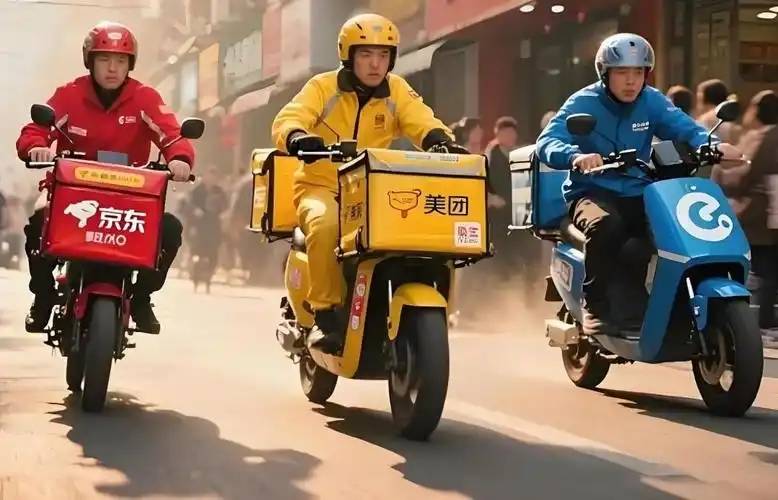
Core Viewpoint - The recent rebranding of a food delivery platform and the upcoming release of the national standard for food delivery services indicate a new development phase for the industry [1][2]. Group 1: Industry Background - The food delivery platform, now renamed "Taobao Flash Purchase," originally launched in September 2008, marking the beginning of a significant industry that has evolved over 17 years [2]. - The newly released national standard is the first specifically addressing the management of food delivery services, filling a gap that previously existed in regulatory frameworks [1][3]. Group 2: National Standard Details - The national standard addresses issues such as "ghost deliveries," irrational competition, and insufficient protection of delivery personnel's rights, highlighting the need for regulatory intervention [3]. - Specific requirements include merchants providing storefront photos and videos for platform verification, platforms offering tools for evaluating promotional service effectiveness, and ensuring that costs of promotional activities are borne by the platform [3]. - The standard also emphasizes consumer rights protection, mandating platforms to compensate consumers for delivery issues caused by uncontrollable factors [3]. Group 3: Industry Response and Implementation - Major platforms like Taobao Flash Purchase, Meituan, and JD Delivery have expressed their commitment to voluntarily implement the new standard, signaling a positive step towards industry regulation [4]. - The standard is recommended rather than mandatory, necessitating active participation from platforms and ongoing legal improvements to keep pace with industry developments [4]. - The introduction of the national standard is seen as an opportunity to enhance the governance of food delivery platforms through stricter standards and more regulated services [4].
外卖“新国标”出台 为市场立下“新规矩”
Zhong Guo Qing Nian Bao· 2025-12-08 22:27
Core Viewpoint - The introduction of the new national standard "Basic Requirements for Food Delivery Platform Service Management" aims to enhance food safety regulation and address key issues in the food delivery industry, including the protection of delivery personnel's rights and the regulation of platform fees [1][6]. Group 1: Food Safety Regulation - The new standard incorporates "Internet + Bright Kitchen" to strengthen food safety oversight, requiring merchants to implement real-time video monitoring of food preparation processes [3][4]. - The standard mandates platforms to establish dedicated teams to verify merchant information and conduct monthly checks on at least 5% of merchants to prevent unqualified vendors from operating [2][6]. - Platforms are encouraged to support merchants in adopting "Internet + Bright Kitchen" through subsidy policies, allowing small and medium-sized businesses to participate at minimal cost [3][4]. Group 2: Market Competition Issues - The standard addresses competitive practices in the food delivery sector, particularly the pressure on small merchants to participate in promotions that can lead to financial losses [6][7]. - It specifies that platforms must bear the costs of promotional activities and cannot pass these costs onto merchants or delivery personnel, nor can they force merchants to participate in promotions [6][7]. - The standard prohibits misleading marketing practices that disrupt market pricing and order [6][7]. Group 3: Delivery Personnel Rights - The new standard emphasizes the protection of delivery personnel's rights, addressing issues such as long working hours and high work intensity [7][8]. - It includes requirements for platforms to provide compensation for delays caused by merchants and to ensure fair working conditions, such as eliminating penalties for late deliveries [7][8]. - Several platforms have already begun reforms, including the cancellation of late delivery penalties and the introduction of service score systems to manage performance [7][8]. Group 4: Complaint Mechanisms - The standard focuses on improving dispute resolution mechanisms by establishing clear channels for complaints from consumers, merchants, and delivery personnel [8]. - It aims to enhance social oversight and ensure that the food delivery industry adheres to the new standards [8].



多平台相继声明,助力破解外卖行业“内卷式”竞争
Ren Min Wang· 2025-12-08 08:51
Core Viewpoint - The official release of the national standard "Basic Requirements for the Management of Takeaway Platform Services" is expected to bring significant changes to the takeaway industry, with major platforms like Meituan, JD, and Taobao voluntarily committing to its implementation [1]. Group 1: Industry Impact - By the end of 2024, the number of online takeaway users in China is projected to reach 545 million, indicating that the takeaway industry has become an integral part of consumer behavior [1]. - The introduction of the national standard is a crucial step towards standardization and refinement in industry governance, addressing long-standing pain points and providing systematic solutions and actionable guidelines [1]. Group 2: Food Safety and Merchant Support - The standard emphasizes food safety by targeting issues like "ghost takeaways," requiring platforms to conduct thorough merchant verifications and promote transparency in food preparation processes [3]. - It aims to create a healthier and fairer operating environment for small and medium-sized merchants by clarifying promotional responsibilities and preventing cost shifting, thus protecting their autonomy and development space [3]. Group 3: Labor Rights and Sustainable Practices - The standard pays close attention to the rights of delivery workers, advocating for income mechanisms that match labor intensity and providing subsidies for special circumstances [4]. - It seeks to balance efficiency and safety, as well as platform development and worker welfare, by promoting reasonable algorithm scheduling that considers real-world factors like traffic and weather [4]. Group 4: Implementation and Collaboration - As a recommended national standard, its core role is to establish widely recognized benchmarks for quality service and management practices, serving as a systematic "manual" for platform companies [4]. - The swift response and voluntary compliance from major platforms signal a shift towards higher standards and a move away from "involutionary" competition, indicating a positive trend in the industry [4]. - The true value of the standard will be realized when it translates into a fairer environment for merchants, a safer experience for consumers, and more secure protections for workers, necessitating ongoing collaboration and supervision from regulatory bodies and industry associations [4].


外卖大战烧掉千亿,阿里本来无需打这场仗,可惜马云当年决定错误
Sou Hu Cai Jing· 2025-12-08 06:15
Core Insights - The article discusses the evolution of the food delivery and group buying market in China, highlighting the competitive dynamics between major players like Meituan, Alibaba, and Tencent, and the strategic decisions that shaped the industry landscape. Group 1: Historical Context - In 2010, Wang Xing discovered the group buying model in the U.S. and decided to launch Meituan after several failed entrepreneurial attempts [1] - The group buying market in China quickly became competitive, leading to a "thousand group buying sites" battle, with competitors like Lashou and Wowo having more funding and city presence [3] Group 2: Investment Dynamics - Alibaba invested $50 million in Meituan in 2011, acquiring a 12% stake, while Tencent partnered with Groupon to create Gaopeng [5] - In 2014, Alibaba raised over $20 billion in its IPO and invested $300 million in Meituan, increasing its stake to 15% [5] Group 3: Strategic Divergence - Wang Xing refused to be acquired by Alibaba, aiming to build his own ecosystem similar to Alibaba's, leading to a strategic split between him and Jack Ma [7] - In 2015, Meituan merged with Tencent's investment in Dazhong Dianping, allowing Wang Xing to end the group buying war and emerge as the market leader [7] Group 4: Market Positioning - After the merger, Alibaba's stake in Meituan decreased to 7%, and they later sold 7% of their shares for $900 million, marking a significant exit from the company [9] - Following this, Alibaba launched a counter-offensive by reviving Koubei and acquiring Ele.me for $12.5 billion, intensifying the O2O battle against Meituan [9] Group 5: Future Outlook - The ongoing competition between Meituan and Alibaba in the food delivery sector is expected to continue, with the outcome still uncertain [9]
【券商聚焦】华安证券维持美团(03690)“买入”评级 看好公司的经营、组织和业务壁垒
Xin Lang Cai Jing· 2025-12-08 04:27
Core Insights - The core viewpoint of the report indicates that Meituan-W (03690) is facing significant challenges due to intensified competition in the food delivery sector and increased investment in overseas expansion, resulting in a substantial operating loss of 198 billion yuan in Q3 2025, compared to an operating profit of 137 billion yuan in the same period last year [1][3]. Financial Performance - Total revenue for Q3 2025 reached 955 billion yuan, reflecting a year-on-year growth of 2.0% [1]. - Adjusted EBITDA was negative at 148 billion yuan, and adjusted net loss amounted to 160 billion yuan, contrasting with a profit of 128 billion yuan in the previous year [1][3]. - Core local business revenue was 674 billion yuan, down 2.8% year-on-year, with an operating loss of 141 billion yuan [1][3]. - New business revenue grew by 15.9% to 280 billion yuan, with an operating loss of 13 billion yuan [1][3]. Competitive Landscape - The food delivery sector is experiencing fierce competition, leading to increased sales and marketing expenditures, which rose by 90.9% to 343 billion yuan, accounting for 35.9% of total revenue [2][4]. - The operating profit margin for the core local business turned negative to -20.9% due to these increased expenditures [2][4]. - Management anticipates that the competitive landscape will improve in the coming quarters, with a focus on high-value users and high-ticket orders, as the intensity of subsidies is expected to decrease [2][4]. Market Position - Despite the competitive pressures, Meituan maintains a dominant position in the mid-to-high price segments, capturing two-thirds of orders priced above 15 yuan and over 70% of orders priced above 30 yuan [2][4]. - Meituan's structural advantages in order density, algorithm efficiency, and logistics capabilities ensure its leading cost control in the industry, solidifying its long-term competitive position [2][4]. Future Projections - The institution forecasts that Meituan's revenue will reach 366.2 billion yuan, 408.7 billion yuan, and 446.6 billion yuan for the years 2025 to 2027, with growth rates of +8%, +12%, and +9% respectively [3][5]. - Adjusted net profits are projected to be -178 billion yuan, 161 billion yuan, and 462 billion yuan for the same period, with a significant growth rate of +186% anticipated in 2027 [3][5]. - The institution remains optimistic about Meituan's operational capabilities and business barriers, maintaining a "buy" rating based on its long-term exploration in the retail sector [3][5].

高盛闭门会-美股互联网Q3财报后,市场三大辩论谷歌亚马逊
Goldman Sachs· 2025-12-08 00:41
Investment Rating - The report indicates a positive outlook for Amazon and a cautious stance on Meta, with a focus on potential growth in the AI sector and consumer behavior impacting various companies [1][4][15]. Core Insights - Alphabet has shown strong market performance due to advancements in AI applications and growth in cloud business, while Meta has struggled with lower-than-expected ad revenue and internal challenges [1][3]. - Consumer behavior is increasingly volatile, particularly among lower-income groups, affecting growth expectations for companies like Uber, DoorDash, Roblox, and Upwork [1][3]. - Amazon's AWS has regained investor confidence with revenue growth projected to exceed 20%, and a Q4 revenue guidance of $26 billion indicates stable profit margins [1][8]. - Meta faces significant challenges in AI, with internal turmoil and underperformance of its Llama model, leading to a strategic shift towards a superintelligence lab [1][9][10]. - The travel industry is experiencing caution due to the introduction of Google's Gemini product, which may disrupt existing players like Expedia and Booking [3][14]. Summary by Sections Alphabet - Alphabet's stock has risen 90% since May, driven by AI advancements and a strong cloud business, with an 80% year-over-year increase in cloud backlog [6]. - The launch of Gemini 3 has exceeded expectations, enhancing Alphabet's valuation, although concerns remain about the sustainability of its advertising revenue [6][7]. Amazon - Amazon's AWS has overcome obstacles, leading to improved investor sentiment, with a projected revenue growth of over 20% and a Q4 revenue guidance of $26 billion [8]. - The company is expected to achieve earnings per share of $11 or higher, with potential for further revisions in AWS estimates [8]. Meta - Meta is facing internal challenges and delivery issues in AI, with a disappointing performance from its Llama model prompting a strategic overhaul [9][10]. - The company is investing heavily in a superintelligence lab, but significant results are not expected until 2026 [9][10][11]. Uber and DoorDash - Uber's stock has fluctuated due to concerns over its autonomous driving technology, while DoorDash has received an upgrade in ratings, indicating a more favorable outlook [4][13][15]. - Both companies are seen as having potential for growth, although Uber's recent performance has led to a slight downgrade in priority [15]. Travel Industry - The introduction of Google's Gemini product has raised concerns about its impact on the travel industry, with a cautious outlook on long-term growth for companies like Expedia and Booking [14].


头部外卖平台集体响应《外卖平台服务管理基本要求》
Zheng Quan Ri Bao Wang· 2025-12-07 12:42
在此背景下,《基本要求》区分了"平台价格促销"与"商户价格促销"两种促销方式,明确提出平台价格 促销相应成本应当由平台自身承担,不能通过推广工具捆绑、临时上调服务收费等方式,将促销活动成 本变相转嫁给商户或者配送员。同时,平台开展促销活动,应当至少提前7天将促销的范围、规则等信 息告知商户,为商户留好准备时间。 《基本要求》还提出,平台要规范竞争行为,不能将商户对消费者提供的补贴作为平台补贴,对外宣传 超大补贴体量吸引用户;也不能采取隐藏部分费用、宣传"零元购"等夸张标签、过度重复推送等手段开 展营销活动;更不能出现扰乱市场价格认知与正常秩序的行为。 对此,12月4日至12月5日,美团、淘宝闪购、京东外卖相继发布"关于执行《外卖平台服务管理基本要 求》推荐性国家标准的声明"。 三大平台均表示,作为标准起草单位之一,深度参与了本标准的研制、起草与论证工作,将自愿执行 《基本要求》国家标准,把标准要求系统融入平台运营管理和服务流程之中,持续优化平台规则,提高 商户与配送员服务管理水平,提升消费者体验,保障配送员、消费者和商户各方权益。将以本标准实施 为契机,积极助力推动外卖行业规范管理、品质服务、理性竞争、生态共 ...
从混战到统一!美团京东外卖官宣国标,消费者体验将迎颠覆性变化!
Sou Hu Cai Jing· 2025-12-07 07:43
Group 1 - The core point of the article is the introduction of national standards for the food delivery industry, marking a shift from chaotic growth to a more regulated environment, with major players like Meituan and JD.com voluntarily adopting these standards [1][3] - The national standard aims to address long-standing issues in the industry, such as the lack of unified rules, by establishing basic requirements for labor rights, consumer complaint handling, and merchant transparency [3][5] - The voluntary execution of the national standard by leading companies is seen as a strategic move to build trust among consumers, delivery personnel, and merchants, enhancing user retention and operational efficiency [5][9] Group 2 - The article discusses the potential changes that the national standard could bring to the rights of delivery personnel, including clearer mechanisms for handling negative reviews, transparent delivery fee structures, and improved labor rights protections [8][10] - For merchants, the standard could lead to more predictable rules regarding commission rates and operational transparency, reducing anxiety about sudden changes in platform policies [8][10] - The article suggests that the actions of Meituan and JD.com may create a ripple effect, encouraging other platforms to adopt similar standards to remain competitive and meet consumer expectations [9][12] Group 3 - To ensure the national standard does not become merely a formality, the article emphasizes the need for platforms to disclose specific implementation details, introduce third-party oversight, and encourage active participation from consumers and delivery personnel [10][11] - The conclusion highlights that the introduction of the national standard is just the beginning of a transformation in the food delivery industry, shifting the focus from speed and subsidies to rules and user experience [12][13] - The ultimate competitive advantage in the industry will depend on the ability to create value for all stakeholders involved, including delivery personnel, consumers, and merchants [13]
饿了么APP正式焕新为淘宝闪购,阿里大消费战舰加速
Sou Hu Cai Jing· 2025-12-07 04:38
Core Insights - The ongoing battle in the food delivery sector has led to significant financial losses for major players, with Meituan reporting a loss of 19.8 billion yuan, while Alibaba and JD also saw declines in net profits. Collectively, these companies have invested over 100 billion yuan in the market, reshaping the competitive landscape and activating a trillion-level instant consumption demand [2] Group 1: Market Dynamics - The competition is shifting from merely delivering food to creating a robust infrastructure for instant retail, focusing on high retention and high-value orders [4] - Meituan holds approximately 50% of the market share in daily orders, while Taobao Flash Purchase accounts for about 42%, and JD has around 8%, indicating a more competitive market than before [2] - The transformation of Ele.me into Taobao Flash Purchase signifies Alibaba's commitment to the instant retail sector, enhancing brand recognition and market positioning [3] Group 2: Financial Performance - Alibaba's latest financial report shows that its local life and instant retail businesses are growing rapidly, outpacing many traditional sectors and becoming a key revenue driver [5] - The management emphasized improving operational efficiency and customer retention, indicating a positive trend in the unit economics of the instant retail business [5] Group 3: Strategic Developments - Alibaba is consolidating its resources around Taobao Flash Purchase, signaling a strategic focus on instant retail growth and consumer demand [8] - The integration of Ele.me and Taobao Flash Purchase aims to enhance operational synergy and create a more efficient ecosystem for instant retail [4][9] - The competitive landscape is evolving, with a focus on who can deliver a wide range of products quickly, rather than just food delivery [4] Group 4: Infrastructure and User Engagement - Taobao Flash Purchase benefits from Alibaba's extensive user base and traffic resources, allowing it to leverage natural traffic for instant consumption [11] - The platform's diverse supply chain, including offline stores and warehouses, enables it to meet various consumer needs beyond just food [11][12] - The combination of local delivery networks and logistics infrastructure enhances efficiency and cost-effectiveness, positioning Taobao Flash Purchase as a comprehensive solution for daily consumer needs [12][13]

今天,饿了么正式改名!
猿大侠· 2025-12-07 04:26
就在12 月 5 日,淘宝闪购(原"饿了么")官方宣布即日起, 饿了么 App 在更新至最新版本后将 全面焕新为"淘宝闪购"。 行各业的大品牌,包括盒马、天猫超市都在快速上线淘宝 闪购,提供随时随地"闪购"的新体验。 经历了这个特别的2025,我们也到了需要再成长一步、向前 一步的时候了。 即日起,"饿了么"APP在更新至最新版本后将全面焕新为 "淘宝闪购"。与此同时,原涉及"饿了么"品牌表达的各个 场景,近期也将陆续完成向"淘宝闪购"的焕新升级。用户 对即时生活服务不断进阶的需求,也始终在鞭策我们必须 持续成长、秉持勇气、自我革新。 在这个"橙了"的大日子,我们也为各位朋友准备了焕新大 礼包: 在最新版本的淘宝闪购APP内,搜索"更新更好"可以直达 我们的"更新更好 橙意满满"活动会场。 与此同时,原涉及"饿了么"品牌表达的各个场景,近期也将陆续完成向"淘宝闪购"的焕新升级。 另外,在最新版本的淘宝闪购 App 内搜索"更新更好"可以获得 288 元起大券包,以及 100 万份专 享免单。 除了有人人必得的288元起大券包,更有100万份专享免单 惊喜好礼等待大家! 从"蓝"到"橙",更新是为了更好,更好也 ...