
休闲娱乐

Search documents
抓住暑期消费的尾巴,港人北上体验一动一静“必玩榜”
2 1 Shi Ji Jing Ji Bao Dao· 2025-08-29 11:43
Core Insights - The entertainment preferences of consumers in China are shifting from occasional experiences to daily leisure activities, indicating a transformation in lifestyle choices [1] - New consumer demands are driving the emergence of innovative business models in urban leisure, characterized by a blend of immersive, complex, and online experiences [1] - The trend of Hong Kong residents traveling to mainland China for leisure activities is becoming a significant aspect of the integration within the Greater Bay Area [1] Group 1: Consumer Behavior - Hong Kong tourists are increasingly seeking leisure activities that provide emotional value and relaxation, moving away from traditional shopping habits [1] - The "must-visit list" has become a key tool for Hong Kong visitors to explore leisure options in mainland China [1] - A notable 40% of visitors to PARTYDAY in Shenzhen are from Hong Kong, with a high rate of repeat customers [2] Group 2: Business Models - The汤崎 brand focuses on creating a relaxing urban destination by combining bathing, spa, and entertainment services, operating 24/7 [2] - PARTYDAY integrates sports, entertainment, and technology, offering a cost-effective experience with multiple attractions and social activities [2] - The digital service enhancements at PARTYDAY, such as the "Adventure Island" mini-program, allow for real-time score tracking and engagement [3] Group 3: Economic Impact - In 2024, it is projected that 81.91 million Hong Kong residents will travel to mainland China, representing a year-on-year increase of over 50% [3] - The estimated total spending by these travelers is approximately HKD 55.7 billion, an increase of nearly HKD 20 billion compared to 2023 [3] - The spending patterns of Hong Kong visitors show that over 80% of their expenditures in mainland China are on lifestyle services, with retail accounting for 28% [4] Group 4: Cross-Border Consumption - The cross-border consumption trend is not displacing spending in Hong Kong but is creating a complementary consumption pattern [4] - The "weekend economy" driven by Hong Kong visitors is significantly boosting local service consumption and enhancing brand standards in mainland cities [4] - Factors such as price differences, exchange rates, and the development of infrastructure in the Greater Bay Area are supporting this trend [4]
七夕“浪漫经济”带动实体店销售 黄金珠宝及服饰美妆等抖音团购销售额增长超2倍
Zheng Quan Shi Bao Wang· 2025-08-29 08:43
Core Insights - The "romantic economy" is driving significant growth in offline consumption during the Qixi Festival, with diverse and youthful trends emerging in consumer behavior [1][2][3] Group 1: Consumption Trends - From August 16 to August 25, sales of beauty and personal care, jewelry, and clothing categories on Douyin's group buying platform saw year-on-year increases exceeding 200% [1] - The proportion of consumers aged 25 and under (post-95 generation) making purchases on Douyin's life services exceeded 40% [1] - The demand for quality experiences is rising, with concert and music festival orders increasing by 142% and 127% year-on-year, respectively [1] Group 2: Dining and Gifts - The number of group purchases for couple meals increased by 72% compared to the same period last year, with major cities like Beijing, Zhengzhou, and Shenzhen leading in sales [2] - Jewelry sales saw a remarkable year-on-year increase of 255%, with brands leveraging live streaming and special promotions to attract consumers [2] Group 3: Market Opportunities - Smaller cities are showing significant growth in romantic consumption, with cities like Kaifeng and Jingdezhen reporting sales increases of 284% and over 147%, respectively [2] - Douyin's life services are focused on optimizing content supply and group buying options to enhance consumer engagement and drive offline economic growth [3]
七夕“浪漫经济”带动实体店销售,小城消费升温
Yang Zi Wan Bao Wang· 2025-08-28 12:30
Group 1 - The "romantic economy" is driving significant growth in offline consumption, particularly in the lead-up to the Qixi Festival, with a notable increase in diverse and youthful spending trends [1][2] - From August 16 to August 25, sales of beauty and personal care, jewelry, and clothing categories saw over 200% year-on-year growth in group buying orders [1][2] - The demand for quality experiences is rising, with concert and music festival group buying orders increasing by 142% and 127% year-on-year, respectively [2] Group 2 - Smaller cities are showing strong potential in romantic consumption, with cities like Kaifeng and Jingdezhen reporting sales growth in accommodation and dining orders of 284% and over 100% respectively [3] - The demographic of consumers making purchases for Qixi is predominantly young, with over 40% of orders coming from individuals born after 1995 [3] Group 3 - Jewelry group buying sales surged by 255% leading up to Qixi, with brands leveraging live streaming and collaborations to attract new consumer segments [4] - Notable jewelry brands have launched new products and marketing strategies, achieving significant sales milestones, such as Zhou Dazheng's live streaming event generating over 11 million in GMV [4] - The trend of integrating brand IP concepts into new product offerings is gaining traction, with various brands successfully engaging younger consumers through innovative marketing approaches [4]
中华港股通泛休闲娱乐指数收报4085.86点,涨幅0.5%
Jin Rong Jie· 2025-08-19 08:36
Core Viewpoint - The China Hong Kong Stock Connect Pan Leisure and Entertainment Index closed at 4085.86 points on August 19, marking an increase of 20.13 points, or 0.5% [1] Group 1: Index Performance - The index reached a daily high of 4091.62 points and a low of 4029.21 points [1] - The index was launched on July 16, 2018, with a base value of 2000 points and consists of 30 constituent stocks [1] Group 2: Index Composition - The index includes stocks listed on the Hong Kong main board that are eligible for the Hong Kong Stock Connect, primarily focusing on companies engaged in the leisure and entertainment industry [1]
【锦绣天府·安逸四川】世运会火热举行 流量“点燃”成都消费激情
Sou Hu Cai Jing· 2025-08-13 14:40
Core Viewpoint - The Chengdu World University Games serves as a significant catalyst for boosting the local cultural and tourism consumption, enhancing the overall consumer experience through collaboration among government, financial institutions, and platform enterprises [3][7]. Group 1: Economic Impact - Chengdu's aviation port recorded over 3.58 million inbound and outbound passengers by the end of July, marking a year-on-year increase of 13.21% [5]. - The city ranks highly as a domestic travel destination during the summer peak, driven by the World University Games [5]. - The introduction of the "ticket root economy" integrates various consumption resources across events, performances, exhibitions, and tourist attractions [5]. Group 2: Consumer Behavior - The local dining sector, particularly hot pot, has seen a significant increase in transaction volume, with overall restaurant payment transactions rising nearly 60% year-on-year, and hot pot transactions increasing by 52.7% [6]. - New leisure consumption scenarios have emerged during event intermissions, with foot massage services' gross merchandise volume (GMV) surging by 78.9% [6]. Group 3: Collaborative Efforts - The Chengdu Cultural and Tourism Bureau launched a 10 million yuan tourism accommodation voucher program, collaborating with major platforms to provide additional subsidies and promotional activities [7]. - Financial institutions, such as the Industrial and Commercial Bank of China Chengdu branch, have enhanced payment convenience for foreign tourists by offering services like quick cash exchange [7][8]. - The integration of consumer vouchers, payment methods, and promotional rights has created a seamless experience for visitors, showcasing the hospitality of Chengdu [8].


中华港股通泛休闲娱乐指数收报3966.71点,跌幅1.24%
Jin Rong Jie· 2025-08-08 08:39
Core Points - The China Hong Kong Stock Connect Pan Leisure and Entertainment Index closed at 3966.71 points on August 8, down 49.86 points, representing a decline of 1.24% [1] - The index reached a high of 4011.05 points and a low of 3957.03 points during the trading day [1] - The index includes stocks listed on the Hong Kong Stock Exchange that are eligible for the Stock Connect program and primarily operate in the leisure and entertainment sector [1] - Launched on July 16, 2018, the index has a base value of 2000 points and consists of 30 constituent stocks [1]
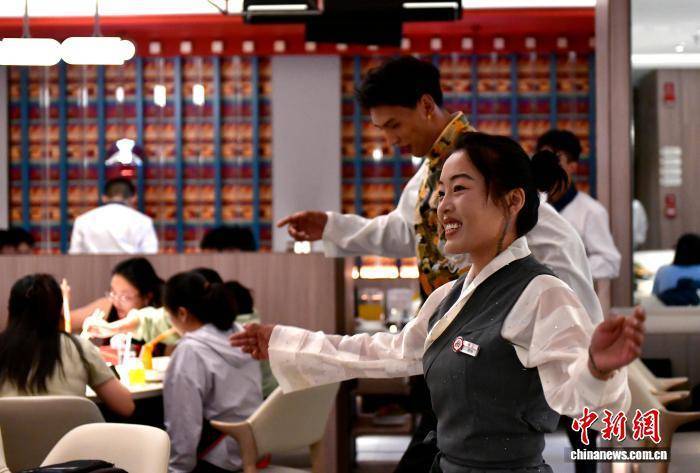
西藏拉萨餐饮特色表演激发消费活力
Sou Hu Cai Jing· 2025-08-04 17:53
Core Insights - The opening of several flagship stores across various sectors including retail, dining, and entertainment in Lhasa has significantly enhanced local consumer experiences and contributed to urban consumption upgrades [2][3][5] Group 1 - A variety of flagship stores have recently opened in Lhasa, covering major sectors such as retail, dining, and leisure [2][3][5] - These new establishments are providing fresh experiences for local residents [2][3][5] - The developments are playing a crucial role in promoting urban consumption upgrades in the city [2][3][5]
服务消费结构演进的国际经验与中国方向(美团研究院)
Sou Hu Cai Jing· 2025-08-04 02:11
Group 1 - The core viewpoint of the report emphasizes the evolution of service consumption structure from survival-type to development investment-type and spiritual enjoyment-type, closely linked to economic development levels [1][6][29] - The report highlights that after reaching a GDP per capita of $10,000, service consumption accelerates, as evidenced by the U.S. and Japan, where service consumption as a percentage of total consumption significantly increased during this period [1][11][22] - The report suggests that China's service consumption structure is still lagging behind major developed countries, with service consumption accounting for approximately 37% of GDP in 2020, compared to over 60% in the U.S. and Japan [2][24][25] Group 2 - The internal transformation of consumption structure follows Maslow's hierarchy of needs, indicating a non-linear decline in survival-type consumption as economic growth progresses, with a notable trend towards "externalization" and "servicization" [2][13][14] - Development investment-type consumption, particularly in healthcare and education, has become increasingly important, with significant increases in spending observed in the U.S. and Japan from 1970 to 1990 [2][18] - The report identifies that cultural and entertainment consumption has risen significantly as disposable income increases, driven by factors such as increased leisure time and digital technology development [21][22] Group 3 - Recommendations include strengthening policy support for service consumption, expanding the range of covered service categories, and developing special funding plans to stimulate consumption in the service sector [3][29][30] - The report emphasizes the need to enhance the quality of supply in the restaurant, leisure, and entertainment sectors, and to promote the integration of healthcare with other service industries [3][29] - It also suggests improving the service consumption market monitoring system by incorporating big data tools and establishing real-time data platforms to better understand market dynamics [3][31]


英敏特:2025年中国消费者报告-深耕价值
Sou Hu Cai Jing· 2025-07-30 11:52
Group 1 - The core viewpoint of the report is that Chinese consumers are increasingly discerning in defining what is "worth buying," balancing rationality and self-indulgence, with emotional resonance becoming more important than mere functionality [1][4][15] - In 2024, China's consumer spending is projected to reach 48.7 trillion yuan, with a forecasted growth rate of 3.6% in 2025, bringing total spending to 50.5 trillion yuan, where nearly 60% of expenditures will focus on essential living needs [1][20][27] - Long-term growth in consumer spending is expected to be driven by service-oriented and quality-focused consumption, with a compound annual growth rate (CAGR) of 3.4% from 2024 to 2029, reaching 57.7 trillion yuan by 2029 [1][21][32] Group 2 - Different consumer categories are showing varied development trends, with essential goods like household food and dining services remaining resilient, while non-alcoholic beverages and health products are experiencing growth [2][11][21] - The report highlights a shift towards experience-driven consumption, with consumers increasingly valuing health, self-indulgence, and emotional connections with brands, indicating a need for brands to innovate based on real demands [1][21][24] - The report emphasizes that while consumers still appreciate the professionalism and innovation of "successful" brands, there is a growing preference for brands that exhibit warmth and empathy, reflecting a desire for trust and companionship in a challenging environment [1][24][15]
中华港股通泛休闲娱乐指数收报3912.65点,涨幅0.21%
Jin Rong Jie· 2025-07-29 08:32
Core Viewpoint - The Chinse Hong Kong Stock Connect Pan Leisure and Entertainment Index closed at 3912.65 points on July 29, marking an increase of 8.09 points or 0.21% from the previous day [1] Group 1: Index Performance - The index reached a daily high of 3912.65 points and a low of 3845.5 points [1] - The index was launched on July 16, 2018, with a base value of 2000 points and consists of 30 constituent stocks [1] Group 2: Index Composition - The index includes stocks listed on the Hong Kong main board that are eligible for the Hong Kong Stock Connect and primarily operate in the leisure and entertainment industry [1]