
传统产业

Search documents
新修订的反不正当竞争法正式施行 法治护航全国统一大市场
Ren Min Ri Bao· 2025-10-20 23:36
Core Points - The newly revised Anti-Unfair Competition Law will take effect from October 15, aiming to enhance market competition rules and optimize the business environment [1][3] - The law targets "involution-style" competition, particularly in the platform economy, to promote healthy market practices and prevent low-quality competition [2][4] - The law emphasizes the protection of small and medium-sized enterprises (SMEs) from unfair practices by larger companies, ensuring fair competition opportunities [4][5] Group 1 - The revised law establishes a fair competition review system to ensure all market participants can compete fairly [2][3] - It prohibits platform operators from forcing internal operators to sell below cost, addressing the issue of "involution-style" competition [2][4] - The law aims to break down industry barriers and market entry restrictions, fostering a more vibrant market environment [3][5] Group 2 - The law provides specific protections for SMEs against the abuse of power by larger enterprises, ensuring reasonable payment terms and conditions [4][5] - It aims to create a comprehensive legal framework for fair competition, enhancing resource allocation and promoting innovation [5] - The law addresses challenges in regulating unfair competition in the digital market, including data misuse and malicious transactions [6][7]
鹤壁:以“平台+人才”协同赋能区域科技创新
He Nan Ri Bao· 2025-10-16 05:34
Group 1 - The core viewpoint is that Hebi City has strategically developed high-level innovation platforms, transitioning from resource dependence to innovation-driven development, which serves as a model for other regions [1][2]. - Hebi has focused on building an innovation ecosystem through platforms, enhancing industrial upgrading and addressing the challenge of technology transfer, particularly through the establishment of pilot testing platforms [1]. - The integration of government, industry, academia, research, finance, and services has been emphasized, creating a collaborative environment that fosters deep integration of technological and industrial innovation [1]. Group 2 - Talent is recognized as a crucial innovation factor, and Hebi has implemented innovative mechanisms to attract, retain, and effectively utilize talent, aiming to build a strong talent city [2]. - The city has launched initiatives like the "Hundred Thousand Talents Project" and "Xinghe Talent Gathering Plan" to create a dual mechanism for attracting top talent and teams [2]. - By integrating talent with projects and industries, Hebi has effectively released talent value within the industrial chain, exemplifying the deep integration of talent and industry [2]. Group 3 - Hebi's transformation is driven by a dual focus on technological innovation and talent cultivation, fundamentally changing its urban development model [2]. - The city has established a virtuous cycle ecosystem of "innovation-industry-talent," promoting innovation as a core aspect of its identity and positioning talent as a key driver of development [2]. - The practices in Hebi demonstrate that traditional resource-based cities can seize opportunities and secure a competitive future in the new development landscape [2].
持续推动国有资本和国有企业做强做优做大——访国务院国资委党委书记、主任张玉卓
Ren Min Ri Bao· 2025-09-29 07:57
Core Viewpoint - The article emphasizes the importance of state-owned enterprises (SOEs) as a fundamental material and political foundation for socialism with Chinese characteristics, highlighting the need for deepening reforms in SOEs to strengthen and optimize their roles in the economy [1][2]. Group 1: Reform Objectives - The State-owned Assets Supervision and Administration Commission (SASAC) aims to strengthen, optimize, and expand SOEs as a leading goal of reform, focusing on breaking down institutional barriers to high-quality development [2][4]. - Enhancing core functions and competitiveness of SOEs is a fundamental requirement, with a focus on improving strategic support, social responsibility, and value creation capabilities [2][3]. - The reform will adapt to new production relations that align with new productive forces, emphasizing the need for organizational, operational, and management transformations in enterprises [3][4]. Group 2: Implementation Strategies - SASAC plans to optimize the layout and structure of state-owned economies through strategic restructuring and professional integration, concentrating on key industries related to national security and public services [5][6]. - The approach includes dual efforts in traditional industries for transformation and in emerging industries for strategic development, with significant investments in sectors like AI, aerospace, and renewable energy [6][7]. - The focus will be on enhancing the role of SOEs in technological innovation, with SASAC encouraging participation in national innovation systems and establishing high-level research platforms [7][8]. Group 3: Management and Supervision - SASAC will implement a management and supervision system that balances flexibility and control, ensuring that enterprises maintain operational autonomy while adhering to regulatory frameworks [8][9]. - The introduction of a classification assessment system for SOEs aims to tailor performance metrics to the diverse missions and industry distributions of central enterprises, enhancing accountability and performance [9][10]. - The goal is to guide enterprises towards higher quality and more efficient development through personalized performance assessments, fostering a competitive environment among SOEs [10].
构建企业主导的融合型人才培育生态
Xin Hua Ri Bao· 2025-09-25 00:09
Group 1: Core Insights - The integration of technological innovation and industrial innovation is crucial for high-quality regional economic development, as emphasized in the 2025 Government Work Report and by President Xi Jinping [1] - For Jiangsu, seamless integration of the innovation chain and industrial chain is key to advancing intelligent manufacturing and moving up the global industrial chain [1] - The shortage of interdisciplinary talent is a significant challenge in Jiangsu's industrial upgrade, affecting efficiency in smart manufacturing, innovation speed in emerging industries, and equipment utilization in traditional industries [1] Group 2: Challenges in Talent Development - The cultivation of integrated talent faces challenges such as institutional barriers that limit the full potential of enterprises, including overlapping responsibilities in policies and cumbersome approval processes for faculty to engage with businesses [2] - There is a mismatch between educational supply and industrial demand, with higher education institutions lagging in setting up new programs that align with industry upgrades [2] - Jiangsu's talent cultivation efforts need to establish a more mature and efficient closed-loop system between enterprise demand and talent supply [2] Group 3: Advantages of Integrated Talent - Integrated talent serves three core functions: acting as a "converter" for technology commercialization, a "glue" for promoting talent flow between academia and industry, and a "catalyst" for enhancing management and technical integration [3] - Establishing an enterprise-led talent cultivation system is essential to ensure that training aligns closely with market needs and enhances practical experience [3] Group 4: Building an Enterprise-led Ecosystem - To enhance integrated talent cultivation, it is necessary to strengthen the role of enterprises, creating a new ecosystem that forms a "demand-supply" closed loop [4] - Implementing a model where enterprises present challenges, universities solve them, and market validation occurs is crucial for effective talent development [4] - Initiatives such as establishing shared training centers and expanding the coverage of industry professors are recommended to improve training outcomes [4] Group 5: Incentive Systems for Talent Development - An innovative talent incentive system that emphasizes market recognition is proposed, including a four-dimensional evaluation method in key sectors [5] - The system aims to eliminate rigid academic requirements in talent evaluation and focus on industry relevance, providing comprehensive support for integrated talent cultivation [5] - Establishing collaborative innovation frameworks among leading enterprises, supporting small and medium-sized enterprises, and creating shared training resources are essential for overcoming talent development challenges [5][6] Group 6: Practical Experience in Talent Development - Integrated talent is best developed through practical engagement with real industry challenges rather than traditional classroom settings [7] - Jiangsu's enterprise-led talent cultivation ecosystem is positioned to seize opportunities in the new technological revolution and industrial transformation, contributing to national and global supply chain stability [7]
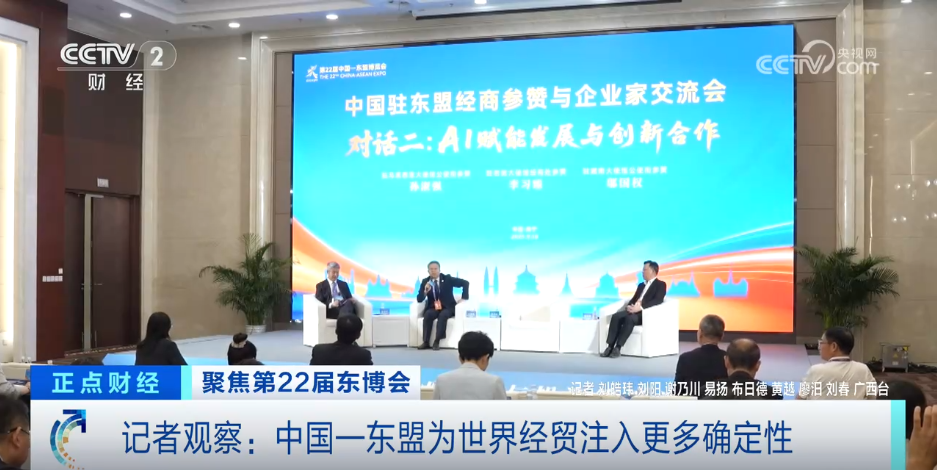
抢抓“3.0版”新机遇 中国—东盟为世界经贸注入更多确定性
Yang Shi Wang· 2025-09-19 04:37
Group 1 - In the first eight months of this year, China's import and export with ASEAN reached 4.93 trillion yuan, an increase of 9.7%, which is 6.2 percentage points higher than the overall foreign trade growth rate of China, accounting for 16.7% of China's total import and export value [1] - The China-ASEAN Free Trade Area 3.0 protocol was signed during the East Expo, leading to increased interest from Chinese enterprises in exploring the ASEAN market [3] - There is a noticeable shift in trade structure between China and ASEAN, with a focus on digital economy, machinery and electronics, and traditional industries continuing to grow [10] Group 2 - The trade facilitation measures have significantly contributed to the increase in trade volume, with specific examples such as the approval of durian exports from Malaysia, Thailand, Vietnam, and the Philippines to China [7] - Companies are looking to extend from traditional bulk commodities to digital trade, indicating a trend towards digitalization in trade practices [5] - The total value of durian imports to China is projected to reach 6.99 billion yuan in 2024, highlighting the potential for explosive growth in certain product categories [7] Group 3 - Malaysian representatives at the East Expo expressed a desire to promote not only traditional industries but also sectors like technology, green economy, chemical products, and education services [11] - There is a strong confidence among Chinese entrepreneurs in tapping into the potential of the East Asian integrated market [3] - A company reported a signing amount of approximately 10 billion yuan in agreements with Vietnam, Thailand, and other Belt and Road countries, indicating robust investment activity [5]

解决企业“三不”“四缺”问题,广东人大开出“三化”融合药方
Sou Hu Cai Jing· 2025-07-31 04:48
Core Viewpoint - Traditional industries play an irreplaceable role in stabilizing Guangdong's economy, particularly in growth, employment, and foreign trade, but face challenges in transformation and upgrading [1] Group 1: Current Challenges - Some enterprises in Guangdong exhibit "three no's" (unwilling, afraid, unable) towards transformation, lacking technical foundation, talent, experience, and investment capacity for trial and error [1] - There is an overcapacity in low-end production and insufficient high-end supply in certain traditional industries, indicating an unbalanced industrial structure [1] - The precision of transformation policies is inadequate, with a gap between universal policies and the specific needs of enterprises [1] Group 2: Recommendations for Transformation - Optimize the development environment for traditional industries by enhancing policies that support high-quality manufacturing, aligning with trends in AI and green energy [2] - Promote innovation-driven development by improving intellectual property protection and supporting the conversion of research achievements [2] - Strengthen the steel industry through consolidation, mergers, and upgrades to increase high-end product supply [2] - Provide customized transformation solutions for different industries to facilitate a shift from passive to proactive upgrades [2] - Leverage artificial intelligence to empower various sectors, addressing challenges faced by small and medium-sized enterprises in R&D [2] Group 3: Collaborative and Legislative Support - Create a conducive environment for enterprise development by introducing models that connect leading enterprises with smaller ones, enhancing application support mechanisms [3] - Strengthen legal support for traditional industries, optimize the policy framework for industrial development, and encourage more enterprises to transition from observation to active transformation [3]
佛山出台投资促进办法 进一步提升营商环境与城市竞争力
Nan Fang Ri Bao Wang Luo Ban· 2025-07-30 07:55
Core Viewpoint - The newly introduced "Foshan Investment Promotion Measures" aims to create a market-oriented, law-based, and international first-class business environment to enhance the city's competitiveness and support high-quality economic and social development [1][2]. Group 1: Investment Promotion Measures - The measures will take effect on September 1, 2025, consisting of 40 articles focusing on attracting, facilitating, and protecting investments [1][2]. - The measures clarify the responsibilities of municipal and district governments and various departments in investment promotion, establishing a collaborative work framework [2][3]. - The measures emphasize the importance of optimizing investment services, including project approval, land transfer, environmental assessment, financing support, credit systems, talent services, tax services, and foreign investment [2][3]. Group 2: Protection of Investor Rights - The measures propose specific actions to protect investors' legal rights, addressing policy stability, agreement fulfillment, fee regulation, operational autonomy, personal and property safety, intellectual property protection, reputation maintenance, and dispute resolution [3][4]. - The measures also include innovative mechanisms to enhance the effectiveness of government investment funds, guiding social capital to support relevant industries and innovation [3][4]. Group 3: Investment Performance and Confidence - In the first half of the year, Foshan signed 391 projects with investments of 1 billion RMB or 10 million USD and a total signed investment amount of 199.118 billion RMB, reflecting a year-on-year increase of 5.24% [4]. - Foshan's business environment has been recognized as the best among provincial-level cities for three consecutive years, contributing to its ability to attract investments [4][5]. - The measures are seen as a formalization of effective practices in optimizing the business environment and are expected to enhance market participants' confidence in long-term investments in Foshan [5].
陕西:不断做强做优现代能源产业集群 持续巩固优势产业领先地位
news flash· 2025-07-18 06:31
Core Viewpoint - The government of Shaanxi province emphasizes the importance of high-quality development, focusing on strengthening and optimizing the modern energy industry cluster to maintain its leading position in advantageous industries [1] Group 1: Industry Development - Shaanxi aims to leverage its resource endowment and industrial foundation to enhance the modern energy industry cluster [1] - The government plans to accelerate the transformation and upgrading of traditional industries while promoting the development of the modern service sector [1] - Continuous efforts will be made to achieve new results in transformation and development [1]
打赢深化提升行动“收官战”,这些领域国企改革将提速
Xin Hua She· 2025-06-17 12:14
Core Viewpoint - The Chinese government is intensifying efforts to reform state-owned enterprises (SOEs) by focusing on enhancing technological innovation and integrating it with industrial innovation, aiming for a completion rate of over 80% for key reform tasks by the end of Q1 2025 [1][2]. Group 1: Technological Innovation and Reform - The State-owned Assets Supervision and Administration Commission (SASAC) emphasizes the importance of improving the quality of technological innovation supply and establishing mechanisms that accommodate the uncertainties and disruptive nature of original innovations [3][4]. - A series of targeted reforms will be implemented to enhance the overall effectiveness of the innovation system, including improving the quality of technological innovation supply and establishing a modern industrial system [1][5]. Group 2: Investment and Development Mechanisms - In Q1 of this year, central enterprises expanded effective investments, with fixed asset investments reaching 851.3 billion yuan, and investments in strategic emerging industries growing by 6.6% year-on-year [5]. - The SASAC plans to refine the development mechanisms for strategic emerging industries and future industries, focusing on identifying key strategic directions for nurturing these sectors [5][6]. Group 3: Talent and Innovation Evaluation - The meeting highlighted the need to establish a multi-dimensional and diversified innovation evaluation mechanism, including long-cycle and precise evaluation methods for different types of research [7][8]. - It is proposed that SOEs implement targeted evaluation indicators for various research areas, such as setting up a virtual quantitative evaluation system for major scientific research tasks [8][9]. Group 4: Integration and Collaboration - The SASAC encourages SOEs to deepen collaboration between industry, academia, and research institutions, leveraging their advantages in demand scale and application scenarios to accelerate the transformation of technologies into productive forces [4][5]. - There is a focus on enhancing the integration of newly acquired businesses post-merger and acquisition, ensuring that governance structures and operational mechanisms align with the development of strategic emerging industries [6][7].
汕头市前4月加力提速推进产业扩量提质和集聚发展,2226个项目总投资超248亿元
Zhong Guo Fa Zhan Wang· 2025-06-11 09:44
Group 1 - Shantou City is focusing on an "industrial city, strong industry" development strategy, aiming to enhance investment and project development to boost economic growth [1] - In the first four months of 2025, Shantou has recorded 2,226 registered investment projects with a total investment exceeding 24.8 billion yuan, contributing to high-quality economic development [1][3] Group 2 - The "Three New, Two Special, One Big" industrial development framework is being actively promoted, with significant contributions from the new generation electronic information industry, which has seen an 11.8% increase in industrial added value [2] - The textile and clothing industry remains a strong support, accounting for 26.2% of the industrial added value among large-scale industries [2] Group 3 - In the first four months, the total investment in key industrial projects reached 10.34 billion yuan, with significant progress in new generation information technology and traditional industry upgrades [4] - The second industry, particularly industrial investments, is the main force in registered investment projects, with 1,963 projects and a total investment of 11.72 billion yuan, representing 47.1% of the total investment [3]