农村电商

Search documents
金融如何助力农业提质和农民增收
Jin Rong Shi Bao· 2026-01-08 01:03
Core Insights - The Central Rural Work Conference held on December 29-30, 2025, in Beijing, analyzed the current challenges in the "three rural issues" and outlined the work for 2026, focusing on improving agricultural quality and increasing farmers' income [1] - Key initiatives include promoting integrated efficiency in agricultural resources, implementing a new round of grain production capacity enhancement actions, and establishing a mechanism to ensure farmers' income from grain production [1] Financial Support for Agriculture - Financial innovation is essential to support high-standard farmland construction, modern seed industry revitalization, advanced agricultural machinery development, and the promotion of green and efficient technologies [1] - A multi-faceted agricultural insurance system is needed to enhance risk management capabilities for grain farmers, focusing on precision insurance and expanding coverage to include both commodity and ecological values [2] Support for County-Level Industries - Financial institutions are encouraged to optimize credit resource allocation in counties, focusing on high-value industries such as agricultural processing, rural tourism, e-commerce, and cold chain logistics [3] - A supply chain finance model involving "core enterprises + cooperatives + farmers" is proposed to ensure farmers' deep participation and sharing of value-added benefits [3] Poverty Alleviation Mechanisms - Financial support for poverty alleviation should transition from "preferential" to "inclusive," maintaining targeted assistance for impoverished populations and underdeveloped regions [4] - A financial monitoring and early warning system for poverty prevention should integrate various data sources from rural digital transformation [4] Support for Agricultural Innovation - Financial support for cutting-edge agricultural technologies like bio-manufacturing, smart agriculture, and digital technologies requires a higher risk tolerance from financial organizations [4] - Innovative financing methods such as equity risk investment and technology loans are suggested to address the financing challenges faced by agricultural innovation enterprises [4] Diversified Food Production - Financial support for diversified food production systems should be tailored to local resources and market characteristics, with specialized financial products designed accordingly [6] - Local governments are encouraged to support the development of local industries and motivate local financial institutions to serve these industries effectively [6]
多维升级破解农村电商发展难题
Jing Ji Ri Bao· 2026-01-08 00:06
Core Insights - The central rural work conference emphasizes the cultivation and expansion of county-level industries to enhance farmers' participation in industrial development and improve agricultural mechanisms [1] Group 1: Rural E-commerce Development - Rural e-commerce is highlighted as a significant model for integrating digital economy with agriculture, facilitating product circulation and increasing farmers' income [1] - The scale of rural e-commerce is growing, with logistics systems and distribution networks continuously improving, achieving a 95% coverage rate of express delivery services in administrative villages nationwide [1] - The integration of traditional agricultural production with secondary and tertiary industries is leading to the emergence of new business models such as deep processing of agricultural products and brand development [1] Group 2: International Comparisons - Developed countries exhibit unique characteristics in rural e-commerce, with the U.S. focusing on local supply chain optimization through technology, while the EU emphasizes resource sharing among member states [2] - China possesses three distinct advantages in rural e-commerce: stable inclusive policies, a vast consumer market, and innovative business models that integrate various rural resources [2] - Challenges such as high logistics costs and low product differentiation remain in China's rural e-commerce development [2] Group 3: Infrastructure and Talent Development - There is a need to enhance logistics networks by integrating local postal, express, and storage resources to create a comprehensive logistics system that reduces costs and improves efficiency [3] - Developing a talent pool for e-commerce through targeted training for various groups, including returning migrant workers and agricultural entrepreneurs, is essential for growth [3] - Collaborating with e-commerce platforms and educational institutions to attract experts and enhance the employment environment for e-commerce talent is recommended [3] Group 4: Digital Technology Application - The application of modern information technologies such as big data and IoT in agriculture can guide farmers in precise production and quality control of e-commerce products [4] - Utilizing digital platforms for live streaming can connect agricultural products directly to broader markets, enhancing brand visibility [4] - The integration of AI and virtual reality in agricultural practices is expected to reshape rural industry forms and create new business opportunities [4]
因地制宜做强乡村特色产业
Xin Lang Cai Jing· 2026-01-07 21:21
Group 1 - The core viewpoint emphasizes the importance of rural特色产业 as a powerful engine for farmers' income growth and a crucial support for high-quality county economic development, with a goal to modernize agriculture into a large industry by 2025 [1] - By 2025, it is projected that there will be over 100,000 large-scale agricultural processing enterprises in China, achieving approximately 18 trillion yuan in revenue and 1.2 trillion yuan in profit, with a main agricultural product processing conversion rate reaching 75% [1] - The development of rural特色产业 must adhere to a differentiated approach, leveraging local resources and comparative advantages to avoid homogenization and blind competition [1] Group 2 - Strengthening key agricultural core technology and promoting agricultural new quality productivity through technological innovation is essential for refining rural特色产业 [2] - Focus areas include biological breeding, smart agriculture, and green agriculture, with an emphasis on integrating technology with the entire agricultural value chain [2] - The promotion of green development and the transformation of agricultural development methods are necessary to enhance product quality and meet consumer demand for high-quality agricultural products [2] Group 3 - A full industry chain development mindset is crucial for enhancing rural特色产业, promoting the integration of primary, secondary, and tertiary industries [3] - The strategy involves extending beyond traditional agricultural production to include deep processing of agricultural products and exploring various agricultural functions and values [3] - New business models such as leisure agriculture, rural tourism, and rural e-commerce should be developed to create a modern agricultural industry system [3] Group 4 - Resource aggregation and optimal factor allocation are vital for the development of rural特色产业, addressing current issues like insufficient rural infrastructure and inefficient factor allocation [4] - Infrastructure improvements, including high-standard farmland, rural roads, irrigation systems, and modern cold chain logistics, are necessary to support rural特色产业 [4] - Policies should be optimized to attract quality labor to agriculture and related industries, while also ensuring that farmers benefit from the development of rural特色产业 [4]
数字全面赋能,四川乡村更宜居、更善治、更富有
Xin Lang Cai Jing· 2026-01-01 11:33
Core Insights - Sichuan province has officially released the "Fifth Batch of Excellent Cases for Digital Rural Construction (2025)", showcasing 60 innovative cases across nine fields that demonstrate the integration of digital technology with rural revitalization [1] - The province aims to achieve comprehensive 5G coverage in all administrative villages by the end of 2024, with rural broadband users reaching 17.03 million, leading the nation in scale [1] Group 1: Digital Infrastructure - The upgrade of information networks in rural areas has significantly improved connectivity, with average monthly data traffic for 4G and 5G base stations reaching 1000GB and 1500GB respectively [2] - The average access speed for fiber broadband in administrative villages exceeds 70Mbps, well above national telecom service standards [2] - Traditional infrastructure has also seen digital transformation, with 79 county-level smart water management platforms launched, enabling online monitoring of water quantity, quality, and pressure [2] Group 2: E-commerce and Cold Chain Logistics - Chengdu's Pujiang County has established a successful e-commerce ecosystem, housing over 240 cold chain enterprises and 7,800 e-commerce entities, resulting in a network retail sales of high-quality agricultural products exceeding 3.8 billion yuan in 2024 [3] - Sichuan has cultivated 40 provincial-level agricultural cold chain distribution centers, guiding over 13,000 businesses to build cold storage facilities, leading to an average price increase of over 20% for fruits and vegetables [3] Group 3: Digital Governance and Services - The "Chuan Shanzhi" app, adopted in 93% of villages, enhances rural governance by allowing villagers to address issues and access services digitally, significantly improving administrative efficiency [4] - The "5G + Telemedicine" network has facilitated over one million remote consultations and over 20 million remote imaging diagnoses, providing healthcare access even in remote areas [4] Group 4: Cultural and Educational Digitalization - The "Sichuan Provincial Public Library Digital Resource Sharing Platform" allows villagers to access a vast array of digital books and resources, enhancing cultural engagement [5][6] - Digital technologies are being utilized to protect and revitalize cultural heritage, with over 200 traditional patterns digitized and a focus on integrating traditional crafts with modern design [5][6] Group 5: Future Directions - Sichuan plans to deepen the integration of digital technology with rural revitalization, solidifying its digital foundation and enriching application scenarios to ensure that digital achievements benefit rural areas continuously [6]
加快农业农村现代化 扎实推进乡村全面振兴——访农业农村部党组书记、部长韩俊
Jing Ji Ri Bao· 2025-12-29 22:36
Core Viewpoint - The article emphasizes the strategic importance of accelerating agricultural and rural modernization as a key component of China's overall modernization efforts, particularly during the 14th Five-Year Plan period [2][3]. Group 1: Significance of Agricultural and Rural Modernization - Agricultural and rural modernization is a major task for building a modern socialist country, as it directly impacts the overall progress and quality of China's modernization goals [2]. - It serves as a foundational support to address various risks and challenges, stabilizing the agricultural sector to ensure food security and economic stability amid external uncertainties [2]. - The modernization of agriculture and rural areas is essential for meeting the people's needs for a better life, as it relates to both economic and political stability [3]. Group 2: Current Conditions and Achievements - Since the 18th National Congress, significant progress has been made in agricultural modernization and rural revitalization, including stable grain production at over 1.3 trillion jin (approximately 650 million tons) annually, with a record high of 14,298 billion jin this year [4]. - The achievements in poverty alleviation have been consolidated, with over 30 million people employed in poverty-stricken areas, and the establishment of a monitoring and support system to prevent a return to poverty [4][5]. - Agricultural modernization has advanced significantly, with a contribution rate of agricultural science and technology exceeding 64%, and a mechanization rate of 76.7% for major crops [5]. Group 3: Strategic Tasks for Implementation - The 14th Five-Year Plan outlines several strategic tasks to ensure the implementation of agricultural and rural modernization, including enhancing agricultural production capacity and quality, and establishing a robust food security framework [8]. - A mechanism for preventing poverty and ensuring sustainable development is to be established, focusing on targeted support for underdeveloped areas and maintaining stability in post-poverty alleviation policies [9]. - Efforts will be made to improve rural living conditions and infrastructure, ensuring that rural areas are equipped with modern amenities and services [10]. Group 4: Policy and Support Mechanisms - The article highlights the need for a multi-faceted investment approach to support rural revitalization, including financial, social, and governmental participation [11]. - Policies will be strengthened to ensure the stability of land contracts and support the development of new agricultural business entities, enhancing the overall agricultural operating system [11]. - The importance of agricultural support policies, including price, subsidy, and insurance mechanisms, is emphasized to maintain reasonable prices for key agricultural products and incentivize farmers [11].
贯彻落实党的二十届四中全会精神权威访谈丨加快农业农村现代化 扎实推进乡村全面振兴——访农业农村部党组书记、部长韩俊
Xin Hua She· 2025-12-28 02:10
Core Viewpoint - The article emphasizes the strategic importance of accelerating agricultural and rural modernization as a key component of China's overall modernization efforts, particularly during the 14th Five-Year Plan period [2][3]. Group 1: Significance of Agricultural and Rural Modernization - Agricultural and rural modernization is a major task for building a modern socialist country, directly impacting the overall progress and level of China's modernization [2]. - It serves as a foundational support to address various risks and challenges, stabilizing the agricultural sector to ensure food security and respond to external uncertainties [2][3]. - It is essential for meeting the people's needs for a better life, as rural issues are not only economic but also political, affecting the party's governance foundation [3]. Group 2: Current Conditions and Achievements - Significant achievements have been made in agricultural modernization since the 18th National Congress, including stable grain production at over 1.3 trillion jin, reaching a historical high of 14,298 billion jin this year [4][5]. - The consolidation of poverty alleviation results has been effective, with over 30 million people employed in poverty alleviation areas and continuous improvement in education, healthcare, and housing security [5]. - Agricultural modernization has advanced with a technology contribution rate exceeding 64%, and mechanization rates for major crops reaching 76.7% [5][6]. Group 3: Strategic Tasks for Implementation - The 20th Central Committee has outlined major strategic tasks to accelerate agricultural modernization and promote rural revitalization, emphasizing the need for strong party leadership and prioritizing agricultural development [7]. - Key initiatives include enhancing agricultural production capacity, implementing a new round of grain production capacity enhancement actions, and ensuring food security responsibilities are met [8]. - Establishing a normalized mechanism to prevent poverty and ensure stable support for rural areas is crucial, with a focus on dynamic adjustments and effective assistance strategies [9]. Group 4: Rural Development and Infrastructure - Efforts to improve rural living conditions and governance are ongoing, with initiatives to enhance infrastructure, public services, and environmental quality in rural areas [11]. - The integration of agriculture with secondary and tertiary industries is being promoted to boost rural economies and create stable income sources for farmers [11]. - Policies to support land tenure stability and the development of new agricultural business entities are being implemented to enhance the agricultural operating system [12].
延长产业链,山东做强农产品精深加工
Qi Lu Wan Bao· 2025-12-26 12:04
Core Viewpoint - The Shandong provincial government is accelerating agricultural modernization during the "14th Five-Year Plan" period, focusing on rural revitalization and the development of a modern rural industry system that supports economic growth in rural areas [1] Group 1: Agricultural Development and Modernization - Shandong has leveraged its agricultural advantages to create a modern rural industry system, emphasizing local specialties and products [1] - The provincial government has issued implementation opinions to promote high-quality development of rural industries, establishing development plans for 26 specialty industries [2] - A "13+N" system for cultivating specialty industries has been developed, with successful examples like the "土特产" (local specialties) gaining recognition [2] Group 2: Agricultural Processing and Leading Enterprises - The province has strengthened the role of leading enterprises in modern agriculture, focusing on deep processing of agricultural products to enhance value chains [3] - As of October, Shandong has established 30 high-quality development pilot counties for agricultural processing, with 11,621 processing enterprises generating an annual revenue of 2.3 trillion yuan, accounting for 10% and 8% of the national totals respectively [3] - The number of provincial and national key leading enterprises has increased significantly, with 141 agricultural enterprises making it to the national top 500 [3] Group 3: New Industries and Rural Economy - Shandong is actively developing new industries such as rural tourism, leisure agriculture, and rural e-commerce, contributing to the diversification of rural economic functions [4] - The province has built 8 national key leisure agriculture counties and 92 beautiful leisure villages, attracting over 200 million visitors annually [4] - Digital agriculture initiatives have been implemented, with 20 counties recognized for their development in this area, alongside the establishment of various digital platforms [4]

让数字经济成为乡村振兴的新引擎
Xin Hua Ri Bao· 2025-12-24 23:23
Core Viewpoint - The integration of digital technologies such as big data, cloud computing, and artificial intelligence is crucial for advancing China's rural revitalization strategy, positioning the digital economy as a key driver for high-quality economic development and revitalizing rural economies [1] Group 1: Digital Infrastructure Development - Digital infrastructure is essential for the operation of the rural digital economy, influencing its breadth, depth, and speed of development [2] - The construction of a comprehensive digital infrastructure should adhere to principles of being appropriately advanced, efficient, and environmentally friendly [2] - There is a need to enhance network coverage in rural areas through the deployment of high-speed fiber networks and mobile communication technologies [2] Group 2: Integration and Empowerment of New Digital Business Models - The deep integration of the digital economy with rural industries is vital for stimulating internal motivation and enhancing development capabilities [3] - Emphasis on smart agriculture through the application of IoT, big data, and AI in agricultural production processes is necessary to improve productivity and resource utilization [3] - The promotion of e-commerce models and the development of diverse marketing strategies such as live streaming and social e-commerce are essential for expanding rural market access [3] Group 3: Innovation-Driven Ecosystem Development - A supportive development ecosystem is crucial for the sustainable growth of the rural digital economy, requiring the removal of institutional barriers and optimization of policy frameworks [4] - The cultivation of local digital talent through training programs for rural stakeholders is necessary to enhance digital skills and knowledge [4] - The advancement of digital governance through integrated online government service platforms can improve rural management and public service delivery [4]
院坝协商 | 楚雄市政协:“小板凳”围出电商“新赛道”
Sou Hu Cai Jing· 2025-12-09 08:22
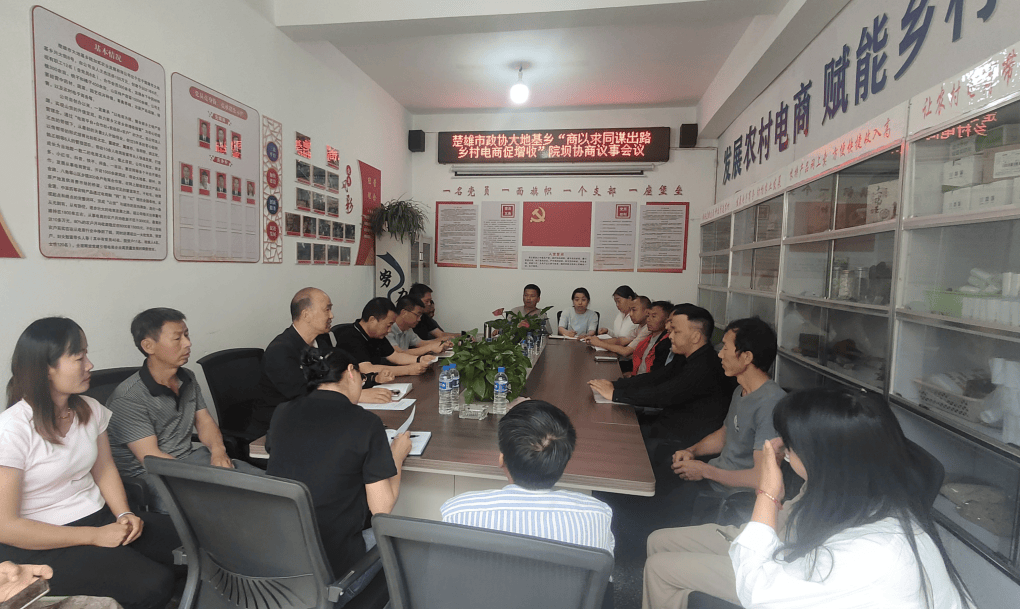
Core Insights - The rapid development of rural e-commerce in Dadiqi Township has become a new engine for farmers' income growth, but it faces challenges such as insufficient infrastructure, logistics bottlenecks, weak branding, and a shortage of talent [2][4] Group 1: Collaboration and Discussion - A consultation meeting was held on May 15, 2025, led by the Director of the Economic, Agricultural, and Environmental Committee of the Municipal Political Consultative Conference, Wang Jinhua, to address core issues such as spatial constraints, logistics bottlenecks, and brand building [4] - The meeting resulted in four consensus points aimed at addressing the identified challenges [4] Group 2: Consensus Outcomes - The first consensus emphasizes strengthening planning guidance to ensure effective policy implementation, including the development of a special plan for rural e-commerce and simplifying the certification process for agricultural products [4] - The second consensus focuses on revitalizing idle resources to address spatial constraints by transforming an old kindergarten site into an e-commerce demonstration base and establishing service points in villages [4] - The third consensus involves implementing targeted training to enhance practical e-commerce skills, with local government and village committees collaborating to identify training needs and secure funding [4] - The fourth consensus aims to promote brand co-construction and strengthen product standardization, focusing on local specialties and improving market competitiveness [4] Group 3: Implementation and Results - The consultation outcomes have been effectively transformed into actions, including the creation of a guide for e-commerce product applications and the establishment of a volunteer service team to assist farmers [5] - Collaborations with two wholesale and retail enterprises have extended shipping hours, and mobile live-streaming equipment has been provided to reduce costs for farmers [5] - Four free training sessions have been conducted, benefiting 377 farmers and leading to the establishment of over 100 new e-commerce businesses [5] Group 4: Insights and Recommendations - The consultation highlights the importance of focusing on issues to unblock industrial bottlenecks and accurately addressing the needs of the community [5] - It emphasizes the role of the community as a主体 in resolving development challenges, transforming stakeholders from passive observers to active participants [5] - A collaborative mechanism involving the Political Consultative Conference, government departments, enterprises, and community participation is essential for translating consultation outcomes into tangible benefits for the public [5]

全国标杆范本!龙岩2个案例入选!
Sou Hu Cai Jing· 2025-12-07 13:51
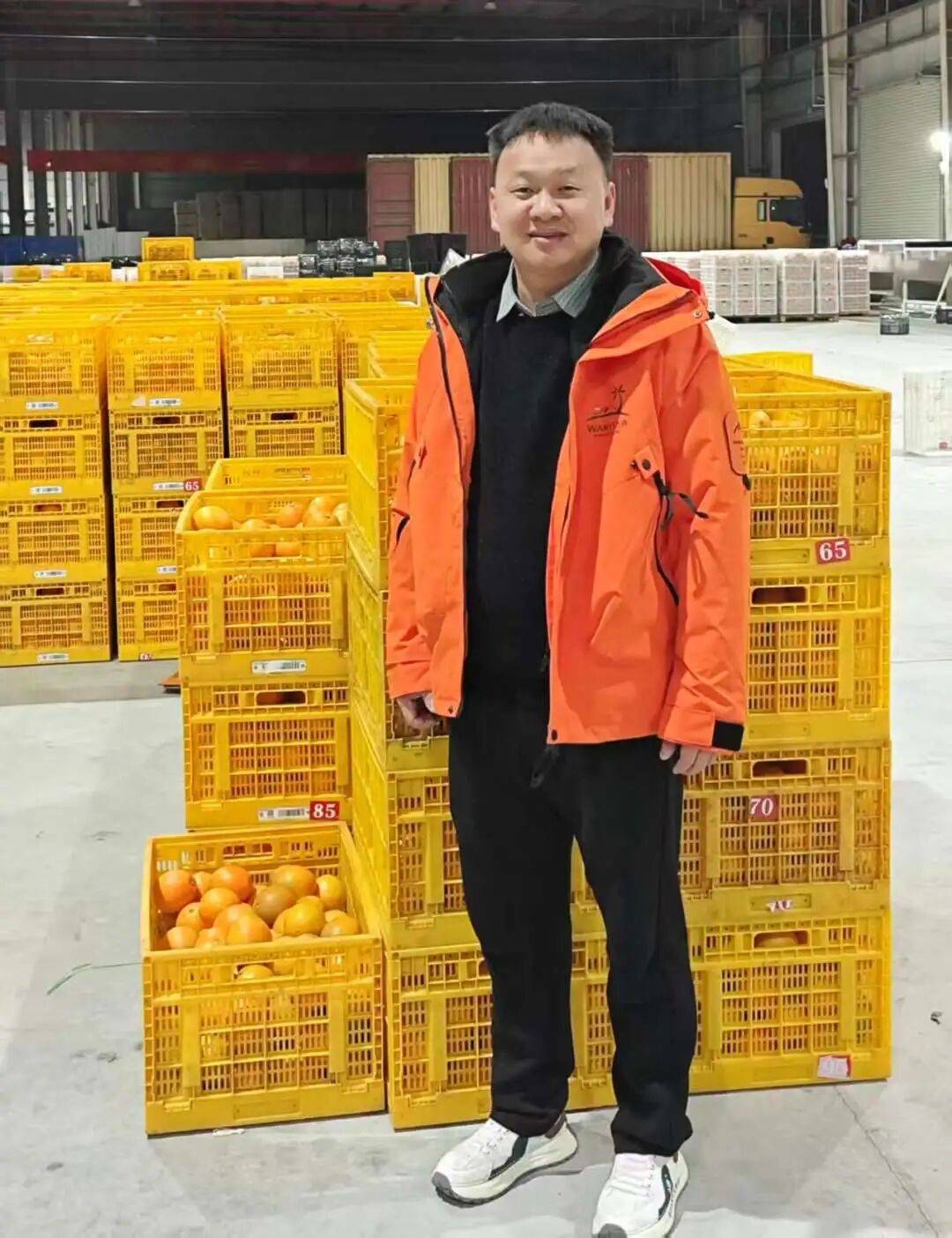
此次入选,既是对两位带头人个人奋斗成果的肯定,更是龙岩市农村电商产业高质量发展的生动缩影。近年来,我市坚持"政府引导、市场运作、企业主 体"原则,建成13个综合性电商园区,实现国家级电子商务进农村示范县(不含区)全覆盖,从"村村都有女主播"培训到校企联合育才,从供应链体系完 善到公益助农机制构建,一系列政策举措为电商人才成长提供了肥沃土壤,也催生了一批扎根乡土、服务乡邻的电商先锋。 下一步,龙岩市商务局将持续深化农村电商发展布局,以典型案例为引领,进一步完善人才培育、平台搭建,优化供应链保障,鼓励更多创业者投身农村 电商领域,让电商红利持续赋能农业增效、农民增收、农村增美,为闽西乡村振兴注入更强劲的数字动能! 来源:龙岩商务 近日,商务部国际电子商务中心发布, 龙岩市连城县伍紫芳、长汀县赖启春两位农村电商带头人的案例成功入选"2025年农村电商带头人典型案例库", 成为全国农村电商高质量发展的标杆范本,为闽西农村电商产业发展再添闪亮名片! 连城"客家媳妇小伍"伍紫芳凭借真实暖心的内容创作积累400万抖音粉丝,从分享家庭日常转型电商带货,不仅带火连城地瓜干、龙岩花生、永定泡鸭爪 等本地特产,更在村民香菇滞销时紧 ...