卫星制造

Search documents
马斯克曝重磅利好!太空光伏概念掀起涨停潮!带飞商业航天板块!(附名单详情)
私募排排网· 2026-01-23 10:00
Core Viewpoint - The space photovoltaic concept has gained significant attention, leading to a surge in stock prices within the commercial aerospace sector, driven by ambitious goals set by companies like SpaceX and Tesla to develop solar power capacity [2][3]. Group 1: Market Dynamics - On January 23, several space photovoltaic stocks, including Maiwei Co., Jiejia Weichuang, and JinkoSolar, experienced a 20% limit up, contributing to a resurgence in the commercial aerospace sector [2]. - Elon Musk announced at the Davos Forum that SpaceX and Tesla aim to establish 100 GW of solar power capacity in the U.S. within three years, exceeding market expectations [2]. - The demand for solar power in satellites is expected to grow significantly, with East Wu Securities estimating that launching 10,000 satellites annually could create a nearly 200 billion yuan market for solar wings [2]. Group 2: Technology and Companies - Various photovoltaic technologies are being explored for space applications, with gallium arsenide being a leading choice due to its performance, despite high costs and material sourcing challenges [3]. - Heterojunction (HJT) technology is progressing rapidly and is expected to be applied first in computing satellites [3]. - Companies like Maiwei Co. are leading in HJT battery equipment, securing 57.46% of SpaceX orders for HJT equipment [5]. Group 3: Industry Players - Maiwei Co. is recognized as a leader in HJT battery equipment and has successfully delivered products to SpaceX, becoming a key supplier for its Starship launch base [5]. - Other companies in the sector are also making strides, with some focusing on various photovoltaic technologies, including TOPCon and perovskite [5]. - The overall photovoltaic market is projected to expand significantly, with estimates suggesting a tenfold increase in the space photovoltaic market by 2030, reaching approximately 29.5 billion yuan [2].

上海金融监管局:支持信托公司开展定制化家族信托、保险金信托等服务
Xin Lang Cai Jing· 2026-01-23 05:33
Group 1 - The Shanghai Financial Regulatory Bureau has issued an action plan to support the development of customized family trusts, family service trusts, and insurance trusts as part of enhancing the pension financial system [1][7] - The action plan includes 20 measures focusing on building a multi-level pension security system, strengthening support for the pension industry, and meeting the financial needs of the elderly [1][8] - Trust companies are encouraged to integrate diversified family assets to meet the comprehensive pension needs of the elderly and explore new types of pension service trusts and special needs service trusts [1][8] Group 2 - Several trust companies have recently launched their first special needs trust projects, including a real estate special needs trust for families with autism and a trust focused on long-term care for special needs individuals [2][9] - Special needs trusts typically do not have a set minimum investment amount, allowing trust companies to establish flexible entry points, commonly starting around 300,000 yuan [3][10] - Trust companies are advised to collaborate with care institutions to facilitate direct payment of service fees from the trust, enhancing convenience for clients [3][10]
20万颗卫星背后 6G加快资源卡位
Xin Lang Cai Jing· 2026-01-21 20:32
Core Insights - China has successfully launched a constellation of 19 low Earth orbit satellites, marking a significant step in the development of satellite internet and a strategic move in the global competition for space resources [1] - The recent submission of frequency and orbit resource applications for 203,000 satellites to the International Telecommunication Union (ITU) sets a new record for China, indicating a robust strategy to secure scarce space resources and build an autonomous space-based information network [1][2] Industry Developments - The low Earth orbit and frequency spectrum are considered non-renewable strategic resources, central to global space competition, with estimates suggesting that near-Earth orbit can accommodate approximately 175,000 satellites [1] - The competition for frequency and orbit resources has intensified under the ITU's "first come, first served" rule, pushing China to strategically position itself within international regulations [1][5] Technological Integration - The core of the 6G space-ground integration lies in the fusion of multiple technologies, which will drive the collaborative development of communication, remote sensing, and AI technologies [2] - The combination of communication satellites for wide-area data transmission and remote sensing satellites for high-precision observation will create comprehensive services across various sectors, including remote communication and environmental monitoring [2] Market Potential - The satellite manufacturing sector is expected to transition from customized production to standardized mass production, potentially reducing the cost of manufacturing a single satellite from tens of millions to millions [3] - By 2030, China plans to establish a massive constellation of over 13,000 low Earth orbit satellites, which could lead to an industry chain scale exceeding 1.2 trillion yuan [2] Industry Upgrades - The ITU's stringent compliance requirements are acting as a catalyst for upgrading China's aerospace industry, pushing it towards standardized, mass production and low-cost operations [2][3] - The industry is expected to see a surge in demand for computing power and AI, with the anticipated data generated by 203,000 satellites reaching petabyte levels daily, necessitating new collaborative models for data processing [4] Strategic Outlook - The 203,000 satellite application figure does not represent the final deployment number, as the ITU application mechanism is primarily for pre-coordination of frequency and orbit resources rather than a commitment to satellite launches [5] - To maintain a competitive edge in the global low Earth orbit resource race, a systematic approach is required to transition from technological breakthroughs to large-scale implementation, solidifying China's position in global communication competition [5]
隆盛科技:已切入GW星座产业链,正快速推进航天领域产能扩充
2 1 Shi Ji Jing Ji Bao Dao· 2026-01-21 11:27
Core Viewpoint - Longsheng Technology's subsidiary, Weiyan Zhongjia, provides key components for satellite energy and control modules, supporting satellite and payload companies, and indirectly serving constellation operators like GW [1] Group 1 - The company has completed the construction of three phases of its aerospace expansion project [1] - The company is rapidly advancing its capacity expansion to lay a solid foundation for the large-scale development of commercial aerospace [1]

中泰证券:卫星太阳翼市场持续扩容 钙钛矿电池有望成为主流技术路线
智通财经网· 2026-01-21 02:04
Core Insights - The demand for satellite internet construction is urgent, driven by the rigid application needs in communication, navigation, and remote sensing, with a low completion rate of satellite constellations in China [1] - Space computing is leading to new growth opportunities in satellite demand, with significant advancements in satellite-based computing systems [2] - Solar wings are the only efficient and long-term energy supply solution for near-Earth commercial space, constituting about 12%-24% of satellite value [3] Group 1: Satellite Internet Demand - There is a strong subjective and objective demand for satellite internet construction, with advantages such as wide coverage, strong disaster resistance, and rapid deployment [1] - The International Telecommunication Union (ITU) has established principles for satellite frequency and orbit usage, emphasizing the urgency of satellite internet development in China due to limited low-Earth orbit resources [1] Group 2: Space Computing Advancements - The traditional "ground computing" model is evolving to a "space computing" model to address issues of data latency and processing cycles, with significant projects like Starcloud-1 and SpaceX's Starlink V3 planned for future deployment [2] Group 3: Solar Wing Technology - Solar wings are critical components of satellite energy systems, with increasing surface areas leading to enhanced power supply capabilities [3] - The transition from rigid to flexible solar wings allows for larger deployment areas and improved power output, making them suitable for high-power and multi-satellite launch scenarios [4] Group 4: Technological Differences Between China and the US - The US favors low-cost silicon solutions due to its rocket capabilities, while China is exploring perovskite batteries for higher power-to-weight ratios, aiming to maximize payload space in single launches [5] - Perovskite batteries are expected to become the next mainstream technology for solar wings in China, offering lower costs and higher efficiency [5]

低轨19组卫星升空组网,中国商业航天独角兽再破纪录;卫星制造商York Space Systems IPO定价30-34美元/股,拟募资5.12亿美元—...
Mei Ri Jing Ji Xin Wen· 2026-01-20 23:33
Market News - On January 19, the S&P 500 futures fell by 0.88%, Dow futures dropped by 0.80%, and Nasdaq 100 futures decreased by 1.11% [1] - The ICE Dollar Index declined by 0.33%, closing at 99.065 points [1] - COMEX gold futures rose by 1.77%, ending at $4,676.70 per ounce, while silver futures increased by 6.49%, closing at $94.280 per ounce [1] - The onshore RMB against the USD closed at 6.9640, appreciating by 80 basis points from the previous trading day [1] - European stock indices closed lower, with Germany's DAX down 1.34%, France's CAC40 down 1.78%, and the UK's FTSE 100 down 0.39% [1] Industry Insights - York Space Systems plans to raise $512 million through an IPO by issuing 16 million shares, with a price range of $30 to $34 per share [2] - The satellite internet sector is projected to grow to between 200 billion to 400 billion yuan by 2030, with an annual compound growth rate of 10% to 28% [2] - The launch of 19 low-orbit satellites by China's Long March 12 rocket marks a significant step in the development of satellite internet infrastructure [3] - The Dojo 3 project by Tesla aims to enhance AI capabilities for autonomous driving, with the AI5 design expected to support more complex algorithms [5][6]

低轨19组卫星升空组网,中国商业航天独角兽再破纪录;卫星制造商York Space Systems IPO定价30-34美元/股,拟募资5.12亿美元——《投资早参》
Mei Ri Jing Ji Xin Wen· 2026-01-20 23:17
Market News - On January 19, the S&P 500 futures fell by 0.88%, Dow futures dropped by 0.80%, and Nasdaq 100 futures decreased by 1.11% [1] - The ICE Dollar Index declined by 0.33%, closing at 99.065 points [1] - COMEX gold futures rose by 1.77%, ending at $4,676.70 per ounce, while silver futures increased by 6.49%, closing at $94.280 per ounce [1] - The onshore RMB against the USD closed at 6.9640, appreciating by 80 basis points from the previous trading day [1] - European stock indices closed lower, with Germany's DAX down 1.34%, France's CAC40 down 1.78%, and the UK's FTSE 100 down 0.39% [1] Industry Insights - York Space Systems announced its IPO terms, planning to raise $512 million by issuing 16 million shares priced between $30 and $34 each [2] - The satellite internet sector is projected to grow significantly, with the satellite communication industry expected to reach a scale of 200 billion to 400 billion yuan by 2030, with an annual compound growth rate of 10% to 28% [2] - The successful launch of 19 low-orbit satellites by China's Long March 12 rocket marks a significant step in the development of satellite internet infrastructure [3] - The Dojo 3 project by Tesla aims to enhance its AI capabilities for autonomous driving, with the AI5 design expected to support more complex algorithms [5][6]
数字化全流程贯通 卫星互联网低轨19组卫星发射成功
Xin Lang Cai Jing· 2026-01-20 00:24
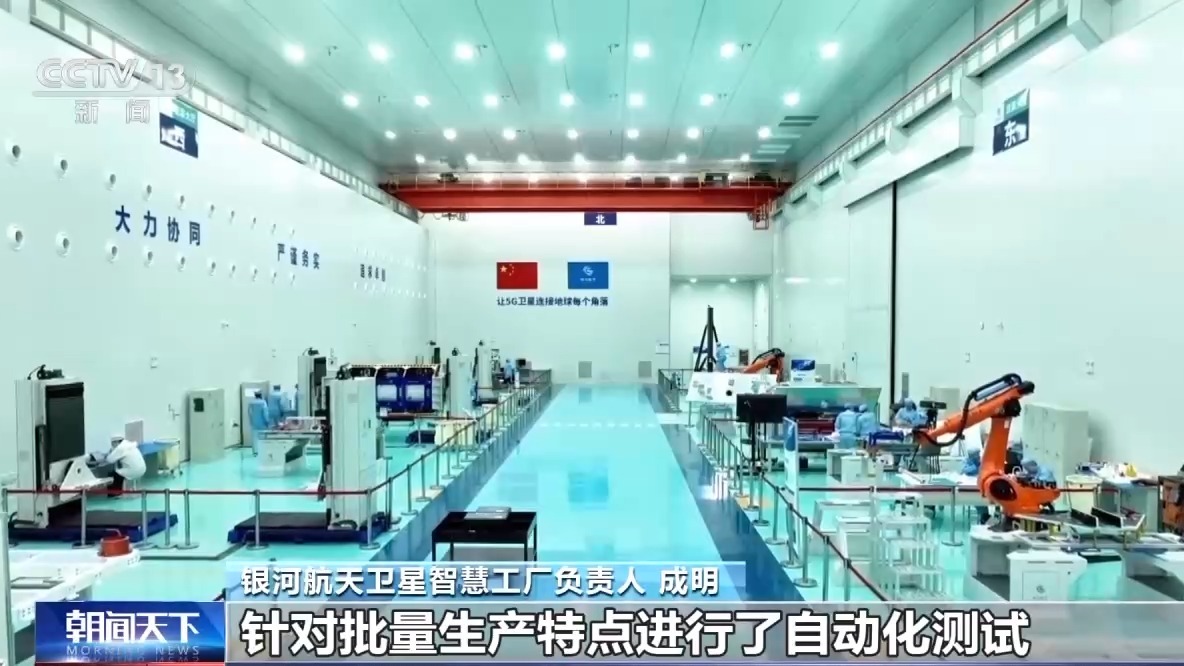
Group 1 - The core viewpoint of the article highlights the successful launch of 19 low Earth orbit satellites for satellite internet construction by China's Long March 12 rocket, marking a significant achievement in commercial space endeavors [1] - The satellites were developed by Galaxy Space, which implemented a fully digital process for production, enhancing efficiency through automation and optimization in testing and assembly [3] - The Long March 12 rocket is noted as China's first 4-meter single-core launch vehicle, capable of carrying at least 12 tons to low Earth orbit and at least 6 tons to a 700-kilometer sun-synchronous orbit, supporting various launch missions [4]
影响市场重大事件:神舟二十号飞船返回舱成功着陆,神舟二十三号飞船运抵发射中心;国金证券研报,关注商业航天3D打印标的
Mei Ri Jing Ji Xin Wen· 2026-01-19 22:21
Group 1: Space Industry Developments - Shenzhou 20 spacecraft successfully landed on January 19, 2026, with the Shenzhou 23 spacecraft arriving at the launch center for backup tasks [1] - York Space Systems plans to raise $512 million through an IPO, pricing shares between $30 and $34, with a total of 16 million shares to be issued [3] - Guojin Securities recommends focusing on companies involved in 3D printing for commercial aerospace, highlighting its potential as a final processing solution for rockets and satellites [4] Group 2: Economic and Industrial Growth - Beijing's Fengtai District aims to exceed a trillion yuan in industrial scale by 2030, focusing on key industries such as aerospace and emerging technologies [2] - The National Bureau of Statistics reported that China's GDP reached 140.19 trillion yuan in 2025, growing by 5.0% year-on-year, with significant contributions from various sectors [6] - The high-tech manufacturing sector's value added increased by 9.4% in 2025, with contributions from industries like integrated circuits and aircraft manufacturing [7] Group 3: Renewable Energy and Green Initiatives - By 2025, China's annual production and sales of new energy vehicles are expected to exceed 16 million units, reflecting a growing emphasis on clean energy [5] - Five government departments issued guidelines to accelerate the transition to a green and low-carbon energy structure, promoting zero-carbon factories and renewable energy utilization [8]

影响市场重大事件:神舟二十号飞船返回舱成功着陆 神舟二十三号飞船运抵发射中心
Mei Ri Jing Ji Xin Wen· 2026-01-19 22:21
Group 1: Space and Aerospace Industry - Shenzhou 20 spacecraft successfully landed, confirming the mission's success, while Shenzhou 23 has arrived at the launch center [1] - Beijing's Fengtai District aims to exceed a trillion yuan in industrial scale by 2030, focusing on aerospace and other key sectors [2] - York Space Systems plans to raise $512 million through an IPO, pricing shares between $30 and $34, with a listing on the NYSE under the ticker "YSS" [3] - Guojin Securities recommends attention to companies involved in 3D printing for commercial aerospace, highlighting its potential as a final processing solution [4] Group 2: Economic and Industrial Growth - By 2025, China's annual production and sales of new energy vehicles are expected to surpass 16 million units, reflecting growth in the clean energy sector [6] - China's GDP is projected to exceed 140 trillion yuan in 2025, with a growth rate of 5.0%, driven by various industrial sectors [7] - The high-tech manufacturing sector is anticipated to grow by 9.4% in 2025, with significant contributions from industries like integrated circuits and aircraft manufacturing [8] Group 3: Financial Market Developments - The number of private equity firms with over 10 billion yuan in assets has reached 114, with new entrants and some exits in the sector [5] - The A-share market has seen a record high of 222 stocks priced over 100 yuan, indicating a concentration of technology companies among the top performers [9] Group 4: Green Energy Initiatives - Five government departments have issued guidelines to accelerate the transition to a green and low-carbon energy structure, promoting zero-carbon factories and renewable energy utilization [9]