智能家居

Search documents
未来10年,最挣钱的凭什么一定是这群人?
创业家· 2026-02-11 10:23
内容来源:刘润公众号(runliu-pub) 此前 ,亚马逊发布了《 2025全球电商消费趋势及选品洞察报告 》 。 作为全球最大电商平台之一, 亚马逊的报告被很多商家 作为 选品指南针和商机 检测仪 。 趋势 一: AI 质感空间 现在, 家 , 正在从一个物理空间 , 变成一个有感知力,能与你情感互动的伙伴。 全球超过 65%的欧美消费者 , 愿意为智能家居花更多钱 。 他们 买的是什么?是安全感 、 仪式感 , 是那种被理解被关怀的小确幸 。 晚上 11点,老板还在群里消息轰炸 。 好不容易应付完老板 , 脑子里却还全是工作 , 辗转反侧到一点多睡不着,半夜惊醒好几次,早上 六 七 点 , 又要起床赶地铁。 数据显示,美国 37%的成年人 , 2023年睡眠质量下降 。 当基础需求都成了奢侈品,它的价值就会被重估 ,睡眠 经济正在爆发。 从监测睡眠的智能设备,到改善睡眠环境的高品质情绪 、 助眠香氛,再到个性化的睡眠咨询服务。 消费者愿意为睡个好觉买单 , 买的更多是健康和生活品质 。 想象一下 , 你回家 把 灯光 、 音乐 、 温度 , 自动调节到你最舒服的状态 。 这 种懂 , 就是机会 。 未来 ...



科沃斯声明:公司被恶意诋毁,将保留追责权利
Xin Lang Cai Jing· 2026-02-11 09:57
Core Insights - The article discusses the recent financial performance of a leading technology company, highlighting a significant increase in revenue and net income compared to the previous year [1] Financial Performance - The company reported a revenue of $50 billion for the last quarter, representing a 20% increase year-over-year [1] - Net income reached $10 billion, which is a 25% increase compared to the same quarter last year [1] - Earnings per share (EPS) rose to $5, up from $4 in the previous year, indicating strong profitability [1] Market Position - The company has strengthened its market position, capturing an additional 5% market share in the technology sector [1] - The growth is attributed to increased demand for its cloud services and innovative product offerings [1] Future Outlook - Analysts project continued growth, with expected revenue growth of 15% for the next fiscal year [1] - The company plans to invest $2 billion in research and development to enhance its product lineup and maintain competitive advantage [1]

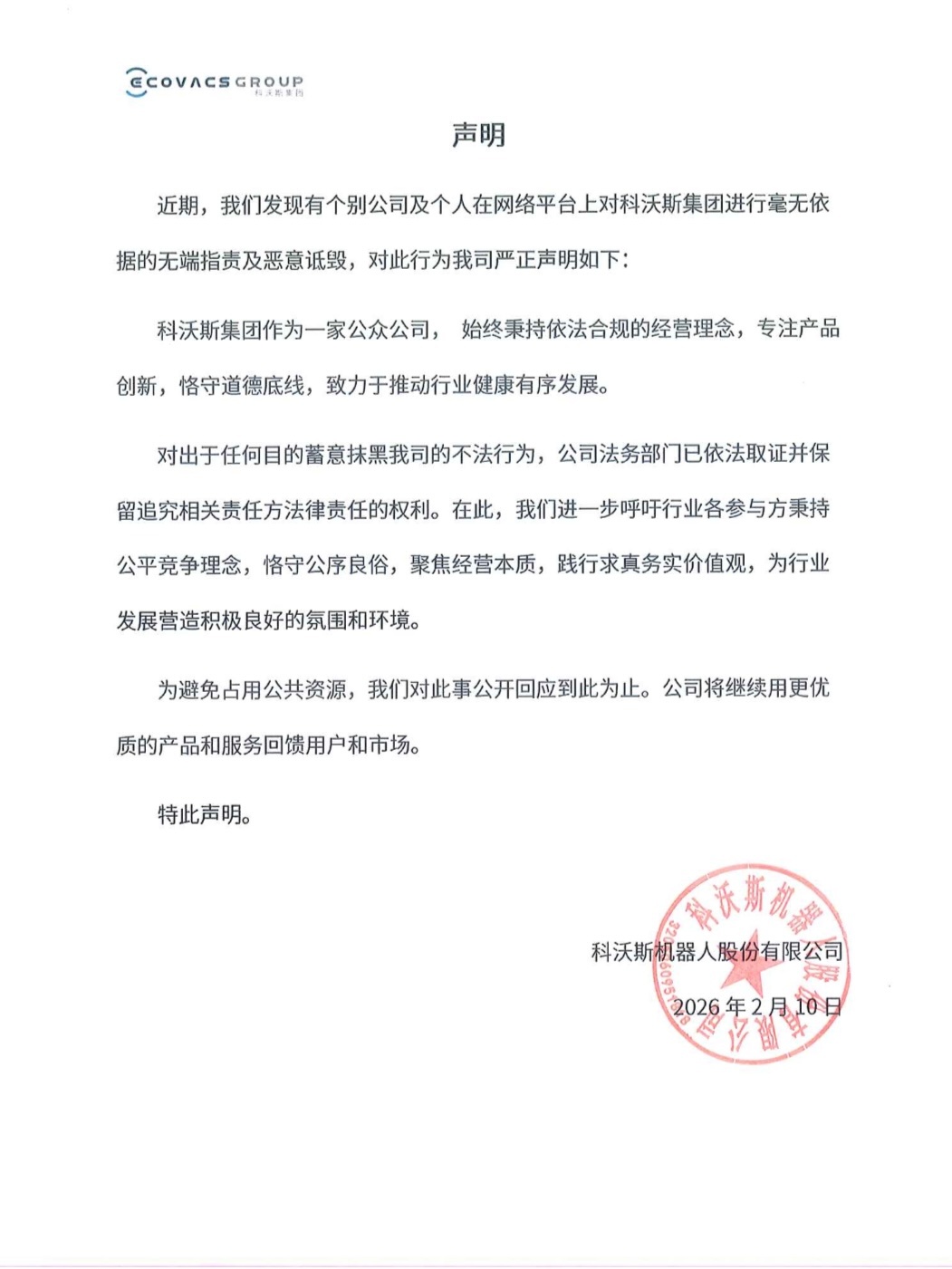
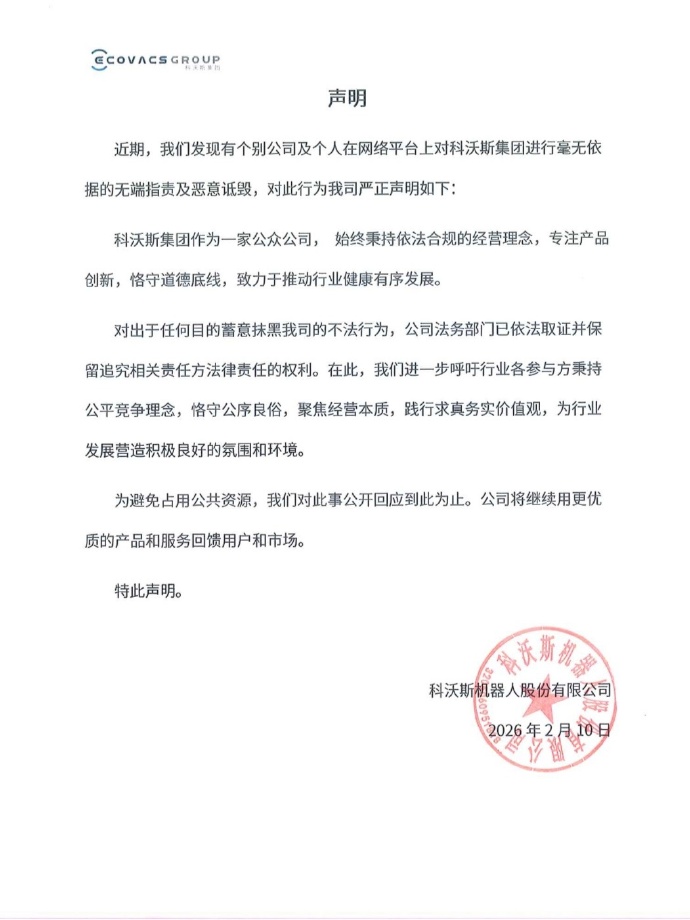
疑回应追觅俞浩水军言论,科沃斯发声明:个别公司及个人毫无依据无端指责及恶意诋毁
Xin Lang Cai Jing· 2026-02-11 09:36
Core Viewpoint - The company, Ecovacs Robotics, has issued a statement addressing baseless accusations and malicious defamation from certain individuals and companies on online platforms, emphasizing its commitment to lawful and compliant operations, product innovation, and ethical standards [1][9]. Group 1: Company Response - Ecovacs Robotics has taken legal measures to collect evidence against malicious actions aimed at defaming the company and reserves the right to pursue legal responsibility [1][9]. - The company calls for all industry participants to adhere to fair competition principles and maintain public order and decency, focusing on the essence of business and promoting a positive environment for industry development [1][9]. Group 2: Industry Context - Prior accusations from the founder and CEO of ZhiMi Technology, Yu Hao, claim that Ecovacs has been involved in purchasing online "water army" to manipulate public opinion [4][12]. - Yu Hao has expressed concerns about the presence of organized efforts to disrupt their live broadcasts with defamatory comments, indicating a competitive and hostile environment within the industry [6][14].
赴港IPO 鹿客科技递表港交所
Bei Jing Shang Bao· 2026-02-11 08:02
招股书显示,2023年、2024年及2025年前三季度,鹿客科技实现收入分别为10.14亿元、10.86亿元、 7.74亿元;实现利润分别为1402万元、5311万元、3198万元。募集资金将用于中长期技术研发及支 持"产品及技术驱动"战略、自有品牌营销及海外市场扩张、偿还公司部分现有债务以及用于营运资金及 其他一般企业用途,包括日常运营及一般企业开支。 北京商报讯(记者 翟枫瑞)2月11日,北京商报记者在港交所官网注意到,鹿客科技(北京)股份有限 公司(以下简称"鹿客科技")已向港交所主板递交上市申请,独家保荐人为中国银河国际。据了解,鹿 客科技是全球AI(人工智能)家庭安全管家的开创者。公司提供以智能锁为核心的家庭及社区安全防 护、智能管理与家庭护理的综合解决方案。 ...
趣睡科技获浙江国资举牌 睡眠科技赛道潜力受关注
Zheng Quan Ri Bao Wang· 2026-02-11 05:33
另一方面,国资股东的入场被认为将对趣睡科技的增长带来新动力。中国电子商务专家服务中心副主任 郭涛在接受《证券日报》记者采访时表示:"浙江国资举牌趣睡科技,体现了国资对睡眠科技这类细分 赛道优质企业的认可。此次交易对趣睡科技而言也具备积极意义,一方面,国资入股有望从资金层面为 该公司带来利好;另一方面,物产中大作为大型国企,在供应链、渠道资源等方面具备优势,可与趣睡 科技形成协同,助力其产品下沉到更广泛市场,尤其是借助国企资源打开政企采购等B端场景。同时, 国资入股也能提升企业公信力,增强投资者信心,为其后续融资或业务拓展铺路。" 2月10日晚间,成都趣睡科技(301336)股份有限公司(以下简称"趣睡科技")披露公告,趣睡科技持股 5%以上的股东苏州工业园区顺为科技创业投资合伙企业(有限合伙)(以下简称"顺为投资")于2月7日与杭 州润晞企业管理咨询合伙企业(有限合伙)(以下简称"杭州润晞")签署股份转让协议,顺为投资因基金存 续期即将届满退出,拟通过协议转让方式将其持有的200万股无限售流通股(占趣睡科技总股本的5%, 占剔除公司已回购股份后总股本的5.04%)以54.946元/股的价格转让至杭州润晞。 资 ...

适老化智能家居成爆款年货,“AI+银发”催生增量
Xin Jing Bao· 2026-02-10 08:41
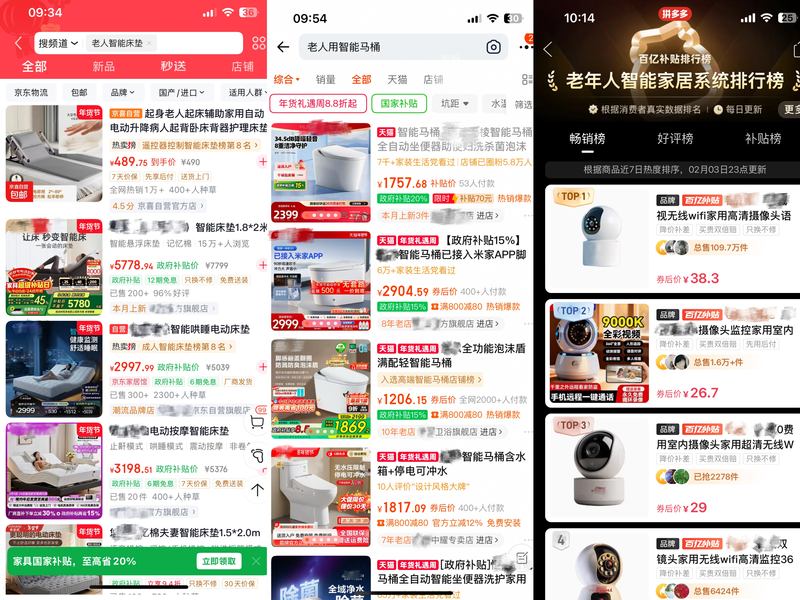
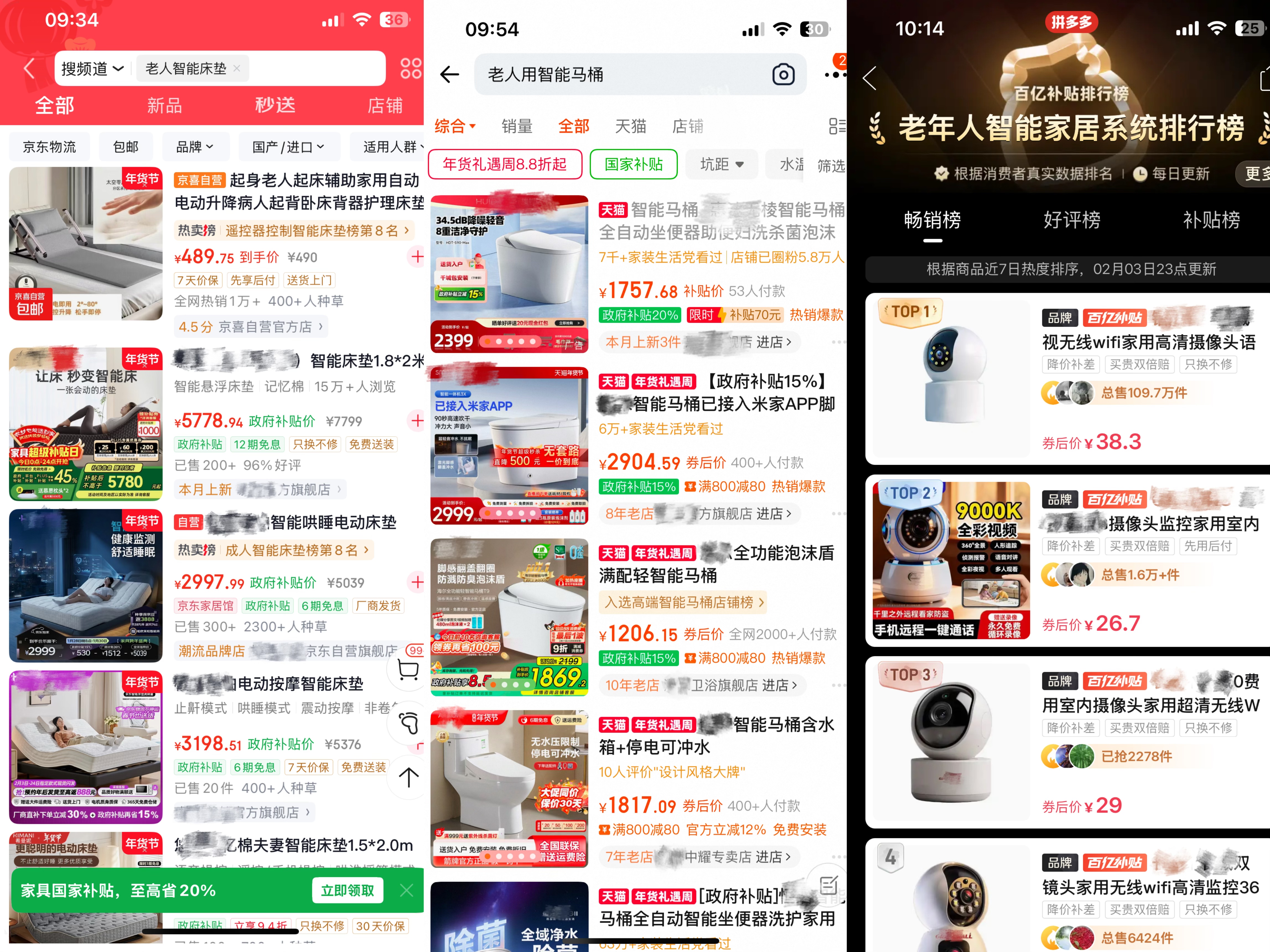
Core Insights - The acceptance and purchase willingness of elderly-friendly smart home products are increasing as they are optimized with "technology adapting to the elderly" rather than the other way around [1][4] Group 1: Market Trends - The demand for elderly-friendly smart home products is rising, driven by the "AI + silver hair" trend and effective consumer stimulation policies [1][5] - During the Spring Festival shopping season, products like smart mattresses with heart rate and sleep monitoring features have become popular, with significant sales increases on major e-commerce platforms [1][5] - The elderly population in China is projected to reach 310 million by 2024, accounting for 22% of the total population, creating a substantial market opportunity for elderly-friendly products [7] Group 2: Product Development - Smart locks are being upgraded to address issues faced by elderly users, such as fingerprint recognition failures due to wear, with features like vein recognition and long battery life being introduced [2][3] - The development of elderly-friendly smart home products follows a logic of "technology adapting to the elderly," incorporating features like AI monitoring and health tracking to enhance user experience [4][9] - Smart mattresses can monitor key health indicators and provide real-time alerts for potential health risks, while AI-enabled devices facilitate health management through online consultations [4][9] Group 3: Consumer Behavior - Consumers are increasingly recognizing the value of elderly-friendly smart products, but there is a misconception that simply having smart features equates to being suitable for the elderly [9][10] - The focus on purchasing over service can lead to poor user experiences, as improper installation or calibration of smart devices may result in abandonment of their use [10] - Industry experts recommend prioritizing essential features that cater to elderly needs, such as emergency alerts and fall detection, while avoiding unnecessary complexities [10]
适老化智能家居成爆款年货,“AI+银发”催生增量|年货新趋势
Bei Ke Cai Jing· 2026-02-10 08:37
Core Insights - The acceptance and purchase willingness of elderly-friendly smart home products have increased as they are optimized with "technology adapting to the elderly" rather than the other way around [1][5] - The surge in demand for elderly-friendly smart home products is driven by the "AI + silver hair" trend and effective consumer stimulation policies, transitioning from niche to mainstream necessity [2][14] Group 1: Market Trends - The popularity of elderly-friendly smart home products during the New Year shopping season is evident, with items like smart mattresses and AI-interactive appliances seeing significant sales growth [1][6] - Data from the National Bureau of Statistics indicates that by 2024, the population aged 60 and above will reach 310 million, accounting for 22% of the total population, creating a substantial market for elderly-friendly products [14] Group 2: Product Development - Smart locks are being upgraded to address common issues faced by elderly users, such as fingerprint recognition failures and complex interfaces, with features like vein recognition and long battery life being introduced [4][5] - The development of elderly-friendly smart home products is guided by the principle of "technology adapting to the elderly," focusing on comprehensive recognition and AI monitoring to enhance safety and usability [5][16] Group 3: Consumer Behavior - Consumers are increasingly recognizing the value of elderly-friendly smart home products, with significant sales growth reported on platforms like Taobao and Tmall, where sales of vein recognition locks increased by nearly 150% year-on-year [14] - There is a growing trend of purchasing these products as gifts for elderly family members, emphasizing the emotional value beyond the product itself [17] Group 4: Policy Impact - Recent consumer stimulation policies have expanded the range of subsidized products to include smart home devices, which is expected to meet the diverse needs of consumers seeking improved living standards [15] - The implementation of these policies is seen as a way to enhance the accessibility of smart home products for the elderly, reflecting a commitment to improving quality of life [15]
石头科技20260205
2026-02-10 03:24
Summary of Stone Technology Conference Call Company Overview - **Company**: Stone Technology (石头科技) - **Industry**: Robotic Cleaning Devices Key Points Financial Performance - **2025 Profitability**: The net profit from the overseas market for robotic vacuum cleaners is stable, with profit margins of approximately 20% in Europe and Asia-Pacific, and around 5% in the US, contributing an estimated net profit of 2 billion RMB for the year [2][8] - **Domestic Market Losses**: The domestic market faced a loss of 100 million RMB due to intensified competition and self-subsidy measures, marking the first loss in a decade [2][4] - **New Business Losses**: The washing machine business is expected to incur losses of 500-600 million RMB, the floor washing machine business 200 million RMB, and the lawn mower business 100 million RMB, with new businesses being the main financial drag [2][8] Strategic Adjustments for 2026 - **Cost-Cutting Measures**: Stone Technology plans to reduce losses from new businesses by 700 million RMB through the closure of the washing machine division, cessation of self-subsidies for floor washing machines, and timely delivery of lawn mower orders [2][7] - **Revenue Projections**: The revenue from floor washing machines is expected to reach 5 billion RMB in 2026, with 30% from overseas sales, potentially achieving a profit margin close to 10% [2][11] Market Expansion Strategies - **US Market Penetration**: The company is expanding its presence in the US market through Costco and Target, utilizing a streamlined SKU strategy and competitive pricing to drive rapid growth [2][28] - **European Market Promotion**: Increased marketing efforts in Europe, including a partnership with Real Madrid, aim to enhance brand recognition and drive sales growth [3][29] Competitive Landscape - **Comparison with Competitors**: Stone Technology's strategy contrasts with competitors like Ecovacs, which focuses on a simplified product strategy to reduce costs. Stone Technology emphasizes adding features without significantly raising prices, which affects short-term profitability [15][17] - **Product Strategy**: The introduction of low-cost cylindrical vacuum robots aims to counter competition while maintaining the integrity of existing product lines [15][20] Future Outlook - **Profitability Forecast for 2026**: The company anticipates a total profit of approximately 2.4 billion RMB in 2026, with a valuation of only 16 times earnings, indicating a positive outlook [35] - **Emerging Product Categories**: The washing machine segment is projected to generate over 2 billion RMB in sales in 2025, with expectations to reach 4-5 billion RMB in 2026, and the lawn mower business is expected to break even [33] Challenges and Risks - **Domestic Market Concerns**: The company does not foresee long-term losses in the domestic market, provided it maintains market share without initiating price wars [18][19] - **Product Limitations**: The cylindrical vacuum robot is not expected to become the sole mainstream solution due to its limitations, with other models like flat mops and dual-disc designs continuing to evolve [20] Conclusion - Stone Technology is navigating a challenging market landscape with strategic adjustments aimed at reducing losses and enhancing profitability. The focus on overseas expansion, product innovation, and brand promotion positions the company for potential growth in the coming years.

AI巨头的超级碗战争,Anthropic与OpenAI互怼,追觅豪掷千万美元秀梦想
Xin Lang Ke Ji· 2026-02-10 01:43
Core Insights - The 2026 Super Bowl showcased a fierce advertising battle among AI giants, leading to its nickname as the "AI Bowl" due to the overwhelming presence of AI-related ads [3][4][5] - The Super Bowl remains a significant commercial event, with over 110 billion USD in broadcasting rights and an expected viewership of over 130 million, making it one of the highest-value sports events globally [3][4] - This year's Super Bowl saw a notable increase in AI company advertisements, with 15 out of 66 ad slots occupied by AI firms, indicating a trend reminiscent of the 2022 cryptocurrency advertising surge [6][9] Advertising Dynamics - The average cost for a 30-second ad during the Super Bowl reached 8 million USD, with some slots exceeding 10 million USD, reflecting the high stakes of advertising on this platform [4][6] - Major tech companies like Google, Microsoft, Amazon, and Meta invested heavily in advertising, with some firms reportedly spending tens of millions to capture the attention of American viewers [4][5][6] - The saturation of AI ads has raised concerns among industry analysts, drawing parallels to the dot-com bubble and the subsequent fallout in the cryptocurrency sector [5][6] Company Strategies - Anthropic and OpenAI are in direct competition, with Anthropic positioning itself as a no-advertising alternative to OpenAI's ad-supported model, which has sparked a public feud between the two companies [10][11][12] - OpenAI's CEO has criticized Anthropic's advertising strategy as hypocritical, while also facing pressure to monetize its user base through ads [10][12][14] - Despite having fewer active users, Anthropic is projected to achieve significant revenue growth, indicating a shift in the competitive landscape of AI companies [10][11][12] International Presence - Chinese companies like Temu and追觅 are making their mark in the Super Bowl advertising space, with Temu's aggressive marketing strategy leading to a substantial increase in U.S. user engagement [20][21][22] -追觅's advertisements aimed to showcase its transition from a home appliance manufacturer to a tech ecosystem player, highlighting its ambitious plans for future product launches [25][26][27] - The involvement of these Chinese firms in high-profile advertising events like the Super Bowl signals a strategic move to gain visibility and market share in the U.S. [22][26]

AI巨头的超级碗战争,追觅豪掷千万美元秀梦想|硅谷观察
Xin Lang Cai Jing· 2026-02-10 00:08
Core Insights - The 2026 Super Bowl not only showcased the Seattle Seahawks' victory but also highlighted a fierce advertising battle among AI giants, leading many to refer to it as the "AI Bowl" [2][31] - The Super Bowl has become a significant commercial event in the U.S., with viewership expected to exceed 130 million, making it a prime platform for advertisers [2][31] - The event's advertising revenue is substantial, with broadcasting rights exceeding $10 billion annually and new contracts totaling over $110 billion for 11 years [2][31] Advertising Landscape - The advertising value of the Super Bowl is highly concentrated in the U.S. market, attracting only the most financially robust companies willing to spend millions [4][33] - In 2026, AI companies dominated the advertising space, with 15 out of 66 ad slots (approximately 23%) occupied by AI-related ads, reminiscent of the cryptocurrency surge in 2022 [6][35] - The average cost for a 30-second ad during the Super Bowl reached $8 million, with some slots exceeding $10 million [4][35] AI Advertising Trends - The saturation of AI ads led to viewer complaints, with some expressing frustration over the overwhelming presence of AI-related advertisements [4][6] - Notable AI companies, including Google, Microsoft, Amazon, and Meta, invested heavily in advertising, with Anthropic's Claude reportedly spending over $16 million on ads alone [6][35] - The advertising strategy of AI companies has raised concerns among industry analysts, drawing parallels to the dot-com bubble and the subsequent collapse of companies that heavily advertised during that period [6][35] Competitive Dynamics - Anthropic's aggressive advertising campaign targeted OpenAI, using ads that criticized the commercialization of AI, while positioning Claude as an ad-free alternative [7][40] - OpenAI's CEO responded to Anthropic's ads, defending the company's advertising strategy and emphasizing transparency in ad placements [13][42] - The rivalry between Anthropic and OpenAI is intensified by their differing business models, with Anthropic focusing on enterprise contracts and subscriptions, while OpenAI relies on a larger user base and advertising revenue [12][41] International Presence - Chinese companies are increasingly participating in the Super Bowl advertising landscape, with Temu and the smart home company Dreame making significant investments [52][54] - Temu's advertising strategy has proven effective, significantly increasing its user base in the U.S. market, while Dreame aims to showcase its transition from a home appliance manufacturer to a tech ecosystem company [52][54] - Dreame's ambitious plans include launching a luxury electric vehicle by 2027, reflecting its broader strategy to capture attention in the U.S. market [57][55]