
有色金属矿业

Search documents
矿业板块站上超级周期起点?矿业ETF(561330)是否还有投资空间?
Mei Ri Jing Ji Xin Wen· 2026-01-28 07:15
供需结构性紧张是基石。以铜为例,其在新能源转型和数字基础设施中的需求持续增长,但新项目开发周期长、资本投入巨大,导致供应难以跟上。摩根士 丹利分析指出,在供应存在缺口的背景下,这种环境有望支撑更高的商品价格和估值倍数。 新兴需求提供强大增长引擎。人工智能数据中心、机器人产业和电动汽车的快速扩张,对铜、铝等基础金属形成了刚性需求。铜正从传统工业原料转变为支 撑数字经济运行的关键资源。 随着全球供应链的重构和新质生产力需求的爆发,曾一度被视为"传统周期股"的矿业板块正被重新定义,并悄然移到了投资者投资的核心位置。从资金流向 来看,在矿业ETF(561330)价格持续上涨创新高的背景下,资金依旧坚定加仓,连续20个交易日持续净流入超16亿元,说明矿业板块近期拥有资金追捧的 坚实力量。 这一惊人的涨幅不仅源于价格的上涨,更在于其投资逻辑的根本性重塑:矿业正从依赖传统经济周期的短期交易标的,转变为受益于能源转型与人工智能革 命的长期结构性资产。 矿业板块近期爆发,是全球宏观经济、地缘政治与科技革命多重因子共振的结果。核心逻辑已从传统需求切换至以 AI与新能源为主导的新质生产力需求。 智能化革命实质性提升生产力。内蒙古伊 ...

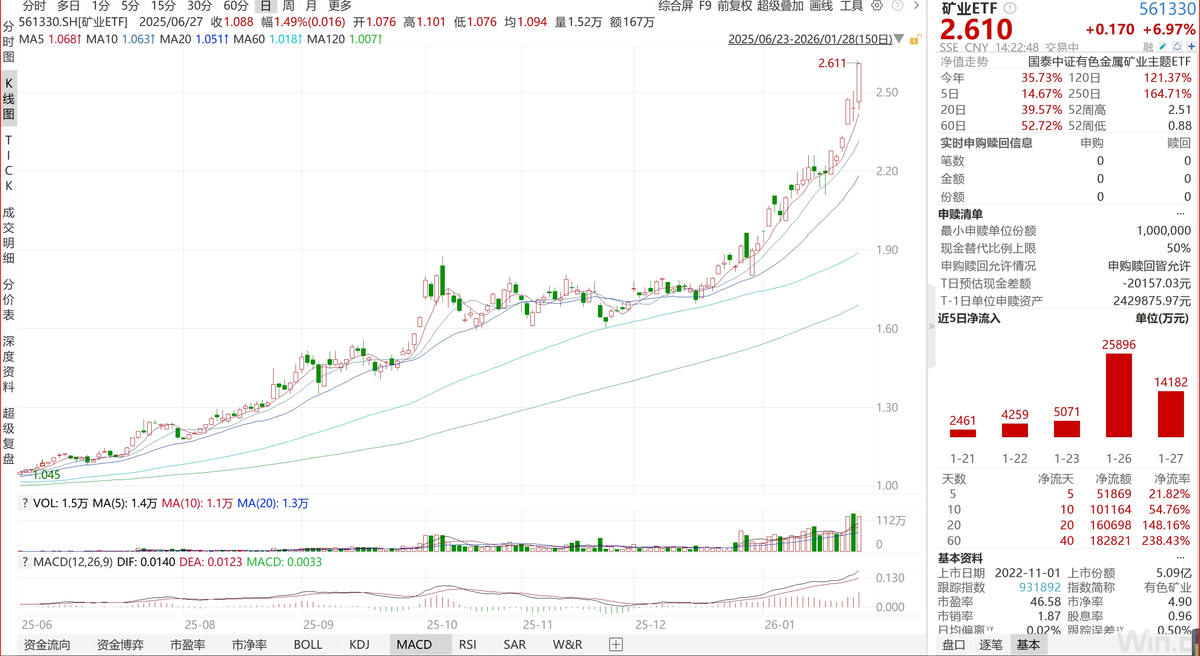
有色板块高位震荡 资金持续加仓ETF
Zhong Guo Jing Ying Bao· 2026-01-27 08:37
Core Viewpoint - The recent strong performance of the non-ferrous metal sector in A-shares is attributed to the resonance of global macroeconomic and industrial trends, with a focus on long-term benefits rather than short-term price fluctuations [1][2]. Group 1: Market Performance - The non-ferrous metal sector has become one of the most prominent sectors in A-shares since 2026, with related ETFs recording significant gains, most exceeding 25% [2]. - On January 26, 2026, several ETFs, including the China Securities Non-ferrous Metal Mining Theme ETF, saw increases of over 6% [2]. - Despite some fluctuations on January 27, the sector did not experience significant declines that would erase previous gains [2]. Group 2: Driving Factors - Two main factors are driving the strength of the non-ferrous sector: a recovery in manufacturing and a long-term demand reshaping due to green and technological trends [2][3]. - The recovery in manufacturing, particularly in the U.S. and emerging economies, has led to increased demand for traditional industrial metals, while low inventory levels have amplified price elasticity [2]. - The demand for metals like copper and aluminum is being supported by stable needs from sectors such as electric vehicles, photovoltaics, and wind power, alongside new growth opportunities from AI infrastructure [3]. Group 3: Investment Strategy - Investors are advised to view industrial non-ferrous metals as strategic resource assets benefiting from global liquidity easing and future electrification and digitalization, rather than merely as cyclical commodities [4]. - Fund managers have identified key metals for 2026, including copper, aluminum, lithium carbonate, gold, and minor metals like tungsten, while also considering opportunities in sectors like chemicals and steel [4]. - Adjustments in portfolio allocations are being made based on industry conditions, with a focus on maintaining high positions in precious metals and copper while reducing exposure to overvalued sectors [4]. Group 4: Supply and Demand Dynamics - The current tight supply-demand balance in the non-ferrous sector necessitates close attention to the supply-demand balance sheet and macroeconomic influences on metal prices, including monetary policy and geopolitical factors [5].
中国有色集团召开2026年工作会议 确保“十五五”开好局、起好步
Xin Lang Cai Jing· 2026-01-26 13:19
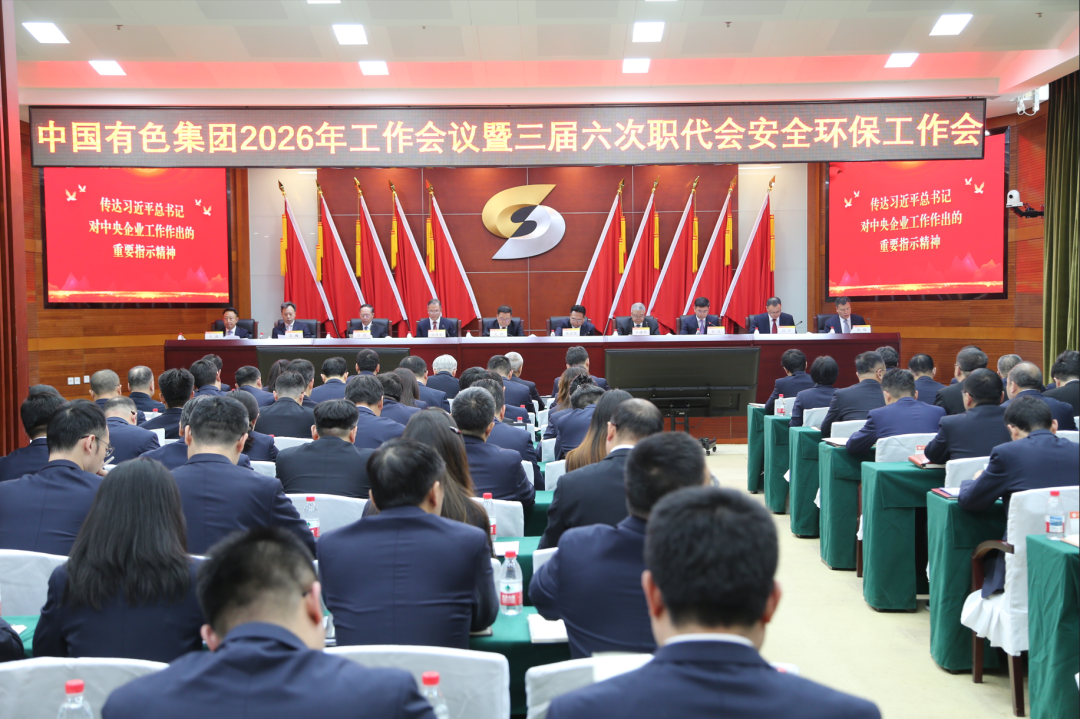
"十四五"期间,中国有色集团深入学习贯彻党的二十大及二十届历次全会精神,坚持以习近平总书记重要指示批示精神为根本遵循,全面落实党中央、国 务院决策部署及国务院国资委工作要求,聚焦提升"五个价值",实现利润总额较"十三五"增长3.2倍;年均净资产收益率12.6%;全员劳动生产率增幅达 101%;科研立项数量和经费总额同比增长214%和167%;战新产业营收年均增长超过25%。企业综合实力显著增强,科技创新与产业升级深度融合,高质 量发展成果逐步显现。 2025年,中国有色集团扎实推进资源增储上产、科技赋能新材料、关键金属产业链打造、治亏脱困等专项行动,实现增加值同比增长4.52%,实现利润总 额86.9亿元,有色金属产品产量同比增长2.8%,全年新增重有色金属资源量约650万吨,新材料产业营收和利润分别同比增长18.1%、12.2%,"两个主力 军"核心功能更加凸显。 (来源:中色东方) 1月26日,中国有色集团召开2026年工作会议暨三届六次职工代表大会、安全环保工作会,深入学习贯彻党的二十大及二十届历次全会精神,全面贯彻习 近平总书记对中央企业工作重要指示精神,全面落实中央经济工作会议精神和中央企业负责人会 ...
现货黄金冲破5000美元/盎司,有色板块集体狂飙
Sou Hu Cai Jing· 2026-01-26 12:18
Core Viewpoint - The recent surge in gold prices, surpassing $5100 per ounce, is attributed to geopolitical tensions and a shift towards de-dollarization, leading to significant gains in gold and metal ETFs [1][3]. Group 1: Market Performance - Gold stocks ETF (517400) increased by 6.95% with a year-to-date rise of 37.07% [1] - Mining ETF (561330) rose by 5.37% with a year-to-date increase of 27.46% [1] - Non-ferrous metals ETF (159881) saw a 4.27% rise with a year-to-date increase of 24.80% [1] - Gold stocks ETF recorded a year-to-date increase of 28.16% as of January 23, 2026 [5] Group 2: Reasons for Price Increase - Geopolitical disturbances and accelerated de-dollarization are driving the demand for gold [1] - Canadian Prime Minister Carney's remarks at the World Economic Forum highlighted a shift in global order, contributing to market uncertainty [1] - Several countries, including Denmark and India, have reduced their holdings of U.S. Treasury bonds, indicating a potential shift in reserve strategies [1] Group 3: Central Bank Activities - Poland's central bank approved a plan to purchase 150 tons of gold, emphasizing gold's unique role in reserve structures [2] - The Polish central bank aims to increase its gold holdings from 550 tons to 700 tons, reflecting a broader trend among central banks to bolster gold reserves [2] Group 4: Future Outlook - The long-term logic for gold remains strong, supported by a potential Fed rate cut and increasing global uncertainties [3] - Analysts predict that the average gold price could reach $4741.97 in 2026, a 38% increase from the previous year [4] - Some analysts forecast gold prices could peak at $7150 this year due to geopolitical risks and central bank purchases [4] Group 5: Investment Opportunities - The gold stocks ETF (517400) is seen as having significant recovery potential due to rising gold prices [5] - The mining ETF (561330) is recommended for investors looking to capitalize on the ongoing metal bull market [5] - Investors are encouraged to consider direct investments in physical gold through gold fund ETFs (518800) [6]

华安中证有色金属矿业主题ETF今日发行 精选有色行业龙头标的
Xin Lang Cai Jing· 2026-01-26 00:55
(标题一)华安中证有色金属矿业主题ETF今日发行 精选有色行业龙头标的 2025年,聚焦产业链上游稀缺资源的中证有色金属矿业指数上涨104.84%,近期关注度持续攀升。据 悉,紧密跟踪该指数的华安中证有色金属矿业主题ETF(认购代码:512943;基金二级市场交易代码: 512940)1月26日发行,为投资者布局有色板块提供新工具。 据悉,中证有色金属矿业主题指数从有色金属行业中选取40只拥有有色金属矿产资源储量的上市公司证 券作为指数样本,反映有色金属矿业主题上市公司证券的整体表现。从成分股看,中证有色金属矿业主 题指数核心成分股均为国内有色金属龙头企业,覆盖铜、锂、稀土、铝、黄金等核心资源品。 和其他有色类指数相比,中证有色金属矿业主题指数仅选取拥有有色金属矿产资源储量的企业,更聚焦 上游采矿环节,剔除了仅从事冶炼与加工等环节的公司。这确保了指数投资于产业链中更具投资价值 的"资源端",与众多包含冶炼加工环节的泛有色指数形成鲜明区别。 (标题二)掘金上游资源机遇 华安中证有色金属矿业主题ETF 1月26日发行 (标题三)多重因素共振 有色ETF华安聚焦有矿企业 同时,在指数编制上,中证有色金属矿业主题指数 ...
乐观预期与市场情绪共振 锡价维持强势
Qi Huo Ri Bao· 2026-01-26 00:32
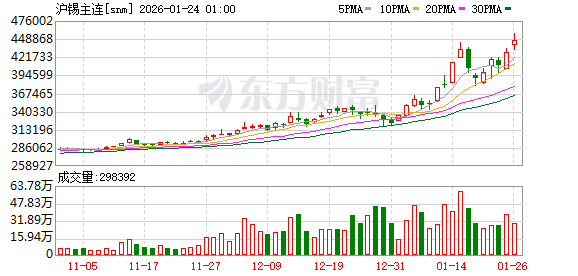
Core Viewpoint - The recent rise in tin prices is primarily driven by improved macroeconomic sentiment and geopolitical policy disturbances, with the main support coming from a stable inflation environment in the U.S. and pressure on the Federal Reserve to lower interest rates, creating a weak dollar scenario [2] Group 1: Price Movements and Influencing Factors - As of last Friday, the main contract price for tin on the Shanghai Futures Exchange closed above 447,140 yuan per ton, marking a 6.56% increase [2] - The significant price increase on Friday was closely linked to allegations of monopolistic practices in port logistics by Indonesia's Qingshan Industrial Park, despite limited actual export impact [2] - The approval delay for mining explosives in Myanmar has resulted in the resumption level of the Manxiang tin mine being only 40%-50% of pre-ban levels [2] Group 2: Market Dynamics and Sentiment - The exuberance in the funding environment has amplified the rise in tin prices, with a surge in precious metals like silver boosting market risk appetite and leading to increased capital inflow into the non-ferrous metals sector [3] - There is a divergence between market expectations and actual demand, with current consumption being notably weak due to the seasonal slowdown and high prices, leading to widespread production cuts among downstream processing enterprises [3] Group 3: Supply and Demand Outlook - Global tin visible inventory has significantly increased to approximately 16,000 tons, with domestic social inventory rising from below 8,000 tons to around 10,000 tons, and LME inventory climbing from 3,000 tons to over 7,000 tons [3] - The core operational logic for tin prices in the medium to long term revolves around resource scarcity and emerging demand growth, with potential supply disruptions and depletion risks due to fragile overseas mining operations and resource protection policies [4] Group 4: Future Projections - Even if Myanmar's supply returns to normal levels, a supply gap for tin is still expected in 2026, with limited elasticity on the supply side and optimistic demand projections from sectors like renewable energy and AI [5] - The overall short-term volatility in tin prices may arise from a retreat in market sentiment and inventory pressures, but the medium to long-term supply-demand balance remains tight, suggesting that the price center is likely to stay elevated [5]
供需共振叠加资金涌入 公募发力有色金属赛道
Shang Hai Zheng Quan Bao· 2026-01-25 14:24
Group 1: Institutional Movements - The non-ferrous metal sector is becoming a focal point for both fund companies and investors, with public funds significantly increasing their positions in this industry by Q4 2025 [1][2] - The allocation ratio of non-ferrous metals in actively managed equity funds has notably increased, rising by 2.3 percentage points compared to the end of Q3 2025, driven by strong demand and favorable liquidity conditions [2] - Major funds are concentrating their holdings in strategic metals such as gold, copper, aluminum, tin, and antimony, with specific funds optimizing their stock selections [2] Group 2: ETF Inflows - A substantial amount of capital is flowing into non-ferrous metal ETFs, with a net subscription of nearly 20 billion yuan in Q4 2025 alone [3] - The total scale of non-ferrous metal theme ETFs has surpassed 100 billion yuan, indicating strong investor interest and confidence in this sector [4] Group 3: New Product Launches - There has been a surge in the issuance of new non-ferrous metal-themed ETFs, with four new products currently in the pipeline as of January 23 [4] - The mining companies within the non-ferrous metal sector are expected to benefit significantly from rising metal prices, as their revenues are closely linked to the spot prices of metals like copper, lithium, and zinc [4] Group 4: Long-term Investment Outlook - The long-term investment logic for the non-ferrous metal mining sector is being reinforced due to tightening supply and demand dynamics, alongside a favorable macroeconomic environment [4] - Despite recent price corrections, the overall bullish outlook on resource commodities remains intact, with expectations for long-term investment returns in the non-ferrous sector [5]
华安中证有色金属矿业主题 ETF:价值重估新周期,布局稀缺资源
Changjiang Securities· 2026-01-24 14:08
- The report focuses on the "CSI Nonferrous Metal Mining Theme Index," which selects 40 listed companies with nonferrous metal mineral reserves as index samples, reflecting the overall performance of nonferrous metal mining-themed listed companies. The index emphasizes upstream mining companies due to their higher profit elasticity and direct benefits from metal price increases. The index is designed to capture the value of upstream resource enterprises and is suitable for investors optimistic about resource cycle trends[27][28][32] - The index adopts a balanced strategy for selecting constituent stocks. It first excludes the bottom 10% of low-liquidity stocks based on daily trading volume, then selects the top three securities from each CSI fourth-level industry based on market capitalization rankings over the past year. If fewer than three securities are available, all are included. Remaining samples are added based on market capitalization rankings until the total reaches 40 stocks. This ensures representation across various resource categories, including gold, aluminum, rare earths, cobalt, lithium, and other strategic metals. The index is adjusted semi-annually in June and December[28][32] - The index's constituent stocks are distributed across four major sectors: industrial metals, energy metals, precious metals, and strategic small metals. This structure aligns with high-demand downstream industries such as new energy, AI computing power, power infrastructure, and semiconductors, enabling precise capture of core investment opportunities across the entire industry chain[7][32][40] - The index's market capitalization distribution is concentrated in large-cap stocks, with 55.61% of the weight allocated to stocks with a market capitalization above 1 trillion RMB. Mid-cap stocks (200-1000 billion RMB) account for 43.09% of the weight, providing effective support. This structure avoids risks associated with small-cap stocks while leveraging the resource barriers of large-cap leaders and capturing growth opportunities in niche sectors[41][46] - The index demonstrates strong performance across various timeframes. Over the past year, its return reached 120.35%, significantly outperforming major broad-based indices like the CSI 300 (24.58%) and the Shanghai Composite Index (27.13%). It also surpassed industry indices such as the SW Nonferrous Metals Index (107.58%). In the medium term, its six-month return was 95.59%, and its three-month return was 28.48%. Short-term performance was equally impressive, with a one-month return of 24.06%[59][62][64]






威领股份2026年1月23日涨停分析:新股东入主+治理结构优化+有色金属概念
Xin Lang Cai Jing· 2026-01-23 07:06
Group 1 - The core viewpoint of the news is that Weiling Co., Ltd. (SZ002667) experienced a significant stock price increase, reaching a limit up of 10% to 17.6 yuan, with a total market capitalization of 4.586 billion yuan and a circulating market value of 4.164 billion yuan, driven by new shareholder involvement and governance structure optimization [1] Group 2 - Weiling Co., Ltd. is undergoing a major strategic transformation, with new shareholders bringing opportunities for resource integration. The parent company, Xinyang Silver Tin, is a leading player in the non-ferrous metal mining industry, which may create business synergies and positively impact the company's development [1] - The company is actively addressing risks and continuously optimizing its governance structure by eliminating the supervisory board and improving the specialized committees of the board of directors, which enhances decision-making efficiency. Additionally, the establishment of an asset impairment management system has standardized the processes for asset impairment provision and write-off, improving financial transparency [1] - In terms of market themes, the company is involved in lithium ore selection, basic lithium battery raw material lithium salt processing and smelting, as well as the mining of tungsten, tin, lead, and zinc, categorizing it within the non-ferrous metal sector. The recent market attention on the non-ferrous metal sector has led to active performance of related stocks, with Weiling Co., Ltd. potentially benefiting from sector linkage. Furthermore, data from Dongfang Caifu indicates that there was capital inflow into the non-ferrous metal sector on the same day, contributing to the stock price increase [1]

买铜真能稳赚钱?交易所出手降温
Shen Zhen Shang Bao· 2026-01-22 22:37
Group 1 - The core viewpoint of the articles revolves around the ongoing high copper prices, which have become a focal point of debate among institutions regarding their sustainability and future trends [1][2][3] - The Shanghai Futures Exchange has announced adjustments to the trading margin ratios and price fluctuation limits for copper and aluminum futures, effective January 22, 2026, in response to high volatility and to maintain market stability [1] - Analysts from Guotai Junan Futures suggest that the adjustments are aimed at preventing systemic risks and guiding rational market participation during a sensitive period before the Chinese New Year [1] Group 2 - Research from Lianhe Securities indicates that the global supply of copper is expected to face structural bottlenecks due to the end of a concentrated capacity expansion cycle, leading to a supply gap that could drive prices higher [2] - Huayuan Securities notes that while short-term copper prices may experience fluctuations due to inventory accumulation and delayed tariff expectations, long-term supply disruptions could lead to a shift from a balanced market to a shortage [2] - Goldman Sachs has stated that the recent surge in copper prices is unlikely to be sustained, predicting a return to fundamental pricing as speculative behaviors driven by tariff expectations wane, with a revised surplus forecast for 2026 [3]