
林果业

Search documents
新疆从“林果大区”迈向“林果强区”——小果子“链”起大产业
Ren Min Ri Bao· 2025-10-11 00:39
Core Insights - Xinjiang's fruit industry is transitioning from a "large fruit region" to a "strong fruit region," leveraging its unique natural resources and innovative agricultural practices to enhance quality and market reach [1][4] Industry Development - Xinjiang has established a mature "one area, three belts" system for fruit production, which includes various advantageous regions and specialty industry belts, ensuring year-round fruit supply [1] - The region is the top producer of red dates, grapes, apricots, and almonds in China, contributing to a diverse and appealing fruit market [1] Technological Advancements - Over 50,000 technical training sessions have been conducted, benefiting over 3.8 million farmers and significantly improving orchard management standards [2] - The integration of technology, such as drones for pesticide application and digital management systems, is enhancing the standardization and efficiency of fruit production [2] Value Addition and Processing - Xinjiang has developed over 70 leading fruit processing enterprises and more than 2,000 cooperatives, producing over 180 deep-processed products, thus moving from simple fresh fruit sales to a multi-faceted industry [3] - The establishment of smart production lines has enabled the processing of 70,000 tons of raw fruits and vegetables annually, creating a variety of products like dried fruit and fruit juices [3] Market Expansion - Xinjiang's fruit exports account for 80% of its annual production, with ongoing efforts to enhance brand influence and market reach [4] - Initiatives like the "Big Warehouse East Move" project have facilitated the sale of 311,000 tons of specialty agricultural products from Kashgar to broader markets since 2018 [3] Socioeconomic Impact - The fruit industry is a crucial pillar for rural revitalization, benefiting 5.5 million farmers and contributing nearly 30% to the disposable income of farmers in main production areas, with some regions exceeding 60% [4]
小果子“链”起大产业(砥砺奋进七十载 天山南北谱华章)
Ren Min Wang· 2025-10-10 22:11
Core Insights - Xinjiang's fruit industry is transitioning from a "large fruit region" to a "strong fruit region," leveraging its unique natural resources and innovative agricultural practices to enhance quality and market reach [1][5] - The region has established a mature "one area, three belts" system for fruit production, optimizing the variety and supply of fruits throughout the year [1][2] Industry Development - Xinjiang ranks first in the production of red dates, grapes, apricots, and almonds, showcasing its diverse and high-quality fruit offerings [1] - The implementation of standardized practices and technological advancements, such as drone usage and digital management systems, has significantly improved fruit quality and production efficiency [2][3] Value Addition and Processing - The establishment of over 70 leading fruit processing enterprises and more than 2,000 cooperatives has diversified the industry, moving from fresh fruit sales to multi-faceted product offerings [3] - Innovative products such as freeze-dried apples and walnut oil have been developed, enhancing the value chain and market potential [3] Sales and Market Expansion - Xinjiang's fruit exports account for 80% of its annual production, with ongoing efforts to enhance brand influence and market access through e-commerce and trade exhibitions [4][5] - Initiatives like the "Big Warehouse East Move" project have facilitated the distribution of local products to broader markets, addressing logistical challenges [3][5] Socioeconomic Impact - The fruit industry significantly contributes to rural revitalization and poverty alleviation, benefiting approximately 5.5 million farmers, with fruit income accounting for nearly 30% of their disposable income [5]
天山南北,写下“浓墨重彩的一笔”
Ren Min Ri Bao· 2025-10-09 22:22
Group 1: Agricultural Development - The introduction of new cotton varieties in Shache County has led to a significant increase in yield, with an average increase of over 50 kg per mu compared to previous varieties [7][8] - The coverage rate of leading cotton varieties in the county reached 240,000 mu, with intentions to plant 700,000 mu in the following year [7] - The county has also seen improvements in wheat and corn varieties, with the quality of first-grade wheat doubling compared to the previous year [8] Group 2: Policy and Financial Support - The implementation of a subsidy program for high-quality seeds has encouraged farmers to adopt better agricultural practices, with a 40% subsidy provided for seed costs [7] - A targeted assistance program has benefited over 60,000 households, with financial incentives for increasing corn yields and improving livestock breeding [9] - The county's agricultural development strategy includes integrating resources and enhancing the supply chain for various agricultural products [9] Group 3: Ecological Restoration and Industry Enhancement - Efforts to restore abandoned mines in the Karamay area have transformed the landscape, promoting ecological balance and agricultural productivity [12][13] - The introduction of advanced processing techniques for seabuckthorn has led to the production of popular consumer products, enhancing local economic development [11] - The focus on ecological restoration is aimed at creating sustainable agricultural practices that benefit local communities [14] Group 4: Water Supply and Infrastructure Development - The construction of small-scale water diversion projects in Jinghe County aims to provide consistent and quality water supply to rural areas, achieving a 99% rural tap water coverage rate by the end of 2024 [15][17] - Innovative methods have been employed to address challenges in water supply infrastructure, ensuring that clean water is accessible to rural populations [16] - The ongoing efforts in water supply projects reflect a commitment to improving living conditions and supporting agricultural activities in the region [17]

当牛马嘶鸣成为背景音:新疆巴扎里的“法治摊位”正进行
2 1 Shi Ji Jing Ji Bao Dao· 2025-09-24 10:21
Core Insights - The article highlights the integration of legal services within traditional markets in Kashgar, Xinjiang, showcasing how local courts actively engage in dispute resolution and legal education to enhance market transactions [1][2][3]. Group 1: Livestock Market - The Selibuyah Livestock Market in Kashgar is the largest in southern Xinjiang, attracting 5,000 to 7,000 visitors daily, with a transaction volume reaching 15 million yuan [1]. - Judges from local courts provide on-site legal consultations and dispute resolution, significantly improving transaction security and efficiency [2][3]. - Since 2021, local courts have conducted over 300 legal education sessions and resolved more than 100 disputes at the livestock market [3]. Group 2: Agricultural Market - The Kashi region, particularly Kashi County, is known for its fruit production, benefiting from favorable climatic conditions [5]. - The "Fragrant Mediation Room" established in the Kashi fruit wholesale market aims to facilitate dispute resolution among fruit farmers and contractors [5]. - Courts encourage mediation to resolve disputes amicably, as seen in a case where a farmer and contractor reached a settlement regarding unpaid fees [5]. Group 3: Trade and Logistics - The establishment of the Kashgar Free Trade Zone has led to an increase in disputes related to new industries such as cross-border e-commerce and logistics [6]. - The Kashgar Free Trade Zone court has handled multiple collective claims from drivers against a startup transport company, facilitating a repayment plan to ensure drivers receive their due payments [6]. Group 4: Legal Framework and Education - Common disputes in Kashgar involve sales contracts, private lending, and land leasing, with the Civil Code's contract section comprising 41.7% of its total articles [7]. - The courts proactively educate market participants about legal risks associated with transactions, aiming to prevent disputes before they arise [8]. - A comprehensive judicial service network is being developed, combining preemptive legal education with efficient dispute resolution mechanisms [8].
荒漠戈壁中如何探索一条高品质林果种植之路
Jing Ji Ri Bao· 2025-09-20 00:48
Core Insights - Xinjiang has become a significant hub for China's forestry and fruit industry, with a stable area of 21.1 million acres in 2024, accounting for approximately 13% of the national total, and over 80% of the area dedicated to specialty fruits in southern Xinjiang [1] Group 1: Industry Growth and Development - The Akesu region has a total area of 4.5 million acres for specialty fruits, with a yield of 2.8088 million tons in 2024, representing a 7% increase from the previous year [1] - The Xinjiang government allocated 109 million yuan to enhance the quality and efficiency of the fruit industry, focusing on the establishment of 55 demonstration parks for the fruit industry chain [1] Group 2: Quality Improvement and Market Expansion - The "Akesu Ice Sugar Heart Apple" is being positioned not only for household consumption but also as an ingredient for trendy coffee, indicating a shift towards quality-driven market strategies [2] - The average yield per acre for apple orchards has stabilized at around 3 tons, with a significant increase in the rate of quality fruit due to improved cultivation techniques [2] Group 3: Technological Empowerment - The 224th regiment of the Xinjiang Production and Construction Corps has developed a standardized management system for jujube orchards, achieving an average yield of 1,500 kg per acre [3] - The regiment has implemented a combination of drainage systems and organic farming practices to combat soil salinization, successfully treating 124,100 acres of saline-alkali land [3] Group 4: Efficient Distribution Channels - The distribution of Kuerle fragrant pears has become highly efficient, with nearly 90% of the harvest pre-ordered, and a network of sales points established in over 300 cities across China [4][5] - The international market for Kuerle fragrant pears is expanding, with exports to over 20 countries and regions, facilitated by customs facilities that streamline the export process [5]
果香溢天山
Jing Ji Ri Bao· 2025-09-19 22:15
Core Insights - The Xinjiang region has become a significant hub for China's forestry and fruit industry, with a stable area of 21.1 million acres dedicated to forestry and fruit production in 2024, accounting for approximately 13% of the national total [1] - The Aksu region alone has a total area of 4.5 million acres for specialty fruits, with a fruit yield of 2.8088 million tons in 2024, representing a 7% increase from the previous year [1] Group 1: Quality Improvement - The "Aksu Ice Sugar Heart Apple" is being positioned not only for household consumption but also as an ingredient for trendy coffee, showcasing the local exploration of "quality breaking boundaries" [2] - The average yield per acre for apple orchards has stabilized at around 3 tons, with a significant increase in the rate of quality fruit due to a focus on reducing yield to enhance quality [2] - The cooperative model of "company + cooperative + farmer" has led to increased income for farmers, with annual earnings surpassing 100,000 yuan [2] Group 2: Technological Empowerment - The 224th regiment of the Xinjiang Production and Construction Corps has established a standardized management system for jujube orchards, ensuring stable fruit quality [3] - The average yield of fresh jujubes is expected to reach 1,500 kg per acre, with specific management techniques employed to enhance sugar content [3] - A comprehensive irrigation system has been implemented to combat soil salinization, with 124,100 acres of saline-alkali land treated by 2024 [3] Group 3: Efficient Distribution - The distribution of high-quality fruits, such as the Korla fragrant pear, is crucial for reaching consumers, with nearly 90% of the harvest pre-ordered [4] - The establishment of front warehouses in over 300 cities across China has streamlined the supply chain, allowing for rapid delivery [5] - Korla fragrant pears are also expanding their international market presence, with exports to over 20 countries and regions [5]
(乡村行·看振兴)山西襄垣:特色西梅硕果盈枝 村民种出“梅”好生活
Zhong Guo Xin Wen Wang· 2025-09-02 03:18
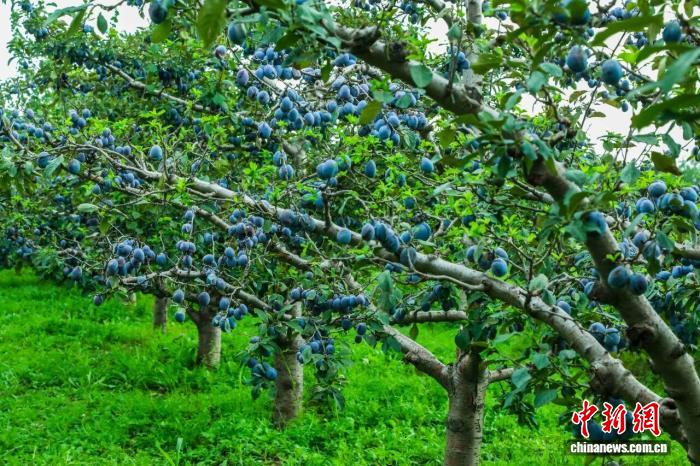
Core Viewpoint - The article highlights the successful cultivation of specialty plums in Xiangyuan County, Shanxi, which has significantly improved the livelihoods of local villagers through agricultural employment and increased income opportunities [1][5]. Group 1: Agricultural Practices - The unique environmental conditions in Bailingzhuang Village, such as drought-resistant soil and significant temperature variations, are ideal for growing plums, resulting in large, sweet, and visually appealing fruits [3][5]. - The orchard employs organic farming practices, utilizing natural fertilizers and manual pest control to ensure high-quality fruit production [7]. Group 2: Economic Impact - The plum orchard spans 30 acres and is home to over 1,800 fruit trees, with expected yields of 8,000 pounds of plums, over 10,000 pounds of pears, and around 40,000 pounds of apples this year [7]. - Villagers can earn over 80 yuan per day working in the orchard, with total earnings during the harvest season exceeding 2,000 yuan, providing them with additional income while managing their own agricultural activities [5][7]. Group 3: Community Engagement - The orchard attracts many visitors for fruit picking, enhancing community engagement and promoting local tourism [5][7]. - The initiative not only enriches the local fruit supply but also creates job opportunities for residents, allowing them to work close to home [5].
千年关隘黑石关: 从烽火硝烟到山河新语
He Nan Ri Bao· 2025-08-22 23:33
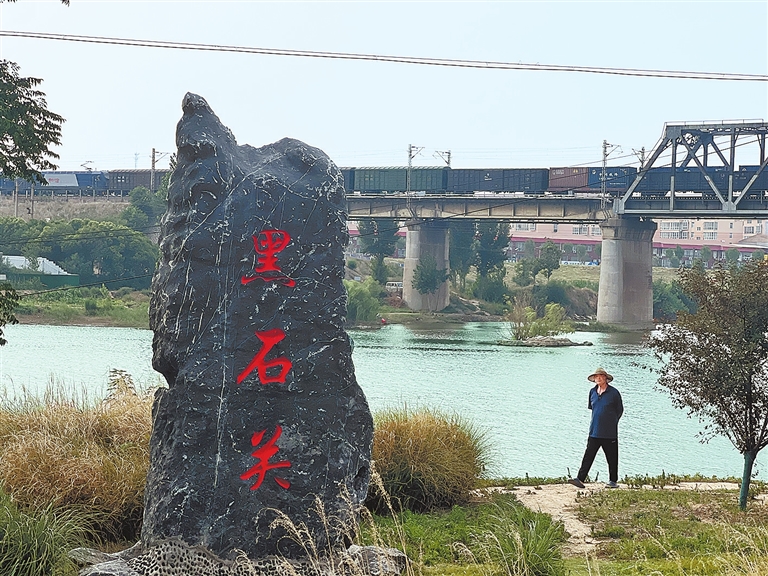
Core Viewpoint - The article highlights the historical significance of Heishi Pass during the Anti-Japanese War and its transformation into a red education site, showcasing the blend of history, culture, and modern development in the region [3][6]. Historical Significance - Heishi Pass was a strategic location in ancient times, known as a contested military site [3]. - The construction of the Heishi Pass Bridge in 1903 was a key development for the railway connecting Kaifeng and Luoyang [3]. - In 1944, the Japanese army occupied the area, leading to significant military actions, including the destruction of the bridge by the Nationalist forces to hinder Japanese advances [3][4]. Military Engagement - The night attack on Heishi Pass by the Eighth Route Army was a pivotal moment, resulting in the defeat of Japanese and puppet forces, the capture of 13 soldiers, and the rescue of over 2,000 forced laborers [4][5]. - This battle marked the first significant victory for the Eighth Route Army in the region, enhancing their influence among the local population [4][5]. Modern Development - The area has undergone significant transformation, with the establishment of new villages and infrastructure, including well-paved roads and flourishing orchards [5]. - East Heishi Pass village has developed a diverse agricultural sector, growing over 10 varieties of fruits across 400 acres, and has also embraced rural tourism [5]. - The city of Gongyi has emerged as a "trillion county" in Henan, with numerous green factories and sustainable production lines contributing to economic growth [5]. Cultural Integration - Heishi Pass has become a site for red education, attracting visitors interested in the history of the Anti-Japanese War [6]. - The integration of historical heritage, ecological beauty, and intangible cultural heritage is being promoted through innovative methods, enhancing the region's cultural appeal [6].
拒绝走马观花,坚持听真话、察实情——身入更心入的“调研”之变(在现场·作风建设新成效)
Ren Min Ri Bao· 2025-08-17 07:35
Group 1 - The article emphasizes the importance of improving research and investigation as a key requirement of the Central Eight Regulations, which relates to style construction and public concerns [1] - Various regions and departments have been enhancing their research methods to better understand grassroots situations and solve practical problems [1] Group 2 - In Baoding, Hebei, a doctoral advisor from the Chinese Academy of Agricultural Sciences has been providing technical guidance for the local fruit industry since 2021, emphasizing the need for on-site research [2] - The local apple trees were underperforming, with yields capped at 2000 pounds per acre due to poor soil conditions, prompting the advisor to investigate further [3][4] Group 3 - The advisor discovered that the irrigation method used was unsuitable for the local sandy soil, and there was a mismatch between local farmers' investment mindset and the high-input, slow-return nature of modern fruit farming [4] - After identifying the root causes, the advisor initiated a series of experiments to improve the situation, including advocating for increased investment and better irrigation practices [4][5] Group 4 - In Suzhou, a local official engaged in a three-month research project by experiencing the work of a human-powered rickshaw driver, which provided valuable insights into the industry [6][7] - The official found that the rickshaw service could enhance cultural experiences for tourists, leading to suggestions for improving the service and increasing drivers' income [10][12] Group 5 - In Longyan, Fujian, a local party secretary conducted extensive research to resolve a land dispute between two villages, emphasizing the importance of understanding community perspectives [13][14] - After multiple visits and utilizing drone technology for accurate mapping, the dispute was resolved, allowing for infrastructure development that could significantly boost local income [16][17]
这个夏天,新疆“果盘”端上全国餐桌
Xin Hua Wang· 2025-08-14 23:51
Core Insights - Xinjiang's fruit industry is experiencing significant growth, with improved management practices and extended sales networks leading to increased market presence and profitability [1][5][6] Group 1: Enhanced Management Practices - The introduction of modern monitoring equipment in red date cultivation has improved planting efficiency and quality, allowing farmers to better manage water and fertilizer [2] - The shift from traditional farming methods to precision management has resulted in higher yields and better quality for various fruits, including new varieties of plums [2][3] Group 2: Industry Chain Extension - The focus on extending the industry chain has allowed for added value from production to consumption, transforming fresh fruits into processed products like dried fruits, juices, and jams [3][5] - Collaboration with well-known companies has facilitated the establishment of a complete industry chain, enhancing the economic viability of local fruit production [3] Group 3: Logistics and Sales Network Development - The establishment of a comprehensive cold chain logistics system has addressed the challenges of short shelf life and high transportation requirements for Xinjiang's fruits [5] - The integration of online and offline sales strategies has improved market access, with significant increases in procurement volumes from local producers [5][6]